Seville
Things to Do
48 attractions, museums, and experiences
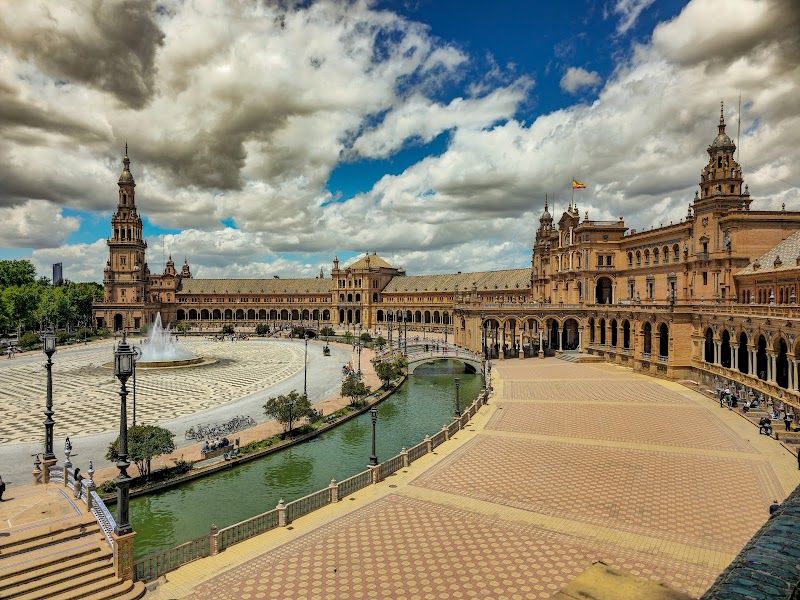
Plaza de Espana
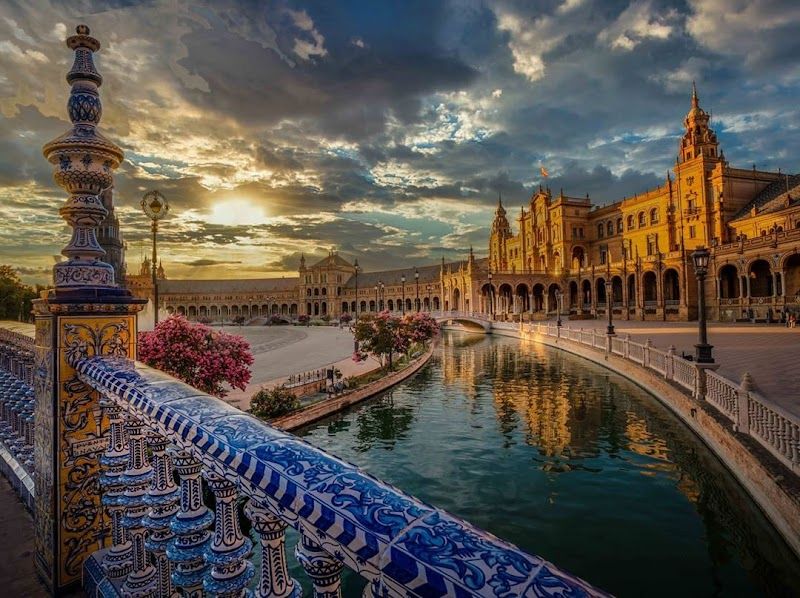
Plaza de España is a massive semicircular plaza built in 1928 for the Ibero-American Exposition, featuring 170 meters of continuous tiled facades, a central fountain, and a canal where you can rent rowboats for €6. The real draw is the 48 ceramic alcoves representing each Spanish province, with hand-painted tiles showing historical scenes and regional maps. The four baroque towers at the canal bridges make this one of Europe's most photogenic squares, which explains why it's appeared in Star Wars Episode II and Lawrence of Arabia. Walking the semicircle takes about 45 minutes if you stop to read the provincial tiles, and the scale hits you immediately when you emerge from María Luisa Park. Tourists cluster around the central fountain and Andalusia alcove, but the far ends of the semicircle stay quieter. The rowboats are surprisingly fun and give you the best perspective of the facade's reflection in the water. The tiles are genuinely beautiful up close, especially the detailed maps and battle scenes. Most guides oversell this as a quick photo stop, but you need 90 minutes to appreciate the craftsmanship properly. Skip the busy midday hours when tour groups dominate, the harsh light washes out the tile colors. The rowboats are worth €6 if you're into photography, but skip them if you just want to walk around. Finding your home province's alcove is touristy but oddly satisfying, the historical details are surprisingly accurate and detailed.
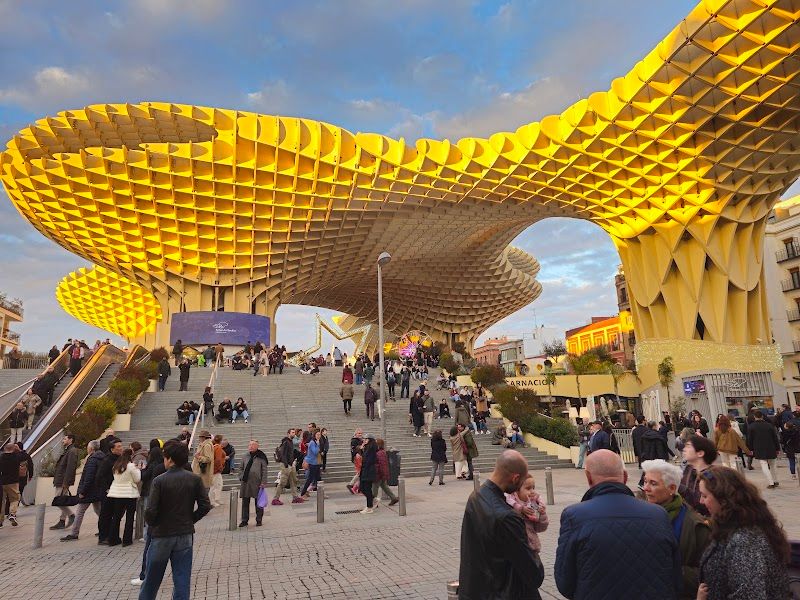
Metropol Parasol (Las Setas)
The Metropol Parasol looks like six giant wooden mushrooms that crash-landed in central Seville. This massive lattice structure rises 28 meters above Plaza de la Encarnación, built from bonded timber in an alien-looking waffle pattern that somehow works. You're here for the rooftop walkway (€5), which snakes through the canopy and delivers spectacular views over the old city, plus there's a basement level showcasing Roman ruins discovered during construction. Climbing to the walkway feels like entering a futuristic treehouse. The serpentine path winds through the timber structure, casting intricate shadows that shift throughout the day. You'll peer down at the plaza below while gazing out over terracotta rooftops toward the Cathedral and Giralda tower. The wooden lattice creates natural frames for photos, and the perspective keeps changing as you follow the curved walkway through the parasols. Most guides don't mention that your €5 ticket includes a drink voucher worth €3-5, making the net cost almost nothing. The Roman ruins downstairs require a separate ticket and aren't particularly impressive compared to what you'll see elsewhere in Seville. Skip the morning visit when the light is harsh and shadows are minimal. The structure divides locals (many think it's an eyesore) but visitors consistently love it, especially at golden hour when those geometric shadows create Instagram gold.
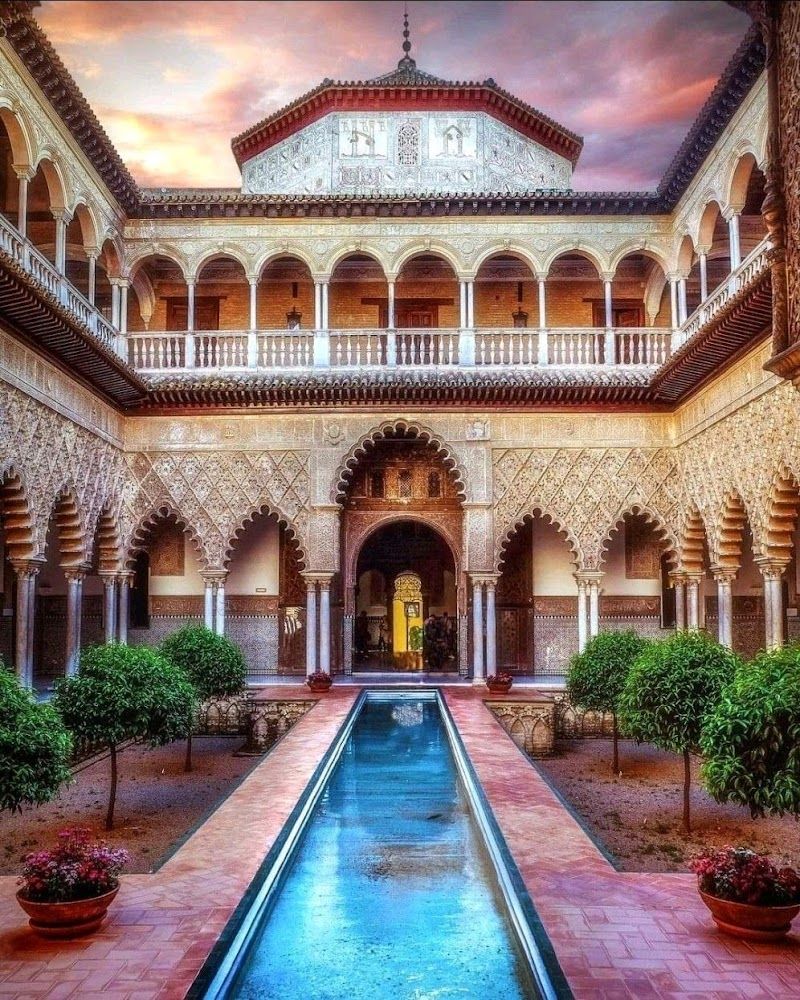
Real Alcázar de Sevilla
The Real Alcázar isn't just another palace: it's a 14th-century Christian king's love letter to Islamic architecture, built by Pedro I using Granadan craftsmen who created something even more ornate than the Alhambra. You'll walk through rooms where Columbus planned his voyages, marvel at tilework that took decades to complete, and explore gardens where peacocks strut past 500-year-old orange trees. The palace complex spans nearly 1,000 years, from Almohad walls to Renaissance additions, all still functioning as Spain's oldest royal residence. Your visit flows from the austere medieval entrance into increasingly elaborate courtyards, each more breathtaking than the last. The Patio de las Doncellas stops everyone cold: its reflecting pool mirrors intricate muqarnas while afternoon light transforms the space into something almost mystical. You'll climb narrow staircases worn smooth by centuries of footsteps, peek into Pedro's private apartments, then emerge into gardens where the scent of jasmine mingles with fountain spray. Most guides push the full complex, but honestly skip the upper floors (€4.50 extra) unless you're obsessed with 19th-century royal apartments. The real magic happens in the main palace and gardens. Entry costs €13.50, but book online weeks ahead or you'll waste time in crushing lines. Start with the Patio del Yeso, which most people rush past, then work toward the famous courtyards when your eyes are still fresh.
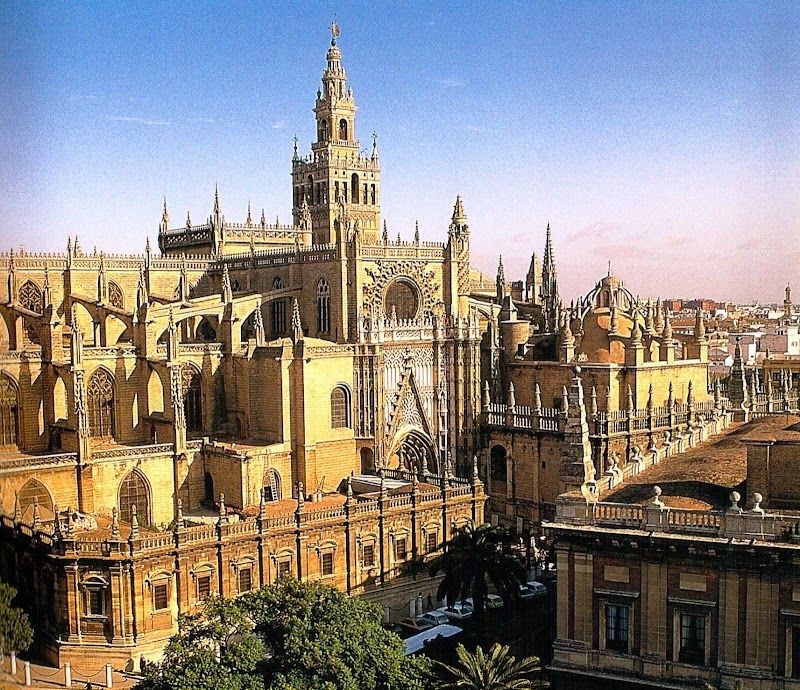
Seville Cathedral and Giralda Tower
This is the world's largest Gothic cathedral by volume, built on the site of Seville's great mosque between 1401 and 1506. The scale hits you immediately: the nave soars 42 meters high, and the Capilla Mayor houses the world's largest altarpiece, an 80-year golden masterpiece that dominates the space. Columbus rests here in a tomb held by four bronze kings, and the attached Giralda Tower (the original minaret) offers panoramic views from 70 meters up. The visit flows from overwhelming grandeur to intimate discovery. You'll crane your neck at vaulted ceilings, then find yourself studying intricate chapels tucked into corners. The Giralda climb uses ramps instead of stairs, making the ascent surprisingly comfortable. At the top, 360-degree views stretch across Seville's rooftops, the Guadalquivir River, and the sprawling Andalusian landscape beyond. Most guides don't mention that the main entrance queue can stretch for blocks, especially after 10 AM. Entry costs EUR 12 for both cathedral and tower, but buy online and use the Puerta de San Cristóbal entrance on the south side to skip the chaos. The cathedral closes Mondays, and Sunday mornings are for worship only. Plan 90 minutes minimum, but you could easily spend half a day here.
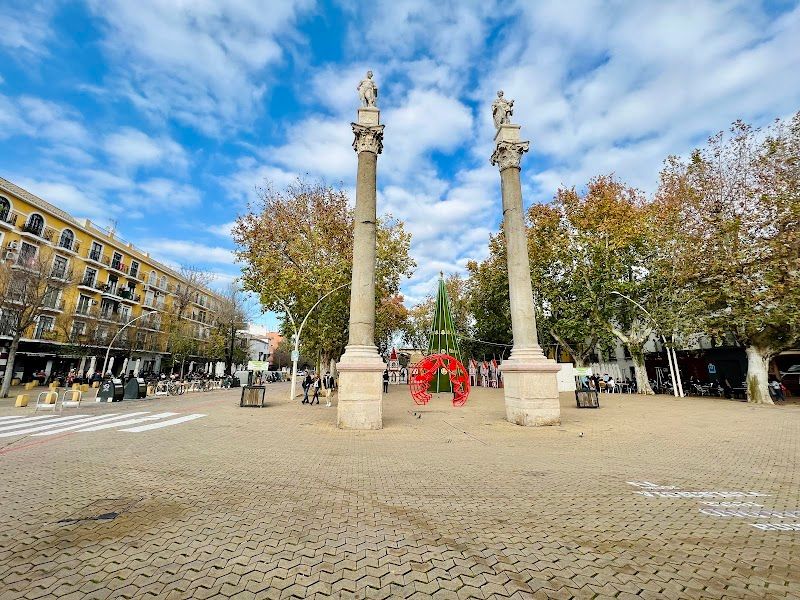
Alameda de Hércules
Alameda de Hércules stretches for six blocks through Seville's most bohemian neighborhood, anchored by two genuine Roman columns topped with statues of Hercules and Julius Caesar at the southern end. This rectangular promenade, created in the 16th century from a drained swampland, has become the city's unofficial outdoor living room where locals gather day and night. You'll find outdoor terraces lining both sides, palm trees providing shade, and a distinctly local crowd that feels refreshingly removed from Seville's tourist trail. The atmosphere shifts dramatically throughout the day. Mornings bring dog walkers and joggers, while afternoons see families claiming benches under the trees. By evening, the outdoor bars fill with university students and young professionals nursing beers and sharing tapas plates. The Sunday flea market transforms the space completely, with vendors spreading vintage clothes, old records, and random antiques across the pavement while neighbors browse and chat. Most guidebooks oversell this as a major attraction, but it's really about soaking up authentic Seville neighborhood life. The bars charge standard prices (€2.50 for beer, €4-6 for tapas), and the flea market runs more toward junk than treasures. Skip the touristy restaurants at the Hercules end and head toward the northern section where locals actually hang out.
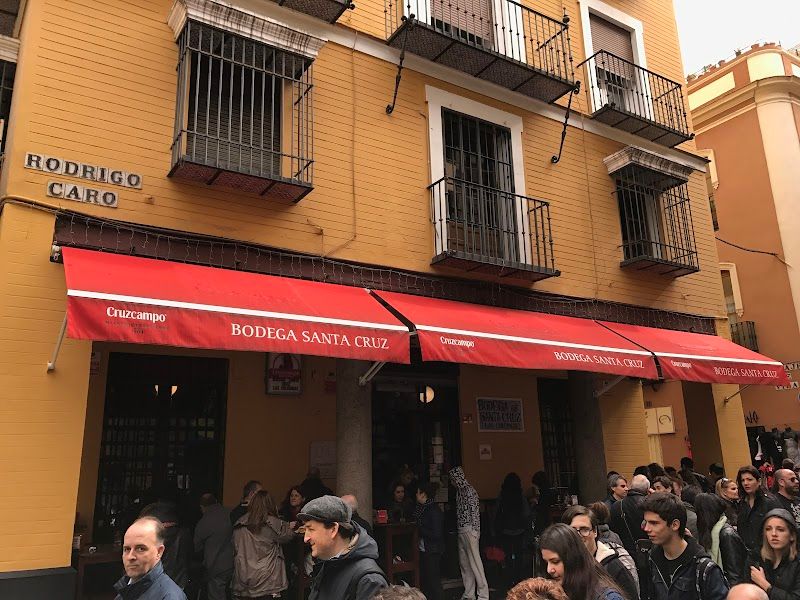
La Bodega Santa Cruz
Standing-room sherry bar tucked into a tiny storefront where locals crowd the marble counter for cold manzanilla and montaditos. Sherries run EUR 2.50 to EUR 3.50 per glass with house specialties like pringá montaditos and boquerones. The place fills by 8:30 PM with pre-dinner crowds.
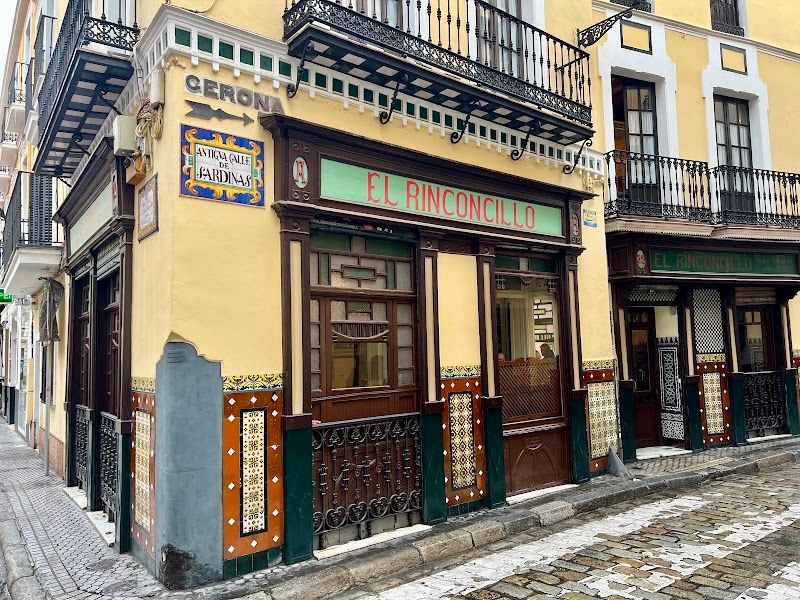
El Rinconcillo
Seville's oldest bar, established in 1670, where tabs are still chalked directly on the wooden bar counter. The house speciality is espinacas con garbanzos, slow-cooked with cumin and paprika. Stand at the bar like locals do and order the pavias de bacalao with a glass of cold manzanilla.
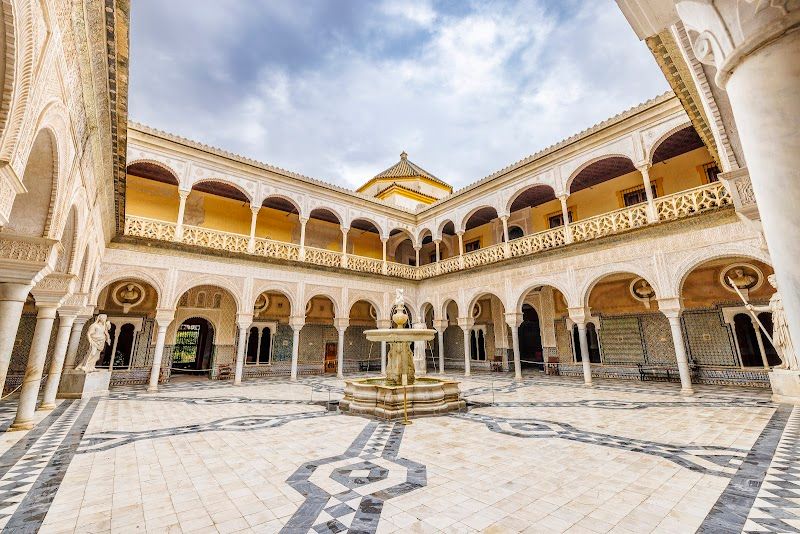
Casa de Pilatos
Casa de Pilatos showcases the most sophisticated blend of Mudéjar and Renaissance architecture in Seville, built by the first Marquis of Tarifa after his pilgrimage to Jerusalem in 1519. You'll find elaborate geometric azulejo tilework covering entire walls, intricate coffered ceilings, and a central patio surrounded by marble columns and classical busts. The palace name comes from local belief that it replicated Pontius Pilate's house, though it's actually inspired by Italian Renaissance palaces the Marquis admired during his travels. Walking through feels like discovering a private museum where you can actually get close to the artwork. The ground floor's patio draws gasps with its perfect symmetry and detailed tile patterns, while upstairs rooms contain original 16th century frescoes depicting mythological scenes. Unlike the Alcázar, you'll often have entire rooms to yourself, letting you photograph details and study the craftsmanship without crowds pressing behind you. Most visitors make the mistake of buying the 10 EUR ground floor ticket, missing the palace's best features upstairs. The full 12 EUR ticket includes private apartments with stunning frescoes and the family chapel with an impressive altar. Skip the audio guide at 3 EUR, the English descriptions on wall plaques are sufficient. The morning light illuminates the central patio beautifully, making tile colors pop for photos.

Tablao Flamenco Show
Flamenco was born in Seville, and the tablaos here deliver the authentic experience you can't get anywhere else. These intimate performance spaces put you close enough to hear the dancers' feet striking wooden floors and see the intensity in their eyes. The three best venues are Casa de la Memoria (EUR 22, most intimate at 100 seats), Casa del Flamenco (EUR 22, set in a stunning 16th-century palace courtyard), and Tablao El Arenal (EUR 26-44 with dinner options). All run multiple nightly shows with consistently excellent rotating performers. You'll sit in candlelit spaces where every stomp reverberates through your chest and every guitar note feels personal. The passion is unmistakable: singers pour their hearts into ancient songs while dancers channel centuries of Andalusian soul through precise, powerful movements. The atmosphere builds throughout each 45-75 minute performance, with audiences growing more captivated as the intensity escalates. These aren't polished theater productions but raw, emotional experiences where each night feels slightly different. Most tourists book the early 7 PM shows, but the 9 PM performances have more experienced audiences and the dancers seem more engaged. All three venues sell out during Feria de Abril (May) and August, so book a week ahead then. Skip the dinner packages unless you specifically want the combination: the food is decent but overpriced. Casa de la Memoria offers the most intimate setting if you want to feel completely immersed.
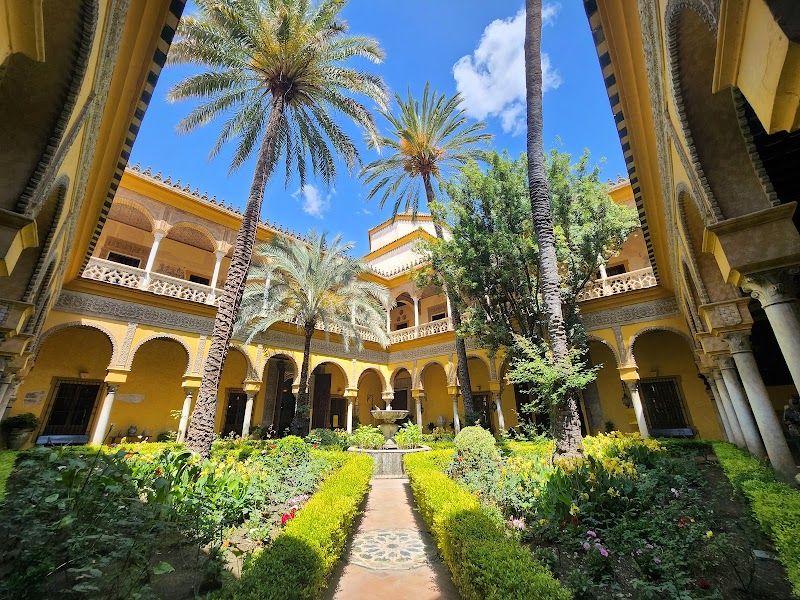
Palacio de las Dueñas
The Palacio de las Dueñas offers an authentic glimpse into aristocratic Seville life, with five centuries of treasures displayed exactly as the Alba family still uses them. You'll wander through intimate salons filled with Goya paintings, ancient tapestries, and personal photographs of Spanish royalty visiting for dinner parties. The courtyards steal the show: orange trees frame original 16th century azulejo tiles, while fountains trickle in spaces where poet Antonio Machado took his first steps. The self guided visit flows through surprisingly lived in rooms where you can picture the Duchess of Alba hosting gatherings last week. Unlike sterile palace museums, this feels like exploring a wealthy friend's home while they're away. The library holds 40,000 books, the chapel displays religious art spanning four centuries, and every room reveals layers of Spanish history through family portraits and furniture. The intimate scale means you're never fighting crowds in narrow hallways. Most guides oversell this as a major attraction, but it works best as a peaceful complement to the overwhelming Cathedral and Alcázar. Entry costs 12 EUR and the audio guide adds nothing valuable, skip it and read the English room descriptions instead. Focus your time in the main courtyard and the Machado room, but honestly the whole circuit takes just an hour if you don't linger over every decorative detail.
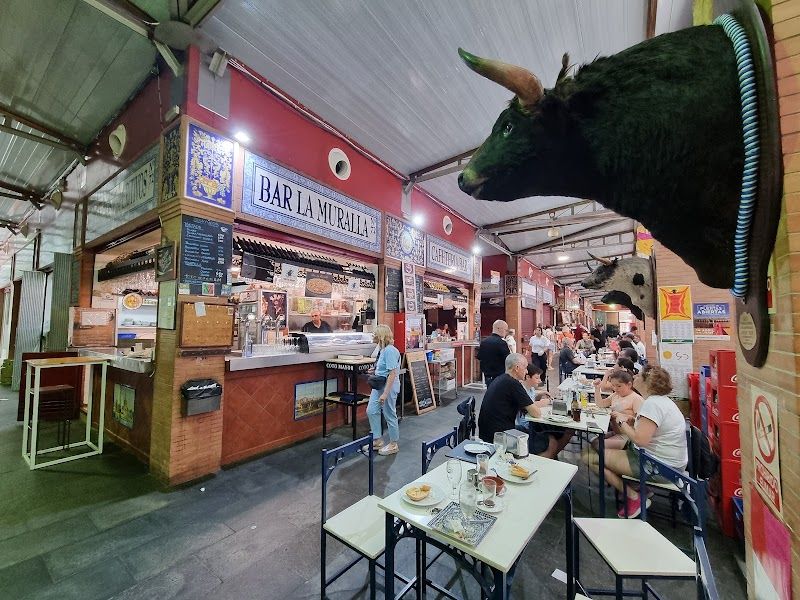
Mercado de Triana
Mercado de Triana sits right on the Guadalquivir's edge where a medieval Inquisition castle once stood, and today it's the only central Seville market where actual locals do their daily shopping. You'll find proper fishmongers selling catch from Cádiz, elderly women haggling over vegetables, and ceramic vendors offering authentic Triana pottery alongside the usual tourist stuff. The top floor opens onto terraces with river views where you can grab wine and tapas for 3 to 5 EUR while watching boats drift past. The ground floor feels authentically Spanish: vendors call out prices, locals chat while selecting produce, and the smell of fresh fish mixes with jamón hanging from hooks. Unlike other Seville markets that cater mainly to tourists, this one maintains its working market atmosphere even when visitors wander through. The upstairs bar area gets lively around sunset, but during morning hours you'll mostly encounter neighbors picking up groceries and catching up on local gossip. Most travel guides oversell the basement archaeology, it's just a few display cases and foundation stones that take five minutes to see. The real draw is the authentic market experience and those riverside terraces, which offer some of the best value drinks with views in Seville. Skip the overpriced ceramic shops near the entrance and head straight to the back stalls where prices drop significantly for the same Triana pottery.
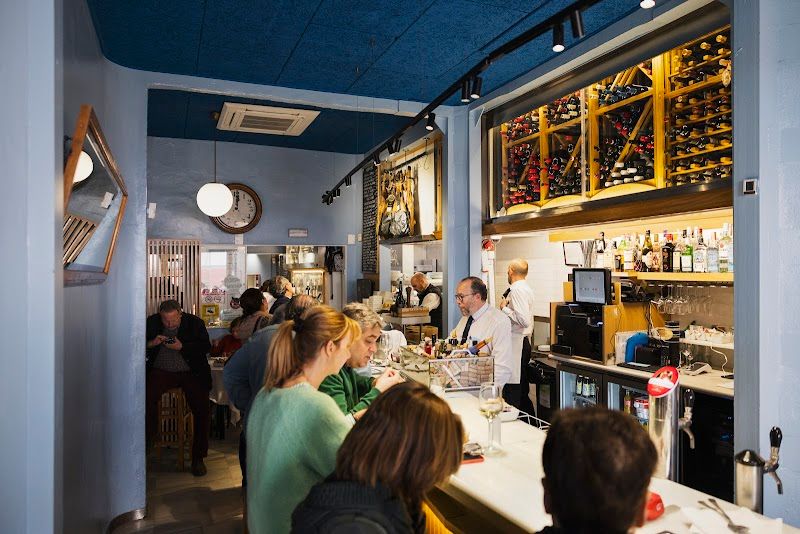
Eslava
A modern tapas bar that earned a Michelin recommendation while keeping prices reasonable and the counter full of locals. The huevo con foie and caramelized idiazabal cheese are creative takes on tapas tradition. Reservations recommended for the dining room, but the bar is first-come.
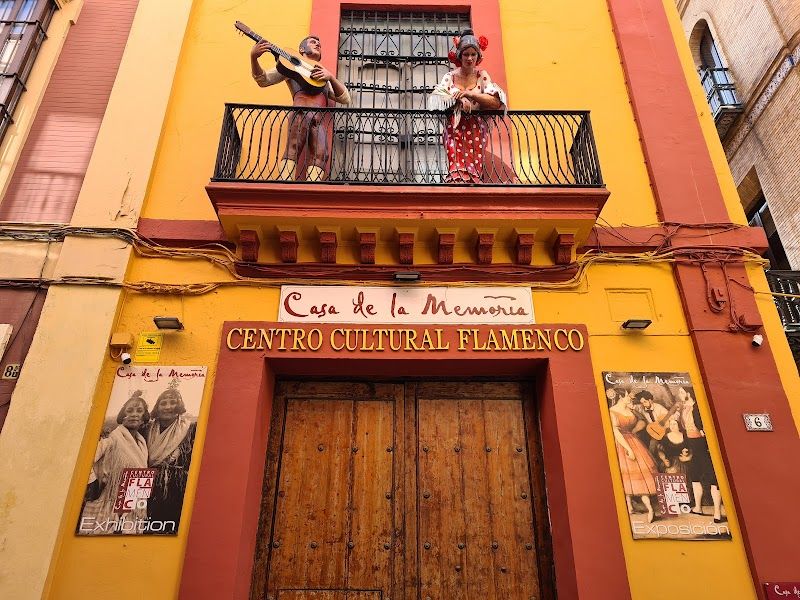
Casa de la Memoria
Casa de la Memoria transforms a 15th-century palace courtyard into Seville's most intimate flamenco experience, where you sit just meters from world-class performers. The venue hosts 90-minute shows featuring acclaimed guitarists, singers, and dancers performing without microphones or amplification in the stone-walled patio. You'll hear every guitar string resonate, every heel strike the floor, and every passionate vocal cry echo off ancient walls. The experience feels like stumbling into a private flamenco gathering rather than attending a tourist show. You enter through heavy wooden doors into a candlelit courtyard surrounded by Moorish arches, where 100 chairs create an impossibly close circle around the performance space. The acoustics are perfect: guitarists' fingers sliding across strings, the rhythmic clapping, and dancers' rapid-fire footwork create an almost hypnotic soundscape that reverberates through your chest. This isn't cheap flamenco dinner theater, it's the real deal. Tickets cost around 22 EUR for general admission, though exact pricing varies by season. The 7:30 PM show draws fewer tour groups than the 9 PM slot, giving you a better chance at front-row seats. Skip the expensive drinks here and grab something beforehand, the focus should be entirely on the performance, which consistently features some of Andalusia's finest flamenco artists.
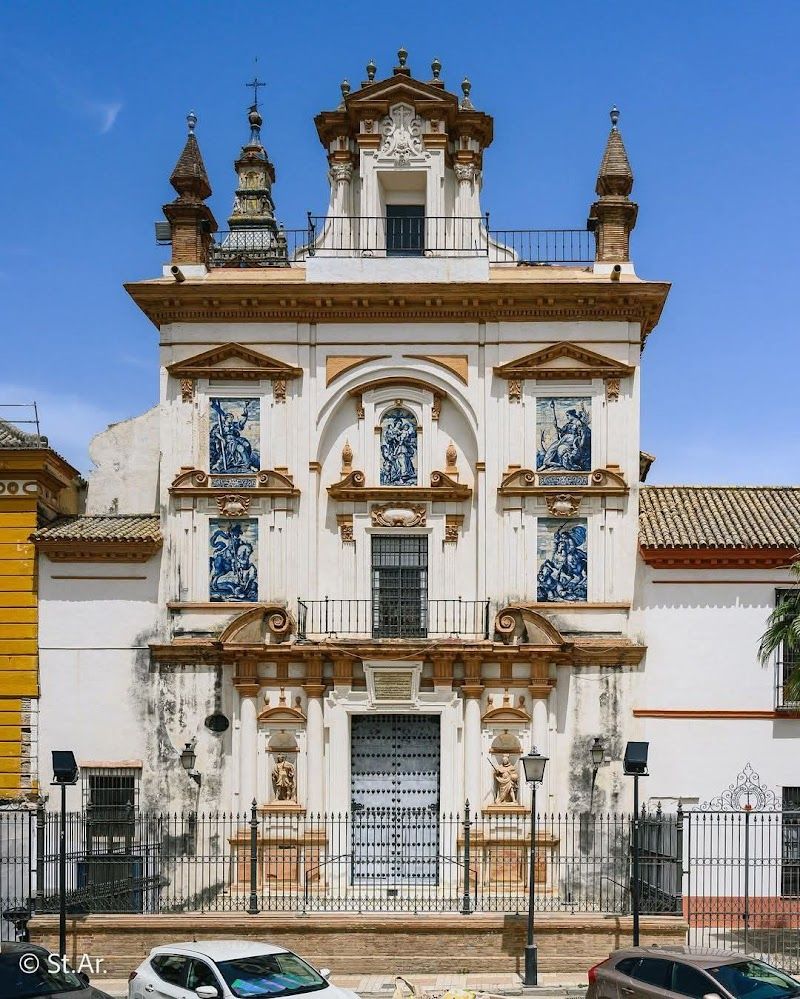
Hospital de la Caridad
This 17th-century baroque hospital turned museum houses some of Seville's most powerful religious art, including Murillo's luminous charity scenes and Valdés Leal's deeply unsettling vanitas paintings that'll stick with you for days. The building itself is gorgeous: a peaceful courtyard lined with blue and white azulejo tiles surrounds a central fountain, while the church sanctuary glows with gilded altarpieces. You're essentially walking through a working example of Counter-Reformation art designed to move souls, not just decorate walls. The visit flows naturally from the serene entrance courtyard into increasingly dramatic spaces. You'll start with Murillo's warm depictions of charitable acts in the main halls, then move to the church where his massive canvases dominate the walls. The real punch comes in the back chapel with Valdés Leal's two famous death paintings: skeletons, decomposing bishops, and scales weighing sins versus good deeds. The contrast between Murillo's gentle beauty and Valdés Leal's brutal mortality reminders creates an emotional whiplash that's genuinely affecting. Most guides overhype this as essential Seville, but honestly, it's only compelling if you're interested in religious art or baroque symbolism. Entry costs around 8 EUR, which feels steep for what's essentially six rooms. Skip it if you're rushed and prioritize the Cathedral or Alcázar instead. If you do visit, spend your time in the church and back chapel where the real masterpieces hang.
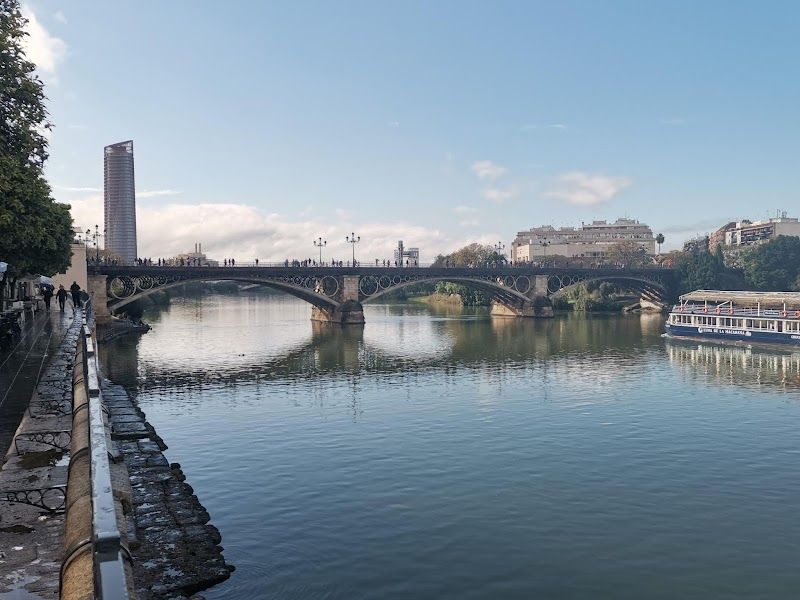
Triana Neighbourhood Walk
Triana is the neighbourhood west of the Guadalquivir river that Sevillanos consider the real soul of the city. It is where flamenco tradition is deepest (the birthplace of many of Spain's greatest flamenco artists), where the ceramics workshops still operate, and where the bars are cheaper and more local than anything in the centre. The Puente de Isabel II (the iron bridge from 1852) connects the centre to Triana. Calle Betis is the riverside street: the terrace bars here look back over the river to the Torre del Oro and the cathedral. The Triana market (Mercado de Triana) is inside a covered space on the riverside and sells local produce, fish, and ceramics. Cerámica Santa Ana on Calle San Jorge has been making Triana tiles since 1870. The neighbourhood is largely residential, the bars are neighbourhood spots, and the tile murals on the buildings depict bullfighters, Virgin icons, and historic scenes in the local style.
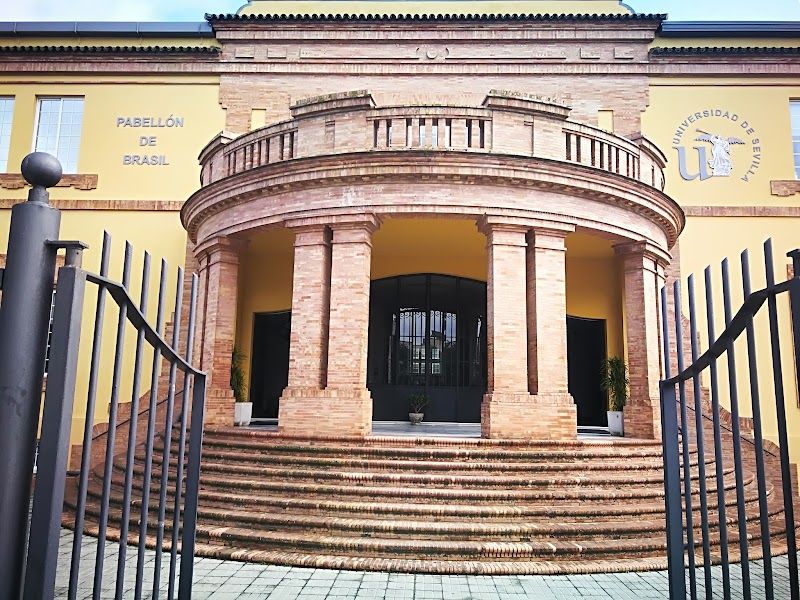
Pabellón de Brasil
This angular concrete pavilion was Brazil's contribution to Seville's 1929 Ibero-American Exposition, and it's aged into something genuinely striking. The stepped modernist design looks like someone stacked concrete blocks with mathematical precision, creating dramatic shadows and geometric lines that photograph beautifully. Inside, rotating contemporary art exhibitions fill the cool, minimalist spaces, while the surrounding gardens offer genuine respite from Seville's heat with mature palms and shaded benches. Walking around the pavilion feels like discovering a piece of 1920s futurism that actually got built. The interior spaces flow naturally from room to room, with high ceilings and clean lines that let whatever exhibition is running breathe properly. Outside, the gardens wrap around the building in terraced levels, creating intimate pockets where locals come to read or chat quietly. The contrast between the hard concrete geometry and soft plantings works better than it should on paper. Most guides inflate this as essential viewing, but it's really worth your time only if contemporary art interests you or you need a quiet break from tourist crowds. Exhibitions change regularly and entry is typically free, though some special shows charge 3-5 EUR. Skip it if you're rushing between major sights, but it's perfect for a contemplative 45 minutes when the Alcázar queues look brutal or you need air conditioning.
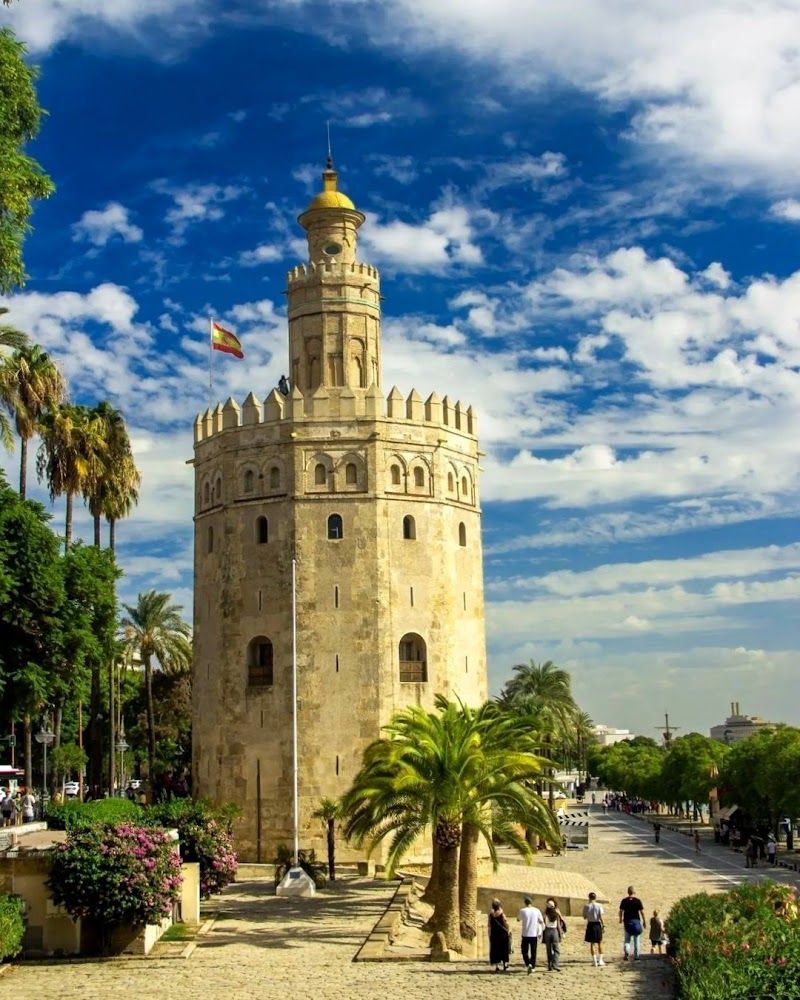
Torre del Oro and Guadalquivir Riverside Walk
The Torre del Oro (Tower of Gold) is a 13th-century Almohad watchtower on the Guadalquivir riverbank that was once connected to the city walls by a chain stretched across the river to block enemy ships. The name comes from the golden reflection of the tower in the water at sunset, or alternatively from the gold tiles that once covered the exterior. Inside is the Museo Naval (maritime museum, EUR 3, small but well-organized with old maps, ship models, and documentation of Seville's role in the Americas trade). The riverside paseo along the Guadalquivir runs north and south from the tower: north along the Triana bank for the best sunset views of the Cathedral, south toward the Parque de Maria Luisa. The riverfront from the Torre del Oro to the Puente de Isabel II is Seville's evening promenade route.
Parque de María Luisa
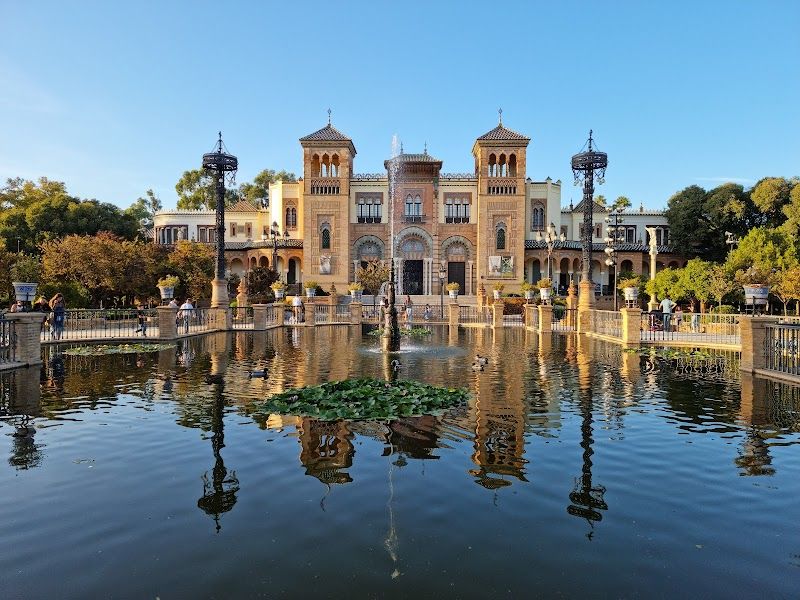
Parque de María Luisa is Seville's sprawling green escape, a 34-hectare maze of shaded paths, ornamental ponds, and tile-covered benches that once served as the private gardens of San Telmo Palace. The park feels like an outdoor museum with its scattered pavilions from the 1929 Exposition, including the Archaeological Museum and the trio of buildings around Plaza de América. You'll walk past duck-filled ponds under canopies of orange trees, stumble upon ceramic-tiled alcoves, and discover fountains tucked between palm groves. The experience flows naturally from one discovery to the next as you follow winding paths that seem designed to get you pleasantly lost. Families spread picnics on the grass while joggers weave around baby strollers and elderly couples on benches. The atmosphere shifts from formal near the museum buildings to wild and overgrown in the park's southern reaches. Every turn reveals another tiled fountain or shaded grove, and the sound of water trickling creates a constant backdrop. Most visitors rush through here as a quick stop between Plaza de España and the city center, which is a mistake. The real magic happens when you slow down and let yourself wander aimlessly for at least 90 minutes. Skip the crowded central paths during weekend afternoons when local families pack the place. The Archaeological Museum costs €1.50 but honestly, the outdoor architecture is more interesting than what's inside.
Iglesia del Salvador
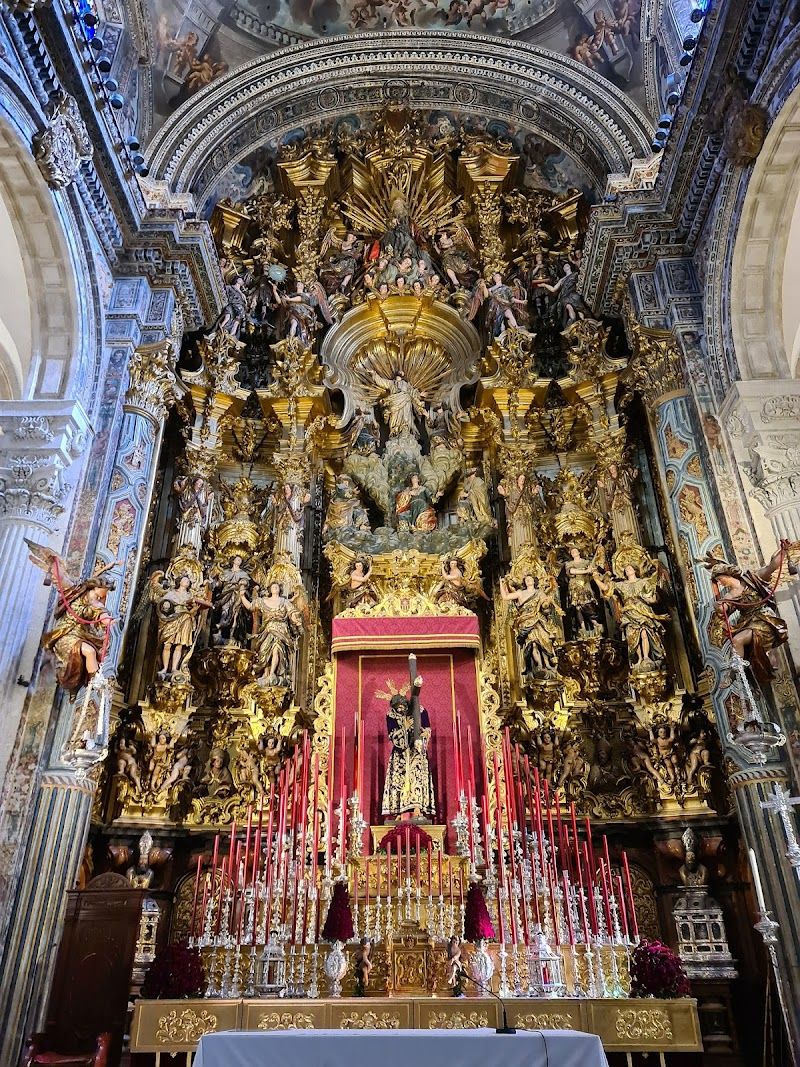
The Salvador Church stands on the foundations of Seville's original Friday mosque, creating a spectacular collision between Islamic architecture and Baroque excess. You'll find the second largest church in the city after the Cathedral, where every surface screams for attention with gilded altarpieces, spiral columns, and dramatic religious sculptures. The original mosque courtyard survives as the Patio de los Naranjos, offering a peaceful contrast to the interior's visual chaos. Walking inside feels like entering a golden jewelry box that's been turned inside out. The main altar rises like a theatrical stage set, while side chapels compete for your attention with increasingly elaborate decorations. The contrast hits you immediately: step from the serene orange tree courtyard into an interior that represents Baroque architecture at its most unapologetic. Most visitors spend their time craning their necks upward, trying to process the sheer amount of detail crammed into every corner. Most guidebooks treat this as a Cathedral afterthought, but it's actually more impressive in some ways because you can get closer to the artwork. The 4 EUR entry fee feels steep for 45 minutes, but your Cathedral ticket gets you in free within 48 hours. Skip the audio guide and focus on the main altarpiece and the Capilla de la Virgen de las Aguas. Come early morning when light streams through the windows and tourist groups haven't arrived yet.
Conjunto Arqueológico de Itálica
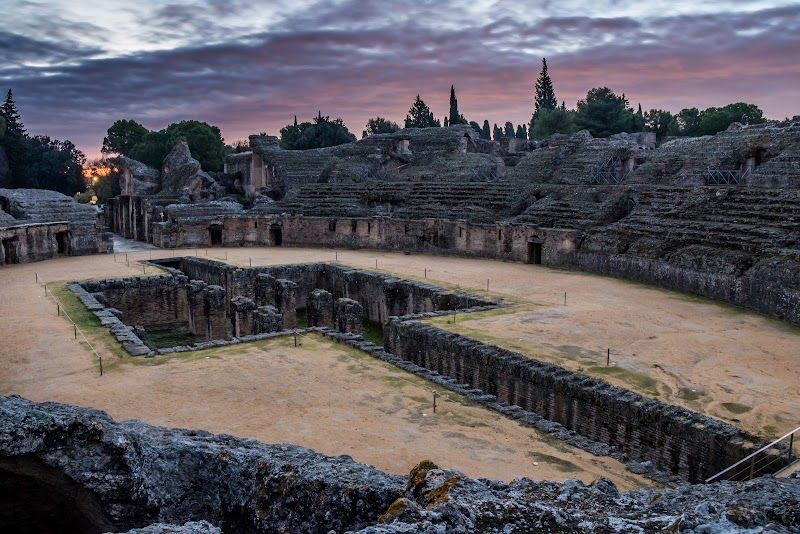
Italica sits 30 minutes northwest of Seville and delivers Rome-quality ruins without the crowds. You'll walk through the birthplace of emperors Trajan and Hadrian, where massive mosaics still cover villa floors in intricate detail. The Neptune mosaic alone spans 50 square meters, while geometric patterns in the House of Birds look like they were installed yesterday. The amphitheater, third largest in the Roman Empire, hosted 25,000 spectators and still echoes when you shout from the arena floor. The site sprawls across olive groves with numbered ruins connected by gravel paths. Start at the visitor center for context, then follow the circuit through residential districts where wealthy Romans lived. Room after room reveals pristine mosaics: dolphins, peacocks, mythological scenes rendered in tiny colored stones. The amphitheater sits at the circuit's end, its underground chambers and tiered seating intact enough that Game of Thrones filmed here. You'll have most spaces to yourself, especially weekday mornings. Entry costs 1.50 EUR, making this exceptional value compared to similar sites elsewhere. Most visitors rush through in an hour, but you need three to appreciate the craftsmanship properly. Skip the audioguide and download the free app instead. The site closes at 3 PM from April through September, catching many off guard. Bring serious sun protection since there's zero shade among the ruins.
Taberna Coloniales
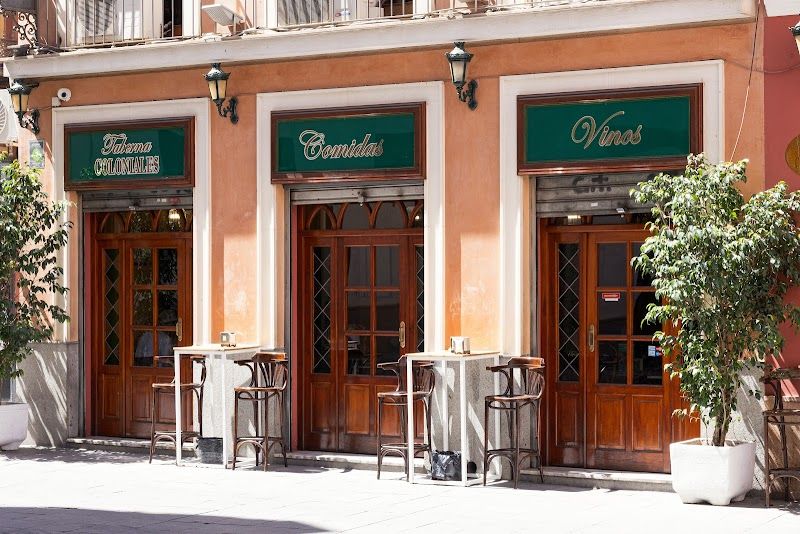
A reliably good tapas spot with multiple locations, but the original near Plaza Cristo de Burgos is where locals go. The solomillo al whisky and the tortilla de camarones are standouts. Prices are fair at EUR 3-4 per tapa and the outdoor tables fill up fast on warm evenings.
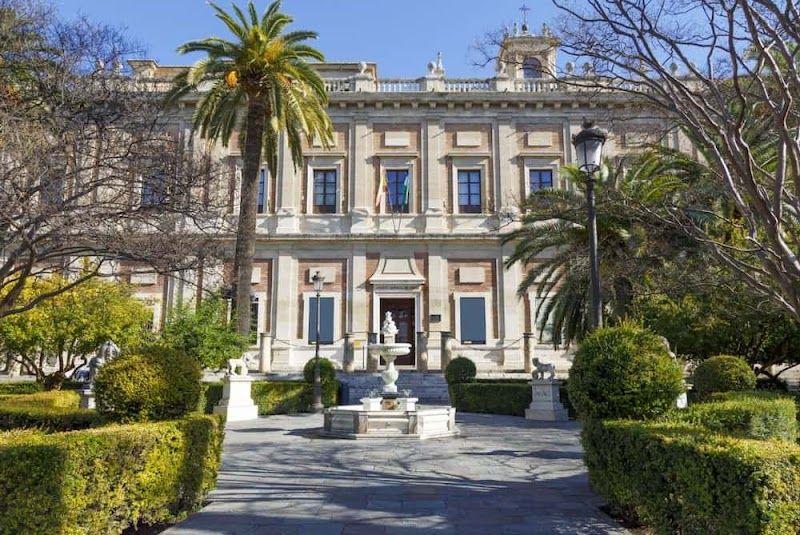
Archivo General de Indias
The Archivo General de Indias holds the world's most complete record of Spanish colonial empire, housed in Juan de Herrera's stunning 16th-century Mannerist building. You'll see original Columbus logbooks, hand-drawn maps of unexplored territories, royal decrees, and personal letters from conquistadors. The collection spans 80 million pages documenting three centuries of exploration, trade, and conquest across the Americas, Philippines, and Caribbean. Entry is completely free. The experience centers on the main exhibition hall with its soaring stone vaults and perfect acoustics. Rotating displays showcase different themes: sometimes it's navigation instruments and sea charts, other times personal correspondence between Spanish royalty and colonial governors. The documents are beautifully lit in climate-controlled cases, with Spanish and English explanations. The building itself competes for attention, its geometric courtyard and marble staircases rivaling the archives. Most visitors rush through in 20 minutes, but you'll want 45 minutes to properly read the translations and absorb the historical weight. The permanent collection rotates every few months, so what you see depends entirely on timing. Skip this if you're not genuinely interested in colonial history or Spanish exploration, the displays require focus and reading. The building's architecture alone justifies a brief visit, even if documents aren't your thing.
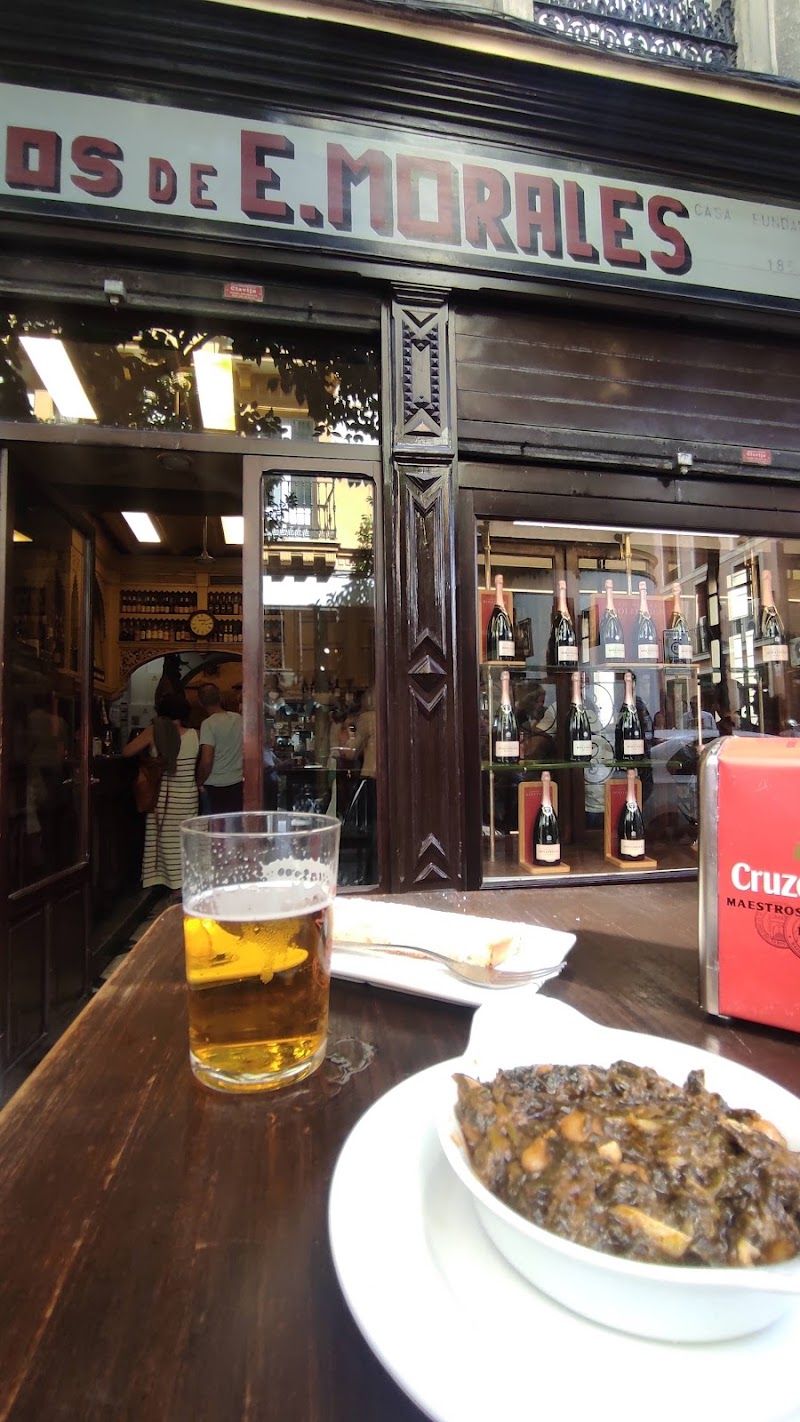
Casa Morales
A classic 1850 tavern with terracotta amphorae still lining the walls from its days as a wine merchant. The house wine comes from their own barrels and the montaditos de lomo are served on crusty bread. This is where warehouse workers and office staff from El Arenal come for lunch.
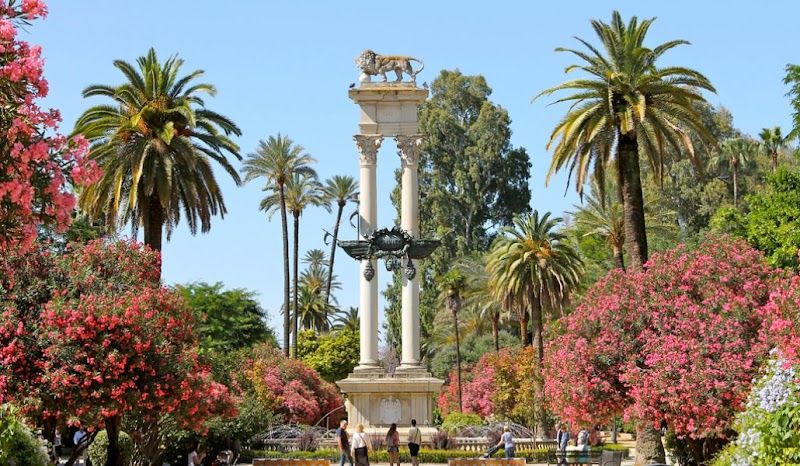
Jardines de Murillo
Jardines de Murillo stretches along Seville's ancient Almohad walls, creating a palm-shaded corridor between the cathedral quarter and the Santa Cruz neighborhood. These former Alcázar orchards were transformed into public gardens in the early 1900s, featuring geometric flower beds, ceramic tile fountains, and monuments to Columbus and other historical figures. You'll walk on gravel paths beneath towering palms and orange trees while views of the Giralda tower peek through the foliage. The gardens feel like a linear park rather than an enclosed space, with multiple entry points along its 400-meter length. Locals use the benches for morning coffee breaks and evening conversations, while tourists discover it as a quiet escape from the cathedral crowds just 100 meters away. The Moorish-influenced landscaping includes intricate tile work and small fountains that create a cooling effect even on scorching summer afternoons. The northern end opens dramatically to reveal the full cathedral facade. Most visitors stumble through randomly and miss the best parts. Start from the Santa Cruz end near Plaza de la Alianza and walk north toward the cathedral for the most impressive finale. The gardens are free but don't expect manicured perfection: this is a neighborhood park that locals actually use. Skip it if you're short on time and prioritize the Alcázar gardens instead, but it's perfect for a 15-minute breather between major sights.
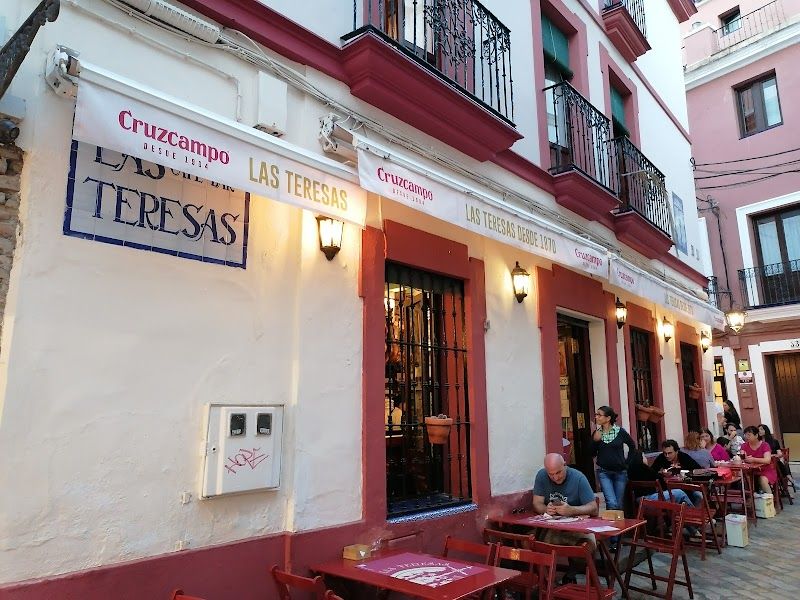
Bar Las Teresas
A Santa Cruz institution with cured hams hanging from the ceiling and azulejo tiles covering every wall. The salmorejo here is served ice-cold with generous amounts of jamón ibérico and chopped egg. Despite the tourist location, locals still pack the bar at lunch.
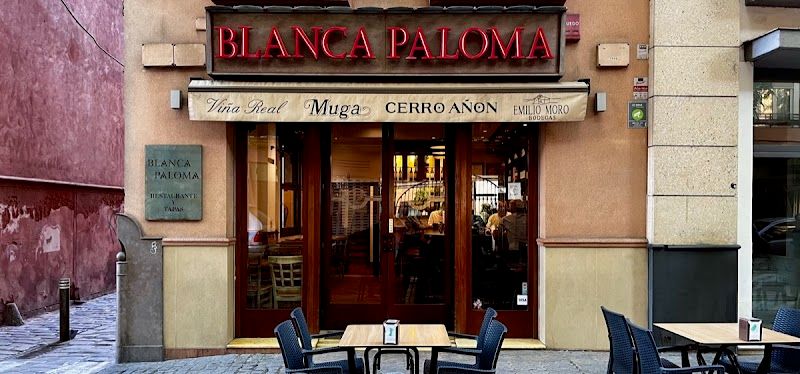
Blanca Paloma
A no-frills Triana bar where a beer still comes with a free tapa, chosen by the kitchen. The pescaito frito arrives perfectly crisp and the carrillada melts on the fork. This is the Triana eating experience: standing at the bar, local dialect spoken fast, cheap and generous.
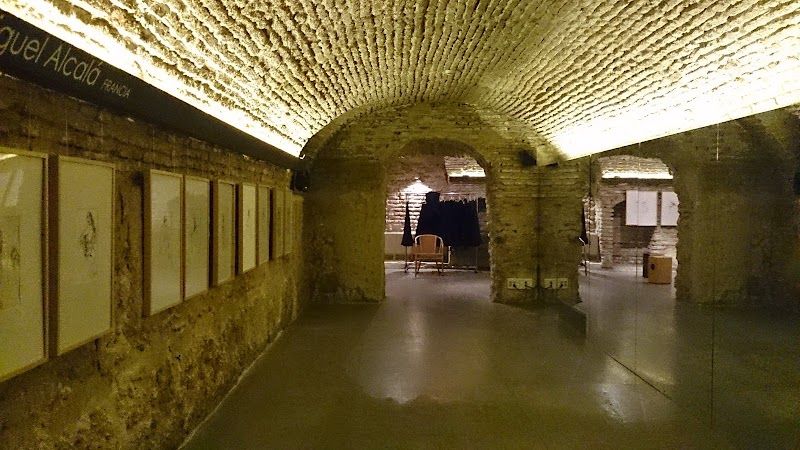
Museo del Baile Flamenco
Cristina Hoyos created this focused museum in 2006 to showcase flamenco's evolution from its 18th century origins to modern masters. You'll find carefully curated exhibits on the three pillars of flamenco: cante (song), baile (dance), and toque (guitar), with interactive displays letting you explore different palos (flamenco styles). The real treasures are the video archives featuring legends like Carmen Amaya and Antonio Gades performing in grainy black and white footage you won't see anywhere else. The museum occupies three floors of an 18th century palace, with the ground floor covering flamenco's roots in Andalusian, Gypsy, and Arabic cultures. Upstairs, the video installations play on loop in darkened rooms where you can sit and watch masters demonstrate techniques that modern flamenco builds upon. The building feels intimate rather than grand, with creaky wooden floors and small rooms that force you to slow down and pay attention to details. Skip the costume displays on the first floor, they're generic and poorly lit. The €10 entry fee is reasonable if you spend at least 30 minutes with the video archives, but many visitors rush through in 15 minutes and feel ripped off. Come before 2pm when the rooms are quieter and you can properly absorb the performances without crowds shuffling behind you.
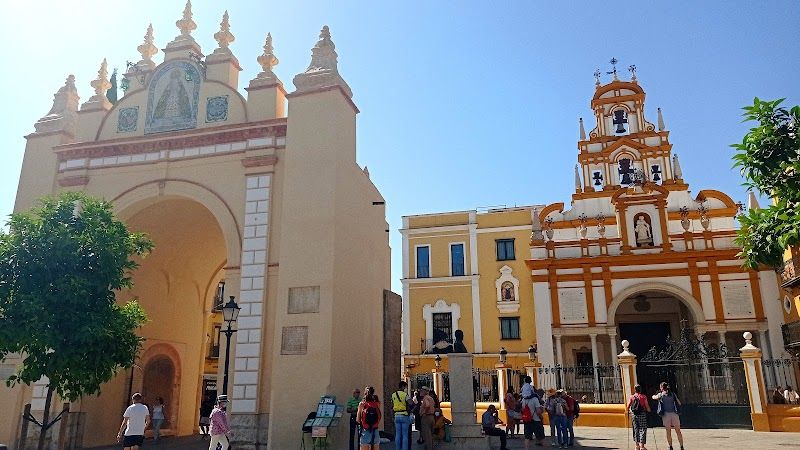
Basílica de la Macarena
This neo-Baroque basilica from 1949 houses Seville's most adored Virgin, La Macarena, whose tear-streaked face and emerald-encrusted crown draw devotees year-round. You'll find her in a glass case behind the altar, draped in velvet and surrounded by hundreds of flickering candles. The attached museum displays her jaw-dropping jewelry collection (emeralds, diamonds, and pearls worth millions) plus the massive silver pasos that carry her through the streets during Easter processions. The church feels more like a living shrine than a tourist attraction. Locals genuflect and whisper prayers while you explore, creating an atmosphere that's deeply reverent yet welcoming to visitors. The Virgin's face is genuinely moving up close: glass tears, perfectly sculpted anguish, and an otherworldly presence that explains centuries of devotion. The museum feels like a royal treasury, with cases full of brooches, necklaces, and ceremonial robes donated by grateful believers. Most guides oversell this as essential Seville, but it's really for those interested in religious art and local culture. The museum costs 5 EUR and takes 20 minutes max. Skip it if you're rushed, but if you're curious about Andalusian devotion, this offers genuine insight into how Sevillanos connect with their faith. The church itself is free and more atmospheric than the museum.
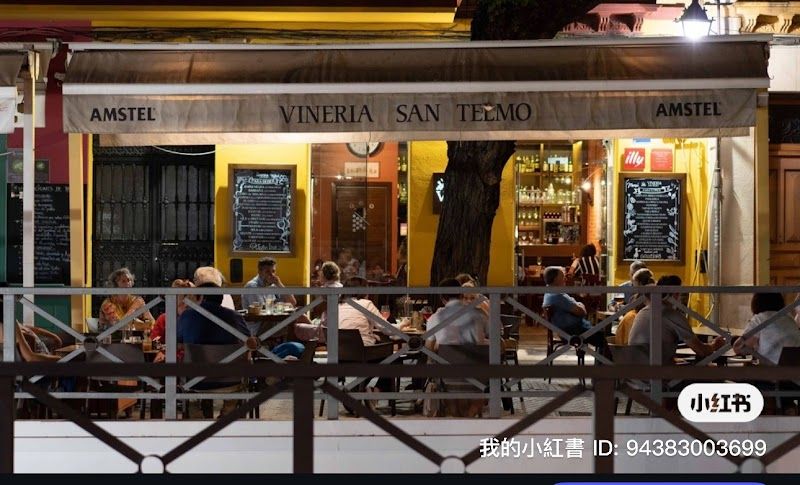
Vineria San Telmo
Modern tapas restaurant blending traditional Andalusian ingredients with creative presentations in a cozy brick-walled setting. Their carrillada and tuna tartare are standout dishes that locals rave about. The wine list features excellent Andalusian selections at fair prices.
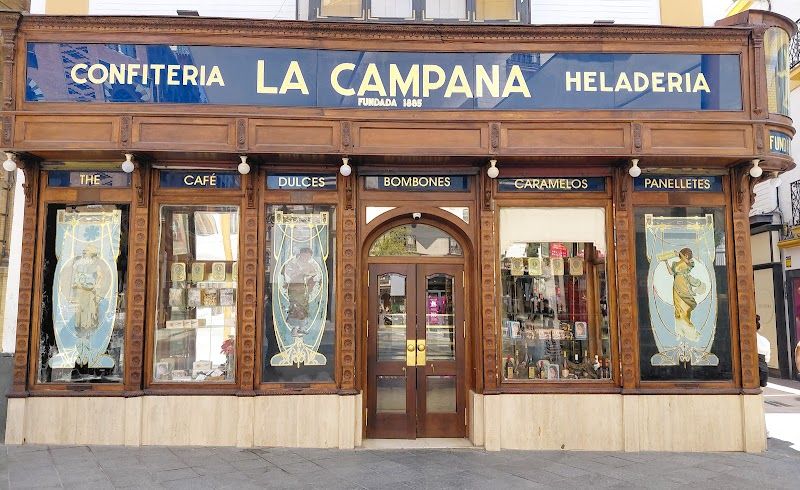
Confitería La Campana
Seville's most famous pastry shop since 1885, located on the main shopping street. The cortaditos (small coffees with a splash of milk) cost EUR 1.20 and the tocino de cielo is a local egg-yolk dessert originating from a nearby convent. Stand at the bar for breakfast like Sevillanos do.
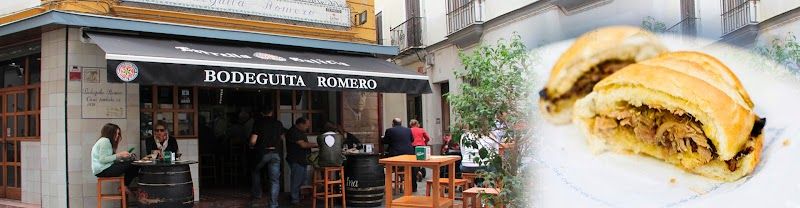
Bodeguita Romero
A tile-covered corner bar in the Alameda area known for its enormous portions of chicharrones and perfectly executed croquetas. The manzanilla flows cold and the atmosphere is loud, smoky, and packed with university students and neighbourhood regulars. Tapas cost EUR 3-4 and could feed two.
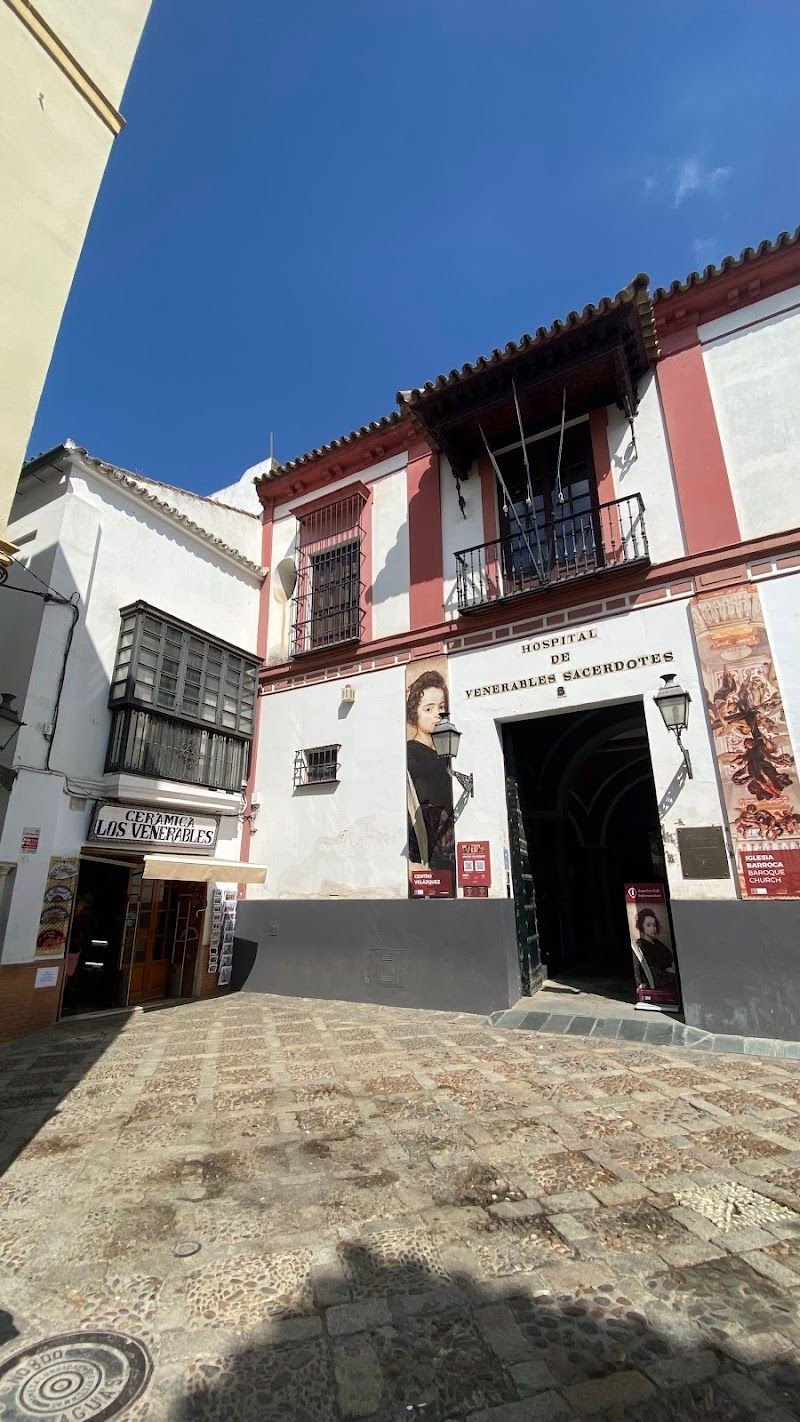
Hospital de los Venerables
Hospital de los Venerables is a perfectly preserved 17th-century Baroque hospital that once housed retired priests and now displays some of Seville's finest religious art. You'll see masterpieces by Velázquez and Murillo arranged around an elegant white marble courtyard, plus Juan de Valdés Leal's spectacular ceiling fresco in the church that creates one of Spain's most convincing optical illusions. The intimate scale makes it feel like wandering through a private collector's mansion rather than a traditional museum. The visit flows naturally from the central courtyard through interconnected rooms where religious paintings line whitewashed walls under exposed wooden beams. The highlight is the church where Valdés Leal's ceiling fresco plays visual tricks that'll have you craning your neck and questioning perspective. The marble courtyard provides breathing space between rooms, and the acoustics in the church make even whispers carry. It's refreshingly quiet compared to the Cathedral crowds just blocks away. Most guides oversell this as essential Seville viewing, but it's really for art lovers who appreciate quality over quantity. The €5 entrance fee feels reasonable for what amounts to a greatest hits collection in beautiful surroundings. Skip it if you're rushed or not particularly interested in religious art, but if you enjoy intimate museums, this beats the overwhelming Museo de Bellas Artes. The whole visit takes about 45 minutes unless you're studying every brushstroke.
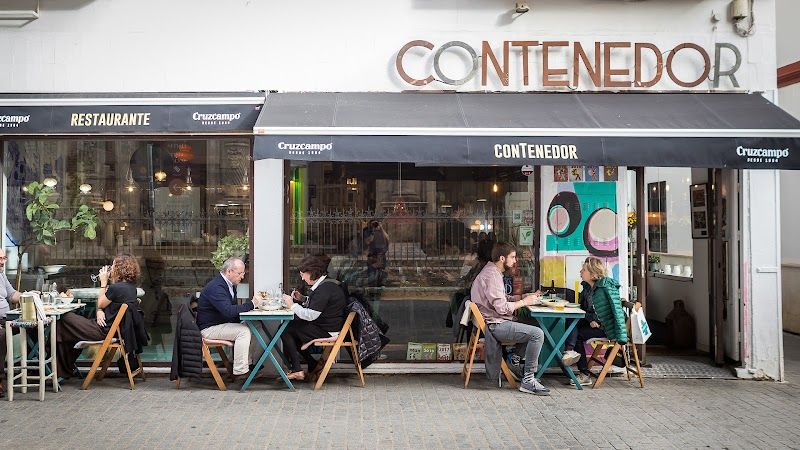
Contenedor
A modern brunch spot near Alameda de Hércules serving avocado toast, smoothie bowls, and specialty coffee in a bright space with plants. This is where young Sevillanos come on Sunday mornings when they want eggs Benedict instead of churros. Prices are EUR 8-12 for brunch dishes.
Capilla de los Marineros
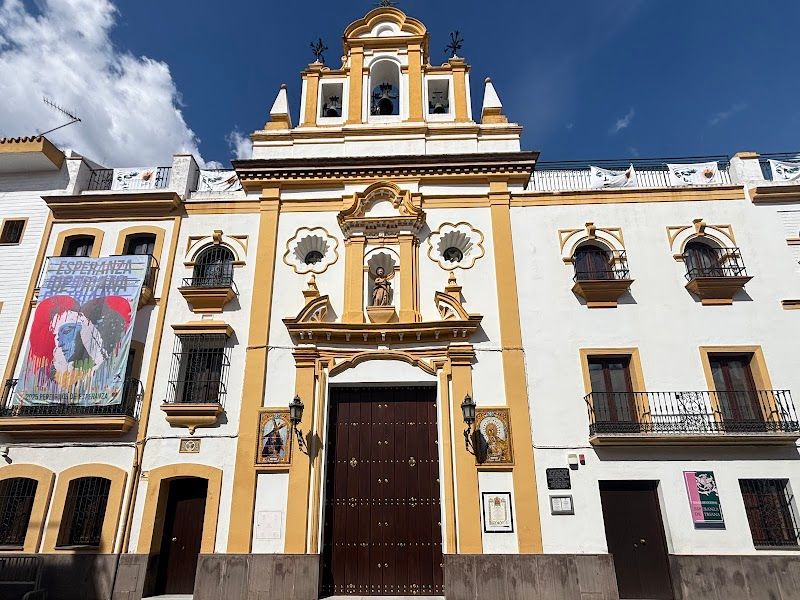
This intimate 15th-century chapel houses one of Seville's most revered Virgin statues, Nuestra Señora de la Esperanza de Triana, whose golden throne and elaborate baroque setting create an unexpectedly powerful spiritual atmosphere. You're looking at exceptional religious art including intricate altarpieces and silverwork that rival anything in the cathedral, but in a space so small you can examine every detail up close. The chapel serves as headquarters for the Esperanza de Triana brotherhood, one of Holy Week's most important, so you're seeing living religious tradition, not just museum pieces. Stepping inside feels like entering a jewelry box lined with gold leaf and devotional paintings. The Virgin's statue dominates the main altar, surrounded by candles and fresh flowers that locals bring daily. You'll hear whispered prayers and see people touching the walls in reverence, creating an atmosphere that's genuinely moving whether you're religious or not. The space is so compact that even a few visitors make it feel full, but this intimacy is exactly what makes it special. Most guidebooks barely mention this place, which is exactly why you should visit. Entry is free, though there's a small donation box if you want to light a candle for €1. Skip the rushed afternoon visits when tour groups occasionally appear, and don't bother if you're only interested in grand architecture. This is about devotion and craftsmanship on an intimate scale, best appreciated when you have time to really look at the details.
Tablao El Arenal
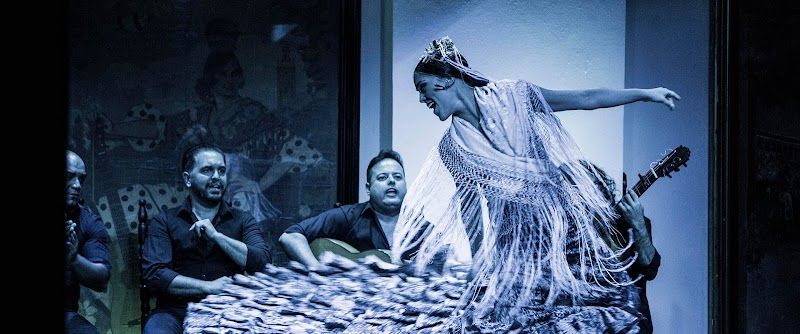
Tablao El Arenal occupies a converted riverside theater that's been showcasing authentic flamenco since 1975, attracting rotating artists from Seville's professional circuit rather than tourist performers. You'll watch guitarists, singers, and dancers who actually make their living from flamenco, performing on a small stage that puts you close enough to hear the dancers' breathing and see sweat on the guitarist's hands. The venue books serious artists who tour between Madrid, Granada, and Seville's established tablaos. The theater setting feels intimate but not cramped, with about 100 seats arranged in rows facing a simple stage lit by warm spotlights. Shows run exactly 90 minutes with a brief intermission, featuring 4-5 artists rotating through solos and ensemble pieces. The acoustics are excellent, you'll hear every guitar string and heel strike clearly. Between sets, servers move quietly through the audience refilling wine glasses without disrupting the performance mood. Most guides push the dinner package at EUR 65, but the food is standard tourist fare that distracts from the music. Book the show-only option for EUR 42 instead and eat beforehand at Bar Eslava (5 minutes away) or Taberna Coloniales for proper tapas. The 10 PM show typically features stronger performers than the earlier set, though both showcase genuine flamenco rather than sanitized tourist versions you'll find elsewhere.
Bar Europa
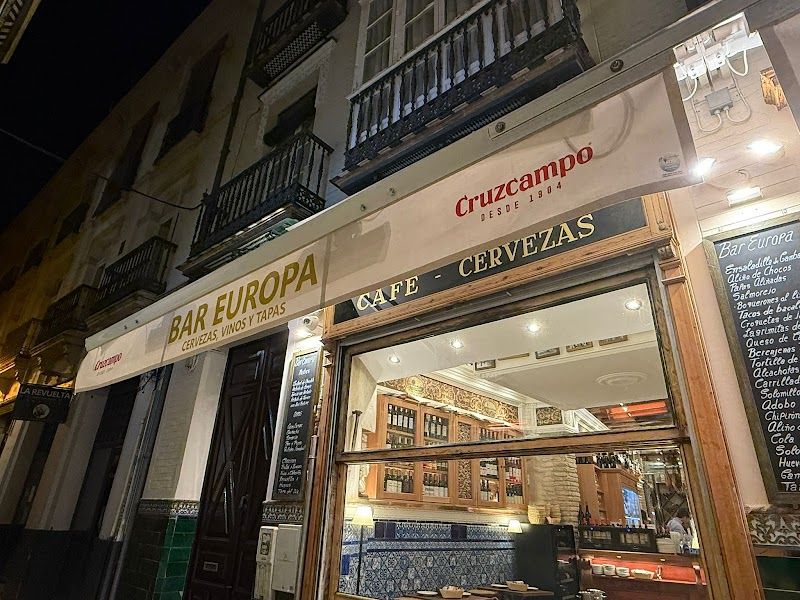
An Art Deco cafe on Plaza del Duque that has been serving cortados and tostadas since 1925. The mirrored walls and marble tables are original, and the clientele includes everyone from businessmen to elderly ladies. A coffee and toast with olive oil costs around EUR 3 total.
Bar Bistec
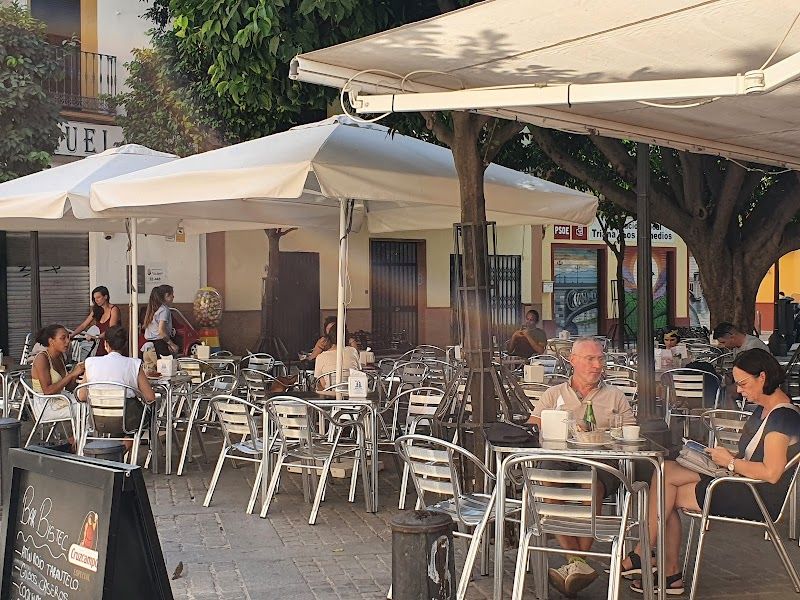
Authentic Triana tavern known for its perfectly grilled meats and traditional tapas, beloved by locals for over four decades. The no-frills atmosphere and house specialty-solomillo al whisky (whisky-flamed pork tenderloin)-make it a neighborhood institution. Small, bustling space with friendly service and excellent value.
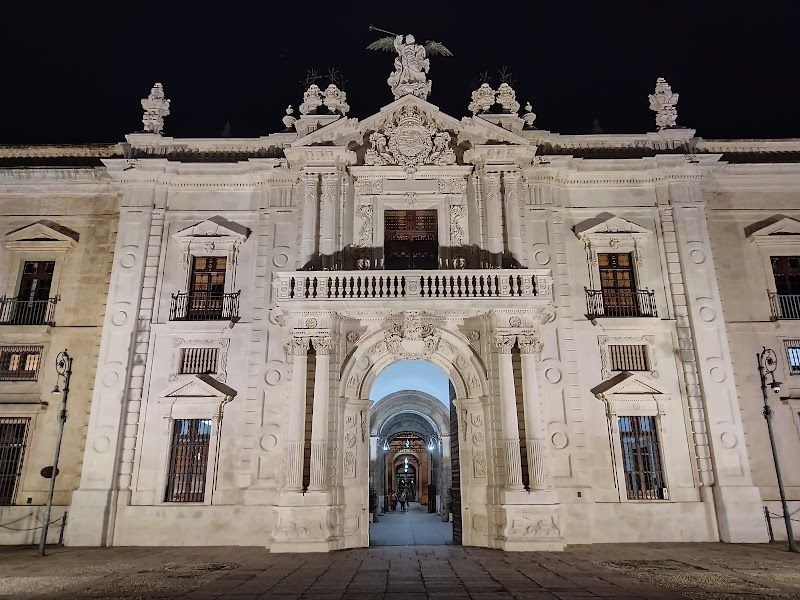
Real Fábrica de Tabacos
The Real Fábrica de Tabacos was Europe's largest tobacco factory when it opened in 1758, and today it houses the University of Seville's administrative offices. You can walk through the massive baroque building for free, exploring the central courtyards where 10,000 workers once rolled cigars by hand. The facade stretches 185 meters along San Fernando street, making it one of Spain's largest 18th-century buildings. These cigar-rolling women, called cigarreras, inspired Bizet's opera Carmen. Walking through feels like entering a working palace rather than a factory. The main entrance leads to a stunning central patio surrounded by two-story galleries with Renaissance arches. Students hurry between classes in spaces where tobacco leaves once dried, and you can peek into converted lecture halls that still show original industrial features. The building stays surprisingly cool even in summer thanks to its thick stone walls and cross-ventilation design. Most guides oversell this as a major attraction, but it's really a pleasant 20-minute architectural detour. The exterior impresses more than the interior, which is just university corridors now. Skip it during exam periods in January and June when access gets restricted. Focus on the main courtyard and don't bother hunting for specific Carmen references, there aren't any obvious markers inside.
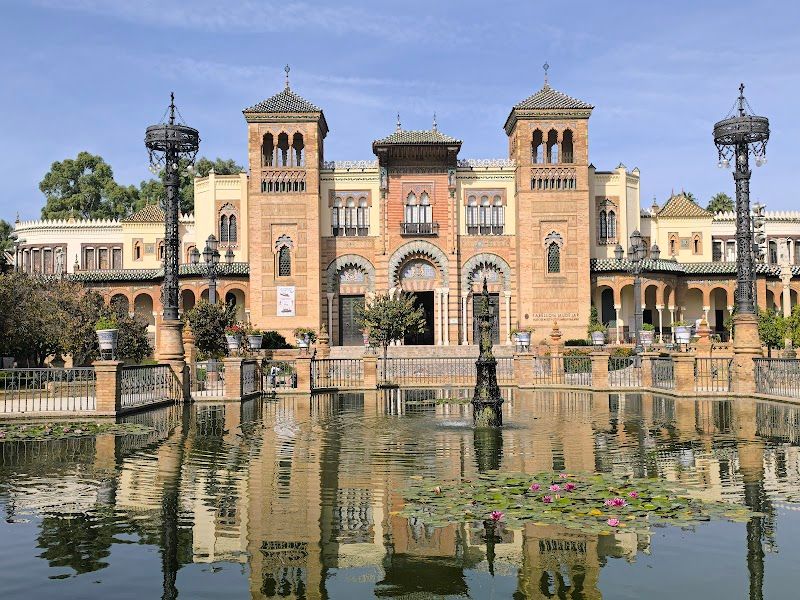
Museo de Artes y Costumbres Populares
The Museo de Artes y Costumbres Populares occupies one of Seville's most stunning buildings, the ornate Mudéjar Pavilion built for the 1929 Ibero-American Exposition. Inside you'll find an extensive collection of traditional Andalusian life: elaborate flamenco dresses, intricate religious brotherhood regalia, traditional ceramics from Triana, and recreated workshops showing how blacksmiths, weavers, and embroiderers once worked. The building itself steals the show with its magnificent tilework, carved plaster ceilings, and peaceful courtyards. Walking through feels like exploring a wealthy Sevillian mansion frozen in time. The ground floor showcases religious artifacts and festival costumes, while upstairs you'll discover domestic life exhibits including traditional kitchens, bedrooms, and workshops. The tile work is phenomenal throughout, particularly in the central courtyard where geometric patterns climb the walls. Natural light filters through the galleries beautifully, making the glazed ceramics and silk embroidery shimmer. Entry costs just 1.50 EUR, making this one of Seville's best cultural bargains. Most visitors rush through in 30 minutes, but you'll need at least an hour to appreciate the craftsmanship properly. The museum suffers from outdated lighting in some rooms, making detailed viewing difficult. Skip the basement level entirely as it's poorly lit and houses mainly storage displays.
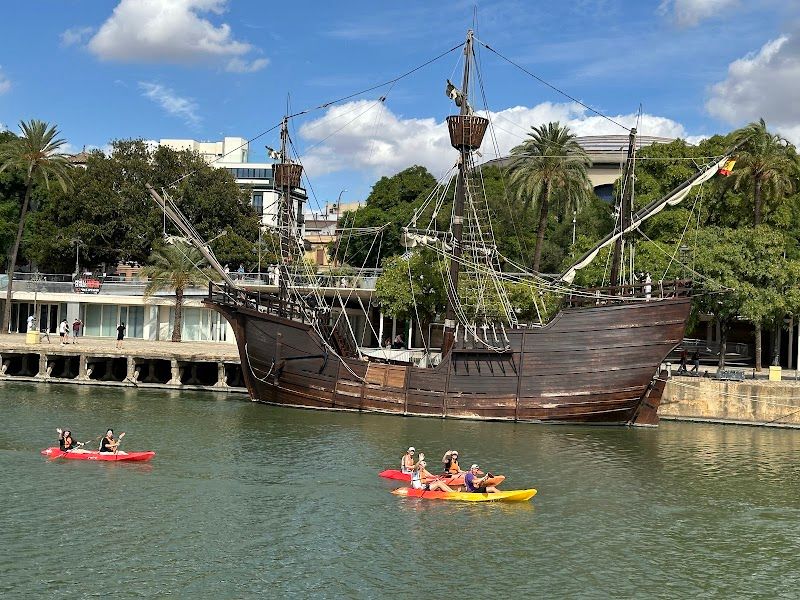
Cruceros Torre del Oro
This hour-long cruise gives you Seville's best riverfront views without the walking. You'll glide past the Maestranza bullring's distinctive white facade, Triana's riverside buildings painted in warm ochres and yellows, and the sleek Alamillo bridge designed by Santiago Calatrava. The audio guide covers how the Guadalquivir brought Columbus back from the Americas and made Seville Europe's richest port. You'll see angles of the cathedral and Giralda tower impossible from street level. The boat holds about 60 people across covered lower deck seating and an open upper deck where everyone gravitates for photos. Most passengers cluster at the railings during the Triana neighborhood stretch when the colorful buildings reflect perfectly in the water. The captain slows near major sights, giving you time to actually focus your camera. The route loops from Torre del Oro north past the Expo 92 site, then returns, so you see everything twice from different angles. Honestly, this isn't groundbreaking, but it's pleasant and delivers exactly what it promises. Tickets cost around 15 EUR for adults, which feels fair for an hour on the water with decent commentary. Skip it if you're tight on time, since you can see most of these buildings perfectly well from the Triana side of the river for free. The sunset timing really does make a difference for photos.
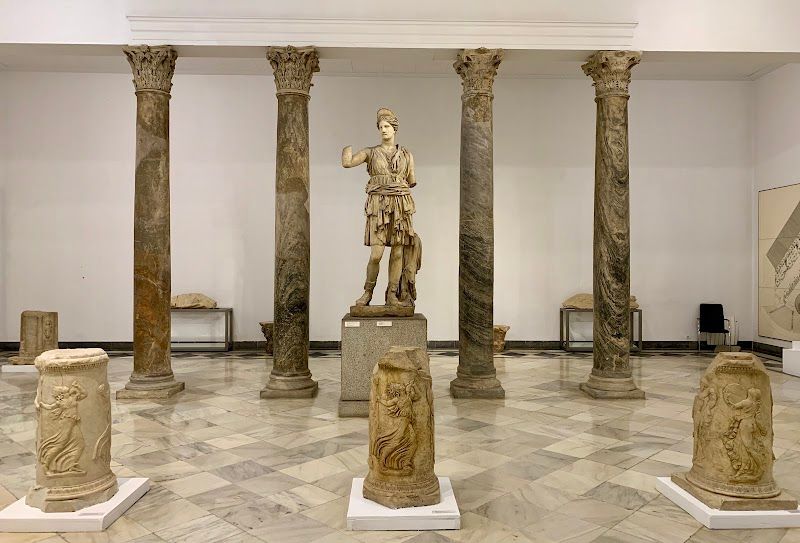
Museo Arqueológico de Sevilla
Sevilla's archaeological museum houses Spain's most important collection of Roman artifacts, anchored by treasures from nearby Italica where emperors Trajan and Hadrian were born. You'll see intricate mosaics, marble sculptures, and the show-stopping Carambolo Treasure: 21 pieces of Tartessian gold jewelry that predate the Romans by centuries. The collection spans 3,000 years, from Iberian stone carvings through Islamic ceramics, all displayed in a beautiful 1929 pavilion. The experience flows chronologically across two floors, starting with prehistoric flint tools and ending with Moorish pottery. The Roman galleries steal the show: life-sized marble statues, detailed floor mosaics from villa dining rooms, and bronze household objects that feel surprisingly modern. The building itself adds atmosphere with its Neo-Renaissance architecture and natural lighting that makes the marble sculptures glow. The basement treasure room feels like a bank vault, which fits the priceless gold work inside. At €1.50 for EU citizens (€3 for others), it's Sevilla's best museum value, but most guidebooks barely mention it. Skip the prehistoric section unless you're genuinely interested in stone axes. The Islamic collection feels thin compared to the Alcázar's displays. Focus your 90 minutes on the Roman galleries and that basement treasure room, which too many visitors miss entirely because the signage is poor.
Mercado del Arenal
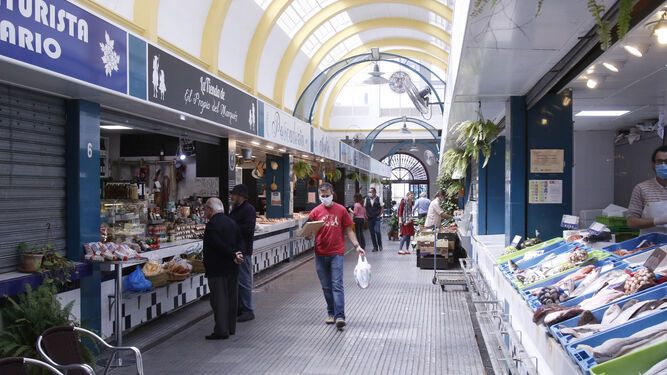
Mercado del Arenal sits in a 19th century iron and glass pavilion that once served Seville's shipbuilding district. You'll find two distinct worlds here: authentic produce vendors selling to neighborhood families on one side, and touristy tapas counters on the other. The fish section displays glistening pescado caught along the Andalusian coast, while vegetable stalls overflow with tomatoes, peppers, and oranges that locals actually buy for their kitchens. The morning crowd consists of Spanish housewives scrutinizing melons and fishmongers shouting prices in rapid Andalusian. By 1pm, the atmosphere shifts as office workers and tourists crowd around the prepared food stalls for lunch. You can watch vendors slice jamón ibérico paper thin, grill sardines over charcoal, and ladle gazpacho from enormous clay pots. The acoustics amplify every conversation, creating a symphony of Spanish chatter and clinking glasses. Most guidebooks oversell this place. The restaurant side charges tourist prices (expect 8 to 12 EUR for basic tapas) and the quality doesn't match neighborhood bars five minutes away. Focus your time on the produce section where vendors still haggle and locals shop seriously. The fish counter at Bar Las Teresas does excellent grilled catches for 6 to 8 EUR, but avoid the overpriced jamón stalls that target cruise ship groups.
Sevilla Bike Tour
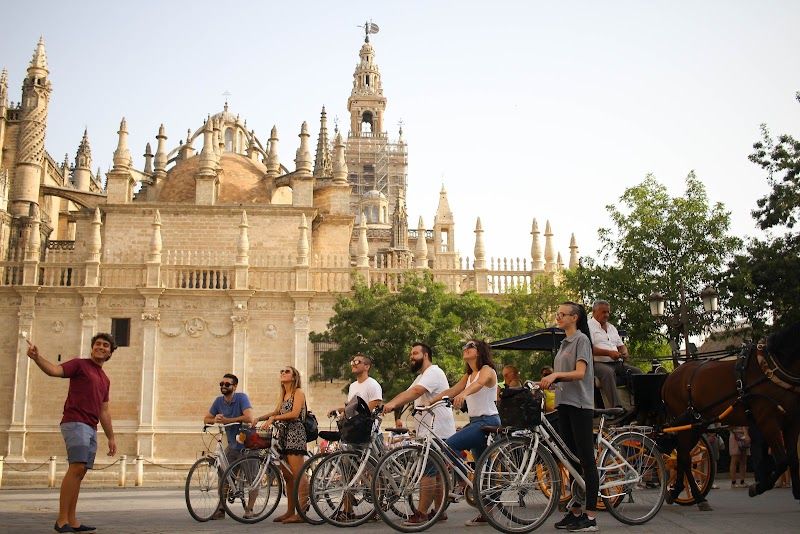
This guided bike tour covers Seville's most important sights across three hours, taking you through the old quarter, along the Guadalquivir River, and into the Triana neighborhood. You'll cycle past the Cathedral, Real Alcázar, Plaza de España, and Torre del Oro while your guide explains the history at each stop. The route uses Seville's excellent bike lanes and sticks to flat terrain, making it manageable for most fitness levels. The tour moves at a relaxed pace with frequent stops for photos and explanations. Your guide pauses at major monuments for 10-15 minutes, giving you time to ask questions and learn context you'd miss exploring alone. The riverside stretch through Parque de María Luisa feels like cycling through a green tunnel, while crossing into Triana gives you great views back toward the cathedral spires. Groups stay small (usually 8-12 people), so it never feels rushed. Most bike tours in Seville cover similar ground, but this one's guides actually know their history rather than just pointing at buildings. Tours cost around 25-30 EUR per person, which includes a decent hybrid bike and helmet. Skip the afternoon departures in summer: Seville hits 40°C regularly, and cycling becomes miserable after 2pm. The morning tours finish by noon, leaving your afternoon free for air-conditioned museums.
Glorieta de Bécquer
The Glorieta de Bécquer honors Seville's most beloved Romantic poet with an intimate marble monument that locals actually use. You'll find Gustavo Adolfo Bécquer's seated figure surrounded by three women representing different stages of love: illusion, realization, and memory. The sculpture sits in a small circular garden where century-old trees create natural shade over traditional Sevillian tile benches. It's genuinely peaceful here, unlike the tourist chaos elsewhere in Parque de María Luisa. The monument feels more like a neighborhood reading room than a typical tourist stop. Elderly Sevillanos bring books and newspapers, students sketch the sculptures, and couples sit quietly on the ceramic benches decorated with excerpts from Bécquer's poems. The filtered light through olive and orange trees changes throughout the day, creating different moods around the white marble figures. You'll hear birds more than traffic, and the atmosphere invites you to slow down rather than snap photos and leave. Most guidebooks oversell this as a major attraction when it's really a lovely five-minute pause during your Parque de María Luisa walk. Don't make a special trip just for this, but absolutely stop when you're heading to Plaza de España. The best approach is from the main park path near the Teatro Lope de Vega. Entry is free, and you won't need more than 15 minutes unless you're genuinely moved to sit and read poetry.
Castillo de San Jorge
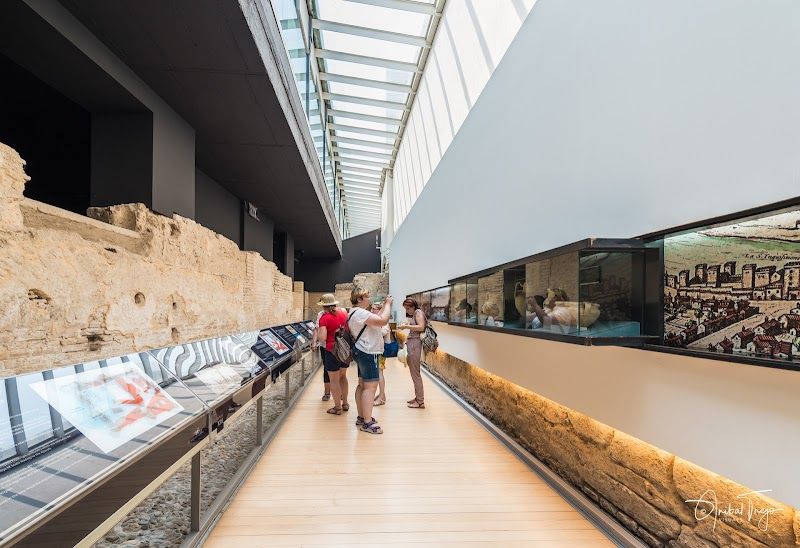
This underground archaeological site sits beneath Triana's market, revealing the actual foundations and prison cells of the Spanish Inquisition's castle that operated here from 1481 to 1785. You'll walk through excavated stone cells where prisoners were held, see original foundations, and explore exhibits that explain how the Inquisition functioned as both religious tribunal and political tool. The displays include artifacts found during excavation and detailed information about daily life in the prison. The visit feels surprisingly intimate and sobering. You descend into the actual excavated ruins, walking on glass platforms above the original floor levels while peering into cramped cells through protective barriers. The lighting is dim and atmospheric, and information panels in Spanish and English explain what each space was used for. The temperature stays cool year round, and the acoustics make everything feel hushed and reverent. Most travel guides oversell this as a major attraction, but it's really a specialized interest site that history buffs will appreciate more than casual visitors. The entire space is quite small and you can see everything meaningful in 30 minutes despite the suggested 45 minute duration. Entry is completely free, which makes it worth a quick stop if you're already exploring Triana, but don't cross the city specifically for this unless you're particularly interested in Inquisition history.
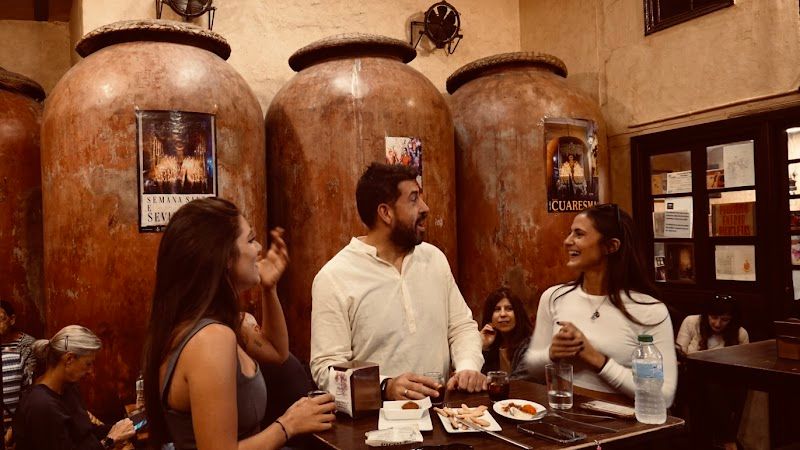
Seville Tapas Evening Tour
A guided tapas tour in Seville covers 3-4 bars in the Santa Cruz, Arenal, or Alameda neighbourhoods with a guide who knows the owners and can order in the Andalusian way: one tapa at a time, eaten standing at the bar, washed down with a glass of cold manzanilla or beer before moving on. The essential Seville tapas to try: salmorejo (the thick, chilled tomato and bread soup that is richer than gazpacho and topped with Iberian ham and hard-boiled egg, EUR 4-5), espinacas con garbanzos (spinach with chickpeas and cumin, the signature tapa of Seville, EUR 3-4), carrillada (braised pork cheek in wine sauce, EUR 5-6), croquetas de jamon (Iberian ham croquettes, EUR 3-4 for two). Tours run EUR 65-85 per person with 4-5 tastings and a glass of wine or beer at each stop. Evening tours (starting 7-8 PM) are best: this is when the bars fill up with locals and the atmosphere is authentic.
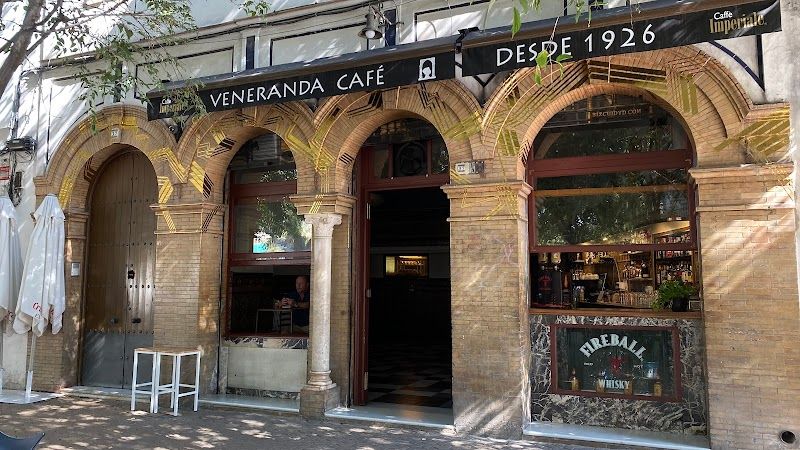
Habanilla Café
Corner bar on Alameda with a vast terrace that fills with university students and locals from 10 PM onward on weekends. The mojitos come in fishbowl-sized glasses for EUR 8, and the DJ plays Latin and reggaeton after midnight. Standing room only by 1 AM on Fridays and Saturdays.
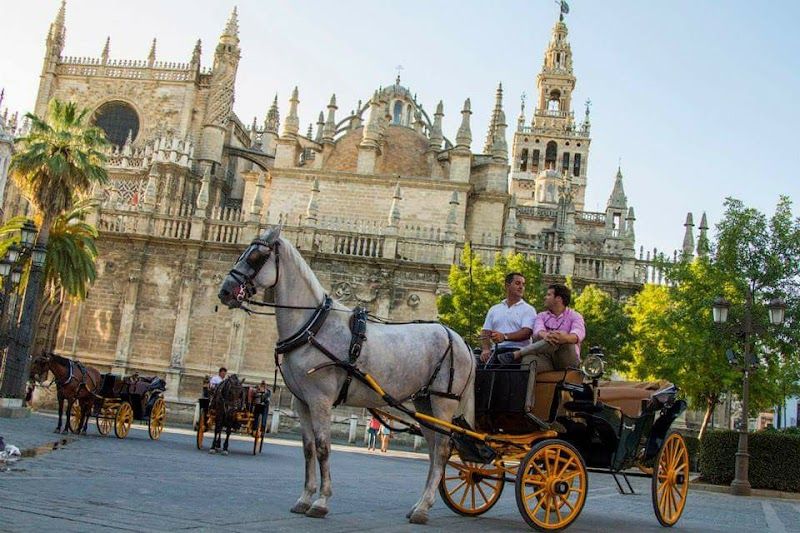
Paseos en Coche de Caballos Sevilla
Horse-drawn carriages clip-clop through Seville's old quarter, offering a genuinely slow-paced way to see the Cathedral, Alcázar, and Santa Cruz's maze of narrow streets. You'll sit on cushioned benches while Andalusian horses pull you past major monuments, through archways barely wide enough for the carriage, and along cobblestone streets where cars can't venture. Most drivers speak decent English and know their city history, pointing out details you'd miss walking. The 45-minute route covers about 2km but feels unhurried, perfect for photos and conversation. The experience feels wonderfully anachronistic as hooves echo off ancient walls and you sway gently through streets unchanged for centuries. Your driver will pause at key viewpoints like Plaza del Triunfo for photos, navigate tight corners in Santa Cruz where you can almost touch the building walls, and stop briefly at the Torre del Oro. The pace allows you to actually absorb the architecture instead of rushing past it. Other tourists will stare and take photos of you, which either adds to the charm or feels awkward depending on your personality. Most tours cost 45-50 EUR for up to four people, making it reasonable if you're sharing. The biggest downside is that locals genuinely see this as tourist theater, so you'll feel conspicuous. Many drivers default to a boring route along modern Avenida de la Constitución instead of maximizing time in atmospheric Santa Cruz. The carriages aren't comfortable for tall people, and summer heat makes the experience sweaty rather than romantic. Skip it if you're short on time, the same route takes 20 minutes walking.