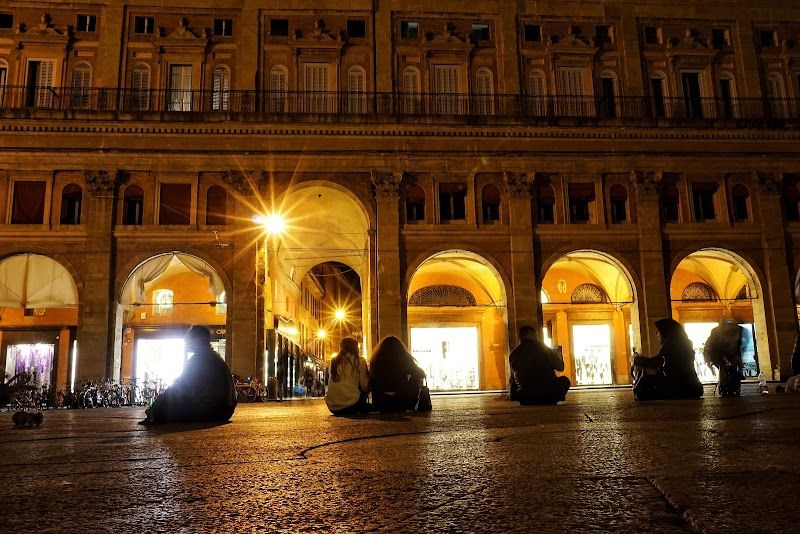
2-3 Days in Bologna: First-Timer's Itinerary
The Two Towers, Quadrilatero market, tortellini in brodo, pasta-making, and San Luca
How to spend 2-3 days in Bologna: the Asinelli Tower, the Quadrilatero food market, a proper tortellini in brodo lunch, the Archiginnasio Anatomical Theatre, and the San Luca portico walk.
2-3 Days in Bologna: First-Timer's Itinerary
Bologna hits you with porticos first, then the smell of ragu simmering in kitchen windows, then the realization that this is what an Italian university town actually feels like when it's not performing for tourists. You'll climb medieval towers for views that explain why they call this the red city, learn to roll pasta dough until your arms ache, and discover that the best mortadella sandwich of your life costs four euros in a market stall. Three days gives you enough time to eat properly, walk the endless covered walkways, and understand why Bolognese people are so smugly satisfied with their city.
Centro storico and the towers
Your first day is about getting your bearings in Europe's best-preserved medieval city center. You'll crane your neck at leaning towers, climb 498 steps for the money shot view, and eat standing in food markets that have been feeding Bologna for 800 years. The evening ends with Lambrusco on Via del Pratello, where students and locals spill out of bars onto cobblestones.
- Climb the Asinelli Tower
- Explore Quadrilatero food markets
- See the Anatomical Theatre
Morning: The Heart of Medieval Bologna
Start at Piazza Maggiore before 9 AM when the morning light hits the mismatched buildings and you can actually hear your footsteps echo off the stones. The square looks like a movie set because it basically is one: San Petronio's facade is half finished marble, half raw brick, stopped mid-construction in 1514 when the Pope decided Bologna was getting too ambitious. Walk inside the basilica for free and look for the brass meridian line that runs across the floor. It's a 17th-century solar calendar that still works, and at noon a beam of sunlight hits exactly where it should. The story goes that this was Europe's largest sundial, built to prove the church was more scientific than anyone gave it credit for.
The Two Towers: Bologna's Leaning Truth
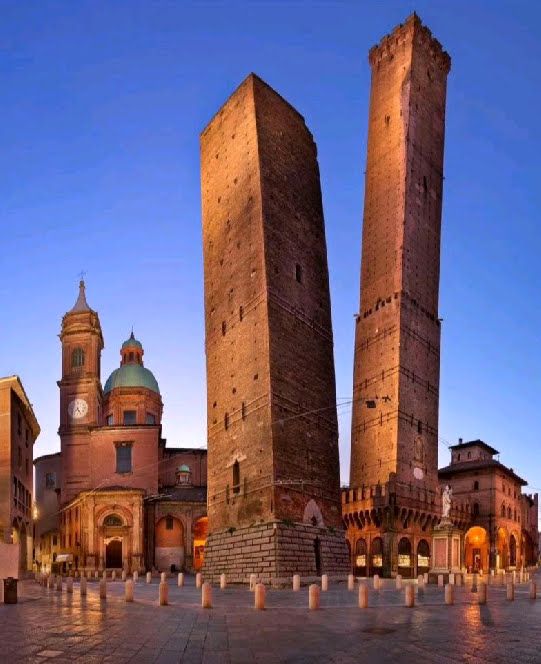
Walk five minutes east on Via Rizzoli to Piazza di Porta Ravegnana, where Bologna's famous towers lean toward each other like drunk friends. The taller Asinelli Tower costs EUR 5 to climb and it's worth every step of the 498-stair workout. Go early because the narrow spiral staircase turns into a sweaty traffic jam by 11 AM, and summer heat makes the climb genuinely miserable. At the top, the view explains everything: red tile roofs stretching to the Apennines, porticos running like covered highways through the streets, and the logical grid that makes Bologna easy to navigate. The shorter Garisenda Tower is closed because it's leaning too far and might actually fall over, which is somehow very Bologna.
Lunch in the Quadrilatero: Eating Like a Local
The Quadrilatero food market streets are where Bologna shops for dinner every day, and you should eat here instead of sitting in some tourist restaurant. Walk through Via Pescherie Vecchie and Via degli Orefici, where the smell of aged cheese and cured meat hits you from every doorway. Stop at any salumeria counter and taste the Parmigiano Reggiano: they'll cut you a wedge and explain the difference between 24-month and 36-month aging while you chew. Buy a mortadella roll from one of the sandwich counters for EUR 3-4, eat it standing at a high table, and wash it down with a small beer. This is lunch in Bologna: fast, cheap, and better than anything you'll get sitting down for EUR 20.
Afternoon: The Archiginnasio's Disturbing Beauty
Walk to the Archiginnasio, Bologna's original university building, where the courtyard is free and covered in student coat of arms from five centuries of graduates. Pay EUR 3 to see the Anatomical Theatre, a wooden amphitheater where medical students watched dissections in the 1600s. The carved wooden figures above the professor's chair are called the Spellati, skinless humans holding up the ceiling, and they're the most unsettling thing you'll see in Bologna. The room survived Allied bombing in 1944 but was rebuilt piece by piece, and somehow that makes it more impressive than if it were original.
Evening: Aperitivo on Via del Pratello
End your day on Via del Pratello, Bologna's best street for drinks and the closest thing the city has to nightlife. Pick any bar, order a glass of Lambrusco for EUR 4-6, and eat from the free spread of focaccia, olives, and cheese that appears at 6 PM. This is aperitivo done right: cheap wine, free food, and conversation that spills onto the cobblestones. The street fills up with university students, local workers, and the occasional tourist who figured out where Bologna actually drinks.
Dinner: Osteria del Sole
For dinner, go to Osteria del Sole on Vicolo Ranocchi, Bologna's strangest restaurant. You bring your own food from the Quadrilatero markets and they provide wine, tables, and atmosphere in a room that hasn't changed since 1465. Buy cheese, salumi, and bread from nearby shops, carry it in, and order wine by the glass. It sounds like a gimmick but it works: EUR 15 total for a meal and wine, surrounded by locals doing exactly the same thing.
Food deep dive
Day two is about understanding why Bologna calls itself Italy's food capital. You'll roll pasta dough until your technique resembles something an Italian grandmother might not completely hate, then eat the real thing in a trattoria where they've been making tortellini the same way for decades. The afternoon slows down with medieval churches and Renaissance art, before ending in the student quarter where bookshops stay open late and bars serve wine in plastic cups.
- Learn to make tortellini by hand
- Eat proper tortellini in brodo
- Explore university quarter
Morning: Pasta-Making Reality Check
Book a pasta-making class for EUR 50-80 at places like Sfoglia Rina or La Vecchia Scuola Bolognese, and prepare for a humbling experience. Making tortellini by hand is genuinely difficult: the pasta dough needs to be rolled thin enough to read through, the filling ratio has to be exact, and the folding technique takes years to master. You'll produce lumpy, uneven tortellini that look nothing like the perfect parcels your instructor makes, but you'll understand why good pasta costs what it does and why machines can't replicate hand-rolled sfoglia. The classes include lunch with your wonky creations, which somehow still taste better than anything from a box.
Alternative Morning: Mercato delle Erbe
If you skip the pasta class, go to Mercato delle Erbe at 7 AM when it opens and Bologna is buying groceries. This covered market is more local and less touristy than the Quadrilatero: old women arguing over tomato quality, vendors who've held the same stalls for 30 years, and prices that make sense for people who live here. Buy espresso and a cornetto from the bar in the center, watch the morning routine, and notice how seriously Bolognese people take their ingredient shopping. It's grocery theater, and you're the only tourist in the audience.
Lunch: Real Tortellini in Brodo
For lunch, eat tortellini in brodo at Trattoria Anna Maria on Via delle Belle Arti, where they make pasta exactly like your nonna would if your nonna happened to be Bolognese. The tortellini float in clear, golden broth that tastes like it's been simmering since morning, and the pasta has that al dente bite you can't get from dried versions. A bowl costs EUR 10-14, a full meal with wine runs EUR 25-35, and the dining room looks like it hasn't been redecorated since 1970. This is exactly what you want: no atmosphere, no innovation, just perfect pasta made the way it's supposed to be made.
Afternoon: Santo Stefano Complex
Walk to the Santo Stefano complex, seven interconnected churches that locals call "Le Sette Chiese" even though only four are still functioning. Pay EUR 5 to wander through medieval spaces that connect like a religious maze: Romanesque apses, Byzantine mosaics, and a courtyard where Pontius Pilate supposedly washed his hands. It's touristy but genuinely atmospheric, and Piazza Santo Stefano outside is one of Bologna's prettiest squares when the afternoon light hits the triangular church facades.
Art Break: Pinacoteca Nazionale
Spend an hour at the Pinacoteca Nazionale for EUR 6 to see Bologna's best art collection in a palazzo that feels more like a private home than a museum. The Raphael Saint Cecilia altarpiece is the star, painted when he was 30 and showing off everything he knew about color and composition. Giotto's polyptych is older and more severe, from when Italian painting was still figuring out how to make flat figures look human. The museum is small enough to see properly in 45 minutes, unlike those exhausting cathedral-sized galleries that leave you numb to everything.
Evening: Via Zamboni Student Quarter
Spend your evening walking Via Zamboni, the university street where Bologna's student life happens. Bookshops stay open late, bars serve wine in plastic cups for EUR 3, and the energy feels more like a college town than a tourist destination. Duck into Libreria Coop Zanichelli for travel books and Italian literature, grab an aperitivo at one of the narrow bars, and watch students debate over cheap wine. This is Bologna's intellectual heart, and it feels genuine because it is: the university has been here since 1088, and the neighborhood exists to serve students, not tourists.
Dinner: Trattoria di Via Serra
For dinner, try Trattoria di Via Serra, a family-run place where the menu changes based on what's good at the market and the portions are sized for people who work with their hands. Order the tagliatelle al ragu (the real Bolognese sauce, which takes nothing like the stuff you get abroad), the cotoletta alla bolognese (veal cutlet with prosciutto and Parmigiano), and a bottle of local Sangiovese. Dinner for two with wine costs around EUR 50, the atmosphere is zero-fuss trattoria, and you'll leave understanding why Bolognese people are so protective of their food traditions.
San Luca pilgrimage or day trips
Your third day is about getting outside Bologna proper, either walking the world's longest portico up to the San Luca sanctuary for views over the Po Valley, or taking a short train ride to Modena for balsamic vinegar tastings or Parma for Parmigiano dairy visits. Both options give you a sense of Emilia-Romagna beyond the city and a better understanding of why this region takes food so seriously.
- Walk the 666-arch portico to San Luca
- Day trip options to Modena or Parma
- Balsamic vinegar and Parmigiano experiences
Option A: The San Luca Portico Walk
Take bus 20 to Porta Saragozza and walk the portico up to San Luca sanctuary, a covered walkway with exactly 666 arches that climbs steadily uphill for 3.8 kilometers. The walk takes 45-60 minutes depending on your pace and fitness level, and it's genuinely meditative: covered walkway protecting you from weather, numbered arches marking your progress, and views of Bologna spreading out below as you climb higher. The sanctuary at the top is free to enter and houses a Byzantine icon supposedly painted by Saint Luke himself. More importantly, the terrace gives you views across the Po Valley that explain Bologna's strategic importance: flat agricultural land stretching to the horizon, protected by Apennine foothills.
Option B: Day Trip to Modena
Take the train to Modena for EUR 3.50 and 25 minutes of countryside views to visit the birthplace of balsamic vinegar and Ferrari. The Ferrari Museum costs EUR 17 and showcases cars you'll never afford alongside the history of Italy's most famous automotive export. More interesting are the traditional balsamic vinegar producers like Acetaia di Giorgio, where 12-year-aged vinegar costs EUR 15 for a small bottle and tastes nothing like the grocery store stuff. Book ahead for acetaia visits, bring cash, and prepare to learn why real balsamic vinegar is so expensive: it's aged in wooden barrels, concentrated by evaporation, and regulated like wine.
Option C: Day Trip to Parma
Train to Parma takes 55 minutes and costs EUR 6 each way, putting you in the heart of Parmigiano Reggiano country. Visit a working dairy like Caseificio Sociale della Valtidone to see how real Parmesan is made: massive copper vats, wheels of cheese aging on wooden shelves, and the specific bacteria cultures that give Parmigiano its crystalline texture. Tours cost around EUR 10 and include tastings of different ages. The city center has Correggio frescoes in the cathedral dome and a pink marble baptistery, but honestly, you're here for the cheese. Buy a wedge of 24-month Parmigiano directly from the producer for half what you'd pay at home.
Practical Tips for Bologna
Buy a Bologna Welcome Card for EUR 15: includes public transport, museum discounts, and free wifi passwords
Restaurants close between 2:30-7:30 PM, so plan lunch accordingly or buy supplies from markets
Book pasta-making classes 2-3 days ahead, especially on weekends
Bring cash: many small food vendors and traditional trattorias don't accept cards
The train station is 20 minutes walk from the center, or take the ATC bus for EUR 1.30
Aperitivo starts at 6 PM sharp: arrive earlier and you'll be drinking alone
Ready to Visit Bologna?
Get a personalized itinerary tailored to your travel style and interests.
Plan Your Bologna TripMore Bologna Guides
First Time in Bologna: Food Rules and What You Need to Know
Bologna's food rules: tortellini is never with cream, tagliatelle al ragù is not spaghetti bolognese, mortadella is not baloney, and Lambrusco is not the cheap fizz you exported.
8 min
First Time in Bologna: What You Need to Know
Bologna in plain terms: what it is, why the food matters, what the three nicknames mean, how to navigate the porticoes, and what not to do on your first visit.
6 min