2-3 Days in Copenhagen: First-Timer's Itinerary
Nyhavn at dusk, cycling Vesterbro, Christiania at your own pace, and a Tivoli evening
How to spend 2-3 days in Copenhagen: Rundetarn in the morning before crowds, smorrebrod for lunch, cycling the city, Christiania without the tourist pressure, and Tivoli at dusk when the lights come on.
First-Timer's Copenhagen: The Real Story
Copenhagen isn't the fairy tale you've seen on Instagram. It's expensive, the weather is unpredictable, and half the tourists spend their time taking photos instead of actually experiencing anything. But if you know what you're doing, it's one of Europe's most livable cities, with better coffee than Paris and more interesting food than Amsterdam. This itinerary skips the cruise ship crowds and gets you to the places locals actually go. Three days is enough to understand why Danes consistently rank as the world's happiest people, even if you'll be significantly poorer by the end.
City Centre + Tivoli
Your first day tackles the tourist circuit, but we're doing it right. You'll climb Copenhagen's most unusual tower, drink cheap beer where everyone else pays restaurant prices, and end at Tivoli when the lights transform it from a daytime amusement park into something actually magical. This is Copenhagen's greatest hits, minus the mistakes.
- Rundetarn's spiral ramp
- Canal-side beer at Nyhavn
- Tivoli at twilight
Morning: The Round Tower and Royal Watching
Start at Rundetarn at exactly 10 AM when it opens (DKK 40). This 17th-century tower has no stairs, just a spiral ramp that winds up seven and a half times around the interior. Peter the Great supposedly rode his horse up here in 1716, which tells you how gentle the incline is. The views from the top show you old Copenhagen's red tile roofs and church spires without the modern blocks. From Rundetarn, walk east down Stroget (the pedestrian street that every guidebook mentions because it connects everything). Don't buy anything here unless you enjoy paying double for things you can get anywhere else. Instead, use it as a direct route to Kongens Nytorv, then turn toward the canal.
Nyhavn: Skip the Restaurants, Buy the Beer
Nyhavn is touristy because it's genuinely beautiful, not because someone decided it should be on postcards. The 17th-century townhouses in yellow, red, and blue line a canal filled with wooden sailing ships. Here's what every guidebook won't tell you: buy beer from the 7-Eleven on the corner (DKK 15-20) and sit on the canal steps with everyone else doing the same thing. The restaurants here charge DKK 200+ for mediocre fish and chips because of the view. The view is free if you're sitting on the stone steps with a Tuborg, and you're doing exactly what half the locals do on sunny afternoons.
Amalienborg: Free Royal Theatre
Walk 5 minutes north to Amalienborg Palace for the changing of the guard at noon. This isn't Buckingham Palace pageantry, it's more understated, but the Queen actually lives here (when she's in town). Position yourself in the octagonal courtyard by 11:55 AM and watch the guards in their bearskin hats march in formation. The whole ceremony takes 20 minutes and costs nothing. The palace museum exists but skip it unless you're fascinated by 18th-century furniture. The exterior and the ceremony are the real draw.
Lunch: Torvehallerne Market
Walk 10 minutes northwest to Torvehallerne, Copenhagen's glass-covered food market. This place gets crowded by 1 PM, but it's still the best introduction to Danish food culture. Go directly to Hallernes Smorrebrod for open sandwiches (DKK 80-120 each). Order the roast beef with horseradish and crispy onions on dense rye bread, or the shrimp with dill mayonnaise. These aren't snacks, they're proper meals that will fill you up until dinner. After eating, get coffee from Coffee Collective (DKK 35-45). They roast their own beans and the baristas know what they're doing. The market also has excellent cheese, chocolate, and produce if you want to assemble a picnic for later.
Afternoon: Bikes or Shops
You have two options for the afternoon. If you want to shop, Stroget has every international brand you've seen everywhere else, plus some Scandinavian design stores with beautiful things at eye-watering prices. If you'd rather understand how Copenhageners actually move around their city, rent a bike (DKK 30-50/day from shops near Torvehallerne). Copenhagen is flat and has more bike lanes than car lanes. Cycle through the city center, around the lakes, or north toward the parks. You'll immediately understand why 40% of Copenhageners bike to work every day. The city makes more sense from a bike seat.
Evening: Tivoli After Dark
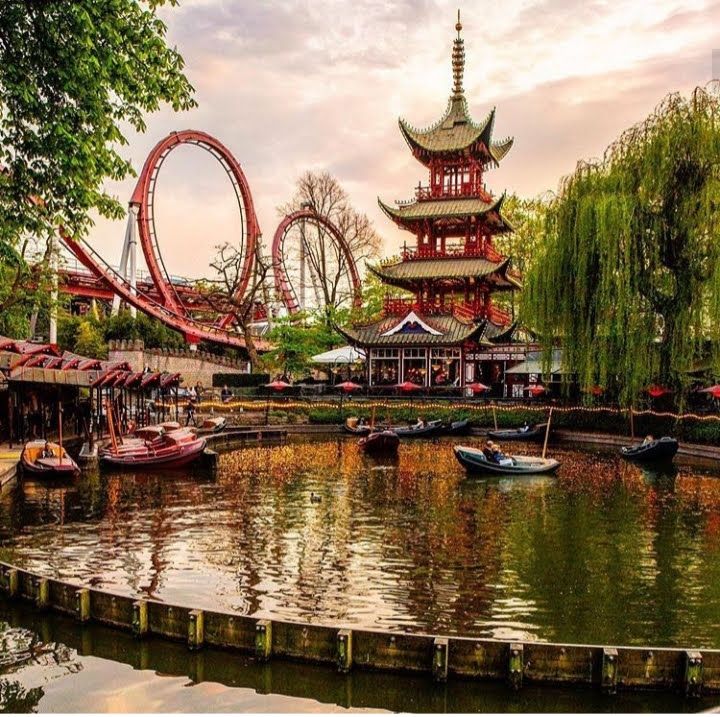
Arrive at Tivoli Gardens at 5 or 6 PM (DKK 155 admission). Yes, it's expensive. Yes, it's touristy. It's also genuinely magical after dark when thousands of lights illuminate the gardens, concert halls, and restaurants. Tivoli opened in 1843 and inspired Walt Disney, but it's not Disneyland. It's more intimate, more elegant, and decidedly more adult in the evenings. The rides cost extra (DKK 35-60 each, or DKK 175 for a multi-ride pass), but you're really here for the atmosphere. Walk the gardens, listen to live music at the outdoor stages, and eat dinner at one of the restaurants. Formel B inside Tivoli serves modern Danish cuisine (DKK 400-500 per person), while the beer garden offers simpler food and local brews. Stay until closing to see the gardens fully illuminated.
Christianshavn + Vesterbro
Today you'll climb Copenhagen's most dramatic tower, walk through Europe's most famous commune, and end up in the neighborhood where locals actually go out. This day shows you Copenhagen's alternative side and its modern food scene, both of which matter more to understanding the city than any royal palace.
- External spire climb at Church of Our Saviour
- Walking through Freetown Christiania
- Craft beer in the Meatpacking District
Morning: The Best View in Copenhagen
Take the metro to Christianshavn and walk to the Church of Our Saviour (Vor Frelsers Kirke). Arrive before 10 AM when it opens (DKK 65) to beat the crowds, because this climb is not for everyone. The internal spiral staircase takes you up through the church tower, but the real adventure is the external staircase that winds around the outside of the golden spire. The final 150 steps are exposed to wind and weather, with only a handrail between you and a very long drop. If you're afraid of heights, skip this. If you're not, the 360-degree view of Copenhagen from 90 meters up is the best paid view in the city. You can see across the Oresund to Sweden on clear days.
Freetown Christiania: Europe's Most Famous Commune
Walk 5 minutes south into Christiania through the entrance on Prinsessegade. This 34-hectare area has been a self-governing commune since 1971, when hippies occupied abandoned military barracks. Today it's part tourist attraction, part ongoing social experiment. Walk straight through Pusher Street (don't photograph anything here, the signs are serious about this) and continue to the quieter back sections around the lake. The ramshackle houses, art installations, and alternative architecture tell the story of 50 years of communal living. Some of it looks romantic, some looks run-down, all of it is genuinely different from anywhere else in Europe. The residents tolerate tourists but this is still someone's neighborhood, so behave accordingly.
Lunch in Christianshavn
For lunch, either stay in Christianshavn proper or eat at one of Christiania's cafes. Morgenstedet inside Christiania serves vegetarian food in a communal setting (DKK 80-120 for generous portions). The atmosphere is exactly what you'd expect from a commune cafe, complete with long wooden tables and a no-hurry attitude. If you prefer something more conventional, walk back to Christianshavn's main street where several good lunch spots serve modern Danish food at reasonable prices. Either way, you're eating in Copenhagen's most alternative neighborhood.
Afternoon: Into Vesterbro
Cycle or walk west to Vesterbro, the neighborhood that transformed from red-light district to the city's coolest area over the past 20 years. Your target is Kodbyen, the old Meatpacking District, now home to Copenhagen's best restaurants, bars, and nightlife. This area comes alive in the evening, but spend the afternoon exploring the converted warehouses and industrial buildings that house galleries, design studios, and cafes. The transformation is remarkable, from slaughterhouses to Michelin-starred restaurants in two decades.
Evening: Mikkeller and Dinner in Kodbyen
Start your evening at Mikkeller Bar (DKK 60-90 for 330ml glasses). This brewery put Copenhagen on the international craft beer map, and their original bar has 20 taps of their own beers plus guest selections. Ask the staff for recommendations, they know their products and will steer you toward styles you'll like. The bar fills up with locals and beer tourists, creating the kind of atmosphere where conversations start easily. For dinner, book ahead at one of Kodbyen's restaurants. Kul serves modern Nordic cuisine in a former slaughterhouse (DKK 300-400 per person), while Pate Pate offers French-inspired dishes (DKK 200-300 per person). Both are significantly better than the tourist restaurants in the city center.
Norrebro + Frederiksberg OR Louisiana
Your final day offers two very different experiences. Stay in the city to explore Copenhagen's most diverse neighborhood and its most elegant park, or escape to the coast for one of Europe's finest art museums. Both options show you sides of Danish culture that most tourists never see.
- Porridge breakfast on Jagersborggade
- Cemetery picnics with locals
- World-class modern art by the sea
Option A: Norrebro Morning
Take the metro to Norrebro, Copenhagen's most diverse and creative neighborhood. Start on Jagersborggade at 9 AM with breakfast at Groed (DKK 70-90). Yes, you're paying almost $15 for porridge, but this isn't instant oats. They serve multiple types of porridge with seasonal toppings, from savory versions with herbs and vegetables to sweet bowls with berries and nuts. It's Danish comfort food elevated to an art form. After breakfast, visit Coffee Collective's roastery to see where some of Copenhagen's best coffee comes from, then browse the ceramics shops that open at 11 AM. The prices are high but the quality is exceptional.
Assistens Cemetery: Where Locals Picnic
Walk to Assistens Cemetery (free admission), where Hans Christian Andersen is buried in Section A along with other Danish cultural figures. But you're not here for a morbid tour. This cemetery doubles as Norrebro's main park, where locals picnic, sunbathe, and walk their dogs among the graves. It sounds strange until you see families having birthday parties next to 19th-century headstones, then it makes perfect sense. The Danes have a practical relationship with death that extends to using their cemeteries as green space.
Afternoon in Frederiksberg
Take the metro to Frederiksberg Gardens (free), Copenhagen's most elegant park surrounding Frederiksberg Palace. The landscaped gardens, canals, and Chinese pavilion feel more formal than anywhere else you've visited. If the weather cooperates, rent a canal boat (DKK 80-100/hour) and paddle around the waterways. This is where upper-middle-class Copenhagen families spend Sunday afternoons, and the atmosphere is noticeably more refined than the grittier neighborhoods you've been exploring.
Option B: Louisiana Museum
Instead of staying in the city, take the train north to Humlebaek for Louisiana Museum of Modern Art (35 minutes from Copenhagen H, DKK 90-120 return train ticket, DKK 145 museum entry). This is one of Europe's best modern art museums, built into coastal cliffs overlooking the Oresund strait toward Sweden. The permanent collection includes major works by Picasso, Warhol, and Giacometti, but the real magic is the sculpture garden that extends down to the water. The building itself, designed in 1958, integrates perfectly with the landscape. You can see the museum and return to Copenhagen in half a day, or spend the entire afternoon here if the art and setting capture you.
Final Day Logistics
Both options work well in any weather, though Frederiksberg Gardens are better on sunny days
If choosing Louisiana, buy train tickets at Copenhagen H station, not online
Norrebro has the city's best international restaurants for dinner
Save energy for your last night, Copenhagen's bar scene starts late and goes later
Ready to Visit Copenhagen?
Get a personalized itinerary tailored to your travel style and interests.
Plan Your Copenhagen TripMore Copenhagen Guides
First Time in Copenhagen: What You Need to Know
Everything before your first Copenhagen visit: managing the cost, renting a bike, the Copenhagen Card, when to visit, and why Nyhavn restaurants are a trap.
6 min
Where to Eat in Copenhagen: Smorrebrod, Hot Dogs & New Nordic
Copenhagen food without the Noma budget: smorrebrod at a proper lunch restaurant, a polsevogn hot dog, Torvehallerne market, Vesterbro Meatpacking District, and Norrebro for the cheapest meals in the city.
7 min