
3 Days in Lisbon: A First-Timer's Itinerary
Three days is the sweet spot for Lisbon. Enough to climb the hills, eat the pasteis, find the miradouros that make the sore calves worthwhile, and still have time for a ginjinha at Rossio.
3 Days in Lisbon: A First-Timer's Itinerary
Look, three days isn't enough for Lisbon, but it's enough to fall in love with the place. You'll cover the essential neighborhoods, eat the pasteis that matter, and drink bicas where locals actually go. This itinerary assumes you can handle hills (there's no avoiding them) and that you're here to experience the city, not just photograph it. I've built in time to get properly lost in Alfama and to sit in proper tascas where the wine comes in unmarked bottles. Skip the hop-on-hop-off buses, trust your feet, and always order the imperial.
Alfama, Baixa & the Historic Core
Your first day is about understanding Lisbon's geography and rhythm. You'll start high in Alfama when the morning light hits those azulejo tiles just right, then work your way down through the oldest neighborhood before crossing into the rebuilt Baixa. The contrast between medieval tangles and Pombaline grid streets will make sense of this city's personality. End with a cold imperial as the sun sets over the Tagus.
- Sunrise at Miradouro de Santa Luzia
- Getting lost in Alfama's labyrinth
- Pastries and people-watching at Time Out Market
- Sunset imperial at Miradouro de São Pedro de Alcântara
Get to Miradouro de Santa Luzia before 9 AM. The viewpoint is free, the morning light on those blue and white tile facades is perfect, and you'll have the terrace to yourself. The east-facing position means golden hour happens early here, and by 10 AM you're competing with tour groups for photo space.
From the miradouro, walk downhill into Alfama. This is important: always go downhill in this neighborhood. The Moorish street plan makes no logical sense, getting lost is entirely the point, and your knees will thank you later. The narrow passages smell like grilled sardines and old stone, laundry hangs from wrought-iron balconies, and fado drifts from doorways even in the morning.
Stop at the Sé Cathedral for 15 minutes. It's free, refreshingly cool inside, and the mix of Romanesque and Gothic architecture tells Lisbon's story in stone. The treasury costs extra and isn't worth it unless you're obsessed with medieval religious artifacts.
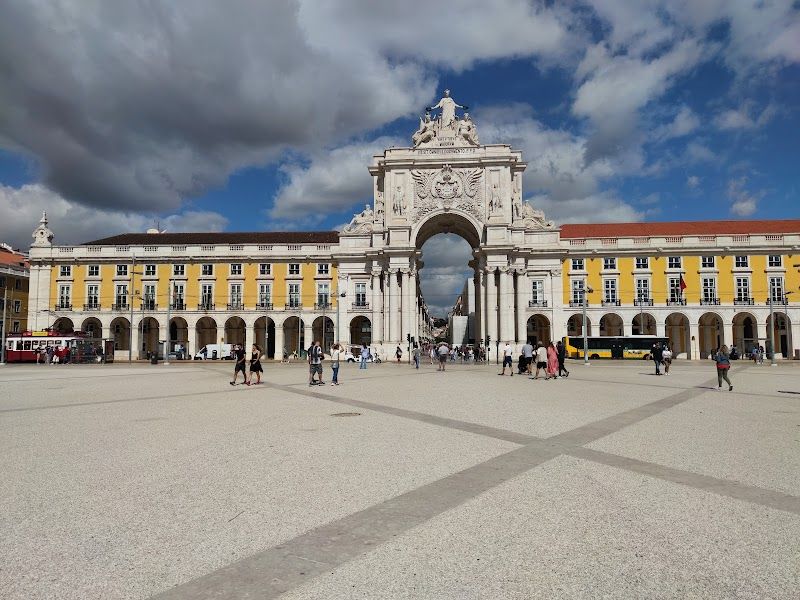
Continue downhill to Praça do Comércio, Lisbon's grand riverside square. The scale hits you immediately after Alfama's intimacy. Walk up pedestrianized Rua Augusta for lunch and people-watching. The arch at the end costs EUR 3 for rooftop views, which are decent but not essential on day one.
For a late lunch, head to Time Out Market, but only on weekdays. Weekend queues stretch 30 minutes for mediocre food court experiences. Weekdays, you can sample everything from bifana sandwiches (EUR 3) to octopus salad (EUR 8) without the crowds. The Su'mo counter does excellent Japanese-Portuguese fusion, try the tuna tataki with ponzu for EUR 12.
Walk or take Elevador da Glória up to Miradouro de São Pedro de Alcântara for sunset. The kiosk sells ice-cold imperials for EUR 2, the view covers the entire city center, and this is where locals come for evening drinks. You'll hear more Portuguese than English, which is always a good sign.
End your day at Taberna Ideal in Bairro Alto. The lamb stew with chickpeas (EUR 11) comes with rough red wine in an unmarked bottle, the tiles are authentically grimy, and the owner's been serving the same five dishes for 30 years. It's exactly the kind of tasca you came to Lisbon to find.
Belém, Pastéis & LX Factory
Day two takes you west along the Tagus to Belém, where Portugal's maritime empire began and where the country's most famous pastries are still made the original way. You'll see some of Lisbon's most important monuments, eat pastéis where they were invented, and end in a converted industrial space that represents the city's creative present. The tram ride alone is worth it.
- Jerónimos Monastery's Manueline stonework
- Proper pastéis de Belém with table service
- MAAT's riverside architecture
- Ler Devagar bookshop's flying bicycle
Take tram 15E from Praça do Comércio to Belém. Buy a Zapping card for EUR 1.50 rides instead of EUR 3 tourist tickets. The 20-minute journey follows the river, and you'll see Lisbon's port, the 25 de Abril bridge, and Cristo Rei statue across the water.
Start at Jerónimos Monastery. The cloisters cost EUR 10 but are free on Sunday mornings before 2 PM. The Manueline stonework is genuinely extraordinary: maritime motifs carved into limestone with obsessive detail. Vasco da Gama is buried here, and the scale of the place reflects just how much gold was flowing in from Brazil and India in the 16th century.
Now for the pastéis de Belém, and here's what nobody tells you: skip the takeaway queue entirely. Walk past the crowds and into the seated restaurant in the back rooms. Same exact pastéis, same EUR 1.30 price, table service, and zero wait. Order at least three, ask for extra cinnamon and powdered sugar, and get a bica. The custard is still warm, the pastry shatters when you bite it, and the slightly burned tops are the signature of the original recipe.
The Torre de Belém looks much better from outside than inside. The exterior is perfect for photos, but the interior is cramped, hot, and doesn't add much to the experience. Save your EUR 6 and admire it from the riverside gardens.
MAATT museum is worth the EUR 9 entry fee for Amanda Levete's building alone. The copper-clad curves follow the river's edge, and the rooftop walkway gives you different perspectives on Belém and the Tagus. The contemporary art inside is hit-or-miss, but the architecture justifies the price.
End your day at LX Factory under the 25 de Abril bridge. This former industrial complex now houses studios, restaurants, and shops. Ler Devagar bookshop is the highlight: floor-to-ceiling shelves, a flying bicycle suspended from the ceiling, and books in multiple languages. It's touristy now, but genuinely worth seeing.
Dinner at Rio Maravilha inside LX Factory. The rooftop terrace overlooks the river, and the octopus with sweet potato (EUR 16) is perfectly tender. The space feels like Brooklyn circa 2010, but the Portuguese ingredients keep it grounded. Get a bottle of Vinho Verde for EUR 18 to share.
Graça, Mouraria & the Neighbourhood Trail
Your final day explores the neighborhoods tourists skip but locals live in. Graça offers the best views without the crowds, Mouraria serves the city's most interesting immigrant cuisine, and Príncipe Real shows off Lisbon's contemporary style. You'll end where the city's nightlife actually happens, drinking with people who live here year-round.
- Local-preferred views from Miradouro da Graça
- Multicultural Mouraria lunch
- Empty 360-degree views from National Pantheon
- Bairro Alto's Thursday night scene
Start at Miradouro da Graça, the viewpoint locals actually prefer. It's less famous than Senhora do Monte, which means better photos and space to breathe. The panorama takes in the castle, the river, and the red tile roofs that define Lisbon's skyline. The small café serves decent bicas for EUR 1, and you'll hear neighbors gossiping in Portuguese instead of tour guides explaining the obvious.
Walk downhill through Mouraria, Lisbon's most multicultural neighborhood. This is where immigrants from Bangladesh, India, and Africa have opened restaurants that serve the city's most interesting food. Try Restaurante Bangladeshi on Rua do Benformoso for chicken biryani and dal that costs EUR 6 total. It's not fusion or contemporary, just excellent home-style cooking that reflects modern Lisbon better than any tourist restaurant.
The National Pantheon's rooftop costs EUR 4 and offers 360-degree views that are always empty. Most people photograph the building's dome from outside and move on, missing the best panorama in central Lisbon. The elevator saves your legs, and you can see all the way to Cascais on clear days.
Spend your afternoon in Príncipe Real. The garden in the center of the square has a massive umbrella pine tree and outdoor café tables perfect for afternoon bicas. Embaixada, the former embassy turned shopping space, houses Portuguese designers and artisan producers. It's upscale but not pretentious, and you'll find ceramics, textiles, and jewelry you can't get anywhere else.
For dinner, head to Bairro Alto but avoid the obvious tourist traps on Rua do Norte. Try Adega Machado for cozido à portuguesa (EUR 14), the Portuguese boiled dinner with five different meats, vegetables, and beans. It's heavy, old-fashioned, and exactly what you want after three days of walking hills.
Bairro Alto comes alive after 10 PM. Bars are tiny, imperials cost EUR 1.50-2.50, cocktails run EUR 5-7, and Thursday is when locals actually go out. Try Pavilhão Chinês for cocktails surrounded by bizarre collections of toys and artifacts, or stick to simple tascas for wine and conversation. The neighborhood gets loud, crowded, and messy, which is exactly the point.
Essential First-Timer Tips
Buy a rechargeable Viva Viagem card for EUR 0.50, load it with Zapping for EUR 1.50 per ride instead of EUR 3 tourist tickets
Always carry cash - many tascas and small shops don't accept cards, especially for amounts under EUR 10
Lunch happens late (2-3 PM), dinner later (9-10 PM) - don't expect full menus at tourist meal times
Tram 28 is overcrowded and pickpocket central - use it for short segments or skip it entirely
Free museum entry on Sunday mornings before 2 PM, but expect crowds at popular sites
Fado restaurants are expensive tourist traps - hear fado for free at Tasca do Chico on Tuesday nights
Uber works well and costs less than taxis, but walking and public transport cover most tourist areas
Portuguese people speak excellent English, but learning 'obrigado/a' (thank you) and 'com licença' (excuse me) goes far
Ready to Visit Lisbon?
Get a personalized itinerary tailored to your travel style and interests.
Plan Your Lisbon TripMore Lisbon Guides

Where to Eat in Lisbon: A Neighbourhood Food Guide
Lisbon eats well and eats cheap - a bica costs EUR 0.70, a bifana EUR 3, and a full tasca lunch with wine EUR 10-15. Here is where to go, neighbourhood by neighbourhood.
5 min read
Lisbon on a Budget: How to Visit for Under EUR 50 a Day
Lisbon is the cheapest capital in Western Europe for travellers who know where to look. Free miradouros, EUR 0.70 bicas, and tascas that charge EUR 10 for lunch with wine.
4 min read

Lisbon with Kids: A Family Guide
Lisbon with kids means Europe's best aquarium, tram rides, pasteis de nata tastings, and the flattest neighbourhood in the city for when the stroller defeats the cobblestones.
5 min read