Munich's Beer Hall Guide: Hofbräuhaus, Augustiner, and the Beer Gardens That Locals Use
The six legal Munich breweries (Hofbräu, Augustiner, Paulaner, Spaten, Löwenbräu, Hacker-Pschorr), where to drink each, and the etiquette difference between a beer hall (Bierhalle) and a beer garden (Biergarten).
A practical guide to drinking beer in Munich - the six breweries, the difference between halls and gardens, the tourist-vs-local venues, and how to behave at a shared table.
Listen, Munich isn't just about beer, it IS beer. You've got six legal breweries in this city, each with their own personality and politics. The tourists flock to Hofbräuhaus like moths to a flame, but the locals have their secret handshakes and preferred wooden benches. After three years living here, I can tell you exactly which halls deserve your euros and which beer gardens will give you that perfect foam mustache without the side of tourist trap. This isn't just about getting drunk on overpriced lager. This is about understanding a culture where a one-liter glass isn't considered ambitious, it's considered Tuesday.
The Six Legal Munich Breweries: Know Your Players
Hofbräu
The state-owned heavyweight. Yes, it's touristy as hell, but it's touristy for a reason. The original Hofbräuhaus has been pouring since 1589, and they know exactly what they're doing. EUR 11-13 for a Maß, brass bands, and English-speaking servers who've seen every drunk American in lederhosen.
Augustiner
The locals' religion. They're the only brewery still using traditional wooden barrels, which gives their beer a softer taste that spoils you forever. Augustiner Bräustuben is attached to the actual brewery, no English menu, and EUR 9-10 for a Maß that tastes like liquid gold.
Paulaner
Famous for their Salvator strong beer during Lent, which will knock you sideways if you're not careful. Paulaner am Nockherberg is their main venue, and they take their beer seriously enough to make it a quasi-religious experience.
Spaten
They run the Schottenhamel tent at Oktoberfest, where the mayor taps the first keg every year. Their beer garden is solid, nothing fancy, but they know what they're doing.
Löwenbräu
The Löwenbräukeller near Stiglmaierplatz is their flagship. Good beer, decent atmosphere, but they're playing in the shadow of the bigger names.
Hacker-Pschorr
Another Oktoberfest heavyweight with their own tent. They're more about the festival scene than year-round venues, but when they show up, they deliver.
Bierhalle vs. Biergarten: Learn the Difference or Look Like a Tourist
A Bierhalle is indoors, serves food, and you cannot bring your own anything. It's a restaurant that happens to specialize in beer. A Biergarten is outdoors, often lets you bring your own food, but you must buy their beer. The unmarked wooden tables are communal, and the whole point is to sit with strangers under chestnut trees. Biergartens close when the weather turns, usually October. Bierhallen stay open year-round because Germans need somewhere warm to drink their feelings during winter.
The Venues That Actually Matter
Hofbräuhaus (The Original Tourist Trap Worth Visiting)
Founded in 1589, this is ground zero for every beer hall cliché you've ever seen. EUR 11-13 for a Maß, brass bands playing oompah music, and servers who speak perfect English because they've dealt with confused tourists for decades. Yes, it's overrun with tour groups, but it's overrun for a reason. The building itself is beautiful, the beer is actually good, and the atmosphere is genuinely fun if you don't take yourself too seriously. Go once, take your photos, embrace the chaos.
Augustiner Bräustuben (The Local's Secret)
Attached to the actual Augustiner brewery, this place smells like hops and history. No English menu, servers who might grunt at you in Bavarian, and EUR 9-10 for a Maß of the best beer in Munich. The wooden barrels behind the bar aren't decoration, they're actively serving from them. The pork knuckle here is the size of your head and costs EUR 12. If you want to drink where actual Munich residents go, this is it.
Chinesischer Turm in Englischer Garten (The Family Circus)
A 7,000-seat beer garden wrapped around a pagoda because why not. You can bring your own food, which means families show up with full picnic spreads and coolers. Kids run around like maniacs while parents nurse liters of beer under chestnut trees. It's chaos, but organized chaos. The beer is Löwenbräu, the pretzels are massive, and on weekends it feels like all of Munich decided to have lunch outside.
Augustiner-Keller (The Classic Done Right)
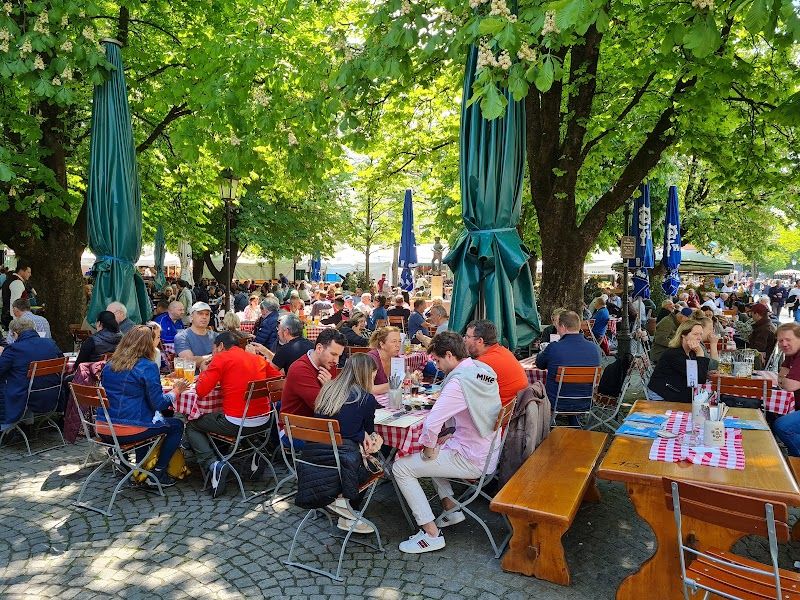
The largest beer garden in central Munich with 5,000 seats, and it still manages to feel intimate. This is what every beer garden tries to be: gravel paths, wooden tables, chestnut trees, and that perfect golden light filtering through leaves. The Augustiner flows from wooden barrels, the roast chicken is crispy perfection, and you'll find everyone from students to businessmen sharing tables.
Hirschgarten (The Monster)
8,000 seats make this the largest beer garden in Munich, sprawled across parkland near Nymphenburg Palace. It's a 15-minute walk from the nearest U-Bahn, but worth it for the sheer scale. Deer wander through the adjacent park (hence the name), families claim entire sections of tables, and on summer weekends it becomes a small city of beer drinkers. The walk through the park to get there is half the experience.
Shared Table Etiquette: How Not to Offend the Locals
Just sit down at any open spot on a bench. Seriously, don't wait for permission.
If you're feeling polite, ask 'Ist hier frei?' but most people won't even bother.
You don't need to chat with your table neighbors, but a 'Prost' when someone's toasting is basic courtesy.
Hold your beer glass at the bottom and clink the body of the glass, never the rim.
Make eye contact when toasting. This is a real Bavarian rule, and they notice when you don't.
Don't save seats for large groups. Arrive together or sit separately.
Food Pairings That Make Sense
Schweinshaxe (pork knuckle) plus a Maß of whatever's on tap is the classic combination. The salty, crispy skin cuts through the beer perfectly. Weisswurst with Weissbier, a pretzel, and sweet mustard is the traditional Bavarian breakfast, but only before noon because that's the rule and Germans love rules. The white sausages are boiled, not grilled, and you're supposed to suck the meat out of the casing like some kind of beer hall vampire. Leberkäse isn't liver and isn't cheese, it's a mystery meat loaf that tastes better than it sounds. Pair it with a Helles and don't ask questions.
What to Skip: Save Your Money and Your Time
Sterneckerbräu isn't actually one of the six Munich breweries, despite what their marketing claims. It's contract-brewed elsewhere and tastes like it. Skip the tiny beer halls clustered around Marienplatz that look traditional but feel like theme restaurants. They're designed for tour groups who don't know better. If a beer hall has laminated menus in eight languages and servers wearing costumes that look like Halloween lederhosen, you're in the wrong place. The real spots have stained wooden tables, servers who look like they've been there since 1987, and menus that assume you can figure out basic German food words.
Ready to Visit Munich?
Get a personalized itinerary tailored to your travel style and interests.
Plan Your Munich TripMore Munich Guides
3 Days in Munich: Beer Halls, Pinakotheks, and a Park Bigger Than Central Park
A 3-day Munich sequence for first-time visitors. Old town on day 1, museum quarter on day 2, the Englischer Garten and Schwabing on day 3. Beer hall lunches and beer garden dinners both days the weather permits.
14 min
Munich's Pinakothek Quarter: The Three Galleries, the Brandhorst, and the Glyptothek
A practical guide to Munich's museum quarter - what each Pinakothek covers, when to use combo tickets, the Sunday EUR 1 admission, and which museums genuinely repay 2+ hours.
10 min