3-Day Paris Itinerary: Perfect First-Time Visitor Guide
The landmarks you came for, the neighborhoods you didn't know you wanted
Three days in Paris is short enough that you'll leave wanting more, which is exactly the right way to leave Paris. This itinerary doesn't try to cram in every museum and monument - it gives you the landmarks you came for, the neighborhoods you didn't know you wanted, and enough good meals that you'll stop being intimidated by French menus by Day 2.
Day 1 is the big hits: Eiffel Tower, Seine, Saint-Germain. Get them done while your energy's high and your jet lag is working in your favor (you'll be awake at 7 AM whether you like it or not). Day 2 goes deeper - the Louvre, Montmartre, and the Paris that doesn't fit on a postcard. Day 3 is the Marais and the Latin Quarter, which is where you'll realize three days isn't enough.
Why This Itinerary Works
Geography. Each day stays on one side of the river with minimal metro hopping. Day 1 starts on the Left Bank and crosses to the Eiffel Tower. Day 2 starts on the Right Bank at the Louvre and ends on the hill in Montmartre. Day 3 stays in the heart of the Right Bank - the Marais, Bastille, and the islands.
You'll walk about 12-15 km per day, which sounds like a lot but doesn't feel like it when you're stopping for coffee every two hours and sitting in parks between museums. The metro is there when you need it, but Paris is a city built for walking and the distances between things are shorter than the map suggests.
The Left Bank & the Eiffel Tower
Start at Trocadero for the postcard Eiffel Tower photo - this is genuinely the best view and you'll want it in morning light. Cross the river and either go up the tower (book ahead, €29.40 to the top, €18.80 second floor) or skip it and spend the money on lunch. Walk along the river to Musee d'Orsay, which is the better museum if you only have time for one - the Impressionists hit differently inside a Belle Epoque train station. By evening you'll be in Saint-Germain drinking a €4.50 glass of wine at a terrace and wondering why you only booked three days.
- Trocadero for Eiffel Tower photos - Metro Line 6 or 9, arrive by 9 AM for soft light and small crowds
- Eiffel Tower - book timed entry online 2-3 weeks ahead, €29.40 elevator to top, €18.80 second floor
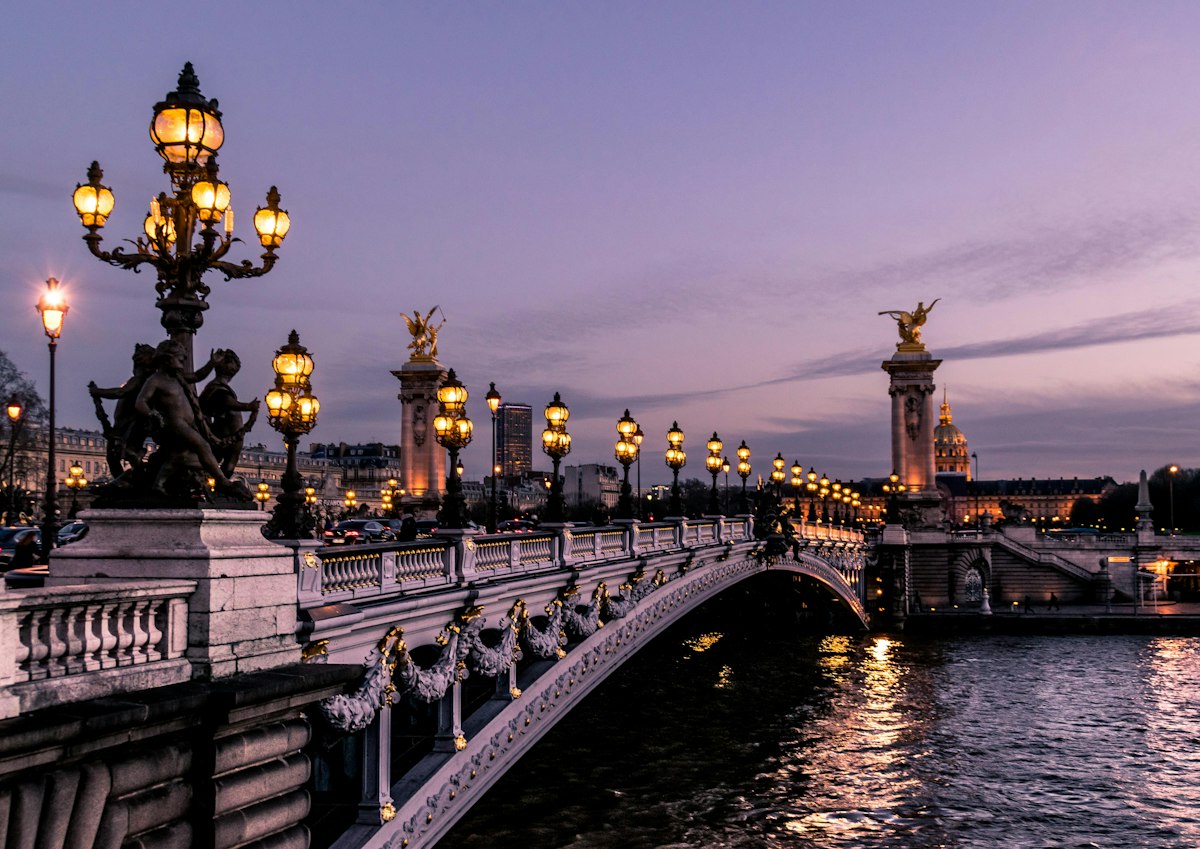
- Walk along the Seine to Musee d'Orsay - 30 minutes, pass Pont Alexandre III (the ornate gold one)
- Musee d'Orsay - €16, arrive by 2 PM, go straight to Level 5 for Impressionists in natural light
- Dinner in Saint-Germain - Le Comptoir du Relais if you can get a table, or any bistro on Rue de Buci
The Louvre, Tuileries & Montmartre
The Louvre is a full morning even if you're strategic about it. Enter through the Carrousel du Louvre (underground entrance on Rue de Rivoli) to skip the pyramid queue, head straight to Denon Wing for the Winged Victory and Mona Lisa, then give yourself permission to leave after three hours. Your brain will be full. Walk through the Tuileries to decompress, grab lunch near Palais Royal, then take the metro to Montmartre for a completely different Paris - village streets, vineyard views, and Sacre-Coeur's dome lit gold at sunset.
- Louvre Museum - €17, enter via Carrousel du Louvre (Rue de Rivoli), focus on Denon Wing, 3 hours max
- Tuileries Garden walk - free, grab a €1.80 cafe from Paul bakery on Rue de Rivoli
- Lunch near Palais Royal - Cafe Kitsune for a quick coffee (€4) or a sit-down bistro on Rue de Montpensier
- Metro to Montmartre - Line 12 to Abbesses (not Anvers, which dumps you at the tourist gauntlet)
- Montmartre walk - Sacre-Coeur, Place du Tertre (walk through, don't sit), Musee de Montmartre (€14, Renoir's garden)
- Dinner in Montmartre - Le Bouillon Chartier Montmartre, steak-frites for €11.50 in a Belle Epoque palace
Le Marais, the Islands & the Latin Quarter
Day 3 is the day you stop following an itinerary and start following the streets. Le Marais is the neighborhood that makes people fall in love with Paris - medieval buildings, the best falafel in Europe, concept stores, and Place des Vosges, which is the most beautiful square in the city and somehow never crowded before noon. Cross to Ile de la Cite for Sainte-Chapelle's stained glass (the one Parisian church that's genuinely unmissable), then wander into the Latin Quarter for your last afternoon.
- Le Marais morning - Rue des Rosiers for coffee, Place des Vosges at 10 AM before crowds
- L'As du Fallafel - €8 special with everything, the best street food in Paris, queue is worth it
- Sainte-Chapelle - €11.50, the stained glass is the most beautiful thing you'll see in Paris, 30 minutes is enough
- Notre-Dame exterior - still under reconstruction but the views from the square are free
- Latin Quarter afternoon - Shakespeare & Company bookshop, then wander Rue Mouffetard
- Farewell dinner - Le Comptoir du Relais (Saint-Germain) or Breizh Cafe (Le Marais) for galette complete (€14)
Where to Stay
Le Marais (4th)
- -Central to everything on Days 2 and 3
- -Best restaurant density in Paris - falafel to fine dining
- -Place des Vosges on your doorstep
- -Hotels €120-200/night mid-range
Saint-Germain (6th)
- -Perfect base for Day 1 (Eiffel Tower, Orsay)
- -Classic Parisian atmosphere, cafe culture at its best
- -Luxembourg Gardens for morning runs
- -Hotels €150-250/night, higher but worth it
Montmartre (18th)
- -Best value - hotels €80-150/night
- -Village atmosphere, Sacre-Coeur as your backyard
- -Metro ride to everything else but the hill makes up for it
- -Best sunset views in Paris, every single evening
Essential Tips
Book the Eiffel Tower and Louvre online. This isn't optional - walk-up queues are 60-90 minutes and the Eiffel Tower sells out.
The Paris Museum Pass (€55 for 2 days) pays for itself after the Louvre (€17) and Orsay (€16), plus you skip queues.
Wear shoes you can walk 15 km in. Cobblestones destroy anything with a heel.
Download the RATP app for metro navigation or use Citymapper. Google Maps works but the metro-specific apps show real-time delays.
Ready to Visit Paris?
Get a personalized itinerary tailored to your travel style and interests.
Plan Your Paris TripMore Paris Guides
3 Days in Paris for Art Lovers
You don't come to Paris for three days to tick museums off a list - you come because this is where art lives in your daily coffee run, not just behind velvet ropes. Walk down any street and you'll pass 18th-century sculptures used as actual street corners, gallery windows that change every two weeks, and bistros where the owner's personal Picasso sketch hangs next to the wine list like it's no big deal. The sequencing here isn't random. We're moving through art history chronologically - Day 1 classical masters (Louvre, Orangerie), Day 2 impressionists (Orsay, Rodin, Left Bank galleries), Day 3 modern and what's happening now (Centre Pompidou, Montmartre). Each morning anchors you in a major museum when your brain's fresh, each afternoon turns you loose in neighborhoods where artists actually work. We save Montmartre for last because ending where Picasso and Renoir actually painted, looking down at the city you've been walking through for three days, feels like the only way to finish. Plus by Day 3, you'll understand why they all came here.
3 min read
5 Days: The Complete Paris Experience
Five days is when Paris stops being tourism and starts being temporary residency. Three days and you're sprinting between landmarks. Four and you catch your breath. Five and you've got a favorite bakery, a shortcut through a courtyard that saves two minutes, and the dangerous feeling that maybe you could just... stay. We've front-loaded the big sights so you can ease into the real stuff. Days 1-3 hit the landmarks everyone comes for. Day 4 takes you to Versailles - which sounds like more tourism but actually makes you appreciate Paris more when you come back to human-scale streets and €2.50 café noisettes. Day 5 is when you stop looking at maps and start acting like someone who just happens to live here for a week.
4 min read
Paris on a Budget: A Practical Guide
Look, Paris doesn't have to cost €200 a day. I've spent weeks there spending €50 without once feeling like I was slumming it. The secret isn't suffering through bad meals and skipping museums - it's knowing which things are overpriced and which are practically free. A croissant from the best bakery in the neighborhood costs €1.20, same as one from the worst. The Sacré-Cœur steps have a better view than most paid observation decks. And a bottle of Côtes du Rhône from a cave costs €6 - what you'd pay for one glass at a tourist cafe. Here's how to do Paris right for €50-70 a day, without once feeling like you're missing out.
3 min read