Greece
Santorini
A volcanic caldera, white villages on the cliff edge, Oia sunsets that earn every photograph, and cherry tomatoes the soil makes impossibly sweet
Best Time
April-June and September-October
Ideal Trip
3-4 days
Language
Greek, English widely spoken in tourist areas
Currency
EUR
Avg Temp
19°C / 66°F
About Santorini
Santorini is what remains of a volcanic eruption that blew the centre of an island into the sea 3,600 years ago, and the result is a crescent-shaped cliff face with white villages perched on top and a flooded caldera 300 metres below. The views are the reason people come, and the views deliver: Oia at sunset, when the entire village turns gold and then pink and then dark blue, is one of those travel experiences that lives up to the photograph. The problem is that 15,000 other people are also watching, so the trick is to find a restaurant terrace or a quieter spot on the kasteli (castle ruins) rather than fighting for the famous viewpoint.
Fira is the capital and the transport hub, built along the caldera rim with a cable car (EUR 6) connecting the clifftop to the old port 220 metres below where the cruise ship tenders dock. The town is dense with jewellery shops, restaurants with caldera views (a table with a view costs EUR 40-80 per person for dinner, the same meal without a view costs EUR 20-35), and the narrow marble paths that connect everything. The Archaeological Museum (EUR 6) and the Museum of Prehistoric Thera (EUR 6) are small but explain how the Minoan eruption buried Akrotiri and may have inspired the Atlantis myth.
The beaches are volcanic and strange. Perissa and Kamari have black sand that burns your feet by noon in July. Red Beach (near Akrotiri) has red and black cliffs that look like Mars. White Beach is only accessible by boat. None of them are the powder-white Caribbean beaches that some visitors expect, and managing that expectation is half the job. The water, however, is warm and absurdly clear, and a beach club lounger costs EUR 15-25 with a drink. The food is built on local ingredients: cherry tomatoes sweeter than any you have tasted (the volcanic soil concentrates the sugars), white eggplant, capers, fava (yellow split pea puree, EUR 8-10), and Assyrtiko wine from grapes trained in basket shapes to survive the wind.
Regions
Each region has its own character
Oia
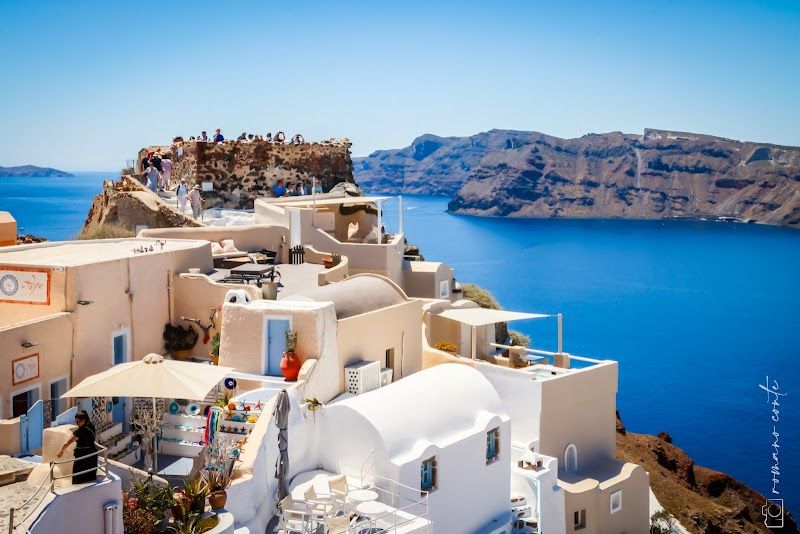
The northern tip of the island and the village of the famous sunset: blue domes, kasteli ruins, Ammoudi Bay 300 steps below, and the most expensive restaurants on the island
Fira & Firostefani
The capital and its quieter neighbour connected by the best free walk on the island: the cable car, the museums, the widest restaurant selection, and the caldera path with the famous Three Bells church
Akrotiri & South
The archaeological and beach zone: the Minoan city buried by a volcano, volcanic red-and-black beaches, the lighthouse sunset alternative, and wineries with caldera views
Things to Do
Top experiences in Santorini
Akrotiri Archaeological Site
Akrotiri is a 3,600-year-old Minoan city frozen in time by volcanic ash, often called the Greek Pompeii. You'll walk through actual Bronze Age streets past two-story buildings with sophisticated drainage systems and indoor plumbing that predates most European cities by millennia. The original frescoes (Boxing Boys, Spring Fresco) are in Athens, but the preserved architecture tells the real story of this advanced civilization that thrived here before the catastrophic 1627 BC eruption. The visit takes you along elevated walkways through the excavated city under a protective canopy. You'll peer into ancient rooms where storage jars still sit in place, see clay pipes that carried water through multi-story homes, and walk past walls that once displayed colorful frescoes. The scale surprises most visitors: this wasn't a village but a proper urban center with paved streets and sophisticated infrastructure. The covered walkways keep you out of the sun, though it gets stuffy on hot afternoons. Most guides oversell this as spectacular, but temper expectations. The famous frescoes are gone, and you're essentially looking at foundations and lower walls. That said, the urban planning and drainage systems are genuinely impressive if you appreciate ancient engineering. Entry costs EUR 12, and the site opens at 8 AM. Cruise groups swarm by 10 AM, so go early or late. Budget 75 minutes maximum, then walk five minutes to Red Beach for a swim.
Pyrgos
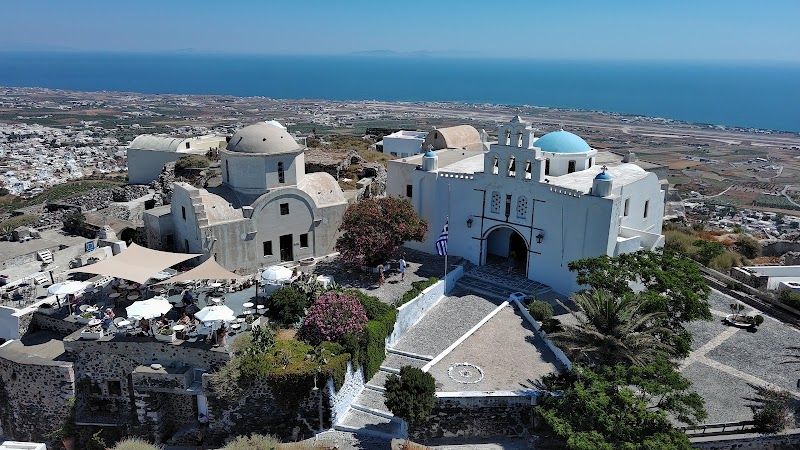
Pyrgos sits 370 meters above sea level, making it Santorini's highest village and home to the medieval Franco Castelo fortress ruins. You'll climb through narrow cobblestone streets past whitewashed houses, blue-domed churches, and working windmills to reach the Kasteli summit. The 360-degree views stretch from the airport and eastern beaches to Oia's cliffs and the caldera, with vineyards carpeting the slopes below. Unlike touristy Oia, this feels like a real Greek village where locals still outnumber visitors. The walk up takes about 15 minutes through maze-like alleys barely wide enough for a donkey. Traditional houses cascade down the hillside, many converted into small galleries and cafes run by families who've lived here for generations. At the top, you'll explore Byzantine church ruins and Venetian fortification walls while the wind whips around you. The silence is striking after Fira's chaos, broken only by church bells and the occasional motorbike navigating the narrow streets below. Most visitors rush straight to the fortress and miss the village itself, which is a mistake. The best tavernas are halfway up the hill, not at the summit where prices jump 30% for the view. Selene Restaurant costs 80-120 EUR per person, while family-run spots like Metaxi Mas offer better food for 25-35 EUR. Skip the overpriced summit cafes completely and bring water, the climb is steeper than it looks and there's little shade.
Oia Sunset at the Kasteli
The Oia sunset is Santorini's defining moment: white cubic buildings cascading down clifftops, the volcanic caldera stretching endlessly, and the sun melting into the Aegean while the village transforms from gold to pink to deep blue. You're watching one of the world's most photographed sunsets from 300 feet above the sea, with the caldera's dramatic rim creating a natural amphitheater. The kasteli ruins, just 100 meters east of the main viewpoint, offer the exact same spectacular view with a fraction of the crowd. The experience unfolds slowly over 90 minutes as you claim your spot on the ancient stone walls. Cruise ship passengers flood the main castle area by 7 PM, but the kasteli remains surprisingly peaceful with maybe 50 people versus 2,000 at the crowded spot. You'll hear camera shutters clicking constantly as the light shifts, and couples taking selfies against the caldera backdrop. The actual sunset lasts about three minutes, but the afterglow paints the whitewashed buildings in incredible colors for another 30 minutes. Most guides won't tell you that 15,000 cruise passengers compete for this same moment on busy summer days, making the main viewpoint unbearable. Skip the overpriced restaurant terraces charging EUR 60 per person and bring a bottle of local Assyrtiko wine from any shop for EUR 8 to 12. Arrive 45 minutes early to secure your spot, and honestly, morning light between 7 and 10 AM produces better photos without the crowds.
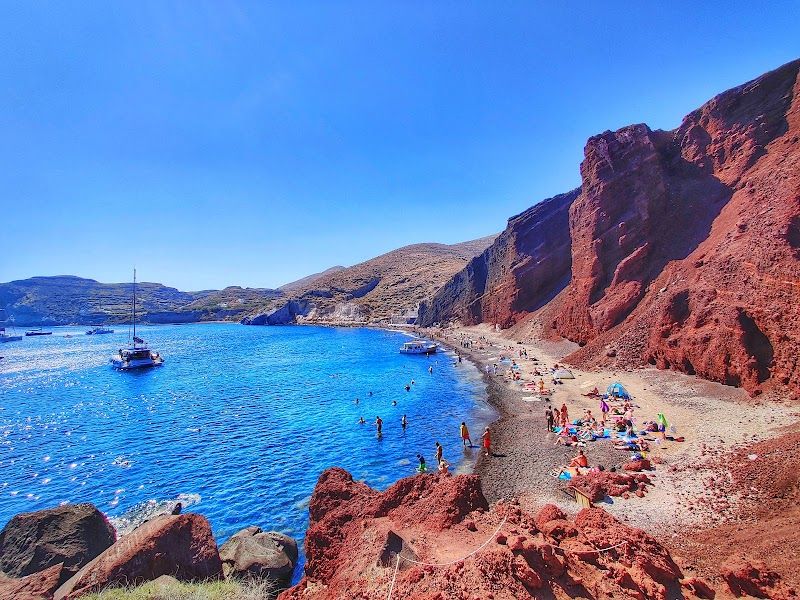
Red Beach (Kokkini Paralia)
Red Beach delivers exactly what its name promises: a narrow strip of volcanic sand surrounded by towering crimson and black cliffs that genuinely look otherworldly. The beach sits in a dramatic cove near Akrotiri, where centuries of volcanic activity created this rust-colored amphitheater of stone. You'll be swimming in warm, crystal-clear water while staring up at cliffs that shift from deep red to charcoal black depending on the light. Getting down requires a 5-minute scramble over loose rocks and narrow ledges, nothing technical but definitely not flip-flop terrain. Once you're there, the beach feels intimate and slightly wild, with maybe 50 people maximum fitting comfortably on the coarse volcanic pebbles. The morning brings blessed shade from the eastern cliffs, but by noon you're in full Mediterranean sun with zero escape except the water. Here's what nobody mentions: this beach is wildly overrated if you're expecting comfort or convenience. No umbrellas, no tavernas, no toilets, and parking fills by 9:30 AM in summer. The scramble down genuinely injures a few people each season who attempt it in sandals. It's free, yes, but you'll spend more time getting there and back than actually enjoying it unless you're committed to a full morning.
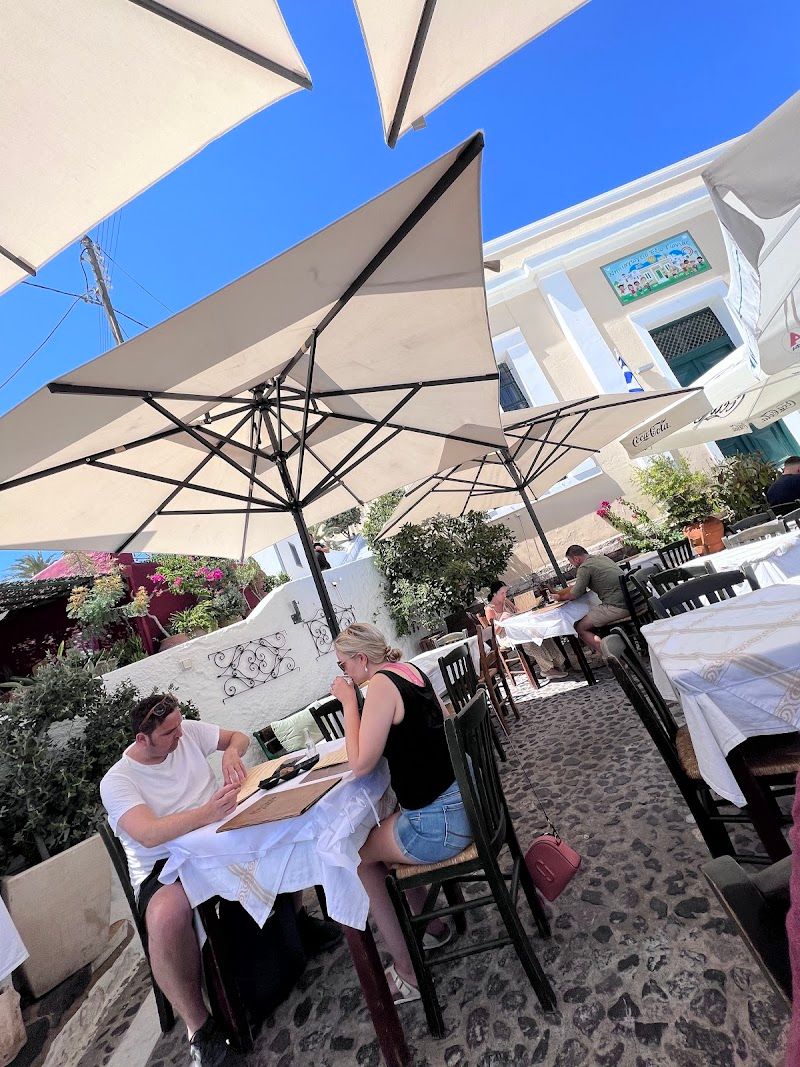
Metaxi Mas
Family-run tavern located inland in Exo Gonia village, far from the caldera crowds. The menu features Santorinian recipes passed down through generations, including exceptional slow-cooked lamb and homemade fava. No sea view, but locals consider it the best traditional food on the island.
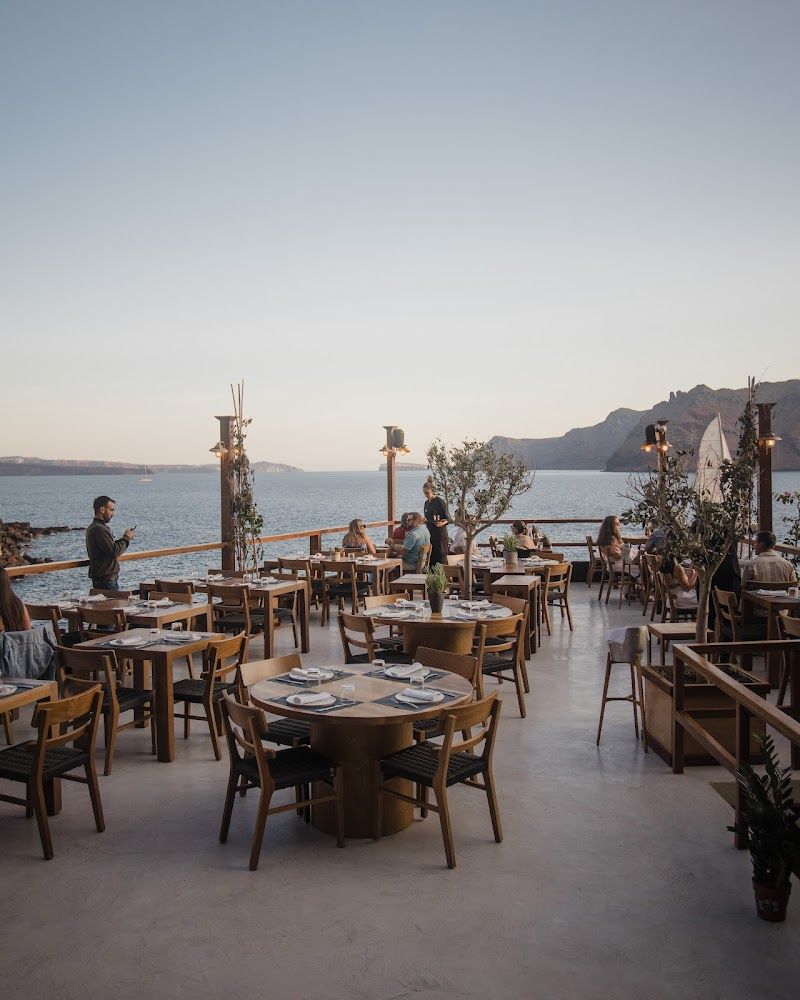
Ammoudi Fish Tavern
Traditional tavern at the bottom of Oia's 300 steps serving grilled octopus and daily catch straight from the bay. Tables sit directly on the water's edge where fishing boats dock throughout the day. Known for simple preparation that lets the quality of seafood speak for itself.
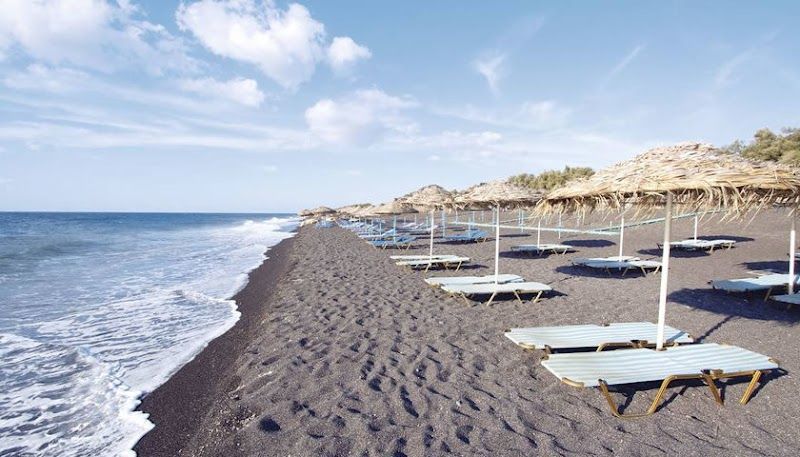
Perissa Beach
Perissa Beach stretches along Santorini's southeastern coast for an impressive 7 kilometers, making it the island's longest stretch of volcanic black sand. The dramatic landscape puts you right beneath Mesa Vouno mountain, with the ancient ruins of Ancient Thira visible on the cliff above. You'll find organized beach sections with sunbeds (EUR 15-25 including a drink), water sports rentals, and beach bars playing everything from Greek pop to electronic music. The beach has a distinctly relaxed, international vibe that feels more like a proper seaside resort than Santorini's posher spots. Groups of backpackers mix with Greek families, while beach volleyball games happen spontaneously near the water sports centers. The black sand gets scorching hot by midday, so most people stick to the sunbeds or rush quickly between towel and sea. The water stays surprisingly clear despite the dark sand, and you can walk out quite far before it gets deep. Most travel guides oversell this as a budget paradise, but sunbed prices have crept up significantly in recent years. The southern end offers genuinely free space if you don't mind walking 10 minutes past the last taverna. Skip the overpriced water sports here and save money for better operators in Kamari. The beach gets packed between noon and 4pm, so come early or late for a better experience.
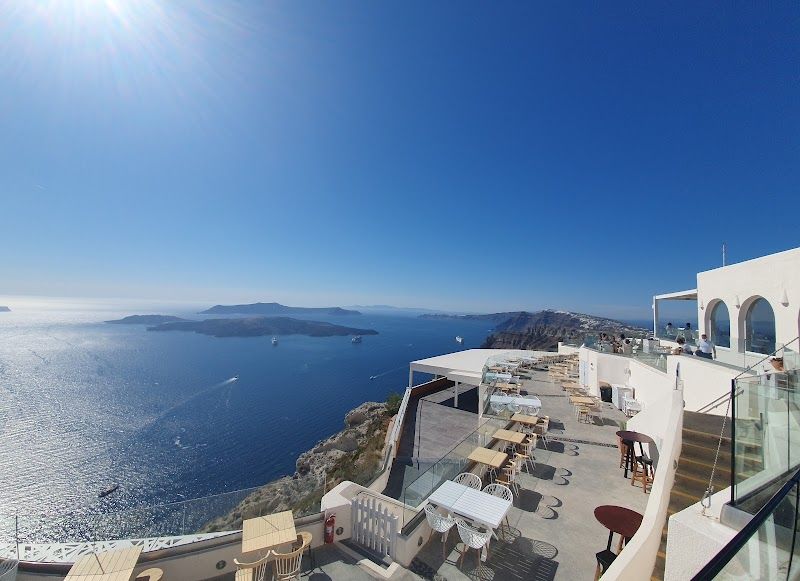
Santo Wines Winery
Santo Wines sits right on the caldera rim between Fira and Akrotiri, offering wine tastings with probably the best view any winery has ever managed. You'll taste 4-6 wines for EUR 10-15 while looking directly across the caldera to Nea Kameni volcano island floating in the center. The star here is Assyrtiko, Santorini's signature white wine that grows in twisted basket shapes called kouloura to survive the fierce Meltemi winds. The volcanic soil creates a mineral-rich taste you literally can't get anywhere else on earth. The tasting happens on a broad terrace that faces west across the entire caldera. You'll sit at proper tables (not standing around barrels like some places) while staff explains each wine and points out the volcanic islands ahead. The Assyrtiko has this sharp, citrusy bite with an almost salty finish that makes perfect sense once you see the black volcanic earth stretching in every direction. Other visitors cluster along the railing taking photos, but the real magic is in your glass. Honestly, the standard tasting is plenty unless you're obsessed with sunset photos. The sunset package (EUR 15-20) gets crowded and books solid in summer, but the wine and view are identical at 3pm. Most guides don't mention that Estate Argyros down the road has equally good Assyrtiko with half the crowds, or that Venetsanos has more interesting architecture if you care about that sort of thing.
Museum of Prehistoric Thera
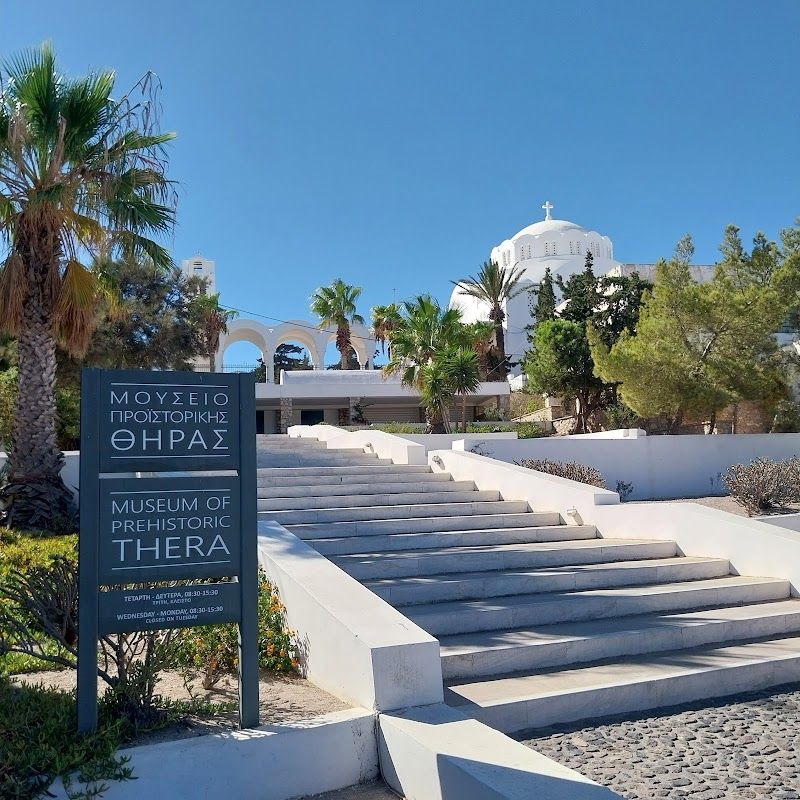
The Museum of Prehistoric Thera houses the most remarkable Bronze Age artifacts you'll see in Greece, all preserved perfectly by the same volcanic ash that buried Pompeii's predecessor. You'll encounter 3,600-year-old frescoes showing dolphins, antelopes, and boxing children that look like they were painted yesterday, plus sophisticated pottery, furniture, and tools that reveal how advanced Akrotiri's civilization really was. The collection proves this wasn't just another ancient settlement but a cosmopolitan trading hub with running water, multi-story buildings, and artistic skills that rival classical Athens. The museum occupies a compact two-story building where you'll move chronologically through the Bronze Age discoveries. The frescoes steal the show, displayed behind glass with dramatic lighting that brings out colors you wouldn't believe survived millennia underground. You'll see massive storage jars that once held olive oil and wine, delicate gold jewelry, and even preserved wooden furniture. The atmosphere feels intimate rather than overwhelming, with detailed English plaques that actually explain what you're looking at instead of just listing dates. Most guides oversell this as a quick stop, but you'll want at least 90 minutes to properly absorb what you're seeing. The EUR 5 entry fee is reasonable, though the combined ticket covering Akrotiri and Ancient Thera makes more sense at EUR 14 if you're planning multiple archaeological visits. Skip the gift shop, it's overpriced postcards and generic souvenirs. Focus your time on the fresco room upstairs where the masterpieces live.
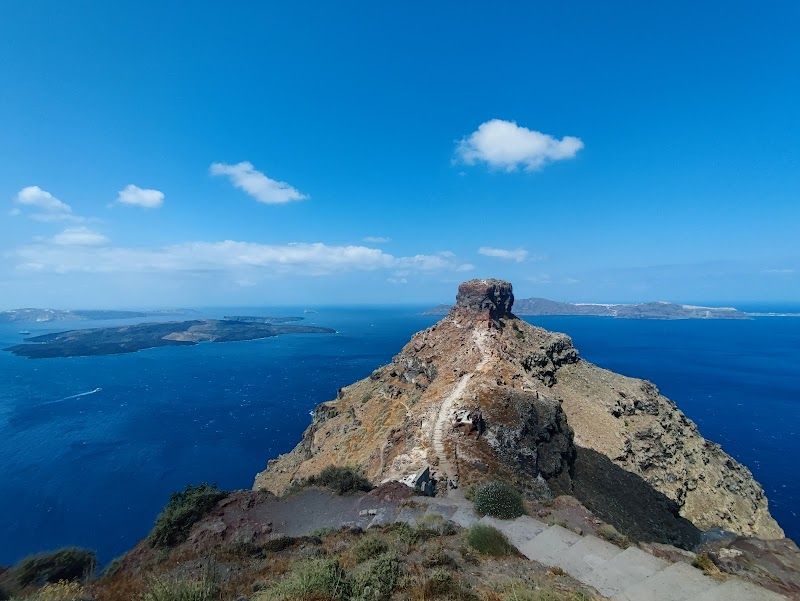
Skaros Rock
Skaros Rock is the jagged remains of a medieval fortress that juts into Santorini's caldera like a stone ship's bow. You'll hike 30 minutes along a narrow ridge path from Imerovigli to reach the ruins of this 13th century Venetian castle, built when this rocky outcrop was still connected to the main island. The payoff is spectacular: 360 degree views over the caldera, the volcano islands, and the white cubic houses of Imerovigli cascading down the cliff face. The trail starts innocuously near Anastasi Church but quickly becomes an adventure. You'll scramble over loose volcanic rock and navigate some genuinely exposed sections where the path narrows to just a few feet wide with steep drops on both sides. The fortress ruins themselves are modest, just stone foundations and crumbling walls, but standing on this isolated pinnacle feels like you're floating above the Aegean. The wind can be fierce, and the late afternoon light turns the caldera walls golden. Most people come at sunset and regret it. The path becomes treacherous in dim light, and you'll be fighting crowds for photos. Go in late afternoon around 4PM instead for equally stunning light without the chaos. The hike is free, but bring proper hiking shoes and water. Skip this entirely if you're afraid of heights or have mobility issues, the final approach to the ruins involves some genuine rock scrambling.
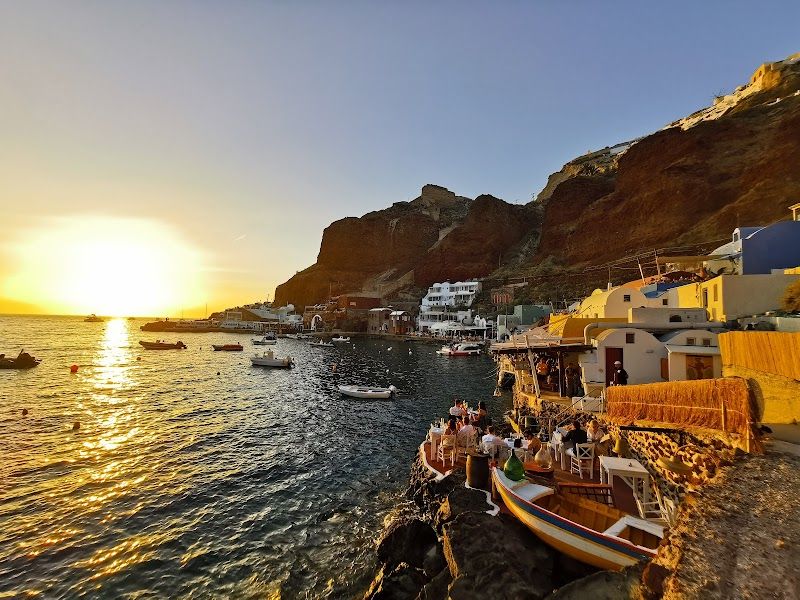
Ammoudi Bay
Ammoudi Bay is a proper fishing harbor carved into the cliffs 70 meters below Oia, reached by a zigzag stone stairway that drops straight down the volcanic rock face. The water here is genuinely stunning: deep turquoise that turns navy blue just meters from shore, perfect for jumping off the smooth lava rocks. Three traditional tavernas serve whatever the fishing boats brought in that morning, and you'll often see locals diving from the rocks even in January. The 300 step descent takes about 15 minutes and reveals new angles of the caldera with each switchback. Once you're down, the harbor feels completely separate from touristy Oia above: fishing nets dry in the sun, cats patrol the waterfront, and the tavernas have that authentic worn-in feel where Greeks actually eat. The swimming is addictive because the volcanic rock creates natural diving platforms, and the water stays refreshingly cool even in summer heat. Most people underestimate how brutal the climb back up is, especially after lunch and wine. The donkeys cost 5 EUR per person and they know these steps better than you do, so don't be too proud. Skip the sunset rush when everyone from Oia crowds down here. Go mid-morning when you can claim the best swimming spots and the tavernas aren't slammed.
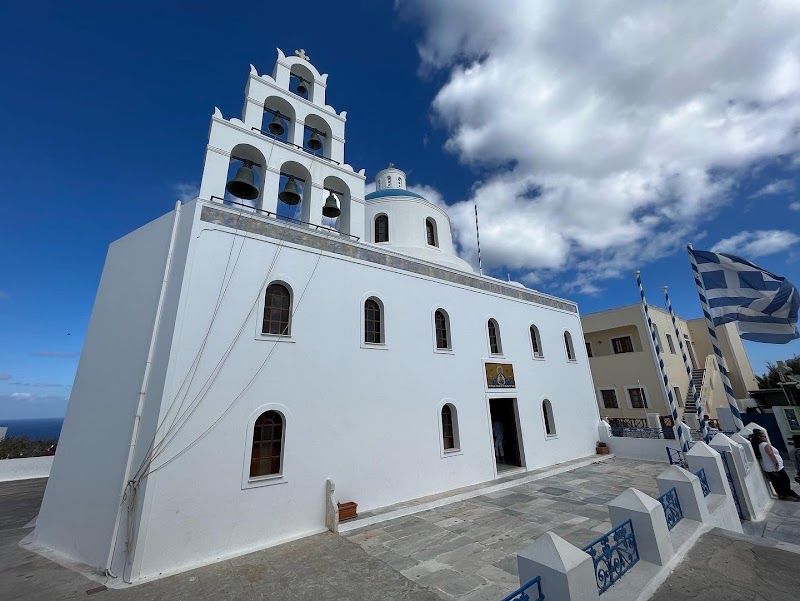
Church of Anastasis
The Church of Anastasis sits perched on Firostefani's cliff edge, about 10 minutes' walk from Fira town center. This small Greek Orthodox church from the 1920s has become Santorini's most photographed spot thanks to its three blue domes contrasting against white Cycladic walls and the caldera backdrop. You'll find a peaceful courtyard with stone benches where you can sit and take in the volcanic crater views. The church itself is tiny, fitting maybe 20 people, but it's the exterior and setting that draw the crowds. You'll likely share the space with other photographers, especially during golden hour when the light hits the blue domes perfectly. The courtyard offers unobstructed caldera views stretching to Thirassia island, and you can hear the bells from neighboring churches echoing across the cliffs. The atmosphere feels surprisingly serene despite the constant stream of visitors. Morning light illuminates the white walls beautifully, while late afternoon brings that warm glow everyone's chasing for Instagram. Honestly, it's worth the visit but don't expect to have it to yourself unless you arrive very early. Most people snap their photos and leave within 10 minutes, missing the peaceful moments between tour groups. The walk from Fira involves some steps and uneven paths, so wear proper shoes. Entry is free, though there's often a small donation box if you want to contribute a euro or two.
Travel Guides
Expert guides for every travel style
Where to Eat in Santorini: Fava, Octopus & Assyrtiko Wine
Santorini food guide: fava EUR 8-10, tomatokeftedes EUR 8-10, grilled octopus EUR 14-18 at Ammoudi, Assyrtiko wine EUR 5-8/glass, and where to eat without the caldera markup.
7 min
First Time in Santorini: What You Need to Know
Everything before your first visit: fly from Athens 45 min or ferry 5-8 hours, cruise ship timing, ATV rental EUR 25-40/day, and the caldera dinner price premium.
7 min
Frequently Asked Questions
July-August brings 35C+ heat and 5,000-10,000 cruise ship passengers daily between 8 AM-5 PM. Oia and Fira are overwhelmed during these hours. The trick is timing: visit caldera villages before 9 AM or after 6 PM, and plan beach days during cruise hours. April-June and September-October have warm weather (22-28C), swimmable seas, and manageable crowds. November-March most restaurants and hotels close.
Santorini is the most expensive Greek island. Budget: EUR 80-120/day (hostel or cheap room in Perissa EUR 40-60, non-view meals EUR 15-25, bus transport EUR 1.80-2.50). Mid-range: EUR 150-250/day (hotel with view EUR 100-180, one caldera dinner EUR 40-60, ATV rental EUR 25-40). Luxury: EUR 300-500+/day (cave hotel with private pool EUR 250-400, fine dining EUR 60-80). The caldera view premium is real: the same grilled fish costs EUR 18 in Perissa and EUR 35 in Oia.
Buses connect all major villages (EUR 1.80-2.50, every 30-60 min from Fira) but frequency drops after October and the last buses leave around 11 PM. ATV rental (EUR 25-40/day) is the local favourite and gives freedom for sunset spots and south coast beaches. Car rental (EUR 40-60/day) is better for families. Walking between caldera villages is possible: Fira to Firostefani is 20 min, the full Fira to Oia hike is 10 km (3-4 hours). For Akrotiri and south coast beaches, you need wheels.
Yes, but skip the main viewpoint near the castle where 2,000+ people pack in from 6 PM. Better options: the kasteli (castle ruins) 100 metres east with the same view and a quarter of the people, any restaurant terrace with a caldera view (book for 7 PM, order a glass of Assyrtiko EUR 5-8, the sunset comes to you), Ammoudi Bay 300 steps below (watch the cliffs turn gold from sea level), or the Akrotiri Lighthouse on the south tip (20 people instead of 15,000, bring your own wine).