2-3 Days in Stockholm: First-Timer's Itinerary
Vasa Museum before the crowds, Gamla Stan at dawn, the best meatballs in Sodermalm, and fika at Ostermalm
How to spend 2-3 days in Stockholm: Vasa Museum at 10 AM before the groups, Gamla Stan in the early morning, City Hall tour, Sodermalm for meatballs and views, and a fika at Ostermalm Saluhall.
2-3 Days in Stockholm: First-Timer's Itinerary
Stockholm is a city that rewards early risers and punishes followers. The difference between visiting the Royal Palace at 9 AM versus 2 PM is the difference between having the courtyards to yourself and fighting through tour groups with selfie sticks. This itinerary assumes you understand that timing matters more than trying to see everything, and that three well-planned days will give you a better sense of Stockholm than a week of wandering around wondering what to do next.
Gamla Stan + City Hall
Your first day is about getting Stockholm's medieval bones and political grandeur right. Start when the old town belongs to you and the morning light, then move to the building where Nobel Prize winners eat dinner. The rhythm is slow morning, structured afternoon, proper Swedish evening.
- Empty medieval streets before 9 AM
- City Hall Nobel dinner rooms
- Östermalm's market hall
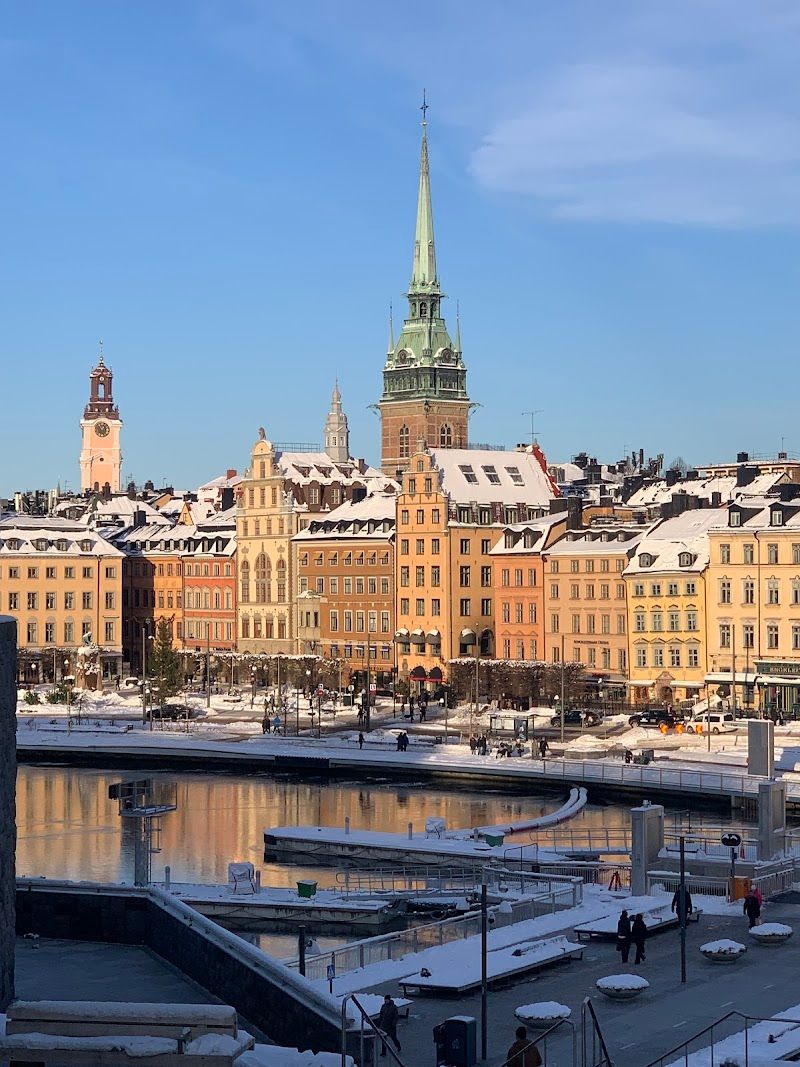
Get to Gamla Stan before 9 AM. I mean this: the cobblestone lanes that will be shoulder-to-shoulder with cruise ship groups by 11 AM are completely empty at 8:30 AM, and the morning light hitting those ochre and burgundy building facades is the only time the old town looks the way it did 300 years ago. Start at Stortorget square, where the colorful buildings look like a children's book illustration but were actually merchant houses where fortunes were made and lost. The square feels small because it is: medieval cities weren't built for tour buses.
Walk east from Stortorget through the actual narrow streets where people lived. Österlängatan is the main artery, but duck into Mårten Trotzigs Gränd, which at 90 centimeters wide is allegedly Stockholm's narrowest street. It feels like a crack between buildings because that's essentially what it is. These aren't tourist attractions, they're just what happens when a city grows organically over 700 years without anyone tearing everything down and starting over.
The Nobel Prize Museum opens at 10 AM (SEK 120) and is worth the admission if you care about the politics and accidents behind the world's most famous prizes. The rotating exhibits change every few months, but the permanent collection includes Einstein's pipe and Marie Curie's laboratory notes. What you're really paying for is understanding that Nobel prizes are as much about timing and politics as genius. Skip it if you don't like reading wall text.
Position yourself in the Royal Palace courtyard at noon for the changing of the guard at 12:15 PM. The ceremony takes exactly 40 minutes and involves a lot of standing around while men in elaborate uniforms march in small circles. It's touristy because it's supposed to be: the Swedish monarchy survives by being picturesque. The palace itself is enormous and boring inside unless you have a specific interest in 18th-century furniture.
For lunch, take the ferry from Slussen to Östermalm Saluhall or walk 20 minutes northeast through the city center. The market hall, rebuilt in 2020, is Stockholm's answer to European food markets, meaning it's cleaner and more expensive than most. A proper lunch costs SEK 100-200. Order the toast skagen (shrimp salad on toast) from Melanders Fisk: it's SEK 165 and tastes like the sea with dill and lemon. The market fills up with local office workers between 12:30 and 1:30 PM, which is exactly when you want to be there.
Take the guided tour of City Hall at 2 PM (SEK 130, 45 minutes, runs every two hours). This is where Nobel Prize winners eat dinner every December, and the tour guide will tell you exactly how many flowers they use (20,000) and how long the dinner lasts (five hours). The Blue Hall isn't blue, it's red brick, because the architect changed his mind but kept the name. The Golden Hall has 18 million pieces of mosaic tile and looks like a Byzantine church designed by someone who had only heard descriptions of Byzantine churches.
Walk along Strandvägen afterward to see how Stockholm's 19th-century shipping money built mansions. The boulevard faces the water and was designed to show off: wide sidewalks, elaborate facades, old-growth trees. It takes 15 minutes to walk end to end, and you'll understand why Stockholm feels like a small city with big-city architecture.
For dinner, head to Södermalm. If you want the full Swedish experience, book Pelikan 2-3 days in advance for their meatballs (SEK 195), which come with lingonberries and cream sauce and taste exactly like what you expect Swedish meatballs to taste like, but better. The restaurant looks like a 19th-century beer hall because it is one. If Pelikan is booked, walk through SoFo (the area south of Folkungagatan) and pick any restaurant that looks full of locals under 40.
Djurgården Museum Day
Day two is about Stockholm's ability to preserve things that should have disappeared: a 17th-century warship, Sweden's most successful cultural export, and the changing light over a medieval city. Everything is on one island, which makes logistics simple and gives you time to actually pay attention.
- Vasa warship before the crowds
- ABBA museum if you care about pop music
- Photography exhibitions at sunset
Take the ferry from Slussen to Djurgården at 9:30 AM. The ferry is included in your SL transit pass and takes 10 minutes, but more importantly, it's how locals get to the island and gives you the approach from the water. Djurgården is Stockholm's museum island, which means it's either going to be the best day of your trip or completely exhausting, depending on how you feel about spending money to look at things behind glass.
Get to the Vasa Museum right when it opens at 10 AM (SEK 200). The Vasa is a 17th-century warship that sank in Stockholm's harbor 20 minutes after launching because the king wanted more cannons than the ship could handle. It's been preserved in the cold Baltic water for 333 years, and what you're looking at is 95% original wood and rope. Before 11 AM, you can walk around the ship and actually see the details: the carved lions, the gun ports, the personal belongings still scattered on the deck. After 11 AM, you're looking over the heads of school groups. Plan at least 1.5 hours.
ABBA The Museum (SEK 280) is next door if you care about pop music or Swedish cultural exports. It's interactive in the way that modern museums are interactive, meaning you can press buttons and sing karaoke versions of "Dancing Queen." The real attraction is seeing how four people from a small country created songs that everyone in the world knows. If you don't like ABBA, skip it entirely. If you do like ABBA, plan one hour and prepare to leave humming.
For lunch, either stay on Djurgården at one of the museum cafés or take the ferry back to Södermalm for something more interesting. The Djurgården cafés serve the kind of sandwiches and salads that museum visitors expect to pay SEK 150 for. They're fine, but Stockholm has better food elsewhere.
Spend the late afternoon at Fotografiska (SEK 195), Stockholm's photography museum housed in a converted customs building. The exhibitions rotate every few months, so you might see war photography, fashion shoots, or documentary projects about climate change. What doesn't change is the building itself: high ceilings, excellent natural light, and views over the water from every floor. The real reason to go is the rooftop bar, where a drink costs SEK 80-100 but comes with the best sunset view in the city.
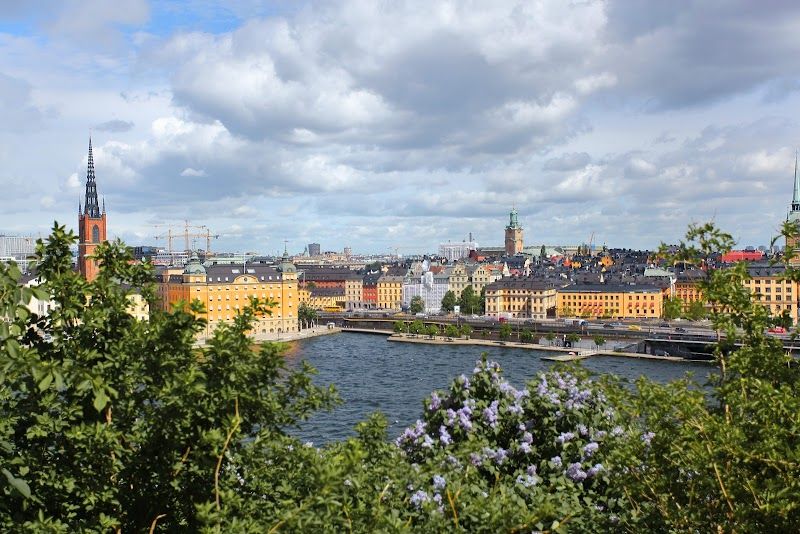
As the light starts dropping around 7 PM (or 4 PM in winter), walk to Monteliusvagen, a 500-meter clifftop path that runs along Södermalm's north shore. This is the view of Gamla Stan that appears in every Stockholm travel article: the medieval city rising from the water, church spires and palace roofs backlit by northern light. It's free, it's never crowded for more than a few minutes at a time, and it's the reason people fall in love with Stockholm. The path can be icy in winter, so watch your footing.
Norrmalm + Archipelago Options
Your last day splits between city and sea, depending on the season and your energy level. Stockholm's archipelago is the reason Swedes put up with long winters, but the museums are the reason to visit when the ferries run half-empty and the islands look like Nordic noir film sets.
- National art collections or island fortress towns
- Sweden's 30,000 islands
- Summer swimming or winter museums
For your third day, you have two options that depend entirely on the weather and your tolerance for ferry schedules. If it's June through August and you want to understand why Stockholmers disappear to their summer houses, take the archipelago option. If it's shoulder season or you prefer art to open water, stay in the city center.
Option A: City Museums
Start at the Nationalmuseum (free admission, Södra Blasieholmshamnen) when it opens at 11 AM. Sweden's national art collection focuses on Nordic artists you've probably never heard of but should have, plus the usual European masters. Carl Larsson's watercolors of Swedish family life look sentimental until you realize they were painted as political statements about how people should live. The building reopened in 2018 after five years of renovations, so everything is well-lit and properly labeled. Plan 90 minutes minimum.
Walk through Kungsträdgården around midday. This is Stockholm's central park, a long green space that hosts outdoor concerts in summer and an ice rink in winter. It's also where Stockholm's cherry trees bloom in late April, turning the park pink for exactly two weeks. The rest of the year it's a pleasant place to walk through on your way somewhere else.
Head back to Östermalm Saluhall for fika, the Swedish coffee break that happens around 3 PM and involves coffee and something sweet. Order a cardamom bun and coffee for about SEK 80. Fika is a social ritual, not just a snack, so sit down instead of taking it to go. You'll notice that conversations happen at normal volume and people put their phones away. This is what Swedish work-life balance actually looks like.
Option B: Stockholm Archipelago
Take the ferry from Strandvägen to Vaxholm (SEK 180 return, departures every hour, 1.5-hour journey each way). Vaxholm is a fortress island town that exists because Sweden and Russia spent 300 years trying to control the Baltic Sea. The fortress is now a museum, but the real attraction is the town itself: wooden houses, a small harbor, and restaurants that serve fish caught that morning. Have lunch at Waxholms Hotell (seafood soup for SEK 185) and walk around the island in an hour.
Alternatively, take the ferry to Grinda (SEK 280 return, 2 hours each way), which is the most beautiful of the inner archipelago islands if you like pine forests and rocky shores. There are hiking trails, places to swim in summer, and exactly one restaurant. Grinda is what Stockholm locals mean when they talk about getting away from the city: you're still only 90 minutes from downtown, but you could be in the wilderness.
The archipelago is only worth the trip from June through August, when the ferries run on full schedules and the weather makes being on the water pleasant. In winter, many of the island restaurants close, and you'll spend four hours on ferries to walk around a small town for 90 minutes. Check ferry schedules before you go: services reduce significantly outside summer months.
Practical Notes
All prices are in Swedish kronor (SEK). As of 2024, SEK 100 equals about USD 9 or EUR 8.50.
Buy an SL Access card for public transport. 72 hours costs SEK 300 and includes ferries to Djurgården.
Most museums are closed on Mondays. Check opening hours before you go.
Restaurant reservations are essential for dinner, especially Thursday through Saturday.
Swedes eat lunch between 11:30 AM and 1 PM, and dinner between 6 PM and 8 PM. Restaurant kitchens often close by 9 PM.
Summer daylight lasts from 4 AM to 10 PM. Winter daylight runs from 9 AM to 3 PM. Plan accordingly.
Ready to Visit Stockholm?
Get a personalized itinerary tailored to your travel style and interests.
Plan Your Stockholm TripMore Stockholm Guides
First Time in Stockholm: What You Need to Know
Everything before your first Stockholm visit: the cost in SEK, the mandatory fika, the metro as an art gallery, getting to the archipelago, and why Stockholm is almost entirely cashless.
6 min

Where to Eat in Stockholm: Meatballs, Fika & New Nordic
Stockholm food without the tasting menu: meatballs at Pelikan, fika at Ostermalm Saluhall, husmanskost explained, the smorgasbord tradition, and the best lunch under SEK 180.
7 min