First Time in Val d'Orcia: What You Need to Know
Car required, base in Pienza, the wine hierarchy explained, and where the famous photographs are actually taken
Everything before your first visit to Val d'Orcia: why you need a car, where to base yourself, the wine differences, cypress road locations, thermal bath logistics, and seasonal timing.
First Time in Val d'Orcia: What You Need to Know
Look, I'll be straight with you: Val d'Orcia is that postcard-perfect Tuscan landscape you've seen a thousand times, and yes, it really does look like that. Rolling hills covered in wheat that shifts from emerald green in spring to golden amber by summer, cypress trees planted in perfect lines, medieval hilltop towns that seem to glow in the afternoon light. It's touristy because it's beautiful, not the other way around. The key is knowing how to do it right.
Getting There and Around
A car isn't just recommended here, it's required unless you want to spend your vacation waiting for buses that come twice a day. Rent from Florence (EUR 40-70 per day, 90 minutes to Pienza) or Siena if you're smart (EUR 35-60 per day, only 60 minutes). The occasional buses from Siena hit the main towns but they're useless for connecting between places, running maybe 2-4 times daily. Once you're driving, though, everything clicks. The roads are proper two-lane paved routes with some winding sections that make the journey half the fun. Distances are laughably short: Pienza to Montalcino takes 20 minutes, Pienza to Montepulciano 15 minutes, Pienza to Bagno Vignoni 15 minutes. You'll pay EUR 1.50-2 per hour for parking in each town, which is the cost of a coffee and completely worth it.
Where to Base Yourself
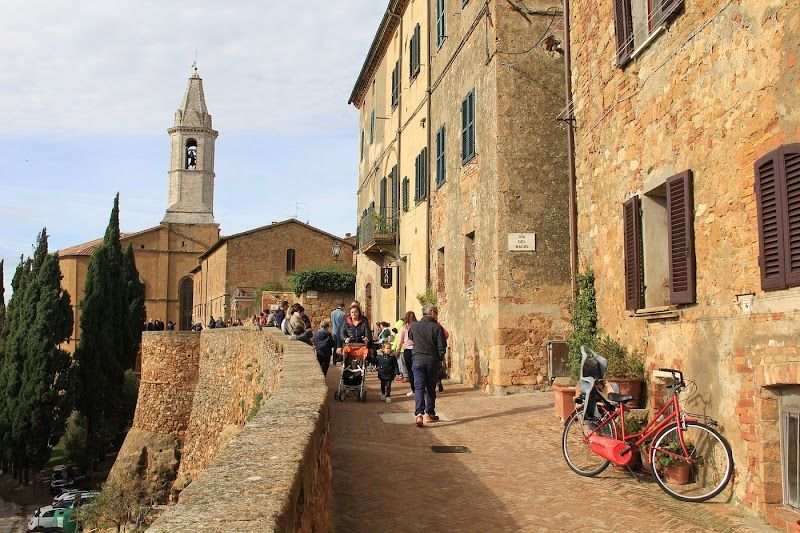
Pienza wins as your base camp. It's dead center geographically, has the best restaurant scene, and manages to feel like a real place rather than a museum. The town is small enough that you can walk end to end in 10 minutes, but every street has something worth looking at. Montepulciano is your backup choice if Pienza is booked, it's the biggest of the hill towns with more hotels and B&Bs. Only stay in Montalcino if you're here specifically for serious wine tasting and nothing else. The real move, though, is an agriturismo in the countryside between towns. You'll pay EUR 100-200 per night to wake up in the actual landscape, with views that stretch to the horizon and the kind of silence that makes you realize how much noise you live with back home.
The Wine Hierarchy You Need to Understand
There are three wines here and they follow a clear hierarchy of price and complexity. Start with Rosso di Montalcino: it's 100% Sangiovese aged just one year, lighter and easier to drink at EUR 4-8 per glass or EUR 12-25 per bottle. Then try Vino Nobile di Montepulciano, a Sangiovese-based blend aged two years with medium body and EUR 4-8 per glass, EUR 10-20 per bottle. Finally, have one glass of Brunello di Montalcino to understand what the fuss is about. It's the same Sangiovese grapes but aged four years minimum (five for Riserva), creating something powerful and complex that costs EUR 6-15 per glass, EUR 30-80+ per bottle. That progression lets you taste how time and technique transform the same grape into completely different experiences.
Getting Those Landscape Photos
Everyone wants the same three shots, and honestly, they're worth it. The cypress road near Monticchiello sits right on SP88 between Pienza and Montepulciano. You can park on the shoulder and walk into the field, it's free and farmers expect it. Cappella della Madonna di Vitaleta is that tiny chapel you see in every Tuscany calendar, located between Pienza and San Quirico d'Orcia with a 15-minute walk from where you can park. Poggio Covili has the cypress avenue that looks like nature arranged it for your Instagram, near Castiglione d'Orcia. All three are free and accessible from main roads. The light makes or breaks these shots: early morning gives you soft golden tones, late afternoon creates those long shadows that add drama. Midday sun flattens everything into tourist snapshot territory.
When to Go
April-June: The Sweet Spot
Hills explode in green, wildflowers carpet the fields, temperatures hover around 18-25°C. This is Val d'Orcia at its most alive, though you'll pay peak season prices and deal with crowds at major viewpoints.
September-October: Harvest Magic
The landscape turns golden, grape picking happens in the vineyards, and the light becomes almost honey-colored in late afternoon. Temperatures are perfect for walking and wine tasting.
July-August: Beautiful But Brutal
Temperatures hit 32-38°C, the hills turn brown and dormant, and every tourist in Europe seems to be here. The early morning and evening light is spectacular, but midday is unbearable.
November-March: For Solitude Seekers
Cool, quiet, and many restaurants close for the season. The landscape looks spare and dramatic, but you'll need to plan around limited opening hours and bring layers.
Ready to Visit Val d'Orcia?
Get a personalized itinerary tailored to your travel style and interests.
Plan Your Val d'Orcia TripMore Val d'Orcia Guides
1-2 Days in Val d'Orcia: Wine, Cheese & Cypress Roads
How to spend 1-2 days in Val d'Orcia: Pienza pecorino, Montalcino Brunello, Montepulciano cellars, the Vitaleta Chapel, thermal baths, and the famous cypress roads.
8 min
Val d'Orcia Wine Guide: Brunello, Vino Nobile & Rosso
Val d'Orcia wine guide: Brunello di Montalcino explained, Vino Nobile cellars in Montepulciano, Rosso as the smart choice, where to taste, and what to buy.
7 min