Val d'Orcia
Pienza
The Renaissance ideal city on a hilltop: one harmonious main street, the best pecorino in Tuscany, a papal palace with a hanging garden, and a panoramic walk that looks out over the Val d'Orcia to Montalcino.
About Pienza
Pienza is the smallest and most architecturally perfect of the Val d'Orcia towns. In the 1460s, Pope Pius II (born Enea Silvio Piccolomini in the village then called Corsignano) hired architect Bernardo Rossellino to transform his birthplace into an ideal Renaissance city. The result is the Corso Rossellino, a main street lined with stone buildings of perfect proportions, leading to Piazza Pio II with the cathedral (free, the interior has a luminous quality from the tall windows Pius II specified), the Palazzo Piccolomini (EUR 7, the papal palace with a hanging garden and a loggia overlooking the Val d'Orcia), and the Palazzo Borgia (now the Diocesan Museum, EUR 5). The panoramic walk along the south wall of the town looks across the entire Val d'Orcia valley to Montalcino. Pienza's other identity is as the pecorino capital of Tuscany: every other shop on the Corso sells sheep's milk cheese in a dozen varieties (fresco, semi-stagionato, stagionato, in walnut leaves, in ash, with truffle). A tasting plate costs EUR 6-10, a portion to take away EUR 3-8.
Things to Do
Top experiences in Pienza
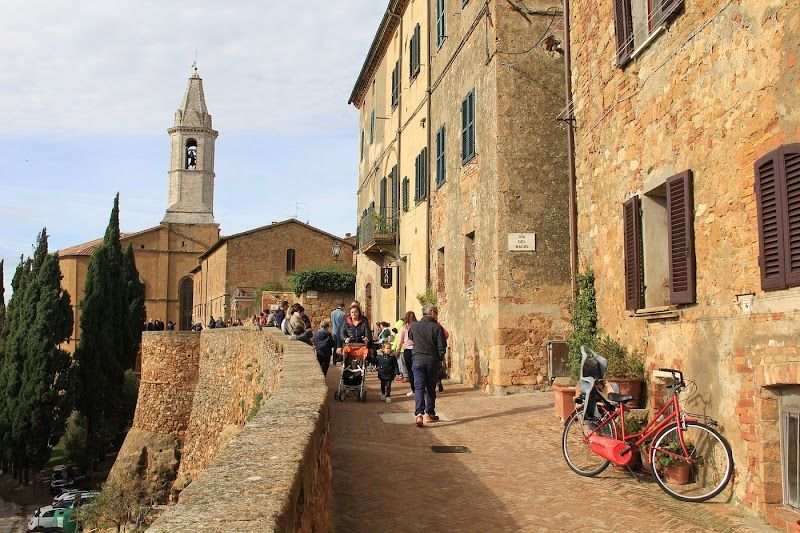
Pienza Panoramic Walk
The panoramic walk along Pienza's southern ramparts gives you the single best view in Val d'Orcia, period. You'll walk along medieval walls perched on the hilltop's edge, looking out over the postcard landscape that defines Tuscany: rolling clay hills striped with wheat fields, lone cypress trees marking ridgelines, and Montalcino's silhouette on the distant hill. The entire spectacle unfolds below you like a Renaissance painting, completely free and accessible 24/7. The walkway stretches about 800 meters along the old defensive walls, with several wooden benches and stone overlooks perfectly positioned for photos. You'll start from either end near Via dell'Amore or Via del Casello and meander slowly eastward, stopping constantly to absorb the view. The path feels like a private balcony over the valley, especially at sunset when the clay hills turn golden and the light shifts through amber and deep red. Even in peak summer, you'll rarely encounter crowds here. Most guides bury this in lists of Pienza attractions, but honestly, skip the overpriced pecorino tastings and head straight here. The walk takes 20 minutes if you're rushing, but plan 45 minutes to actually enjoy it. Come 30 minutes before sunset for the magic hour lighting, though morning light works beautifully too. Unlike most Tuscan viewpoints, this one costs nothing and delivers everything.
Piazza Grande
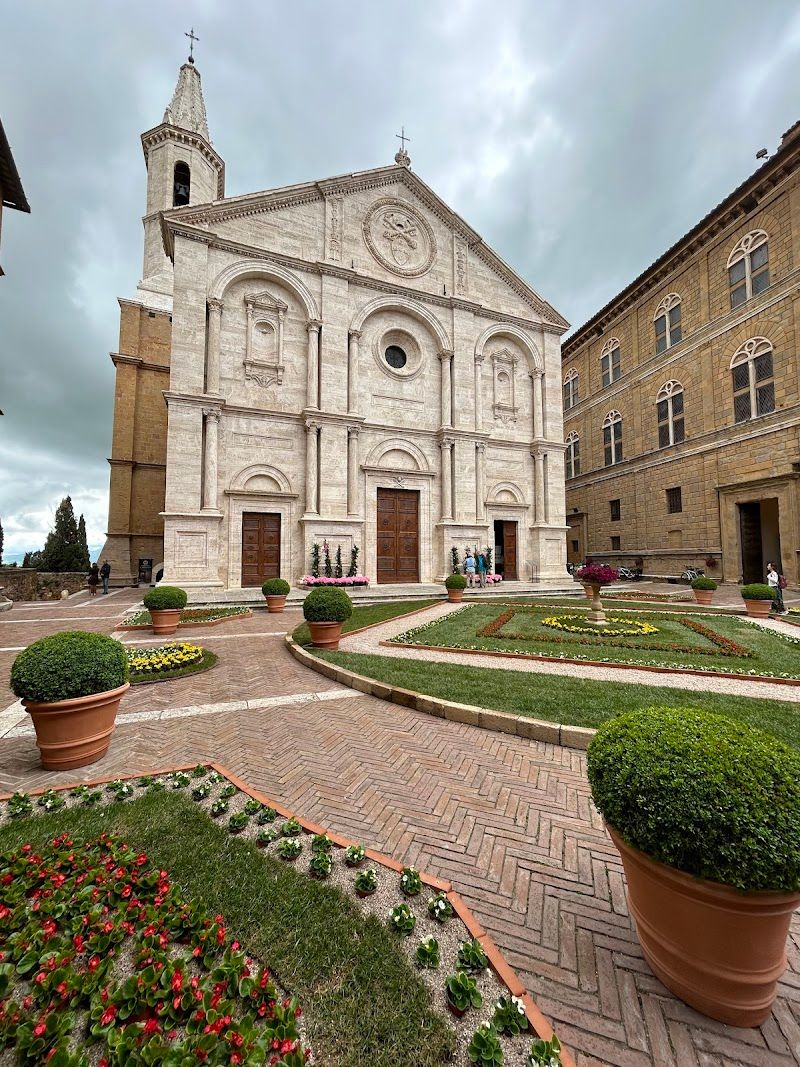
Piazza Pio II forms the heart of Pienza's Renaissance perfection, a perfectly proportioned square designed by Bernardo Rossellino in the 1460s for Pope Pius II. You'll find the cathedral with its unusual Gothic facade (rare for Renaissance Pienza), the papal palace, and the town hall arranged in harmonious symmetry. The cathedral's interior surprises with soaring Gothic arches and three stunning altarpieces, while the papal palace offers guided tours of opulent papal apartments. The piazza feels like stepping onto a movie set, which it literally has been for films like Gladiator and The English Patient. Morning light hits the travertine paving stones beautifully, and you'll often have the space nearly to yourself before 10am. The cathedral's acoustics are remarkable, and if you're lucky, you might catch choir practice echoing through the space. The papal palace's hanging garden provides unexpected views over the Val d'Orcia that most visitors miss entirely. Most guides oversell the papal palace tour (EUR 7), which feels rushed and overpriced for what you see. Instead, spend your time in the free cathedral and exploring the square's architectural details up close. The real magic happens at sunrise when you'll have this UNESCO World Heritage site practically to yourself, and the golden light makes every stone glow.
Cattedrale di Santa Maria Assunta
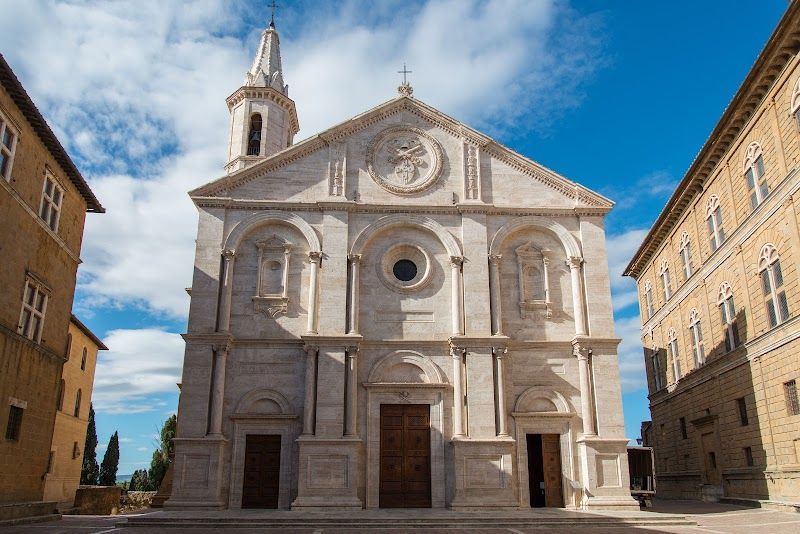
This cathedral represents Pope Pius II's bold attempt to create the perfect Renaissance church in his redesigned hometown of Pienza. You'll find an unusual hybrid of architectural styles: a Renaissance facade hiding a Gothic interior flooded with natural light through unusually tall windows. The interior feels more like a bright hall than a traditional dark cathedral, with clean lines and minimal decoration that was revolutionary for the 1460s. The wooden choir stalls and Flemish tapestries add warmth to the otherwise stark stone interior. Walking inside feels immediately different from other Italian churches. The light streaming through those oversized windows creates an almost Protestant atmosphere that Pope Pius II specifically wanted to embody humanist principles. You'll notice how the space echoes more than expected, and the wooden ceiling gives it an intimate scale despite the soaring windows. The side chapels contain decent altarpieces, but honestly, the architecture itself is the main attraction here. Most guides oversell this as a masterpiece, but it's really more interesting for what it represents than what it contains. The real appeal is understanding Pius II's vision and seeing how it influenced later church design. Skip the crypt unless you're particularly interested in papal history. The cathedral works best as part of exploring Pienza's main square rather than as a standalone destination, and you'll see everything worthwhile in 20 minutes.
Palazzo Piccolomini Pienza
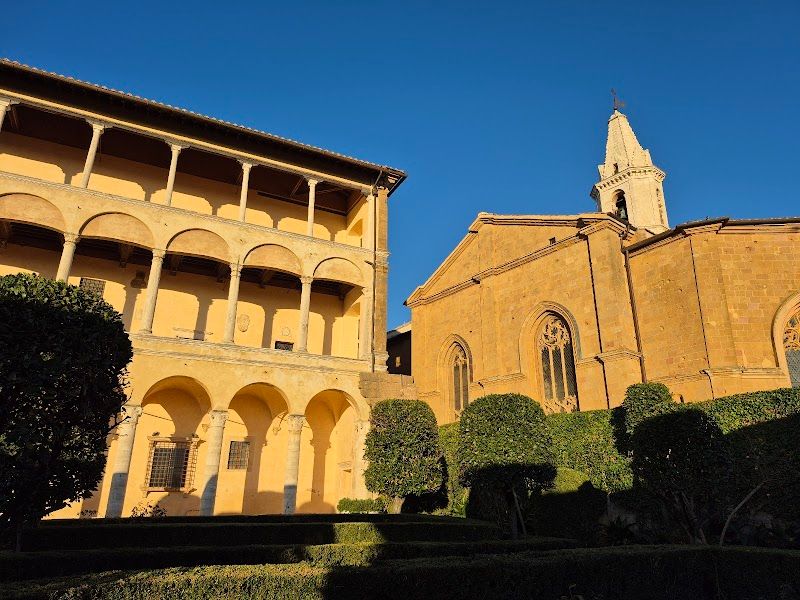
Palazzo Piccolomini is Pope Pius II's personal residence, built in the 1460s as the crown jewel of his utopian Renaissance city project. You'll see the papal apartments with original 15th century furnishings, a weapons room displaying period armor, and the spectacular hanging garden with its famous loggia. The loggia frames the Val d'Orcia landscape in what architect Bernardo Rossellino designed as the perfect marriage of Renaissance architecture and Tuscan countryside. The guided tour moves through intimate papal chambers where you can touch 500 year old furniture and peer into the Pope's private study. The real magic happens when you step onto the rear loggia: the view opens up like a Renaissance painting, with the Val d'Orcia rolling away in perfectly composed layers. The guide explains how Rossellino calculated every sight line to create this visual masterpiece, and you'll understand why this single view appears on countless Tuscany postcards. At EUR 7, this is exceptional value for a papal palace with original interiors intact. Most visitors rush through the indoor rooms to reach the loggia, but the papal apartments contain genuine treasures including Pius II's personal books and ceremonial objects. The tour runs every 30 minutes and is mandatory for entry, lasting about 45 minutes. Skip the expensive restaurants on the square afterward and grab paninis from the local shops instead.
Where to Eat
Restaurants and cafes in Pienza
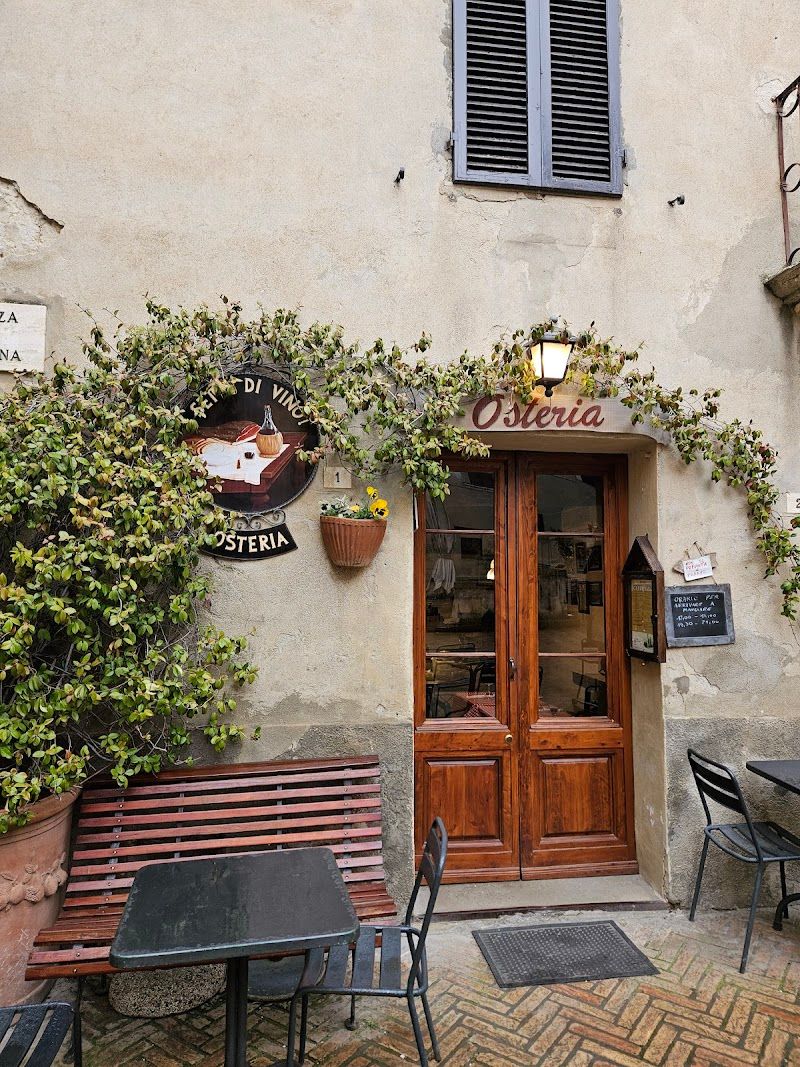
Osteria Sette di Vino
RestaurantFamily-run trattoria in the center of Pienza serving hand-rolled pici with ragu di cinghiale and local pecorino dishes. The wine list focuses on small Orcia Valley producers with Rosso di Montalcino starting at EUR 5 per glass. Pasta is made fresh each morning in the open kitchen visible from the dining room.
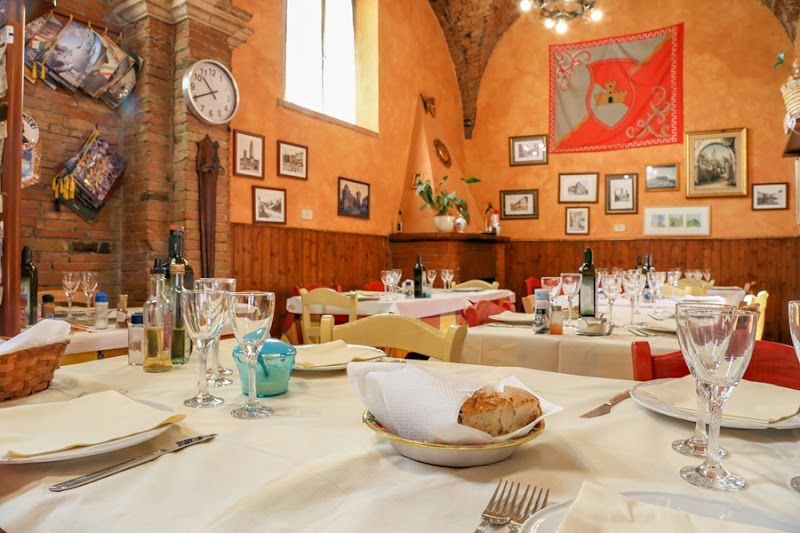
La Grotta
RestaurantStone-walled restaurant built into a 13th-century wine cellar beneath Montepulciano serving ribollita and pappardelle with duck ragu. The cheese cart features 15 varieties of local pecorino and the wine list highlights vertical tastings of Vino Nobile. Brick vaulted ceilings and candle lighting create medieval atmosphere.
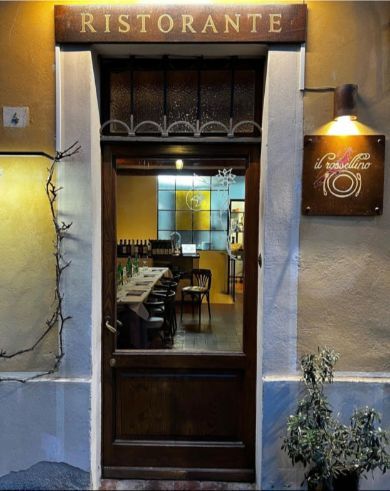
Il Rossellino
RestaurantSmall restaurant on Pienza's main square serving seasonal Tuscan menu with outdoor tables facing the Palazzo Piccolomini. Known for cacio e pepe with Pienza pecorino and pici all'aglione, a garlic and tomato sauce traditional to the valley. The kitchen sources lamb from Crete Senesi shepherds.
Getting Here
Getting There
No public transport within the town. Parking outside the walls at P1 (EUR 1.50/hour). Bus from Siena 2-3 times daily (75 min).
On Foot
The entire town takes 30 minutes to walk end to end. Flat within the walls, gentle slope to the panoramic walk.
Insider Tips
Panoramic walk at sunset
The walkway along the south wall of Pienza looks out over the entire Val d'Orcia. At sunset, the light on the clay hills turns golden and Montalcino is silhouetted on the horizon. Free, uncrowded, and the single best view in the valley.
Pecorino tasting strategy
Every shop offers free tastings. Start with fresco (fresh, mild), move to semi-stagionato (firmer, nuttier), then stagionato (hard, sharp). The versions aged in walnut leaves or ash have the most interesting flavour. Buy what you like for EUR 3-8 per portion.
Palazzo Piccolomini garden
The hanging garden of the Palazzo Piccolomini (included in the EUR 7 ticket) has a geometric Italian garden with a loggia that frames the Val d'Orcia view. It is the Renaissance ideal of the relationship between architecture and landscape, and it is the most photographed garden in southern Tuscany.
Nearby Neighborhoods
Continue exploring
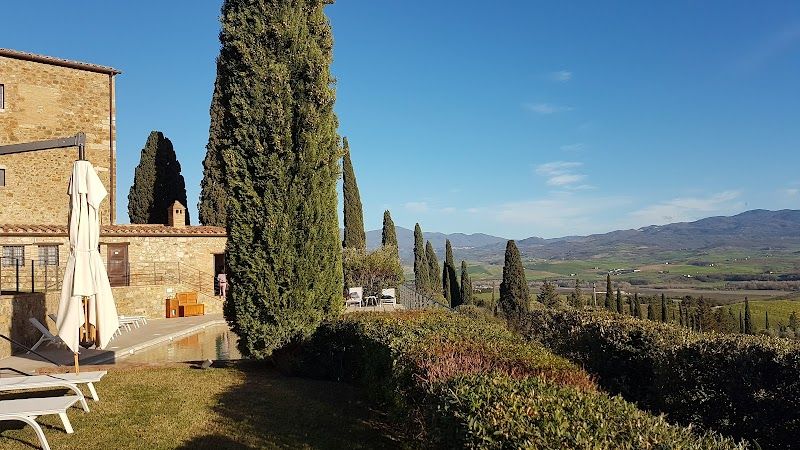
Montalcino
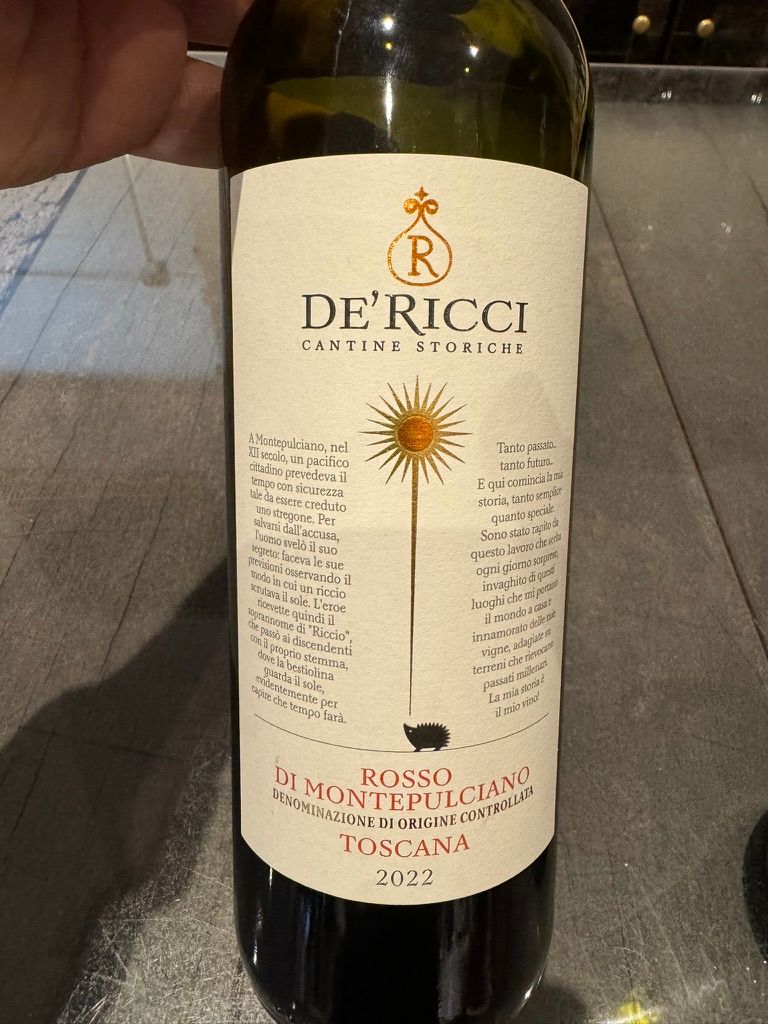
The hilltop wine town: Brunello in the fortress, Rosso at the enotecas, vineyards visible from every terrace, and the quiet confidence of a place that produces one of the world's great reds.
Montepulciano
The largest and most dramatic Val d'Orcia town: a main street climbing steeply to a Renaissance piazza, underground cellars aging Vino Nobile in tufa caves, and the energy of a place that functions as a real town, not a museum.
Cypress Roads & Countryside
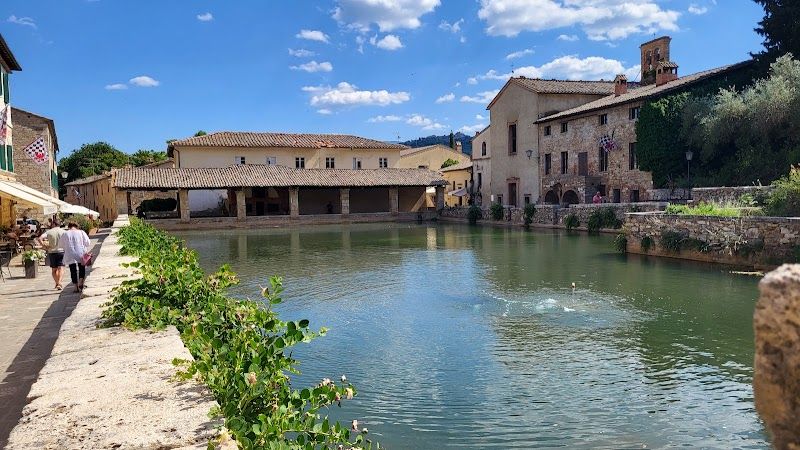
The landscape between the towns that is the actual UNESCO World Heritage Site: cypress avenues disappearing over ridgelines, the lone chapel between two trees, thermal springs in a valley, and the Tuscan countryside that every photograph tries to capture.
Plan a trip featuring Pienza
Get a personalized Val d'Orcia itinerary with Pienza built in.
Start Planning