1-2 Days in Siena: First-Timer's Itinerary
Piazza del Campo at sunset, the Duomo marble floor, Torre del Mangia, and pici with wild boar ragu
How to spend 1-2 days in Siena: the Campo, Torre del Mangia, the Duomo and OPA SI Pass, contrade exploration, and where to eat pici and drink Chianti.
1-2 Days in Siena: First-Timer's Itinerary
Siena is the anti-Florence. Where Florence throws monuments at you until you're numb, Siena wraps around you like a medieval hug. The whole city revolves around one scalloped square where horses still race twice a year and locals still gather at sunset. You can see everything that matters in one full day, but two days lets you understand why people never really leave this place. This isn't about checking boxes. It's about sitting in that famous square until you get why Sienese people think they live in the center of the universe.
The Campo, the Tower, and the Cathedral
Your first day is about the big three: the shell-shaped square that makes every other piazza look boring, the tower climb that will ruin your legs but reward your eyes, and the cathedral complex that proves Siena was once rich enough to rival Rome. This is tourist Siena, but it's tourist Siena for a reason. Everything else in the city radiates out from these three spots.
- Piazza del Campo
- Torre del Mangia climb
- Duomo complex
Take the SITA bus from Florence's central station (75 minutes, EUR 8-10) or drive and park at Stadio Comunale or Fortezza Medicea (EUR 2 per hour, then a 10-minute uphill walk). Skip the overpriced parking inside the walls unless you enjoy paying EUR 4 per hour to walk the same distance. The bus drops you at Piazza Gramsci, and the 5-minute walk down Via Curtatone gives you your first glimpse of why Siena's skyline looks like a medieval movie set.
Morning: Piazza del Campo
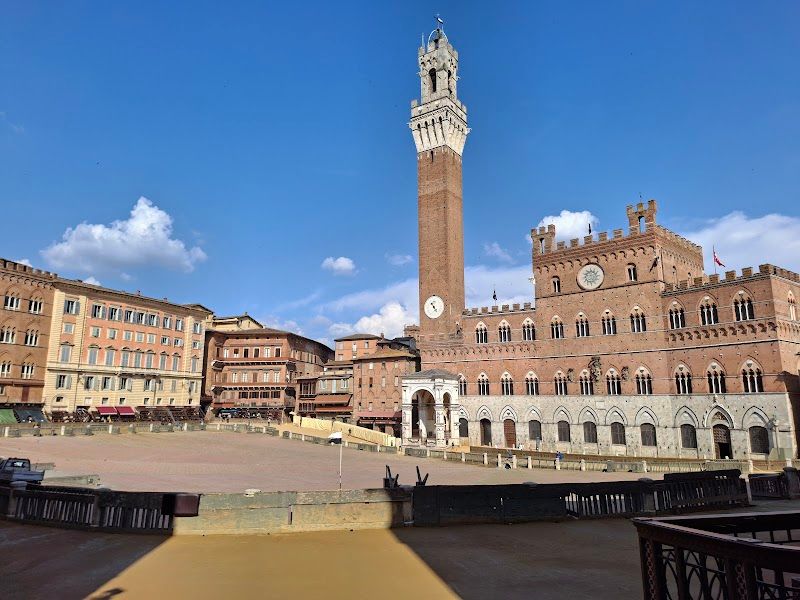
Walk straight to Piazza del Campo and do absolutely nothing for 30 minutes. Sit on the brick slope where everyone sits, not at a cafe table where you'll pay EUR 5 for a coffee that costs EUR 1.50 at the bar. The Campo isn't just a square, it's a shallow amphitheater that tilts toward the Palazzo Pubblico like water flowing toward a drain. Count the nine sections of brick pavement, each representing one of the nine medieval rulers. Notice how every building around the rim is exactly the same height. This is what urban planning looked like when cities had actual rules. Get your coffee from Bar Il Palio on the northwest side (EUR 1.50 at the bar, EUR 4 at a table for the same coffee but with the view).
Mid-Morning: Torre del Mangia
Get to Torre del Mangia at 10 AM when it opens, not because you're eager but because they only let 25 people up at a time and summer lines get stupid by 11 AM. The EUR 10 ticket gets you 400 steps of medieval cardio and the best view in Tuscany. Yes, better than Florence's dome. From the top you can see the geometry of Siena spread below you in three ridges, the contrade districts laid out like puzzle pieces, and the Tuscan hills rolling toward infinity. The tower sways slightly in wind. This is normal and probably fine. Probably. The climb takes 15 minutes up, 30 minutes of photos and wheezing, 10 minutes down.
Late Morning: Duomo Complex
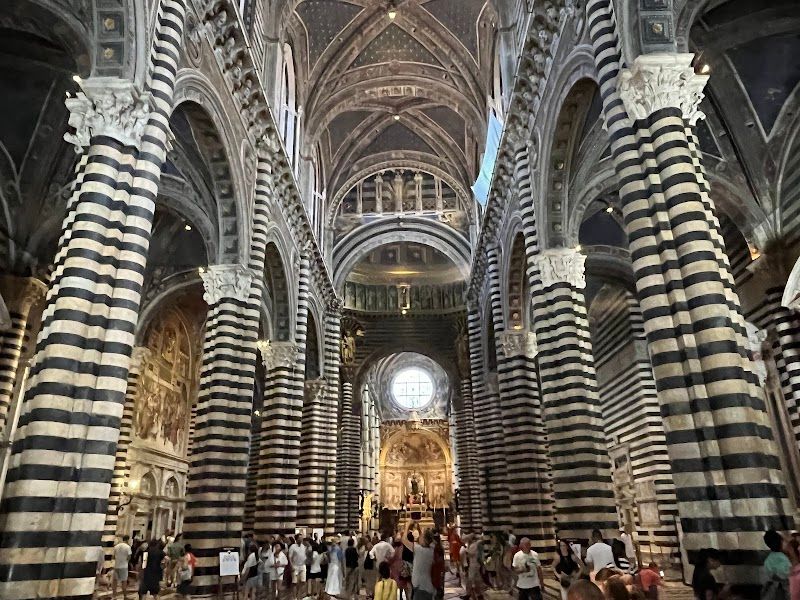
Walk up Via di Citta to the Duomo, stopping to window shop the ceramic stores and wondering who buys EUR 200 hand-painted plates. Buy the OPA SI Pass (EUR 13) at the ticket office across from the cathedral entrance. This covers the cathedral interior, Piccolomini Library, baptistery, crypt, and the Facciatone viewpoint. Do not buy individual tickets like a tourist amateur. Start with the cathedral interior, which looks like someone decided to stripe a building like a zebra and then cover every surface with marble, frescoes, and gold. The marble floor is only uncovered August through October, and it's genuinely worth timing your visit around. The rest of the year you're walking on protective panels wondering what's underneath. The Piccolomini Library is in the left transept, a small room with Pinturicchio frescoes that most people walk past because they're already overwhelmed.
Lunch
Find a trattoria on the side streets off Via di Citta, not on Via di Citta itself where you'll pay tourist prices for the same food. Order pici cacio e pepe (thick hand-rolled pasta with cheese and pepper, EUR 9-12) or pici with wild boar ragu (EUR 12-14) if you want the full Tuscan experience. The pasta looks like thick spaghetti rolled by someone's nonna, which it probably was. A glass of Chianti Classico runs EUR 4-6 and comes from vineyards you can see from the city walls. Skip the restaurants with English menus posted outside. Find the places where the menu is handwritten in Italian and the waiter looks mildly annoyed that you don't speak the language.
Afternoon: Contrade Wandering
Spend your afternoon walking through the contrade neighborhoods north and west of the Campo. Siena is divided into 17 districts, each with its own flag, symbol, and deep rivalry with its neighbors. Look for the ceramic plaques on building corners marking each contrada's territory, the fountains decorated with district symbols, and the small museums that are usually closed but worth finding anyway. The Aquila (Eagle), Civetta (Owl), and Leocorno (Unicorn) contrade are closest to the center and easiest to explore. This isn't sightseeing, it's understanding how a medieval city still organizes itself. Every person born in Siena belongs to a contrada for life, and twice a year they try to beat the hell out of each other in a horse race around the Campo.
Evening and Dinner
Buy a bottle of wine from an alimentari (grocery store) and join the locals sitting in the Campo at sunset. This is what Sienese people do, and it costs EUR 8 for wine that would cost EUR 40 in a restaurant. Watch the light change on the Palazzo Pubblico and listen to the city's acoustic center fill with conversation in six languages. For dinner, walk behind the Campo to the streets around Via del Porrione. Osteria Le Logge (Via del Porrione 33) does refined Tuscan food in a 12th-century pharmacy, with dinner running EUR 35-45 per person with wine. Order the ribollita (bread and vegetable soup) in winter or the tagliata di chianina (sliced Chianina beef) any time of year. If you want something cheaper and more authentic, find Trattoria Papei (Piazza del Mercato 6), where the same family has been serving simple food since 1933 and dinner costs EUR 20-30 per person.
Deep Siena
Day two is for people who want to understand Siena instead of just photographing it. You'll see paintings by artists who never made it into Art History 101 but defined how an entire city saw itself, walk through neighborhoods where tourists don't go, and visit the places that locals actually consider important. This is quieter, slower, and more real than your first day.
- Pinacoteca Nazionale
- Panoramic views from Santa Maria dei Servi
- San Domenico and Fontebranda
Morning: Pinacoteca Nazionale
Start at the Pinacoteca Nazionale (EUR 4, Via San Pietro 29), the most undervisited museum in Tuscany. This is where you learn that Sienese painters developed their own style completely separate from Florence, and frankly it's often better. Duccio, Simone Martini, and the Lorenzetti brothers painted saints that look like real people and landscapes that look like the hills outside your window. The museum is usually empty, which means you can stand in front of a 700-year-old masterpiece without someone taking a selfie next to you. The building itself is a 15th-century palace where the rooms are as interesting as the paintings.
Mid-Morning: Santa Maria dei Servi
Walk south and uphill to Santa Maria dei Servi, a church that most guidebooks ignore but locals love for the view. The church itself is fine but unremarkable 13th-century Gothic. The reason to come is the small terrace next to the church that gives you the best panoramic view of Siena's historic center. You can see the whole city laid out below you: the three ridges, the towers, the way the medieval streets follow the contours of the hills. This view explains Siena's geography better than any map, and you'll usually have it to yourself.
Late Morning: San Martino Quarter
Explore the San Martino quarter south of the Campo, the most residential part of the historic center. This is where Sienese people actually live, shop for groceries, and complain about tourists. The streets are narrower, the restaurants are cheaper, and you'll hear more Italian than English. Look for Via del Porrione and the surrounding streets, where small trattorias serve lunch to locals who work in the city center. The contrada museum here is usually closed, but the fountain and street decorations show you how seriously these neighborhoods take their identity.
Afternoon: San Domenico and Fontebranda
Walk to Basilica di San Domenico (free admission), a massive brick church that looks like a fortress because it basically is. This is where St. Catherine of Siena prayed, and her head is preserved in a chapel that's either deeply spiritual or deeply creepy depending on your perspective. The church is austere in a way that makes the Duomo look like a jewelry store, and the views from the small park next to it are excellent. Walk downhill to the Fontebranda fountain, a brick tunnel that's been supplying water to this part of the city since the 13th century. It's still working, still beautiful, and proof that medieval engineering was sometimes better than what we build today.
Palio Season
If you're visiting during Palio season (late June/early July or early-mid August), the trial races called prove happen in the Campo on the three days before each race. These are free, less crowded than the actual Palio, and give you a real sense of the atmosphere without the chaos. You'll see the horses, hear the drums, watch grown adults in medieval costumes take a horse race more seriously than most people take their jobs. The prove usually happen in the evening around 7 PM, and you can walk right into the Campo to watch.
Practical Notes
All prices listed in EUR. Credit cards accepted most places, but bring cash for small shops and market stalls.
Siena is compact and walkable but built on hills. Wear comfortable shoes and accept that your calves will hurt.
Most churches close 12:30-3 PM. Plan accordingly or spend lunch annoyed at locked doors.
The city center is closed to cars except for residents. Don't even think about driving into the historic center.
August is hot, crowded, and expensive. Spring and fall are better for weather and prices.
Ready to Visit Siena?
Get a personalized itinerary tailored to your travel style and interests.
Plan Your Siena TripMore Siena Guides
First Time in Siena: What You Need to Know
Everything before your first visit to Siena: getting there from Florence, parking, the OPA SI Pass, contrade culture, where to eat, and why you should stay overnight.
6 min
Where to Eat in Siena: Pici, Panforte & Chianti Classico
Siena food guide: pici pasta (EUR 10-14), ribollita, ricciarelli and panforte, Chianti Classico by the glass, and where to eat without the Campo view tax.
6 min