Italy
Siena
Piazza del Campo, the Palio, contrade rivalries that outlast centuries, and pici with wild boar ragù for half what Florence charges
Best Time
April-June and September-October
Ideal Trip
1-2 days
Language
Italian, limited English outside hotels
Currency
EUR
Avg Temp
14°C / 57°F
About Siena
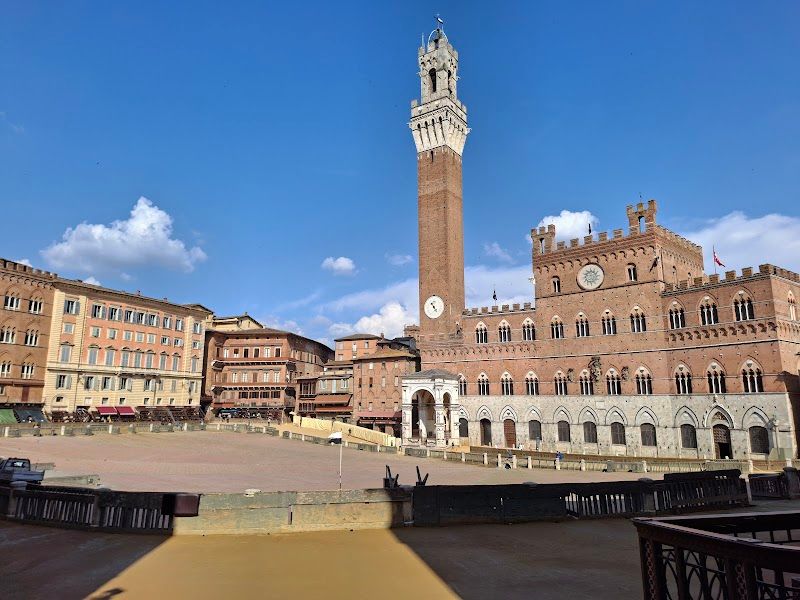
Siena is the medieval city that refused to become Florence, and the result is a place that feels like it was preserved in amber sometime around 1348. The shell-shaped Piazza del Campo is the finest public square in Italy: a sloping brick fan that functions as the city's living room, where students sit on the paving stones with bottles of wine, tourists eat gelato on the edge of the Fonte Gaia fountain, and twice a year (2 July and 16 August) the entire space transforms into a dirt horse-racing track for the Palio, the most intense sporting event in Europe.
The 17 contrade (city wards) are not a tourist attraction. They are a living social system that has organised Sienese life since the Middle Ages: each has its own church, museum, fountain, and patron saint, and the rivalries between them are real, inherited, and permanent. A member of the Oca (Goose) contrada does not marry someone from the Torre (Tower) contrada without consequences. The Palio is the visible expression of this system, but the contrade define daily life in Siena year-round.
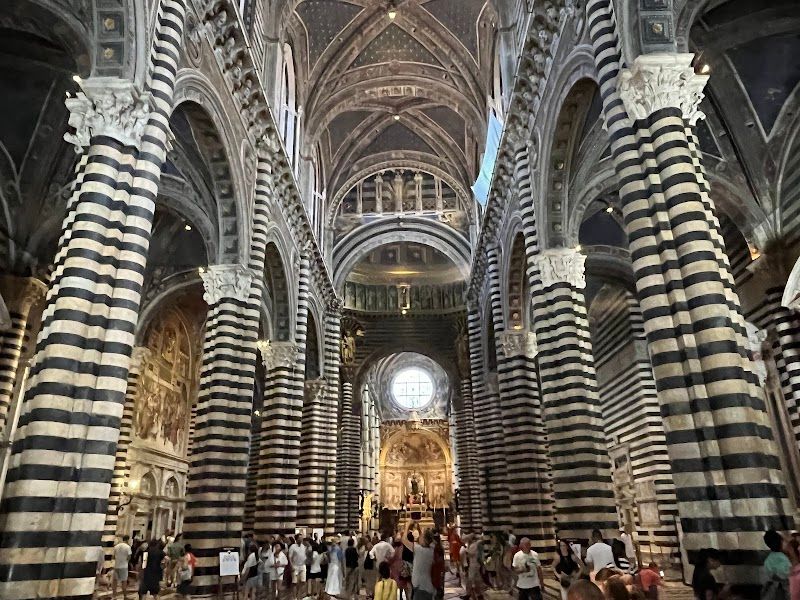
The Duomo (cathedral) is one of the great buildings of Europe: the black-and-white striped marble exterior is dramatic enough, but the interior has a marble floor with 56 narrative panels created by 40 artists over 200 years, most of which are covered by protective flooring and revealed only between August and October. The Piccolomini Library inside has Pinturicchio frescoes that are among the most vivid Renaissance paintings anywhere. Entry EUR 5 for the cathedral, EUR 13 for the combined OPA SI Pass covering the cathedral, library, baptistery, crypt, and the Facciatone viewpoint.
Food in Siena is Tuscan without the Florence markup. Pici (thick hand-rolled pasta) with wild boar ragu or cacio e pepe costs EUR 10-14 at a proper trattoria. Ricciarelli (soft almond cookies) and panforte (dense spiced fruit cake) are Siena's own sweets, sold at every bakery for EUR 2-4 per portion. A full dinner with wine costs EUR 25-40 per person, which in Florence would be EUR 35-55 for the same quality.
Neighborhoods
Each district has its own personality
Piazza del Campo & Centro
The shell-shaped square that is the finest public space in Italy: the sloping brick fan where students drink wine, tourists eat gelato, and twice a year horses race bareback around the edge
Duomo & San Giovanni
The cathedral quarter on the hill above the Campo: black-and-white striped marble, 200 years of floor panels, Renaissance frescoes, and the unfinished nave wall you can climb for the view
Contrada della Selva & North
The residential north where contrada life is real, not performed: neighbourhood fountains, local trattorias with no English menus, and the basilica where Saint Catherine had her visions
Things to Do
Top experiences in Siena
Piazza del Campo
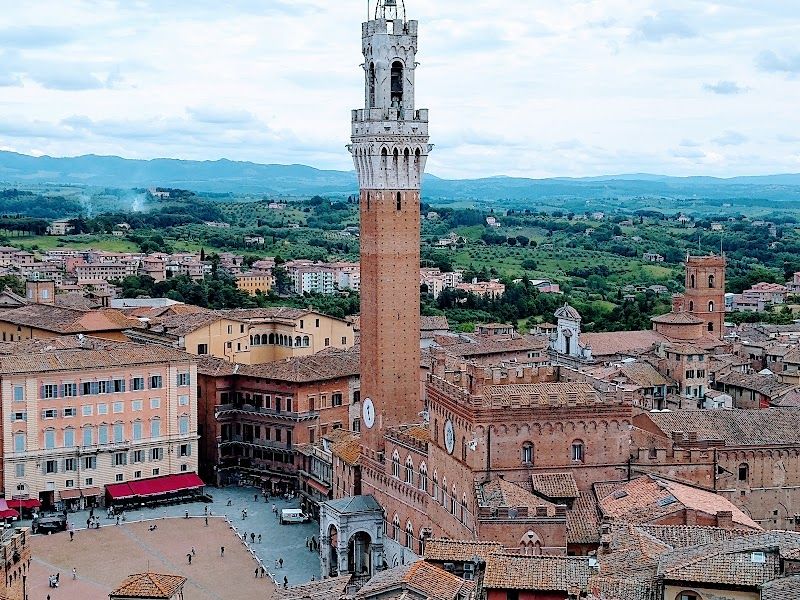
Piazza del Campo is Europe's most beautiful medieval square, a shell-shaped amphitheater of red brick that slopes down like a natural theater toward the Gothic Palazzo Pubblico. You're looking at 14th-century urban planning at its finest: nine white marble lines divide the fan-shaped space, representing the Council of Nine who ruled Siena during its golden age. The Fonte Gaia fountain anchors the high end while the 102-meter Torre del Mangia dominates the skyline at the bottom. Walking into the Campo feels like entering a living postcard where students sprawl on warm brick, tourists navigate gelato vendors, and pigeons patrol for dropped paninis. The sloping surface works like stadium seating, so you can sit almost anywhere and watch the theater of daily life unfold below. Twice yearly the space transforms completely when they dump sand everywhere for the legendary Palio horse race, but most of the time it's Siena's outdoor living room where conversations echo off surrounding palazzos. Skip the overpriced cafes ringing the square (EUR 4 for espresso, EUR 8 for a mediocre panino) and grab supplies from any alimentari instead. The restaurants charge a 25% premium for Campo views that aren't even that great from table level. Come at sunset when the brick glows golden and locals appear with wine bottles, or early morning when you can actually hear the fountain over the chatter.
Siena Cathedral (Duomo di Siena)
Siena Cathedral stands as Italy's most striking example of black and white striped marble architecture, built over two centuries starting in the 1200s. The real treasure lies beneath your feet: 56 intricate marble floor panels telling biblical stories, created by 40 different artists over 200 years. You'll also find Pinturicchio's vibrant frescoes in the Piccolomini Library that look like they were painted yesterday, not 500 years ago. The unfinished Facciatone offers panoramic views across Siena's terracotta rooftops. Walking into the cathedral feels like entering a zebra-striped jewel box where every surface tells a story. The marble floors are usually covered by protective boarding, but when exposed (late August to October), they transform the space into a walkable art gallery. The Piccolomini Library glows with Renaissance colors, while climbing the Facciatone gives you breathing space and sweeping views after the intensity inside. Audio guides help decode the complex iconography. Skip the basic EUR 5 cathedral-only ticket and get the OPA SI Pass for EUR 13 (EUR 15 during floor season). Most visitors rush through without realizing the crypt and baptistery are equally impressive. The library is small but spectacular, don't miss it. If you're here during floor season, arrive early as crowds build quickly. The Facciatone climb is easier than Torre del Mangia with better views.
Fortezza Medicea
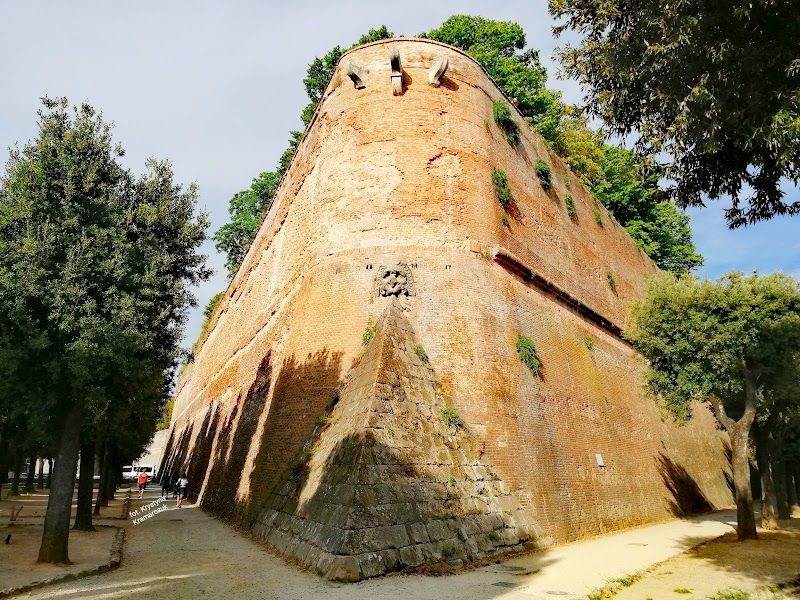
The Fortezza Medicea sits on Siena's northern edge as a massive 16th-century star-shaped fortress built by Cosimo I de' Medici to control the conquered city. You'll find thick brick walls, angular bastions, and surprisingly well-maintained gardens inside what's now a public park. The real draw is the Enoteca Italiana, Italy's official wine showcase housed in the fortress cellars, where you can taste wines from every Italian region without the tourist markup you'll find elsewhere in Siena. Walking the perimeter walls takes about 20 minutes and offers genuinely spectacular views over the Tuscan hills, especially toward the southeast where you can spot medieval towers dotting the countryside. Inside the walls, locals spread blankets on the grass for impromptu picnics while kids play football in the open areas. The atmosphere feels more like a neighborhood park than a historical monument, which is exactly what makes it special. The Enoteca's tasting room occupies atmospheric vaulted chambers that stay cool even in summer heat. Most guidebooks oversell this as a major historical site when it's really best appreciated as a peaceful escape from Siena's crowded centro storico. The fortress itself has limited historical displays and no museum worth paying for. Focus your time on the wall walk at golden hour and the Enoteca's wine selection, where tastings start around 8 EUR. Skip weekends when local families pack the grassy areas.
Pasticceria Nannini
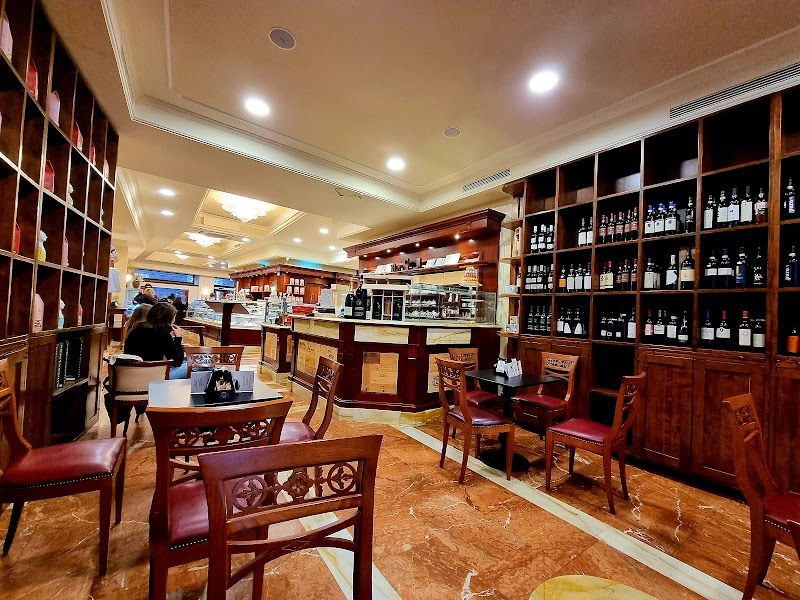
Historic pastry shop opened in 1911, famous for ricciarelli almond cookies and panforte spice cake made from original recipes. The marble-topped bar serves espresso alongside fresh cornetti and cantucci throughout the day. The shop also sells packaged sweets that make authentic Sienese souvenirs.
Palazzo Pubblico & Museo Civico
The Palazzo Pubblico houses Siena's most important art collection, centered around Ambrogio Lorenzetti's extraordinary Allegory of Good and Bad Government frescoes from 1338. These aren't just pretty paintings: they're a complete political manifesto painted across three walls, showing exactly what happens when rulers govern well versus badly. You'll also see Simone Martini's stunning Maesta and the controversial Guidoriccio equestrian portrait that art historians still argue about. You enter through the palazzo's Gothic courtyard and climb marble stairs to the first floor where the frescoes await. The Sala della Pace stops everyone in their tracks: Lorenzetti's good government scene shows merchants trading peacefully while farmers tend orderly fields, then the bad government wall reveals the same landscape in ruins with armed thugs roaming the streets. The contrast is startling and surprisingly relevant today. The adjoining Sala del Mappamondo feels more formal with its towering Maesta dominating one wall. Most visitors rush past this for the Torre del Mangia, which is backwards thinking. The museum ticket costs EUR 10 alone, or EUR 15 combined with the tower (saving you EUR 5). Skip the upper floors unless you're obsessed with minor 14th century works. Focus your hour on the two main rooms: they contain some of Europe's most sophisticated medieval political commentary, and unlike most fresco cycles, these tell a complete story you can actually follow.
Santa Maria della Scala
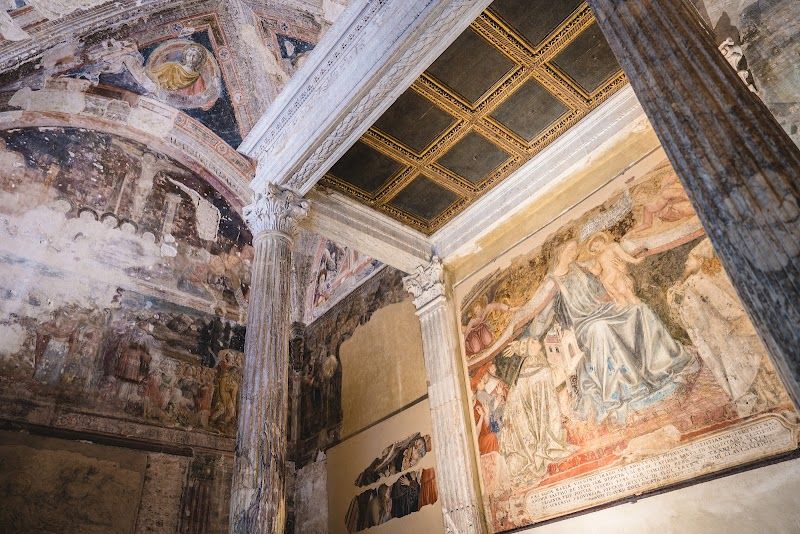
Santa Maria della Scala operated as Europe's oldest hospital for over 800 years before transforming into Siena's most underrated museum. You'll explore a labyrinth of medieval halls, Renaissance chapels, and underground Etruscan chambers that most tourists skip entirely. The star attraction is the Pellegrinaio hall, where Domenico di Bartolo's extraordinary 15th-century frescoes show orphans being bathed, pilgrims receiving care, and nuns preparing medicines with documentary precision. The visit feels like archaeological detective work as you descend through layers of Sienese history. Medieval hospital wards lead to ornate sacristies, then down stone steps into pre-Roman tunnels where Etruscan artifacts sit in climate-controlled cases. The atmosphere shifts from clinical medieval efficiency upstairs to mysterious ancient worship below. You'll often have entire rooms to yourself, especially the haunting underground sections where your footsteps echo off stone walls. Most guides completely ignore this place, which means you get extraordinary art without crowds but terrible signage in English. The €9 entry fee is excellent value compared to packed attractions nearby. Skip the top floors entirely, they're mostly administrative displays. Focus your energy on the Pellegrinaio frescoes and the underground archaeological areas, both genuinely spectacular and completely tourist-free.
Museo dell'Opera del Duomo
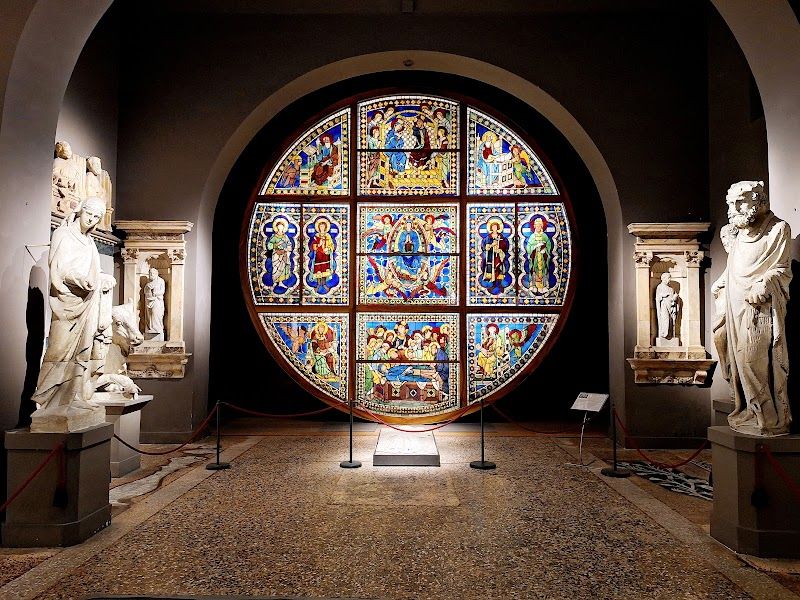
This museum houses Duccio's Maestà, the altarpiece that changed Italian art forever when it was completed in 1311. You'll see both sides of this massive work: the front shows the Virgin and Child surrounded by saints, while the back tells Christ's passion story across 26 panels. The museum also displays original statues from the cathedral's facade by Giovanni Pisano, letting you examine details impossible to see from street level. The visit flows chronologically through Sienese art history, but everyone comes for the Maestà room on the first floor. Standing before this golden masterpiece feels almost overwhelming: the faces are impossibly expressive for 14th century painting, and you can spend ages discovering tiny narrative details. The top floor terrace offers spectacular views over Siena's terracotta rooftops, with the Torre del Mangia perfectly framed. Most guides oversell the entire collection when really it's about three highlights: the Maestà, Pisano's statues, and that terrace view. The ground floor rooms feel like filler compared to upstairs. Entry costs €8, or €15 combined with the cathedral (worth it). Skip the audio guide and use that €5 for gelato instead: the wall texts are perfectly adequate in English.
Fonte Gaia
Fonte Gaia sits at the highest point of Piazza del Campo's slanted shell, a white marble fountain that's been the square's centerpiece for over 600 years. The rectangular basin features carved reliefs showing biblical scenes and allegorical figures representing virtues, all framed by elegant Gothic arches. What you're seeing is actually a faithful 19th-century copy: the original weathered panels by master sculptor Jacopo della Quercia are safely displayed in Santa Maria della Scala museum, where you can study the intricate details up close. The fountain creates a natural gathering spot where locals fill water bottles and tourists rest between exploring the surrounding medieval buildings. Water still flows from the carved spouts, just as it did when the fountain first brought fresh water to this hilltop square in 1419. The marble gleams white against the red brick Palazzo Pubblico behind it, and you'll often see people sitting on the steps leading up to it, using it as a backdrop for photos. Most guidebooks make this sound more spectacular than it actually is. It's pleasant to look at and historically significant, but don't expect to be blown away: the replica lacks the patina and character of the original. Save your real fountain admiration for the originals in the museum, which cost 8 EUR to visit. The fountain works best as part of experiencing the entire Campo rather than a destination itself.
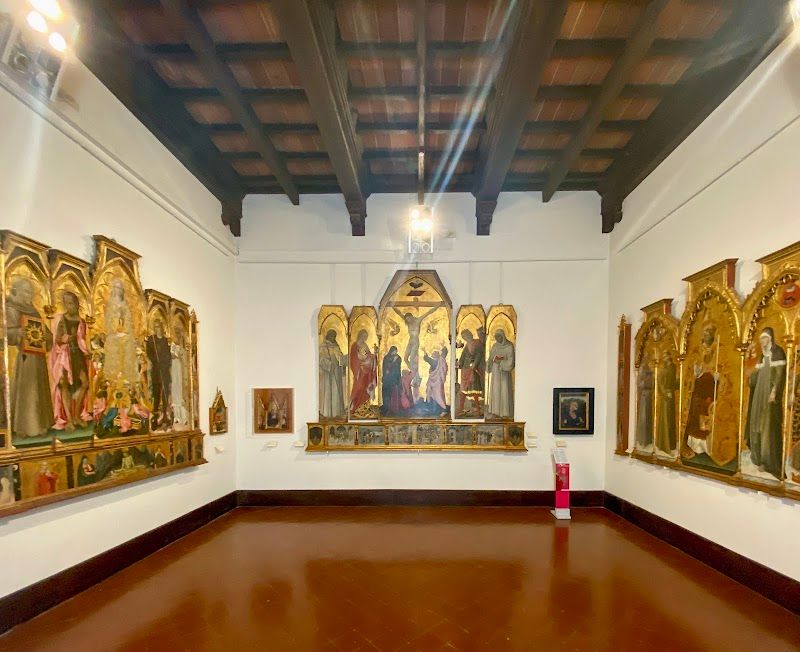
Pinacoteca Nazionale
The Pinacoteca Nazionale houses the world's greatest collection of Sienese School paintings, spanning from the 1200s through the Renaissance in two connected medieval palaces. You'll see works by Duccio, Simone Martini, and the Lorenzetti brothers that show how Siena developed a distinctly different artistic style from Florence, with more Byzantine influence and ethereal gold backgrounds. The collection includes Duccio's stunning polyptych fragments and Pietro Lorenzetti's sublime Birth of the Virgin. The chronological layout across 30 rooms tells the story of Siena's artistic golden age perfectly. You start with primitive religious panels and progress through increasingly sophisticated works that rival anything in the Uffizi. Room 7 holds the masterpieces: Duccio's Madonna and Child panels feel almost alive under the careful lighting. The upper floors get quieter, and by the time you reach the later Renaissance works, you'll often have entire rooms to yourself. Admission costs €4, making this one of Italy's best art bargains. Most visitors rush through to tick boxes, but you should linger in rooms 4 through 9 where the real treasures live. Skip the ground floor temporary exhibitions unless the topic genuinely interests you, they're usually academic and dry. The audio guide costs €3 extra and actually adds valuable context about Sienese painting techniques.
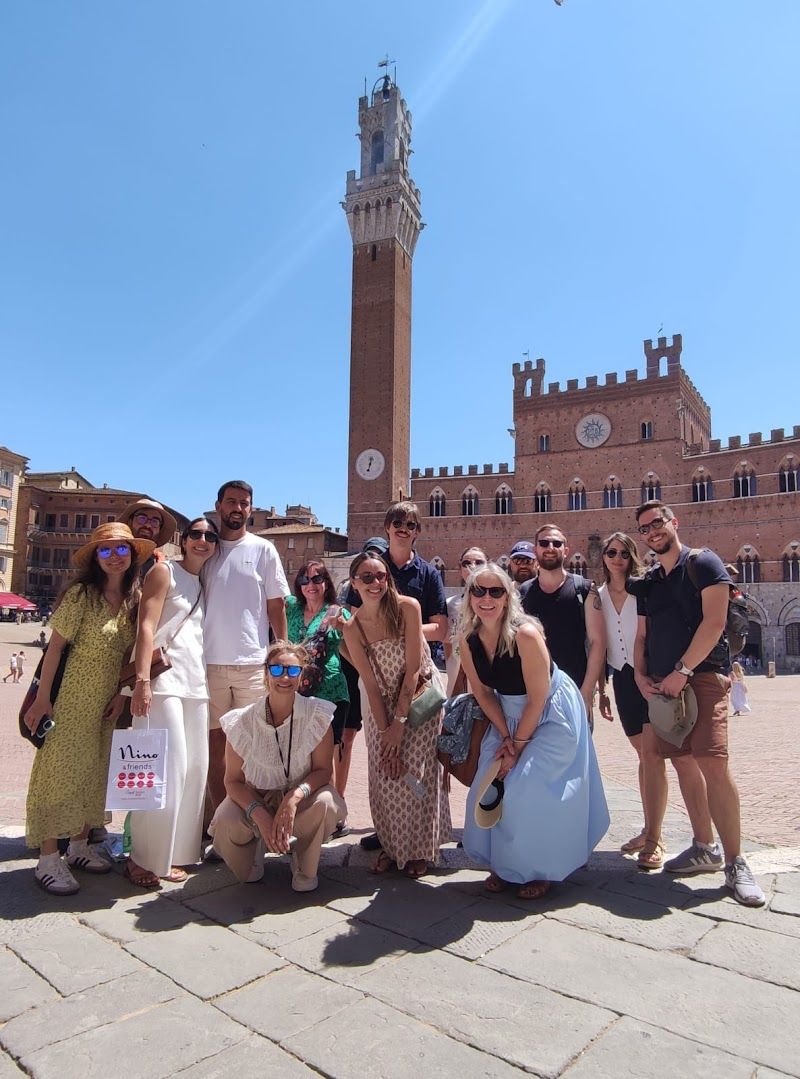
Contrade and Palio Walking Tour
This specialized tour takes you deep into Siena's contrada system, the 17 neighborhood districts that have defined the city's identity since medieval times. You'll visit contrada museums displaying centuries of Palio silks and silver, see the animal-emblemed fountains that mark each territory, and learn how these rivalries still shape daily life. Your guide explains the Byzantine rules governing the famous bareback horse race held twice yearly in the Piazza del Campo, plus the year-round ceremonies that keep these traditions alive. The 2.5-hour walk winds through narrow streets where each contrada's symbols appear on flags, doorways, and street art. You'll hear stories of legendary victories and bitter defeats while standing in the exact spots where celebrations or mourning took place. The atmosphere shifts noticeably as you cross invisible borders between rival territories. Some guides arrange access to private contrada spaces like chapels or meeting halls normally closed to outsiders, giving you a rare glimpse into this parallel world within Siena. Most Palio tours focus only on the race itself and miss the deeper cultural significance. This one gets it right by showing how the contrade function as extended families with their own baptisms, weddings, and social structures. Skip the generic Siena walking tours that barely mention the contrade. At around 45-50 EUR per person, it's expensive but worth it for the insider access and authentic stories you won't get elsewhere.
Travel Guides
Expert guides for every travel style
Where to Eat in Siena: Pici, Panforte & Chianti Classico
Siena food guide: pici pasta (EUR 10-14), ribollita, ricciarelli and panforte, Chianti Classico by the glass, and where to eat without the Campo view tax.
6 min
First Time in Siena: What You Need to Know
Everything before your first visit to Siena: getting there from Florence, parking, the OPA SI Pass, contrade culture, where to eat, and why you should stay overnight.
6 min
Frequently Asked Questions
The Palio is a bareback horse race around Piazza del Campo held on 2 July and 16 August. Ten of the 17 contrade compete each time, and the rivalry is real, not theatrical. Standing in the centre of the piazza is free but you need to arrive by 2 PM (the race starts at 7:30 PM) and you cannot leave once the piazza is full. Balcony seats cost EUR 300-800 and sell out months in advance. The trial races in the days before are free and less crowded. The atmosphere is extraordinary but the heat and the crowds in July/August are intense.
The cathedral alone costs EUR 5. The OPA SI Pass (EUR 13) covers the cathedral, Piccolomini Library, baptistery, crypt, and the Facciatone viewpoint (the unfinished nave wall you can climb for a panoramic view of Siena). The marble floor panels are uncovered only from late August to late October, and this is the best time to visit the interior. Allow 1.5-2 hours for the full OPA SI Pass circuit.
Siena works as a day trip from Florence (75 minutes by bus, EUR 8-10 each way with SITA/Tiemme). But an overnight is better: the city empties after 6 PM when the day-trippers leave, and the evening passeggiata around Piazza del Campo with the locals is the best experience Siena offers. Hotels cost EUR 80-150 per night for a double in the centre.
Pici (thick hand-rolled pasta) with wild boar ragu or cacio e pepe is the signature dish, EUR 10-14. Ribollita (bread and vegetable soup) EUR 8-10. Ricciarelli (soft almond cookies) and panforte (dense spiced fruit cake) are Siena sweets, EUR 2-4 per portion at any bakery. A full dinner with Chianti Classico costs EUR 25-40 per person. The restaurants around Piazza del Campo charge 20-30% more for the view. Walk two streets back for the same food at local prices.