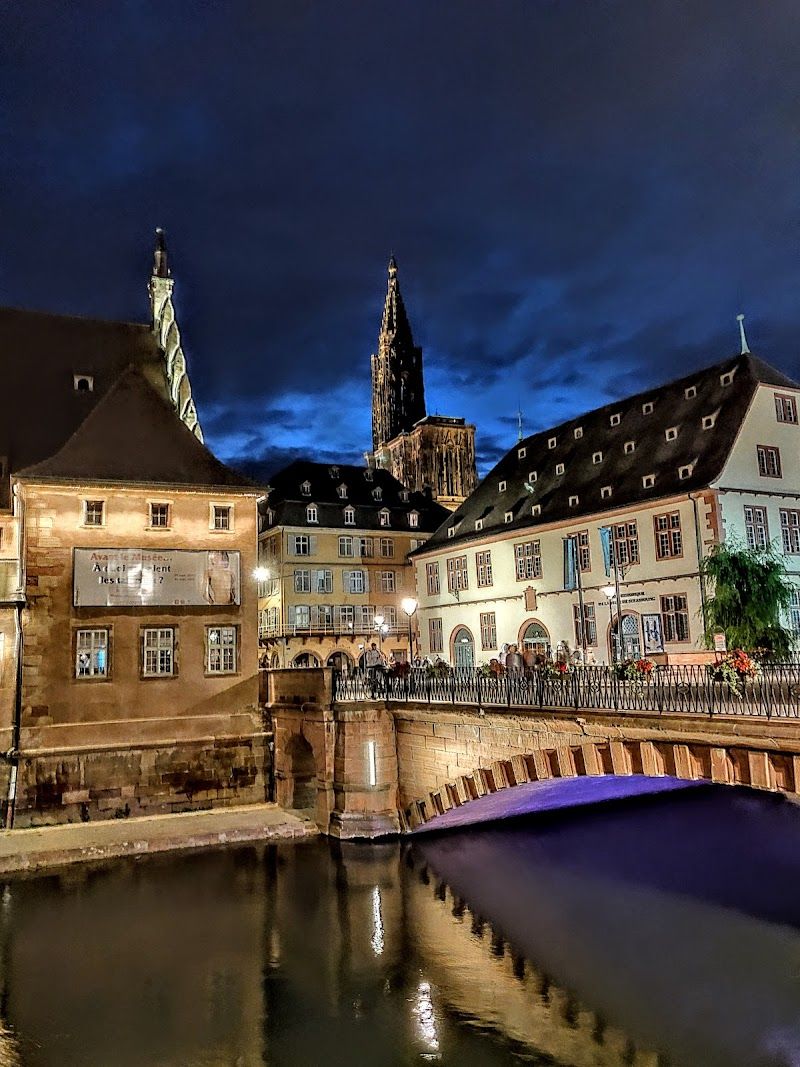
Eating and Drinking in Strasbourg: Winstubs, Tarte Flambee & Alsace Wine
The food of Alsace explained: what to order, where to go, and what the tourist traps look like
Strasbourg food guide: winstub etiquette, tarte flambee (the real version), baeckeoffe, and which Alsace wines to order in what order.
Eating and Drinking in Strasbourg: Winstubs, Tarte Flambee & Alsace Wine
Strasbourg's food scene is half French, half German, and completely its own thing. You'll eat in winstubs (Alsatian wine taverns), drink local Riesling from pottery stemware, and discover that tarte flambee is not pizza, no matter what it looks like. The tourist restaurants around the Cathedral are fine but overpriced. Walk one block further and you'll find the real thing at half the tourist markup.
Winstubs: Strasbourg's Wine Taverns
Winstubs are Alsatian wine taverns, the closest thing Strasbourg has to a pub-restaurant hybrid. Picture low wood-beamed ceilings, red-checked tablecloths, wooden booths worn smooth by decades of elbows, and chalkboard menus scrawled in French and Alsatian dialect. The wine comes in traditional Alsatian pottery stemware (thick, green-tinted glass) and the food is hearty, Germanic, and designed to soak up alcohol. A proper winstub smells like sauerkraut, wood smoke, and Riesling. The noise level hovers between animated conversation and outright shouting, especially after 8pm when the locals settle in for the evening.
The Best Winstubs
Chez Yvonne (10 Rue du Sanglier)
The most authentic winstub in the city center, packed with locals who've been coming here for decades. The choucroute garnie (EUR 22) is enormous and comes with five different cuts of pork. Book ahead or you won't get a table after 7pm. The waitresses have worked here forever and will tell you exactly what to order.
Le Tire-Bouchon (5 Rue des Tailleurs de Pierre)
Smaller and quieter than Chez Yvonne, with excellent baeckeoffe (EUR 24, order when you arrive as it takes 45 minutes). The wine list focuses on small Alsace producers you won't find elsewhere. The wooden booths are perfect for long conversations over multiple bottles of Pinot Gris.
Au Pont du Corbeau (21 Quai Saint-Nicolas)
Located near the Petite France canals with a terrace overlooking the water. The tarte flambee (EUR 12) has properly charred edges and the Munster cheese version is worth trying if you can handle strong cheese. Tourist-adjacent but the quality hasn't suffered.
Winstub Menu Essentials
Choucroute garnie (EUR 18-24) is sauerkraut with several cuts of pork: knackwurst, kassler, sometimes pork belly and blood sausage. It arrives on a platter large enough to feed two people and tastes better than it looks. Baeckeoffe (EUR 20-26) is a casserole of lamb, pork, and beef slow-cooked with potatoes and onions in Riesling wine. Order it when you sit down as it takes 45 minutes to heat through. The meat falls apart when you touch it with a fork and the whole dish tastes like concentrated Alsace. Pair both with Riesling, which cuts through the richness.
Tarte Flambee: Not Pizza
Tarte flambee (also called flammekueche) is thin Alsatian flatbread topped with creme fraiche, sliced onions, and lardons (smoked bacon bits), then baked in a wood-fired oven until the edges are charred black. It originated as a test for bakers to check oven temperature. The base should be thin enough to see through, crisp enough to crack when you cut it, and the edges should be genuinely burnt. It is not pizza. Do not expect pizza. The classic version is blanc (white, with the creme fraiche base). There's also a Munster cheese version that smells like feet but tastes incredible if you like strong cheese.
Where to Eat Tarte Flambee
Every winstub and brasserie serves tarte flambee (EUR 10-14 for a full tarte that serves one generously). The ones near the Cathedral are serviceable but rushed. The better versions are in Petite France, where they still use wood-fired ovens and take time to get the char right. Au Pont du Corbeau makes excellent ones, and Maison des Tanneurs (42 Rue du Bain-aux-Plantes) serves them on a riverside terrace where you can watch the canal boats pass. Order Sylvaner or Cremant d'Alsace with tarte flambee. The bubbles and acidity cut through the cream and bacon fat.
Alsace Wine: All White, All Good
Alsace makes white wines almost exclusively, and they're labeled by grape variety, not region. Riesling is dry, high-acid, and mineral, the benchmark Alsace wine that goes with choucroute and fish. Pinot Gris is fuller-bodied with a slight smoky note, perfect with baeckeoffe and pork dishes. Gewurztraminer is aromatic and spicy, almost perfumed, and works with foie gras and Munster cheese. Sylvaner is lighter and more neutral, good with tarte flambee and shellfish. Cremant d'Alsace is the local sparkling wine made by methode traditionnelle. It's excellent value at EUR 8-12 per bottle in shops and tastes like proper Champagne at half the price.
Wine in Winstubs
Wine by the glass costs EUR 5-9 in winstubs, served in those thick green Alsatian glasses that hold about 150ml. Order Riesling with choucroute (the acidity cuts the pork fat), Pinot Gris with baeckeoffe (it matches the richness), and Sylvaner with tarte flambee (it won't compete with the cream and bacon). If you're sharing a bottle, ask for local producers like Trimbach, Hugel, or Dopff au Moulin. The house wine is usually decent and costs about EUR 25 per bottle.
What to Skip
Christmas market food stalls (late November to December): the pain d'epice, hot wine, and bredele biscuits are tourist-priced and the vin chaud is too sweet. Go for the atmosphere but eat elsewhere.
Restaurants directly on Place de la Cathedrale: they charge EUR 3-5 more per dish for the same quality as places one street back. The view of the Cathedral isn't worth the markup.
Any winstub that has an English menu posted outside: if they're trying that hard to attract tourists, the locals have probably moved on.
Timing Your Meals
Winstubs open around 6pm and fill up quickly. Locals eat dinner late (8-9pm) and stay for hours, so book ahead if you want a proper table. Tarte flambee works as a light lunch or late-night snack. Many winstubs serve it until midnight, making it perfect after a long day of walking around the old town. Wine shops close at 7pm, so buy your Cremant d'Alsace before dinner if you want to take bottles home.
Ready to Visit Strasbourg?
Get a personalized itinerary tailored to your travel style and interests.
Plan Your Strasbourg TripMore Strasbourg Guides
2 Days in Strasbourg: First-Timer's Itinerary
How to spend 2 days in Strasbourg: climb the cathedral spire at opening, wait for the astronomical clock, walk Petite France before 9 AM, eat in a winstub, and get to Colmar or the wine route on day two.
7 min
First Time in Strasbourg: What You Need to Know
Everything before your first visit: what a winstub is and what to order, how the Christmas market actually works, which Alsatian wines to drink, the bilingual street signs, and the tram.
7 min