Where to Eat in Bergen: Fish Soup, Shrimp at the Market & Local Fish
Norwegian fiskesuppe, fresh shrimp at Fisketorget, where the locals eat, and coffee in a city that takes it seriously
Bergen food without the tourist markup: fish soup in a bread bowl at the Fish Market, fresh shrimp by the bag, local restaurants on Nøstet, and the coffee scene away from Bryggen.
Where to Eat in Bergen: Fish Soup, Shrimp at the Market & Local Fish
Bergen's food scene revolves around what comes out of the North Sea, and you'll eat better here by sticking to that principle. The city does three things exceptionally well: fiskesuppe that's richer and more generous than anywhere else in Norway, fresh shellfish sold directly from fishing boats at the harbor market, and straightforward fish preparations that don't mess around with the product. The tourist restaurants along Bryggen charge double for the same food you'll find in the neighborhoods where actual Bergen residents eat.
Fiskesuppe: The Real Bergen Version
Bergen fish soup is specifically different from what you'll get in Oslo or anywhere else in Norway. The base is creamier, almost like a thin chowder, and they're more generous with the seafood. The standard version contains salmon, cod, prawns, and root vegetables in a cream broth, served with crusty bread that you're expected to dip directly into the bowl. A proper portion is a complete meal. Sit-down restaurants charge NOK 150-200 for a bowl. The Fish Market sells it in a hollowed-out bread bowl for NOK 120-150, which sounds gimmicky but actually works because the bread soaks up the broth and becomes part of the dish. The best restaurant versions come from places on Nøstet, the south side of Nordnes peninsula, and in the streets south of Bryggen, where prices run about NOK 50 lower than the harbor-view spots serving identical soup.
Fish Market Shrimp: What You Actually Come For
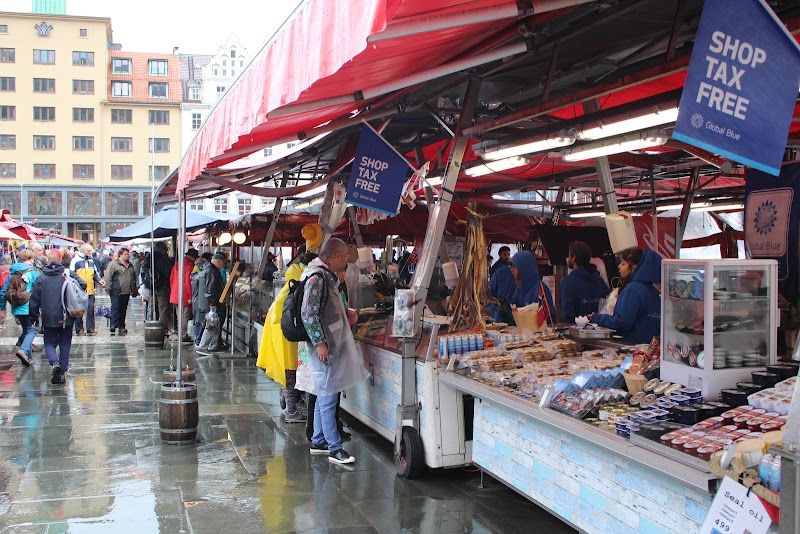
The Fish Market (Fisketorget) sits on the harbor square at the end of Bryggen and has been selling fish since 1276, though the current setup is obviously more recent. It operates outdoors May through September and year-round indoors. The thing to eat here is fresh shrimp by the bag. You order at one of the vendor counters (NOK 120-180 for a generous bag that feeds two people), they hand you crusty bread and mayonnaise, and you eat standing at the counter with the harbor directly in front of you. The shrimp are small, sweet, and you peel them yourself. King crab is the luxury option at NOK 200-300 for half a crab, which is genuinely good but expensive even by Norwegian standards. They also sell smoked salmon for taking away (NOK 80-120 per 100g). The vendors at the outer edge face the main pedestrian traffic and tend to be more aggressively priced; the inner vendors have faster turnover and fresher stock.
Where Bergen Residents Actually Eat
The local eating areas are on Nøstet, the south side of Nordnes peninsula about 15 minutes walk from Bryggen, and the streets around Vaskerelven and Kong Oscars gate in the city center. These neighborhoods serve the Bergen population rather than the Bryggen tourist traffic, so you get the same quality kitchen at lower prices. A fish main course costs NOK 200-280 compared to NOK 250-350 on the waterfront. A burger or pizza runs NOK 150-200. Fish and chips, which is a Bergen pub staple, costs NOK 130-160. The food is identical to what the harbor restaurants serve; you're just not paying for the view of old wooden buildings.
Coffee Culture (Because of the Rain)
Bergen has a strong coffee culture, partly because sitting with a coffee is the sensible response to the rain, which happens frequently. Blom (Vaskerelven 8) is a Bergen institution with filter coffee, cake, and mismatched furniture that looks like it hasn't changed since the 1970s. A flat white costs NOK 45-60. Kaffebrenneri (Strandkaien 2, near Bryggen) is the local chain equivalent of Oslo's Tim Wendelboe: reliable, good quality, NOK 50-65. The funicular summit cafe at Fløyen charges NOK 55-75, which is reasonable for a tourist location, and the view over the city justifies the visit even if you're not normally someone who pays extra for scenery.
Brunost: The Polarizing Brown Cheese
Brunost (Norwegian brown cheese made from caramelized whey) appears on every Bergen hotel breakfast buffet and divides people immediately into those who find it interesting and those who find it inedible. It's sweet-savory, somewhere between cheese and caramel, with a dense texture. The correct way to eat it is sliced thin on dark bread or crispbread with jam or butter. You can buy it in any supermarket for NOK 30-45 for a block. The market vendors sell it at higher prices with tourist packaging, but the quality is identical to what you'll find at Rema 1000. If you want to try it, buy it at the supermarket and save yourself NOK 20.
Fish Eating Strategy for Bergen
Eat fish soup as a complete meal, not a starter. The portions are sized accordingly.
At the Fish Market, choose vendors with faster turnover rather than the ones actively calling out to tourists.
Fish and chips at Bergen pubs uses local fish and is better than the tourist restaurant versions.
Restaurants on Nøstet and around Vaskerelven serve identical food to Bryggen at NOK 50-80 lower prices.
The bread bowl fish soup at the market is actually practical, not just a gimmick.
Buy brunost at supermarkets, not from market vendors charging tourist prices.
Ready to Visit Bergen?
Get a personalized itinerary tailored to your travel style and interests.
Plan Your Bergen TripMore Bergen Guides
2 Days in Bergen: Bryggen, Fløyen & the Fjord
How to spend 2 days in Bergen: the fish market first thing, Bryggen's back alleys, Fløibanen funicular to the mountain summit, Kode art museums, and fish soup that justifies the trip.
7 min
First Time in Bergen: Wet Weather, Bryggen & the Fjord Gateway
Everything before your first Bergen visit: the rain (how bad, how to manage), what Bryggen is and what it costs, the Fløibanen funicular, the fjord day trips, and how to get there from Oslo.
6 min