2-3 Days in Bordeaux
The Miroir d'Eau at sunrise, the Capucins market for oysters, Saint-Emilion by train, and a serious wine dinner in Chartrons
The two-to-three day Bordeaux sequence: waterfront and old town on day one, Saint-Emilion by train on day two, Chartrons market and the Cite du Vin on day three.
2-3 Days in Bordeaux
Bordeaux hits differently when you actually know where to go. This isn't Paris with obvious monuments on every corner. The magic here is in the rhythm: morning markets where fishermen sell yesterday's catch, limestone facades that turn gold at sunset, wine bars where the owner disappears into the cellar and returns with something unmarked and extraordinary. Three days gives you enough time to understand why people move here and never leave.
Waterfront and Old Town
Your first day is about getting the essential Bordeaux shots and understanding the bones of the old town. You'll start at the waterfront where every visitor begins, but you'll time it right. Then you'll walk through the real Bordeaux, the 18th-century streets where people actually live and eat, ending with the best rooftop view in the city.
- Miroir d'Eau at golden hour
- Place du Parlement lunch
- Cathedral and tower climb
Morning: The Waterfront Done Right
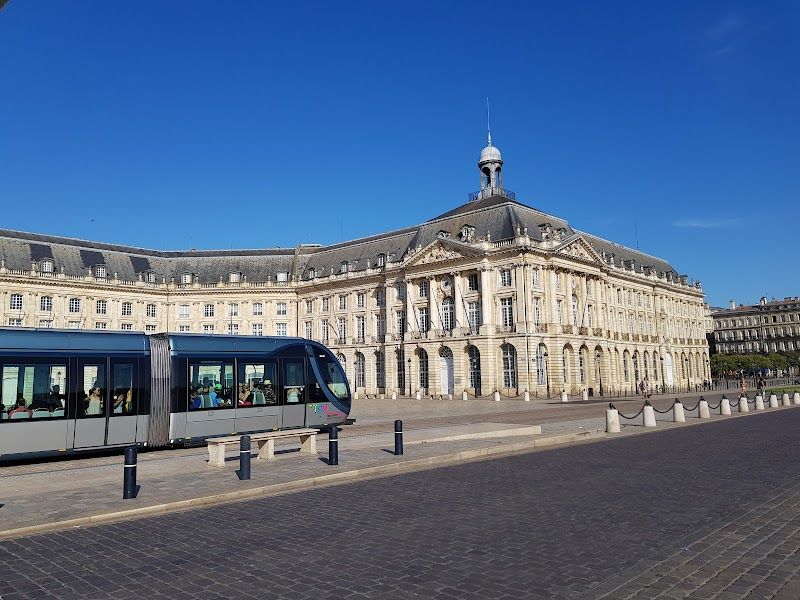
Take tram A or C to Place de la Bourse and walk straight to the Miroir d'Eau. Yes, this is touristy. Yes, you should do it anyway because the reflection of Place de la Bourse in the water mirror is legitimately the best photograph you'll take in Bordeaux. The trick is timing: arrive one hour before sunset (around 6 PM in summer, 4 PM in winter) or at 7-8 AM for sunrise when you'll have it mostly to yourself. The water cycles every 15 minutes, so if you arrive to concrete, wait. When the mist rises, the whole square disappears into something dreamlike. Stand at the far end for the classic shot, but walk through the mist if you want to feel like you're inside a cloud.
Through the Old Town
From the waterfront, walk south down Rue du Parlement. This is where you start seeing the real Bordeaux: wine shops with dusty bottles stacked to the ceiling, cafes with zinc bars worn smooth, buildings the color of old champagne. The street leads to Place du Parlement, an 18th-century arcaded square that most tourists miss entirely. This is where you want lunch. Every restaurant here serves a plat du jour for EUR 15-22 with a glass of Bordeaux, but go to L'Estacade for their magret de canard or La Brasserie Bordelaise for a proper entrecôte. Order whatever wine they recommend by the glass. It will cost EUR 4-6 and it will be better than bottles you pay EUR 30 for at home.
Cathedral and the Best View
After lunch, walk five minutes south to Cathédrale Saint-André. The cathedral itself is fine, free, and worth 15 minutes for the Royal Gate sculpture on the north side, which shows medieval carvers at their most ambitious. The real reason you're here is Tour Pey-Berland, the separate bell tower. Pay the EUR 6 and climb all 232 steps. Your legs will hate you. The view will make you forgive everything. This is the only place in Bordeaux where you can see the whole city: the river curving north, the wine country stretching south, the old town spread out like a map below. Go in late afternoon when the limestone buildings turn gold.
Evening in Saint-Pierre
For dinner, head to the Saint-Pierre district, the maze of narrow streets between the cathedral and the river. This is tourist-adjacent but not tourist-trapped. Every street has three wine bars and two bistros. Go to Le Bistrot du Musée on Rue Bouffard for their entrecôte bordelaise (steak in red wine sauce with shallots, EUR 24) or Chez Dupont on Rue des Piliers for a full Gascon menu with foie gras, duck confit, and Armagnac (EUR 35-40). Order a half-bottle of something from Pessac-Léognan. It will cost EUR 18-25 and pair perfectly with whatever rich, meaty thing you've ordered.
Saint-Émilion Day Trip
Today you leave Bordeaux for its most famous wine village. Saint-Émilion is small enough to walk in an hour but complex enough to fill a day. You'll see a church carved from solid rock, taste wine where monks have been making it for 800 years, and understand why UNESCO protects this entire landscape.
- Medieval village exploration
- Monolithic Church tour
- Vineyard château visit
Getting to Saint-Émilion
Take the train from Bordeaux-Saint-Jean station (tram C gets you there from downtown). Trains run roughly hourly, cost EUR 9 each way, and take 35 minutes through vineyard country that looks like a painting. Buy tickets at the station or on the SNCF Connect app. Arrive before 10 AM. Saint-Émilion fills up with tour buses by noon, and the morning light on the limestone buildings is worth getting up early for.
The Monolithic Church
Your first stop is the Monolithic Church, carved entirely from solid rock by a Benedictine monk in the 12th century. This is genuinely unique. I've never seen anything like it anywhere else. You can only visit on guided tours run by the tourist office (Place des Créneaux, EUR 8-12, tours in French and English every 45 minutes). The tour takes you underground into what feels like a stone cathedral. The acoustics are extraordinary. Stand in the center and whisper; you'll hear your voice echo back from every carved pillar.
Climbing for the View
After the underground church, climb the bell tower for the vineyard panorama. This is the view that defined every Saint-Émilion postcard: rows of vines rolling toward the horizon, château towers poking up between the leaves, the Dordogne river valley stretching east. It costs EUR 2 extra and requires another 200 steps, but this is why you came to Saint-Émilion. The view explains everything about why wine grows here and why monks chose this hill 1,000 years ago.
Walking the Village
Spend the rest of the morning walking Saint-Émilion's narrow limestone streets. The village is tiny but perfectly preserved. Stop at one of the bakeries on Place du Marché for macarons de Saint-Émilion, the local almond cookies that have nothing to do with Parisian macarons. They're dense, chewy, and cost EUR 3-5 for a bag. If it's Saturday, the outdoor market fills the main square with local producers selling everything from goat cheese to walnut oil. This is where you buy picnic supplies or gifts that actually mean something.
Château Visit
Book one château visit for the afternoon. The famous names (Cheval Blanc, Ausone) require advance reservations and cost EUR 50-100. Skip them unless you're seriously into wine. Instead, ask the tourist office to arrange a same-day visit to a smaller producer. You'll pay EUR 15-25, taste five wines, and actually talk to someone who makes the stuff. Château Fonplegade and Château La Dominique both welcome walk-ins and pour wines you can afford to buy. Return to Bordeaux on the 5 PM or 6 PM train for dinner in the city.
Markets, Chartrons, and Wine Culture
Your final day is about understanding Bordeaux as a living city, not a museum. You'll eat like locals do at the morning market, learn why Bordeaux owns the wine world at the city's wine museum, and end with dinner in the district where wine merchants have been making deals for 300 years.
- Fresh oysters at Marché des Capucins
- La Cité du Vin experience
- Chartrons wine bar dinner
Market Morning
Get to Marché des Capucins (Place des Capucins, tram A to Capucins) by 9 AM. This is Bordeaux's real food market, not the tourist version. Head straight to the oyster stands run by Arcachon fishermen. Order a dozen oysters with bread and shallot vinegar for EUR 8-12. This is the best value meal in the city and the most Bordeaux thing you can do. Stand at the counter, squeeze lemon over Gillardeau or Belon oysters, wash them down with Muscadet, and watch the city wake up around you. The oysters taste like the Atlantic Ocean, clean and briny and completely alive.
Chartrons District
Walk north from the market to Chartrons, the old wine merchants' quarter. Rue Notre-Dame is lined with antique shops and art galleries in 18th-century townhouses where wine traders once stored Bordeaux before shipping it to London and Amsterdam. If it's Sunday, the market on Quai des Chartrons sells everything from vintage posters to organic vegetables. This is less touristy than the Saturday markets and better for actual shopping.
La Cité du Vin
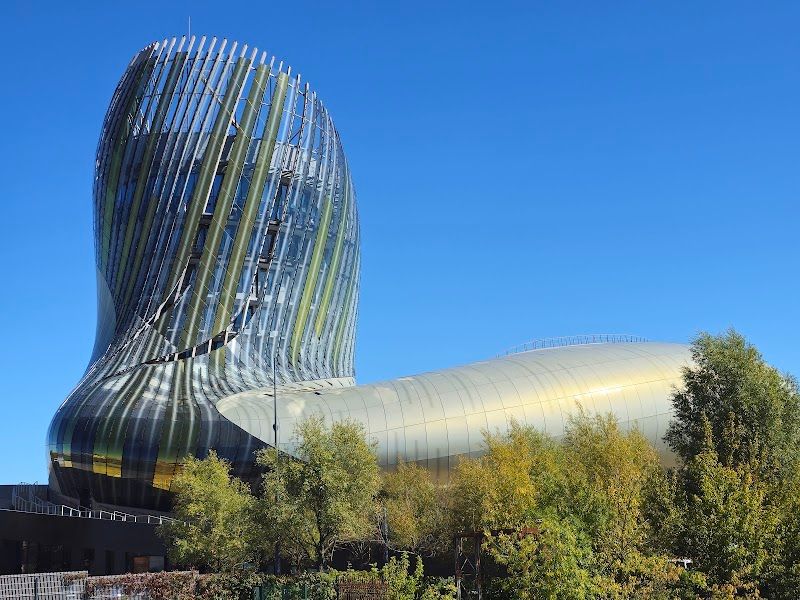
La Cité du Vin is Bordeaux's wine museum and cultural center, designed to look like wine swirling in a glass. It costs EUR 22 including the 8th-floor tasting, and yes, it's worth it. Book online to skip lines. Allow 2.5 hours minimum. The permanent collection explains why Bordeaux became the world's wine capital: geography, politics, trade routes, terroir. It's genuinely educational without being boring. The tasting room on the 8th floor pours 20 wines from around the world with panoramic city views. Try the Bordeaux flight if you want to understand what you've been drinking, or branch out to Barolo and Burgundy to taste the competition.
Final Evening
Walk back along the waterfront to see the city from river level one last time, then return to Chartrons for dinner in the wine bar district. This is where Bordeaux wine merchants still do business, and the bars reflect that heritage. Go to Le Bistrot du Sommelier on Rue de la Devise for natural wines and small plates (EUR 35-45 for dinner with wine) or Bar à Vin du Château du Tertre on Quai des Chartrons for serious Bordeaux tastings by the glass (EUR 8-25 per pour). Order the cheese plate, ask for wine recommendations, and let them pour you something you've never heard of but should have been drinking all your life.
Getting Around
Buy a day tram pass for EUR 4.50 if you're taking more than 3 trips. Individual tickets cost EUR 1.70.
Tram A connects the airport to downtown (45 minutes, runs every 10 minutes).
The old town is completely walkable. Everything in this itinerary is within 15 minutes' walk of everything else.
Trains to Saint-Émilion leave from Bordeaux-Saint-Jean. Take tram C from downtown (15 minutes to the station).
Money and Logistics
Most restaurants take cards, but small wine bars and market vendors prefer cash.
Lunch is served 12-2 PM, dinner starts at 7:30 PM. Don't show up at 6 PM expecting to eat.
Wine shop tastings cost EUR 5-15 and you can usually buy bottles at retail prices.
Book château visits in Saint-Émilion at least a day ahead, especially in summer and harvest season (September-October).
Ready to Visit Bordeaux?
Get a personalized itinerary tailored to your travel style and interests.
Plan Your Bordeaux TripMore Bordeaux Guides
First Time in Bordeaux: Everything You Need to Know
The practical first-timer's guide to Bordeaux: how to navigate the appellations, where to stay, how to reach Saint-Emilion, what to eat beyond wine, and the things that first-time visitors get wrong.
10 min
Bordeaux Wine & Food Guide
The food and wine guide to Bordeaux: the appellation map for non-experts, the best wine bars in the city, the Capucins market, Gascon cooking traditions, and the canele question answered.
14 min