Prague
Things to Do
130 attractions, museums, and experiences
Letná Park
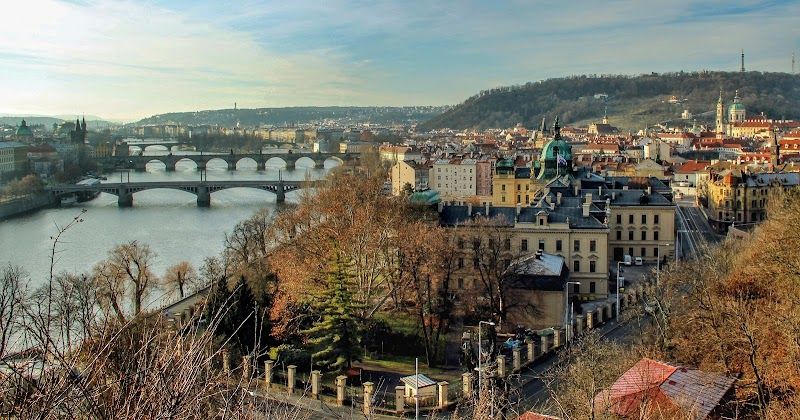
Letná Park sprawls across a plateau above the Vltava River, offering some of Prague's best panoramic views without the tourist crowds of Prague Castle. You'll find the towering Metronome sculpture ticking away where Stalin's massive statue once stood, plus tree-lined paths perfect for running or cycling. The park connects several neighborhoods and serves as Prague's unofficial outdoor living room, complete with a proper beer garden that locals actually use. Walking through Letná feels like discovering Prague's backyard: dog walkers emerge from every path, skateboarders practice tricks near the Metronome, and families spread blankets under chestnuts and lindens. The river views unfold gradually as you walk toward the southern edge, revealing the full sweep of Prague's bridges and red rooftops. The atmosphere stays relaxed year-round, though summer brings outdoor ping-pong tables and impromptu football games. Most guides oversell the Metronome itself (it's just a big ticking sculpture), but undersell the beer garden experience. Letenský zámeček serves proper Pilsner Urquell for around 50 CZK with million-dollar views. Skip the formal gardens near the entrance and head straight for the river overlooks. The park works best as a sunset spot after visiting nearby attractions, not as a destination itself.
Karlínské náměstí
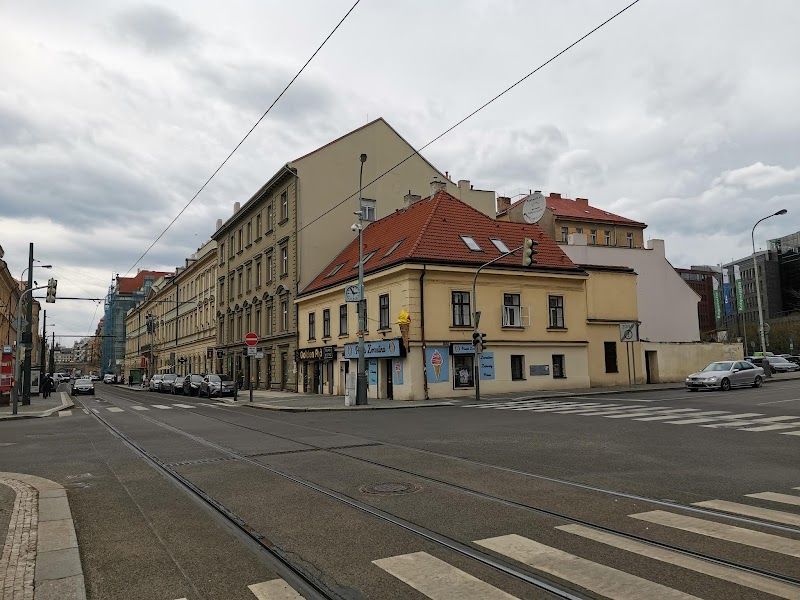
Karlínské náměstí is the heart of Prague's Karlín district, a square surrounded by beautifully restored 19th-century buildings that showcase the neighborhood's evolution from industrial zone to residential area. You'll find yourself in a local space where kids play on modern playground equipment while their parents relax on benches beneath mature trees. The centerpiece is SS. Cyril and Methodius Church, whose Byzantine Revival domes and ornate facade create an exotic focal point in this otherwise Central European setting. Walking around the square feels like discovering a neighborhood secret that most Prague visitors never find. The morning light hits the colorful Neo-Renaissance facades perfectly, and you can grab coffee from nearby cafes to enjoy on one of the many benches. The church often stands open, revealing Byzantine-style interior decorations that match the unique style found in the city center. Local residents walk their dogs, elderly men play chess, and the whole scene has an authentic Prague neighborhood vibe that's increasingly rare. Most guidebooks barely mention this square, which is exactly why it's worth the 10-minute tram ride from the center. It's best to visit if you have time to explore beyond the tourist circuit, as this gives you a taste of residential Prague. The church interior is free when open (usually mornings and early evenings), and the square itself makes for a 30-minute stop rather than a destination.
Prague Castle
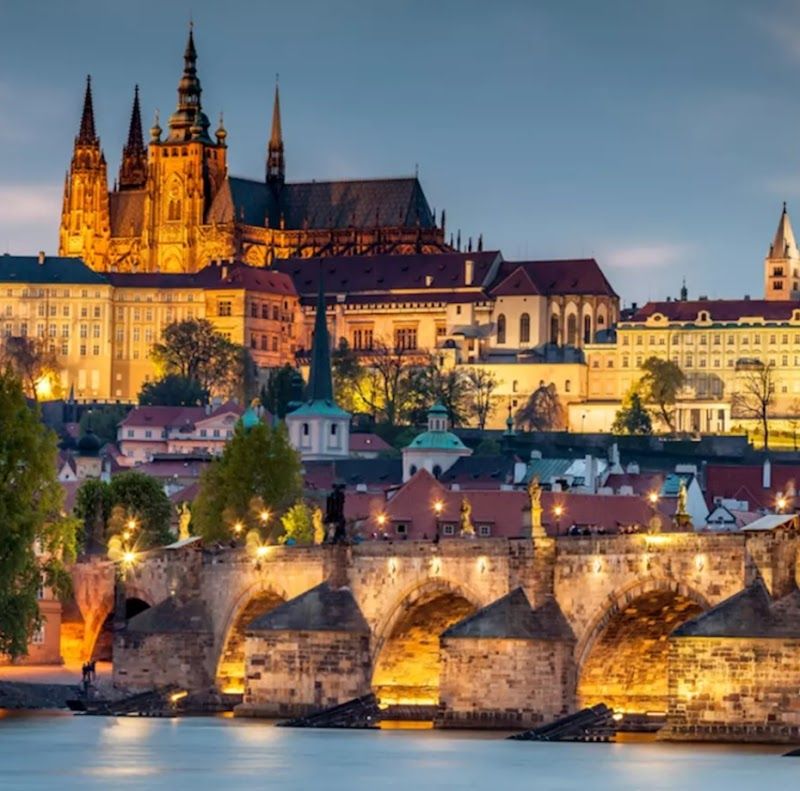
Prague Castle sprawls across 70,000 square meters above the Vltava River, housing nearly 1,000 years of Czech royal history in one massive complex. You'll walk through St. Vitus Cathedral's soaring Gothic nave (free entry), climb the 287-step tower for city views, explore the cramped medieval houses of Golden Lane where Kafka once lived, and wander through the Old Royal Palace's vast Vladislav Hall. The full circuit ticket costs CZK 250 and covers all the main interiors, though you can easily spend hours just in the free cathedral sections. The experience feels like walking through a living history book, with each courtyard revealing different architectural periods from Romanesque to Baroque. St. Vitus Cathedral dominates the first courtyard, its blackened stone exterior giving way to jewel-toned light filtering through Mucha's Art Nouveau stained glass. Golden Lane gets packed with tourists photographing the tiny colorful houses, while the Royal Palace's enormous halls echo with footsteps on worn stone floors. The complex sits on multiple levels, so you're constantly climbing stairs and discovering new views across Prague's red rooftops. Most guidebooks oversell Golden Lane, which is essentially a tourist trap with overpriced medieval-themed shops. The real highlights are the cathedral's free sections and the tower climb, though skip the tower if you're doing Petřin Hill later. The CZK 250 circuit ticket is worth it only if you're genuinely interested in royal apartments and historical interiors. Buy online to skip ticket queues, especially in summer when lines stretch across the courtyard.
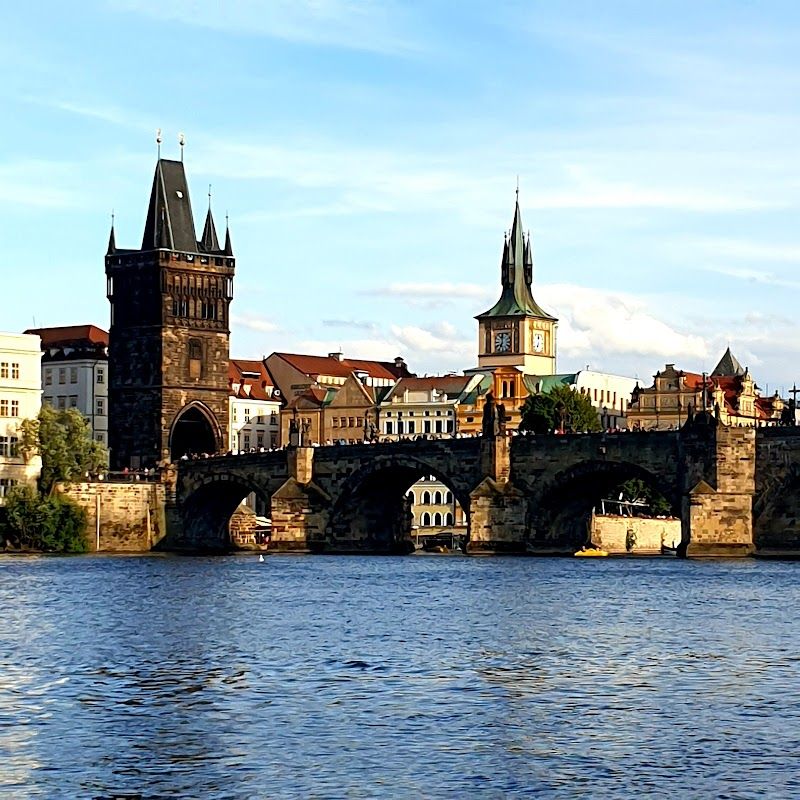
Charles Bridge
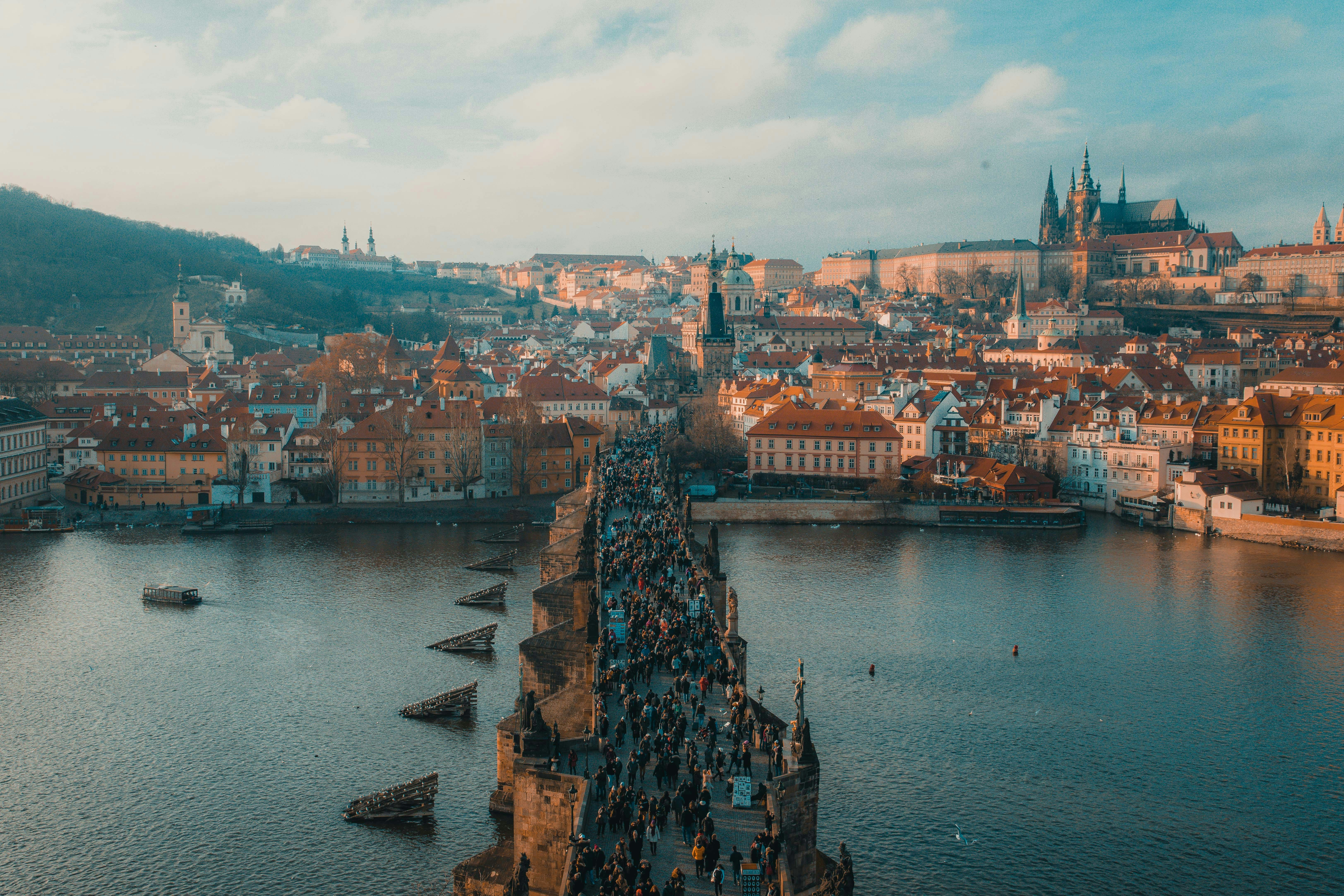
Charles Bridge is Prague's 14th-century stone lifeline connecting Old Town to Lesser Town, lined with 30 Baroque statues that feel like silent guardians watching over the Vltava River. You'll walk the same 516-meter cobblestone path that's carried everyone from medieval merchants to modern backpackers for over 600 years. The Gothic towers at each end frame castle views that'll make you understand why Prague gets called the City of a Hundred Spires. Walking across feels like stepping onto a medieval film set, complete with street artists, souvenir hawkers, and tourists posing with the bronze plaques on St. John of Nepomuk's statue (touching it supposedly brings good luck). The experience shifts dramatically with the crowds: early morning gives you space to actually appreciate the craftsmanship of those Baroque saints, while midday turns it into a slow-moving parade of selfie sticks. The river views open up beautifully from the center, with Prague Castle looming magnificently to the west. Most guides won't tell you that the bridge itself is completely free, but climbing either tower costs extra: Old Town Tower runs 150 CZK, Lesser Town Tower costs 100 CZK. Skip the overpriced souvenirs on the bridge and save your money for the tower climb instead. The timing makes or breaks this experience, so either go at sunrise when you'll have it mostly to yourself, or embrace the chaos and go at sunset for the classic castle backdrop shot.
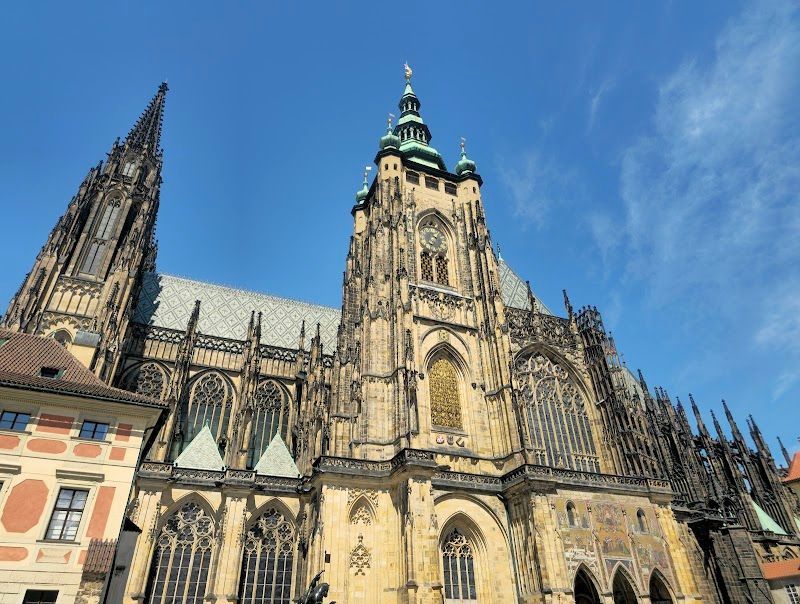
St. Vitus Cathedral
St. Vitus Cathedral is Prague's Gothic masterpiece, a towering spire that took 600 years to finish and houses Czech kings in its crypt. You'll walk through soaring stone arches where colored light streams through medieval stained glass, including Alphonse Mucha's Art Nouveau window depicting Saints Cyril and Methodius. The Chapel of St. Wenceslas glitters with semi-precious stones covering every wall, while the royal tombs below hold Charles IV and Rudolf II. The nave feels impossibly tall and hushed, with tourists craning their necks at the ribbed vaulting overhead. Most people cluster around the Mucha window (third on the left as you enter), but the real showstopper is St. Wenceslas Chapel, where every surface sparkles with jasper, amethyst, and gold leaf. If you buy the full circuit ticket, the tower climb gets progressively narrower until you're squeezing through medieval stone passages to emerge 287 steps later with panoramic views over red rooftops. Here's what most guides won't tell you: the nave is completely free, so don't feel pressured to buy the 250 CZK circuit ticket unless you specifically want the tower climb and Wenceslas Chapel access. The crypt is interesting but skippable unless you're obsessed with Habsburg history. Morning light makes the stained glass absolutely sing, while afternoon visits feel dim and gloomy.
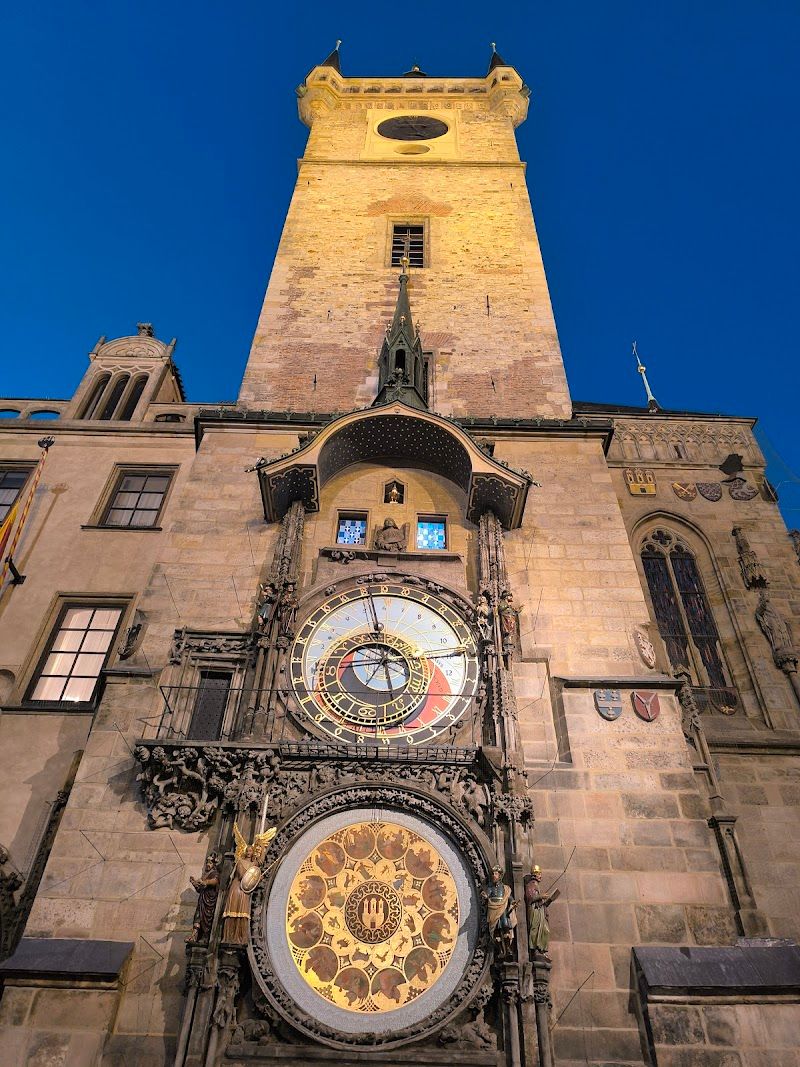
Old Town Square & Astronomical Clock
Old Town Square anchors Prague's historic center with 900 years of continuous use as the city's main marketplace and gathering point. The medieval Astronomical Clock on Old Town Hall Tower, operational since 1410, performs its famous hourly show where twelve apostles parade past tiny windows while mechanical figures of Death, Vanity, Greed, and a Turk move below. The real attraction isn't the 45-second show but the intricate clock face itself: an astronomical dial tracking sun and moon positions, a detailed calendar dial, and Renaissance-era craftsmanship that still functions perfectly. The square buzzes with tour groups clustering around the clock tower every hour, cameras ready for the brief mechanical performance. Between shows, you can properly examine the clock's complex dials and symbolic figures without crowds blocking your view. The Gothic twin spires of Tyn Church dominate the square's eastern edge, while colorful baroque buildings line the other sides. Street performers, horse-drawn carriages, and outdoor restaurant terraces fill the remaining space with constant activity. Honestly, the hourly show disappoints most visitors: it's literally 45 seconds of wooden apostles rotating past windows. Skip the crowds and focus on studying the clock's astronomical details up close. Climb the tower for 310 CZK to get Prague's best aerial view of the square and surrounding red rooftops. Every restaurant directly on the square charges tourist prices, easily double what you'll pay on nearby Dlouhá street just two minutes away.
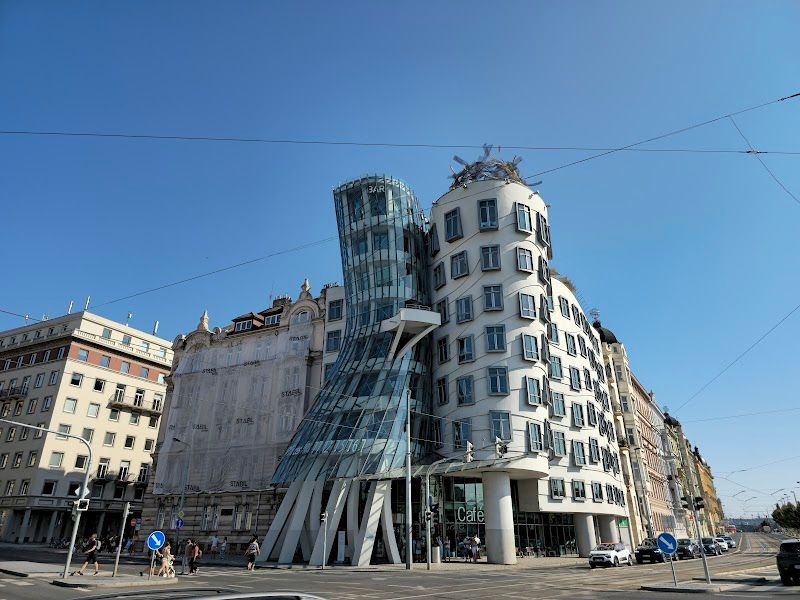
Dancing House
Dancing House stands out like a wobbly sculpture among Prague's baroque buildings, its curved glass and concrete designed to resemble a dancing couple. You're looking at Frank Gehry's first major European project, completed in 1996 after years of controversy from locals who thought it ruined their historic skyline. The building houses offices, a hotel, and the top floor Ginger & Fred restaurant with panoramic views over the Vltava River and Prague Castle. Walking up close, you'll notice how the wavy facade creates different silhouettes from every angle, especially where the concrete 'Fred' leans into the glass 'Ginger.' The ground floor feels surprisingly ordinary inside, just a hotel lobby and some shops. Most people spend 10 minutes circling the building for photos, then either head up to the restaurant or cross the river for wider shots. The contrast with neighboring 19th century apartments is jarring in the best way. Honestly, the exterior is the real show here, and it's completely free. The top floor restaurant charges around 800 CZK for mains and gets packed with tour groups by noon. Skip the overpriced drinks on the roof terrace unless you're desperate for Castle views. The building photographs better from across the river anyway, where you can capture it alongside Prague's traditional architecture for context.
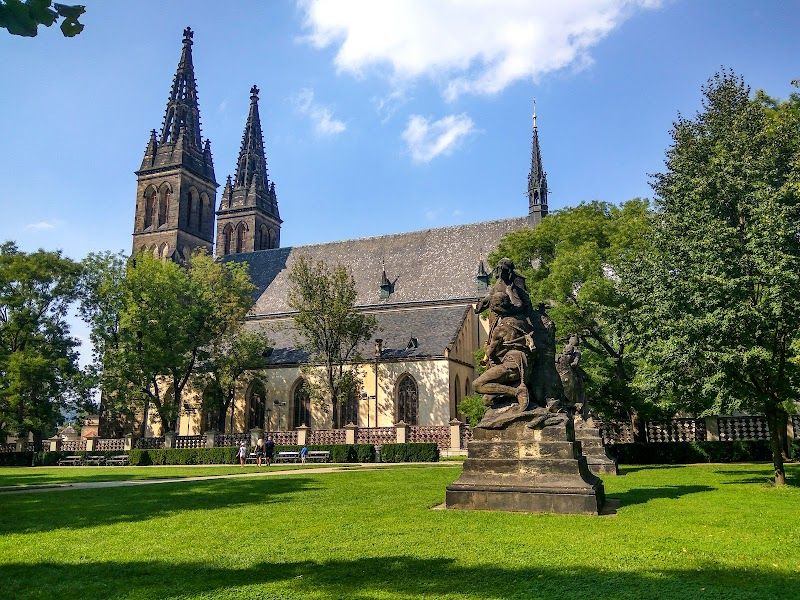
Vyšehrad Fortress Historical Tour
Vyšehrad Fortress sits on a rocky outcrop above the Vltava, predating Prague Castle by centuries and serving as the legendary seat of Czech princes. You'll walk medieval ramparts with sweeping river views, explore underground casemates storing original Charles Bridge statues, and visit the neo-Gothic Church of St. Peter and Paul with its distinctive twin spires. The cemetery here holds Czech cultural giants like composer Dvořák and Art Nouveau master Mucha, making this both a historical site and national pantheon. The fortress feels refreshingly peaceful compared to Prague's tourist chaos. You'll enter through ancient gates into landscaped gardens where locals jog and families picnic, creating an unexpectedly relaxed atmosphere. The underground casemates provide a cool contrast to outdoor exploration, displaying massive baroque statues in atmospheric brick vaults. Walking the ramparts gives you Prague's best panoramic views without the crowds of Prague Castle, especially beautiful at sunset when the city lights reflect off the Vltava. Most visitors rush through in 45 minutes, but you need at least 90 to appreciate the casemates and cemetery properly. The church interior costs 50 CZK extra and honestly isn't worth it unless you're obsessed with neo-Gothic details. Skip the overpriced fortress restaurant and bring snacks for the gardens instead. The real treasure is the peaceful atmosphere, so avoid weekends when Prague families claim every bench.
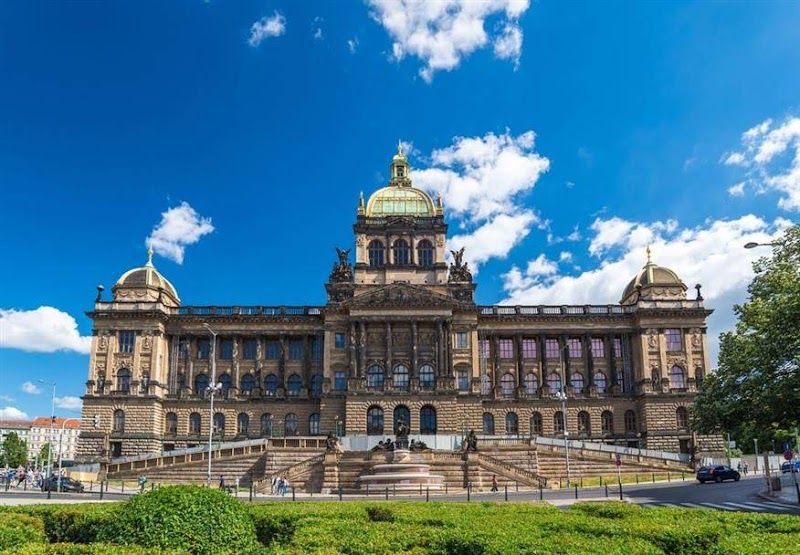
National Museum
Prague's National Museum fills a spectacular neo-Renaissance palace that looks like it could house royalty instead of rocks and bones. The 2018 renovation revealed gilded ceilings, marble staircases, and crystal chandeliers that honestly outshine most of the exhibits. You'll find everything from meteorites to stuffed animals, plus the Pantheon upstairs where Czech cultural heroes get the marble bust treatment. The building itself tells Prague's story better than many of the collections inside. Your visit flows up the grand central staircase past restored frescoes and into halls that feel more like Versailles than a natural history museum. The mineral collection sparkles under ornate ceilings, while the paleontology section puts dinosaur bones in rooms fit for emperors. Most visitors spend time gawking at the architecture, which is exactly right. The rooftop terrace opens onto sweeping views of Wenceslas Square, and you can see why this building anchors Prague's most famous boulevard. At 250 CZK, you're really paying for the building tour with some decent exhibits thrown in. Skip the zoology floors unless you love taxidermy, and don't expect world-class collections. The Pantheon feels like a who's who of people you've never heard of, but the gilded dome above makes it worthwhile. Come for the restored interiors and that rooftop view, treat everything else as a bonus.
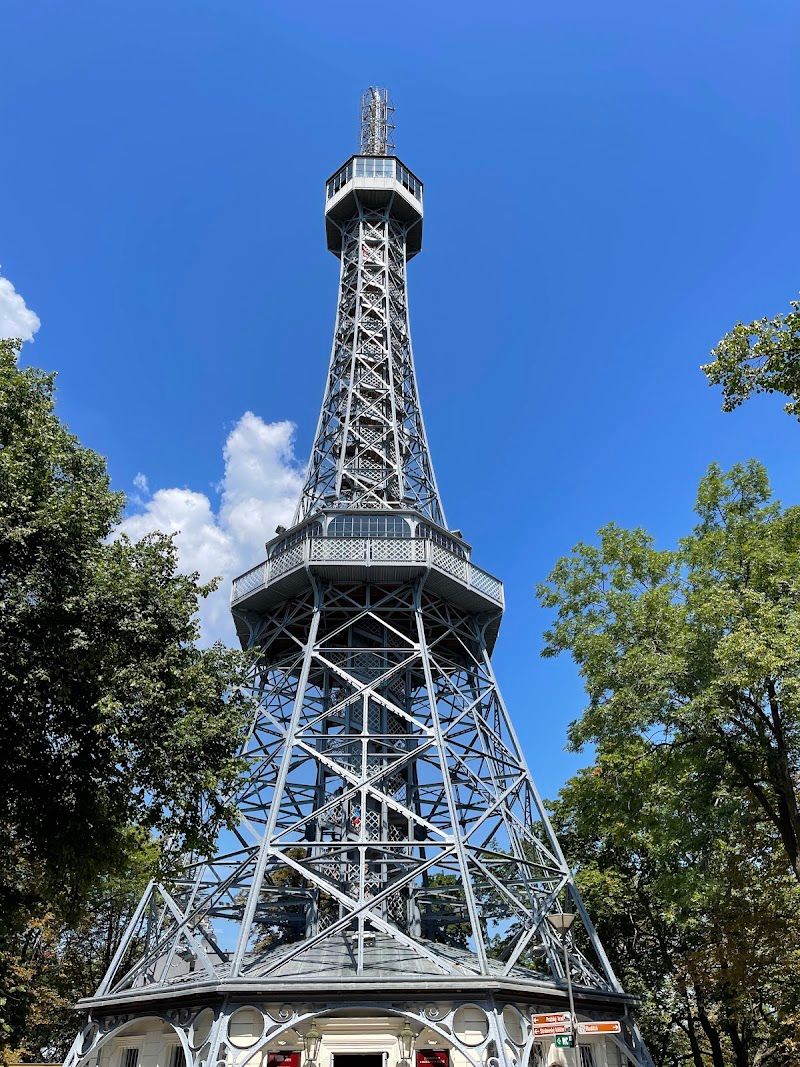
Petřín Observation Tower & Funicular Experience
Prague's mini Eiffel Tower sits atop Petřín Hill, reached by a charming 1891 funicular that creaks up the 511-meter climb in four minutes. The 63-meter steel tower offers genuine 360-degree views across Prague's red-tiled rooftops, with the castle complex, Charles Bridge, and Old Town Square spread below like a medieval map. You'll climb 299 steps inside the tower's narrow spiral staircase, but there's a lift for 20 CZK extra if your legs aren't up for it. The funicular ride feels delightfully old-world, with wooden benches and vintage charm as you glide past gardens and glimpses of the city below. At the top, the tower's observation deck gets packed during sunset but the views justify the crowds: you can trace the Vltava's curves and spot every major landmark. The surrounding Petřín Gardens offer peaceful paths through rose gardens and orchards, plus a quirky mirror maze that's surprisingly entertaining for adults. Most guides won't tell you the tower closes at 8pm in summer (6pm in winter), and the funicular stops running 20 minutes after. Skip the overpriced café at the bottom and bring snacks for the gardens instead. The funicular costs 60 CZK up, 32 CZK for the tower, but walking down through the gardens is free and far more rewarding than taking the funicular both ways.
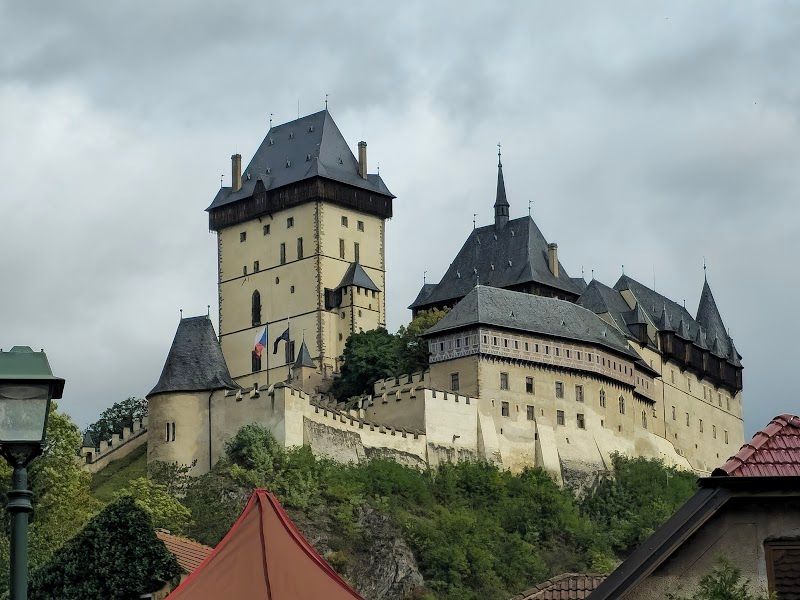
Karlštejn Castle Day Trip
Karlštejn Castle sits on a limestone cliff 40 minutes southwest of Prague, built by Holy Roman Emperor Charles IV in 1348 to safeguard crown jewels and sacred relics. The Gothic fortress towers over medieval Karlštejn village, connected by a steep cobblestone path that winds past half-timbered houses and souvenir shops. Inside, you'll explore imperial chambers, the Church of Our Lady, and if you book ahead, the stunning Chapel of the Holy Cross with its 129 painted panels and walls encrusted with semi-precious stones. The visit starts with a 30-minute uphill walk from the train station through the tourist-packed village. Tours are mandatory and move in groups through restored rooms filled with period furniture, replica crown jewels, and religious artifacts. The Route I tour covers the imperial palace and Church of Our Lady, while Route II adds the famous chapel where photography is forbidden. Views from the castle walls stretch across forested hills and the Berounka River valley. Most guides don't mention that Route II tours (500 CZK) sell out weeks ahead in summer and only run in small groups of 12 people. The basic Route I tour (300 CZK) satisfies most visitors and doesn't require advance booking. Skip the overpriced village restaurants, the wax museum is tourist trap nonsense, and avoid weekends when Czech families pack the trains. Early morning visits beat the crowds and give you better photo opportunities.
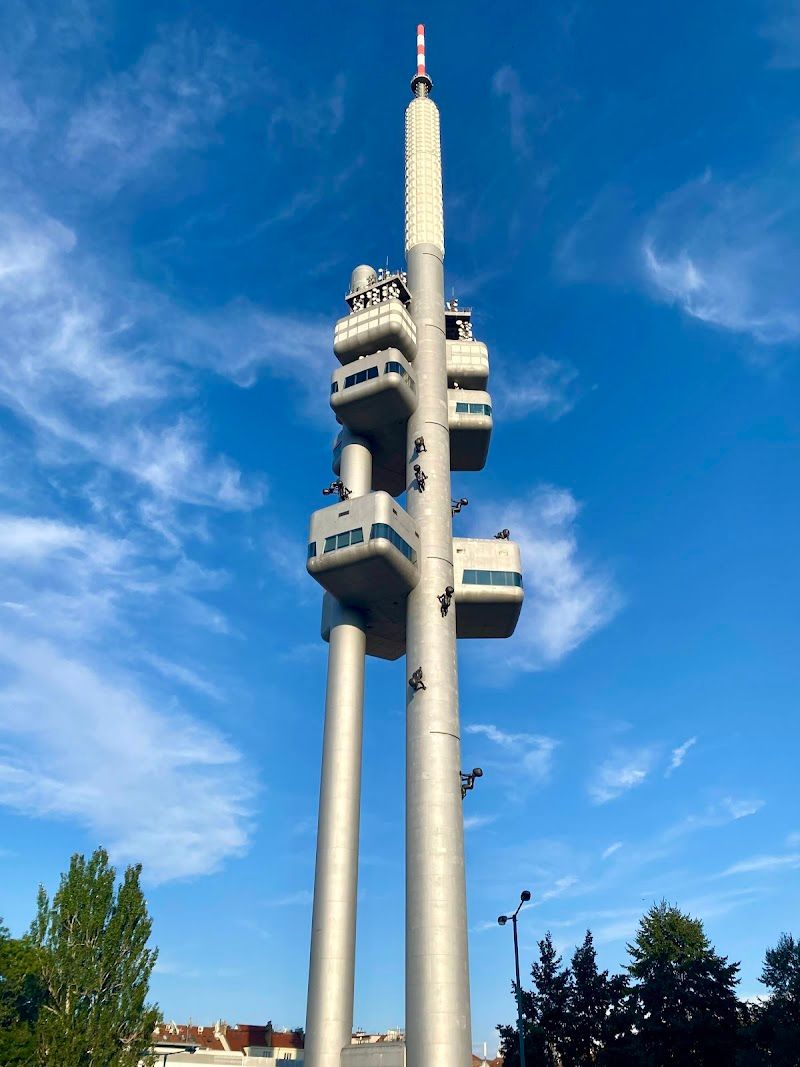
Žižkov Television Tower
Prague's 216-meter concrete TV tower divides opinion like no other landmark, but the 360-degree views from its observation decks at 93 meters are undeniably spectacular. You'll spot Prague Castle, the Vltava snaking through the city, and rooftops stretching to the horizon. The tower's most famous feature is David Černý's ten giant bronze baby sculptures crawling up and down the exterior, each weighing 250 kilograms and looking appropriately bizarre against the brutalist concrete. The high-speed elevator shoots you up in seconds to three observation levels where floor-to-ceiling windows frame the entire city. The atmosphere feels distinctly modern and sterile compared to Prague's medieval towers, but that's exactly why the views work so well. You can walk around each circular level freely, and there's an outdoor viewing platform on the lower observation deck where wind and weather make the experience more dramatic. The babies look even more surreal from up here, their faceless forms seeming to move as you change angles. Most guides won't mention that 300 CZK feels steep for what you get, especially since you can see similar views from Petřin Hill for free. The restaurant up here is overpriced tourist food, so eat elsewhere. Your best strategy is timing your visit for golden hour when Prague's red roofs glow beautifully. Skip the one-room hotel unless you're after bragging rights, it's more novelty than comfort.
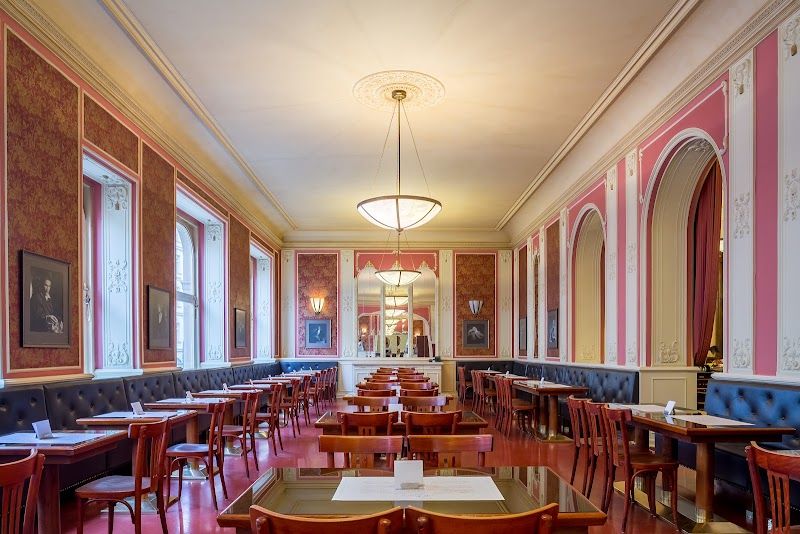
Café Louvre
Café Louvre serves as Prague's most atmospheric literary café, occupying the same Art Nouveau space where Einstein debated relativity and Kafka scribbled stories in 1911. You'll find yourself dining under soaring ceilings with original moldings, surrounded by marble-topped tables and burgundy banquettes that have hosted a century of conversations. The menu spans Czech classics like goulash (280 CZK) and schnitzel (320 CZK) alongside all-day breakfast options and exceptional cakes that locals actually order. The experience feels like stepping into pre-war Central Europe, with waiters in bow ties navigating between tables of students, business meetings, and tourists clutching guidebooks. The main dining room buzzes with multilingual chatter, while the upstairs billiard room maintains its original 1902 tables and quieter atmosphere. Service moves at old-world pace, giving you time to absorb the literary ghosts and watch Prague's intellectual class still gathering over coffee and newspapers. Most guides oversell the Kafka connection, but the café genuinely delivers on atmosphere without feeling like a museum. Skip the tourist-heavy weekend brunches when tables turn slowly and opt for weekday mornings or late afternoons instead. The apple strudel (120 CZK) is legitimately excellent, and the billiard room upstairs often goes unnoticed by visitors focused on the main floor.
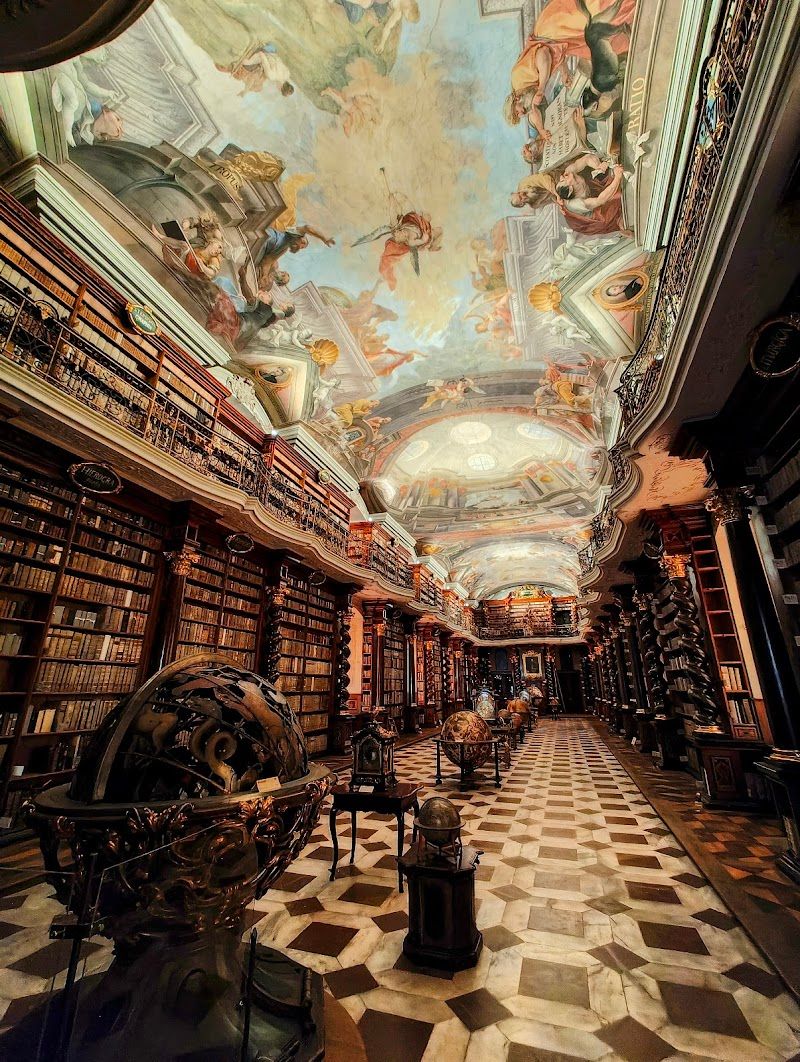
Klementinum
The Klementinum is a massive 17th-century Jesuit complex that houses Prague's National Library and some genuinely spectacular rooms you can visit on guided tours. The 300 CZK tour takes you through the jaw-dropping Baroque Library Hall with its ceiling frescoes and ancient globes, the Meridian Hall where they've recorded weather data since 1775, and up the Astronomical Tower for panoramic views over Prague's red rooftops. You'll also see the original astronomical instruments and learn how this place operated as the intellectual heart of Bohemia for centuries. The tour moves at a brisk pace through surprisingly intimate spaces. The Library Hall genuinely takes your breath away when you first walk in: floor-to-ceiling books, gilded details everywhere, and those famous antique globes positioned perfectly for photos. The climb up the Astronomical Tower involves 172 steps on narrow spiral staircases, but the 360-degree views from the top are worth every step. Your guide shares stories about the Jesuit scholars who lived and worked here, making the place feel lived-in rather than just pretty. Most guides oversell this as a library experience, but it's really about the architecture and views. The actual library visit lasts maybe 10 minutes since you can't touch anything or explore freely. Book online in advance during summer since tours do fill up, especially the morning slots. Skip the expensive gift shop and spend that money on the nearby cafes instead. The tower views are genuinely better than Prague Castle's more crowded alternatives.
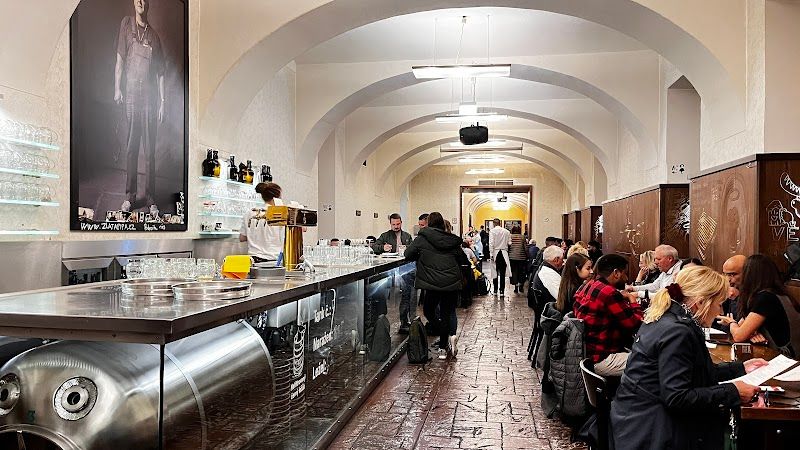
Lokál Dlouhááá
Lokál Dlouhááá delivers exactly what Prague's beer hall culture should be: fresh Pilsner Urquell straight from tanks, proper Czech comfort food, and an atmosphere that feels authentically local rather than touristy. You're here for the svíčková (beef sirloin in cream sauce), goulash, and schnitzel that actually taste like your Czech grandmother made them, plus beer so fresh it hasn't seen the inside of a bottle. The Ambiente restaurant group runs this place, so standards stay consistently high across their multiple locations. The moment you walk in, servers in traditional vests start marking beer tallies on paper coasters without asking if you want one. Tables fill with a genuine mix of office workers, residents, and tourists who've done their homework, all digging into massive plates while conversations flow in multiple languages. The energy peaks around lunch and dinner when every seat fills and the noise level rises to proper beer hall volume. Your server will be brisk, efficient, and won't hover, which is exactly how it should be. Most guides won't tell you that the food here actually outshines many fancier Czech restaurants at half the price. Mains run 200-350 CZK, beer costs around 45 CZK for 0.5L, making a full meal with multiple beers easily under 500 CZK per person. Skip the tourist trap beer halls near the castle and come here instead. The only downside is no reservations, so arrive early or be prepared to wait during peak times.
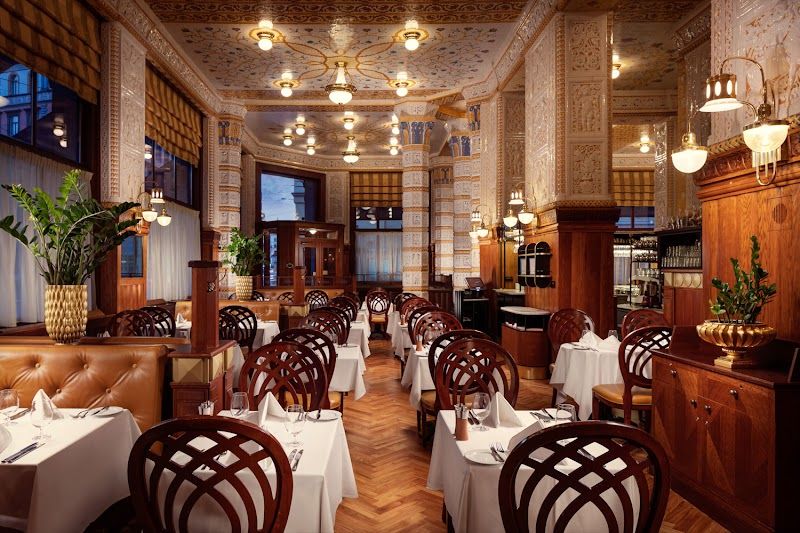
Café Imperial
Café Imperial opened in 1914 as Prague's most opulent coffeehouse, and its restored Art Nouveau interior remains absolutely stunning today. The main dining hall showcases intricate ceramic tilework covering every surface, crystal chandeliers hanging from an ornate ceiling, and marble columns that make you feel like you're dining in a palace. You'll get excellent Czech classics like goulash (420 CZK) and schnitzel (380 CZK), plus they serve breakfast all day including proper eggs Benedict (290 CZK). Walking into the main hall feels like stepping into early 20th century elegance, with tourists and locals alike craning their necks to admire the ceiling details. The atmosphere stays refined but relaxed, servers move efficiently between marble-topped tables, and the kitchen consistently delivers well-executed traditional dishes. Weekend brunch draws Prague families who linger over coffee and pastries, creating a genuinely local feel despite the grand setting. Most guidebooks won't mention that half the tables sit in a bland side room with none of the spectacular tilework, so request the main hall when booking. Expect to pay about 800-1000 CZK per person for a full meal with drinks, which is expensive for Prague but worth it for the setting. Skip the tourist-trap desserts and focus on the mains, they're what the kitchen does best.
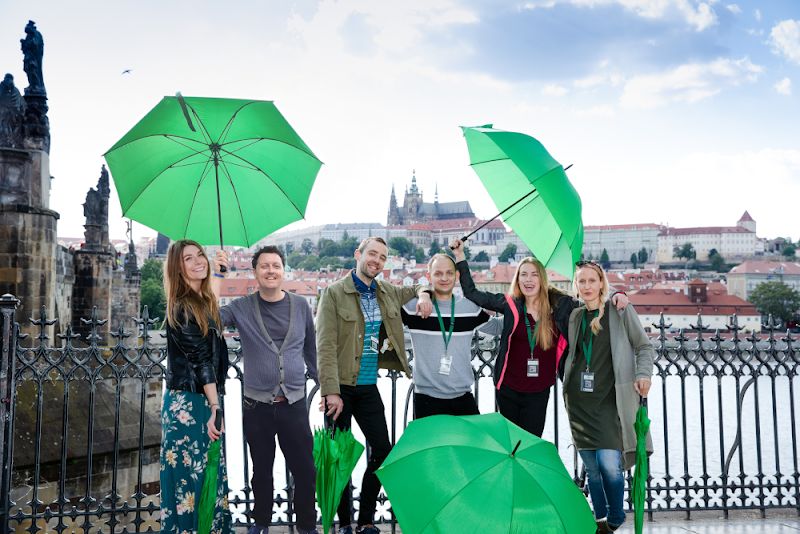
Jewish Quarter Walking Tour Prague
Josefov isn't just any historic quarter: it's Europe's best preserved medieval Jewish district, where six functioning synagogues and the continent's oldest active Jewish cemetery tell a thousand year story. Your historian guide walks you through the atmospheric Old Jewish Cemetery where 12,000 tombstones lean at impossible angles in 12 cramped layers, then into the gothic Old New Synagogue where Prague's Jews have prayed since 1270. The Spanish Synagogue dazzles with Moorish gold patterns, while the Pinkas Synagogue walls list 77,297 Holocaust victim names in tiny handwritten script. The tour flows chronologically through narrow cobblestone streets where medieval walls still stand. You'll duck into small synagogues that feel frozen in time, each with distinct architecture and purpose. The cemetery hits hardest: Rabbi Loew's grave (the golem legend guy) draws pilgrims leaving stones, while your guide explains why bodies were stacked 12 deep in this tiny space. The Spanish Synagogue finale feels like stepping into a jewelry box with its intricate Islamic inspired interior. Most tours rush through, but the 150 minute pace lets stories sink in properly. Skip expensive private guides: group tours with qualified historians cost around 750 CZK and cover identical ground with better storytelling. The Klausen Synagogue's Terezin children's artwork will wreck you emotionally, so save tissues. Book ahead in summer when tours sell out.
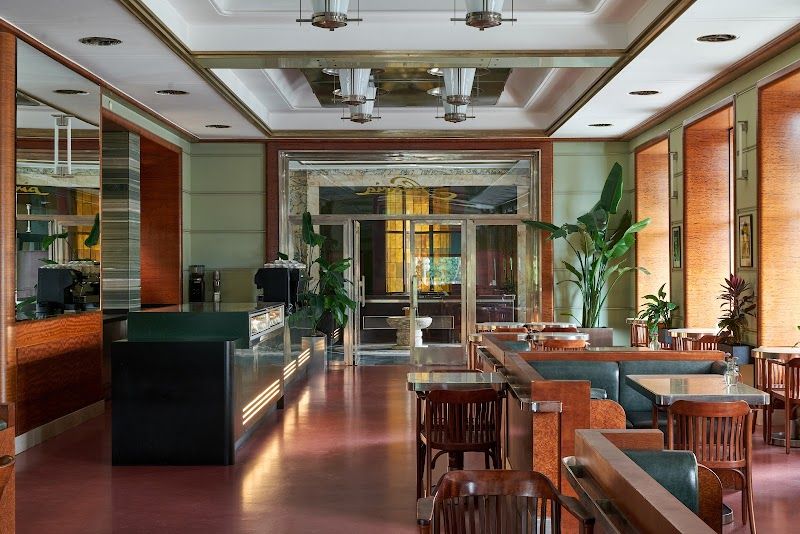
Café Slavia
Café Slavia sits directly across from the National Theatre with floor-to-ceiling windows facing Prague Castle and the Vltava River. This 1884 coffeehouse served as a meeting spot for dissidents during communist rule, including future president Václav Havel, and maintains its original Art Deco interior with marble tables and red banquettes. You'll find traditional Czech pastries like medovník (honey cake) for 85 CZK and proper absinthe service with the sugar cube ritual. The atmosphere feels genuinely old world, not touristy recreation. Waiters in bow ties serve coffee from silver trays while locals read newspapers and tourists crane their necks toward the castle views. The river-facing windows create a natural gallery of Prague's skyline, especially beautiful during golden hour when the castle glows. Conversations happen in hushed tones, maintaining the intellectual coffeehouse tradition that survived decades of political upheaval. Most guidebooks oversell the food quality, it's decent but not exceptional. The real draw is the location and atmosphere, not the 140 CZK goulash. Window tables book up fast, so arrive by 8am or after 4pm for the best castle views. Skip the tourist-heavy weekend afternoons when service slows to a crawl and focus on weekday mornings when locals still outnumber visitors.
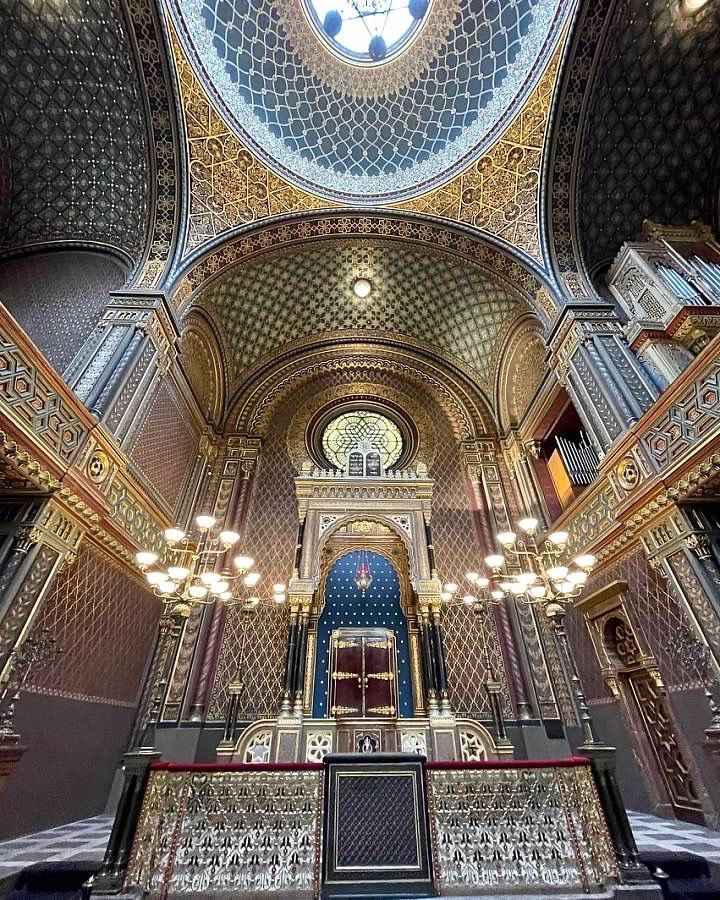
Spanish Synagogue
The Spanish Synagogue isn't Spanish at all, but it's Prague's most architecturally striking synagogue, built in 1868 on the site where Prague's first Jewish community supposedly prayed. The interior explodes with intricate Islamic-inspired geometric patterns covering every surface: golden arabesques climb the walls, ornate tiles frame the windows, and the domed ceiling feels more like a Moorish palace than a Central European synagogue. You'll find exhibitions covering Jewish life in Bohemia from the 1800s to present day, plus a beautiful 19th-century organ that still gets used for concerts. Walking inside feels like stepping into a jewelry box. The afternoon light streaming through stained glass windows illuminates the gold leaf details, making the whole space shimmer. The ground floor focuses on 19th and early 20th century Jewish life, while upstairs covers the darker Holocaust period and communist era. Unlike other Prague synagogues that feel somber, this one feels celebratory, almost festive. The acoustics are incredible, which explains why they still hold classical concerts here. Entry costs 350 CZK for the Jewish Quarter ticket (covers multiple synagogues), but honestly, if you're only doing one synagogue, make it this one. Most people rush through in 15 minutes taking Instagram photos, but the second floor exhibition deserves time. Skip the overpriced audio guide at 50 CZK. The building's beauty overshadows some of the other Jewish Quarter sites, so don't feel guilty about spending most of your ticket value here.
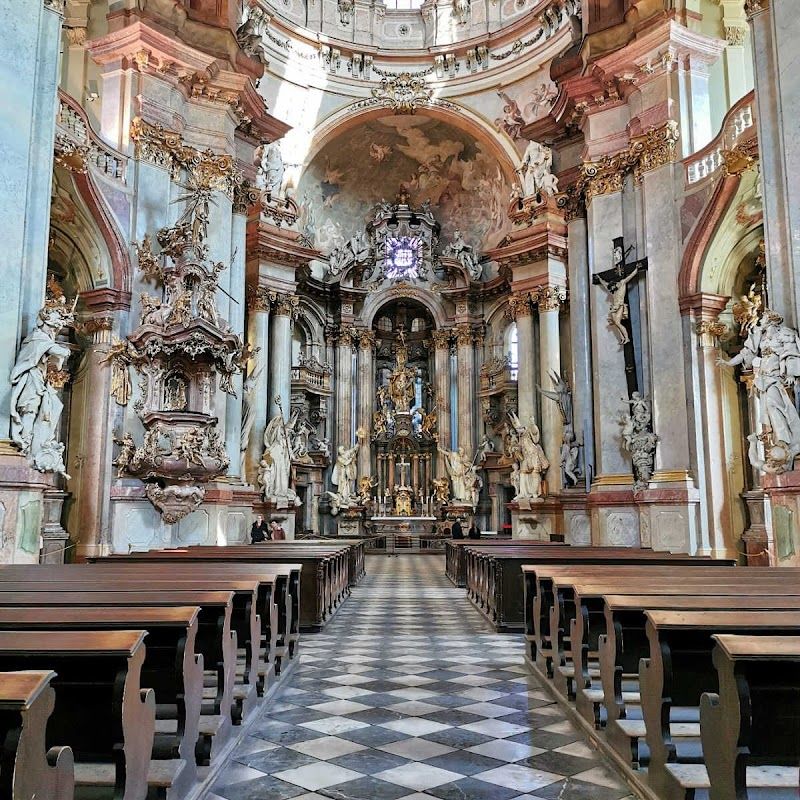
Church of St. Nicholas
St. Nicholas Church dominates Malá Strana square with Prague's most spectacular Baroque interior, where Johann Lukas Kracker's ceiling frescoes stretch across 1,500 square meters of soaring dome and nave. You'll walk beneath pink marble columns that tower overhead while golden statues catch light streaming through tall windows. The acoustics are phenomenal, which explains why classical concerts happen here almost nightly for the same 100 CZK entrance fee. Inside feels like stepping into an 18th century opera house rather than a typical church. The pink and gold color scheme creates warmth that most Baroque interiors lack, and the scale hits you immediately when you enter. Your neck will ache from looking up at Kracker's masterpiece overhead, depicting the life of St. Nicholas in swirling clouds and dramatic gestures. The organ dominates the rear wall, and you can often hear musicians practicing. Most guides rave about this place, and they're right, though 100 CZK feels steep for what's essentially a 20 minute visit unless there's a concert. Skip the crypt tour unless you're obsessed with church history. The real magic happens during evening performances when dramatic lighting transforms the space completely. Come for a concert if possible, otherwise visit in late afternoon when golden hour light streams through the windows at the perfect angle.
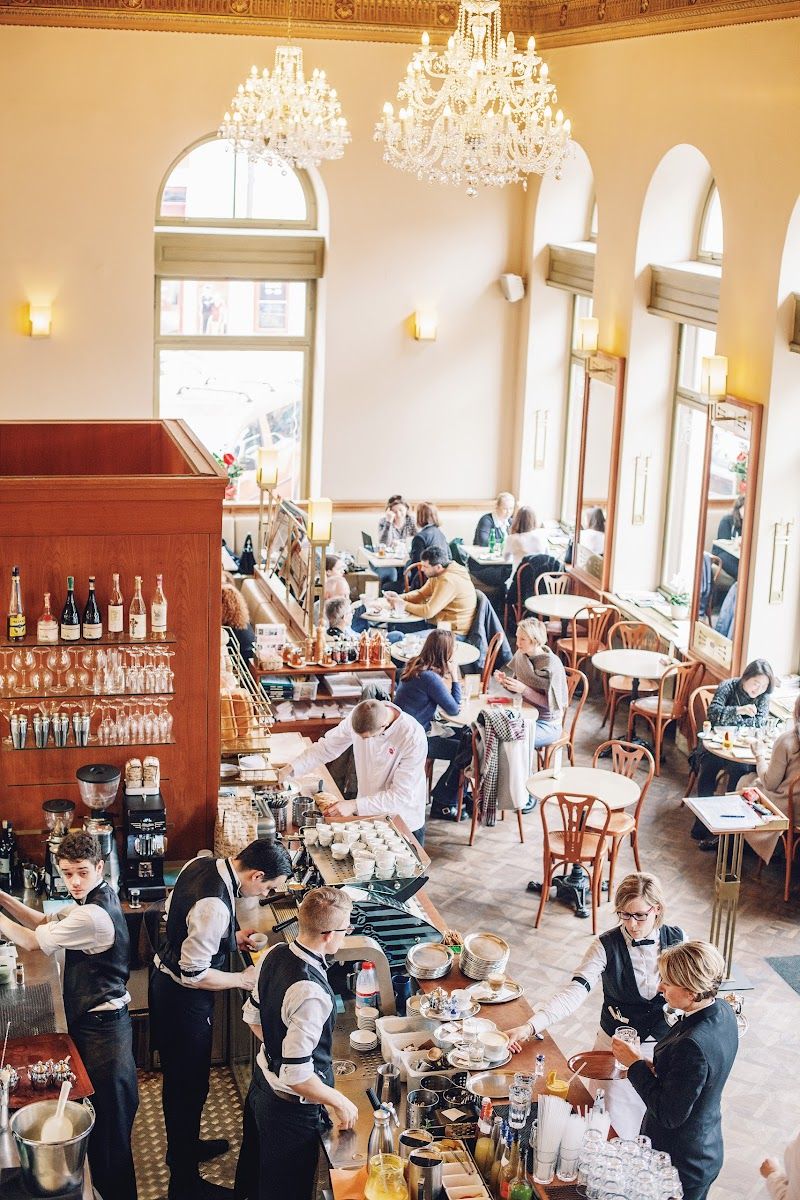
Café Savoy
Café Savoy is a genuinely grand 1893 coffeehouse with a jaw-dropping Neo-Renaissance ceiling that'll make you stop mid-bite to stare upward. You're here for two things: the weekend brunch scene that locals queue for religiously, and Czech classics done properly at lunch. The eggs Benedict variations (around 320 CZK) get all the Instagram love, but honestly, their svíčková na smetaně and wiener schnitzel are what keep regulars coming back. The space feels like stepping into old Prague elegance without the tourist trap vibe. Waiters glide between marble-topped tables under soaring ceilings painted with cherubs and gold leaf details. Conversations buzz in Czech and German as much as English, and you'll see everything from business meetings over coffee to families tackling massive brunch platters. The energy peaks around 11am on weekends when every table fills and the kitchen hits its stride. Most guides don't mention that weekday lunches (mains 280-420 CZK) are actually better value than the famous brunches. Skip the overpriced coffee cocktails and stick to their excellent Czech beer or traditional coffee. The queue situation is real on weekends, sometimes 45 minutes, but the weekday morning sweet spot (8-10am) gives you the same menu with zero wait.
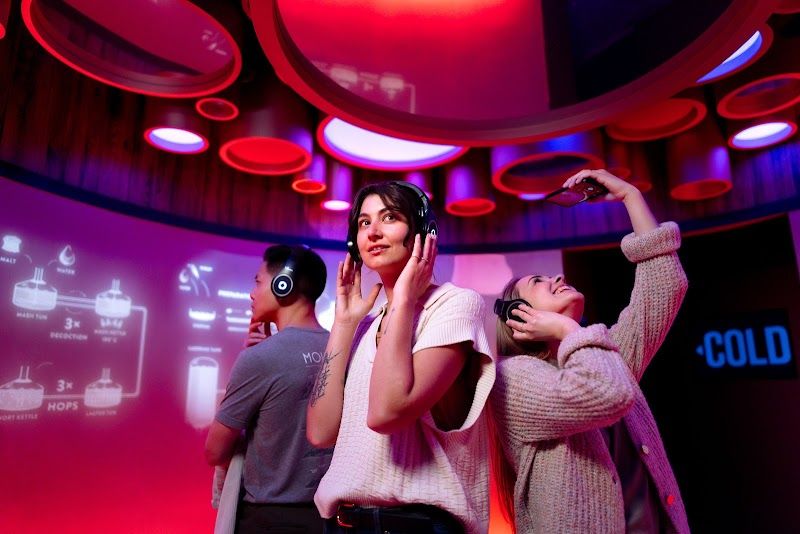
Pilsner Urquell Brewery Day Trip
Pilsner Urquell Brewery sits 90 kilometers west of Prague in Plzeň, where Czech brewmaster Josef Groll invented pilsner beer in 1842. You'll descend into medieval sandstone cellars that stay naturally cool year-round, where massive oak barrels hold unfiltered beer that tastes nothing like the bottled version. The tour includes the original brewhouse where they still use open copper kettles, plus a modern bottling plant that fills 120,000 bottles per hour. The cellar experience feels like entering a beer cathedral: 9 kilometers of tunnels carved from sandstone, with your guide drawing fresh beer directly from wooden barrels using a wooden tap. The temperature stays at 1°C year-round, so you'll need the provided jacket. Above ground, the historic brewhouse smells of hops and malt, while massive copper vessels bubble away. The bottling plant moves at hypnotic speed, with green bottles racing along conveyor belts. Most tours cost around 350 CZK and include three beer tastings, but skip the basic tour for the premium version at 490 CZK. It includes the cellar experience, which is the only reason to make this trip. The museum section feels like corporate propaganda, so spend your time in the cellars and historic brewhouse instead.
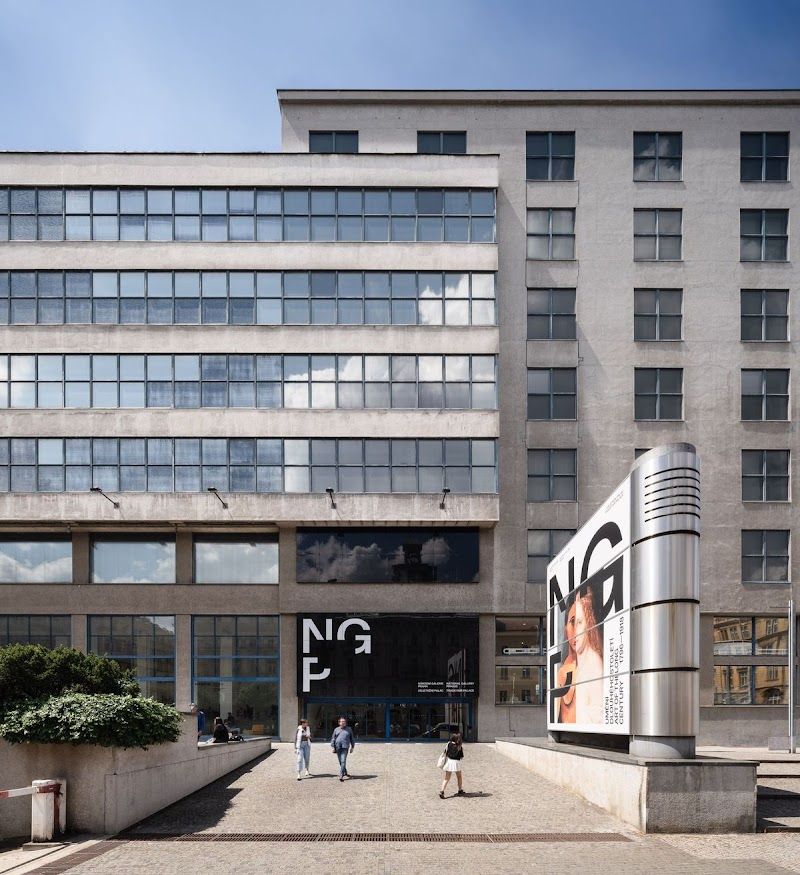
National Gallery Prague - Trade Fair Palace
The Trade Fair Palace houses the National Gallery's impressive collection of modern and contemporary art in a striking 1928 functionalist building that looks like a giant white ocean liner. You'll find works spanning from French Impressionism through Czech Cubism to contemporary pieces, including paintings by Klimt, Schiele, Picasso, and Mucha across six floors. The 220 CZK admission gets you access to the world's largest collection of Czech Cubist art, plus rotating exhibitions that often feature major international artists. The experience feels refreshingly uncrowded compared to Prague's medieval attractions. The building's clean lines and massive windows create perfect gallery spaces where natural light illuminates the artwork beautifully. You'll move through chronologically arranged rooms, starting with 19th-century French masters on the upper floors and working down to contemporary Czech artists. The scale surprises most visitors: this isn't a quick afternoon stop but a proper museum that rewards slow exploration. Most guides don't mention that the permanent collection rotates regularly, so some famous pieces might be in storage during your visit. The contemporary floors (1-2) are hit or miss and often feel sparse, so focus your energy on floors 3-6 where the real treasures live. Skip the basement temporary exhibitions unless they're featuring major names, as they're usually overpriced at an additional 150 CZK. The museum shop is excellent for art books but wildly expensive for everything else.
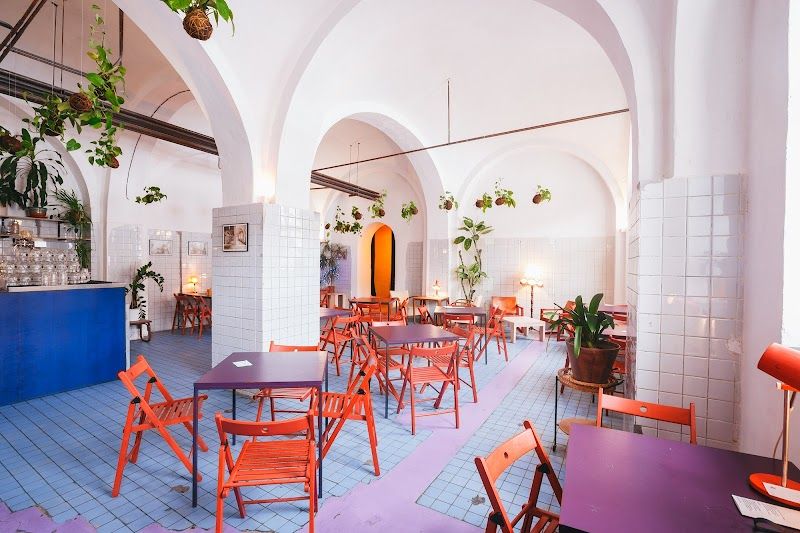
Kasárna Karlín
Kasárna Karlín transforms a sprawling 19th-century Habsburg military complex into Prague's most successful urban regeneration project. You'll find designer co-working spaces, rotating art installations, independent coffee shops, and weekend farmers markets all housed within beautifully restored brick buildings. The central courtyard hosts everything from outdoor cinema screenings to vintage flea markets, while the surrounding spaces house architects, startups, and creative agencies that give the place genuine energy beyond just weekend tourists. Walking through feels like discovering Prague's creative future housed in its imperial past. The original military architecture remains intact, with high ceilings and massive windows now filled with modern furniture and contemporary art. On weekends the central courtyard comes alive with families browsing market stalls, freelancers working on laptops at outdoor tables, and kids playing while parents drink specialty coffee. During weekdays it's quieter but more authentic, with actual tenants going about their business in what feels like a functioning creative community rather than a tourist attraction. Most travel guides oversell this as a major sightseeing destination when it's really best experienced as part of daily Prague life. The weekend farmers market (Saturday 8am to 2pm) offers excellent local produce and artisanal goods, but skip the overpriced organic vegetables and focus on the bread, cheese, and craft beer stalls. Coffee runs about 80-120 CZK, comparable to central Prague prices. The real appeal isn't any single attraction but the atmosphere of seeing how Prague's young professionals actually live and work.
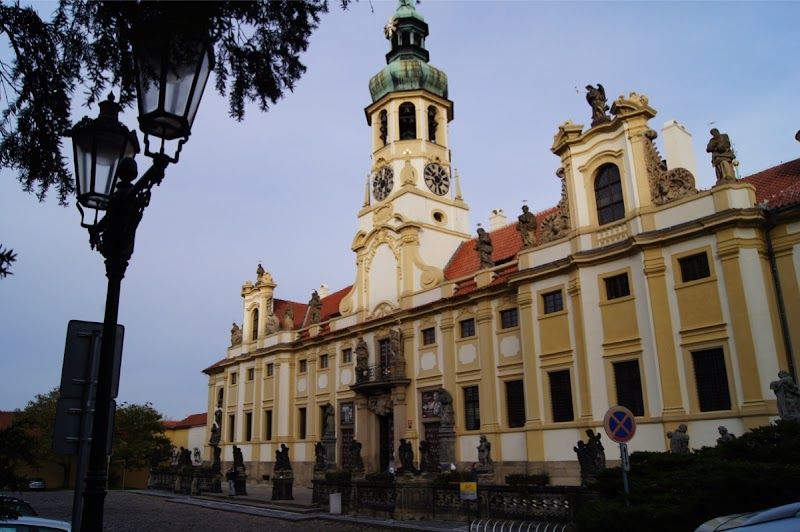
Loreta
Loreta houses a precise replica of the Holy House from Nazareth, wrapped in baroque cloisters that contain six chapels dedicated to various saints. The treasury upstairs displays the famous Prague Sun, a diamond-encrusted monstrance that's genuinely spectacular, plus dozens of other liturgical objects donated by noble families. The carillon tower plays Marian hymns every hour, and the acoustics in the courtyard make it worth timing your visit around. You'll enter through the main gate into a peaceful rectangular cloister where pilgrims have walked for centuries. The Santa Casa sits in the center, surprisingly small and intimate compared to the ornate baroque facade surrounding it. Each chapel has different artwork and relics, but the real highlight is climbing to the treasury where cases display centuries of religious gold and silverwork. The whole complex feels like stepping into a working pilgrimage site rather than a tourist attraction. Entry costs 150 CZK for adults, which is reasonable given what you see. Most visitors rush through in 30 minutes, but you'll appreciate it more if you take the full hour and read the English descriptions. Skip the basement exhibition unless you're really into religious history. The treasury is worth the extra time, and don't miss the carved ceiling in the Church of the Nativity.
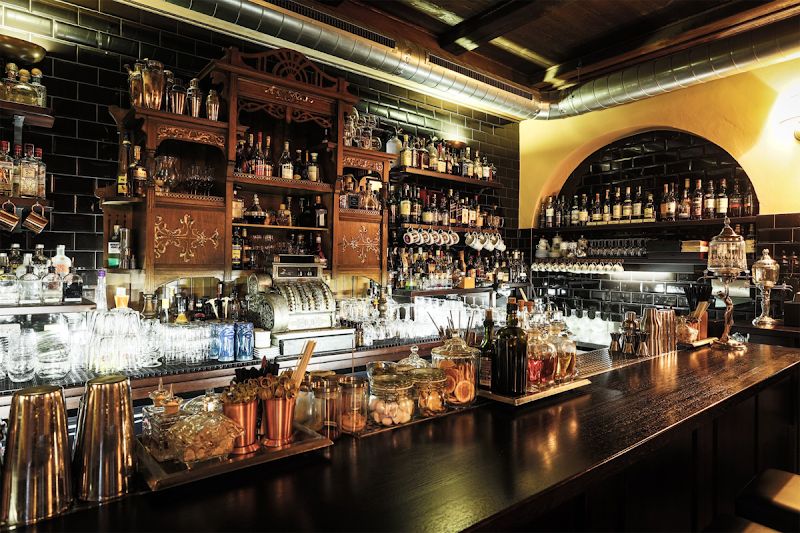
Hemingway Bar
Hemingway Bar occupies a basement space in Nové Město that feels like stepping into 1920s prohibition America. This isn't just another cocktail bar: it's consistently ranked among the world's top 50, with bartenders who make their own bitters, infusions, and syrups. You'll find an encyclopedic absinthe selection (over 60 varieties) and cocktails that take genuine skill to execute, like their famous absinthe drip or perfectly balanced Ramos Gin Fizz that requires 12 minutes of shaking. The space divides into two distinct areas: a front bar with mahogany paneling and vintage jazz playing, plus a tiny back room with maybe eight seats total. Service moves at a deliberate pace because everything gets made from scratch, so expect 10 minutes per drink minimum. The atmosphere stays sophisticated and conversation focused, not a party scene. Bartenders wear suspenders and bow ties without irony, and they know their craft inside out. Most guides won't mention that cocktails run 350-450 CZK each, making this one of Prague's priciest drinking experiences. The back room books up weeks ahead, but honestly, the front bar offers better people watching and equally skilled service. Skip the absinthe unless you're genuinely curious: their classic cocktails showcase the real talent here. Come after 8pm when the lighting dims and the atmosphere peaks.
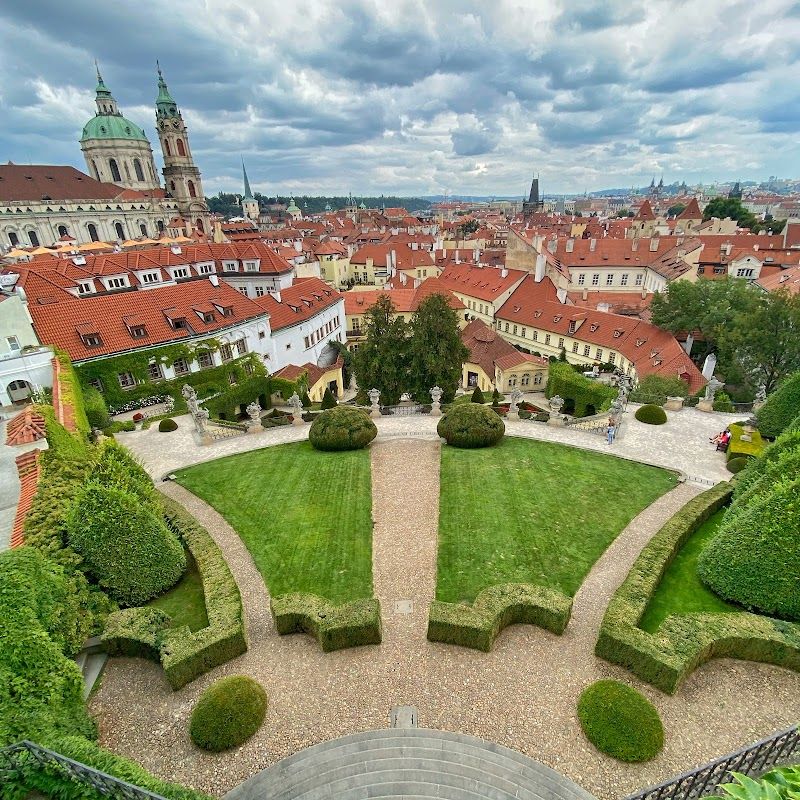
Vrtba Garden
Vrtba Garden climbs five terraced levels behind Prague's most easily missed entrance, a plain doorway on busy Karmelitská street. František Maxmilián Kaňka designed these Baroque terraces in 1720, and sculptor Matthias Braun added mythological figures that peer from alcoves and pedestals. You'll ascend through perfectly manicured hedges, ornate staircases, and stone balustrades to reach Prague's most rewarding elevated viewpoint over Malá Strana's terracotta rooftops. The visit feels like discovering a secret world just meters from tourist crowds. Each terrace reveals new sculptural details: Atlas figures supporting stone urns, cherubs climbing ivy covered walls, and baroque fountains trickling quietly. The garden stays remarkably peaceful even during peak season, with only 20 or so visitors allowed at once. Climbing to the top terrace takes about 15 minutes, but you'll want to linger on each level to appreciate the intricate stonework and increasingly spectacular views. At 120 CZK, it's Prague's best value for photography enthusiasts, but skip it if you're mobility limited since the climb involves steep stone steps throughout. Most visitors rush straight to the top terrace and miss the detailed sculptural work on levels two and three, where Braun's craftsmanship really shines. Come before 10am or after 4pm when the light hits the garden perfectly and you'll have the terraces mostly to yourself.
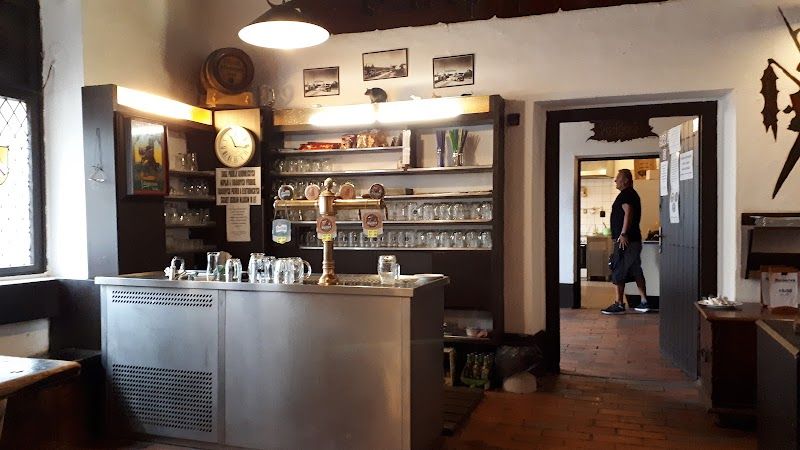
U Černého vola
U Černého vola is Prague's most authentic neighborhood pub, a smoke-stained time capsule that's barely changed since the 1950s. You'll find wooden benches worn smooth by decades of locals, Communist-era decorations still hanging on yellowed walls, and bartenders who've been pulling pints of Kozel for longer than you've been alive. This isn't a tourist attraction disguised as a pub: it's the real deal, where construction workers and pensioners gather after work to argue about football over 35 CZK beers. Walking in feels like entering someone's grandfather's basement bar. The ceiling is low and nicotine-stained, fluorescent lights buzz overhead, and conversations happen entirely in Czech at volumes that suggest everyone's slightly deaf. You'll squeeze onto benches at communal tables, order by pointing at what others are drinking, and realize this cramped room somehow holds the soul of old Prague. The Kozel flows from taps that look original to the building, and plates of goulash or schnitzel appear without fanfare. Most pub crawls skip this place because it intimidates tourists, which keeps it perfect. Don't expect English menus, card payments, or Instagram lighting. Half-liters of Kozel run 35-40 CZK, making it absurdly cheap for the castle district. The goulash costs about 120 CZK and tastes like your Czech grandmother made it. Skip the touristy pubs on Nerudova Street: this cramped cave delivers more authentic Prague in one pint than those places manage in an entire evening.
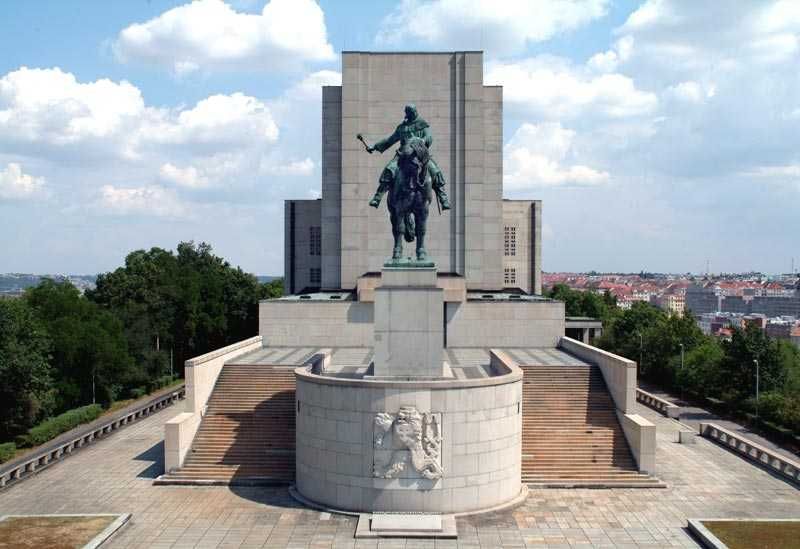
National Memorial on the Vítkov Hill
The National Memorial on Vítkov Hill dominates Prague's skyline with Jan Žižka's colossal bronze statue, the world's third largest equestrian monument at 9 meters tall. Inside, the museum chronicles Czechoslovakia's turbulent 20th century through artifacts, photographs, and multimedia displays covering both world wars, the communist era, and the Velvet Revolution. The real prize is the free rooftop terrace, which delivers 360-degree views across Prague's red rooftops, castle, and the Vltava River winding below. You'll start in the stark functionalist interior where exhibits feel somewhat dated but tell compelling stories of resistance fighters and political upheaval. The communist-era propaganda displays are particularly fascinating, showing how history was rewritten multiple times. Climbing to the terrace feels like emerging from a time capsule into brilliant daylight, where the panorama stretches from Petřin Hill to the TV tower. Most visitors skip this place entirely, which is their loss. The museum entry costs 120 CZK, but you can access the terrace for free. Skip the underground crypt unless you're genuinely interested in interwar architecture. The walk up from Florenc metro takes 15 minutes and gets steep, but it's worth every step for views that rival those from Prague Castle without the crowds.
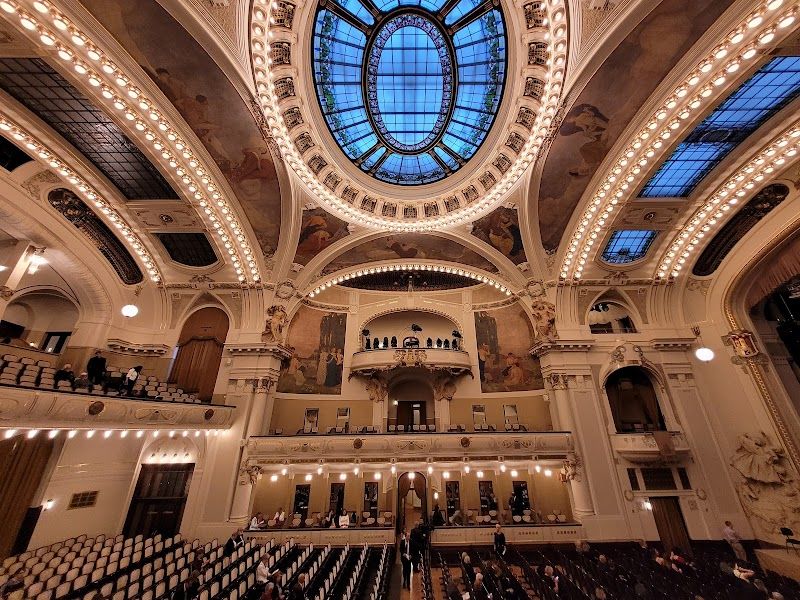
Smetana Hall Classical Concert
Smetana Hall sits inside Prague's Municipal House, delivering classical concerts in what's genuinely one of Europe's most beautiful concert venues. You'll hear the Prague Symphony Orchestra perform works by Czech masters like Dvořák and Smetana beneath Alphonse Mucha's swirling Art Nouveau ceiling murals. The acoustics are exceptional, every note carries perfectly whether you're in the front row or upper balcony. The experience begins the moment you enter the Municipal House's mosaic covered foyer, then ascend the marble staircase to the concert hall itself. The hall glows golden under crystal chandeliers, and Mucha's allegorical paintings seem to dance in the warm light. During intermission, you can explore the building's other decorated rooms, including the Lord Mayor's Hall with its intricate stained glass. Ticket prices range from 890 CZK for balcony seats to 2,200 CZK for premium orchestra sections. Skip the tourist focused "Best of Czech Classics" programs, they're overpriced at 1,500+ CZK and feel rushed. Instead, book regular Prague Symphony Orchestra concerts for authentic programming at better prices. The venue's beauty makes even mediocre performances memorable, but check the conductor, some guest conductors phone it in.
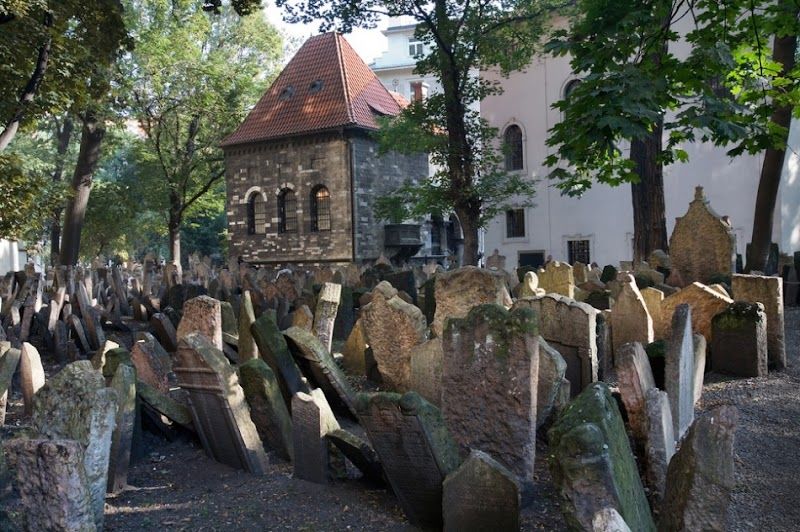
Jewish Quarter (Josefov)
Prague's Jewish Quarter preserves six historic synagogues and Europe's oldest surviving Jewish cemetery, telling the story of a community that lived here from the 13th century until the Holocaust. You'll see 77,297 names of murdered Czech Jews inscribed on the Pinkas Synagogue walls, children's drawings from Terezin concentration camp, and the Old Jewish Cemetery where 12,000 visible headstones are layered up to 12 levels deep. The Spanish Synagogue (1868) showcases stunning Moorish architecture, while the Old-New Synagogue from 1270 remains Europe's oldest active synagogue. The visit feels like walking through layers of history, from medieval persecution to Nazi horrors to modern preservation. The Pinkas Synagogue hits hardest, with floor-to-ceiling names and heartbreaking children's artwork upstairs. The cramped cemetery tells its own story of forced confinement, while the Spanish Synagogue's golden interior provides architectural relief. Most visitors spend 3-4 hours moving between sites, and the emotional weight is significant. The CZK 500 combined ticket covers five synagogues and the cemetery, but you'll pay extra CZK 200 for the Old-New Synagogue, which is worth it. Most guides don't mention how emotionally draining this is, so plan lighter activities afterward. Skip the Klaus Synagogue if you're short on time, it's the least compelling. Start early to avoid tour groups, and buy tickets online to skip queues.
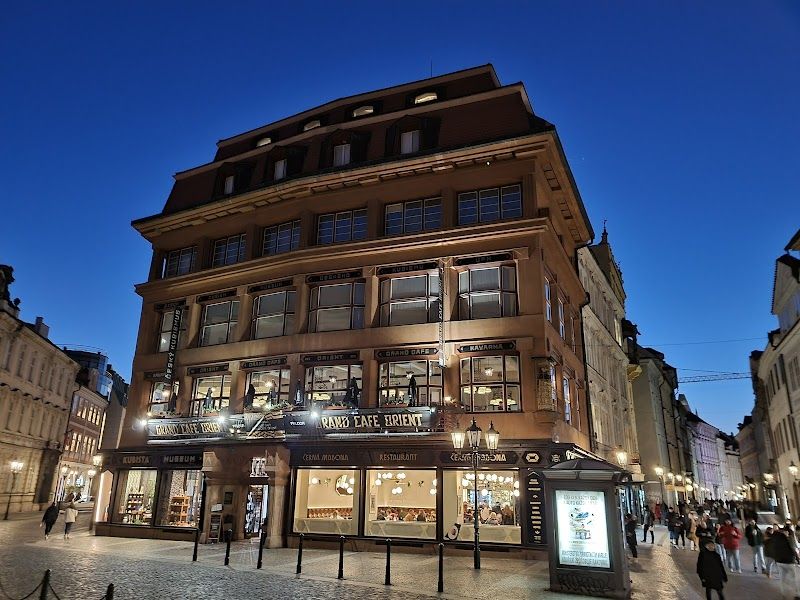
House of the Black Madonna
This is genuinely the world's only Cubist museum, housed inside Josef Gočár's 1912 architectural masterpiece that pioneered Cubist building design. You'll see original Czech Cubist furniture, paintings, and decorative objects from 1911-1919, including Pavel Janák's angular chairs and Vlastislav Hofman's geometric ceramics. The collection is small but extraordinary: every piece represents a brief moment when Czech artists applied Cubist principles to everyday objects like lamps, vases, and tables. The museum occupies just three floors of the narrow building, so you'll move through intimate rooms rather than vast galleries. The Cubist furniture looks surprisingly modern, with sharp angles and faceted surfaces that catch light dramatically. What's remarkable is seeing how artists transformed ordinary objects into geometric sculptures while keeping them functional. The building itself is part of the exhibition, with Gočár's angular facade and crystalline details visible from every window. Most visitors rush through in 30 minutes, but you should spend at least an hour to appreciate the craftsmanship. At 150 CZK, it's excellent value for such rare pieces. Skip the basement level if you're short on time: the ground floor furniture collection is the real highlight. The museum shop sells quality reproductions, but they're expensive at 800-2000 CZK for small items.
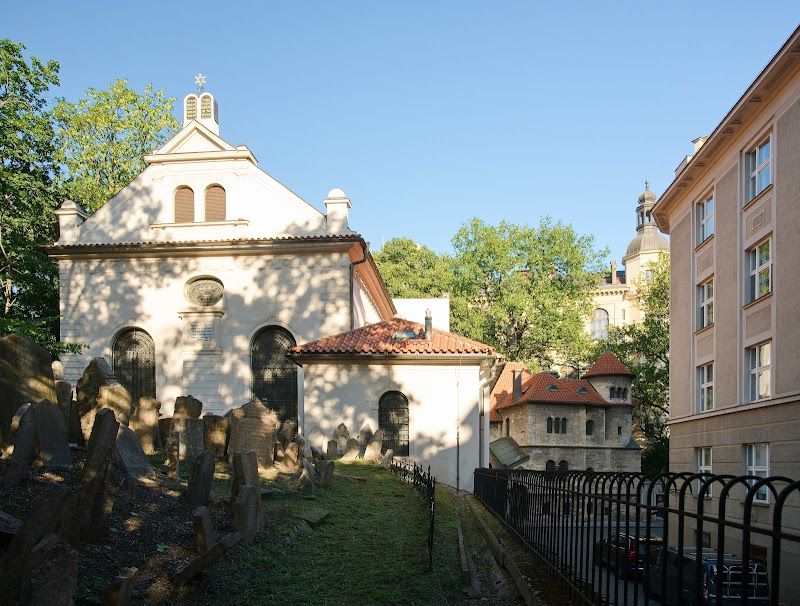
Old Jewish Cemetery
The Old Jewish Cemetery holds around 12,000 gravestones packed into a space smaller than a football field, creating Europe's most densely layered burial ground. Bodies were buried up to twelve layers deep over 350 years, pushing weathered tombstones at odd angles that catch shadows beautifully. You'll walk narrow paths between Hebrew inscriptions dating back to 1439, including graves of famous rabbis like Judah Loew ben Bezalel, creator of the legendary golem. The visit feels otherworldly as you navigate between tilted stones covered in moss and centuries of wear. Crowds move slowly through the cramped pathways, and the atmosphere stays reverent despite tour groups. The contrast between cramped burial space and ornate synagogues nearby shows how Prague's Jewish community adapted to severe restrictions. Hebrew text covers every surface, with symbolic carvings of hands, grapes, and lions marking different family lineages. Entry costs 350 CZK for the full Jewish Museum circuit, which includes four synagogues you honestly don't need to see. The cemetery alone justifies the price, but most visitors rush through in 15 minutes when you should spend at least 30. Skip the audio guide and focus on the famous graves marked with small plaques. Morning visits before 10am avoid the worst crowds, and winter visits offer the most atmospheric lighting through bare trees.
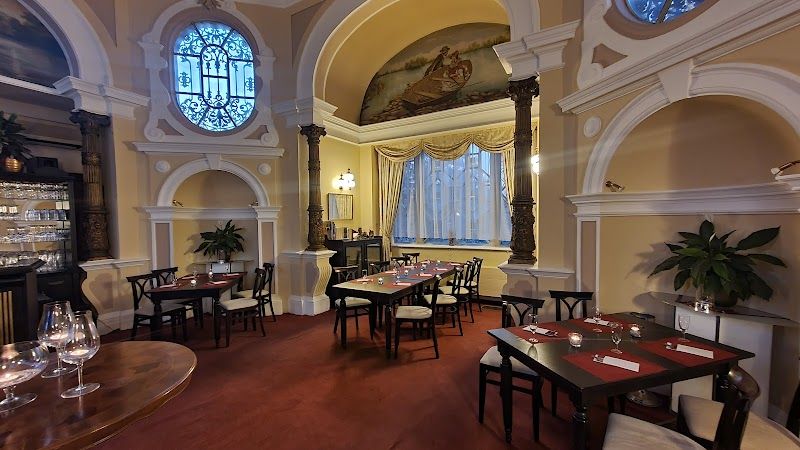
Pavilon
Pavilon occupies a gorgeous 1890s glass pavilion in Havlíček Park that was originally built for the Jubilee Exhibition. You'll dine inside an Art Nouveau greenhouse with soaring windows, ornate ironwork, and period details that survived decades of neglect before the restaurant's careful restoration. The seasonal Czech menu focuses on locally sourced ingredients, with mains running 380-680 CZK and the three-course lunch menu at 450 CZK. The experience feels like dining in a Victorian conservatory that happens to serve exceptional food. Natural light floods through the glass walls during lunch, while evening service gets moody with warm lighting reflecting off the metal framework. The terrace overlooks the park's vineyard and offers distant city views, though the indoor space is more atmospheric. Service runs professionally without being stuffy, and the kitchen executes modern takes on Czech classics like duck confit with red cabbage or beef tartare with quail egg. Most reviews rave about the setting, but honestly, it's the food that justifies the prices. Skip the basic salads (overpriced at 280 CZK) and go for the seasonal game dishes or fish preparations where the kitchen really shines. The wine list emphasizes Czech bottles, including some from their own vineyard, though markups are steep. Book ahead for weekend dinners, but weekday lunches usually have space.
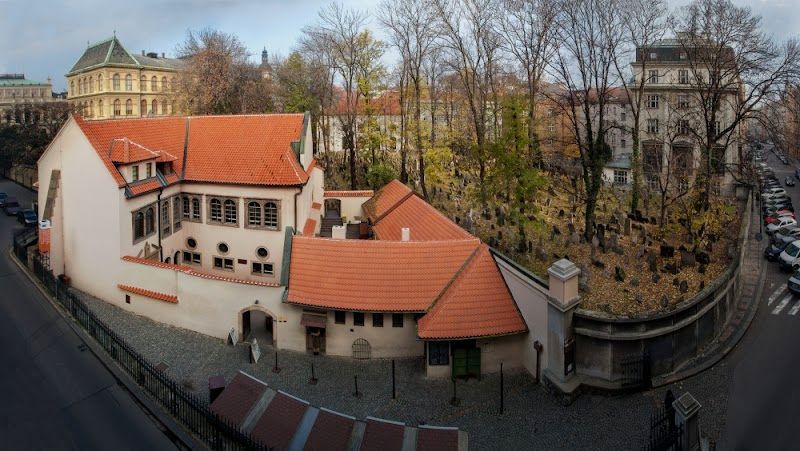
Pinkas Synagogue
Pinkas Synagogue transforms a 16th-century place of worship into Prague's most powerful Holocaust memorial. Every wall bears the hand-painted names of 77,297 Czech and Moravian Jews who perished in the Holocaust, creating an overwhelming visual reminder of individual lives lost. Upstairs, you'll find drawings and poems created by children at Terezín concentration camp, many depicting memories of home alongside their harsh reality. The experience hits you immediately when you enter the main hall and see names covering every surface from floor to ceiling. The atmosphere is profoundly quiet, with visitors speaking in hushed tones as they scan the walls for family names or simply absorb the scale of loss. The children's artwork upstairs provides a different kind of impact: colorful butterflies and house drawings that make the tragedy feel deeply personal rather than abstract. Most guides don't mention that the memorial was closed for decades under communist rule and only reopened in 1991. The entry ticket costs 400 CZK for the full Jewish Quarter circuit, but you can't buy single-site tickets. Don't rush this one, many people spend only 15 minutes when the children's drawings alone deserve half an hour. Skip the crowded afternoon hours when tour groups make the narrow spaces feel cramped.
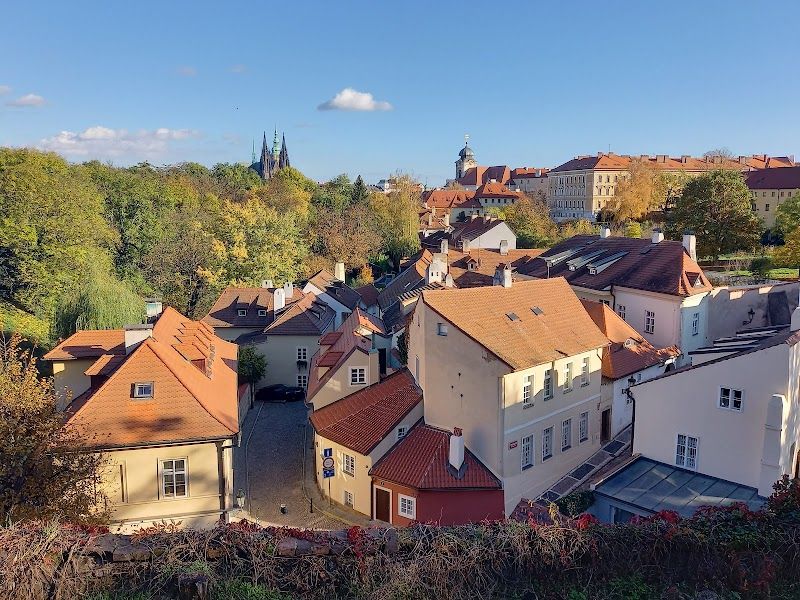
Nový Svět
Nový Svět is a cobblestone lane with 24 tiny pastel cottages that date back to the 14th century. These miniature houses were originally built for Prague Castle servants. You'll see a wide range of colours, from butter yellow to sage green. Walking this short street gives you a glimpse of what medieval Prague might have looked like. The uneven cobblestones force you to slow down, while the small size of the houses makes you wonder how families lived here. Morning light hits the eastern facades well, while late afternoon sun warms the western cottages. It's easy to see everything in 15 minutes, but most people linger longer, taking in the atmosphere. Many travel guides make Nový Svět sound more prominent than it actually is. Between 10am and 4pm, tour groups congregate on the street, blocking the best photo angles. The most photogenic compositions are found at house number 1 at the castle end and the cluster around houses 20-24. Keep in mind that it's not possible to go inside any of these properties, as they are private residences where real people live and work.
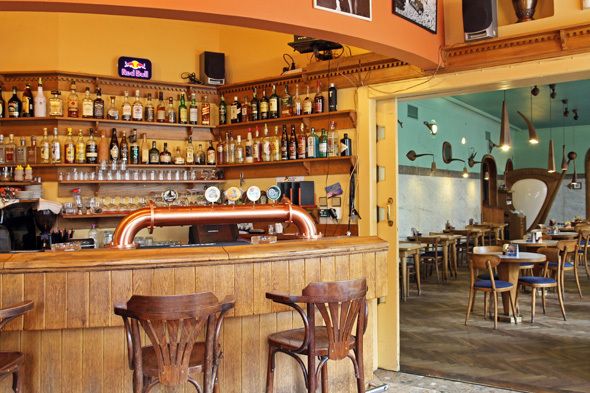
Restaurace Akropolis
Restaurace Akropolis is Prague's most important alternative cultural space, a rambling multi-room complex that's been hosting everything from experimental theater to world music since 1993. You'll find three distinct areas: the ground-floor restaurant serving solid international dishes (mains 180-280 CZK), the intimate upstairs club for smaller gigs, and the main hall that packs in 400 people for bigger acts. The summer garden terrace becomes the heart of the action when weather permits. Walking through feels like exploring an art student's fever dream. Mismatched furniture, concert posters from decades past, and dim lighting create an authentically bohemian atmosphere that most Prague venues try to fake. The restaurant buzzes with pre-show energy while musicians sound-check in adjacent rooms. You'll hear snippets of conversations in multiple languages as local artists mix with international touring acts and curious tourists who've wandered in from touristy Vinohrady. Most guides oversell the food, which is perfectly decent but not the main attraction. Come for concerts (tickets 200-600 CZK depending on the act) and treat dinner as fuel rather than fine dining. The upstairs club books genuinely interesting acts that bigger venues won't touch, while the main hall gets crowded and sweaty fast. Skip weekend evenings unless you've got tickets, as it's often booked for private events.
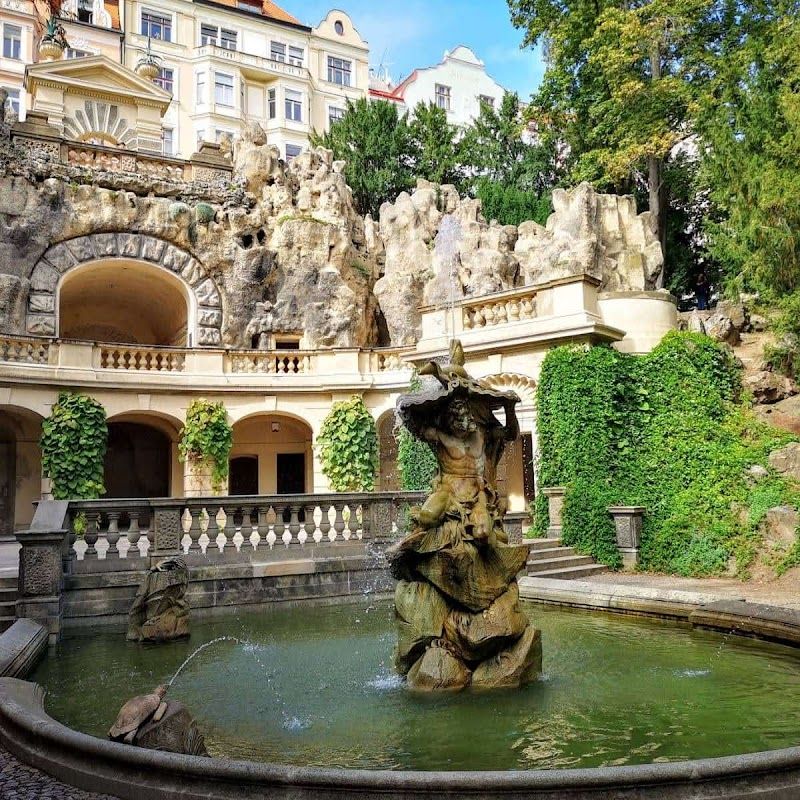
Havlíčkovy sady
Havlíčkovy sady transforms a former 19th-century wine estate into Vinohrady's most rewarding park experience. You'll climb through actual terraced vineyards that still produce wine, discover an artificial grotto with a small waterfall, and reach viewpoints overlooking Prague's red rooftops. The Art Nouveau Grébovka pavilion anchors the upper section, while winding paths connect manicured gardens with wilder hillside sections. The park feels like exploring someone's elaborate private estate rather than a public space. You'll start at street level and work your way up through different garden zones, each with its own character. The vineyard terraces create natural amphitheaters where locals picnic on weekend afternoons. The grotto provides genuine coolness on hot days, and the upper paths offer surprising quiet despite being minutes from busy Náměstí Míru. Most Prague guides mention this place briefly, but it deserves a proper 90-minute exploration. Skip the crowded lower playground area and head straight for the vineyard paths. The best views are from the pavilion area, not the obvious viewpoint platforms. Wine from the estate occasionally appears at local wine bars for around 200-300 CZK per bottle, though you can't buy it on-site.
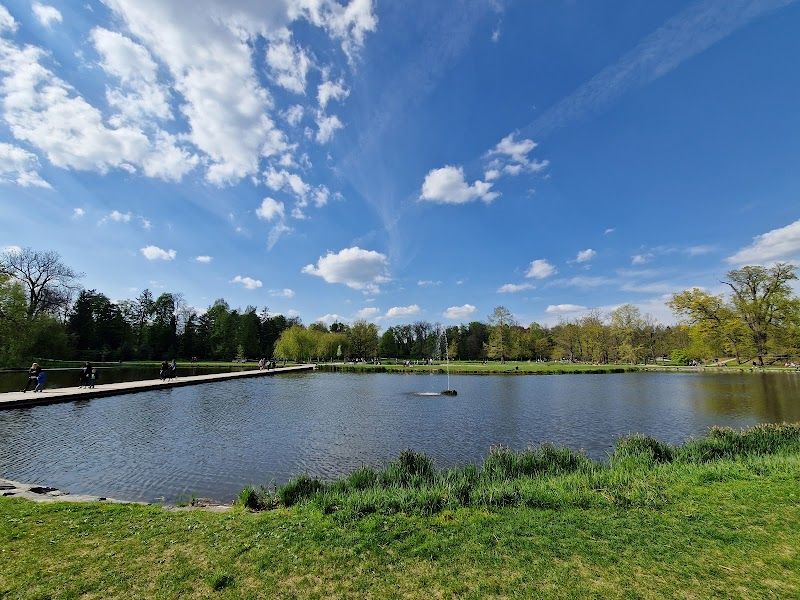
Stromovka
Stromovka sprawls across 95 hectares of former royal hunting grounds that Emperor Rudolf II transformed in 1268, making it Prague's largest green space. You'll find genuine wilderness minutes from the city center: dense forests with 400-year-old oaks, meandering streams, and the striking neo-Gothic Governor's Summer Palace from 1805. The park connects seamlessly to Výstaviště exhibition grounds, creating a massive recreational area where locals jog, cycle, and picnic year-round. The experience feels more like hiking through countryside than visiting a city park. Wide gravel paths weave between towering trees and cross historic waterways via small bridges, while narrower dirt trails disappear into thick forest sections. Families spread blankets near the palace, cyclists zip past on designated routes, and you'll hear multiple languages as international residents treat this as their backyard. The atmosphere stays relaxed even on weekends, with plenty of space to find solitude among the trees. Most guides oversell the palace, which you can only admire from outside unless there's a special exhibition. Skip the formal entrance near Letná and head straight to the Výstaviště side where you'll find better parking and immediate access to the best forest sections. The park works perfectly as a connecting route if you're cycling from Holešovice to other districts, and it's genuinely beautiful in autumn when the canopy turns golden.
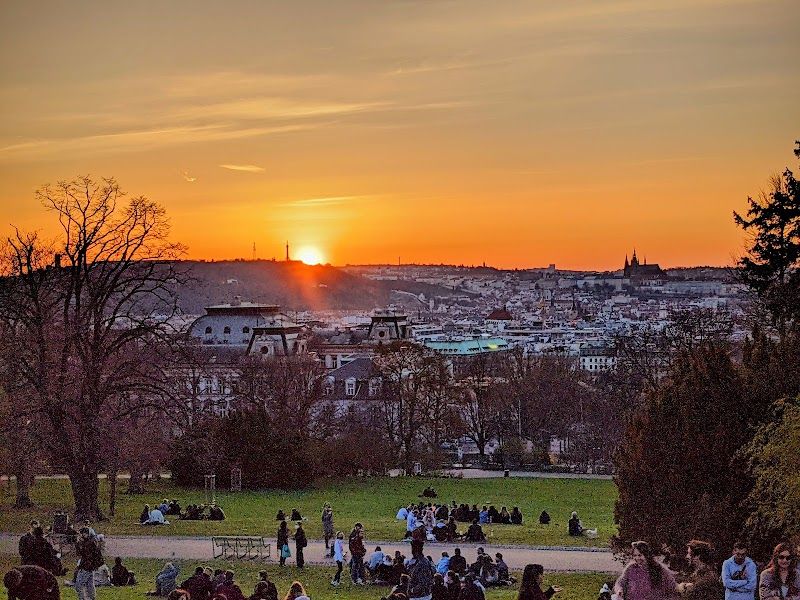
Riegrovy Sady
Riegrovy Sady sprawls across terraced hillsides in Vinohrady, offering Prague's best combination of green space and cold beer with a view. The 1904 park design creates natural amphitheater levels where locals spread blankets for picnics, kick footballs on sloping grass, and gather at wooden tables in the legendary beer garden. You'll find mature chestnut trees providing shade, open lawns perfect for frisbee, and eastern terraces that frame Prague Castle beautifully. The experience flows naturally from exploration to relaxation. You'll wander tree lined paths connecting different terrace levels, each offering distinct views across red tile rooftops toward the castle or city center. The beer garden dominates the upper section with long communal tables where conversations flow easily between strangers. Evenings bring guitar players, dog walkers, and young professionals unwinding after work, creating an authentically local atmosphere that tourist spots lack. Most guides overhype this as a major attraction when it's really just a solid neighborhood park with great beer. The Pilsner Urquell costs 45 CZK, which is standard for Prague. Skip coming in winter when the beer garden closes and the grass turns muddy. The eastern terrace benches fill up by 6pm on sunny days, so arrive earlier or accept standing room. Don't expect manicured gardens, this place prioritizes function over beauty.
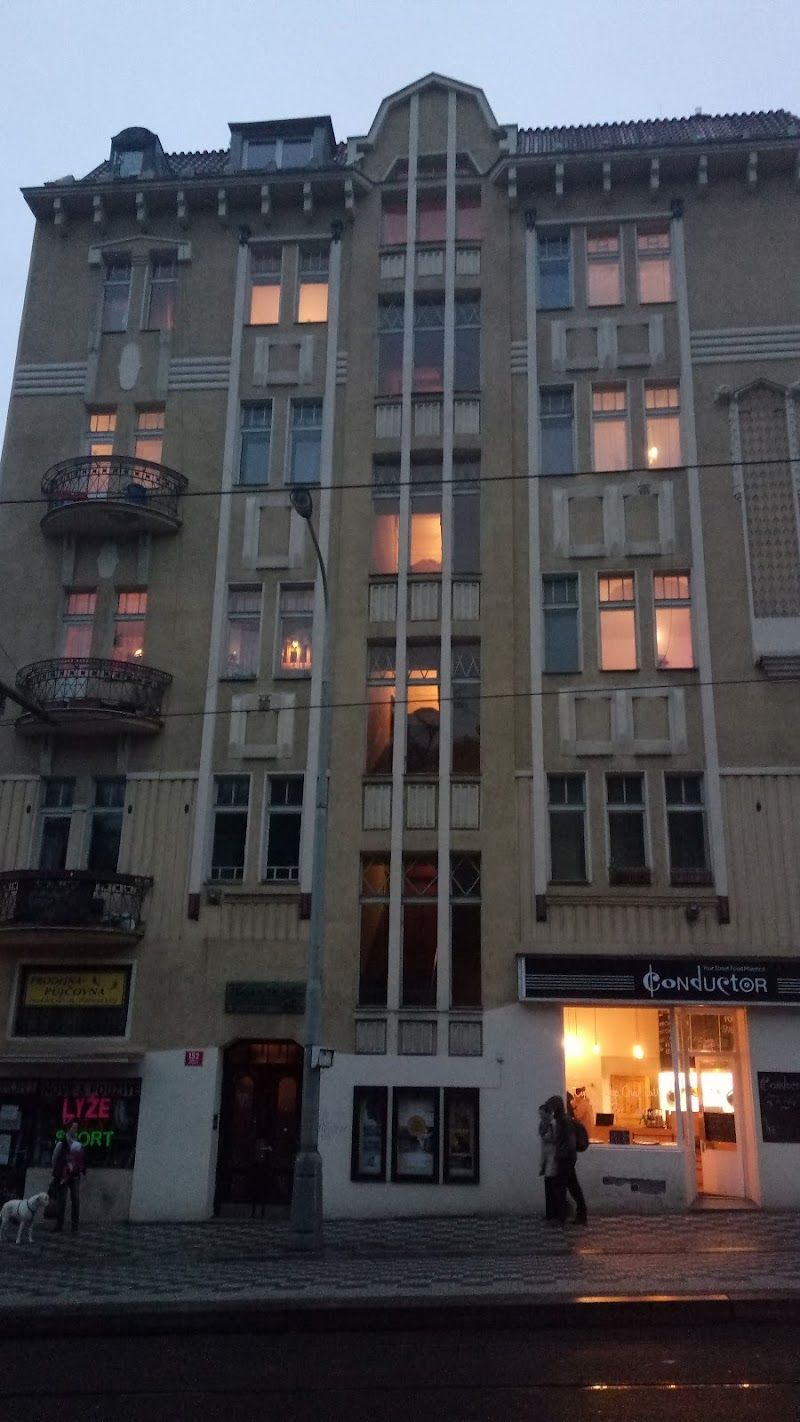
Krymská Street
Krymská Street transforms a former residential road into Prague's most authentic alternative scene, stretching six blocks through Vinohrady with independent cafés, natural wine bars, and vintage shops that locals actually use. You'll find microbreweries like Vinohradský Pivovar pouring fresh lagers for 45 CZK, wine bars serving natural bottles from 150 CZK per glass, and vintage stores selling everything from Soviet-era cameras to 1980s band tees. The street hosts weekend pop-up markets and regular cultural events in small galleries and community spaces. Walking Krymská feels like discovering Prague's creative underground without the tourist performance. Outdoor seating spills onto wide sidewalks during warmer months, creating an impromptu street party atmosphere where art students mix with young professionals and longtime residents. You'll hear conversations in Czech, not English, and see locals reading newspapers over morning coffee at 9am or sharing natural wine at small tables by 6pm. The pace stays relaxed even on busy Friday evenings. Most guides oversell this as some revolutionary district, but it's simply a nice neighborhood street with good places to drink and browse. Skip the overhyped spots near Náměstí Míru and focus on the middle section where rent's still affordable and owners take risks. The vintage shopping gets picked over quickly, so come early if that's your priority. Expect to spend 300-500 CZK for coffee, a glass of wine, and maybe a small plate.
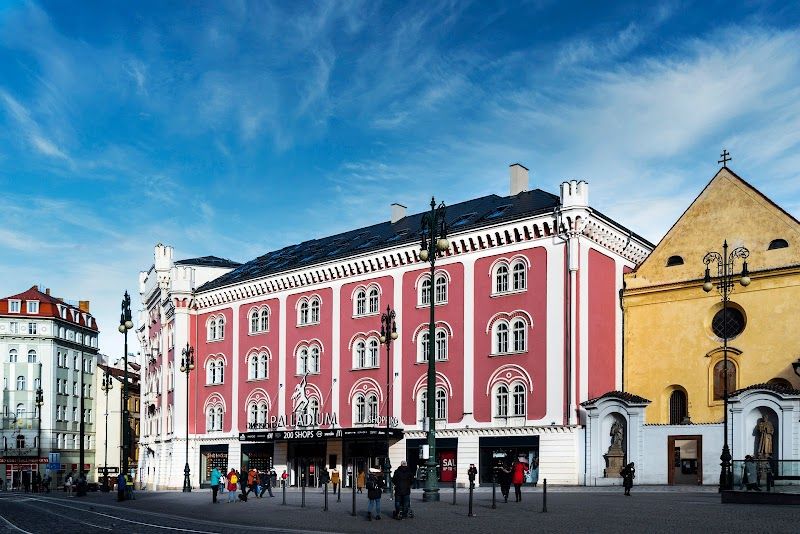
Palladium
Palladium transforms a 1920s military barracks into Prague's most architecturally interesting shopping center, blending original Art Nouveau details with sleek modern retail spaces across five floors. You'll find 200 stores ranging from H&M and Zara to local Czech brands, plus a massive Albert hypermarket in the basement and a food court on the top floor. The real draw isn't just shopping: it's seeing how cleverly they've preserved the building's military heritage while creating a genuinely pleasant place to spend time. Walking through feels like exploring a beautifully renovated fortress rather than a typical mall. The central atrium showcases original brick arches and period details, while wide corridors lined with shops maintain an airy, uncluttered feel. The basement Albert buzzes with locals doing their weekly shopping, and the top floor food court offers decent views over Náměstí Republiky. Even if you're not shopping, the architecture alone makes it worth a quick walk through. Most visitors stick to the main floors and miss the best parts. Skip the generic international chains on floors 2-3 and head straight to the basement Albert for genuinely useful Czech products at local prices: Kofola costs 15 CZK, Karlovarské wafers run about 35 CZK. The food court is overpriced at 200-300 CZK per meal, but the building's original features are most visible from up there. Weekday afternoons are perfect for avoiding crowds while still seeing the place come alive.
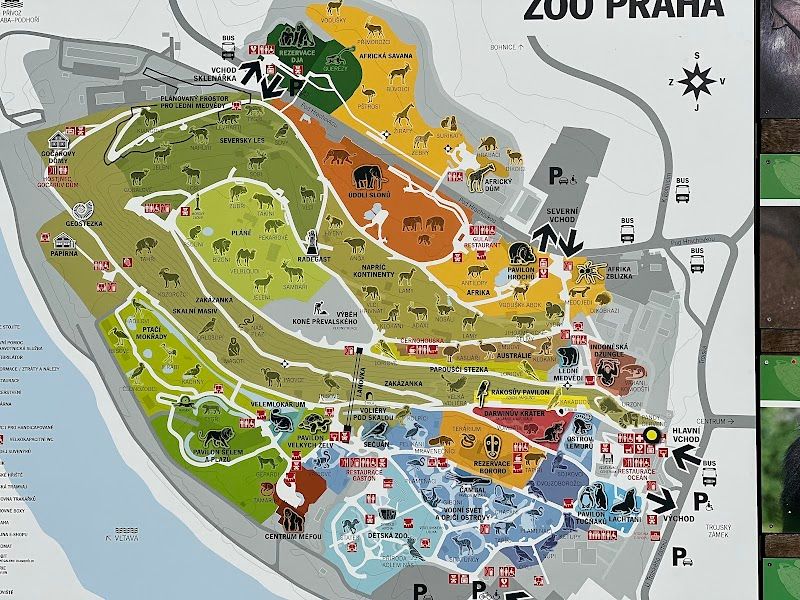
Prague Zoo
Prague Zoo is consistently ranked among the top 10 zoos in the world and it deserves the ranking. Spread over 58 hectares on a hillside above the Vltava in Troja, the zoo specialises in conservation programs and has naturalistic enclosures that do not feel depressing. The Indonesian Jungle pavilion, the gorilla family, and the elephant valley are highlights. The chairlift (CZK 30) takes you to the upper section with panoramic views. CZK 320 adults, CZK 220 children. Allow 4-6 hours. It is genuinely good enough to justify half a day.
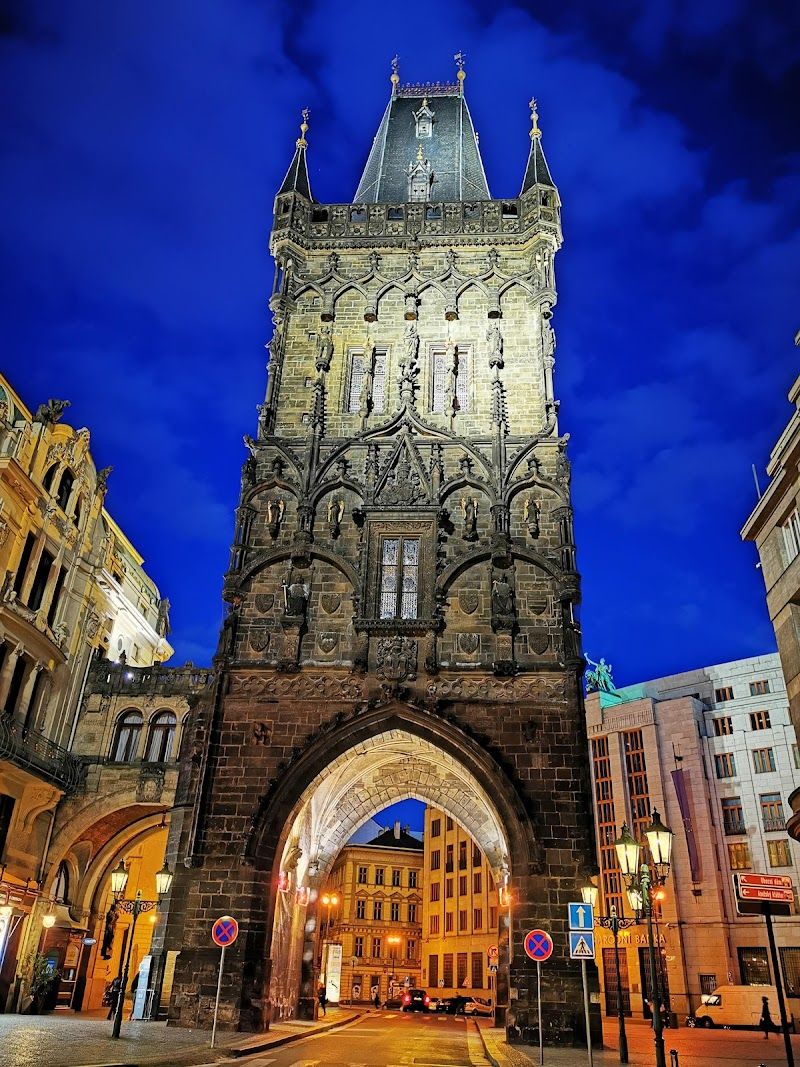
Powder Gate
Powder Gate stands as Prague's last surviving city gate, a 65-meter Gothic tower that once marked where merchants entered Old Town. You'll climb 186 narrow stone steps to reach the viewing gallery, which offers solid perspectives over náměstí Republiky and down the Royal Route toward Wenceslas Square. The tower got its name from storing gunpowder in the 17th century, though it was built in 1475 as part of the original city fortifications. The climb feels authentic with worn medieval steps winding up through multiple levels of the tower's interior. Halfway up you'll pass small windows that frame different angles of the surrounding streets, and the final gallery wraps around the tower's exterior under Gothic arches. The views aren't Prague's most spectacular, but they give you a unique perspective on how Old Town connects to New Town, with the Municipal House's Art Nouveau dome directly below. Most visitors rush through in 20 minutes, but the 100 CZK admission feels steep for what you get. The tower closes at 6pm (4pm in winter), so don't arrive late. Skip this if you're already planning to climb Petřin Tower or the Astronomical Clock, both offer better views. The real value comes from combining it with Municipal House next door, where the architecture and interiors justify the area visit.
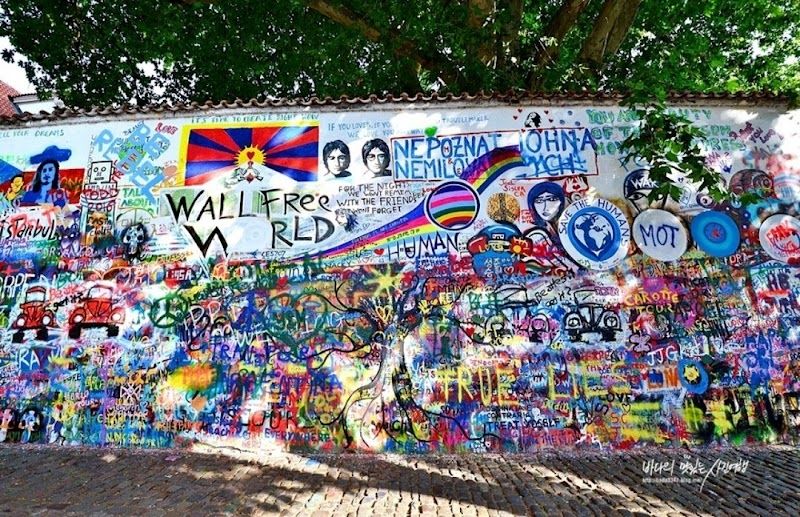
Lennon Wall
The Lennon Wall sits on a 100-meter stretch of colorful stone facing Kampa Island, covered in constantly changing graffiti, Beatles lyrics, and political messages. What started as subtle John Lennon tributes during communist rule has evolved into Prague's most democratic art space, where anyone can add paint over existing work. You'll find everything from elaborate murals to simple peace signs, with the wall's appearance shifting weekly as new layers cover old ones. The experience feels surprisingly intimate despite the tourist crowds. You'll watch people carefully adding their messages while others snap selfies, creating an odd mix of reverence and chaos. The wall extends around a corner, so most visitors miss the quieter side sections where local artists often create more sophisticated pieces. Paint fumes hang in the air, and you'll hear a dozen languages as people explain the wall's significance to their companions. Honestly, it's smaller and more touristy than most guides admit, but the constantly evolving nature makes each visit different. Skip the main central section between 10am and 6pm when tour groups create bottlenecks. The corner sections offer better photo opportunities without crowds, and you'll spot the most interesting artwork there. Don't bring expensive clothes if you plan to add your own message, as spray paint drifts easily.
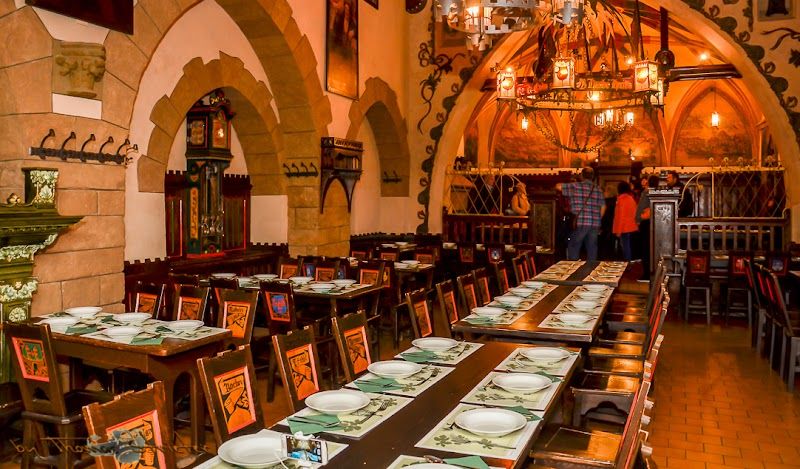
U Fleků
Historic 1499 brewery in Nové Město serving their proprietary dark lager and heavy Czech food. It's touristy, expensive by Prague standards (beer 140 CZK), and loud with tour groups, but the dark beer is unique and brewed on-site. The warren of rooms and beer garden spans multiple buildings.
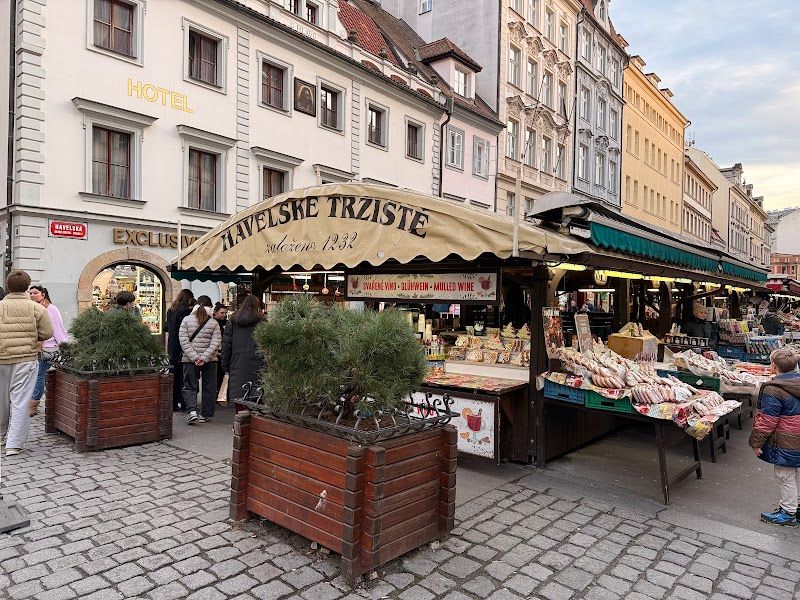
Havelské tržiště
Havelské tržiště runs down a narrow cobblestone street that's been hosting merchants since the 1200s, making it Prague's oldest market. You'll find traditional wooden stalls selling everything from seasonal Czech produce to handmade marionettes, with genuine local vendors mixed among the tourist-focused shops. The produce quality rivals any supermarket, with prices around 30-40 CZK for a kilo of apples or 20 CZK for fresh herbs that elderly vendors grow in their own gardens. The market stretches about 200 meters along Havelská street, creating a natural funnel between Old Town Square and Wenceslas Square. Morning brings the authentic local atmosphere: you'll hear vendors calling prices in Czech while tourists browse wooden toys and crystallware. The mix feels genuine rather than staged, with flower sellers arranging fresh bouquets next to babushkas hawking homegrown vegetables from plastic crates. Most guidebooks overhype this as some magical experience, but it's really just a pleasant working market that happens to occupy medieval real estate. Skip the overpriced souvenirs (those wooden toys cost 200-300 CZK here versus 100 CZK in normal shops) and focus on the produce and flowers. The fruit vendors offer samples freely, and their seasonal offerings beat anything you'll find in Prague's chain stores.
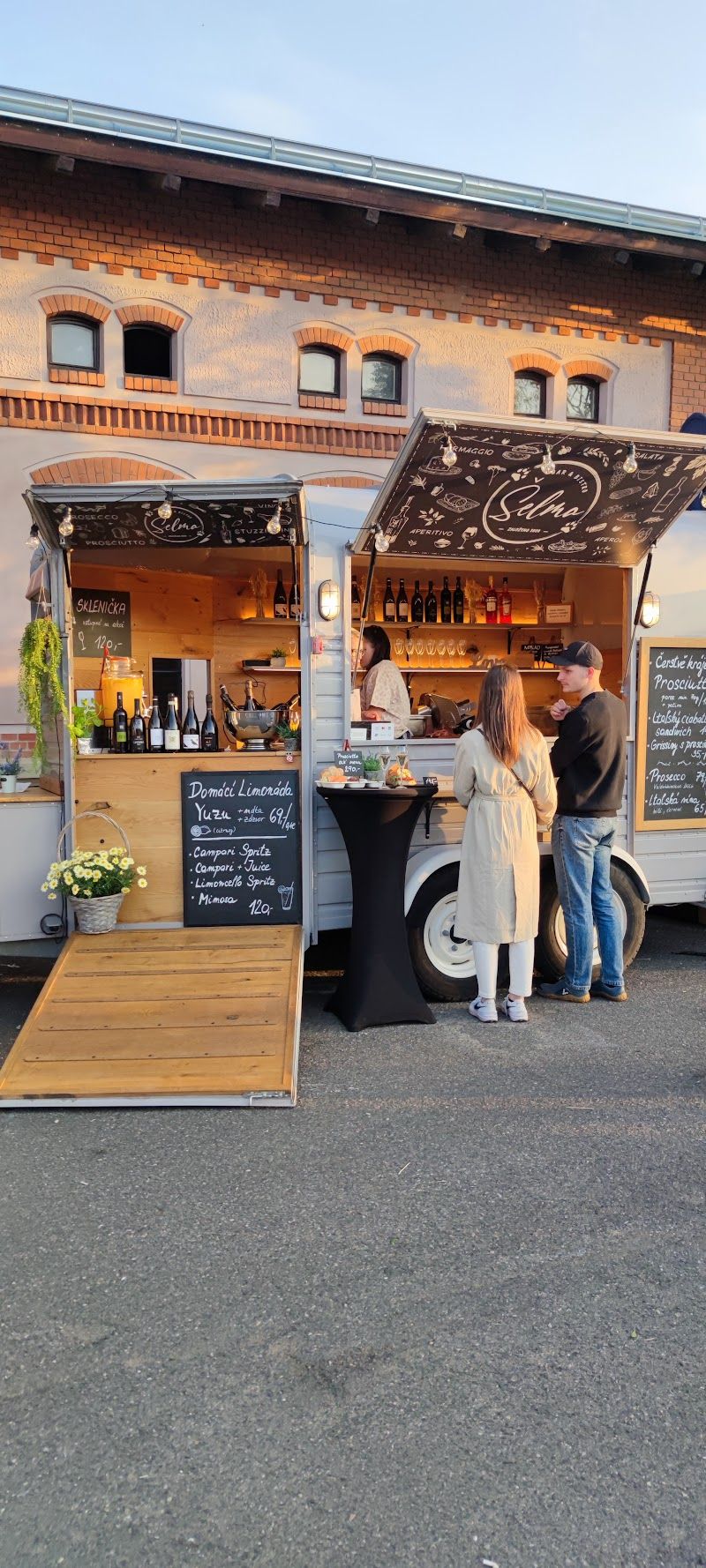
Holešovice Market Hall
Holešovice Market Hall transforms Prague's 1950s industrial space into the city's best multicultural food scene, where Vietnamese families run authentic pho stalls alongside Czech vendors selling fresh produce and imported Asian ingredients. You'll find genuine bánh mì for 60 CZK, steaming bowls of pho from 120 CZK, and specialty items like fish sauce and lemongrass that downtown shops charge double for. Saturday mornings add local farmers selling seasonal produce and artisan bread makers. The ground floor feels like wandering through a working neighborhood market where locals actually shop, not a tourist attraction. Vietnamese grandmothers prep fresh herbs while Czech butchers slice traditional cuts, and the mix of languages creates an unexpectedly authentic atmosphere. The upstairs food court gets packed during lunch hours (11:30am to 1:30pm) when office workers from nearby buildings queue for the Vietnamese stalls. Most food guides oversell this as some revolutionary food destination when it's really just a solid neighborhood market that happens to serve excellent Asian food. Skip the overpriced coffee stands and head straight to the pho vendors on the ground floor. The Saturday farmers market draws crowds but offers standard Czech produce at prices similar to regular supermarkets.
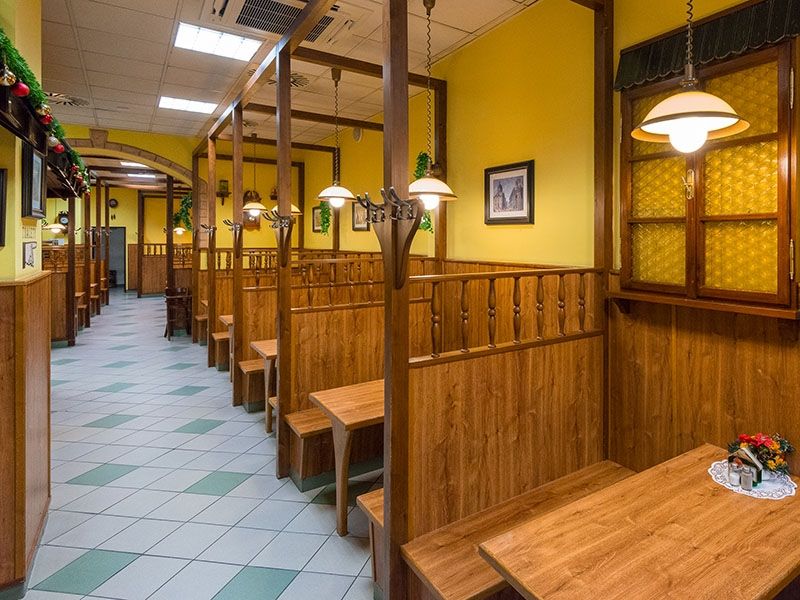
Havelská Koruna
No-frills cafeteria-style restaurant in Staré Město serving Czech basics since 1935. You get a tray, point at what you want, pay, and find a seat. Incredibly cheap (full meal under 150 CZK), totally local, and the svíčková is actually good. Zero English, zero atmosphere, maximum authenticity.
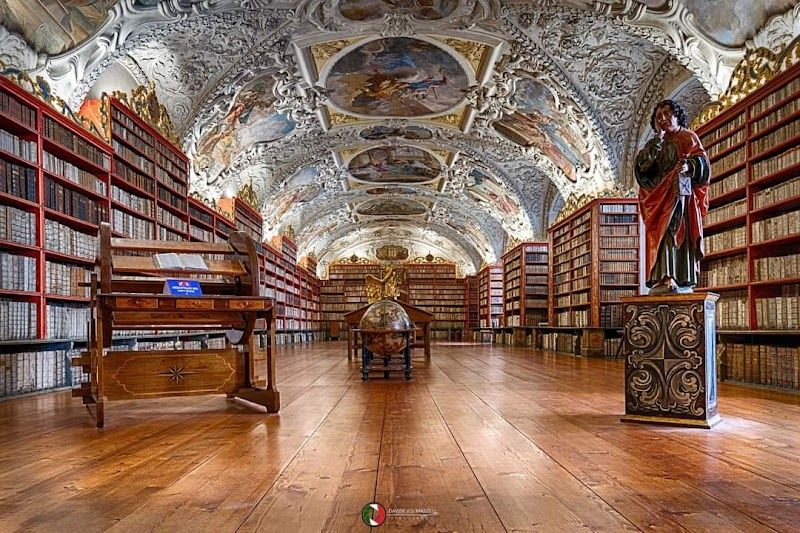
Strahov Monastery Library
The Strahov Monastery Library houses two extraordinary Baroque halls: the Theological Hall (1679) and the Philosophical Hall (1794). Both have floor-to-ceiling frescoed ceilings, carved wooden shelving, and thousands of volumes. The Philosophical Hall is the more spectacular, with a ceiling fresco by Anton Maulbertsch depicting the progress of knowledge. You view both halls from the doorway (no entry into the rooms). CZK 150 entry. The monastery also has a picture gallery (CZK 120) and the Strahov Monastic Brewery next door, which serves excellent beer with views of the Castle.
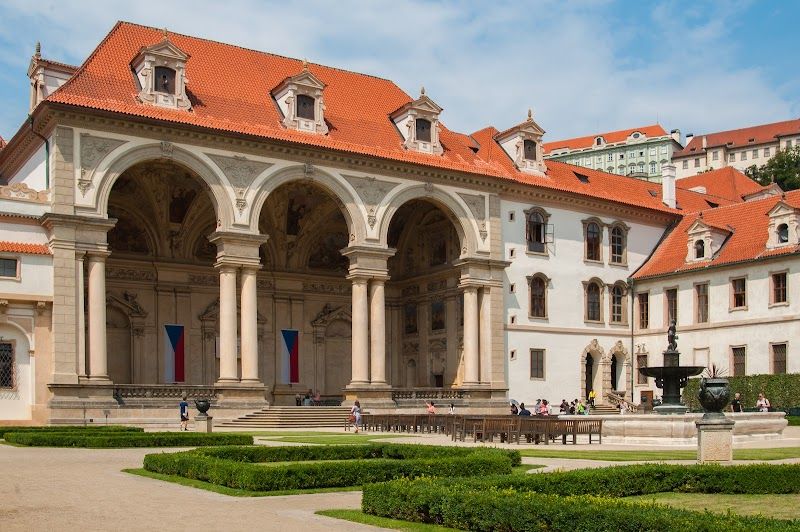
Wallenstein Garden
Wallenstein Garden is Prague's best free Baroque garden, built in 1623 behind what's now the Czech Senate building. You'll walk geometric flowerbeds lined with bronze fountains while peacocks strut across gravel paths, completely unbothered by visitors. The real showstopper is the sala terrena, a grand pavilion covered in mythological frescoes, plus an artificial grotto that feels like walking into a fairytale cave with fake stalactites. The garden has this wonderful sense of stepping back in time, where perfectly manicured hedges frame views of Prague Castle towers. Peacocks own the place and they know it, often blocking paths while showing off their plumage. The sala terrena feels surprisingly intimate despite its grand scale, and the grotto is genuinely atmospheric with its rocky formations and hidden alcoves. Everything's laid out on clean gravel paths that make a satisfying crunch underfoot. Most guides oversell this as a major attraction when it's really a lovely 30-minute stroll, perfect for escaping tourist crowds. Skip it in shoulder seasons when the peacocks are less active and flowers aren't blooming. The garden closes completely November through March, which catches many visitors off guard. Entry is genuinely free with no catch, making it one of Prague's best values in touristy Malá Strana.
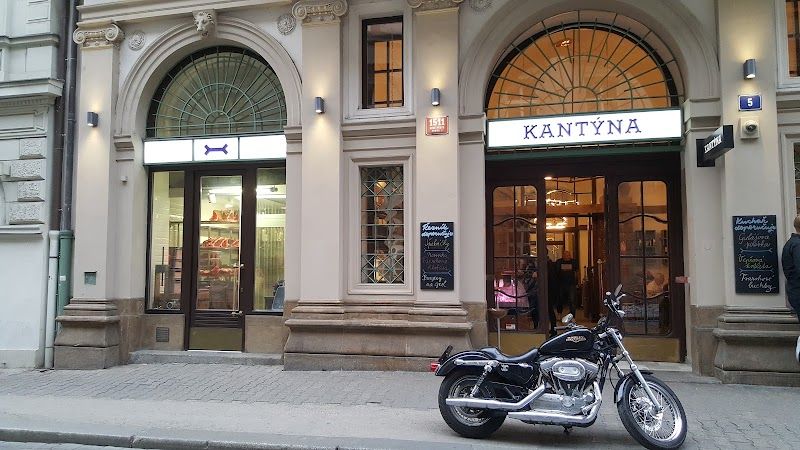
Kantýna
Vinohrady's bustling bistro with an open kitchen, breakfast all day, and a menu that mixes Czech and international comfort food. Their burger is one of Prague's best, the kulajda soup is excellent, and weekend brunch draws queues. Counter seating lets you watch the kitchen work.
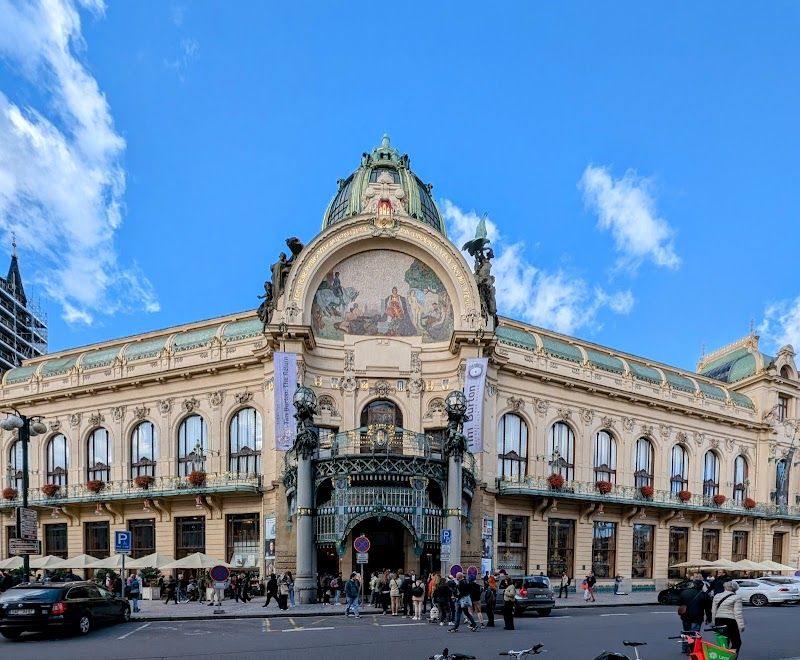
Municipal House (Obecní dům)
The Municipal House is Prague's Art Nouveau masterpiece, built 1905-1912 on the site of the medieval Royal Court. The exterior is impressive but the interior is extraordinary: Smetana Hall (where the Prague Spring festival opens annually), the Mayor's Hall decorated entirely by Alphonse Mucha, and public spaces dripping with mosaics, stained glass, and gilded stucco. The guided tour (CZK 290) is the only way to see the Mayor's Hall and the private rooms. The ground-floor cafe (Kavárna Obecní dům) is open to everyone and is one of the most beautiful cafe interiors in Europe. Smetana Hall concerts are regular and affordable (CZK 400-1000).
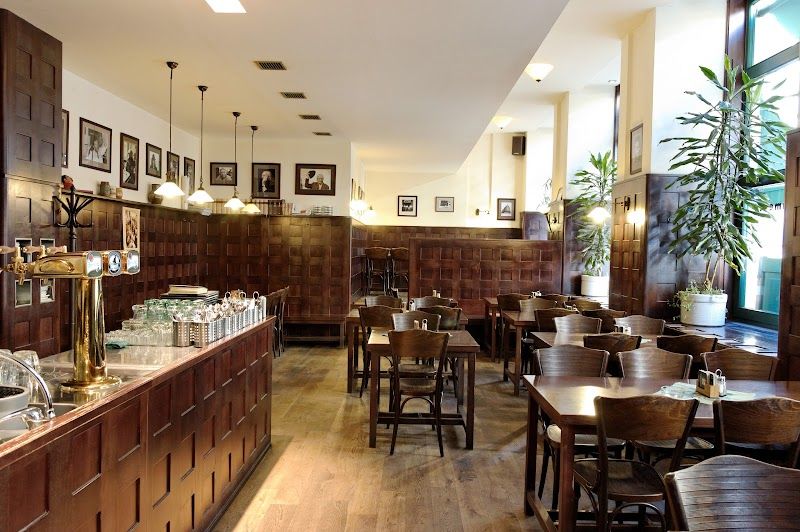
U Parliamentu
Authentic Malá Strana hospoda just below the Castle, where locals still outnumber tourists despite the location. The vepřo-knedlo-zelo is proper Czech soul food, beer is under 60 CZK, and the garden out back is perfect in summer. No English menu, limited English from staff.
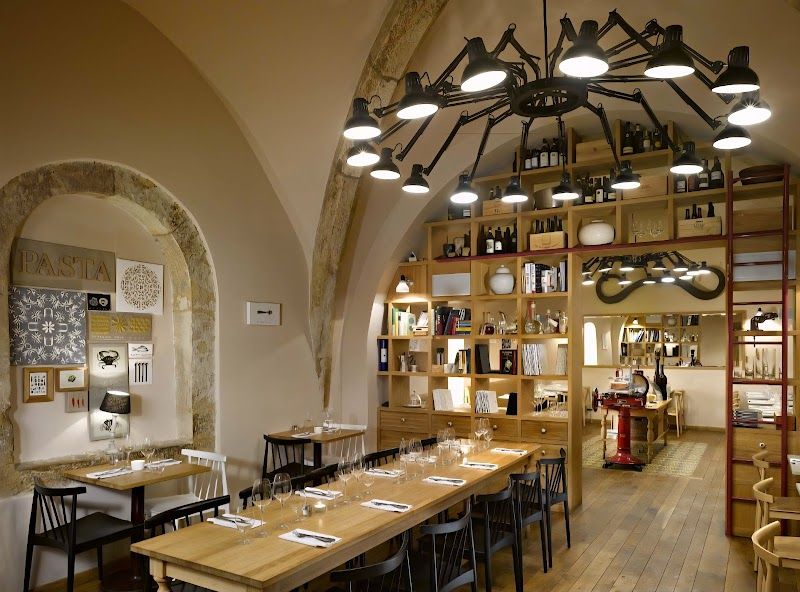
Pasta Fresca
Tiny Italian spot in Karlín making fresh pasta daily, with a short menu of authentic regional Italian dishes. The cacio e pepe is perfect, portions are reasonable, and it's run by actual Italians. Counter seating only, no reservations, expect to wait during lunch rush.
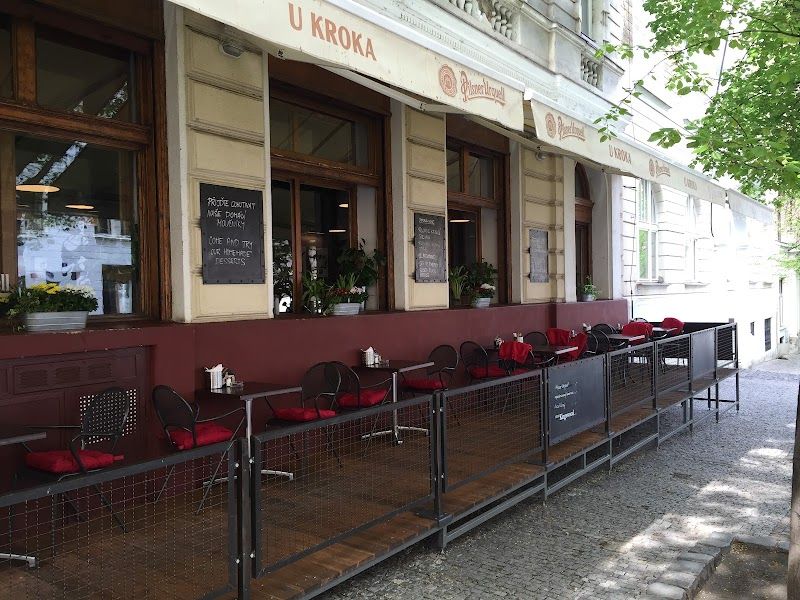
U Kroka
Tiny Žižkov hospoda with room for maybe 20 people, serving some of Prague's cheapest beer (under 50 CZK) and hearty pub food. The guláš is excellent, the atmosphere is pure local, and the owner doesn't speak much English. Cash only, no pretense, just authentic Czech pub culture.
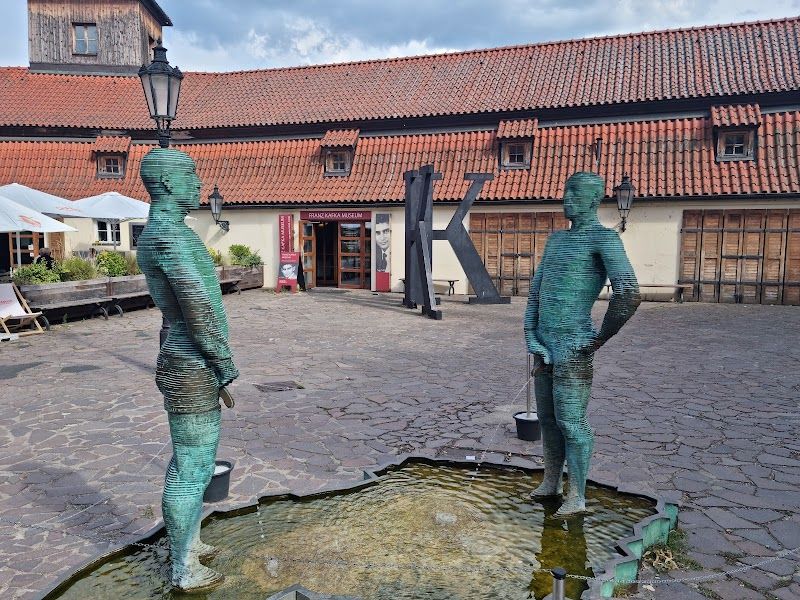
Franz Kafka Museum
This museum occupies a former brickworks near the Charles Bridge and costs 240 CZK for what amounts to a thoughtfully curated dive into Kafka's neurotic relationship with Prague. You'll see original manuscripts, family photographs, and first editions arranged in deliberately cramped rooms that mirror the claustrophobic themes of his writing. The exhibition includes audio recordings and reconstructed scenes from his life, plus that infamous Černý fountain sculpture in the courtyard where two bronze figures urinate into a pool shaped like the Czech Republic. The museum feels intentionally oppressive, with dim lighting and narrow passages that make you understand Kafka's mental state viscerally rather than intellectually. You'll move through recreated scenes from his insurance office days, see his actual letters describing Prague as having claws that wouldn't let him go, and encounter interactive displays about his troubled relationship with his father. The audio guide adds context but the visual design does most of the storytelling. Honestly, 240 CZK feels steep for what's essentially a small exhibition, but literature fans will find it worthwhile while casual visitors might feel underwhelmed. The controversial fountain gets more attention than it deserves, skip the photo ops there and focus on the handwritten letters upstairs. Most guides oversell this as essential Prague culture when it's really for dedicated Kafka enthusiasts.
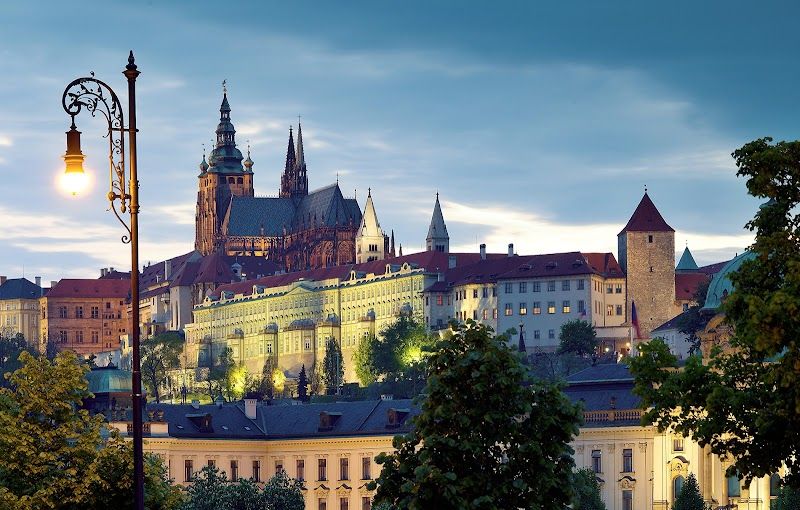
Lobkowicz Palace
Lobkowicz Palace stands as the only privately owned building within Prague Castle's walls, housing seven centuries of family treasures that survived Nazi seizure and Communist confiscation. You'll walk through rooms filled with Canaletto cityscapes, Bruegel masterpieces, and original Beethoven manuscripts, including his handwritten notes on the 4th and 5th symphonies. The audio guide, narrated by current owner William Lobkowicz himself, turns each room into a personal story about his family's resilience through European upheavals. The visit flows chronologically through elegant chambers where you'll hear William's grandfather's tales of hiding art from Nazis and his own childhood memories of exile. Unlike other castle museums with velvet ropes and sterile displays, this feels like touring someone's actual home. The Beethoven room particularly captivates: you can see the composer's angry scribbles and corrections while listening to the very pieces playing softly in the background. Most guides rave about every room, but honestly, the weapons collection feels like filler compared to the art galleries. Admission costs 350 CZK for adults, which seems steep until you realize you're getting a private family's perspective on Czech history. Skip the gift shop downstairs and head straight to the café terrace for lunch with Prague's best castle views.
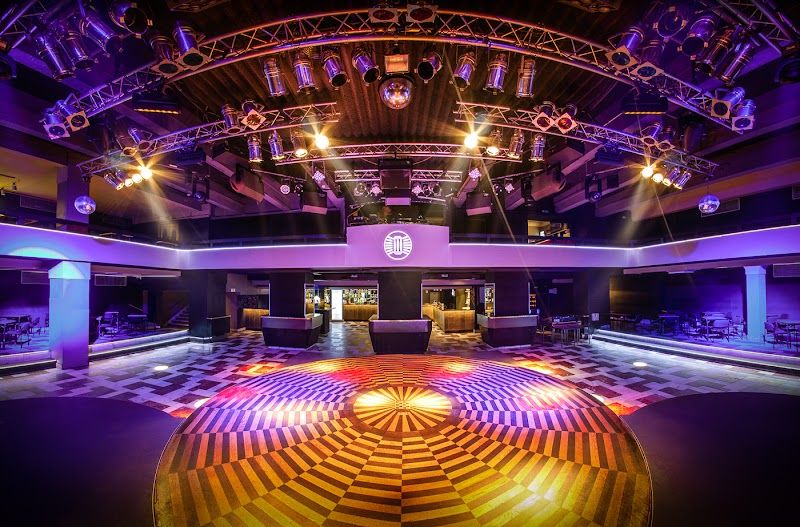
Lucerna Music Bar
Legendary music venue in the historic Lucerna Palace hosting live concerts and the famous 80s and 90s Video Parties every Friday and Saturday. The art deco ballroom has seen everyone from local indie bands to international acts, while the weekend nostalgia parties draw a mixed crowd of locals and expats. Entry is typically CZK 150-300 depending on the event.
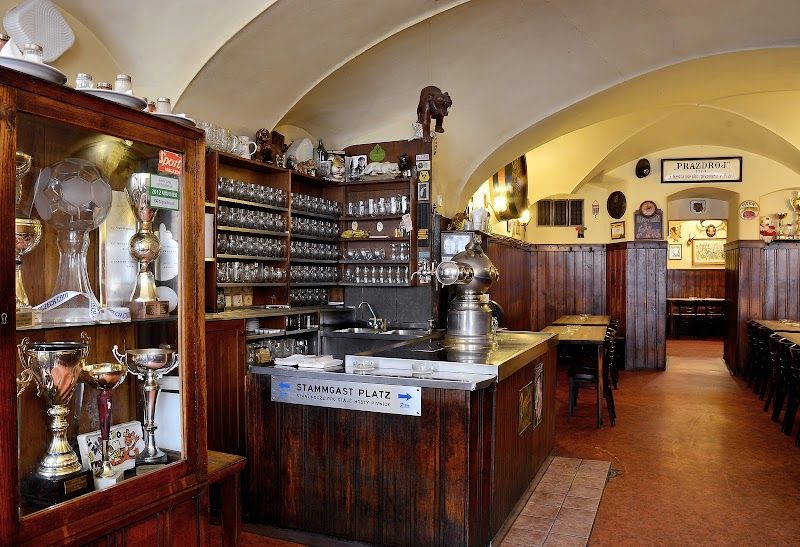
U Zlatého tygra
Legendary Staré Město pub where Václav Havel brought Bill Clinton in 1994, still serving Pilsner Urquell and basic pub food. Crowded with regulars who have their own tables, smoky atmosphere, gruff service, but this is where you see authentic Czech pub culture in the Old Town.
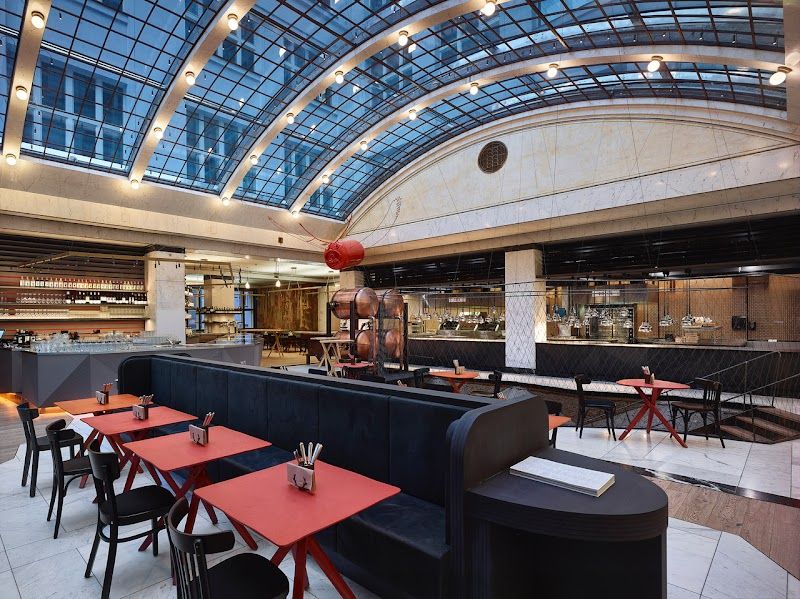
Červený Jelen
Traditional Malá Strana restaurant in a 14th century building, specializing in game and Czech classics. The venison goulash is excellent, portions are hearty, and the medieval cellar atmosphere feels authentic without being too touristy. Good Czech wine selection.
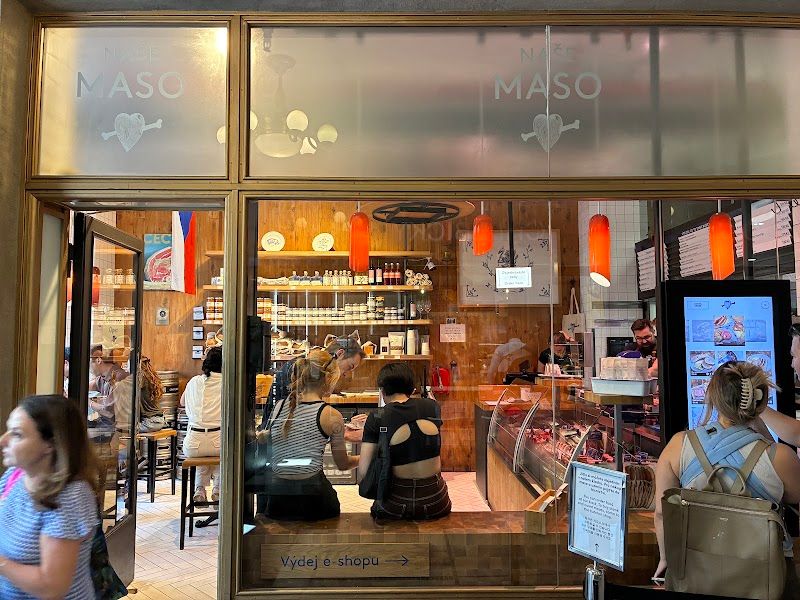
Naše maso
Butcher shop with a lunch counter in the back of Dlouhá street, serving daily specials made from their own meat. The beef tartare is excellent, portions are huge, and everything comes from Czech farms they work with directly. Order at the counter, seat yourself, very casual.
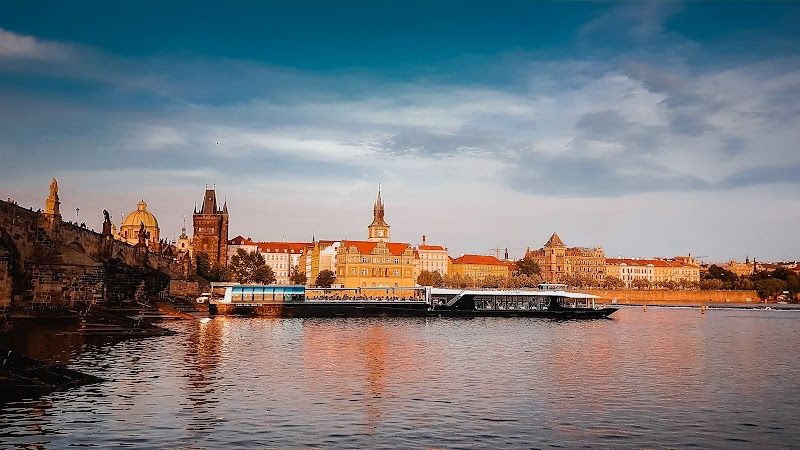
Prague Evening Vltava River Cruise
This two-hour evening cruise takes you along the Vltava River past Prague's floodlit landmarks, including Prague Castle perched above the water, the Gothic towers of Charles Bridge, and the gold-domed National Theatre. You'll glide under ten bridges while a live accordionist plays Czech folk songs, and there's a decent buffet dinner included (think goulash, roast pork, and local sides). The boat has both heated indoor seating and open-air upper decks perfect for photos during golden hour. The experience feels like floating through a fairy tale as Prague's skyline transforms from daylight to evening illumination. You'll start near the Jewish Quarter and cruise south past Kampa Island, then loop back north, giving you multiple angles of each landmark. The accordion music creates a genuinely romantic atmosphere without feeling cheesy, and other passengers tend to be a mix of couples and families rather than rowdy tour groups. The dinner service happens midway through, so you're not juggling food and photos during the best lighting. Honestly, this beats the daytime cruises hands down because Prague's architecture looks spectacular when lit up. The buffet is better than expected for a tourist boat (around 890 CZK total), though skip the wine unless you enjoy overpriced Moravian varieties. Most people crowd the back deck initially, but the front upper section offers cleaner shots of Prague Castle without other tourists' heads in your frame. The cruise runs year-round, but spring through early fall gives you the warmest outdoor deck experience.
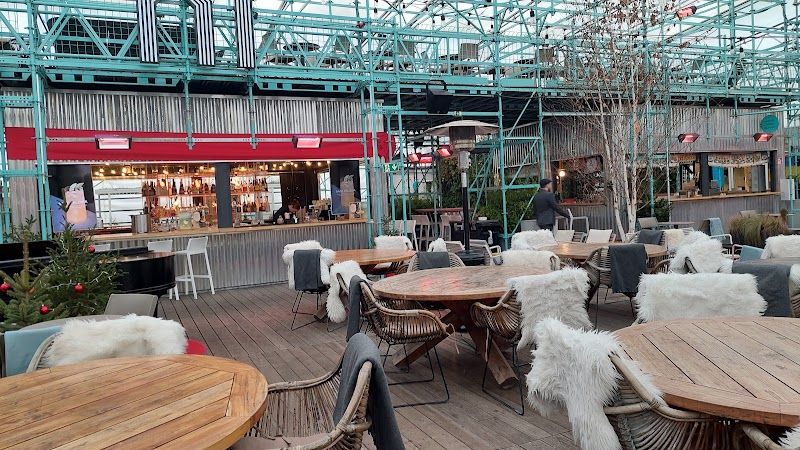
Manifesto Market Anděl
Shipping container food court in Smíchov with rotating street food vendors, craft beer bar, and communal tables. Quality varies by vendor but highlights include Neapolitan pizza, Korean fried chicken, and good coffee. Popular with young Czechs, especially Thursday-Saturday evenings.
Monastery Brewery Strahov
A working monastery brewery producing traditional Czech beer according to centuries-old recipes. The restaurant serves hearty Czech cuisine in a historic setting with vaulted ceilings and monastery atmosphere. Their signature St. Norbert amber lager and dark beer are brewed on-site.
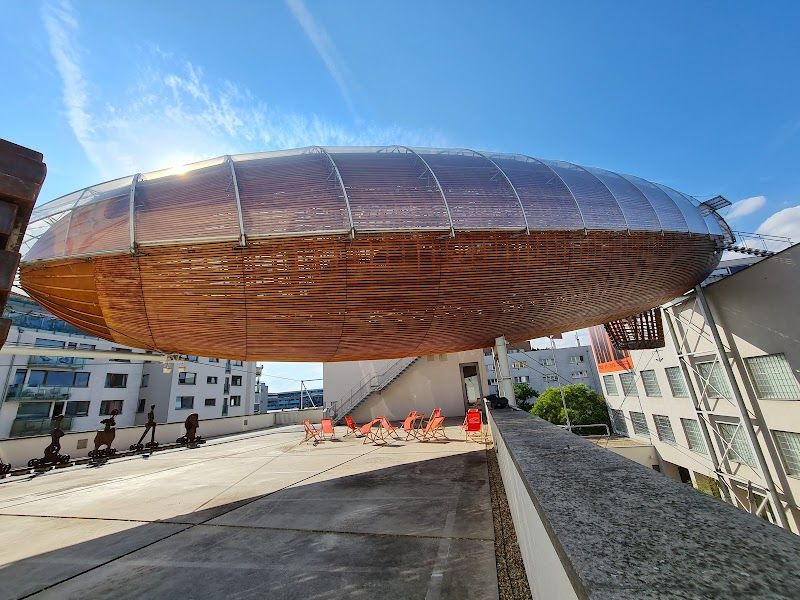
DOX Centre for Contemporary Art
DOX sits in a converted factory building in Holešovice, showcasing rotating exhibitions that mix established international artists with emerging Czech talent. The real draw is the Gulliver airship perched on the roof: a silver, whale-shaped structure that houses a reading room and event space with panoramic city views. Your 220 CZK ticket covers both the galleries and airship access, making it Prague's best value for contemporary art. Inside, the industrial bones of the original factory create dramatic exhibition spaces with soaring ceilings and concrete floors. The galleries flow logically from room to room, though the real surprise comes when you climb to Gulliver. The airship's curved interior feels like stepping inside a spaceship, with floor-to-ceiling windows offering unexpected perspectives of Prague's skyline. The reading room stocks art books and magazines in multiple languages. Most visitors rush through the ground floor galleries to reach Gulliver, but you'll miss some genuinely thought-provoking work downstairs. The temporary exhibitions change every few months, so check their website before visiting. Skip the gift shop unless you're hunting for expensive art books. The 220 CZK admission is reasonable, but students get discounts with ID.
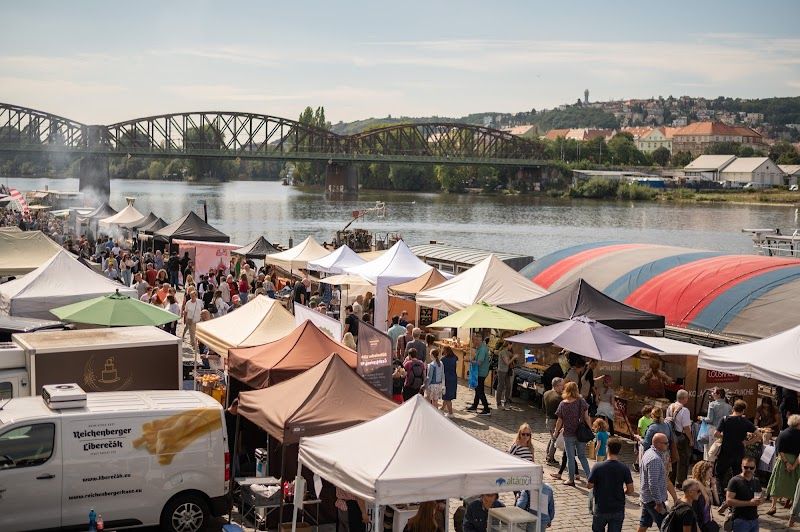
Náplavka Farmers Market
Náplavka stretches along the Vltava riverbank every Saturday, bringing together around 50 local producers who actually know where their vegetables grew and which farm their cheese came from. You'll find seasonal Czech produce that grocery stores don't carry, plus homemade bread that's still warm at 9am, craft beer from microbreweries, and handmade soaps that smell like lavender fields. The market runs along a scenic promenade where you can shop with Prague Castle reflected in the water behind you. The atmosphere feels more like a neighborhood gathering than a tourist market. Vendors chat with regulars in Czech while newcomers sample honey straight from the comb or debate which of three different goat cheeses to take home. Kids run along the waterfront while parents browse wooden toys and organic apple juice. The pace stays relaxed even when it gets busy around 10am, and you'll hear more Czech than English, which keeps prices reasonable. Most food guides oversell this as a gourmet paradise, but it's really just a solid farmers market with nice views. Vegetables cost 20-40 CZK more than supermarkets, which is fair for organic quality. Skip the overpriced smoothie stands and focus on items you can't get elsewhere: raw milk cheese (around 150 CZK per piece), fresh herbs, and seasonal specialties like elderflower syrup in spring. The market gets picked over after 1pm, so don't arrive late expecting full selection.
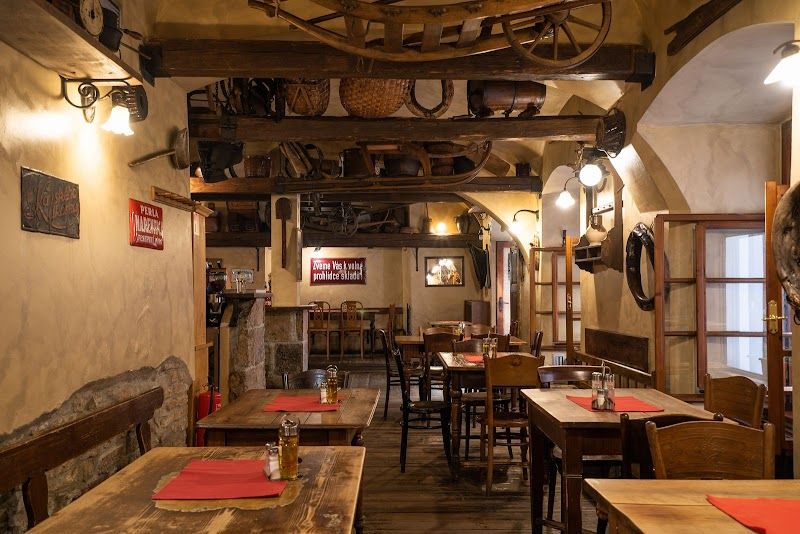
Mlejnice
Medieval-themed Staré Město restaurant in a 13th century cellar serving massive portions of Czech classics. Touristy but food is decent, portions are enormous (one main feeds two), and prices are surprisingly reasonable for Old Town. The medieval atmosphere is kitschy but fun.
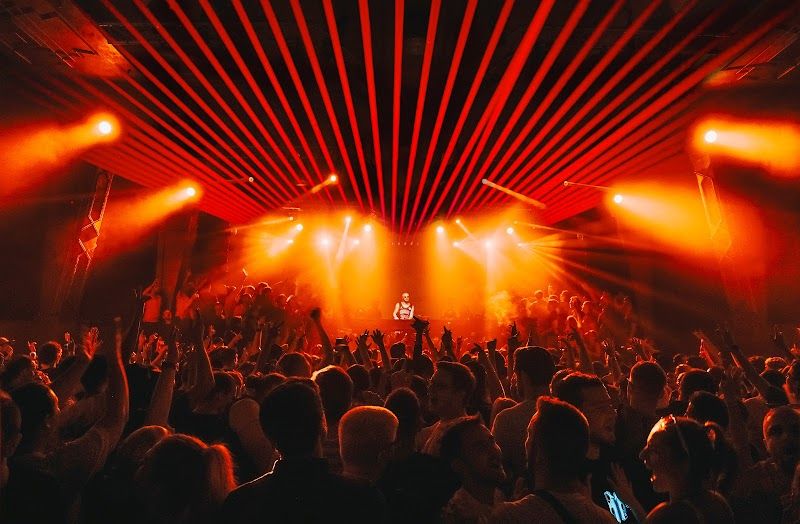
Roxy
Experimental cultural center housed in a converted 1930s cinema, known for cutting-edge electronic music, live performances, and art installations. The main hall retains original theater elements while the basement NoD club hosts techno and house nights. The programming ranges from international DJs to film screenings and contemporary art exhibitions.
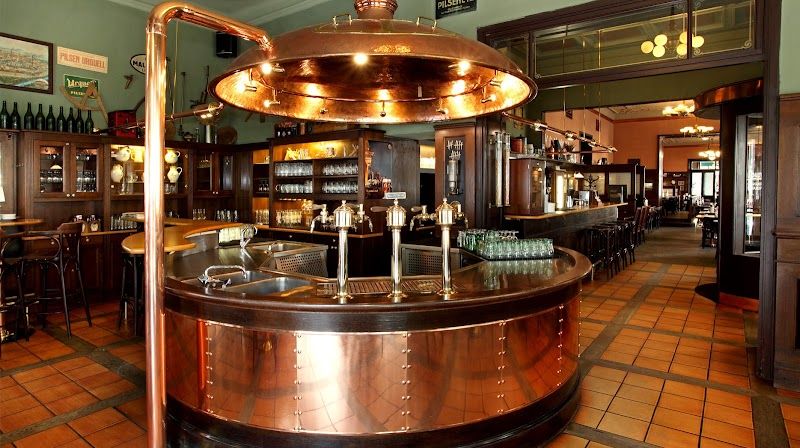
Kolkovna Olympia
Reliable Vinohrady beer hall from the Pilsner Urquell group with tankové beer, Czech classics, and a refined version of pub food. More upscale than Lokál but same company, good for svíčková and vepřo-knedlo-zelo when you want traditional food without dive bar vibes.
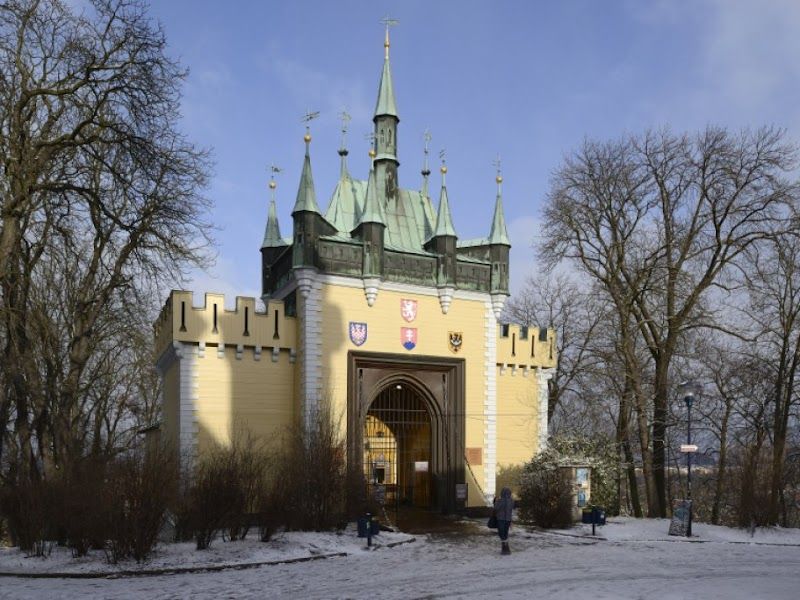
Petřín Mirror Maze
The Mirror Maze sits inside a miniature Gothic castle on Petřín Hill, offering two completely different experiences under one ticket. You'll start with the classic hall of distorting mirrors where kids shriek with laughter at their stretched, squished, and wobbling reflections. Then you'll walk into a detailed diorama recreating the 1648 Battle of Prague, complete with period costumes and Charles Bridge in miniature. It's quirky, old school, and genuinely fun for about 15 minutes. The castle itself feels like a fairy tale prop, built for the 1891 Jubilee Exhibition and designed to look medieval. Inside, the mirror maze isn't actually much of a maze, more like a funhouse with about 20 different distorting mirrors arranged in a small room. The battle diorama comes next, featuring hundreds of tiny figures fighting Swedish troops on a replica Charles Bridge. Kids love making faces in the mirrors while parents appreciate the historical craftsmanship. Honestly, CZK 150 feels steep for 15 minutes, but kids under 10 will talk about it for days. The mirrors are the real draw here, the diorama is fine but forgettable. Most people combine it with the Petřín Tower next door (another CZK 150) and the funicular ride up (CZK 60), which makes the whole hill experience feel more worthwhile. Skip it if you're traveling without kids or trying to save money.
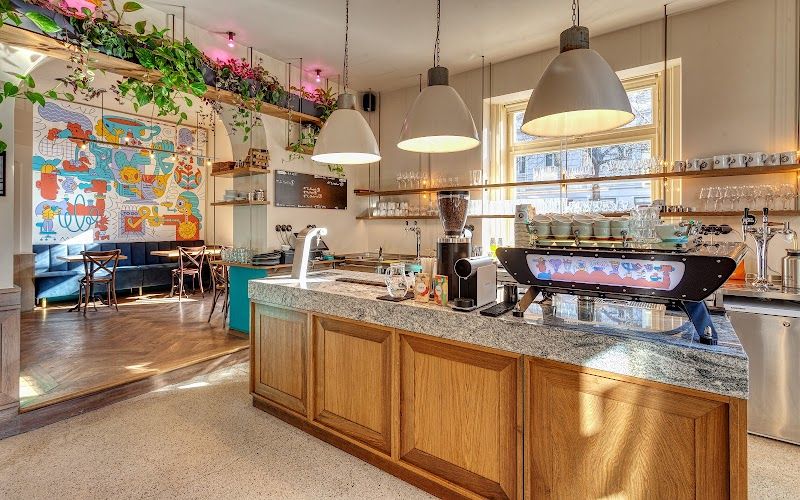
Můj šálek kávy
Pioneering third-wave coffee roastery in Karlín that helped establish Prague's specialty coffee scene. Rotating single-origin beans roasted on-site, with baristas who explain brewing methods and tasting notes. Minimalist Scandinavian-inspired interior with concrete floors and communal wooden tables.
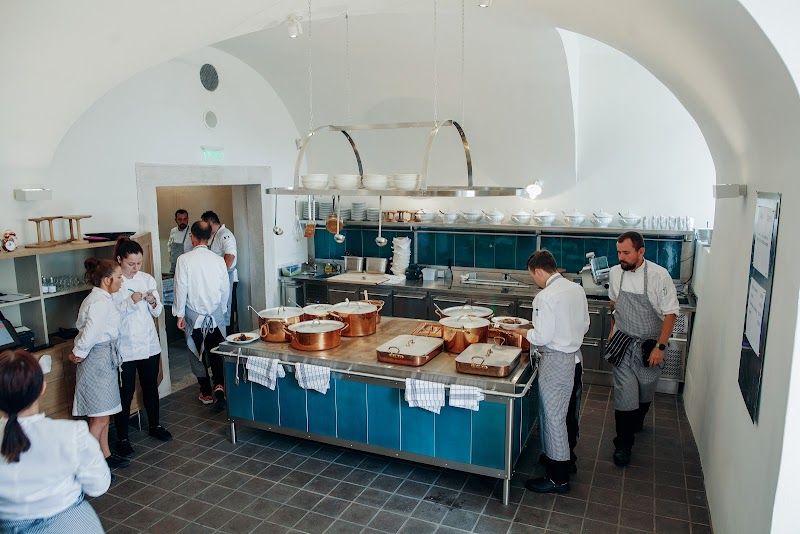
Kuchyň
Modern Czech bistro serving seasonal, locally-sourced dishes with creative twists on traditional recipes. The industrial-chic interior and open kitchen create a relaxed atmosphere popular with Prague locals seeking quality comfort food.
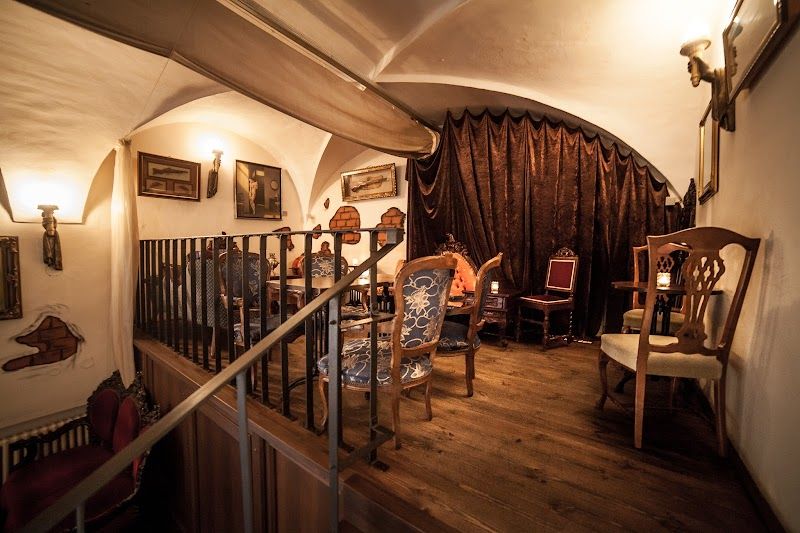
Anonymous Bar
Theatrically designed cocktail bar themed around Guy Fawkes and secret societies, with masked servers and elaborate presentations. The cocktails arrive with smoke, fire, and dramatic flair, while the dimly lit interior features conspiracy theory decor and hidden alcoves. It is more accessible than Hemingway Bar but still delivers serious cocktail craftsmanship.
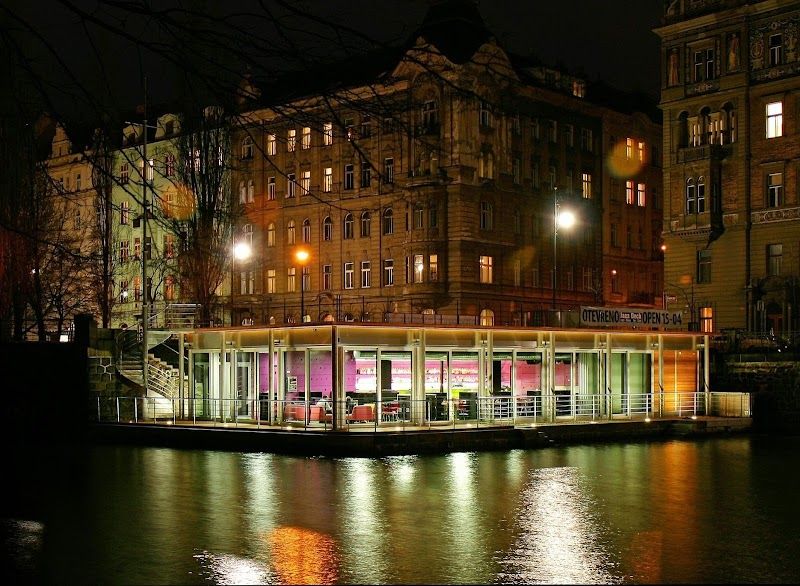
Jazz Dock
Contemporary jazz club built on a floating platform on the Vltava River with floor-to-ceiling windows overlooking the water. The venue hosts nightly live performances ranging from traditional jazz to fusion and experimental acts, with shows typically starting at 9 PM. The acoustics are exceptional and the outdoor terrace operates in summer.
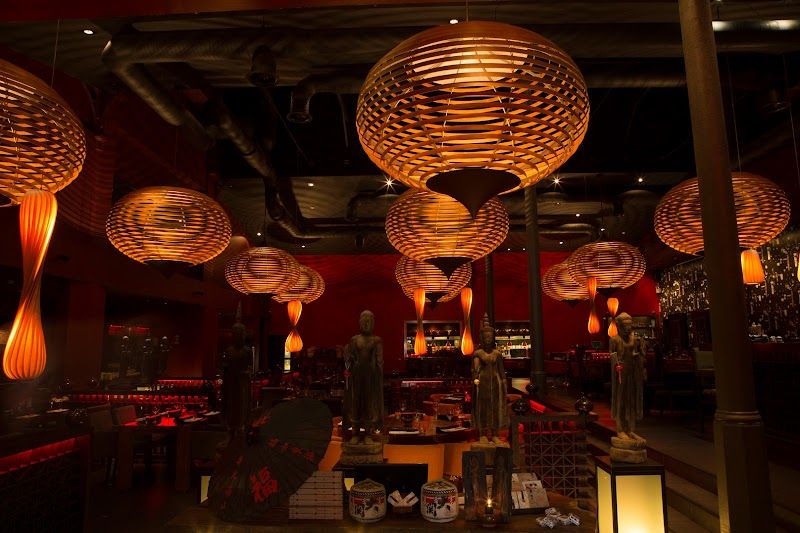
Sasazu
Massive Asian fusion restaurant in Holešovice's former industrial space, with pan-Asian menu, sushi bar, and weekend DJ nights. The space is dramatic with high ceilings and modern design, food is good if not authentic, and it transforms into Prague's upscale nightclub scene after 11pm.
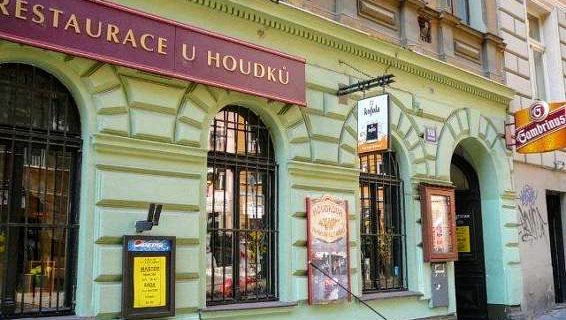
Pivní Lokál U Houdků
Traditional Czech beer hall serving Pilsner Urquell and classic pub dishes in a no-nonsense setting. Popular with locals for its proper beer pours, affordable prices, and hearty portions of svíčková, goulash, and other Czech staples. The atmosphere is authentic neighborhood tavern without any tourist polish.
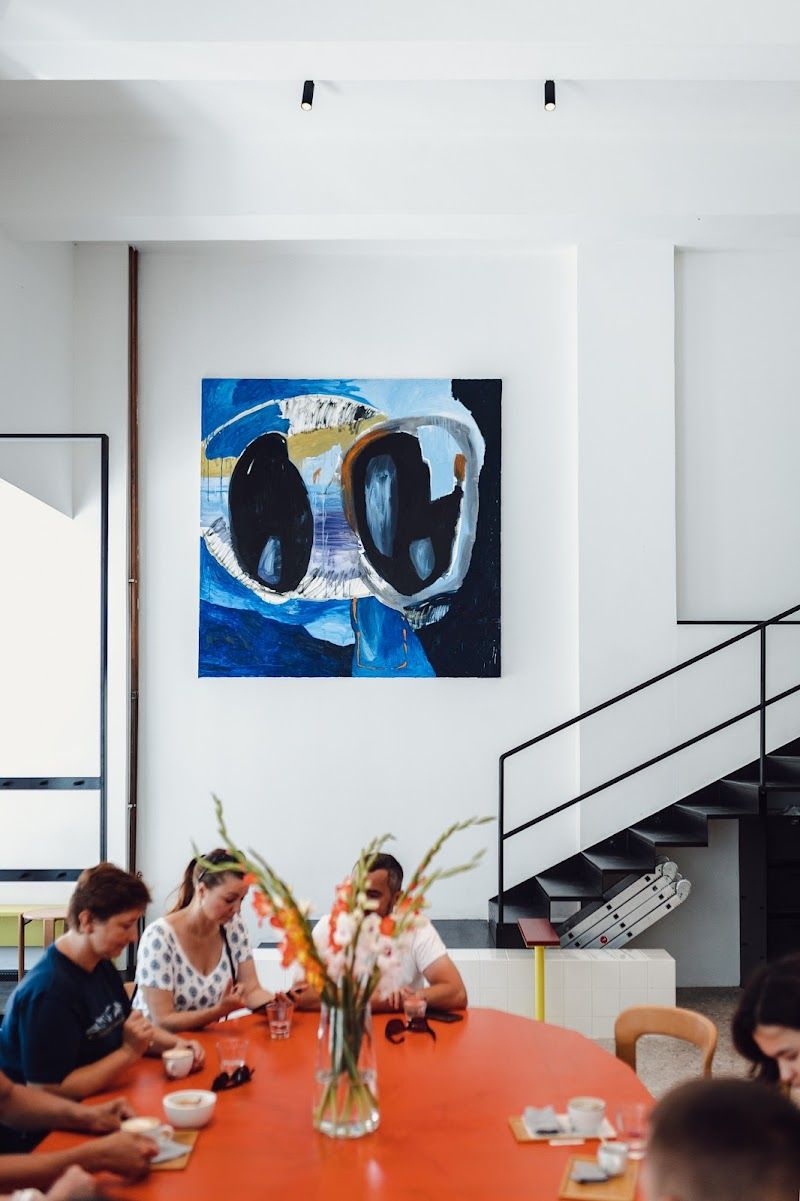
EMA espresso bar
Award-winning specialty coffee bar in Vinohrady with a focus on espresso precision and latte art. Compact space with just 12 seats where you can watch baristas work on La Marzocco machines. Offers seasonal pastries from local bakeries and alternative milk options made in-house.
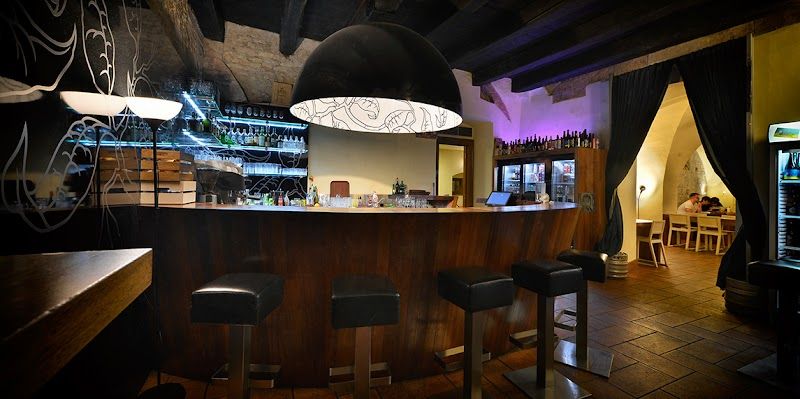
U Kunstatu
Historic 14th century beer hall in Staré Město with Gothic cellars, serving Pilsner Urquell and Czech food. The space is medieval and atmospheric, food is reliable Czech classics, and it's less touristy than nearby options despite the Old Town location. The upstairs pub is quieter than the cellar.

Žižkov Pub Crawl Prague
Žižkov holds the world record for pub density, and this crawl takes you through five authentic Czech pubs where locals have been drinking since the Habsburg era. You'll sample half-liter pours of different Czech beer styles at each stop, from crisp Pilsner Urquell to rich dark lagers, while learning about brewing traditions that predate most European capitals. The neighborhood feels genuinely working-class, with pubs that haven't changed much since the 1960s and bartenders who've been pulling taps for decades. The tour moves at a relaxed pace through narrow streets lined with crumbling Art Nouveau buildings and communist-era panel houses. Each pub has its own character: smoke-stained walls covered in football scarves, regulars playing cards in corners, and that distinctly Czech atmosphere where conversations happen over beer, not around it. Your guide shares stories about the area's bohemian past while you sit on wooden benches that have hosted everyone from dissidents to artists. Most pub crawls in Prague are tourist traps, but this one actually visits places where locals drink. Skip the food offerings at most stops since pub snacks here are pretty basic. The 2,500 CZK price includes all beers and is reasonable considering you're getting premium Czech lagers. Start with an empty stomach because five half-liters adds up quickly, and the tour doesn't include much walking between stops.
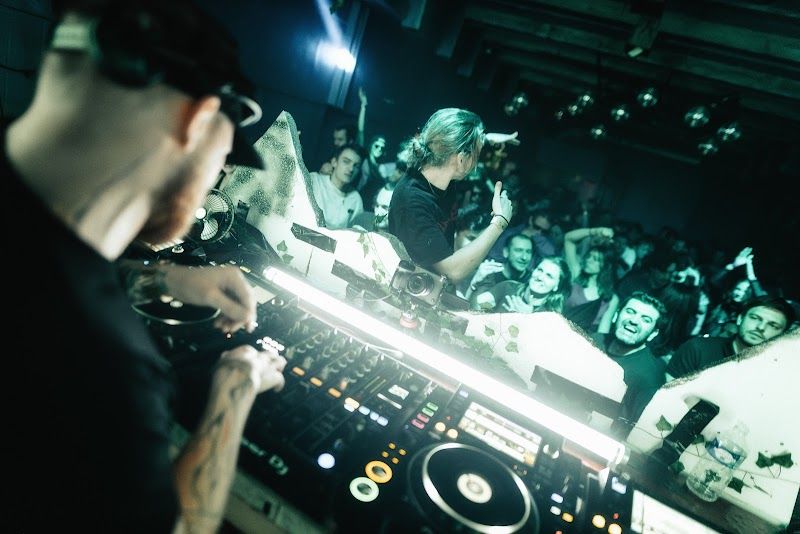
Cross Club
Industrial steampunk wonderland in Holešovice, built from recycled materials, mechanical installations, and constantly moving sculptures. This multi-level club hosts electronic music, live bands, and cultural events in a space that feels like stepping into a post-apocalyptic factory. The rooftop terrace offers views over Prague's industrial quarter.
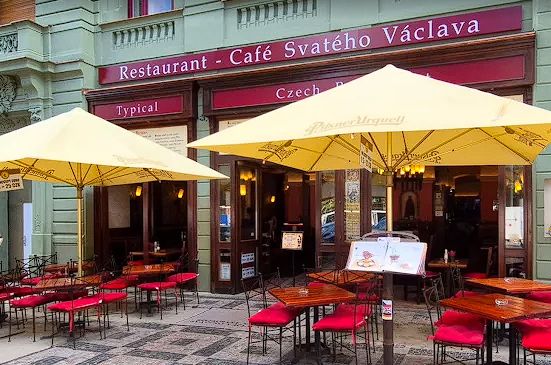
Café Svatý Václav
Charming neighborhood café on Vinohrady's main square serving excellent coffee, homemade cakes, and light meals. This cozy spot is a favorite among locals for breakfast and weekend brunch, featuring a warm interior with vintage décor. The café roasts its own coffee and offers a selection of fresh pastries baked daily.
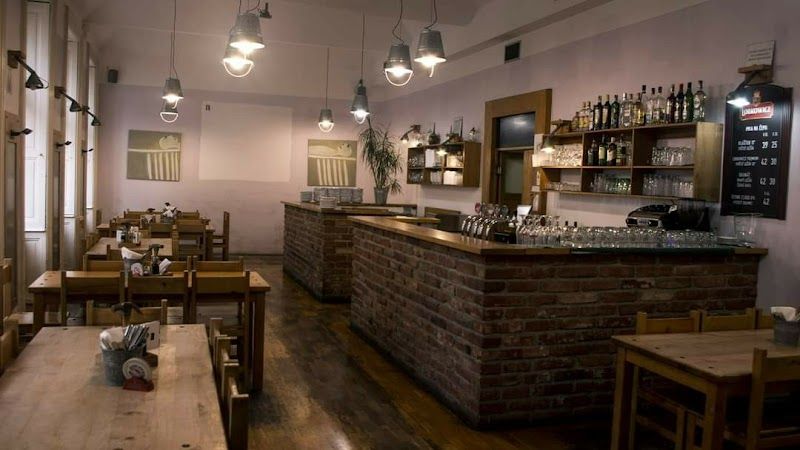
Ferdinanda
Karlín steakhouse and butcher shop specializing in dry-aged Czech beef, with cuts displayed in aging cabinets. Steaks are excellent, sides are generous, and the meat quality justifies the higher prices. The attached butcher shop sells the same cuts for home cooking.
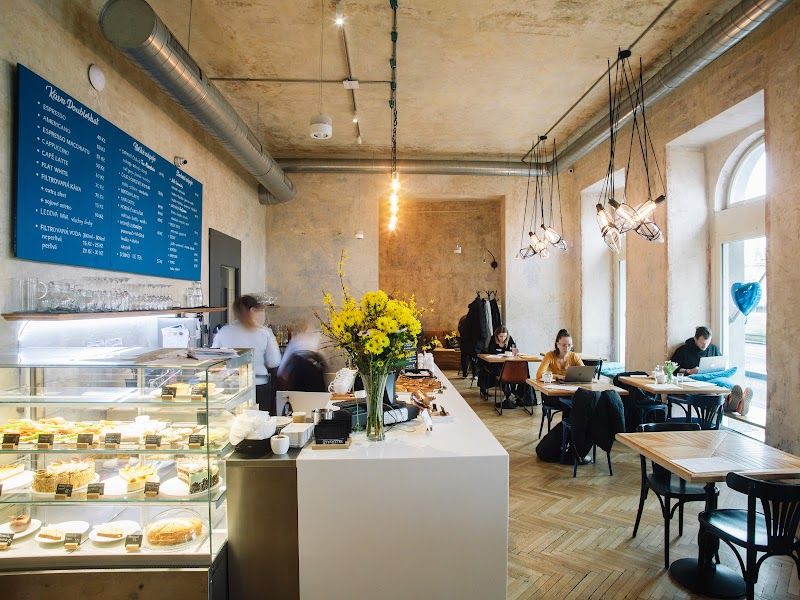
Smetana Restaurant
Refined Czech restaurant on the Vltava riverfront with views of Prague Castle, serving elevated Czech classics and Moravian wines. The location is prime, food is good if slightly overpriced, but the river terrace on summer evenings justifies the cost. Jacket preferred for dinner.
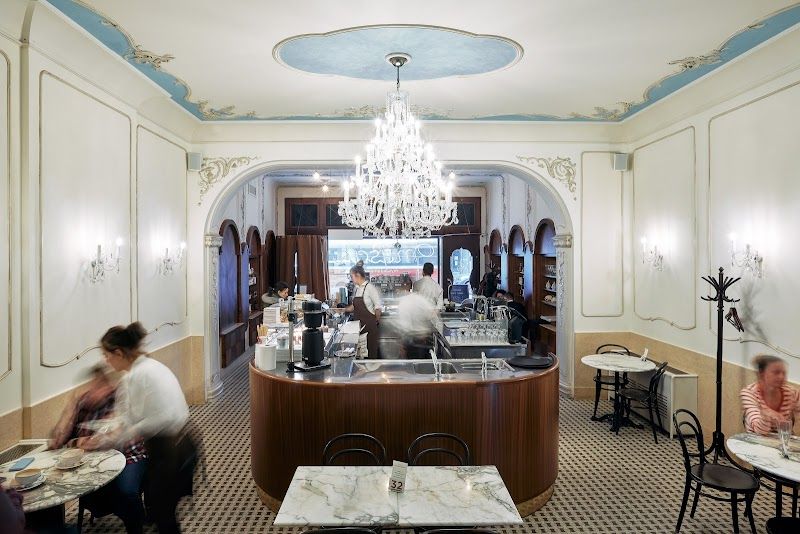
Cukrárna Mysák
Historic 1922 functionalist patisserie and cafe on Wenceslas Square with original geometric interior design by Josef Záruba-Pfeffermann. Famous for traditional Czech cream cakes, especially větrník and řezy (layer cakes). The ground floor serves quick takeaway while upstairs offers sit-down service with table lamps and period details.
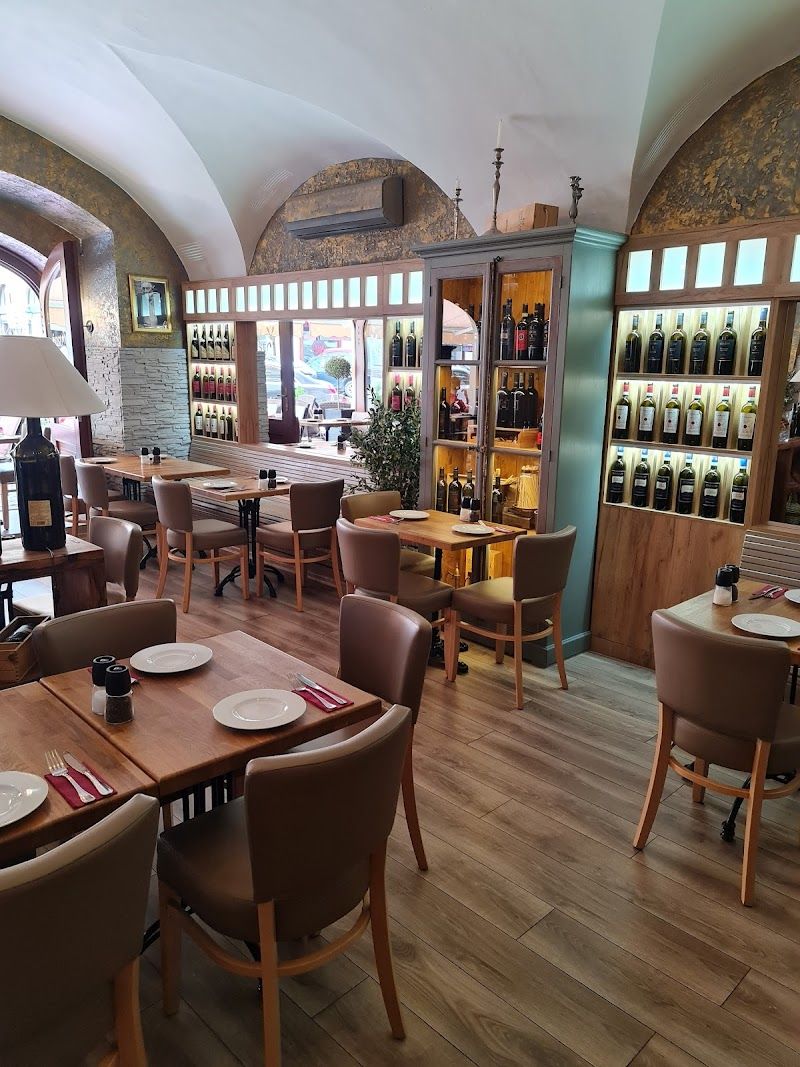
Angelato
Italian gelato chain with multiple Prague locations, making fresh gelato daily with natural ingredients. The pistachio and hazelnut are standouts, fruit flavors are intensely seasonal, and prices are reasonable. Better quality than 90% of Prague's tourist gelato.
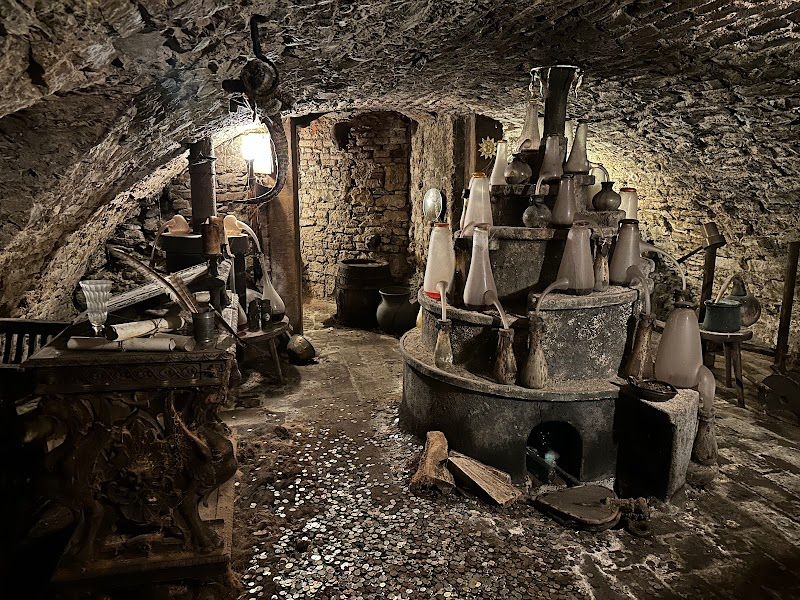
Speculum Alchemiae
Speculum Alchemiae takes you into Prague's most authentic alchemical laboratory, preserved exactly as Emperor Rudolf II's court scientists left it in the 16th century. You'll see original copper distillation apparatus, stone furnaces still blackened with soot, and glass vessels arranged on medieval workbenches. The underground chambers connect to secret tunnels that once allowed alchemists to move unseen between the castle and their experiments, and your guide explains how they attempted to create gold and the philosopher's stone. The 45-minute tour winds through cramped stone chambers where only 8-12 people fit comfortably. Your guide demonstrates how the equipment worked, from the pelican flasks that recycled liquids endlessly to the athanor furnaces that maintained constant heat for months. The air smells faintly metallic, and you can touch some of the original tools. The highlight is the main laboratory where manuscripts and chemical residue remain exactly where researchers abandoned them. At 350 CZK, it's pricier than most Prague attractions but genuinely unique, unlike the touristy fortune teller shops nearby. Skip the Czech-language tours unless you're fluent since the technical explanations get lost in translation. The English tours run three times daily and fill up quickly, especially on weekends. Most visitors rush through, but linger in the main chamber where the acoustics are incredible.
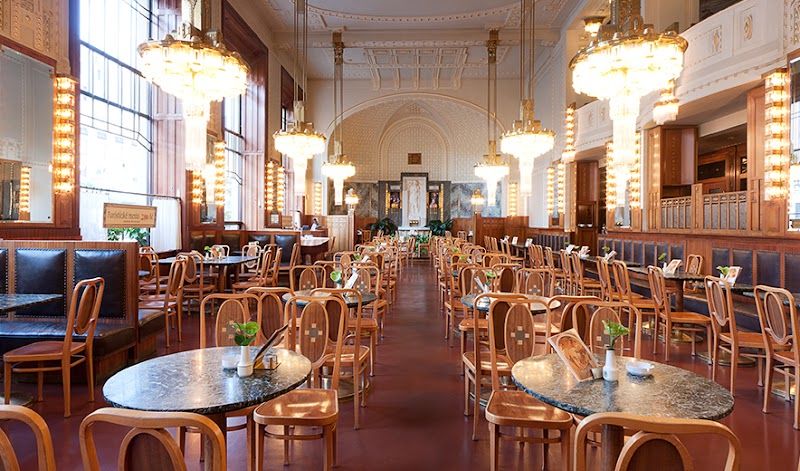
Kavárna Obecní dům
Art Nouveau masterpiece inside the Municipal House, designed by Alfons Mucha with original 1912 fixtures and stained glass. Every surface displays period decoration from the gilded ceiling to the mosaic floor. Coffee and cakes are premium-priced but the setting justifies the expense for this architectural treasure.
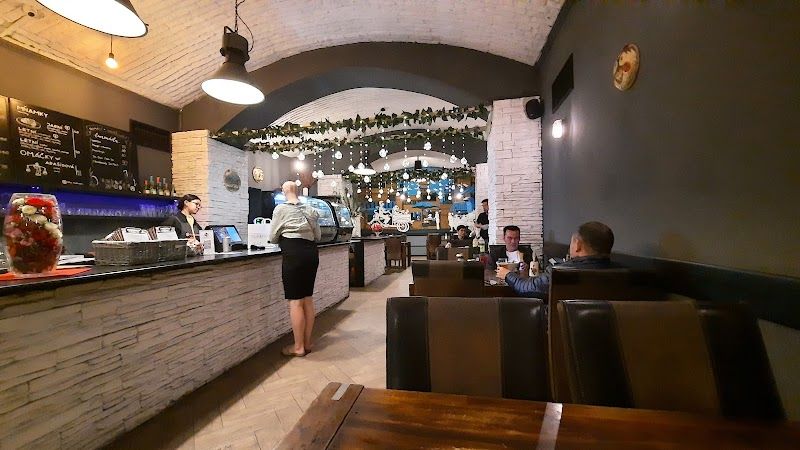
Pho Vietnam Tuan & Lan
No-frills Vietnamese spot in Holešovice's market area serving excellent pho for under 130 CZK. The broth is rich and properly made, fresh herbs arrive on the side, and the family running it has been here for 20 years. Lunch only, cash only, barely any seating.
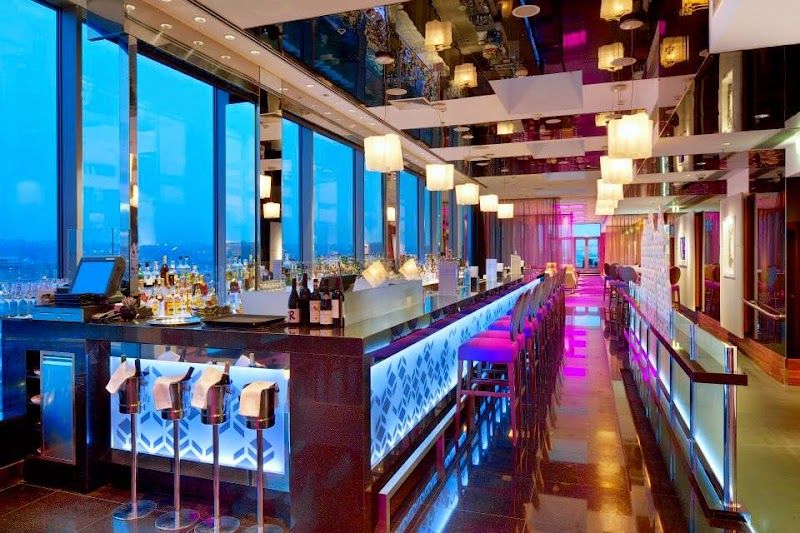
Cloud 9 Sky Bar & Lounge
Rooftop bar on the 9th floor of the Hilton Prague with panoramic views over Prague Castle, Petřín Tower, and the city skyline. The cocktail menu features classic and signature drinks served in a sleek, modern setting with both indoor and outdoor seating. It attracts a more upscale crowd and the prices reflect the prime location.
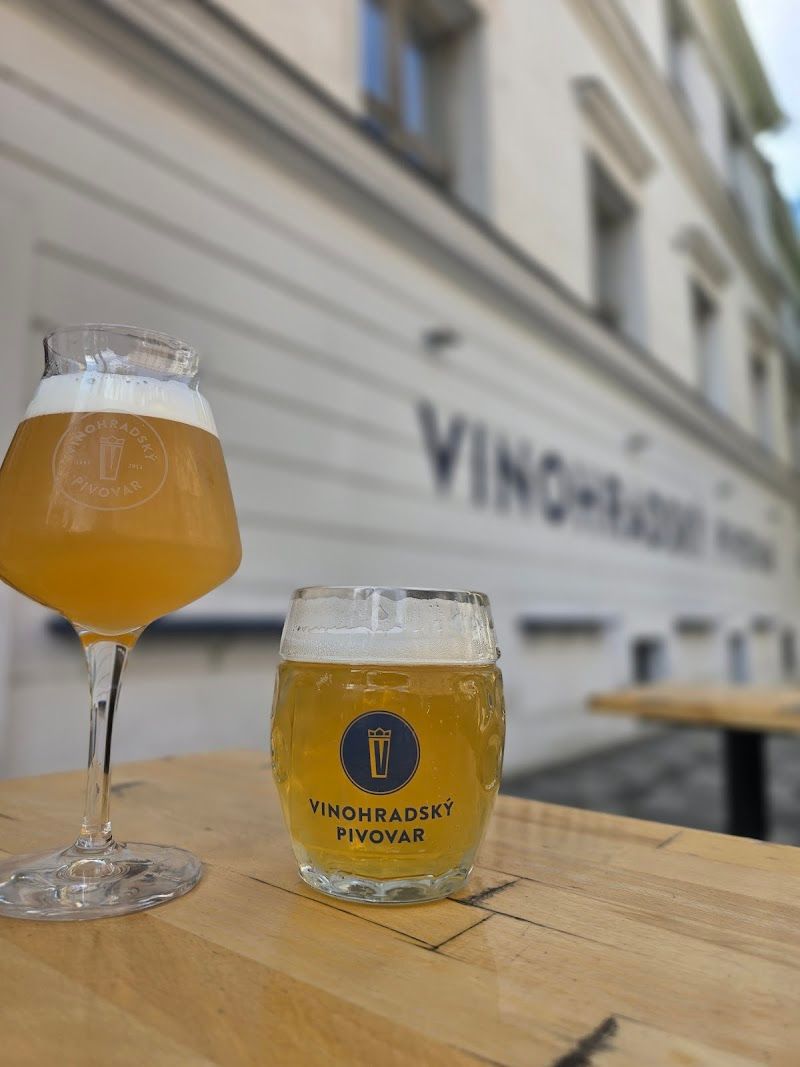
Vinohradský pivovar
Modern brewpub in Vinohrady with their own beers made on-site, elevated pub food, and Sunday brunch buffet. The beer varieties change seasonally, ribs are excellent, and the space is bright and family-friendly. More polished than traditional hospody.
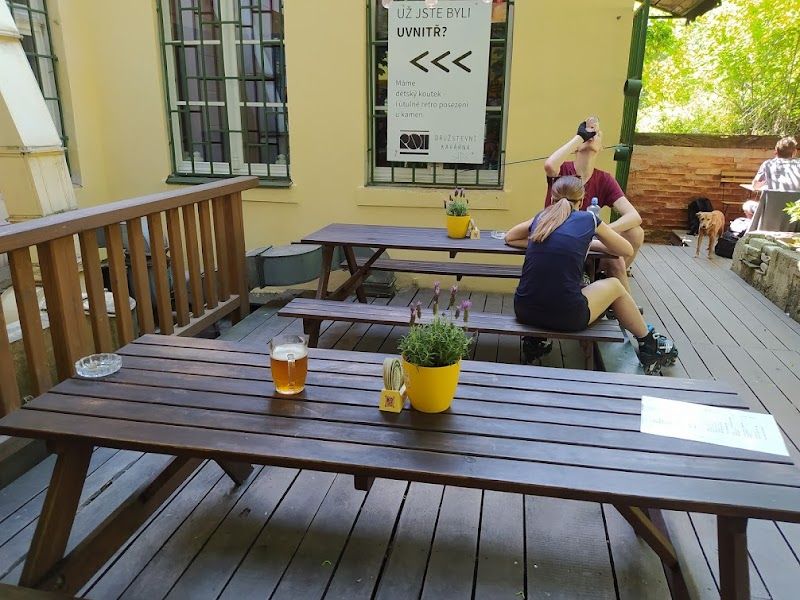
Hospůdka U Vystřelenýho Oka
Legendary Žižkov dive bar decorated entirely with one-eyed iconography, paying homage to Jan Žižka, the one-eyed Hussite general. Serves cheap Czech beer and simple pub food in an authentically gritty atmosphere beloved by locals. The walls are covered with posters, paintings, and memorabilia all featuring eyes and eye patches.
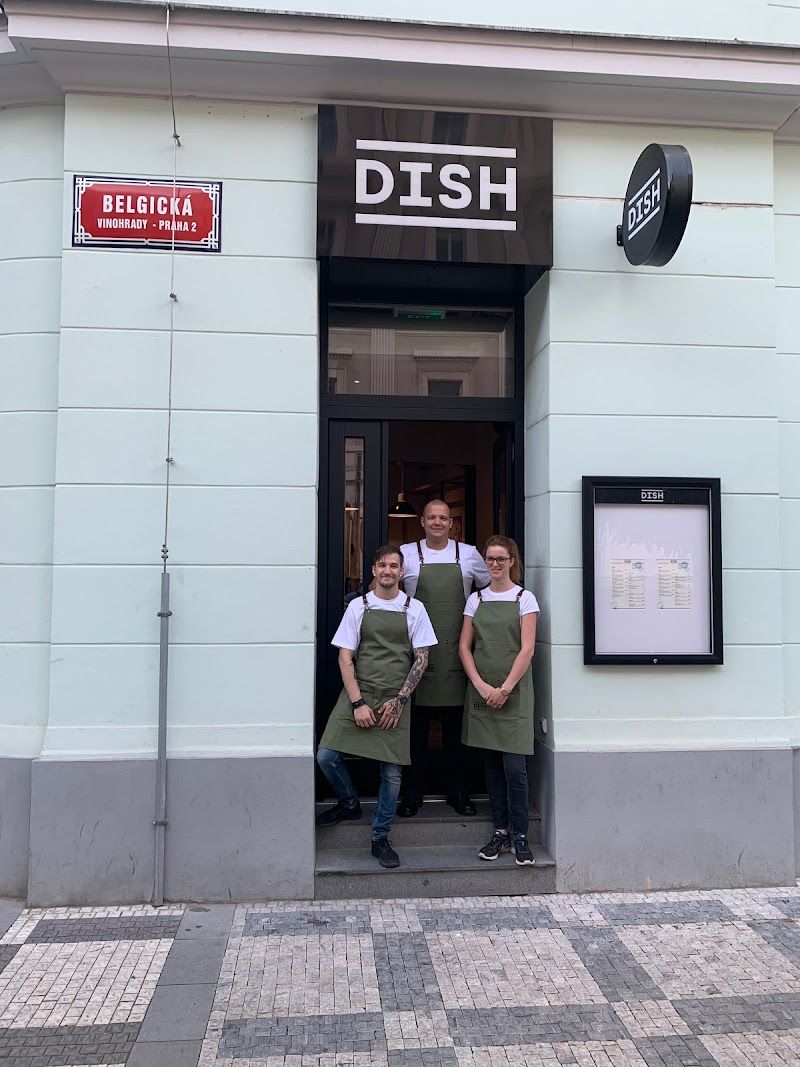
Dish – Ostrovní
Modern bistro in Nové Město with creative burgers, excellent craft beer selection, and weekend brunch. The beef burger with aged cheddar is Prague's best, sweet potato fries are crispy, and the relaxed atmosphere works for casual meals. Popular with expats and younger Czechs.
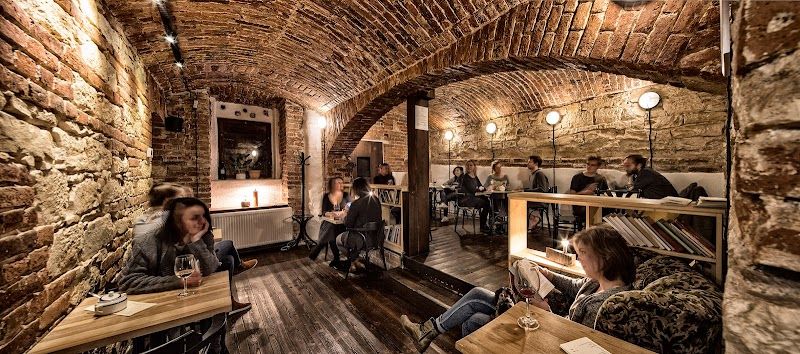
Kavárna Pražírna
Specialty coffee roastery and café with a minimalist industrial design. They roast their own beans on-site and serve expertly prepared pour-overs, espresso drinks, and filter coffee. The space attracts coffee enthusiasts and remote workers with its relaxed atmosphere and commitment to quality.
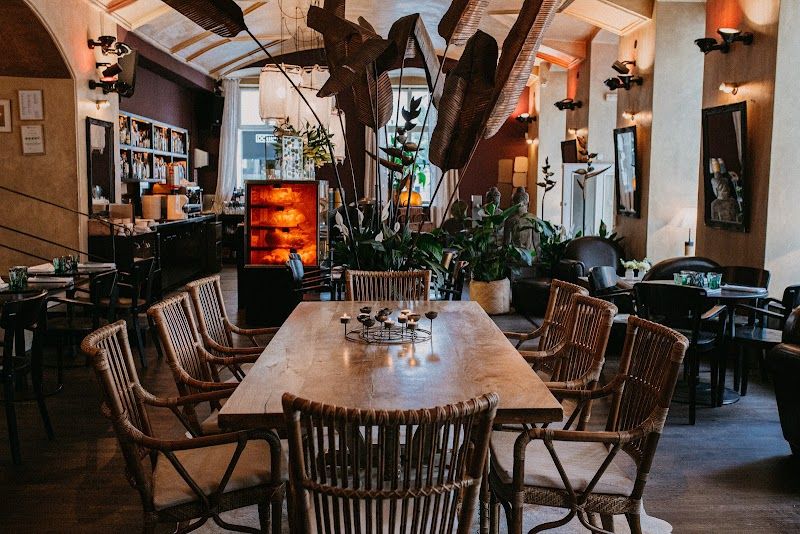
Noi
Contemporary Thai restaurant in Karlín with authentic flavors, stylish minimalist interior, and reasonable prices. The green curry is properly spicy, pad thai is excellent, and they don't dumb down the heat for Czech palates. Lunch menu offers great value.
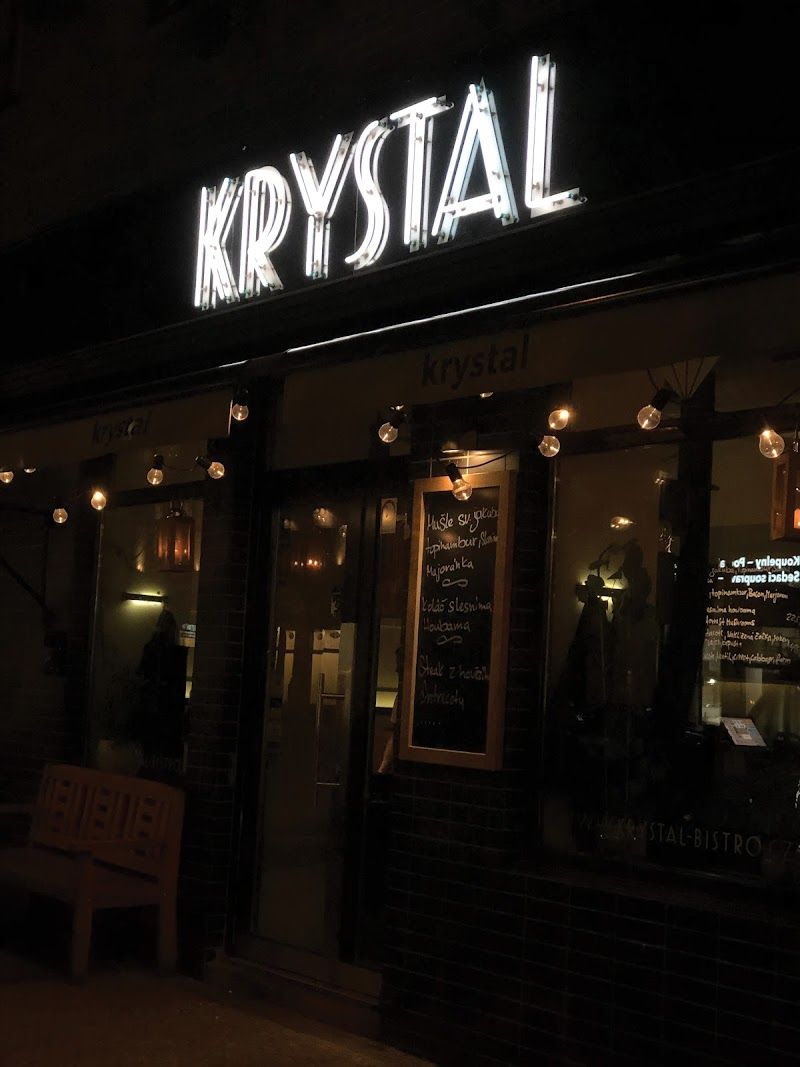
Krystal Mozaika Bistro
Vinohrady neighborhood spot with a daily-changing menu written on mirrors, Czech wines by the glass, and creative seasonal cooking. The space is tiny (12 seats), reservations essential, and the chef-owner sources from small Czech farmers. Dinner feels like eating at a friend's very talented home.
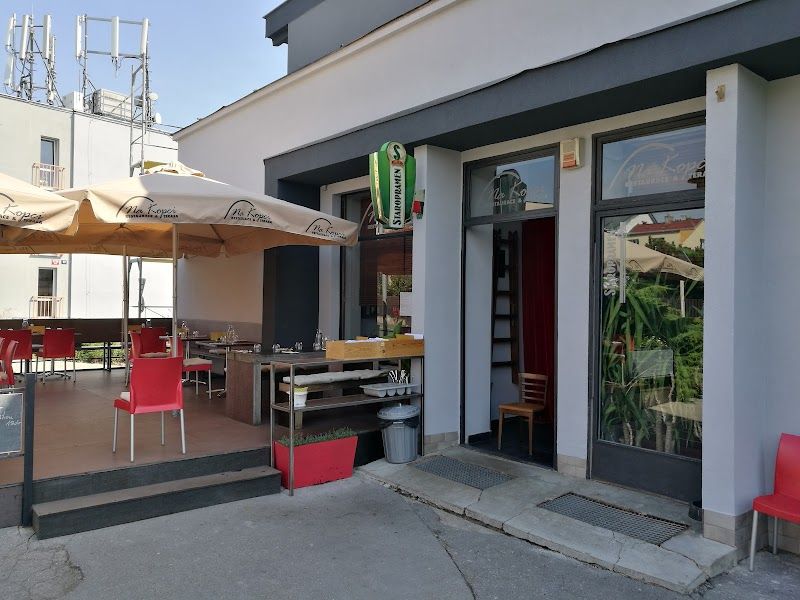
Na Kopci
Modern craft beer pub in Vinohrady with rotating taps of Czech microbrews and elevated pub food. The burger is excellent, beer selection changes weekly, and the crowd is local beer enthusiasts rather than tourists. Industrial-modern interior with communal tables.
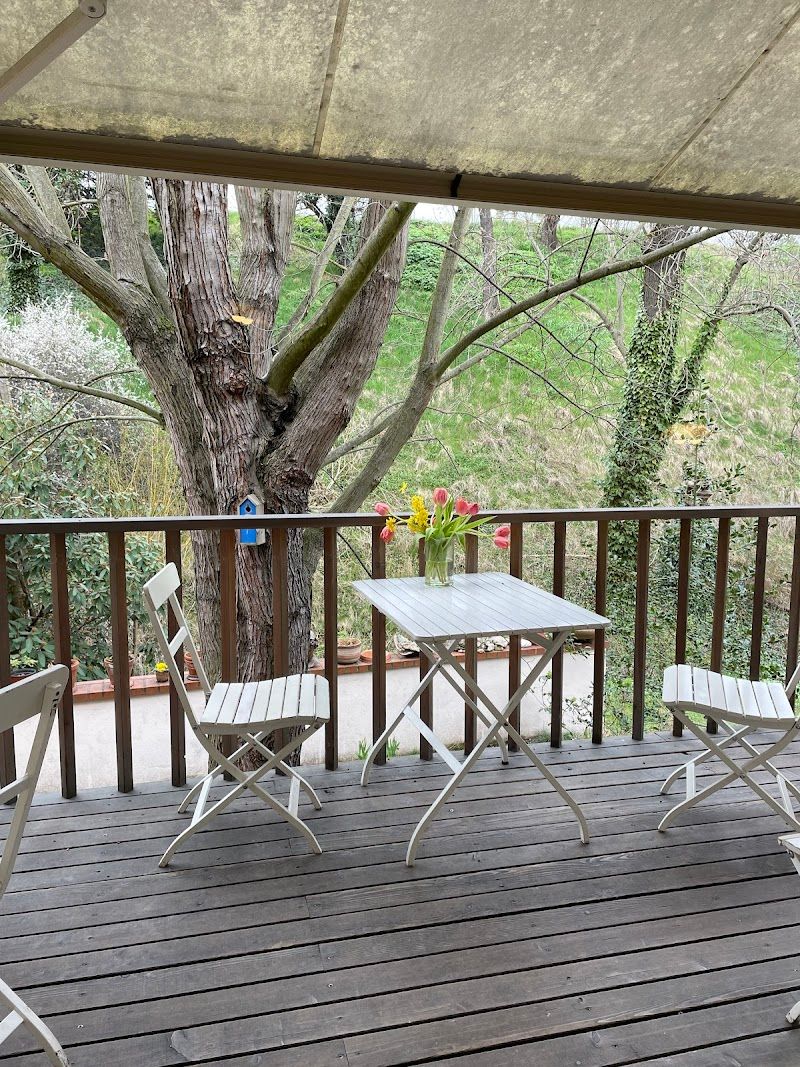
Kavárna Nový Svět
Charming small cafe on Hradčany's most picturesque street, Nový Svět, serving coffee and homemade cakes in a 17th-century house. The summer terrace offers peaceful views of colorful baroque cottages away from castle crowds. Interior features exposed beams, vintage furniture, and works by local artists for sale.
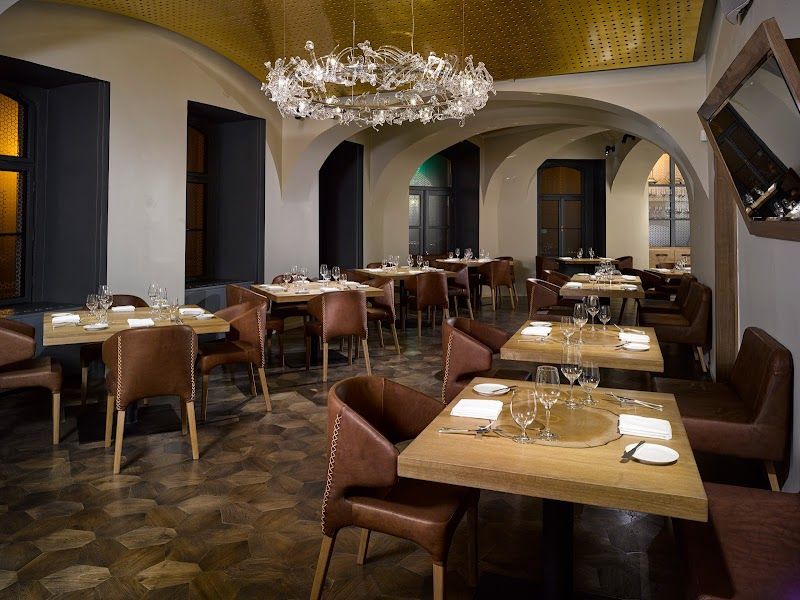
La Degustation Bohême Bourgeoise
Michelin-starred tasting menu restaurant in Staré Město focusing on historical Czech recipes from the 19th century. Six or eleven courses, excellent wine pairings, and refined technique applied to forgotten Czech dishes. Expensive but this is Prague's most sophisticated dining experience.
La Finestra in Cucina
Intimate Italian restaurant run by chef Riccardo Lucque, featuring authentic regional Italian cuisine with fresh pasta made daily and seasonal ingredients sourced from small producers. The open kitchen allows diners to watch the culinary mastery firsthand in this cozy, upscale setting just steps from the Jewish Quarter.
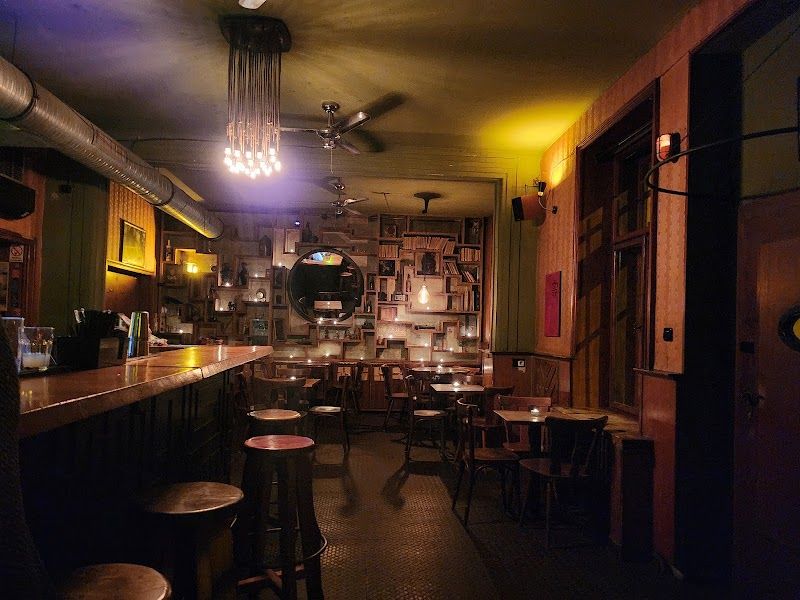
Bukowski's Bar
Literary-themed cocktail bar named after the American writer Charles Bukowski. Features creative cocktails, regular poetry readings, and live music in an intimate, bohemian setting. The walls are decorated with books and literary quotes, attracting Prague's artistic crowd and culture enthusiasts.
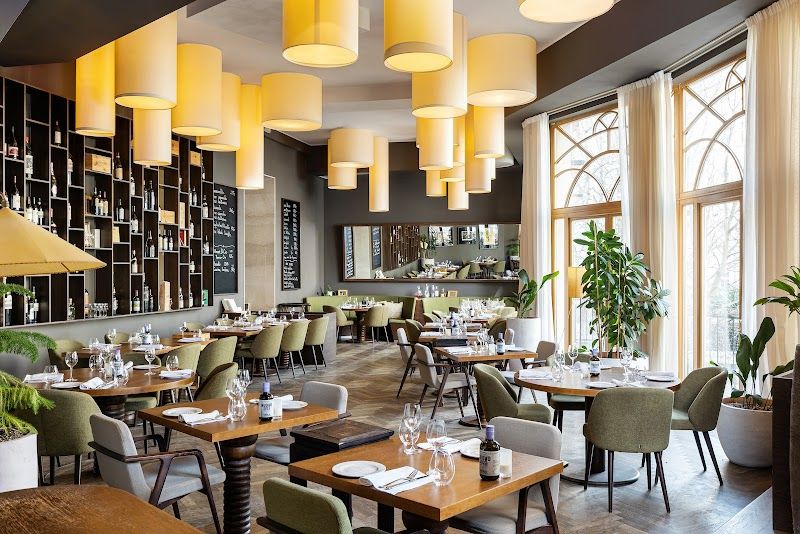
Aromi
High-end Italian restaurant in Vinohrady with house-made pasta, imported ingredients, and Prague's best Italian wine list. The tasting menu changes monthly based on seasonal Italian products. Expensive by Prague standards but authentic Italian technique.
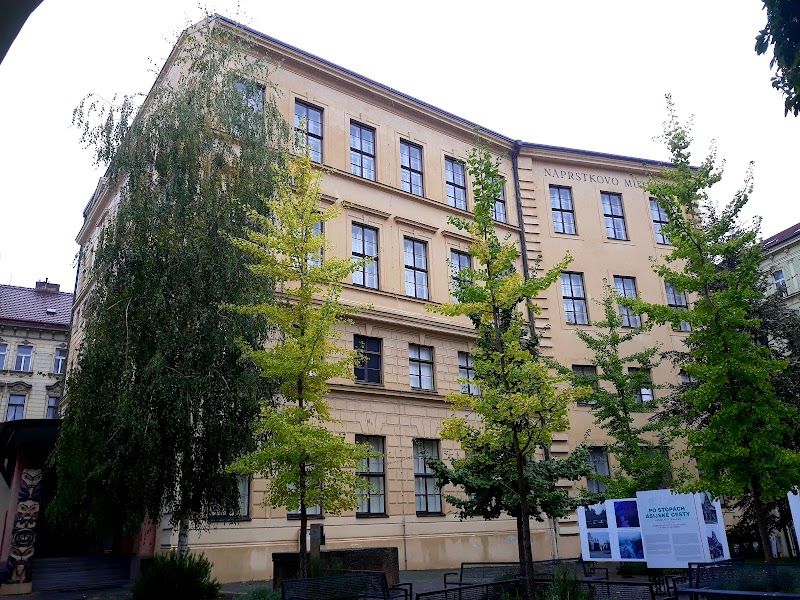
Náprstek Museum
The Náprstek Museum houses one of Central Europe's most impressive ethnographic collections, gathered by Czech explorers and collectors during the colonial era. You'll find genuine Aboriginal boomerangs, intricate Aztec pottery, Japanese samurai swords, African masks, and Polynesian tapa cloth spread across several floors of a 19th-century merchant's house. The pre-Columbian section is particularly strong, with Mayan ceramics and Incan textiles that rival collections in much larger museums. The experience feels intimate and personal, like wandering through a wealthy collector's private cabinet of curiosities. Rooms are small and dimly lit, with artifacts packed into antique display cases that haven't changed much since the 1890s. You'll often have entire galleries to yourself, especially the upper floors where Pacific Island war clubs and Native American headdresses create an almost mystical atmosphere. The building itself creaks with age, adding to the sense of stepping back in time. Most guidebooks barely mention this place, which is exactly why you should visit. Entry costs 120 CZK for adults, or grab the National Museum combo ticket for 350 CZK if you're hitting multiple locations. Skip the ground floor introduction and head straight to the second floor where the best artifacts live. The African collection upstairs gets overlooked but contains some genuinely stunning pieces, including ceremonial masks that put other museums to shame.
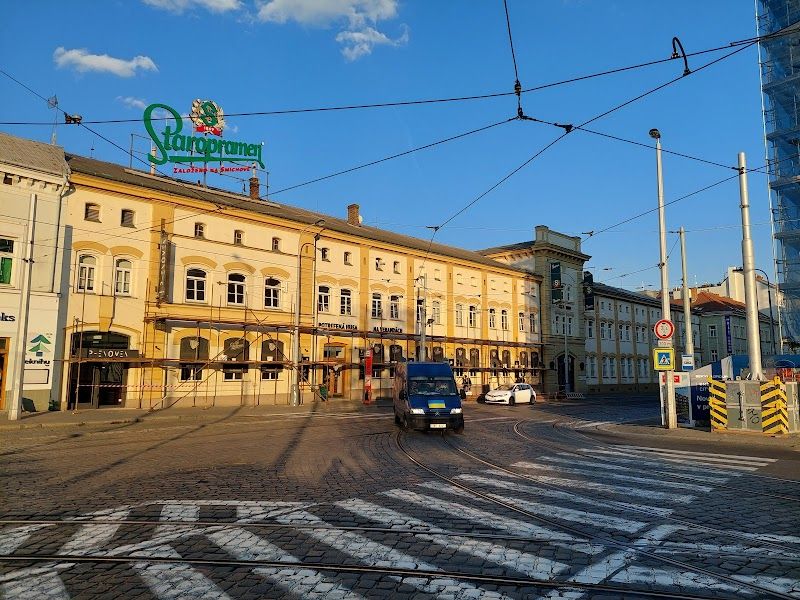
Staropramen Visitor Center
The Staropramen Visitor Center takes you through the actual working brewery where Prague's second most famous beer gets made. You'll walk past massive copper kettles, fermentation tanks, and bottling lines while guides explain the brewing process in detail. The 90-minute tour includes three beer tastings: unfiltered lager straight from the tank, classic Staropramen, and a seasonal brew. The small museum covers Czech brewing history with interactive displays, though honestly it's more about the fresh beer than the exhibits. The tour starts in a modern visitor center but quickly moves into industrial brewing halls that smell like hops and malt. Groups of 15-20 people follow guides through active production areas where you can hear machinery humming and see workers monitoring the process. The highlight comes when you taste beer that's literally hours old from the fermentation tanks. The atmosphere feels authentic because this isn't a tourist brewery, it's a real production facility that happens to offer tours. At 450 CZK per person, it's decent value for three generous beer samples and seeing actual beer production. Skip the overpriced brewery shop and don't bother with the weekend tours when it gets packed with stag parties. The evening tours (available Tuesday through Thursday) cost 100 CZK more but include rooftop access and an extra tasting. Book directly through their website to avoid tour company markups.
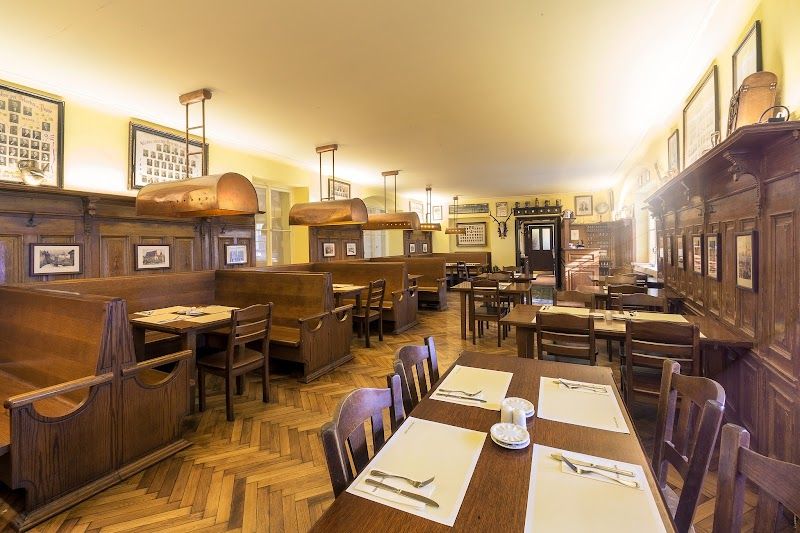
Baráčnická rychta
Traditional beer garden in a Dejvice park near Prague Castle, serving Czech food and Pilsner Urquell under chestnut trees. The massive garden seats hundreds, it's packed with families on weekends, and the roasted pork knee (koleno) feeds two people. Open May-September only.
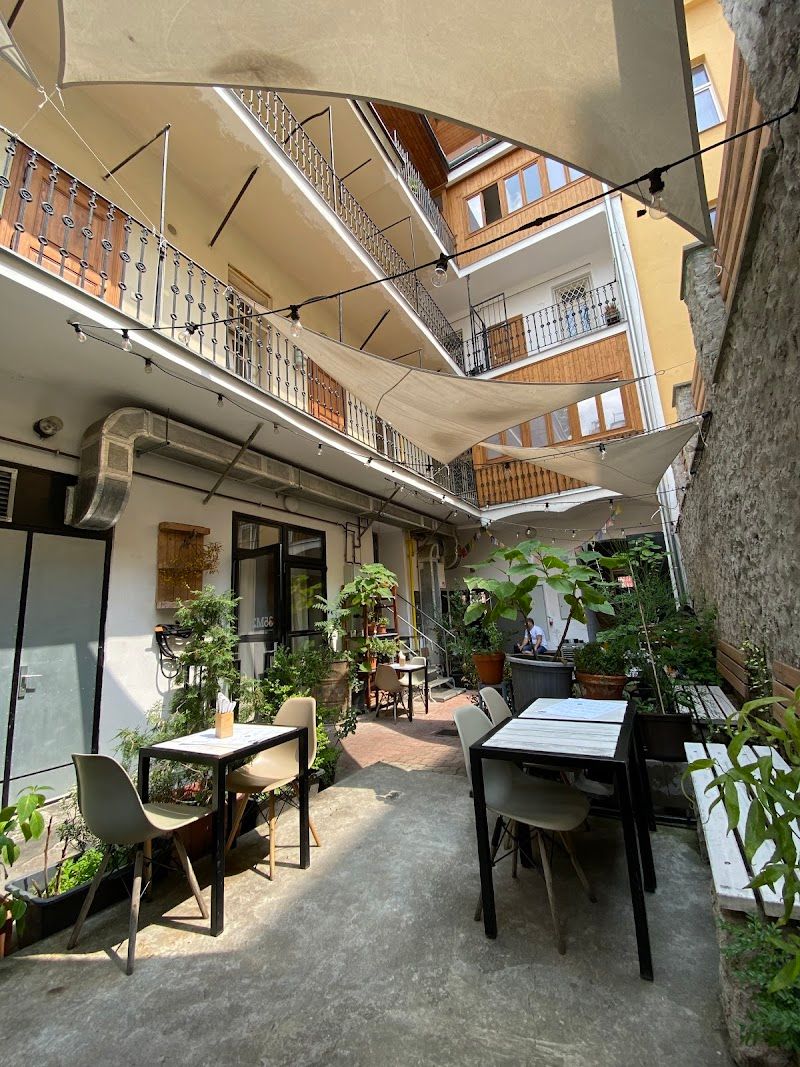
Pavlač
Authentic neighborhood pivnice serving traditional Czech pub food and excellent Pilsner Urquell in a no-frills setting frequented by locals. The smoky atmosphere and old-school tile interior transport you to a genuine Prague beer hall untouched by tourism.
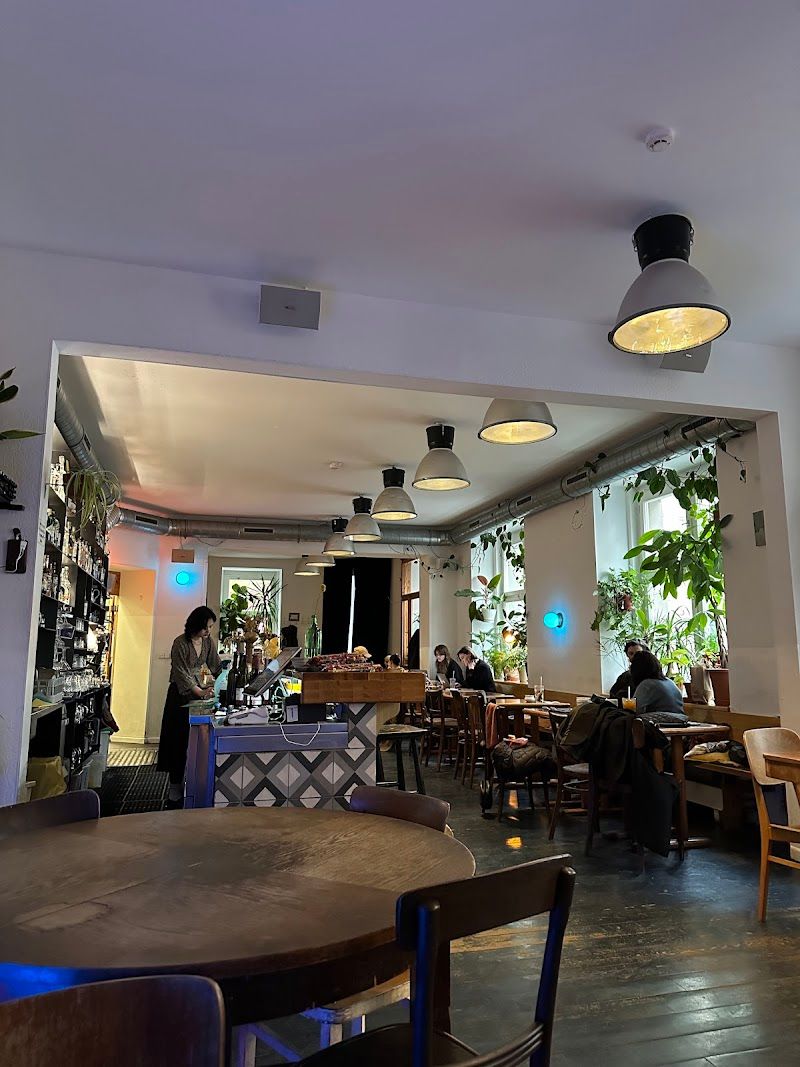
Bullerbyn Vinohrady
Swedish-Czech brunch spot in Vinohrady with Nordic-inspired breakfast dishes, excellent coffee, and fresh-baked cinnamon buns. The atmosphere is cozy Scandinavian minimalism, portions are generous, and it's less crowded than other Vinohrady brunch places. Cash only.
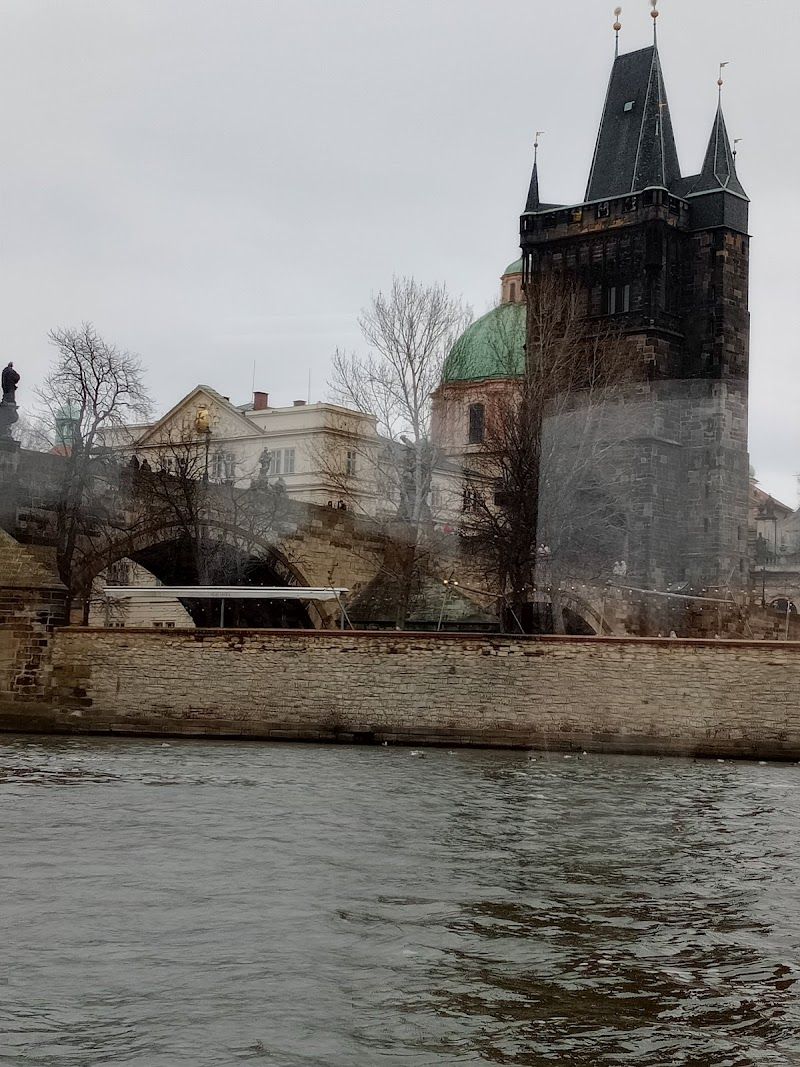
Prague Venice Boat Trip
The Čertovka canal boat trip takes you through Prague's narrowest waterway, squeezed between Kampa Island and the Lesser Town. You'll float past the Grand Priory Mill's massive wooden wheel, duck under low stone bridges, and see the city from an angle that's existed since medieval times. The 45-minute journey covers about 800 meters of canal, giving you water-level views of Gothic arches, baroque facades, and the underside of Charles Bridge that pedestrians never notice. The boats hold just 8-12 people, so it feels intimate rather than touristy. Your captain navigates tight corners where the canal walls are arm's length away, pointing out details like 14th-century flood marks and explaining how the mills once powered Prague's industry. The highlight comes when you emerge from under Charles Bridge and see Kampa Park from the water, with swans often following alongside. The route loops back past restored mill buildings that now house restaurants and galleries. Most operators charge 290-350 CZK per person, but honestly, the experience is too short for the price. The kayak option (180 CZK) gives you more control and time on the water, though you'll miss the commentary. Skip this if you're on a tight budget, the views from Charles Bridge are 90% as good and free. Book directly at the dock to avoid online booking fees that add 50 CZK.
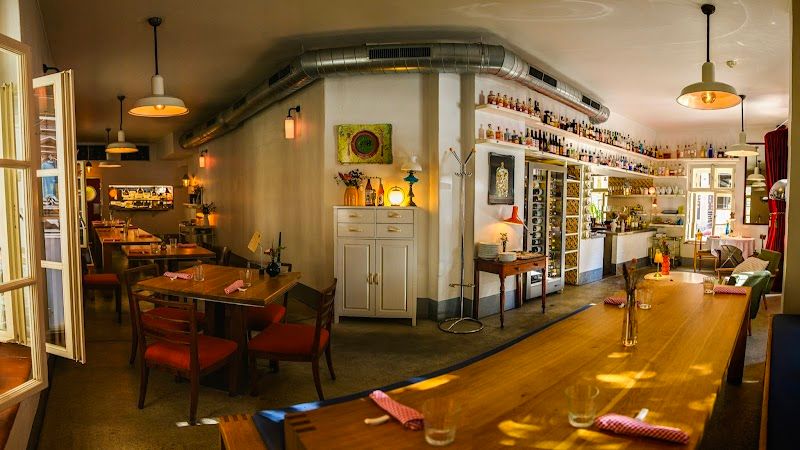
Sansho
Tiny Karlín bistro with Asian-influenced tasting menus that change based on what chef-owner Paul Day finds at market. Only about 20 seats, no walk-ins accepted, and the wine pairings are excellent. This is where Prague chefs eat on their nights off.
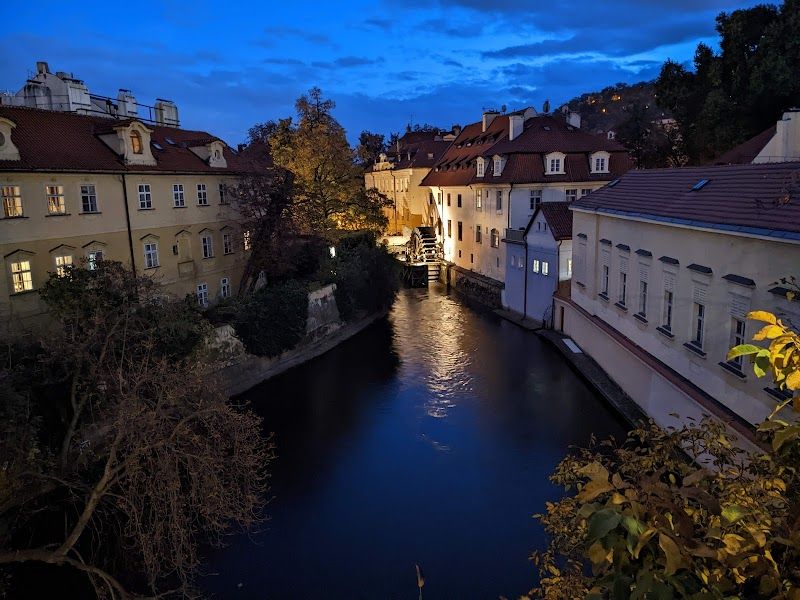
Kampa Island
Kampa Island sits between the Vltava River and the narrow Čertovka canal, technically making it Prague's smallest district. You'll find the Kampa Museum showcasing modern Central European art in a restored mill, plus David Černý's giant crawling baby sculptures that look unsettling up close. The island's southern tip offers genuine quiet with functioning mill wheels still turning in the canal, while the northern section connects directly under Charles Bridge. The experience feels like discovering Prague's backyard. You'll walk along cobbled paths beside the canal where ducks paddle between the old mill wheels, then climb gentle slopes through Kampa Park where locals read on benches. The Kampa Museum takes about 45 minutes if you're into contemporary art, though many visitors just wander the sculpture garden for free. The contrast hits you immediately: one minute you're among Charles Bridge crowds, the next you're in this peaceful pocket where canal water laps against stone walls. Most guides oversell the museum (entry 120 CZK), which rotates exhibitions that can be hit or miss. The real value is the free outdoor space, especially early morning when you'll have the mill wheels area to yourself. Skip the overpriced canal-side restaurant and bring coffee from Malá Strana instead. The babies installation photograph better from a distance, and don't miss the small bridge connecting to Slovanský Island for the best Vltava views.
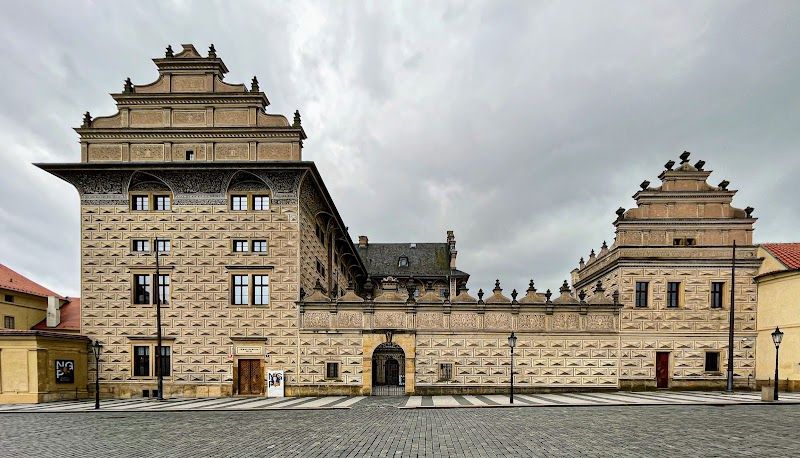
Schwarzenberg Palace
Schwarzenberg Palace stands out immediately on Hradčany Square with its extraordinary sgraffito facade that tricks your eye into seeing three-dimensional pyramid stonework where there's actually flat wall. Inside, you'll find the National Gallery's baroque collection featuring works by Czech masters like Karel Škréta and European artists including Rubens and Cranach. The palace itself, built in 1563, competes with the paintings for your attention with its Renaissance chambers and period ceilings. You'll move through intimate rooms rather than vast museum halls, making this feel more like exploring a private collector's home than trudging through endless galleries. The sgraffito technique covers nearly every exterior surface, created by layering colored plaster and scraping away sections to reveal patterns underneath. Inside, natural light filters through original windows, illuminating canvases in a way that feels authentic to how they were meant to be viewed. The baroque paintings include religious scenes, portraits, and still lifes that showcase the dramatic chiaroscuro technique of the period. Most visitors rush past the exterior without realizing the 'stonework' is actually an optical illusion, so spend time studying the facade before entering. Entry costs 150 CZK for adults, and unlike Prague's major museums, you'll rarely encounter crowds here. The collection is genuinely excellent but compact, perfect if you want quality baroque art without the overwhelming scale of the National Gallery's main venues.
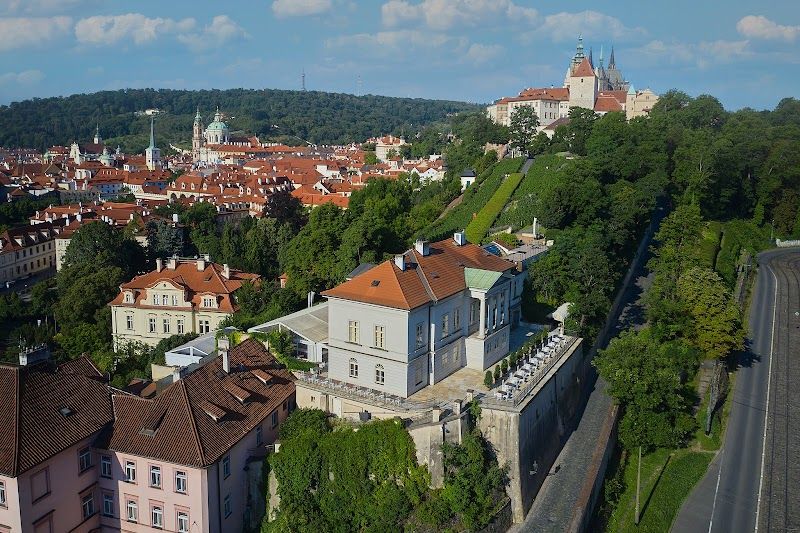
Villa Richter
An elegant restaurant complex with three distinct venues set in historic vineyards below Prague Castle. The Piano Nobile offers fine dining, Piano Terra provides casual bistro fare, and Pergola features outdoor seating with stunning views over Prague. The terraced vineyards have been producing wine since the 10th century.
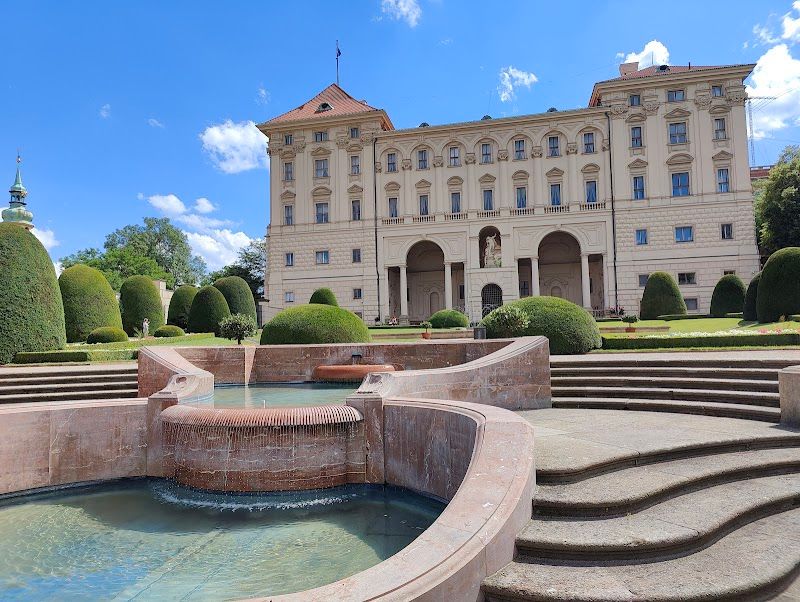
Černín Palace
Černín Palace stretches an impressive 150 meters across Loretánské Square, making it Prague's longest baroque facade. You're looking at peak 17th-century power architecture: thirty monumental columns march across the building's front, creating a rhythm that's both imposing and surprisingly elegant. The palace was built for Count Černín, who wanted to outshine every other aristocrat in the city, and honestly, he succeeded. While it now houses the Ministry of Foreign Affairs, the exterior alone tells the story of baroque ambition at its most grandiose. Standing in the square, you'll feel dwarfed by the sheer scale of this building. The repetitive columns create an almost hypnotic effect as your eye travels along the endless facade. Most visitors spend their time craning their necks upward, taking in the detailed stonework and the way shadows play between the columns throughout the day. The building dominates the entire square, making everything else look miniature by comparison. There's something theatrical about it, like a stage set designed to make mere mortals feel small. Most guidebooks oversell this as a major stop, but twenty minutes is genuinely enough unless you're deeply into baroque architecture. You can't go inside, so you're essentially paying your respects to an impressive exterior and moving on. The real value is understanding how this building fits into Prague's power landscape. Skip it if you're short on time, but if you're already visiting the nearby Loreta, it's worth the extra few minutes to appreciate the sheer audacity of 17th-century wealth.
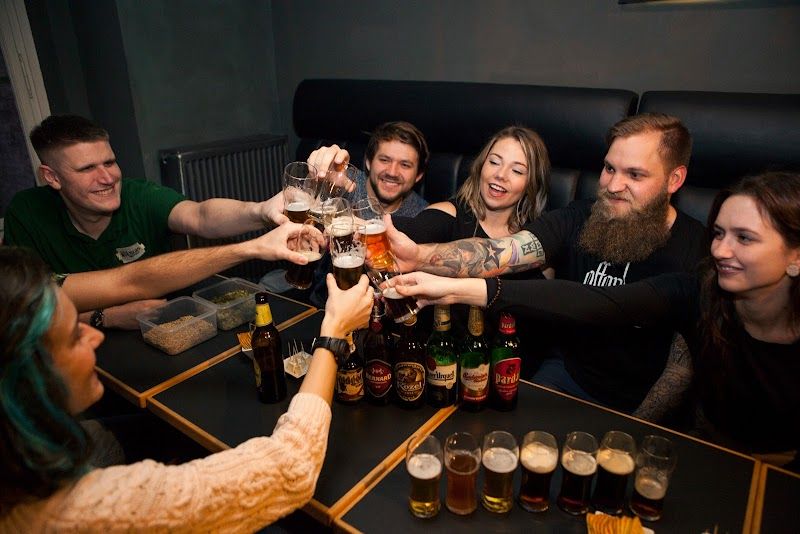
Prague Beer Tour
A guided beer tour through Prague's best beer halls and brewpubs, covering Czech brewing history, tasting techniques, and 4-6 different Czech beers. Good tours run 3-4 hours and cover neighbourhood pubs that visitors would never find on their own. Czech beer culture runs deep: Pilsner was invented in the Czech lands, the country has the highest per capita beer consumption in the world, and Prague has both 500-year-old beer halls and a thriving craft scene. CZK 1200-1800 per person including all tastings.
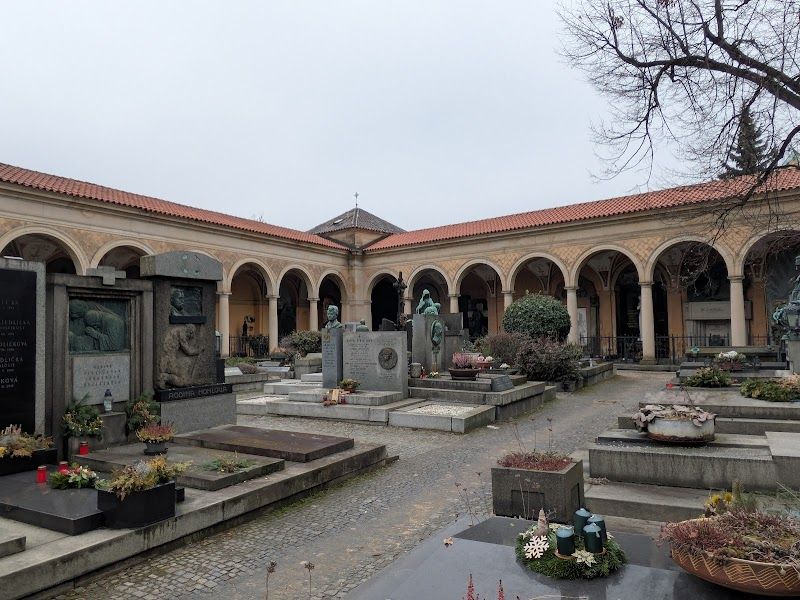
Vyšehrad Cemetery
Vyšehrad Cemetery sits within Prague's ancient fortress walls and serves as the final resting place for Czech cultural legends including composers Dvořák and Smetana, writer Karel Čapek, and painter Alfons Mucha. The centerpiece Slavín monument houses over 50 honored artists beneath an elaborate sculptural arcade that looks like something from Père Lachaise. You'll wander among Art Nouveau tombstones and elaborate family mausoleums while getting panoramic views over the Vltava River. The atmosphere here beats every other Prague cemetery by miles. Gravel paths wind between towering monuments and smaller graves marked with weathered Czech names you'll struggle to pronounce. The Slavín dominates the upper section with its bronze winged figure, while individual graves showcase incredible craftsmanship in marble and bronze. Morning mist often clings to the sculptures, and you'll hear nothing but footsteps on gravel and distant church bells. Most guidebooks make this sound like a pilgrimage site, but honestly, you don't need to know Czech cultural history to appreciate the artistry. The cemetery connects to Vyšehrad's other attractions (the fortress walls and St. Peter and Paul Cathedral), so combine them in one visit. Entry is free, unlike many Prague attractions that'll cost you 200-300 CZK. Skip the audio guide and just wander, the atmosphere speaks for itself.
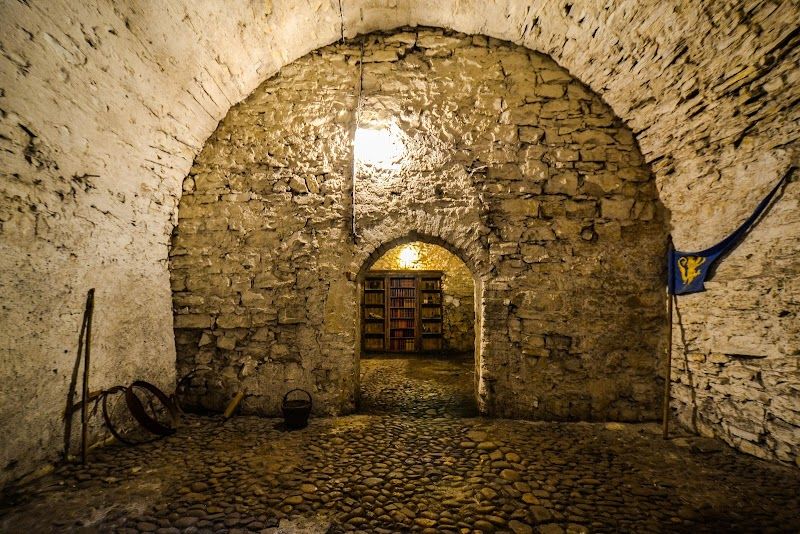
Prague Underground Tours
Prague's underground tours take you three stories below Old Town Square into medieval cellars that date back to the 12th century. You'll walk through original Romanesque rooms, vaulted stone chambers, and narrow passageways that were gradually buried as Prague rebuilt itself over eight centuries. The archaeological layers tell the story of how the city literally rose upward, leaving entire floors of medieval buildings intact beneath modern street level. Your guide explains how merchants stored goods, families lived, and craftsmen worked in these spaces when they were at ground level. The hour-long tour moves through interconnected cellars that feel like a underground medieval neighborhood. Stone walls still show tool marks from 800 years ago, and you can see where wooden beams once supported upper floors. The temperature stays constant at 14°C, creating an almost tomb-like atmosphere that makes the medieval period feel immediate. Some passages require ducking, and the uneven stone floors demand attention. Electric lighting reveals architectural details that most people never imagine exist beneath their feet. Honestly, this tour works better than Prague's overcrowded castle or bridge. The small group size (usually 12-15 people) means you can actually hear your guide and ask questions. However, the tour quality depends heavily on your guide's English and enthusiasm, which varies significantly. Skip this if you have mobility issues or claustrophobia. The 690 CZK price feels steep for 60 minutes, but you're accessing spaces that took decades of archaeological work to open safely.
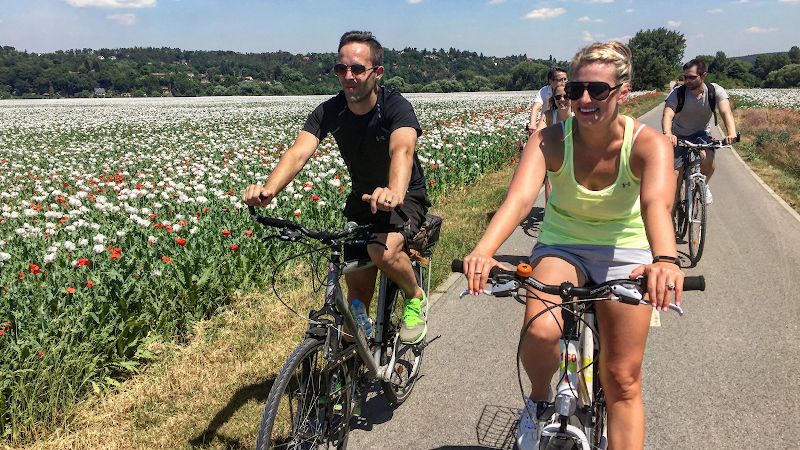
Prague Vltava River Bike Tour
The Vltava River bike route follows a flat, paved path for 15 kilometers from Výtoň's historic water tower north to Troja, passing beneath Frank Gehry's Dancing House and through Stromovka Park. You'll cycle past working river barges, locals sunbathing on small beaches, and Prague's industrial side that most tourists never see. The route connects five distinct neighborhoods, giving you a ground-level view of how Prague actually functions beyond the castle and squares. The ride feels like you're following Prague's main artery, with the river always on your right and the city unfolding naturally. Stromovka Park provides the most scenic stretch, where your path weaves between centuries-old trees and you can spot herons fishing in the shallows. The Dancing House section gets busy with pedestrians, but the northern stretches toward Troja feel surprisingly rural. You'll share the path with commuters, dog walkers, and other cyclists, creating an authentic local experience. Most bike rental shops charge 400-600 CZK for standard bikes or 800-1000 CZK for e-bikes, but you don't need electric assistance since the route is completely flat. Skip the full 15km if you're short on time and focus on the Výtoň to Smíchov section for the best river views and interesting architecture. The northern sections past Holešovice become repetitive, and you'll spend more time dodging pedestrians than enjoying scenery.
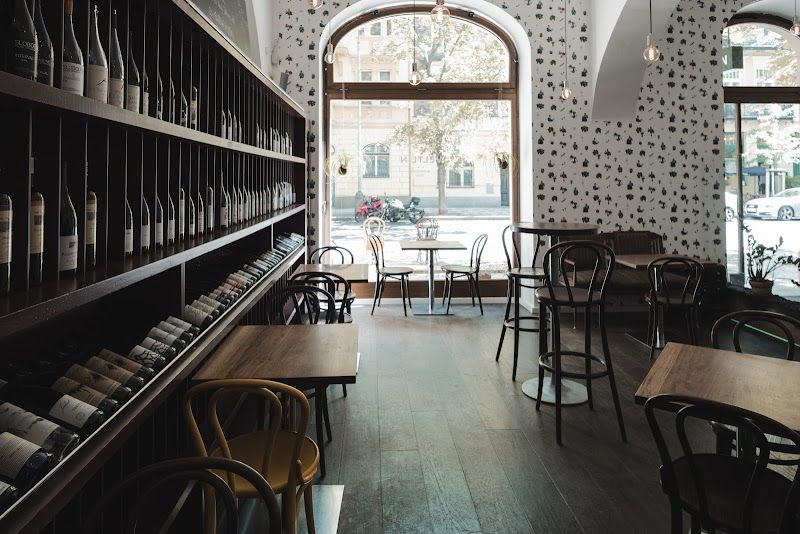
Veltlin
Natural wine bar in Vinohrady specializing in small-producer Czech and European wines, served in a minimalist space with exposed brick. The knowledgeable staff guide you through an ever-changing selection focusing on organic and biodynamic bottles, paired with excellent cheese and charcuterie plates. This is where Prague's wine enthusiasts gather, not tourists.
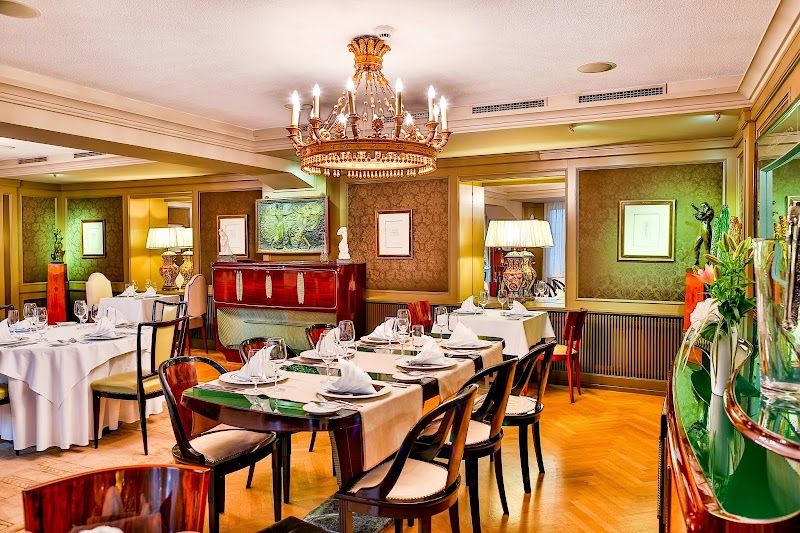
Coda Restaurant
Contemporary fine dining in Holešovice with creative tasting menus that change monthly based on Czech seasonal ingredients. The presentation is artistic, technique is solid, and it's cheaper than comparable restaurants in Old Town. Reservation essential.
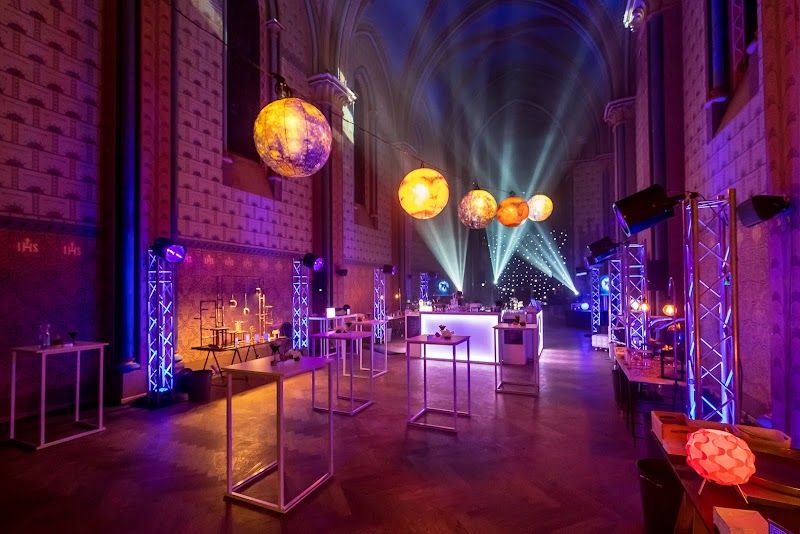
Sacré Coeur
Cozy French-style bistro and wine bar offering an excellent selection of natural wines paired with charcuterie boards and seasonal small plates. The intimate candlelit space creates a romantic atmosphere perfect for evening wine exploration with knowledgeable staff.
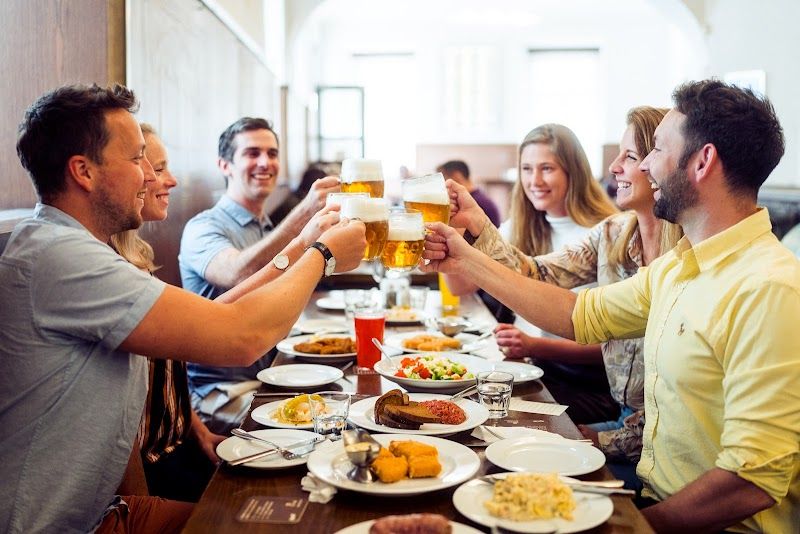
Prague Food Tour - Karlín & Holešovice
This four-hour walking tour takes you through Karlín and Holešovice, two former industrial districts that've become Prague's most exciting food neighborhoods. You'll hit six carefully chosen spots: a traditional restaurant for proper svíčková na knedlíku, an artisan deli with house-cured meats, a neighborhood bakery for authentic trdelník (not the tourist version), a modern bistro doing Czech fusion, a craft brewery, and a classic lokál pub. Your guide explains how these areas transformed from communist-era factories into foodie havens, plus you'll learn about Czech culinary traditions that most tourists never encounter. The tour moves at a relaxed pace with plenty of time to actually enjoy each stop rather than rushing through tastings. You'll walk tree-lined streets past converted warehouses and new apartment buildings, getting a real sense of how Prague locals live outside the tourist center. The lokál pub visit is particularly good: you'll learn proper beer-pouring technique from the tapster and understand why Czechs take their pub culture so seriously. The portions are generous enough that this easily replaces lunch and dinner. Most food tours in Prague stick to Old Town tourist traps, but this one actually goes where locals eat. At 1,200 CZK per person it's pricier than some alternatives, but the quality justifies it. Skip the morning tours if possible, the afternoon ones (starting 2pm) have better energy and the venues are livelier. The walking distance is manageable but wear comfortable shoes since you'll cover about 3km on cobblestones and uneven sidewalks.
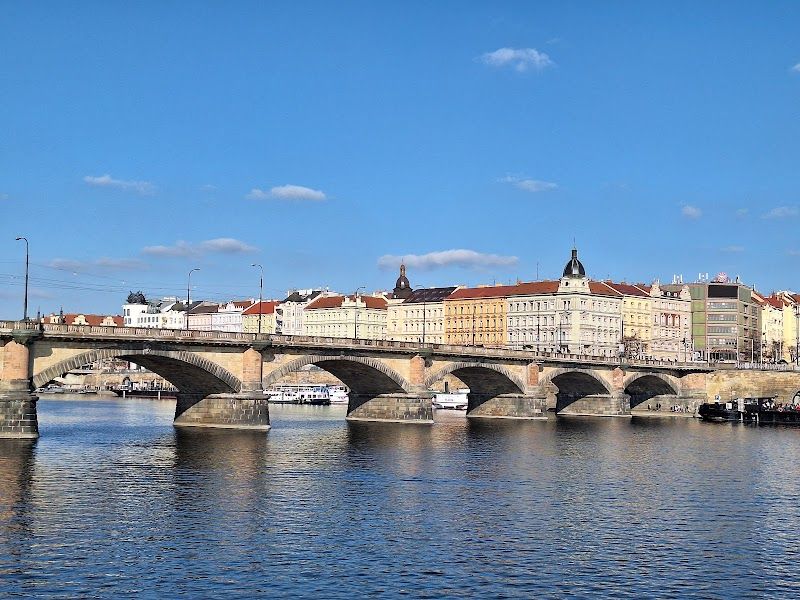
Cafe Cargo
A stylish specialty coffee shop and bistro in a converted industrial space with high ceilings and minimalist design. They roast their own beans and serve excellent espresso drinks alongside light meals, homemade cakes, and weekend brunch. The atmosphere is relaxed and laptop-friendly, making it popular with freelancers and locals working remotely.
Manufaktura
Manufaktura delivers authentic Czech products without the tourist trap markup you'll find elsewhere on Karlova Street. This flagship location stocks genuine Bohemian crystal (not Chinese knockoffs), handcrafted wooden toys that actually come from Czech workshops, and the complete Botanicus natural cosmetics line made with local ingredients. You'll also find traditional garnet jewelry set in Czech gold and linen textiles that locals actually buy for themselves. The two-level store feels more like a curated boutique than a souvenir shop, with products organized by craft type rather than dumped in bins. Staff members know the actual origins of their merchandise and can tell you which glassware comes from which Czech factory. The wooden toy section upstairs showcases intricate marionettes and puzzles that cost 800-2,000 CZK, while the Botanicus cosmetics range from 150-400 CZK per item. Most guidebooks lump this in with generic souvenir shops, but Manufaktura's prices are only 10-15% higher than what Czechs pay in suburban malls. Skip the overpriced crystal shops next door and focus on items you can't easily find abroad: the beer cosmetics line, traditional wooden games, and garnet jewelry with certificates of authenticity. The marionettes make impressive gifts but check airline size restrictions first.
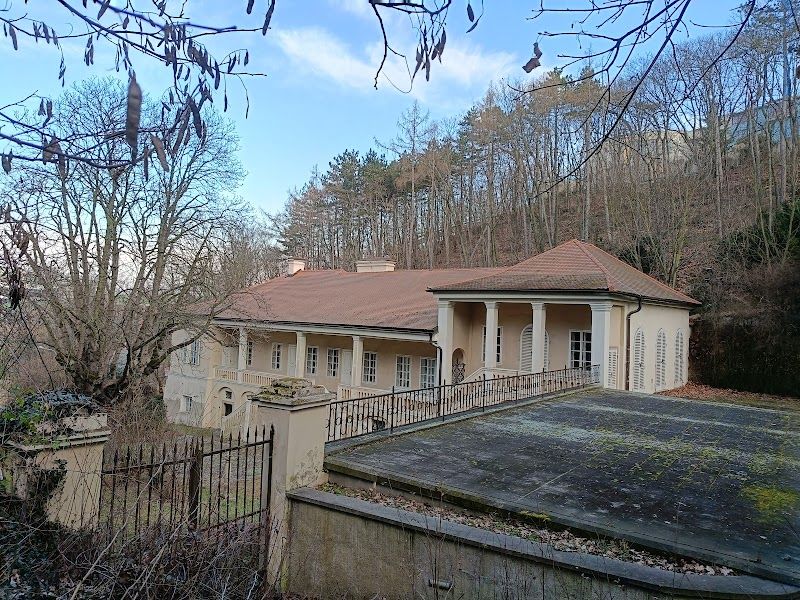
Bertramka
Bertramka is the villa where Mozart stayed during his Prague visits in 1787 and 1791, and where he put the finishing touches on Don Giovanni just hours before its premiere. You'll walk through the actual rooms where he lived and worked, seeing original period furniture, his fortepiano, handwritten sheet music, and personal letters. The villa houses one of Prague's most extensive Mozart collections, displaying everything from his coffee cups to the score of La Clemenza di Tito in beautifully preserved 18th-century interiors. The experience feels personal rather than museum-like. You move through small, connected rooms where Mozart actually slept, composed, and entertained friends. The acoustics in the music room are exceptional, and you can almost hear the echo of his performances. The surrounding English garden provides a peaceful escape from Prague's crowds, with original pathways Mozart himself would have strolled. Staff often play period recordings that fill the villa with classical atmosphere. Most visitors rush through in 30 minutes, but you should spend the full hour to appreciate the details. Entry costs 110 CZK for adults, which feels reasonable for such an authentic experience. The villa gets overlooked because it's in residential Smichov rather than the tourist center, meaning you'll often have rooms to yourself. Skip the gift shop, it's overpriced, but don't miss the letters display upstairs where Mozart's personality really comes through his correspondence.
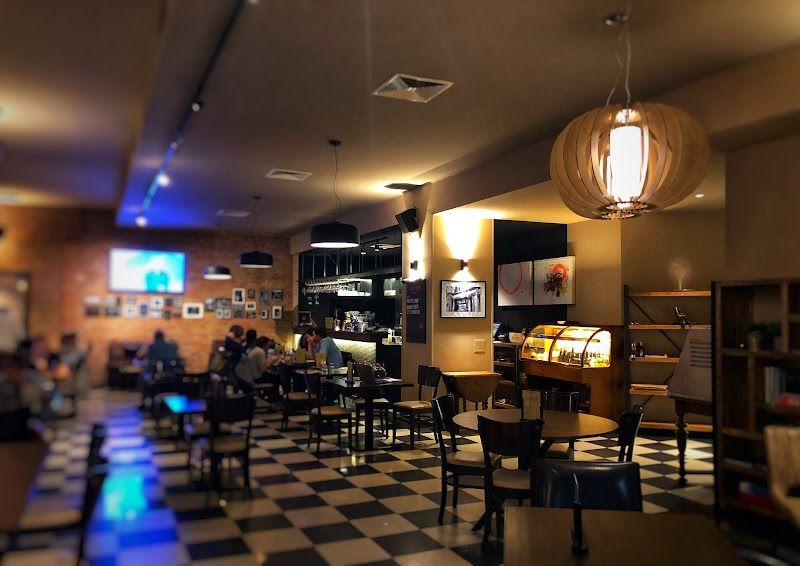
Bianko Coffee
Cozy neighborhood café specializing in specialty coffee and homemade cakes. Known for their expertly crafted flat whites, latte art, and rotating selection of single-origin beans. The warm, minimalist interior makes it a favorite spot for locals to work or chat over quality coffee.
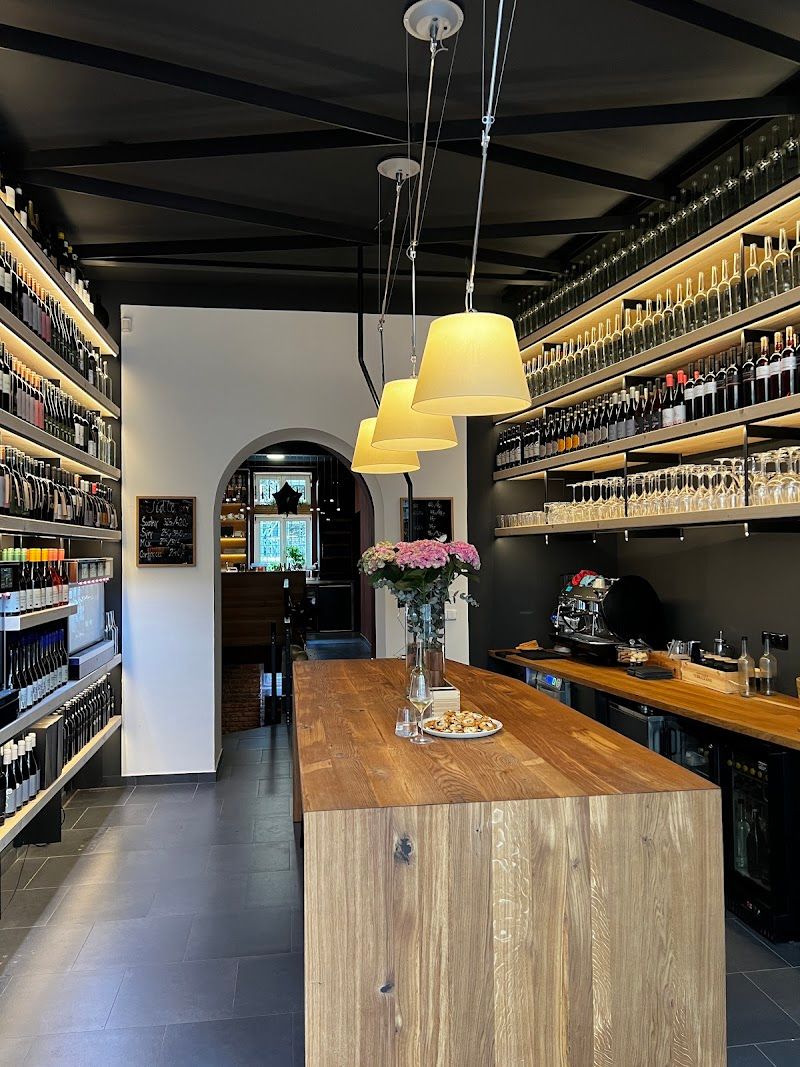
Vinohrady Wine Tasting Experience
This intimate wine bar in residential Vinohrady offers proper Czech wine education through six carefully selected Moravian wines paired with local cheese and charcuterie. Your certified sommelier walks you through indigenous varieties like Pálava and Frankovka from renowned regions including Mikulov and Znojmo, explaining terroir differences that most tourists never learn about. The experience costs around 1,200 CZK and runs for 90 minutes in a cozy setting that feels more like a friend's living room than a tourist attraction. The tasting unfolds at a relaxed pace with wines served in proper Burgundy glasses while your sommelier explains each producer's story and winemaking philosophy. You'll sample alongside small plates of aged Czech cheeses and locally sourced charcuterie that complement rather than overpower the wines. The atmosphere stays conversational and educational rather than pretentious, with plenty of time to ask questions about Czech wine history and current trends. Most wine experiences in Prague focus on Austrian or German wines, making this genuinely Czech approach refreshing and authentic. The sommelier knows their stuff and won't push sales, though you can purchase bottles at reasonable prices (300 to 800 CZK). Skip the weekend afternoon slots when it gets crowded with groups, and don't expect a formal presentation: this works best when you engage actively and ask questions about what you're tasting.
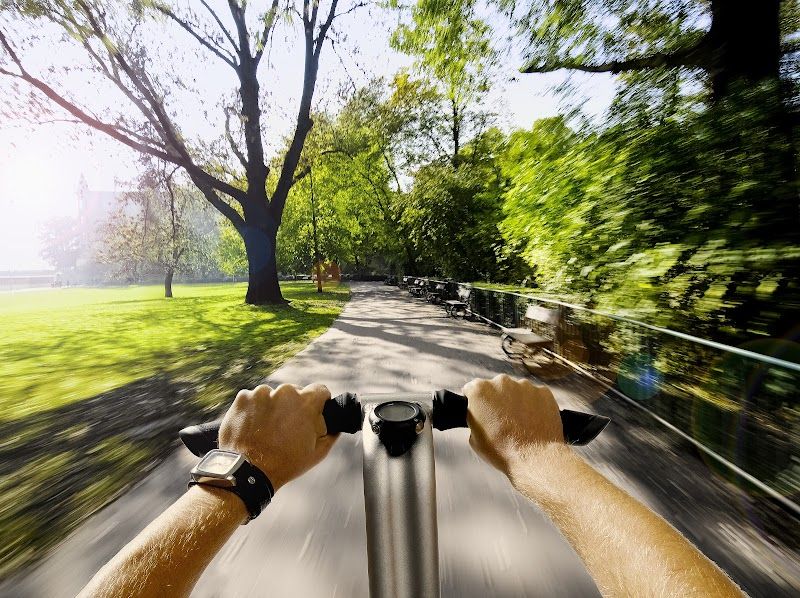
Prague Segway Tour
This three-hour Segway tour covers 15 kilometers from Malá Strana to Prague Castle, hitting Petřín Hill and Strahov Monastery along the way. You'll glide through narrow cobblestone streets that would exhaust you on foot, reaching elevated viewpoints most tourists never see. The electric scooters handle Prague's hills effortlessly while still fitting through pedestrian-only areas where buses can't go. After a 15-minute training session on Maltézské Square, you'll cruise past baroque palaces and up to Petřín's observation tower for panoramic city views. The route winds through Strahov's monastery grounds (you can peek into the famous library courtyard) before descending to Prague Castle's exterior courtyards. Your guide shares local stories while you coast downhill, the wind carrying church bells and street musicians' melodies. Most Segway tours feel gimmicky, but Prague's terrain actually makes these useful: you'll cover ground that would take five hours walking. Skip the expensive castle interior tickets they'll try to sell you, the exterior views are the real prize. Expect to pay around 1,800 CZK per person. Book morning slots to avoid afternoon crowds at Petřín Tower.
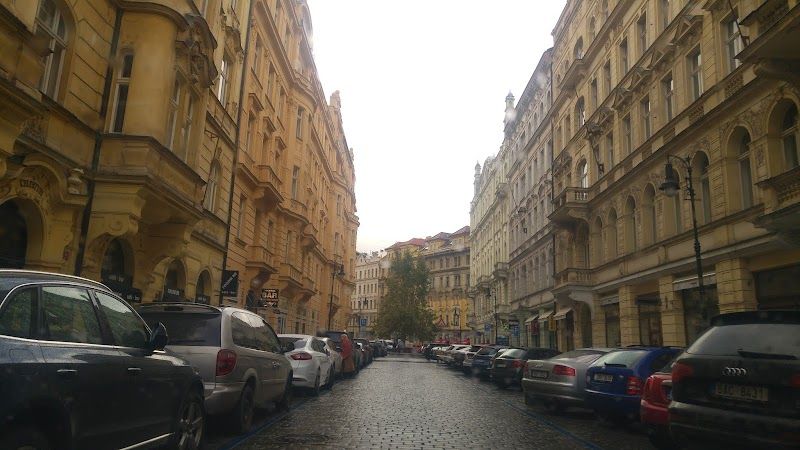
Dlouhá Street
Dlouhá Street stretches six blocks from Old Town Square to Republic Square, packing Prague's most interesting shopping into a narrow medieval corridor. You'll find Czech fashion designers like Tatiana Kovarikova and Jakub Polanka selling pieces you won't see anywhere else, plus vintage stores with genuine 1980s Communist-era finds and streetwear shops stocking local brands. The street works as both a shopping destination and a glimpse into how young Czechs actually dress, not what tourists think they should buy. The experience unfolds as a slow wander between ground-floor boutiques and climbing narrow staircases to second-floor showrooms. Shopkeepers speak excellent English and genuinely want to explain their products rather than just make sales. The medieval buildings create an intimate atmosphere where you're browsing in spaces that feel more like apartments than stores. By late afternoon, the upper floors transform as cocktail bars and small clubs start opening. Most guides oversell this as a major shopping street when it's really about discovering 8-10 genuinely interesting shops among twice as many forgettable ones. Focus on the stretch between Kozí and Rybná streets where the best independent stores cluster. Expect to spend 800-2000 CZK for locally designed pieces, which is reasonable for the quality. Skip the tourist-oriented crystal shops near Old Town Square and head straight to the middle section where locals actually shop.
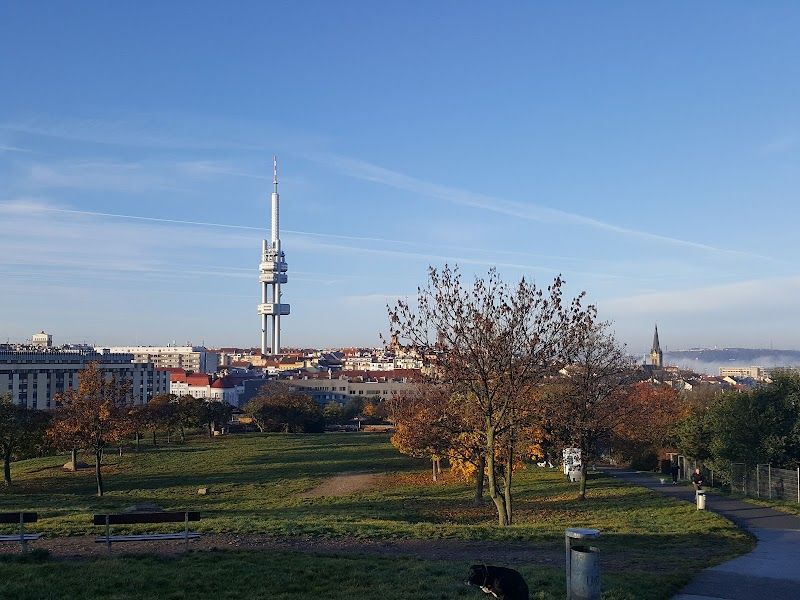
Parukářka Park
Parukářka Park sits on a hilltop in Žižkov, giving you some of the best panoramic views in Prague without the tourist crowds. You'll see the entire city spread out below, from Prague Castle to the TV Tower, while locals play football, walk their dogs, and kids run wild on the large playground. The beer garden serves cold Pilsner Urquell for around 45 CZK, and the open meadows are perfect for picnics or just lying in the grass. The park feels authentically Prague in a way that Petřín Hill doesn't. Families gather for weekend barbecues, teenagers skateboard near the pavilion, and old men play chess under the trees. The western slope offers the money shot views, especially as the light changes throughout the day. You'll hear Czech conversations, smell grilled klobása, and watch the city's rhythm from above without fighting through selfie sticks. Most guides barely mention this place, which keeps it relatively quiet even on sunny weekends. The playground gets packed with local families after 4pm, so come earlier if you want peaceful photo ops. Skip the eastern section entirely, it's just residential buildings and construction. The beer garden closes at sunset, so grab drinks before heading to the viewpoint for golden hour.
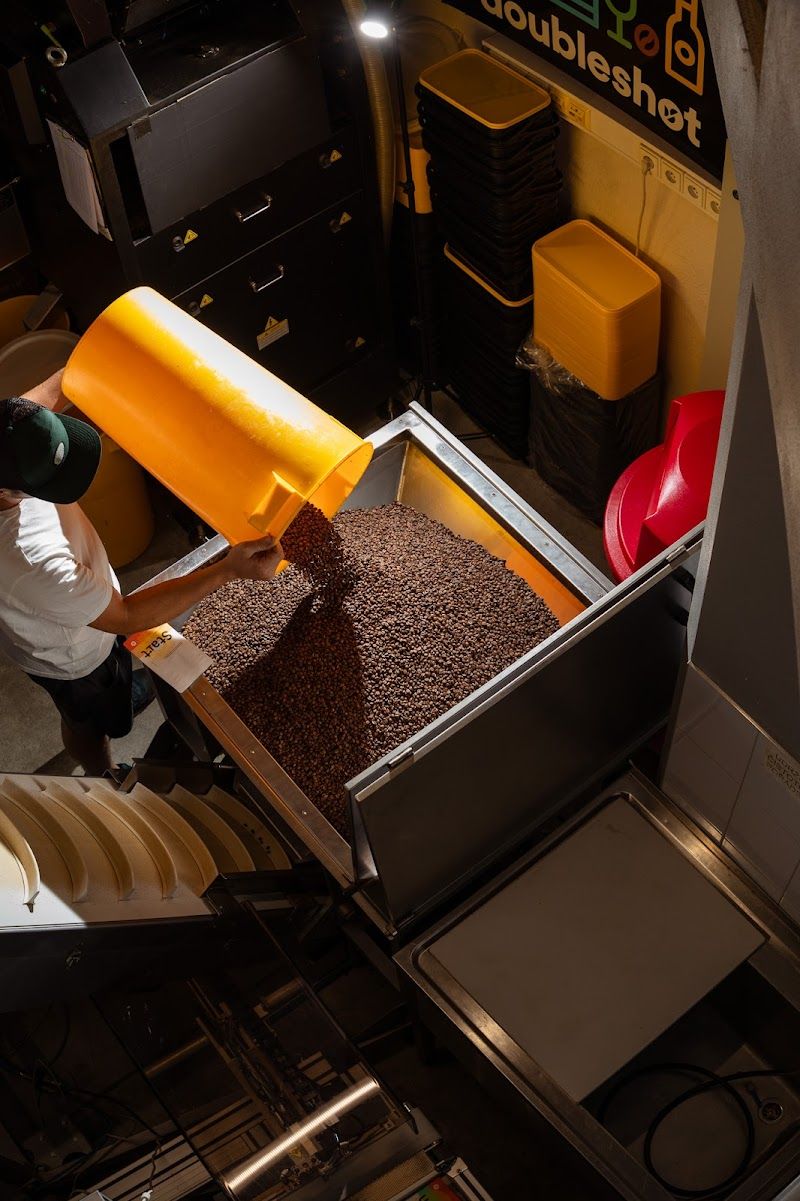
Doubleshot
Sophisticated Žižkov roastery and cafe with exposed brick walls and a serious approach to coffee science. Offers cupping sessions on weekends and brews using V60, Aeropress, and Chemex methods. The attached roastery supplies beans to cafes across Prague and you can buy bags to take home.