The San Gimignano vs Volterra debate comes down to what kind of history you want to touch. San Gimignano kept its towers when every other medieval city tore theirs down, creating a skyline that looks like stone Manhattan rising from the Tuscan countryside. Volterra buried 2,500 years of Etruscan civilization under its Roman and medieval layers, then dug it up to fill one of Italy's best archaeological museums.
Both sit on hilltops an hour from Florence, both draw day-trippers by the busload, and both sell the same Tuscan specialties at inflated prices. But they offer fundamentally different experiences. San Gimignano is a perfectly preserved medieval stage set with crowds to match. Volterra feels like a living town that happens to have extraordinary ancient artifacts.
The choice depends on whether you want Instagram shots of 14th-century towers or whether you prefer wandering through Roman theaters while locals buy groceries at the market.
Why San Gimignano Wins the Visual Impact Contest
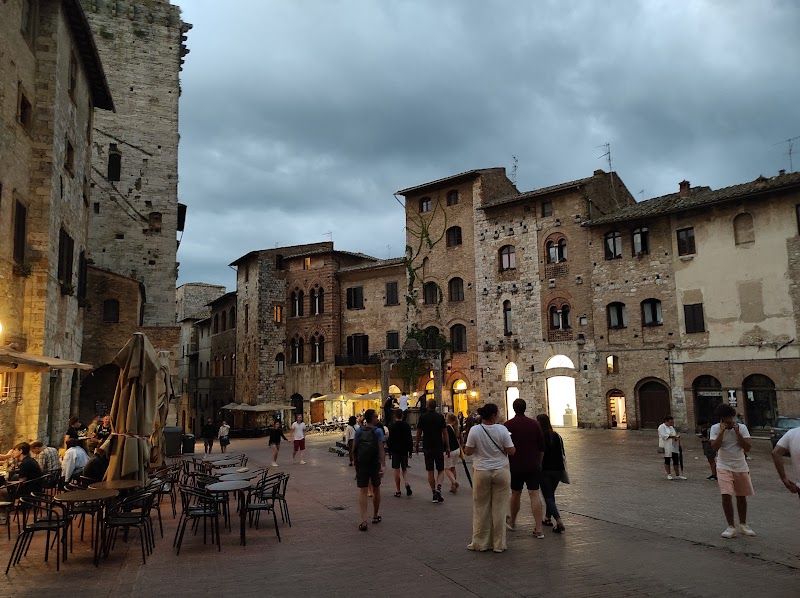
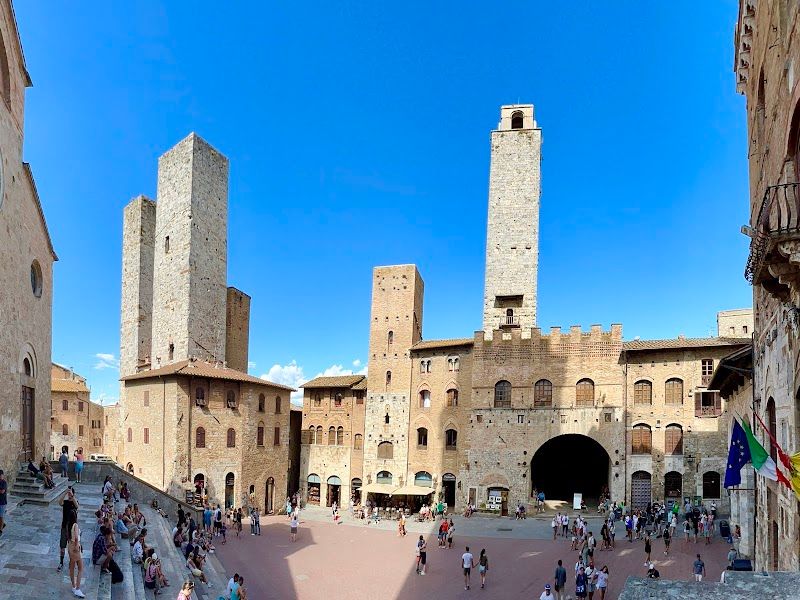
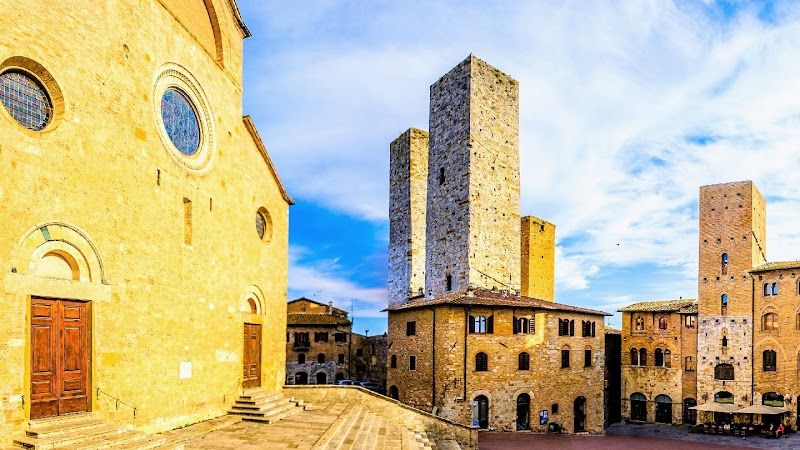
San Gimignano's first impression is unbeatable. Fourteen medieval towers rise from Piazza della Cisterna, the triangular main square that forms the heart of this UNESCO World Heritage site. These aren't reconstructed tourist attractions, they're the real thing: 13th and 14th-century power symbols that rival families built to show off their wealth.
The Torre Grossa, at 54 meters, is the only tower open for climbing. EUR 9-10 gets you to the top via 218 stone steps, but the real value is the San Gimignano Pass at EUR 15 for two days. This covers the tower plus eight other sites including the Duomo and the Civic Museum, making it essential for anyone staying more than two hours.
What San Gimignano does better than any Tuscan competitor is deliver that perfect medieval moment. When you walk through Porta San Giovanni and see the towers ahead, framed by 13th-century stone walls, it's exactly what you imagined Tuscany would look like.
The town is compact enough to see in half a day. You can walk from the south gate to the north gate in 15 minutes, hitting every major sight along the way. This isn't necessarily good news, because it means the crowds are concentrated. Between 10 AM and 2 PM in summer, Piazza della Cisterna becomes a tourist bottleneck where taking photos requires patience.
Volterra's Deeper Historical Layers
Volterra takes a different approach to history. Instead of one perfectly preserved medieval moment, it layers 2,500 years of continuous occupation into a town that feels lived-in rather than museumified. The Etruscan walls still encircle the historic center, Roman ruins sit casually in residents' backyards, and medieval palaces house working businesses.
The Guarnacci Etruscan Museum holds over 600 ancient urns and the famous bronze Shade of the Evening sculpture, making it one of Italy's most important Etruscan collections. The Roman theater, carved directly into the hillside, seats 3,500 and still hosts summer performances. These aren't carefully curated tourist attractions, they're archaeological sites that happen to be accessible.
Volterra's medieval center revolves around Piazza dei Priori, dominated by the 13th-century Palazzo dei Priori (Italy's oldest town hall). But unlike San Gimignano's tourist-focused businesses, Volterra's piazza serves locals first. The weekly market sells produce to residents, not souvenirs to visitors.
The town's alabaster workshops continue a tradition that dates to Etruscan times. You can watch artisans carve everything from chess sets to architectural elements, and the quality is significantly higher than the mass-produced crafts sold in more tourist-focused destinations.
Transportation: Getting to Each Hill Town
San Gimignano by Public Transport: SITA bus 131 from Florence costs EUR 7.50 advance or EUR 11.10 on-board. The journey takes 1.5-2 hours including a transfer at Poggibonsi. From Siena, direct buses run EUR 6-7.50 and take 75 minutes.
San Gimignano's bus stop sits outside Porta San Giovanni, a two-minute walk to the historic center. The last bus back to Florence leaves around 6 PM in summer, 5 PM in winter, limiting your visiting time if you're day-tripping.
Volterra by Public Transport: CPT buses from Pisa take 2 hours and cost around EUR 8-10. From Florence, you need two transfers (Florence-Pontedera-Saline di Volterra-Volterra) taking 3+ hours. From Siena, it's 90 minutes via one change at Colle di Val d'Elsa.
Volterra's bus connections are objectively worse than San Gimignano's, making it less practical for public transport day trips. If you're relying on buses, San Gimignano wins by default.
Driving to Both Towns: San Gimignano bans cars from the historic center. P2 Montemaggio parking costs EUR 3 for the first hour, then EUR 2.50 for hour two, then EUR 2 for each additional hour. The lot fills by mid-morning in summer. All-day parking is EUR 15.
Volterra allows limited car access to the center and has more parking options. The main lot outside Porta Fiorentina costs around EUR 1-2 per hour. Volterra's parking situation is significantly less stressful.
Crowds and Timing: When Each Town Works Best
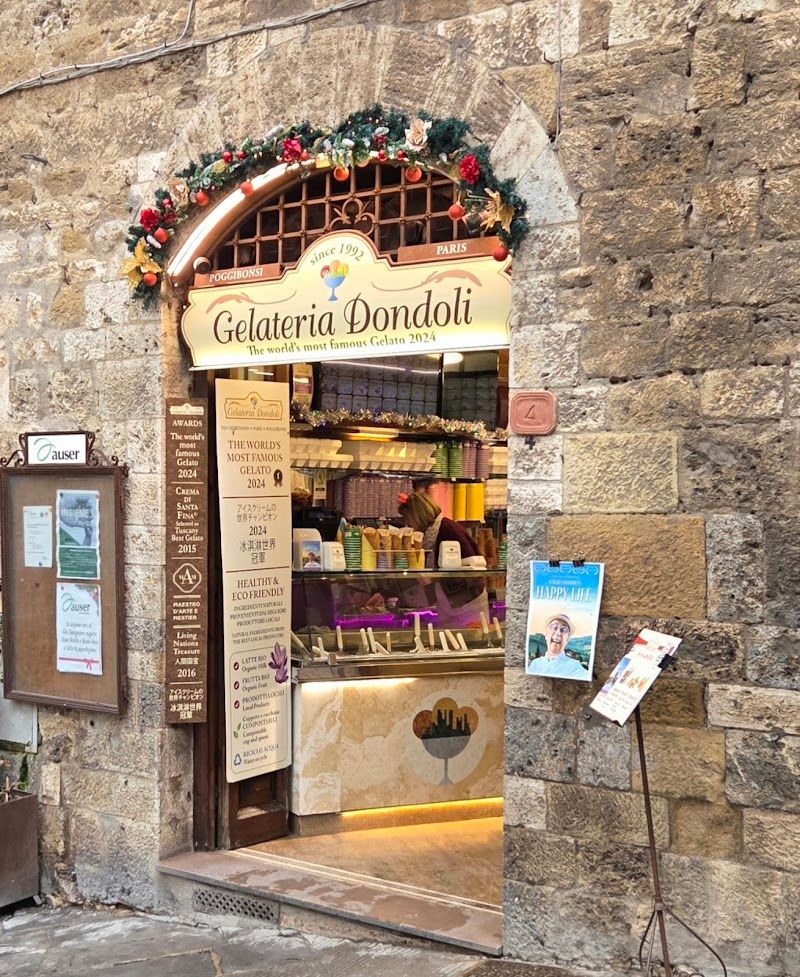
San Gimignano's crowd pattern is predictable and brutal. Day-trippers arrive by 10 AM, photograph Piazza della Cisterna, buy gelato at Gelateria Dondoli (EUR 3-4.50 for award-winning flavors), and leave by noon. Between those hours, the narrow streets become pedestrian traffic jams.
To experience San Gimignano properly, you need to stay overnight or arrive very early. The town transforms at 7 AM when only a few cafes are open and the morning light hits the towers. After 7 PM, when the day-trippers have departed, it becomes peaceful again.
Volterra spreads its visitors across a larger area and attracts fewer Instagram-focused tourists. The crowds exist but feel manageable even in peak season. The town's working life continues regardless of tourist numbers, creating a more authentic atmosphere.
Food and Wine: Local Specialties Done Right
San Gimignano's Culinary Scene: San Gimignano produces Vernaccia, Tuscany's only white wine DOCG. A glass costs EUR 4-7 at town enotecas, and it pairs perfectly with the local pecorino cheese. The Vernaccia Wine Experience at Rocca di Montestaffoli offers tasting cards from EUR 10-25 depending on quality level.
For gelato, Gelateria Dondoli earned world championship titles in 2006-2009. Their Crema di Santa Fina incorporates local DOP saffron, making it genuinely unique rather than just touristy.
Most restaurants inside the walls serve decent but unremarkable Tuscan standards. Pappardelle al cinghiale costs EUR 13-18, and bistecca alla Fiorentina runs EUR 55-80 per kg. The quality rarely justifies the premium prices, but you're paying for the setting.
Volterra's Food Culture: Volterra's restaurants serve the same Tuscan dishes but at lower prices and higher quality. The town's less tourist-dependent economy means restaurants compete on food rather than location.
Volterra produces excellent olive oil and has several artisanal producers within walking distance of the center. The weekly market offers genuine local products rather than tourist-focused crafts.
The town's signature product is alabaster rather than food, but the craft workshops provide cultural experiences that feel authentic rather than commercialized.
San Gimignano vs Montepulciano: A Different Comparison
While we're comparing San Gimignano with Volterra, travelers often ask about San Gimignano vs Montepulciano. Montepulciano offers wine (Vino Nobile DOCG) and Renaissance architecture without San Gimignano's crushing crowds. However, it lacks the immediate visual impact of the towers.
Montepulciano works better for wine enthusiasts and those seeking a more relaxed pace. San Gimignano delivers that perfect Tuscan postcard moment but at the cost of authenticity and crowd management.
Costs Comparison: What You'll Actually Spend
San Gimignano Daily Budget:
- Parking: EUR 15 (all day at Montemaggio)
- San Gimignano Pass: EUR 15
- Lunch: EUR 18-28 (trattoria meal)
- Gelato: EUR 3-4.50
- Wine tasting: EUR 10-25
- Dinner: EUR 35-55
- Total: EUR 96-142.50 per person
Volterra Estimated Daily Budget:
- Parking: EUR 5-8 (all day)
- Museum entries: EUR 15-20 (multiple sites)
- Lunch: EUR 15-22 (local trattoria)
- Afternoon coffee: EUR 2-3
- Alabaster workshop visit: EUR 10-15
- Dinner: EUR 25-40
- Total: EUR 72-108 per person
Volterra consistently costs 20-30% less than San Gimignano while offering comparable cultural experiences.
Where to Stay: Inside the Walls vs Outside
San Gimignano Accommodation: Hotels inside the walls cost EUR 110-180 per night for mid-range properties like Hotel L'Antico Pozzo. Premium B&Bs in restored medieval buildings run EUR 120-220. Parking isn't included and costs an additional EUR 13-15 per night.
Agriturismos outside town offer better value at EUR 90-170 per night with breakfast, parking, and often wine tasting included. The 10-15 minute drive to the walls is worth the savings and tranquility.
Volterra Accommodation: Volterra's hotels generally cost 15-25% less than equivalent San Gimignano properties. The town has more varied accommodation options, from converted convents to boutique hotels in historic palaces.
Unlike San Gimignano, many Volterra hotels include parking or offer it at minimal cost.
The Verdict: Choose Based on Your Travel Style
Choose San Gimignano if:
- You want that perfect medieval tower photo for Instagram
- You're making a day trip from Florence or Siena
- You prefer concentrated sightseeing in a compact area
- You don't mind crowds for experiences
- Wine tasting (Vernaccia) is a priority
- You're following a half-day itinerary and want maximum impact per hour
Choose Volterra if:
- You prefer authentic town life over perfect preservation
- Etruscan and Roman history interests you more than medieval towers
- You want better value for money
- You're staying multiple days in the region
- You enjoy artisan workshops and local crafts
- You're traveling by car (easier parking and access)
Best Tuscany Towns: The Broader Context
In the broader discussion of best Tuscany towns, both San Gimignano and Volterra serve specific purposes. San Gimignano delivers immediate visual gratification and works perfectly for first-time Tuscany visitors who want to check the medieval hill town box. It's touristy because it's genuinely spectacular.
Volterra rewards deeper exploration and appeals to travelers who prefer substance over style. Its Etruscan museum ranks among Italy's finest, its alabaster workshops continue centuries-old traditions, and its restaurants serve locals first, tourists second.
For most travelers doing their first Tuscany trip, San Gimignano vs Volterra comes down to logistics. If you're based in Florence or Siena and relying on public transport, San Gimignano's better connections make the choice for you. If you have a car and want to explore multiple hill towns, Volterra offers better value and fewer crowds while still delivering significant historical and cultural experiences.
The honest answer is that both towns justify their reputations, but they appeal to different travel styles. San Gimignano gives you the perfect Tuscan postcard moment. Volterra gives you a more complete understanding of central Italian history from Etruscan times through the present day. Choose based on what kind of traveler you are, not what other people say you should see.