Mallorca
Things to Do
95 attractions, museums, and experiences
Serra de Tramuntana (Ma-10 Drive)
The Ma-10 is a mountain road running 90 km along the northwest coast of Mallorca from Andratx to Pollenca, through the UNESCO-listed Serra de Tramuntana. It is one of the best drives in Europe: hairpin bends, tunnel sections, viewpoints overlooking 300-metre drops to the sea, and stone villages that appear around corners. Drive south to north for the best views (the coast opens up on your right). Allow a full day with stops in Valldemossa, Deia, and Soller. The road is narrow in sections, so rent a small car: anything bigger than a Seat Ibiza might cause stress through the tightest bends. In summer, tour buses use the road between 10 AM and 4 PM, so start early or you'll be stuck behind a German coach doing 20 km/h. Budget €15-20 for parking in the main villages. Valldemossa gets packed by noon, but the Real Cartuja monastery (€9.50) is worth seeing as this is where Chopin spent his winter. In Deia, skip the overpriced Hotel La Residencia lunch and grab a bocadillo at Ca'n Costa for €6. The Sa Foradada viewpoint, 15 minutes past Deia, offers a good photo opportunity without the crowds. Soller is your logical lunch stop. Park at the train station (€3 for 4 hours) and walk five minutes to Cafe Scholl for excellent German-run coffee and cake. The orange groves have a lovely scent in spring, but by August the heat will make the car journey uncomfortable without air conditioning. Fill up your tank in Soller as petrol stations are scarce on the mountain sections.
Fornalutx
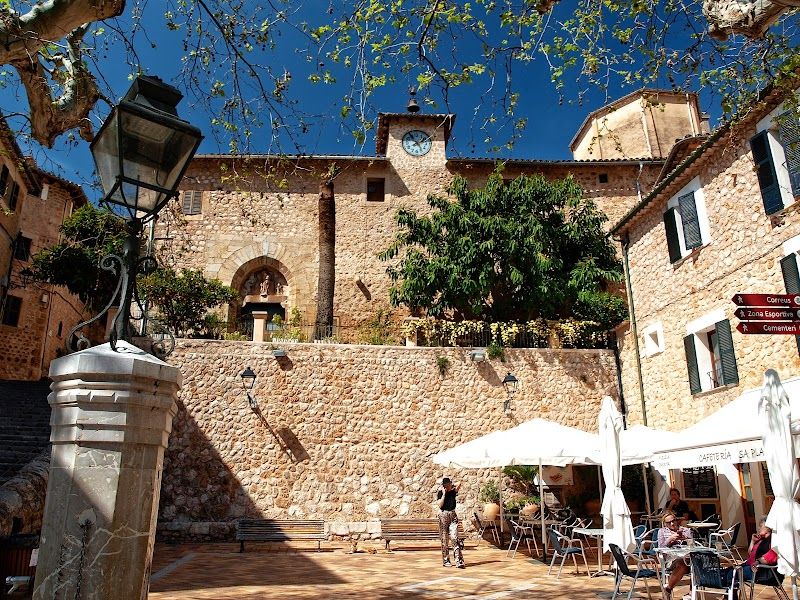
Fornalutx deserves its reputation as Spain's prettiest village, a perfectly preserved medieval settlement where honey-colored stone houses cascade down the mountainside beneath Puig Major. You'll walk narrow cobbled streets barely wide enough for two people, past houses with traditional green shutters and flower boxes spilling with geraniums and jasmine. The surrounding terraced groves of oranges, lemons, and olives create a patchwork landscape that's remained unchanged for centuries, and the mountain air carries that distinctive citrus fragrance year-round. The village feels like stepping onto a film set where modern life has been carefully edited out. You'll hear your footsteps echo off the stone walls as you climb the steep alleyways, discovering tiny squares with ancient wells and perfectly framed mountain views around every corner. The church of Nativitat de Maria sits at the village's heart, its simple bell tower visible from every angle, while locals tend their gardens and hang laundry from wrought-iron balconies above your head. Most visitors rush through in 30 minutes for photos, but that's a mistake. The real magic happens when you slow down and notice details: the carved stone lintels, the traditional roof tiles called tejas árabes, the way morning light hits the ochre walls. Skip the overpriced café in the main square (coffee costs 4 EUR) and instead bring water since there's nowhere decent to eat. Early morning visits before 9am offer the best light and fewer tour groups from the cruise ships.
GR 221 Ruta de Pedra en Sec
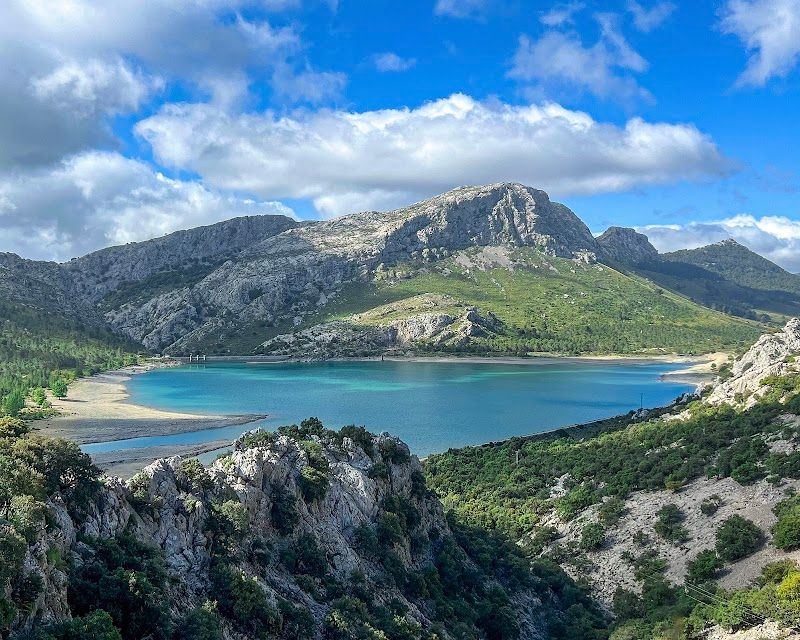
The GR 221 follows ancient mule paths and charcoal routes through Mallorca's UNESCO-listed Tramuntana mountains, connecting eight stone refuges across 140 kilometers of varied terrain. You'll walk on dry-stone paths that haven't changed in centuries, past abandoned snow houses where workers once collected ice for Palma's markets, through oak forests and olive terraces that cascade down to distant sea views. The trail passes through genuine mountain villages like Deià and Valldemossa, where you can resupply or bail out if needed. Each day feels like stepping back into pre-industrial Mallorca. The refuges are basic but atmospheric: shared dorms, simple meals, and evening conversations with fellow hikers from across Europe. Morning starts often reveal cloud inversions filling valleys below while you walk in brilliant sunshine above. The stone work is exceptional, with perfectly fitted walls that have survived centuries without mortar. You'll hear nothing but wind, bells from roaming sheep, and your own footsteps on ancient flagstones. Most guides won't mention that spring can be muddy and cold, while summer is extremely hot with limited water sources. The refuges cost around 15 EUR per night but book up months ahead for peak season. Skip the final section into Pollença, it's mostly road walking. The Sa Calobra detour adds coastal views but requires an extra day most people don't plan for.
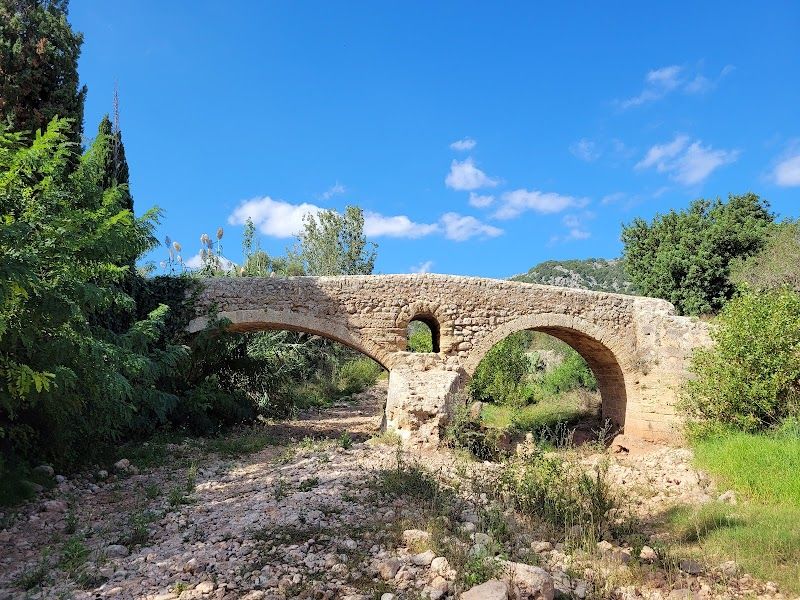
Mercat de Pollença
Pollença's Sunday market sprawls across the town's stone squares and medieval streets, bringing together over 300 vendors selling everything from hand-carved olive wood bowls to traditional Mallorcan textiles. You'll find genuine local produce here: sobrassada sausages hanging in thick red coils, wheels of Mahón cheese, jars of mountain honey, and olives cured in family recipes. The leather goods are particularly good, especially bags and belts made in nearby workshops, though you'll pay tourist prices for anything near the main square. The market flows from Plaça Major through narrow side streets, creating a maze of stalls that locals navigate with practiced ease while tourists get pleasantly lost. Food vendors cluster near the church, filling the air with the scent of grilled sobrassada and fresh bread, while textile sellers spread embroidered linens across tables in the shadier alleys. By 11am, tour groups arrive and the relaxed morning atmosphere shifts into something more chaotic, though still manageable. Most guides won't mention that the real bargains hide in the residential streets beyond the main tourist circuit, where farmers sell olive oil for 8-12 EUR per bottle versus 18-25 EUR in the center. Skip the overpriced pottery near the church entrance, it's mass-produced stuff from mainland Spain. The market's been running since medieval times, but honestly, that history matters less than knowing where to find the good cheese samples.
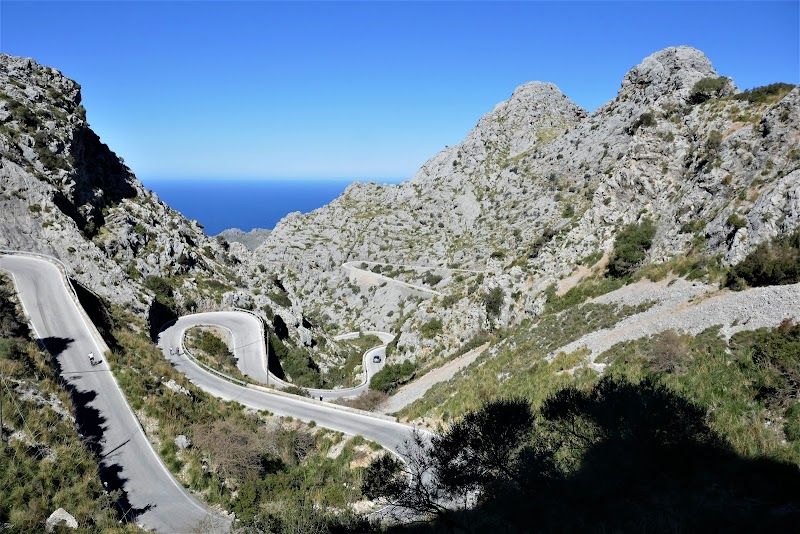
Sa Calobra
Sa Calobra delivers one of Mallorca's most dramatic encounters: a tiny pebble beach wedged between towering limestone cliffs where the Torrent de Pareis gorge meets the sea. The real attraction isn't just the beach itself, but the complete experience of navigating the serpentine MA-2141 road that drops 800 meters through 14 hairpin bends, including the famous Nus de la Corbata where the road loops completely under itself. You'll park in a basic lot and walk through a short tunnel to reach the beach, surrounded by walls of rock that rise hundreds of meters on three sides. The moment you emerge from the tunnel, you're hit by the scale of the place. The beach feels like nature's amphitheater, with smooth pebbles underfoot and impossibly blue water lapping against cliffs that seem to lean inward. Tour groups cluster near the tunnel entrance, but the beach spreads wide enough to find space. The water stays refreshingly cold even in summer, and there's something almost ceremonial about the way sound echoes off the rock walls when waves crash during rough weather. Here's what most guides won't admit: Sa Calobra is more about the journey and the wow factor than actual beach time. The pebbles are uncomfortable for lounging, there's minimal shade, and the single beach bar charges tourist prices for basic drinks. If you're driving, fuel up beforehand because that winding descent will test your brakes, and the climb back up is even more demanding on your engine. The boat from Port de Soller costs around 25 EUR return and saves you the stress, plus you get coastal views that drivers miss entirely.
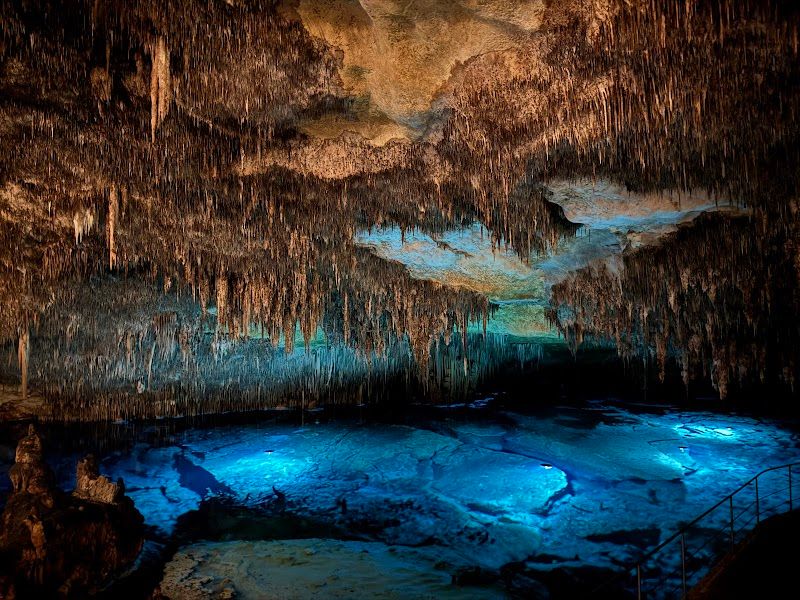
Coves del Drach (Drach Caves)
The Drach Caves in Porto Cristo are the most visited attraction on the east coast: a 1.2 km underground cave system with stalactites, stalagmites, and Lake Martel, one of the largest underground lakes in Europe. The visit culminates in a classical music concert played from boats on the lake in complete darkness, which sounds gimmicky but is genuinely atmospheric. Here's the reality: you'll descend stone steps into cool air that hits you immediately, a relief on hot summer days when it's 35°C outside but stays 21°C year-round down there. The humidity is noticeable but not oppressive. Your guide will point out formations with names like "Buddha" and "Flag of Mallorca" that require serious imagination to see. The acoustics are impressive though, your footsteps and whispers echo in ways that make kids go silent with wonder. Lake Martel is the real payoff. You'll sit on stone benches in total darkness while a small boat glides across the perfectly still water with musicians playing Chopin or Albinoni. It lasts about 10 minutes and yes, it's touristy, but the combination of music, darkness, and that mirror-like lake surface creates something genuinely moving. Some people tear up. After the concert, you can take a short boat ride across the lake for no extra charge, or walk around it if you prefer. The whole experience takes exactly 1 hour, no rushing, no lingering. EUR 16 entry, tours run every 30 minutes from 10 AM. Book online to skip the ticket queue. Go at opening or after 4 PM to avoid the tour bus crowds, otherwise you'll be crammed shoulder-to-shoulder with 400 other people. The caves were known since the Middle Ages and fully explored by Edouard-Alfred Martel in 1896. Wear comfortable shoes with grip, the paths can be slippery.
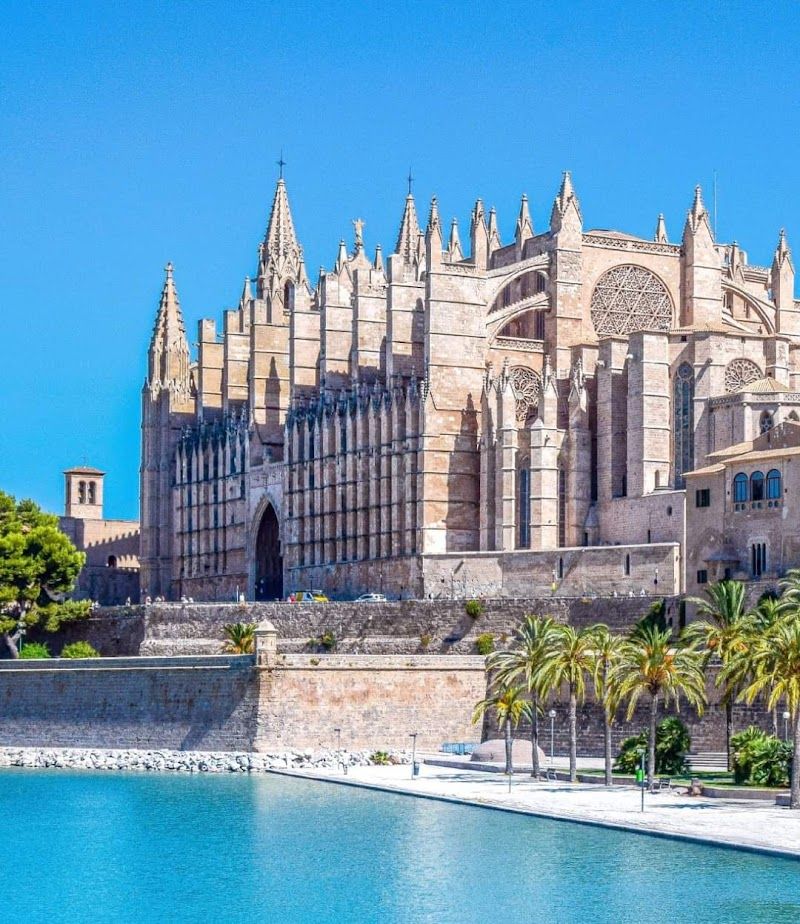
Palma Cathedral (La Seu)
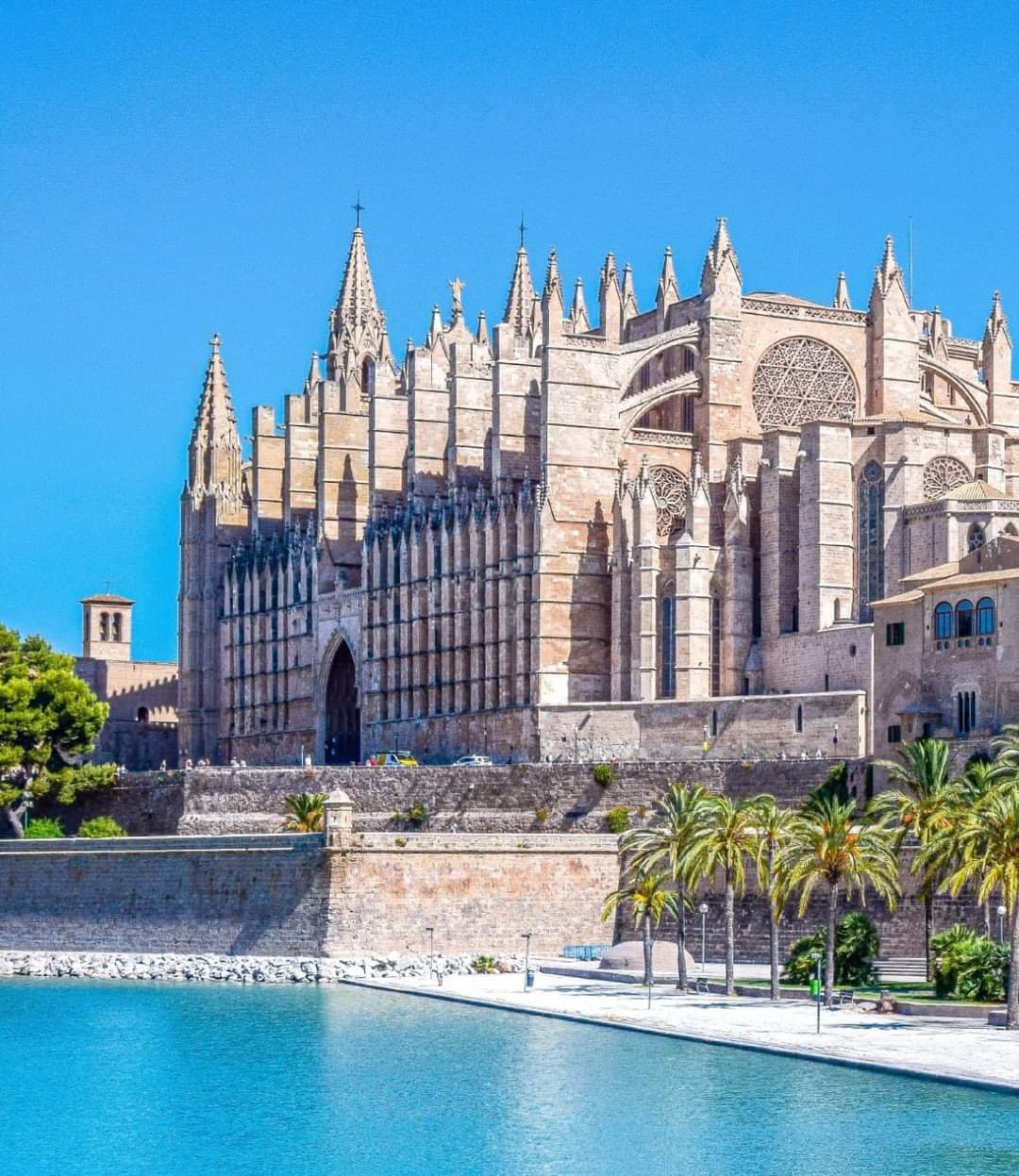
La Seu sits on the Palma waterfront and looks exactly like a cathedral should: massive, Gothic, and catching the light off the harbour. The interior is where it gets interesting. Gaudi redesigned the altar area in the early 1900s (the wrought-iron baldachin is unmistakably his), and Miquel Barcelo created a ceramic chapel wall in 2007 that divides opinion sharply (some think it is a masterpiece, others think it clashes with the medieval setting). Here's what you need to know: go at 8 AM on a weekday when the eastern light hits the rose window, one of the largest in Europe at 12.5 metres across, and projects blues, reds, and purples across the nave. The effect lasts about 30 minutes and transforms the stone floor into a kaleidoscope. Weekend mornings work too but expect more people with phones out. The audio guide costs EUR 3 extra and is actually worth it for the Barcelo chapel backstory and architectural details you'll miss otherwise. Skip the gift shop entirely unless you need postcards. The cathedral gets uncomfortably crowded after 10 AM, especially when cruise ships dock, so early arrival pays off. Walk around the exterior before entering. The flying buttresses and gargoyles are more impressive from the south side facing the sea. Inside, the Barcelo wall feels like underwater coral frozen in clay and covers an entire chapel wall. You'll either love its organic chaos or hate how it disrupts the Gothic lines. EUR 9 entry, free for residents. Allow 45 minutes to an hour including the terrace walk. The terrace outside has the best harbour view in the city and is included in your ticket.
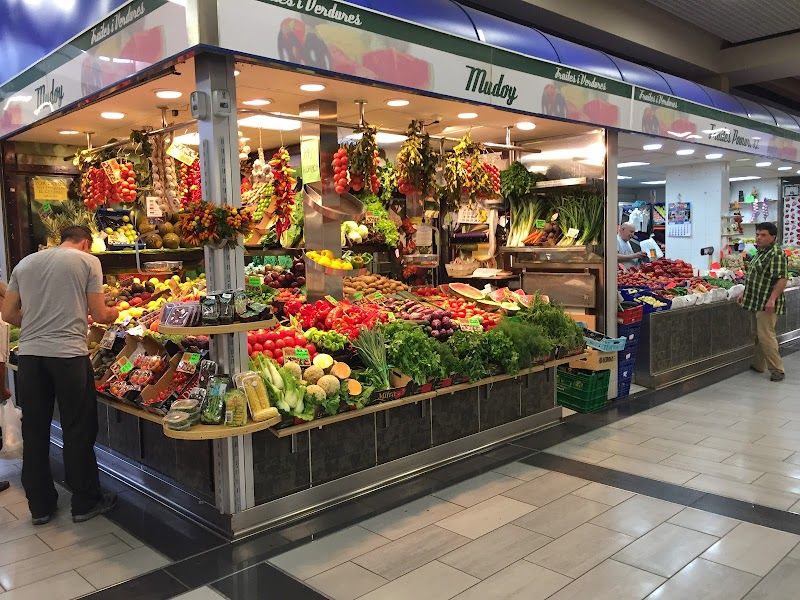
Mercat de l'Olivar
Palma's main food market since 1951, with over 80 stalls selling fresh fish, local produce, and Mallorcan specialties. The upstairs bar Ca'n Joan de s'Aigo serves excellent pa amb oli and the fish stalls display the morning's catch from Palma Bay. A working market where locals shop daily, not a tourist attraction. Get there by 9am when the fish is still glistening on ice and vendors are arranging their best tomatoes. The ground floor smells like sea salt and ripe fruit, with fishmongers calling out prices in rapid Catalan. Look for the red prawns from Sóller (around €25/kg) and ask for recommendations, even if your Spanish is limited. Most vendors speak enough English to help. The produce stalls sell proper Mallorcan tomatoes that actually taste like something, plus those wrinkled black olives you see everywhere on the island. Prices beat the tourist shops by about 30%. Skip the souvenir stalls near the entrance, they're overpriced. Head upstairs to Ca'n Joan de s'Aigo (open since 8am) for pa amb oli with tomato, olive oil, and jamón ibérico for €6. The bread is crusty, the tomatoes are from downstairs, and you'll understand why locals consider this a proper breakfast. The coffee is strong and costs €1.50. Grab a seat at the bar, not the tables, that's where the regulars sit. By noon the best stuff is gone and it gets crowded with cooking class groups. Come hungry, bring cash, and don't expect Instagram-perfect presentation. This is how Mallorcans actually shop and eat.
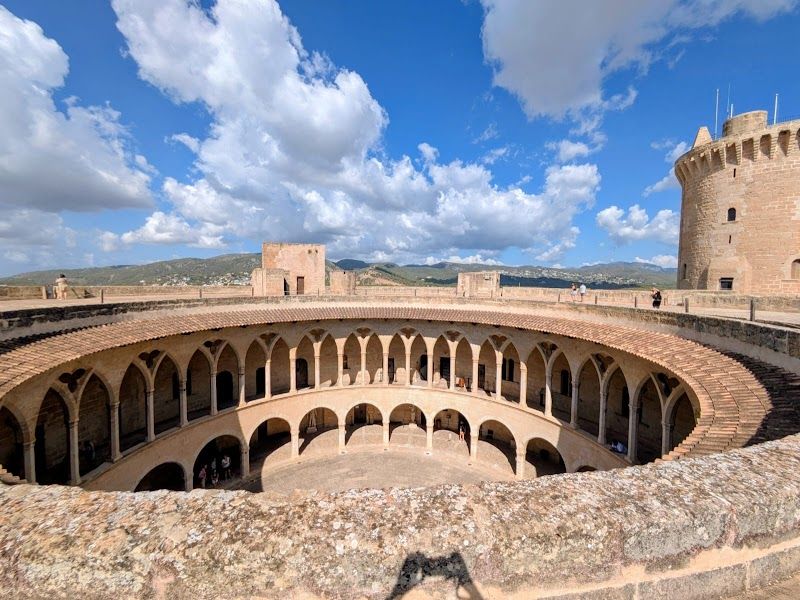
Castell de Bellver
Castell de Bellver sits alone on its pine-covered hilltop, one of only three circular Gothic castles in Europe. You'll walk through the unique round courtyard with its elegant two-story arches, climb the keep for sweeping views over Palma Bay, and explore rooms that now house Palma's city history museum. The 14th-century fortress was built as a summer palace for King James II of Mallorca, though it spent most of its life as a prison. The circular design creates an almost magical atmosphere as you move through curved corridors and chambers that feel completely different from typical angular castles. The central courtyard is surprisingly intimate, with perfect acoustics that make summer concerts here exceptional. From the rooftop battlements, you get unobstructed 360-degree views: the cathedral and old town spread below, the airport and mountains beyond, and endless Mediterranean stretching to the horizon. The pine forest surrounding the castle makes the whole experience feel removed from the city bustle. Most guides oversell the museum inside, which is fairly standard local history with limited English signage. The real draw is the architecture and views, so don't spend too much time reading displays. Entry costs €4 for adults, €2 for students and seniors. Skip the audio guide and focus on the courtyard and tower climb. The gift shop is overpriced tourist tat, but the small cafe sells decent coffee for €2 if you need a break.
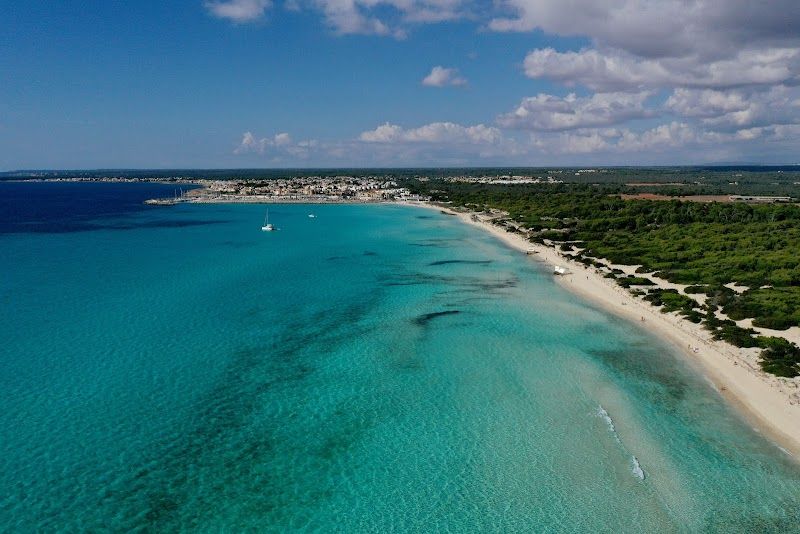
Es Trenc Beach
Es Trenc is the best natural beach on Mallorca: 3 km of white sand backed by dunes and pine trees, no hotels visible, water that shifts between turquoise and emerald depending on the light. It feels more Caribbean than Mediterranean. The beach is protected natural area, so there is no development and that is the point. The sand here squeaks under your feet, genuinely white instead of the beige you find elsewhere on the island. Pine trees provide natural shade about 20 meters back from the water, perfect for afternoon siestas when the sun gets brutal around 2 PM. The water stays shallow for ages, making it ideal if you have kids, though the wind can whip up surprisingly strong waves on some days. There are a few chiringuitos (beach bars) for drinks and basic food, but mostly you bring your own. Es Chiringuito Blue at the main access serves decent paella for EUR 18 and cold beers for EUR 4, nothing fancy but the location makes up for it. The other bars are forgettable. Pack a cooler with plenty of water because there is zero shade on the actual beach and August temperatures hit 35°C regularly. Parking is EUR 7 at Ses Covetes (closest access, fills by 10 AM in summer) or Sa Rapita (north end, less crowded). Arrive before 9 AM or after 4 PM to avoid the worst crowds and heat. Walk 10-15 minutes along the beach from any access point to find space. The south end has a naturist section if that is your thing. Bring reef-safe sunscreen, an umbrella, and realistic expectations about solitude during peak season. This is not some secret spot anymore.
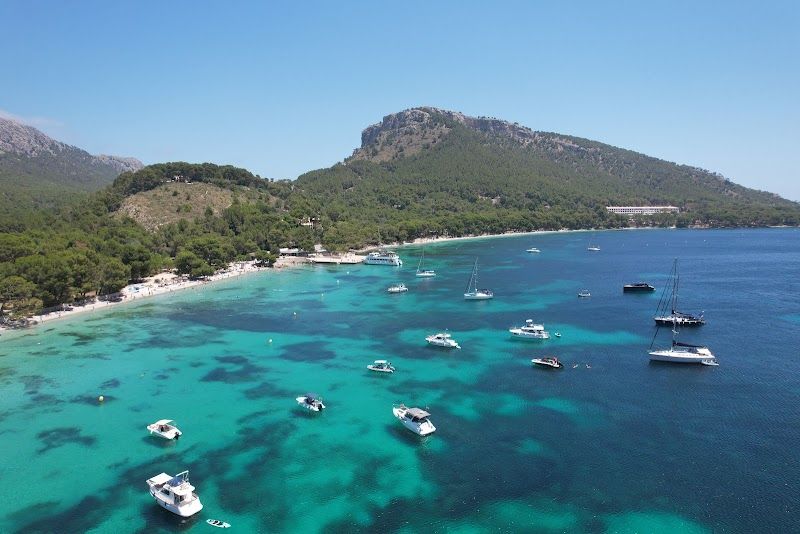
Platja de Formentor
Platja de Formentor stretches for a kilometer along Mallorca's rugged northern coast, where the Tramuntana mountains plunge directly into the Mediterranean. The beach delivers exactly what the postcards promise: powdery white sand, clear turquoise water, and pine forests climbing up dramatic limestone cliffs. You'll spend your time swimming in the shallow, protected bay (it stays chest-deep for 30 meters out), sunbathing on soft sand, or walking the shoreline with Cap de Formentor's lighthouse visible in the distance. The setting feels almost tropical, with a contrast between dark green pines and blue water creating a Caribbean vibe. By 10am in summer, the beach transforms into a packed resort scene, with families claiming spots under umbrellas and the single beach bar serving drinks. The water stays refreshingly cool even in July and August, thanks to its northern exposure, and the swimming is excellent with no rocks or strong currents to worry about. Honest talk: this beach is crowded during peak season, and the 20-minute drive down the winding peninsula road can be tedious with traffic. The beach bar charges resort prices (5 EUR for a beer, 12 EUR for a basic sandwich), so bring your own supplies. Consider skipping the crowded summer afternoons and come early morning or late afternoon when the light on those cliffs is spectacular, allowing you to enjoy the scenery without the crowds.
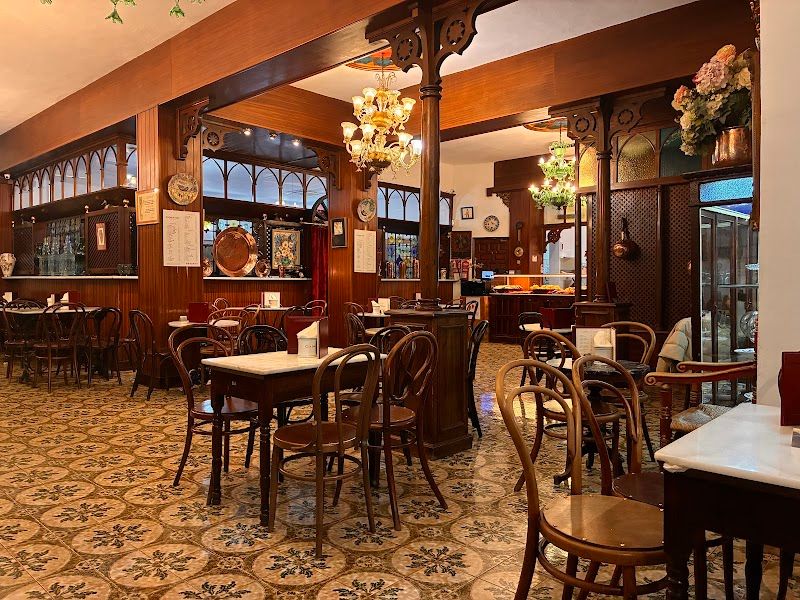
Ca'n Joan de S'aigo
Founded in 1700, this is Palma's oldest cafe, serving hot chocolate so thick you can eat it with a spoon alongside warm ensaimadas. The interior preserves its original marble tables, antique mirrors, and ornate wooden cabinets filled with historic chocolate pots. The almond ice cream (gelat d'ametlla) made in-house is another specialty. You'll smell the chocolate before you even step inside, that rich cocoa aroma mixed with sweet pastry. The hot chocolate here isn't the watery stuff you get elsewhere: it's genuinely thick enough to coat your spoon, almost like melted chocolate bar consistency. Expect to pay around 4-5 EUR for a cup with ensaimada. The pastry arrives warm and flaky, perfect for dunking. The almond ice cream is worth trying if you're here in summer, though at 3.50 EUR per scoop it's pricey. It tastes like liquid marzipan in the best way. Skip the regular coffee, it's nothing special and you're really here for the chocolate experience anyway. The marble tables are genuinely from centuries past, worn smooth by countless elbows. You'll likely wait for a table during peak hours (11am-1pm and 4-6pm), especially weekends. The service moves at traditional Spanish pace, so don't rush. The wooden display cases contain antique chocolate-making equipment that's actually interesting to examine while you wait. Go mid-morning or late afternoon to avoid crowds. The place fills with both tourists and locals, which tells you something about the quality.
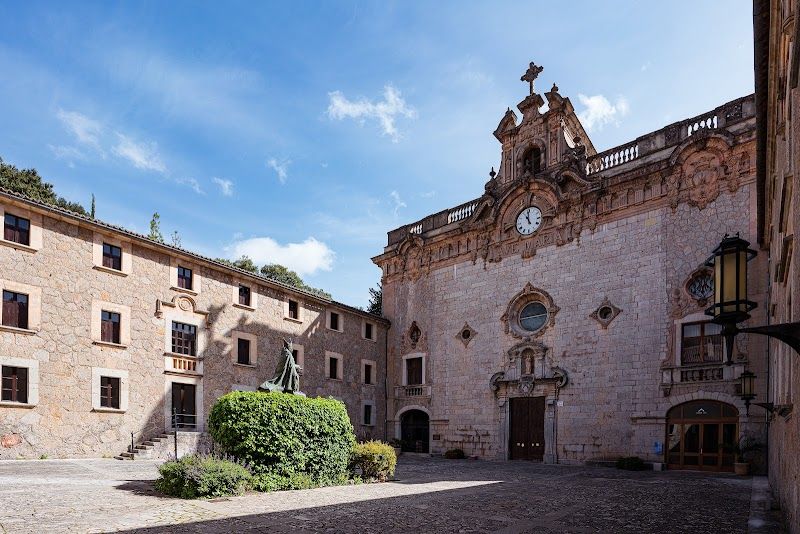
Monestir de Lluc
Mallorca's spiritual heart sits 525 meters up in the Tramuntana mountains, built around a 13th-century statue of the Black Madonna that pilgrims have venerated for over 700 years. You'll find a working monastery with sleeping quarters, a basilica mixing Renaissance and Baroque styles, and Els Blauets boys' choir who've been performing here since 1531. The complex feels like a small village with stone courtyards, a botanical garden displaying endemic Balearic plants, and mountain views that stretch to the coast. The visit flows naturally from the main square through interconnected courtyards and cloisters. The basilica interior surprises with its ornate ceiling and the famous Black Madonna statue positioned above the altar in a marble niche. Els Blauets perform twice daily, their voices filling the stone space with centuries-old Gregorian chants. Between the religious buildings, you'll discover peaceful gardens with labeled Mediterranean flora and quiet spots where monks still go about their daily routines. Most guides oversell the hiking trails here, they're decent but not spectacular compared to other Tramuntana routes. The real draw is experiencing a living monastery that hasn't been turned into a museum. Skip the overpriced cafe (coffee costs 3 EUR) and bring snacks instead. The gift shop sells decent honey made by the monks for 8 EUR, but avoid the touristy religious trinkets.
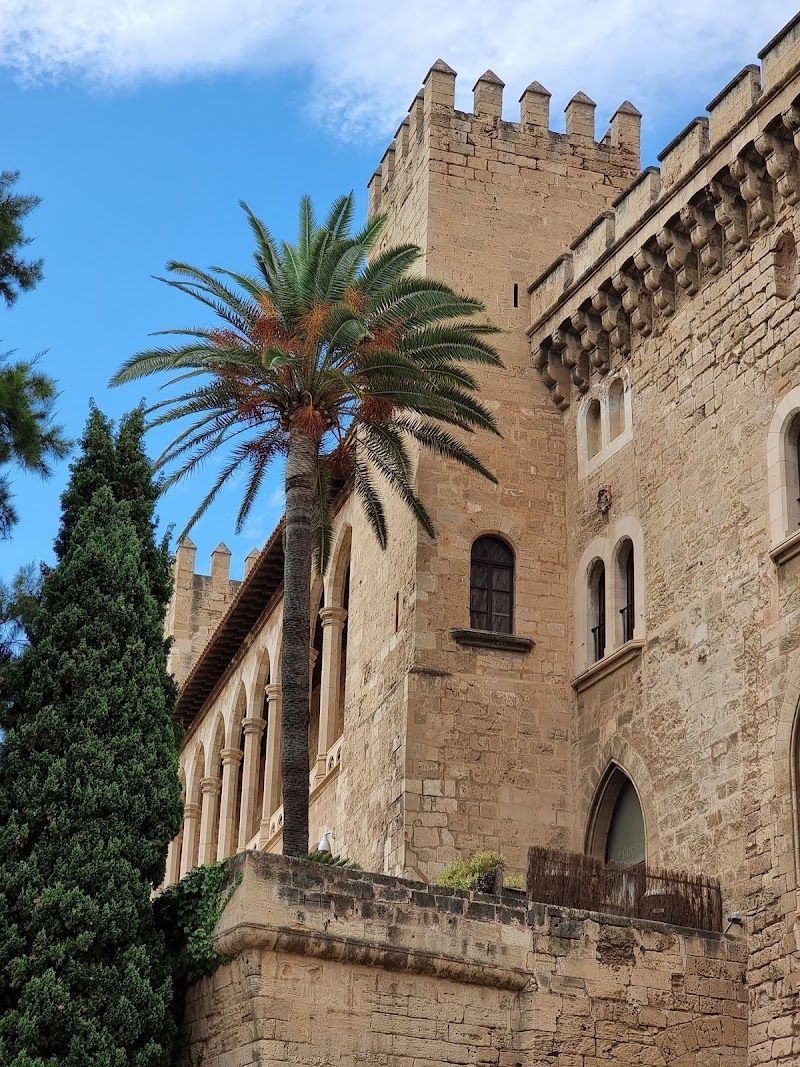
Palau Reial de l'Almudaina
The Palau Reial de l'Almudaina is a working royal palace built on 10th-century Islamic foundations, where Moorish arches meet Gothic stonework in Spain's oldest continuously inhabited royal residence. You'll walk through the King's Hall with its massive 14th-century tapestries, explore the Royal Chapel's blend of Christian and Islamic elements, and see authentic Arab baths that predate the cathedral next door. The palace courtyards offer some of Palma's best harbor views, framed by original Almudina fortress walls that once protected the entire old town. The visit flows chronologically through centuries of conquest and renovation. You start in the stark fortress sections where Moorish horseshoe arches frame Gothic windows, then move through increasingly ornate royal apartments. The contrast hits you immediately: Islamic geometric patterns carved into walls topped with Christian crosses and royal crests. Audio guides (available in English) do a decent job explaining the architectural layers, though the rooms can feel sparse compared to mainland Spanish palaces. Most guides oversell this as Mallorca's Alhambra, but it's actually better for understanding how cultures blend rather than Islamic architecture alone. Entry costs €7, and you can easily see everything worthwhile in 45 minutes. Skip the upper floors if pressed for time and focus on the ground level courtyards and the Arab baths. The palace randomly closes when royals visit (usually August), so check ahead during summer.
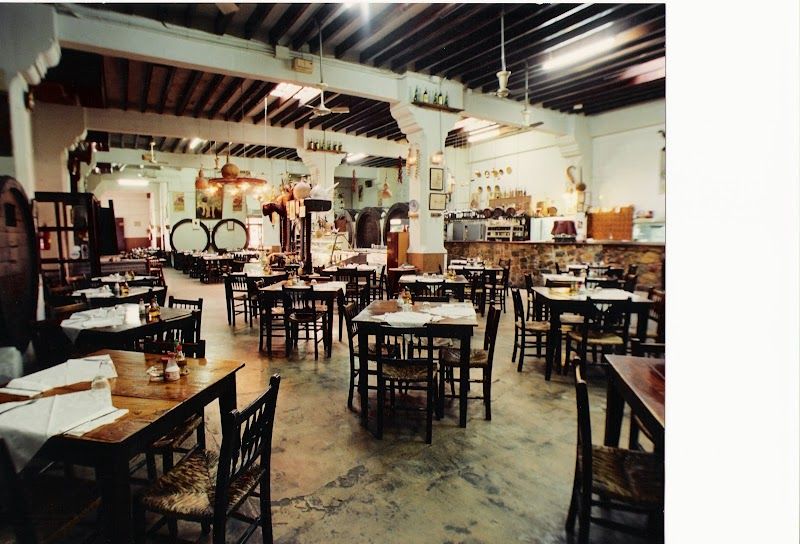
Celler Sa Premsa
This former wine cellar hasn't changed much in decades, and that's exactly the point. The massive wooden barrels still dominate the whitewashed walls, and locals still crowd the long communal tables every lunch service from 1pm sharp. Don't expect modern comforts or Instagram-worthy plating here. The menu is handwritten in Catalan and Spanish, but the waiters speak enough English to get you sorted. They're famously no-nonsense, bordering on gruff, but they know their stuff. Order the frit mallorqui (€8) if you want the real deal: chunks of lamb offal and potatoes fried with peppers and onions. It's an acquired taste, so maybe start with the safer tumbet (€6), essentially Mallorca's answer to ratatouille with layers of aubergine, courgette and tomato. The arros brut (€12 for two) is their standout: a soupy rice dish with whatever meat and vegetables are fresh that day. It arrives bubbling in a clay pot and tastes like someone's grandmother spent all morning making it. Skip the wine unless you're feeling adventurous, the house red is rough around the edges. Portions are enormous. Two people can easily share three dishes and still leave satisfied. The total damage rarely exceeds €25 per person. Book ahead or arrive right at opening, especially on weekends when three generations of Palma families descend for their weekly feast. The atmosphere gets properly lively by 2pm, with animated conversations echoing off the barrel-lined walls.
Mercat de Sineu
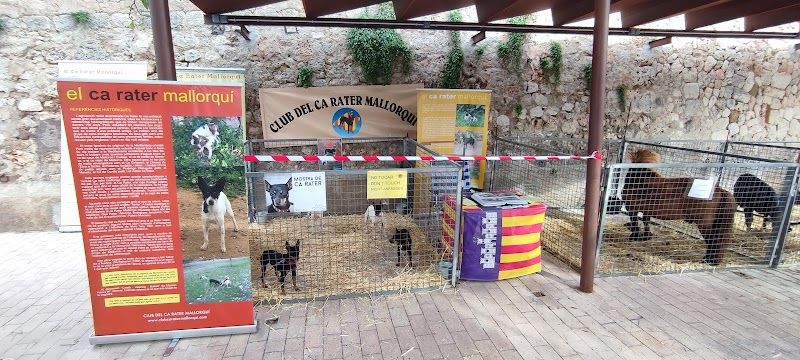
Every Wednesday morning, Sineu transforms into what feels like medieval Mallorca. This 700-year-old market is the real deal: actual farmers selling produce from their land, livestock pens with squealing pigs and clucking chickens, and elderly vendors who've held the same spot for decades. You'll see traditional Mallorcan vegetables like esclata-sangs (wild mushrooms in season), local sobrassada sausages, and jars of honey that taste like the island's wild herbs. The market spreads across Sineu's main square and spills into surrounding streets, creating a maze of stalls and animal pens. Farmers arrive before dawn and set up by 7am, many still wearing traditional blue work clothes and wide-brimmed hats. The livestock section feels authentically rural, complete with the sounds and smells of a working farm. By 10am the square is packed with locals haggling in Catalan while tourists wander slightly bewildered through the organized chaos. Most travel guides romanticize this place, but here's the truth: it's genuinely authentic but also genuinely overwhelming. The produce is excellent but not cheap (expect 3-4 EUR for a jar of honey, 8-10 EUR per kilo for good cheese). Skip the touristy ceramic stalls near the church and focus on the food vendors under the stone arches. The livestock section is interesting for five minutes unless you're actually buying a pig.
Valldemossa Monastery (Real Cartuja)
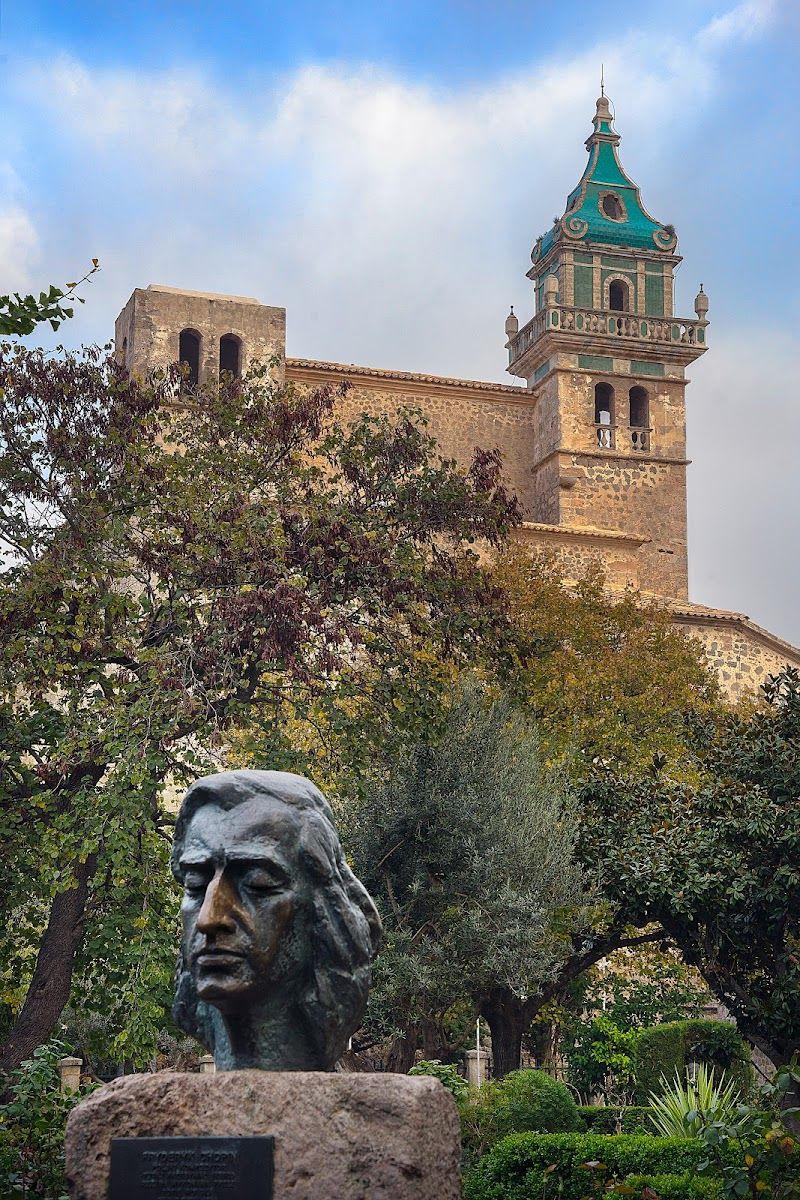
The Real Cartuja de Valldemossa is a former Carthusian monastery where Chopin and George Sand spent a miserable winter in 1838-39, and Sand wrote about it so vividly in "A Winter in Mallorca" that people have been visiting ever since. The cells where they stayed are preserved with Chopin's piano (one of his actual Pleyel pianos), Sand's manuscript pages, and the old pharmacy with hand-painted ceramic jars lined up like soldiers on wooden shelves. You'll smell the musty air of centuries-old stone corridors as you walk through the monks' cells, each one barely larger than a modern bedroom. The audio guide (included) is actually decent and tells you how the locals treated Chopin and Sand terribly, suspicious of the unmarried couple and Chopin's persistent cough. Cell number 2 feels particularly cramped when you realize this is where Chopin composed some of his Preludes while probably freezing his fingers off. The monastery gardens offer solid views across the valley to the Tramuntana peaks, though honestly, you get better mountain vistas from the road driving up. What's worth your time here is the old pharmacy with its collection of ceramic apothecary jars, each hand-painted with Latin names for remedies that probably killed more people than they cured. EUR 9.50 entry gets you about an hour of wandering, though you could stretch it to 90 minutes if you read every placard. The town of Valldemossa itself deserves 30 minutes: narrow stone streets lined with honey-colored buildings draped in bougainvillea, and most importantly, coca de patata pastries from Ca'n Molinas (EUR 3). These sweet, fluffy pastries dusted with powdered sugar have been the town's specialty for centuries. Buy two because one won't be enough.
Cap de Formentor
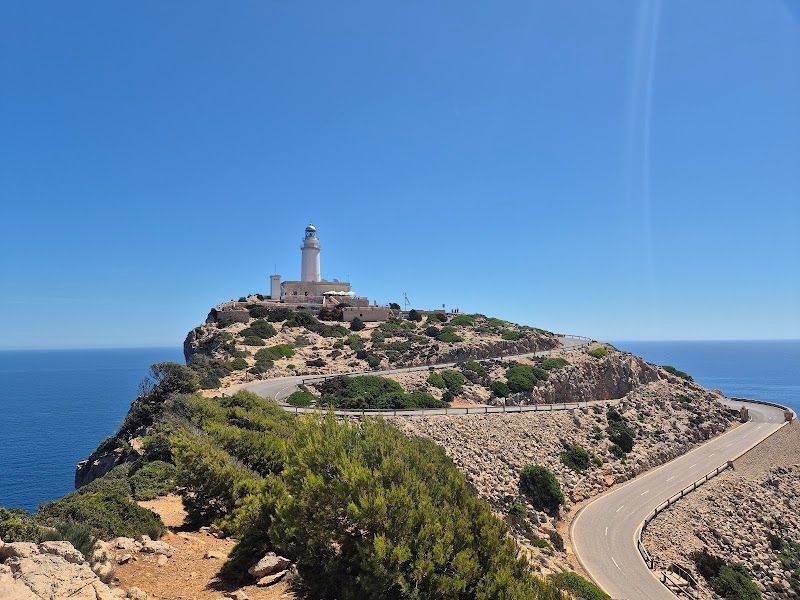
Cap de Formentor is the narrow peninsula at the northern tip of Mallorca, and the drive to the lighthouse is one of the most dramatic on the island. The road climbs through pine forest with viewpoints overlooking sheer drops to the sea, though be warned: the winding route with hairpin turns isn't for nervous drivers or those prone to car sickness. Es Colomer viewpoint is free and deservedly famous, with 300-metre drops and views of the Formentor peninsula stretching north. The stone viewing platform gets packed with tour buses between 11 AM and 3 PM, so arrive early or late for elbow room. You'll hear multiple languages as people jostle for selfie spots, but the views genuinely justify the crowds. The lighthouse at the end is the most photographed spot on Mallorca, a whitewashed beacon perched on craggy cliffs where you can feel the wind whipping off the Mediterranean. Formentor beach, before the lighthouse road, is worth the detour: a long sandy beach backed by pine trees with water so clear you can see your feet at shoulder depth. The sand stays relatively cool under the pine shade, perfect for afternoon naps. Parking costs EUR 8-10 in summer and fills up by 10 AM. The beach bar serves overpriced but decent bocadillos for EUR 12-15. In July and August, the lighthouse road closes to private cars from 10 AM to 7 PM. Take the shuttle bus from Port de Pollenca instead, EUR 15 return, departing every 30 minutes. Early morning drives reward you with empty roads and softer light for photos.
Abaco
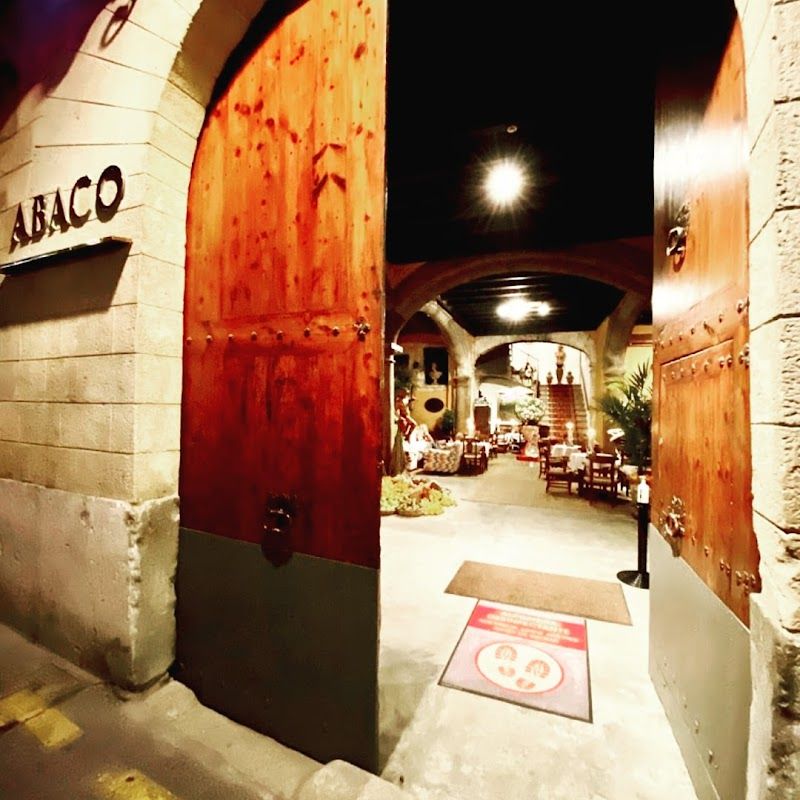
Legendary cocktail bar set in a 16th-century mansion in La Lonja with over-the-top baroque decor featuring cascading fruit displays, flowers, and candlelight. Classical music fills the opulent interior courtyard where drinks are served in ornate glassware. The theatrical ambiance makes it one of Palma's most unique nightlife experiences. Here's what you need to know: cocktails run €15-18 but they're works of art served in crystal goblets with elaborate garnishes. The Abaco signature drink is worth ordering once for the spectacle, though honestly the gin and tonics (€12) taste just as good. Arrive between 9pm and 10pm to snag seats in the candlelit courtyard before it gets packed. After 11pm you'll be standing shoulder to shoulder with tourists taking Instagram shots. The sensory overload is intentional and magnificent: imagine walking into a fever dream where someone combined a church altar with Carmen Miranda's fruit hat. Grapes spill from ornate bowls, roses cascade down stone walls, and classical opera echoes off vaulted ceilings. The scent hits you immediately, a heady mix of fresh flowers, fruit, and melted candle wax. Service can be glacially slow when busy, so don't come here if you're bar hopping. This is a one-drink-minimum, two-drink-maximum kind of place where you soak up the atmosphere. Skip the wine (overpriced and mediocre) and stick to their elaborate cocktails. The whole experience feels like drinking inside a baroque painting, which is exactly the point.
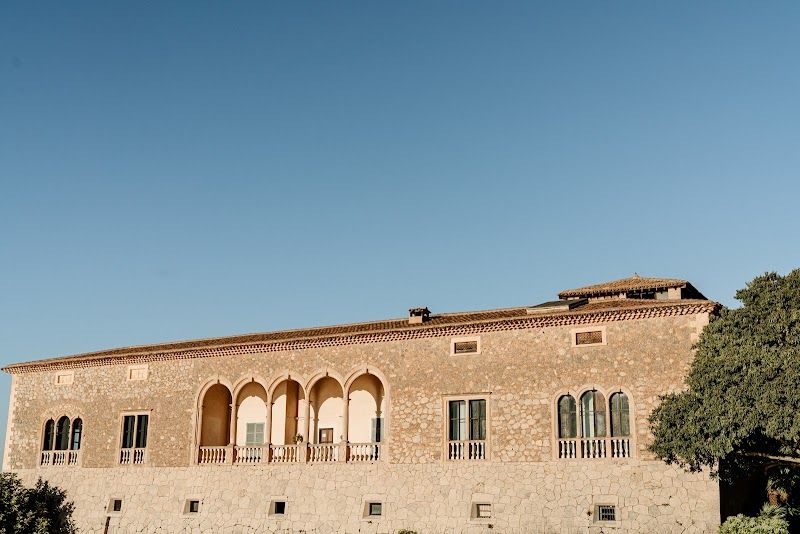
Son Marroig
Son Marroig showcases the obsessive passion of Austrian Archduke Ludwig Salvator, who spent decades documenting every detail of Mallorcan life in the late 1800s. You'll walk through his preserved neoclassical mansion filled with original furniture, his extensive collection of ceramics, and walls lined with his own detailed sketches and writings about local customs. The white marble rotunda temple perched on the cliff edge frames the dramatic view of Na Foradada, the pierced rock formation rising from the sea below. The house feels authentically lived in rather than museum sterile, with the Archduke's personal belongings still scattered about as if he just stepped out. You'll spend most of your time wandering through intimate rooms filled with period furniture and his research materials before heading outside to the famous gazebo. The clifftop setting is genuinely spectacular, with the Mediterranean stretching endlessly and waves crashing against the rocks hundreds of feet below. Most visitors rush straight to the temple for photos and miss the fascinating details inside the house, where you'll learn about this eccentric nobleman who wrote a seven volume encyclopedia about the Balearic Islands. Entry costs around 4 EUR, making it excellent value compared to other Mallorca attractions. Skip it if you're not interested in history, but the views alone justify the visit for most people.
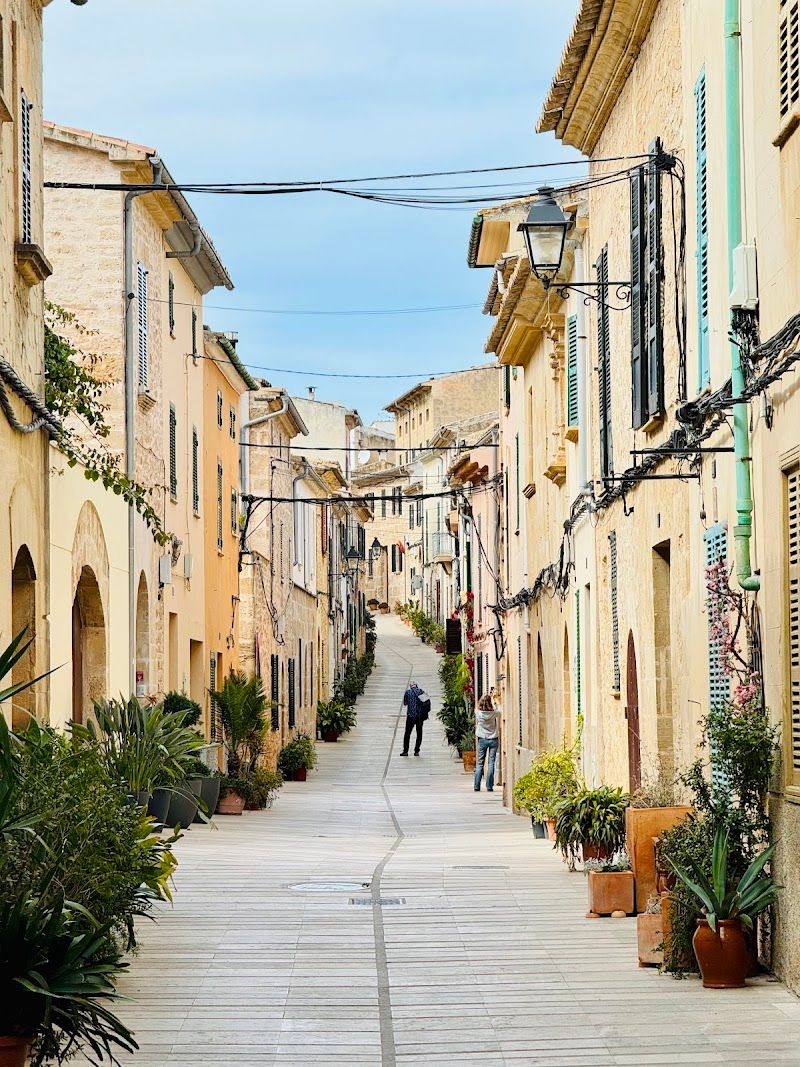
Alcudia Old Town
Alcudia has the best-preserved medieval walled town in Mallorca. The walls were built in the 14th century and you can walk the full 1 km circuit on top (free). The ramparts give you solid views over the rooftops and surrounding countryside, though the walk takes only 20 minutes and gets crowded by mid-morning. Start at the Porta de Mallorca gate where there's a small parking area. Inside the walls: narrow cobblestone streets that stay cool even in summer heat, Renaissance churches worth a quick look, and restaurants on small squares where you can eat decent paella for EUR 15-18. The Sant Jaume church has impressive Gothic arches, but skip the small museums unless you're really into local history. The entrance to the Pollentia Roman ruins costs EUR 4 and gets you access to a Roman theatre and forum from the oldest Roman settlement in Mallorca, founded 123 BC. The theatre is surprisingly intact, though the information boards are sparse. Worth 45 minutes if you like ruins, but honestly not spectacular compared to other Roman sites in Europe. The Tuesday and Sunday markets fill the streets outside the walls with produce, leather goods, ceramics, and the usual tourist trinkets. Arrive before 10 AM for the good stuff and reasonable prices. The local oranges and olives are excellent, but most leather goods are imported. Expect crowds and inflated prices after 11 AM. The town sits 2 km inland from the beach, which keeps it quieter than you would expect. You can easily combine this with beach time at Alcudia Bay. Allow 2-3 hours total including the wall walk and market browsing.
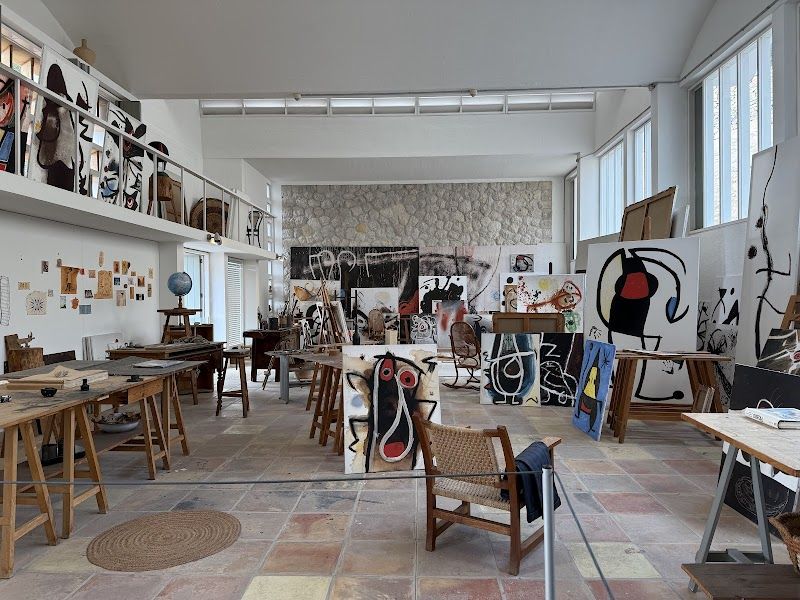
Fundació Miró Mallorca
This foundation preserves Joan Miró's actual working studio exactly as the master left it when he died in 1983, with half-finished paintings still propped on easels and paint-crusted palettes scattered across worktables. You'll see over 6,000 pieces spanning his entire career, from early realistic works to the playful abstractions he's famous for. The stark white buildings, designed by his friend Josep Lluís Sert, feel like extensions of Miró's artistic vision, and the sculpture garden showcases his three-dimensional experiments alongside Mediterranean pines. Walking through feels genuinely intimate, like you're intruding on a private creative space. The studio tour is the highlight: brushes still hold dried paint, sketches cover every surface, and unfinished canvases reveal his working methods. The main galleries flow chronologically, showing his evolution from figurative painter to the cosmic symbolist who created those distinctive biomorphic shapes. The sculpture garden provides breathing space between intense gallery viewing, with bronze figures casting dramatic shadows. Most guides oversell this as essential Miró pilgrimage, but honestly, if you're not already interested in his work, it won't convert you. The €8 entry fee is reasonable, and temporary exhibitions (included) are genuinely excellent. Skip the gift shop unless you want overpriced reproductions. The real magic happens in that preserved studio, so don't rush through it for the sake of seeing everything else.
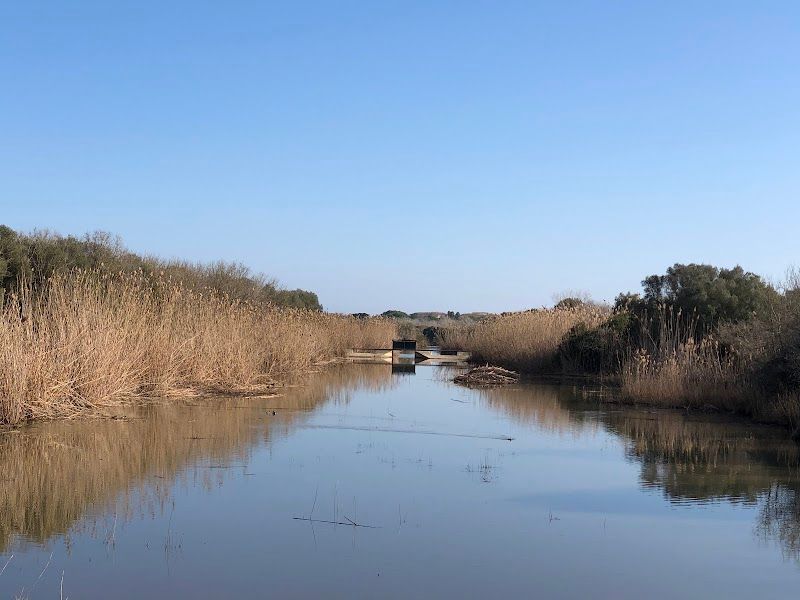
S'Albufera de Mallorca
S'Albufera de Mallorca protects 2,850 hectares of wetlands where 270 bird species feed, nest, and rest during migration. You'll spot purple herons stalking through shallow lagoons, ospreys diving for fish, and countless waders picking through the mud. Four well-marked trails wind through flat terrain perfect for cycling, with wooden observation hides positioned at prime birdwatching spots along the reed-fringed waterways. The park feels refreshingly wild after Mallorca's crowded beaches, with only the sound of birdsong and rustling reeds breaking the silence. You'll walk on raised wooden boardwalks and gravel paths that keep your feet dry while offering clear views across the marshes. The observation hides become treasure hunts where patience rewards you with close-up views of rare species, and the flat landscape means even casual walkers can cover serious distance without breaking a sweat. Most visitors rush through in an hour, but you need at least two hours to make birdwatching worthwhile. The visitor center runs out of binoculars by mid-morning, so bring your own or arrive when they open at 9am. Skip the longest trail unless you're cycling, as it gets repetitive after the first half. Entry costs nothing, making this one of Mallorca's best free attractions if you actually enjoy nature over Instagram shots.
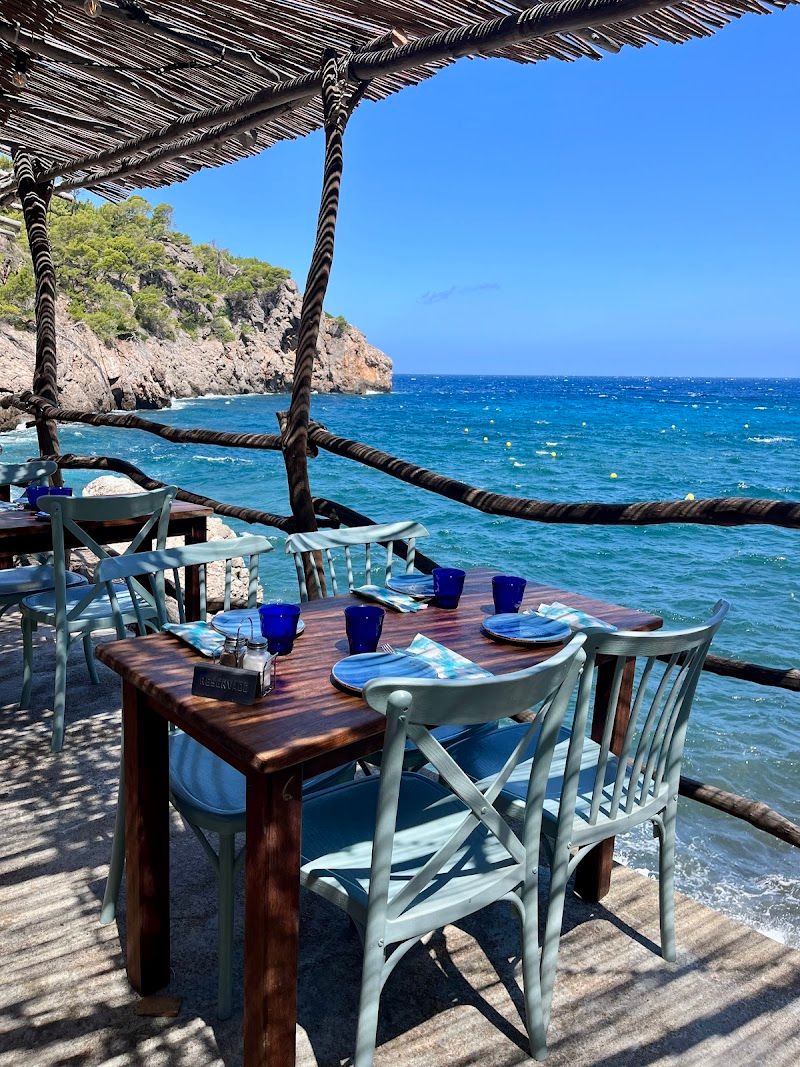
Ca's Patro March
Ca's Patro March sits at the bottom of dramatic cliffs in Cala Deià, reachable only by a punishing 15-minute downhill scramble on loose rocks or by boat if you've got one. The 19th-century stone boathouse restaurant feels like stepping into a film set, with emerald water lapping against weathered stones and pine-covered mountains rising vertically behind you. The bullit de peix is why people make this trek. At 28 EUR, the traditional fisherman's stew arrives as a proper two-course affair: first the saffron-scented broth with rice, then the tender local fish and potatoes. Order the grilled catch of the day too if you're sharing, usually dorada or lubina for around 22 EUR. The pa amb oli is decent but skip the paella, it's clearly an afterthought here. Arrive by 1 PM or 7:30 PM sharp, they don't take reservations and tables fill fast. The waiters hustle between tables carved into the rocks while waves crash just meters away. You'll taste salt in the air with every bite. Wine is overpriced at 35 EUR for basic bottles, but honestly, where else are you going to drink Mallorcan white with your feet practically in the Mediterranean? The climb back up those cliffs after lunch is brutal in the heat. Your legs will burn and you'll question your choices halfway up, but the location genuinely justifies the effort and expense. Just bring proper shoes and plenty of water.
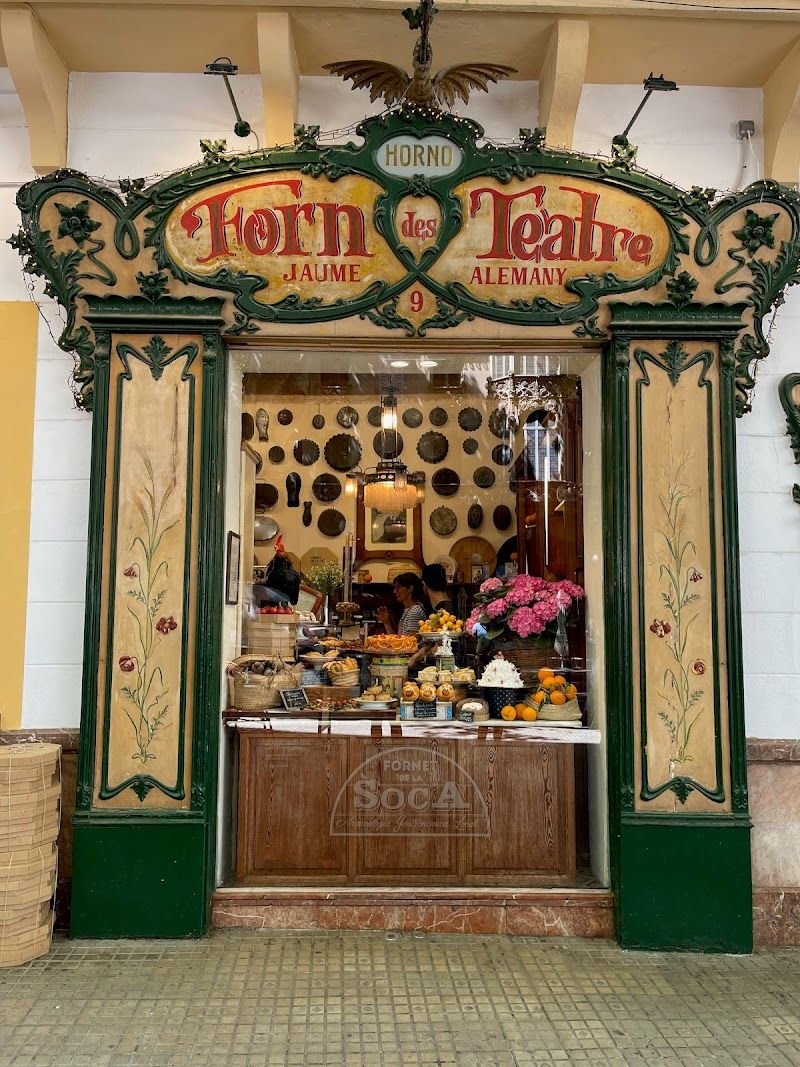
Forn des Teatre
Historic bakery in Palma's old town making traditional ensaimadas since 1910. The pastries are baked overnight and emerge at 8 AM, still warm, dusted with powdered sugar, and completely different from the packaged versions in tourist shops. Also excellent coca de patata and croissants. Here's what you need to know: get there right at 8 AM when the ovens open, or you'll face a line of locals who've been coming here for decades. The ensaimadas are 3-4 EUR each and worth every cent. They're impossibly light, almost weightless, with layers that separate like tissue paper when you bite in. The powdered sugar gets everywhere, so don't wear black. Skip the filled versions with cream or chocolate. The plain ensaimada is perfection and anything else masks that delicate, slightly sweet dough. The coca de patata (2.50 EUR) has a tender, potato-enriched crumb that's fantastic with coffee. Their croissants are proper French-style, buttery and flaky, not the sad hotel breakfast variety. The space is tiny, just a counter and display case, with maybe three small tables crammed in back. Most people grab and go. The staff moves fast and doesn't speak much English, but pointing works fine. Cash only, no cards accepted. By 11 AM, the best stuff is gone. This isn't Instagram pretty, just serious baking that hasn't changed in over a century. The smell alone, yeasty and warm with hints of lemon zest, makes the early wake-up call worthwhile.
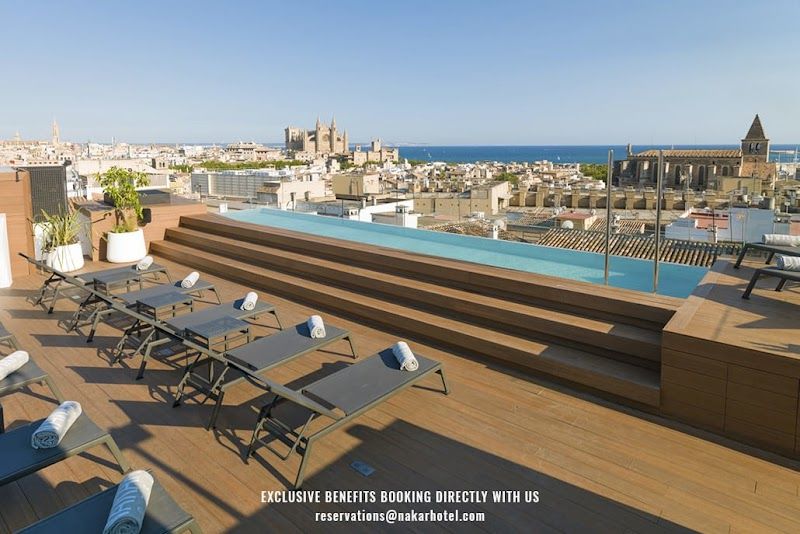
Nakar Rooftop Bar
Stylish rooftop bar on the 8th floor of Hotel Nakar offering panoramic views over Palma Bay and the cathedral. The open-air terrace features a small pool, contemporary furniture, and a cocktail menu focused on Mediterranean flavors. Peak sunset hours draw both hotel guests and locals. Here's what you need to know: cocktails run 14-18 EUR, which is steep but fair for the location. The gin and tonic with local herbs is your best bet, skip the overpriced champagne unless you're celebrating something major. Arrive by 7 PM to snag a poolside table, any later and you'll be standing behind crowds of Instagrammers. The view really delivers though, especially that direct sightline to La Seu cathedral lit up against the darkening sky. The space itself feels more like a sleek private terrace than a typical hotel bar. Those contemporary white loungers around the small pool create good ambiance, though the pool is purely decorative. Service can be slow when packed, so order two drinks at once during sunset rush. The Mediterranean-inspired menu sounds fancier than it tastes, honestly the setting is doing most of the work here. Open daily from 6 PM to 1 AM, but the magic happens between 7:30-9 PM when golden hour hits the bay. After 10 PM it transforms into more of a party scene with DJ sets. Worth it for the views and scene, just set your expectations accordingly for the prices.
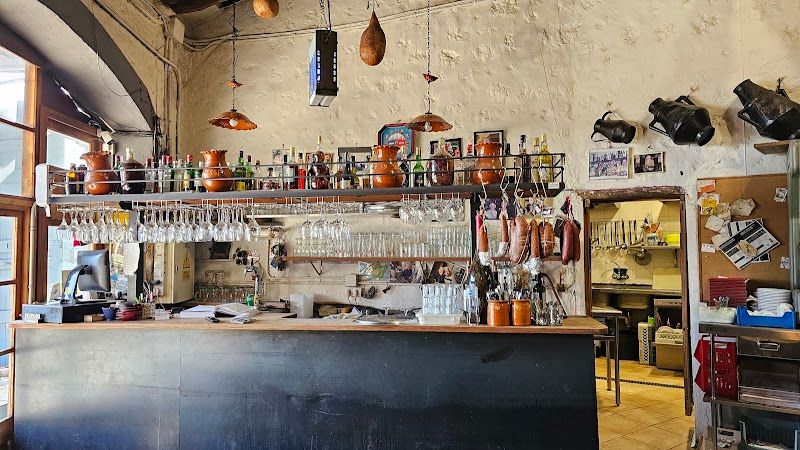
Es Verger
This legendary lamb restaurant in the Tramuntana foothills has been doing one thing perfectly for decades: roasting whole shoulders of lamb over wood fire. The three-course menú costs EUR 28 and includes soup, salad, half a kilo of lamb per person, and wine. Yes, half a kilo. Come hungry or prepare to roll out the door. The dining room is a converted farm building with stone walls and beamed ceilings that feels authentically rustic without trying too hard. You'll smell the wood smoke before you even park. The lamb arrives sizzling on metal platters, the meat falling off the bone with a smoky crust that's borderline addictive. The house red wine is surprisingly decent for what you'd expect from a fixed menu. Fair warning: this isn't fine dining. The salad is basic, the soup forgettable, and service can be brusque when they're slammed on weekends. But nobody comes here for the ambiance or service. They come for lamb that's been perfected over generations. Book ahead, especially March through October, as word has definitely gotten out among both locals and tourists. The portions are genuinely massive, so skip lunch if you're planning dinner here. Located about 30 minutes inland from Palma, it's worth the drive if you're serious about meat. Vegetarians should obviously look elsewhere.
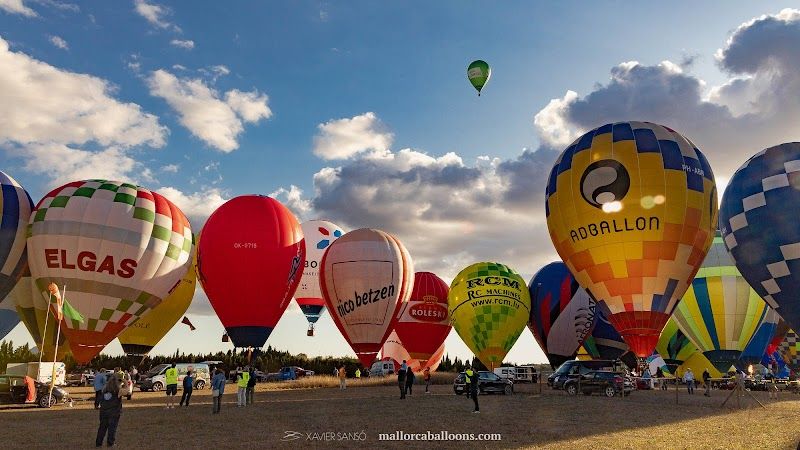
Mallorca Balloons
Hot air balloon flights over the central plains and Tramuntana foothills at sunrise with views stretching to both coasts. Flights last one hour with champagne landing ceremony and return transport to Palma included. Maximum 8 passengers per balloon ensures intimate experience. Here's what you need to know: pickup starts at 5:30am from central Palma hotels (earlier from other areas), so prepare for a seriously early morning. The flight costs around €190 per person, which honestly feels steep until you're floating 500 meters above those golden wheat fields watching the sun paint the mountains pink. The silence up there is remarkable, broken only by the occasional whoosh of the burner above your head. Your pilot will likely point out Palma Cathedral in the distance and the serpentine roads cutting through the Serra de Tramuntana. On clear days, you can spot both Menorca's outline and the mainland Spanish coast. The basket gets a bit cramped with eight people, especially if you're tall, but the views make up for any elbow bumping. The champagne toast after landing is a nice touch, though it's basic cava, not the good stuff. You'll be back in Palma by 10am, making this doable even with afternoon beach plans. Book directly through their website to avoid tour operator markups. Weather cancellations are common in winter months, so have backup plans. Skip this if you're afraid of heights or have back problems as the landing can be bumpy.
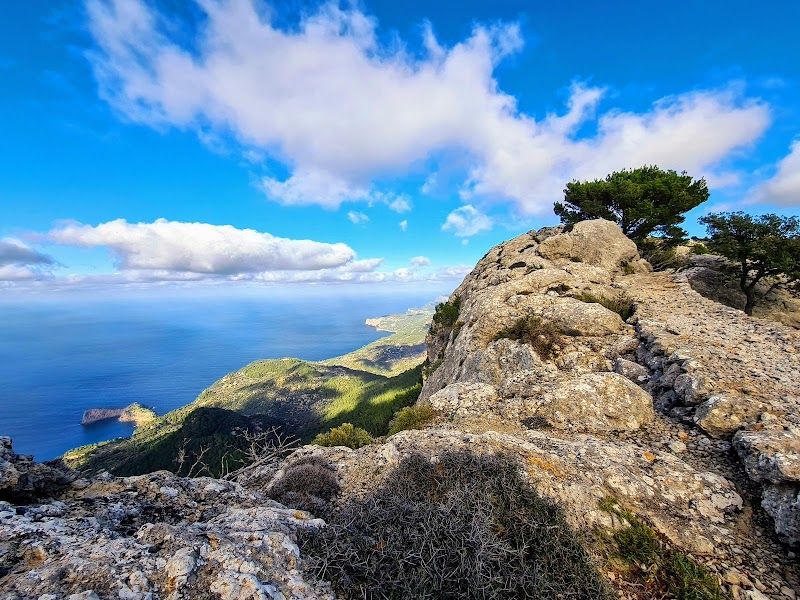
Camí de s'Arxiduc
Austrian Archduke Ludwig Salvator commissioned this 10-kilometer ridge trail in the 1870s, running from Valldemossa to Deia at 1,000 meters elevation. The path offers continuous Mediterranean and mountain views, passing stone shelters built for the Archduke's guests. The circular route takes 4 hours with minimal elevation gain once you reach the ridge. Here's what you need to know: start early around 8am to avoid crowds and afternoon heat. Park in Valldemossa (2 EUR per hour) and catch bus 210 to the trailhead at Coll de sa Basseta, or drive the winding 15-minute route yourself. The initial climb is brutal, gaining 400 meters in the first hour through pine forest that smells like resin and rosemary. Your legs will burn, but once you hit the ridge, it's mostly flat walking on ancient stone paths. The payoff is serious. You'll walk along dramatic cliff edges with the entire west coast spread below, from Port de Soller to Sa Dragonera island. The famous stone shelters are simple but perfectly placed for photos and water breaks. Pack 2 liters per person and real food, not just energy bars. The descent into Deia is knee-jarring steep, so bring trekking poles if you have dodgy joints. Skip this if it's windy above 25 km/h, the exposed ridge becomes genuinely dangerous. The trail is well-marked but rocky, so proper hiking boots are essential. You'll finish exhausted but satisfied, perfect timing for a late lunch at Ca's Patro March (book ahead, 35 EUR per person).
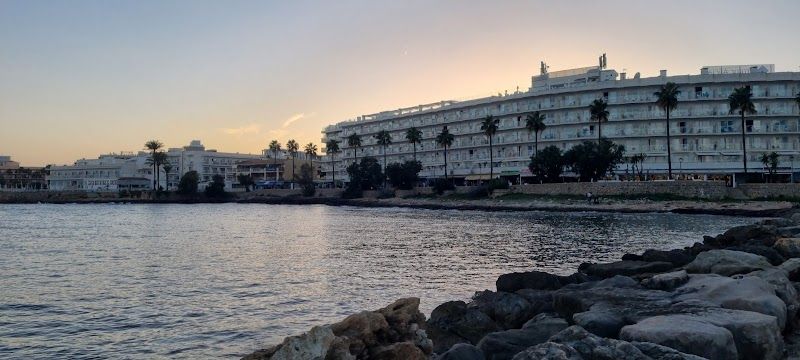
Cala Millor
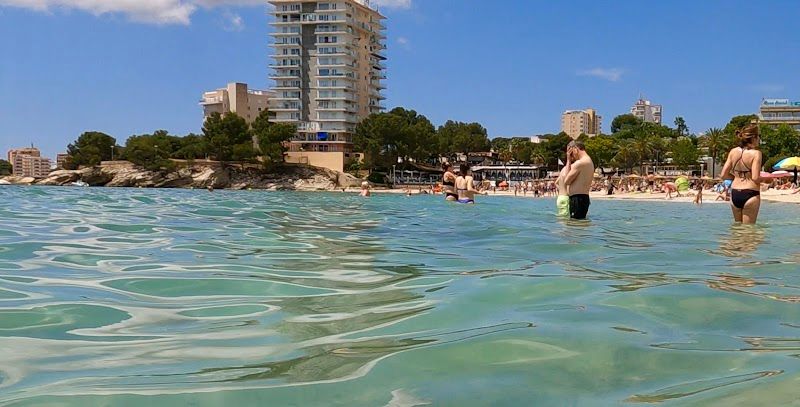
Cala Millor stretches 1.8km along Mallorca's east coast, delivering exactly what families want: soft golden sand, clear shallow water, and zero drama. The blue flag beach comes with lifeguards, sunbed rentals for about 15 EUR per day, and a palm-lined promenade packed with restaurants, ice cream shops, and souvenir stalls. You'll find proper facilities here, showers, changing rooms, and beach bars serving cold San Miguel for 3-4 EUR. The beach fills up by 10am with German and British families claiming their spots near the central section where the sand is widest. Kids splash in the gentle waves while parents relax under rented umbrellas or the occasional pine tree. The water stays shallow for ages, making it perfect for nervous swimmers and toddlers. By afternoon, the promenade comes alive with people strolling between beach sessions, stopping for paella or gelato. Most people crowd the middle section because it's closest to parking, but you're paying resort prices everywhere anyway. The northern end gets windy, and the southern tip near the nature reserve requires a longer walk but rewards you with rockier coastline and better snorkeling. Skip the overpriced beachfront restaurants, head one street back for cheaper tapas. It's commercialized but well-run, exactly what you'd expect from Mallorca's package holiday coast.
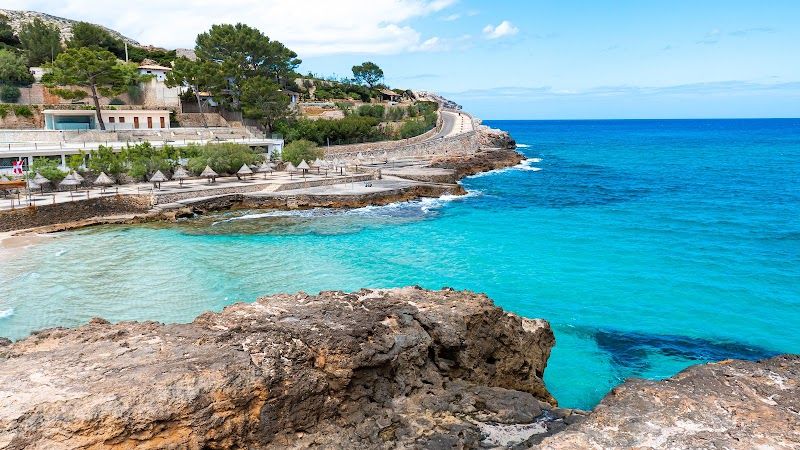
Cala Sant Vicenç
Four small coves form a coastal complex beneath the dramatic Cavall Bernat peak, each with its own personality and swimming conditions. Cala Molins offers the most facilities and a wide beach, while tiny Cala Clara sits perfectly protected between rocky outcrops. Cala Barques draws families with its shallow waters, but Cala Carbó remains wild with just rocks and crystal-clear water. The rocky barriers between each cove create excellent snorkeling territories where you'll spot octopus, sea bream, and colorful wrasse. The experience flows naturally from cove to cove along a coastal path that takes about 10 minutes end to end. Each beach has a different feel: Molins is lively with beach bars and sunbeds (around 15 EUR per day), while Carbó offers pure silence except for lapping waves. The water stays clear thanks to the rocky coastline, and the mountain backdrop makes every photo look dramatic. Swimming between the coves feels like having your own private Mediterranean playground. Most visitors pack into Molins and never explore further, which is their loss. Skip the overpriced chiringuito at Molins (a basic sandwich costs 8 EUR) and bring your own supplies instead. The snorkeling gear rental at Molins costs 12 EUR, but you're better off bringing your own since the rocky areas can be tough on equipment.
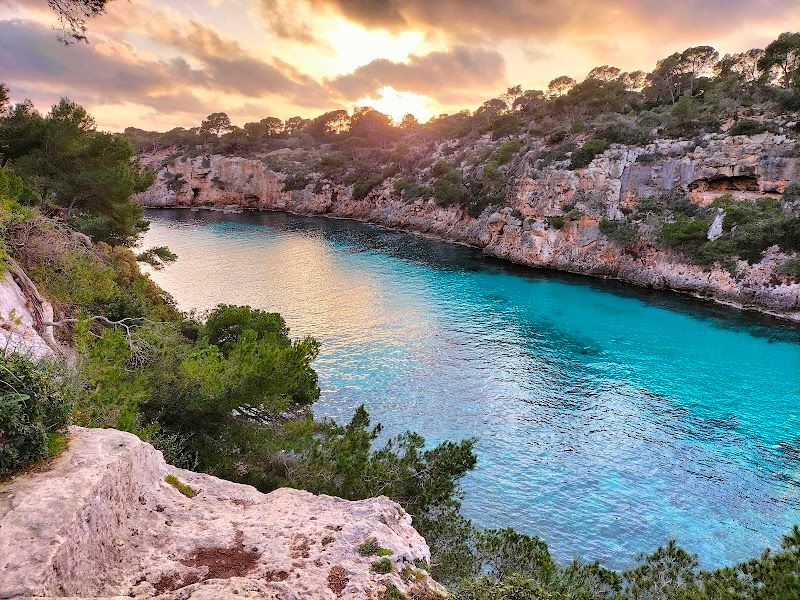
Cala Pi
Cala Pi carves a dramatic 50-meter fjord into Mallorca's southern coastline, where turquoise water cuts between towering limestone cliffs that rise 30 meters on both sides. You'll find one of the island's most protected beaches here, accessible only via a steep stone staircase that drops from the clifftop car park. The 16th-century Torre de Cala Pi watchtower stands guard on the eastern cliff, built to spot approaching pirates, while a scattering of expensive villas clings to the rocky slopes above. The descent takes about 10 minutes down 200+ stone steps carved into the cliff face, with your calves definitely feeling it on the way back up. Once you reach the narrow beach, you're surrounded by walls of white limestone that create perfect shelter from wind and a natural amphitheater effect. The water stays shallow for about 10 meters before dropping off, making it ideal for swimming but limiting space when busy. The whole cove feels incredibly intimate, almost secretive, like you've discovered a private lagoon. Most travel guides make this sound easier than it is. The beach gets packed by midday with barely 30 meters of sand to share, and there are no facilities whatsoever, no shade, no beach bar, nothing. Parking costs nothing but fills up fast after 10am, forcing late arrivals to park 500 meters away on the main road. Come early with plenty of water and snacks, or save yourself the leg workout and hit Es Trenc instead for actual amenities.
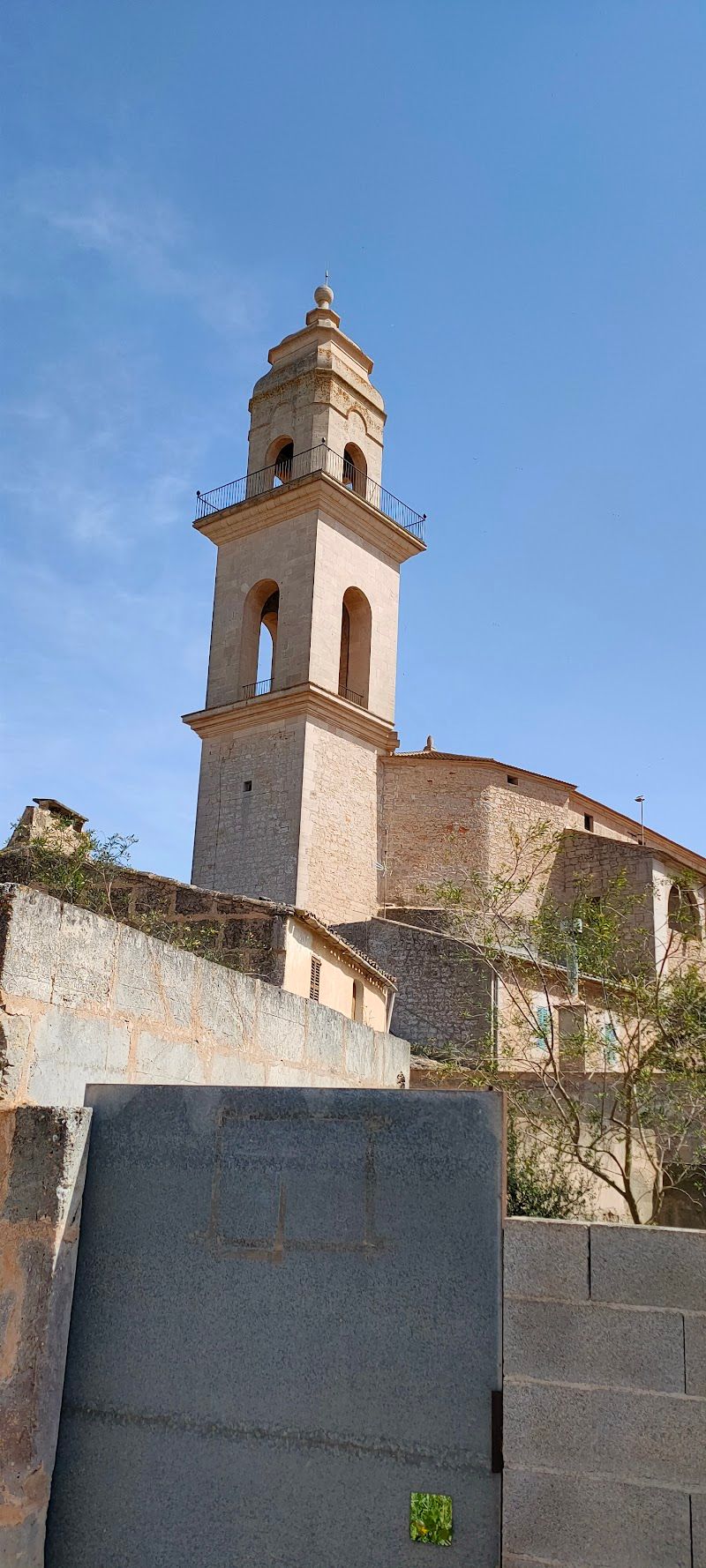
Salines de Llevant
Salines de Llevant produces actual sea salt using 2,000-year-old Roman techniques, with workers still raking salt by hand in shallow evaporation ponds. The operation runs year-round, but winter brings the real spectacle: hundreds of flamingos arrive from November through March to feed on brine shrimp in the mineral-rich water. You'll walk coastal paths with clear views across geometric salt beds that shift from white to deep pink depending on algae concentration and water depth. The experience feels surprisingly industrial yet timeless, watching modern workers use ancient methods while pink birds wade through man-made lagoons. Salt pyramids dot the landscape like miniature mountains, and the air carries that sharp, clean scent of concentrated seawater. Flamingos cluster in specific ponds where brine shrimp are thickest, creating photo opportunities that feel almost surreal against Mallorca's typical beach scenery. The contrast between working salt production and wildlife sanctuary creates an atmosphere unlike anywhere else on the island. Most guides oversell this as a major attraction when it's really a pleasant hour-long detour, best combined with nearby Colonia de Sant Pere. The viewing is free from public paths, so ignore any tour operators charging admission. Winter visits are dramatically better due to flamingo presence, but summer offers the fascinating spectacle of salt harvest. The coastal path can get muddy after rain, and there's zero shade, so bring water and sun protection.
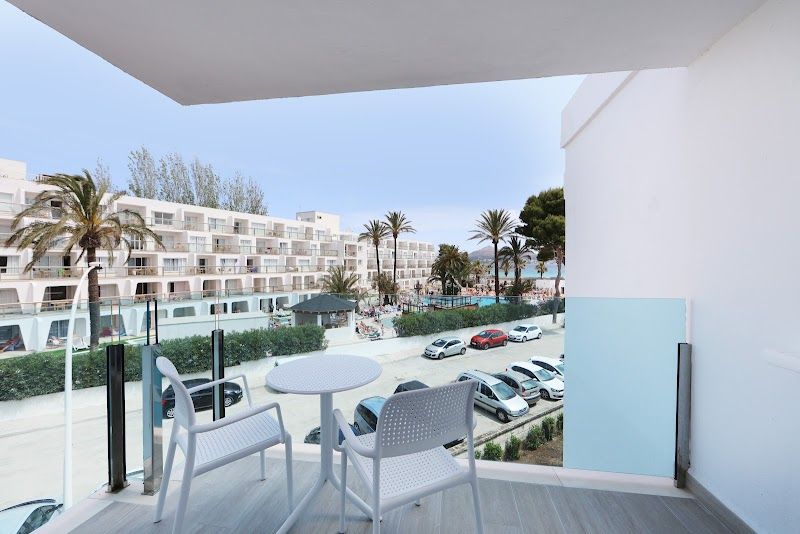
Platja de Muro
Platja de Muro stretches for 6 kilometers along Mallorca's north coast, offering some of the island's finest white sand and calmest waters. The beach divides into distinct sections: the developed area near Can Picafort with restaurants and rentals, and the pristine Es Braç section backed by protected dunes and pine forests. You'll find exceptionally shallow, turquoise waters that stay waist deep for 50 meters out, making it perfect for families with small children. The experience varies dramatically depending where you settle. Near Can Picafort, you'll have typical resort amenities but also crowds and concrete. Walk north toward Es Braç and the scene transforms: wild dunes rise behind untouched sand, pine trees provide natural shade, and the only sounds are gentle waves and wind through the trees. The sand quality here rivals any Caribbean beach, fine and white without being blindingly bright. Most guides rave about the entire stretch, but honestly, only the northern Es Braç section delivers on the paradise promises. The developed southern areas feel generic and overpriced (sunbed rentals run 15-20 EUR). Skip the beach clubs entirely and head straight for the nature reserve end. Parking at Es Comu costs 5 EUR but saves you a long walk from the free lots further south.
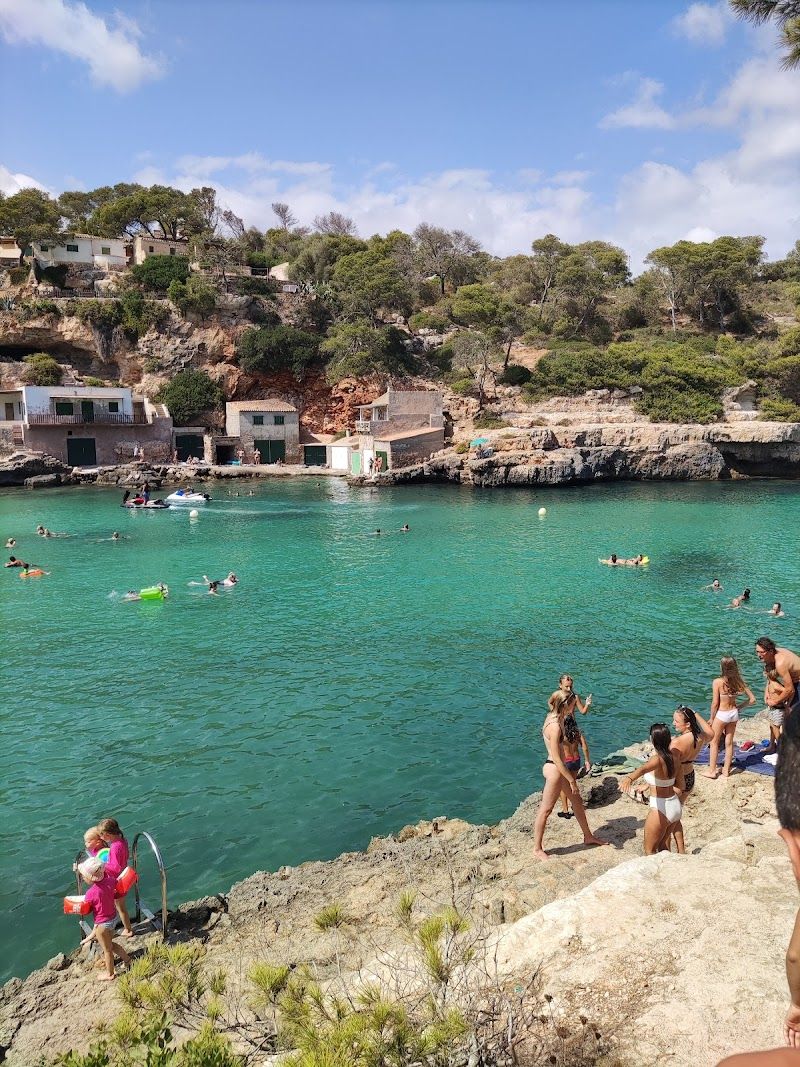
Cala Llombards
Cala Llombards delivers exactly what you want from a Mallorcan beach: a compact 55-meter stretch of powdery white sand squeezed between towering limestone cliffs that block the wind and create a natural amphitheater. The water here is genuinely transparent, revealing rocky patches perfect for snorkeling along the cliff bases where small fish dart between the stones. Two simple chiringuitos perch at opposite ends, serving cold beer (€3), bocadillos (€6-8), and providing the only shade beyond the cliff shadows. You'll walk down a gentle 300-meter slope through scrubland to reach the sand, and the beach reveals itself dramatically as you round the final bend. The protected cove means the water stays calm even when other beaches are choppy, making it ideal for floating and swimming. Families cluster near the beach bars while snorkelers head to the rockier sections, and the whole scene has an intimate, almost private feel despite the crowds. The limestone cliffs glow golden in late afternoon light, creating Instagram moments that actually live up to the hype. Most guides won't mention that this place becomes uncomfortably packed by noon in summer, with barely space to lay a towel. The parking situation is genuinely stressful after 11am, and you'll end up walking much further uphill in the heat. Skip it entirely in July and August unless you arrive by 9am. The snorkeling is decent but not exceptional compared to Cala Mondragó nearby, which has better fish life and more space to breathe.
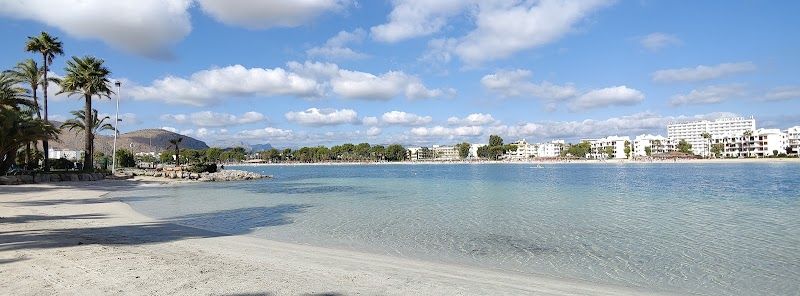
Pol·lèntia
Pol·lèntia gives you the clearest picture of Roman life in the Balearics, with foundations and walls you can actually walk through rather than just peer at from behind ropes. The residential quarter shows how wealthy Romans lived here from 123 BC onwards, with geometric mosaics still visible in several rooms. The theater is the real standout: carved into a hillside, it's remarkably intact and you can climb the stone seats where 2,000 people once watched performances. The forum area feels less impressive, mostly just low stone walls, but helps you understand the town's layout. You'll spend most of your time wandering freely through the residential streets, ducking under modern protective roofs to see the best mosaics. The site feels peaceful and uncrowded, even in summer, with olive trees and wild herbs growing between the ancient stones. Information boards in English explain what you're seeing, though they're sometimes weathered and hard to read. The theater provides the most dramatic moment: standing on the top row gives you views over the surrounding countryside that Roman audiences would have recognized. Entry costs €4, or €6 for the combined ticket with the museum in town (definitely worth it for the context and better preserved artifacts). Skip the audio guide, it's overpriced at €3 and covers obvious points. Most people rush through in 30 minutes, but give it the full hour to properly explore the residential areas where you'll find the best preserved details. The site has minimal shade, so morning visits are essential in summer.
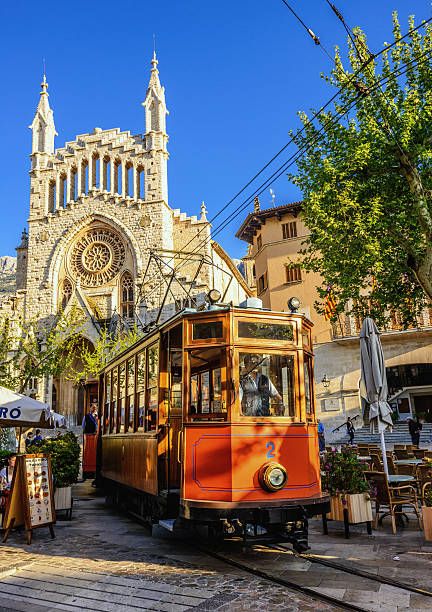
Soller
Soller sits in a valley of orange groves surrounded by the Tramuntana mountains, and it feels like a different island from the coast. The main square (Placa de la Constitucio) has Modernista buildings, the Banco de Soller facade designed by a Gaudi pupil, and cafes where you can sit for an hour watching the vintage electric tram trundle through. The vintage wooden train from Palma (EUR 25 return, 1 hour, through 13 tunnels and across a viaduct) is one of the best rail journeys in Spain. The tram from Soller to Port de Soller (EUR 8 return, 4 km, 20 minutes) runs to the harbour. The town has an ice cream culture that rivals anywhere in Italy, and the orange juice is pressed from the valley's own groves.
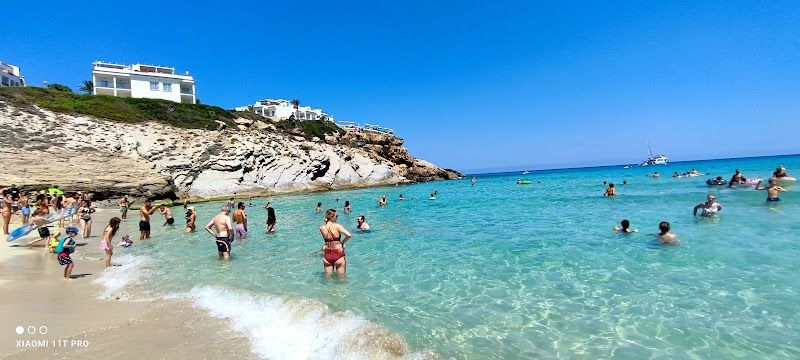
Cala Mesquida
Cala Mesquida delivers exactly what mainland beach resorts can't: a wild, untamed coastline where Atlantic-style swells crash against golden sand backed by towering dunes. This 350-meter stretch sits within the Llevant Natural Park, protected from development since 1991, so you'll find just one beach bar and endless stretches of pristine coastline. The waves here are legitimately powerful, drawing bodyboarders from across the island while making swimming genuinely challenging for most visitors. You'll walk through a landscape that feels more like Portugal's west coast than the Mediterranean. The dunes rise 15 meters high, shifting with seasonal winds and creating natural windbreaks where families cluster with picnics. When the tramuntana wind picks up, the beach transforms into a wild spectacle of foam and spray, while calm days reveal surprisingly clear water perfect for snorkeling around the rocky headlands. The single chiringuito, Es Moli, serves decent bocadillos for 6-8 EUR and cold Estrella for 3 EUR. Most guides won't tell you that this beach is genuinely unsuitable for weak swimmers, especially kids. The undertow is real, and lifeguards are absent. Skip the crowded summer afternoons when parking becomes impossible and winds die down, making the water less dramatic. Come in spring or autumn for the most spectacular wave action, or arrive at sunrise when you'll often have the entire beach to yourself.
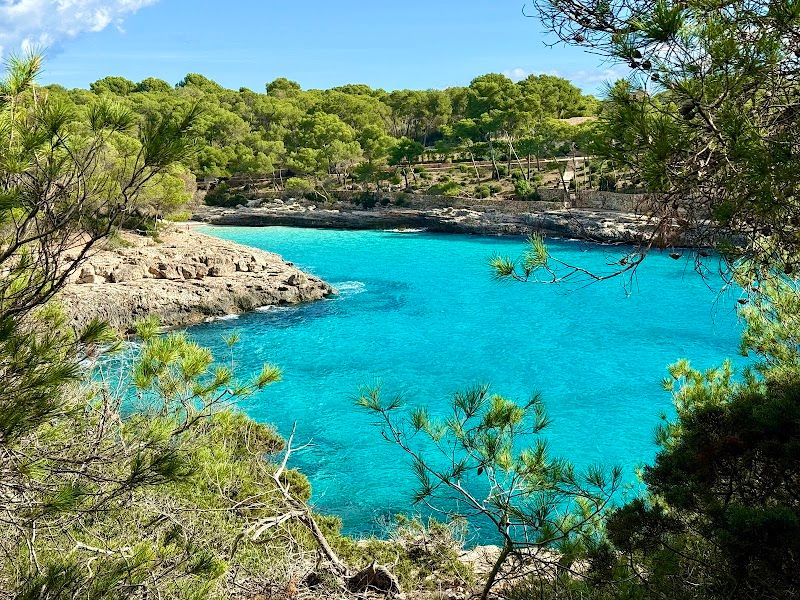
Mondrago Natural Park
Mondrago Natural Park on the southeast coast has two beaches (S'Amarador and Cala Mondrago) connected by a boardwalk through pine forest and coastal wetlands. S'Amarador has fine sand and shallow water, excellent for families. Cala Mondrago is slightly smaller with rocks on the sides good for snorkelling. The park is free to enter (EUR 5 parking). A walking trail loops through the park (3 km, 1 hour, flat, easy) past farmland, wetlands, and viewpoints. Birdwatchers come for the ospreys and Audouin's gulls. The park limits daily visitors in summer, so arrive before 10 AM.
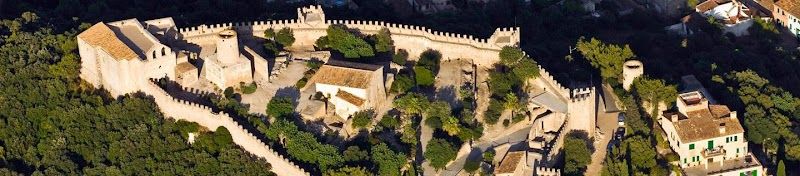
Castell de Capdepera
Castell de Capdepera crowns the hilltop town like a perfectly preserved medieval fortress, its crenellated walls wrapping around an entire complex that includes the Gothic Nostra Senyora de l'Esperança chapel and a commanding watchtower. Built in 1300 by King Jaume II, this wasn't just a castle but a fortified refuge where the entire town population could shelter during North African pirate raids. You'll explore thick stone walls, climb the central tower for sweeping views, and step inside the atmospheric chapel with its simple Gothic arches. The approach up Carrer del Castell builds anticipation as medieval walls loom larger with each step. Once inside the main gate, you're walking through what feels like a miniature fortified city rather than a typical castle. The chapel sits at the heart of the complex, surprisingly intimate after the imposing exterior walls. From the tower's top platform, the view stretches across red-tiled rooftops to the Mediterranean, with Menorca visible on genuinely clear days. Entry costs just 3 EUR, making it exceptional value for such a complete medieval experience. Most visitors rush through in 30 minutes, but you'll want the full hour to properly explore the chapel interior and soak up those tower views. Skip the small museum display, which adds nothing to the experience. The real magic happens in late afternoon when golden light hits the stone walls, though morning visits offer better visibility for long-distance views.
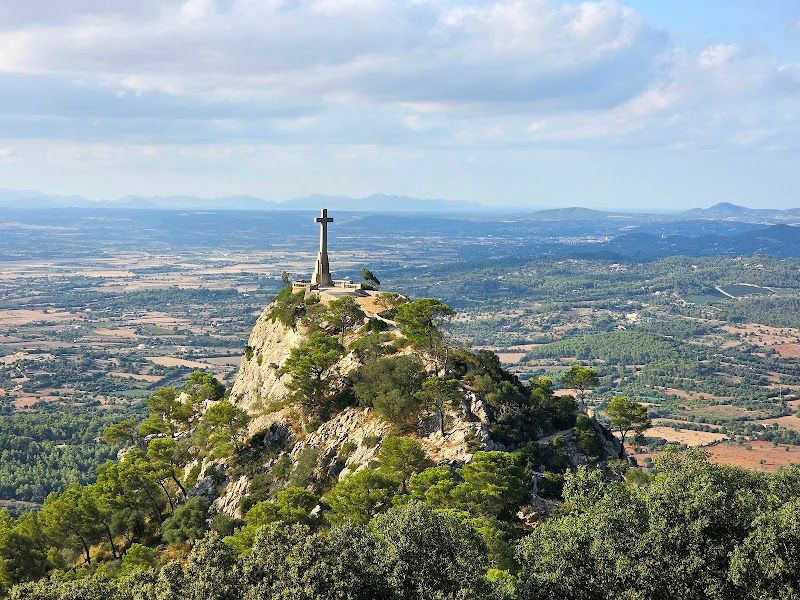
Santuari de Sant Salvador
This 14th-century monastery sits atop a 509-meter peak near Felanitx, crowned by a massive 37-meter stone cross that you can spot from across southeastern Mallorca. The real draw is the panoramic views: on clear days you'll see from Cabrera Island in the south all the way to Cap de Formentor in the north, with the entire coastline spread below. The site includes the original church, a towering Cristo Rei statue, and simple guesthouse rooms where you can spend the night. The drive up takes you through 28 dramatic hairpin turns carved into the mountainside, each bend revealing more spectacular vistas. Once at the top, you'll find a surprisingly peaceful atmosphere despite the steady stream of day visitors. The stone buildings feel authentically monastic, and the terrace offers multiple vantage points for photos. Late afternoon light transforms the landscape below into golden patchwork, while sunrise (if you stay overnight) paints the sea in brilliant oranges and pinks that photographers rave about. Most day visitors rush up, snap photos, and leave within 30 minutes, missing the best light completely. The monastery rooms cost around 25-35 EUR per night and are basic but clean, with the enormous advantage of having the sunrise viewpoint to yourself. Skip the small museum inside unless you're genuinely interested in religious artifacts. The real magic happens during golden hour, so time your visit for late afternoon or commit to staying overnight.
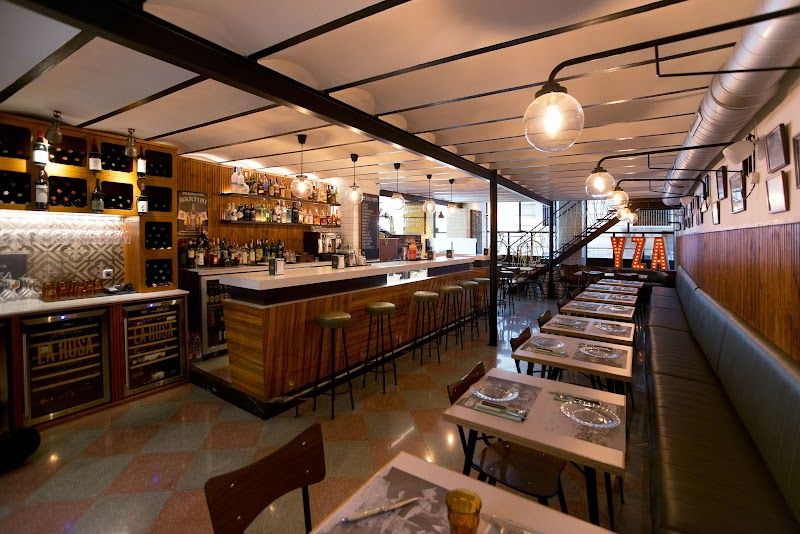
La Rosa Vermutería & Colmado
Tiny vermouth bar in Santa Catalina with standing room only and barrels of house vermouth behind the counter. Serves exceptional conservas from Spain's north coast, Galician razor clams, Cantabrian anchovies, on thick slices of tomato bread. No seats, no reservations, pure neighborhood atmosphere.
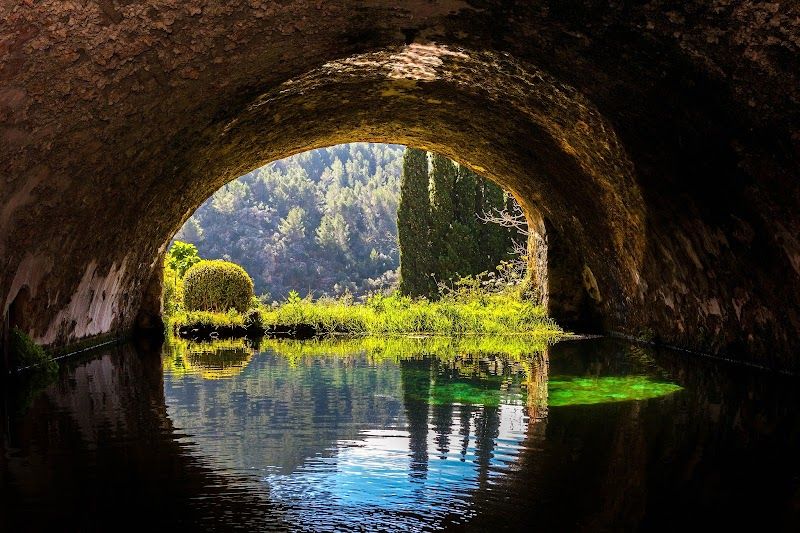
Jardins d'Alfàbia
Jardins d'Alfàbia brings you face to face with 800 years of Mallorcan garden design, where Moorish water engineering meets Renaissance landscaping. You'll walk through terraced levels connected by stone steps, following ancient irrigation channels that still carry mountain spring water to every corner of the estate. The gardens feel like a living museum of agricultural innovation, complete with working fountains, pergolas heavy with jasmine, and those famous plane trees that create natural tunnels of shade. The visit flows naturally from the entrance courtyard (where that water organ plays its hourly concert) through ascending garden terraces toward the manor house. You'll hear water everywhere: trickling through carved stone channels, splashing in geometric pools, and flowing beneath wooden bridges. The atmosphere stays refreshingly cool even in summer heat, thanks to the constant water flow and dense tree canopy. The manor house interior showcases original Mudéjar frescoes and period furniture that most visitors rush through. Most guides oversell this as a major attraction when it's really a pleasant 75-minute diversion if you're driving the Sóller route anyway. The 7.50 EUR entry feels fair for what you get, but don't expect Alhambra-level grandeur. Skip the gift shop entirely and focus your time on the middle terraces where the water features work best. The upper gardens near the house can feel repetitive after the more impressive lower sections.
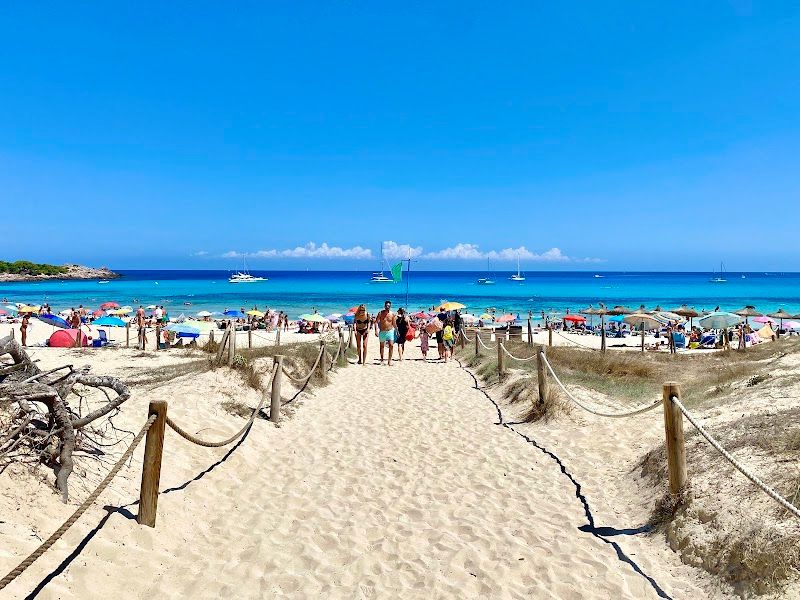
Cala Agulla
Enter from the main car park and head immediately left toward the pine trees for the best natural shade spots that many visitors walk right past. The snorkeling is actually better at low tide when the water is clearer and fish congregate in the shallow rocky pools near the eastern headland. Walk the coastal path to Cala Mesquida in the early morning for clear views back toward Cala Agulla without the midday heat and crowds.
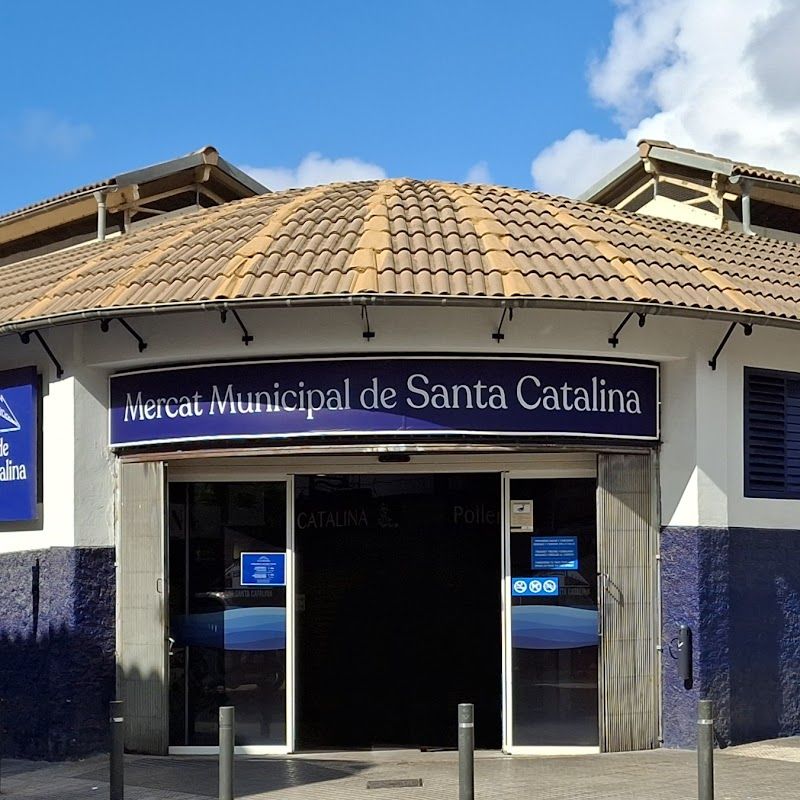
Mercat de Santa Catalina
Neighborhood market in Palma's bohemian Santa Catalina district, smaller and more intimate than Olivar. Bar Mercat inside serves excellent menú del día for EUR 14, and the surrounding bars spill onto the square. The produce is sourced from small Mallorcan farms.
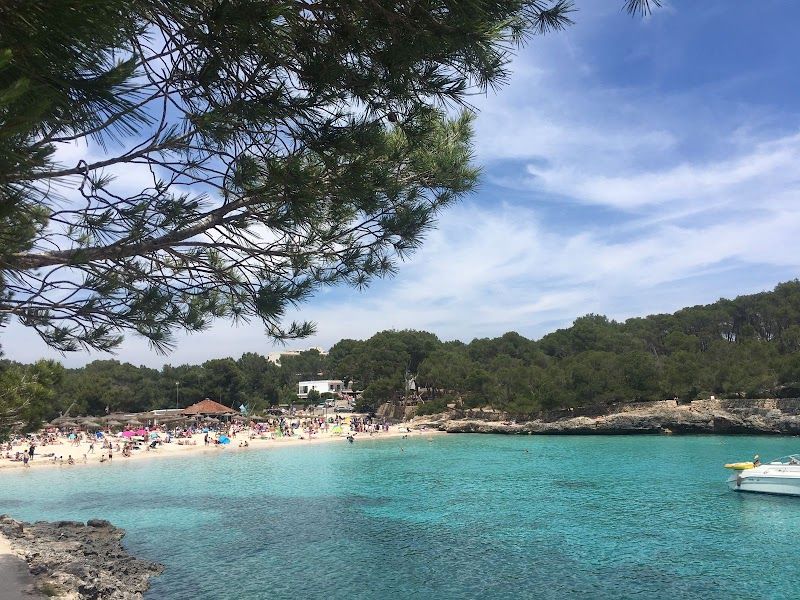
Cala Mondragó
Cala Mondragó sits at the heart of Mallorca's most accessible natural park, offering 75 meters of fine sand backed by protected Mediterranean forest. The water here is genuinely transparent, you can see your feet clearly even waist deep, and the beach mixes pure sand with patches of seagrass that create natural snorkeling spots. Unlike most of Mallorca's eastern coves, this one connects directly to hiking trails that wind through pine forests and past wetlands where you'll spot herons and egrets. The beach feels like a nature documentary come to life, with crystal clear water lapping against white sand while forest sounds drift from the tree line behind you. You'll share the space with Spanish families who picnic under umbrella pines and snorkelers exploring the rocky edges where small fish dart between the seagrass beds. The protected status means no beach bars or sunbed rentals, just a couple of wooden platforms and the sound of waves mixing with birdsong from the forest. Most guides rave equally about Mondragó and neighboring S'Amarador, but honestly, S'Amarador gets more crowded for the same experience. The 4 EUR parking fee at the park entrance covers both beaches and the trail network, making it Mallorca's best beach bargain. Skip the midday rush between 12pm and 3pm when tour buses arrive, early morning gives you the place almost to yourself plus better light for photos.
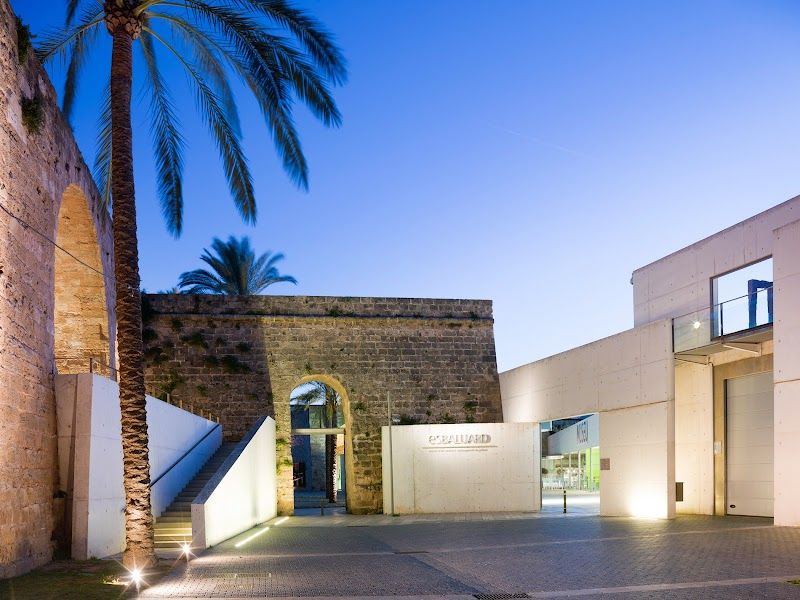
Es Baluard Museu d'Art Contemporani de Palma
Es Baluard cleverly weaves contemporary art into Palma's 16th-century fortifications, creating one of Europe's most architecturally striking museums. You'll find works by Picasso, Miró, and local hero Miquel Barceló alongside rotating exhibitions that focus heavily on Mediterranean artists. The permanent collection spans three floors, with particular strength in Spanish avant-garde and Balearic contemporary pieces that you won't see elsewhere. The experience flows from the stark white galleries into the original stone bastions, where Renaissance military architecture frames modern sculptures and installations. The contrast feels deliberate rather than jarring: you'll walk through vaulted chambers where cannons once stood, now displaying video art and photography. The rooftop terrace delivers genuinely spectacular harbor views, especially at sunset when the cathedral glows golden across the water. Most visitors rush through without reading the excellent English descriptions, missing the context that makes this collection special. The €6 admission (free for under 18s) represents solid value, but avoid Sundays when cruise ship crowds pack the small galleries. Focus your time on the second floor's Barceló room and don't miss the basement level where contemporary pieces sit within the original fortification walls.
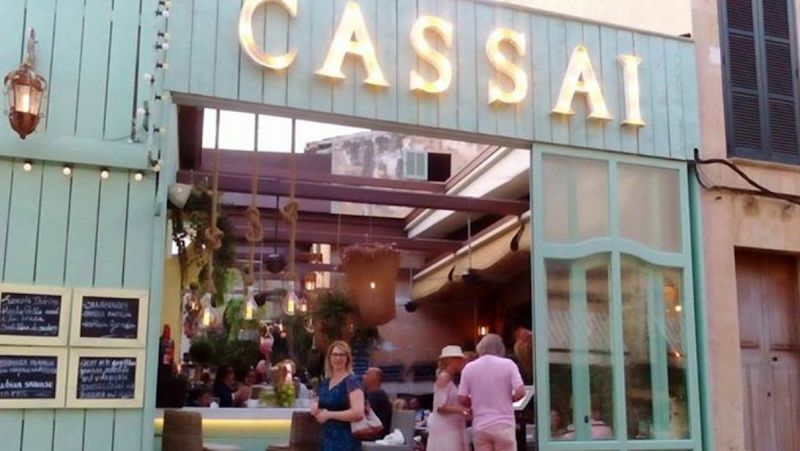
Cassai
Market-driven restaurant in Santanyí's stone center, focused on seasonal vegetables and seafood from nearby Portopetro. The menu changes based on what's available, morning catch, farm eggs, wild asparagus in spring. Small dining room with 8 tables and an open kitchen.
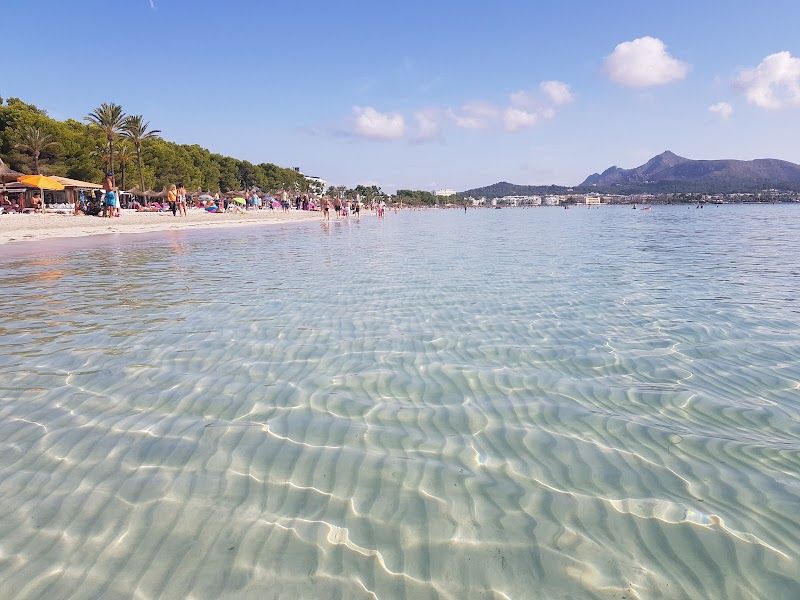
Platja d'Alcúdia
Platja d'Alcúdia stretches for 7 kilometers of powdery golden sand with water so shallow you can walk out 100 meters and still touch bottom. The entire bay faces north, which means it's sheltered from Mallorca's fierce southern winds, creating consistently calm conditions perfect for families with young kids. You'll find proper watersports centers every few hundred meters offering everything from paddleboards (15 EUR/hour) to catamaran rentals, plus wheelchair ramps at six different access points. The beach changes personality as you walk its length. Start near Alcúdia's medieval walls where pine trees provide natural shade and the crowd thins out considerably. Head south toward Port d'Alcúdia and you'll hit the hotel zone with its rows of sun loungers (8 EUR/day) and beach bars blasting music. The sand quality stays excellent throughout, but the water gets slightly deeper and clearer as you move away from the port area where small boats anchor. Most guides rave about the entire stretch, but honestly, the middle section near the big resort hotels feels generic and overpriced. The northern end near the old town gives you the same gorgeous sand with half the crowds and better value beach bars. Skip the expensive parasol rentals and bring your own shade, the sun here is relentless even in shoulder season. The southern merger with Platja de Muro is seamless and often less crowded if you don't mind the extra walk.
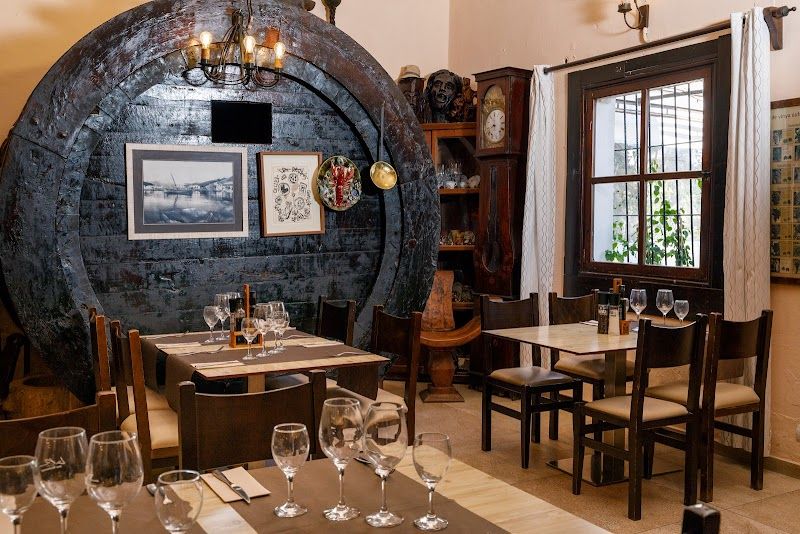
Restaurante Celler La Parra
Classic Inca celler with enormous wine vats and traditional Mallorcan cuisine at absurdly low prices. The three-course menú with wine costs EUR 15 and includes generous portions of stuffed peppers, roast pork, and flan. Popular with market-goers on Thursday mornings.
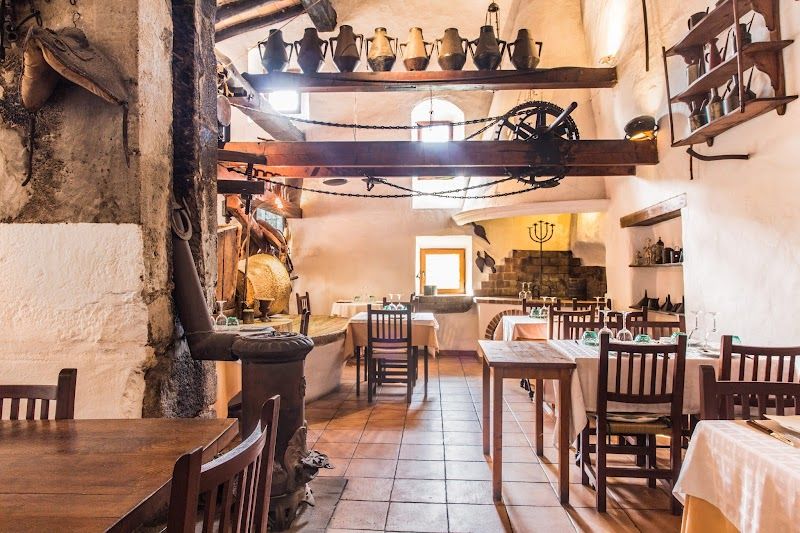
Ca'n Costa
Third-generation family restaurant in Valldemossa serving traditional Mallorcan dishes in a dining room decorated with vintage photos and farm implements. Famous for their tumbet and coca de patata dessert. The menú del día at EUR 18 includes wine and brings dishes your grandmother would recognize.
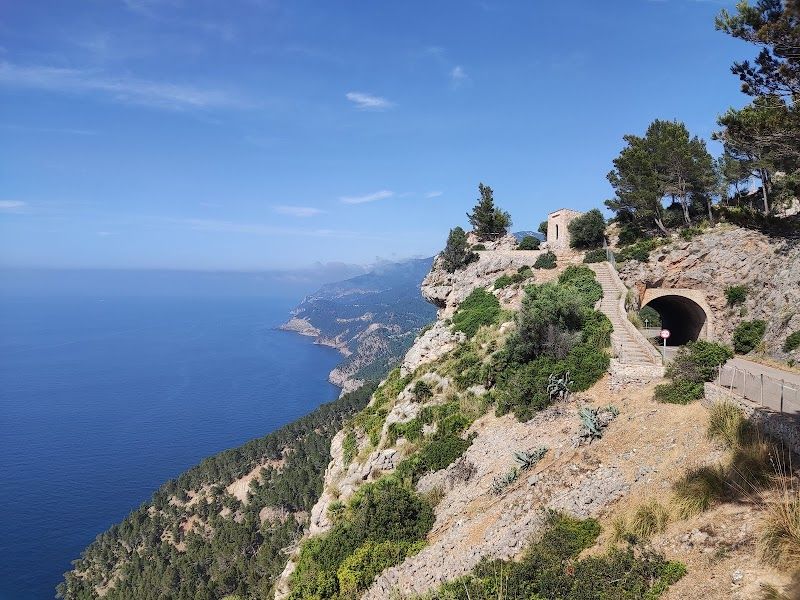
Es Mirador
Simple restaurant with a terrace overlooking the endless plains of Es Pla, located near the hilltop sanctuary of Bonany. Serves honest Mallorcan cooking, frit mallorqui, arros brut, llom amb col, with ingredients from local farms. The views extend to both coasts on clear days.
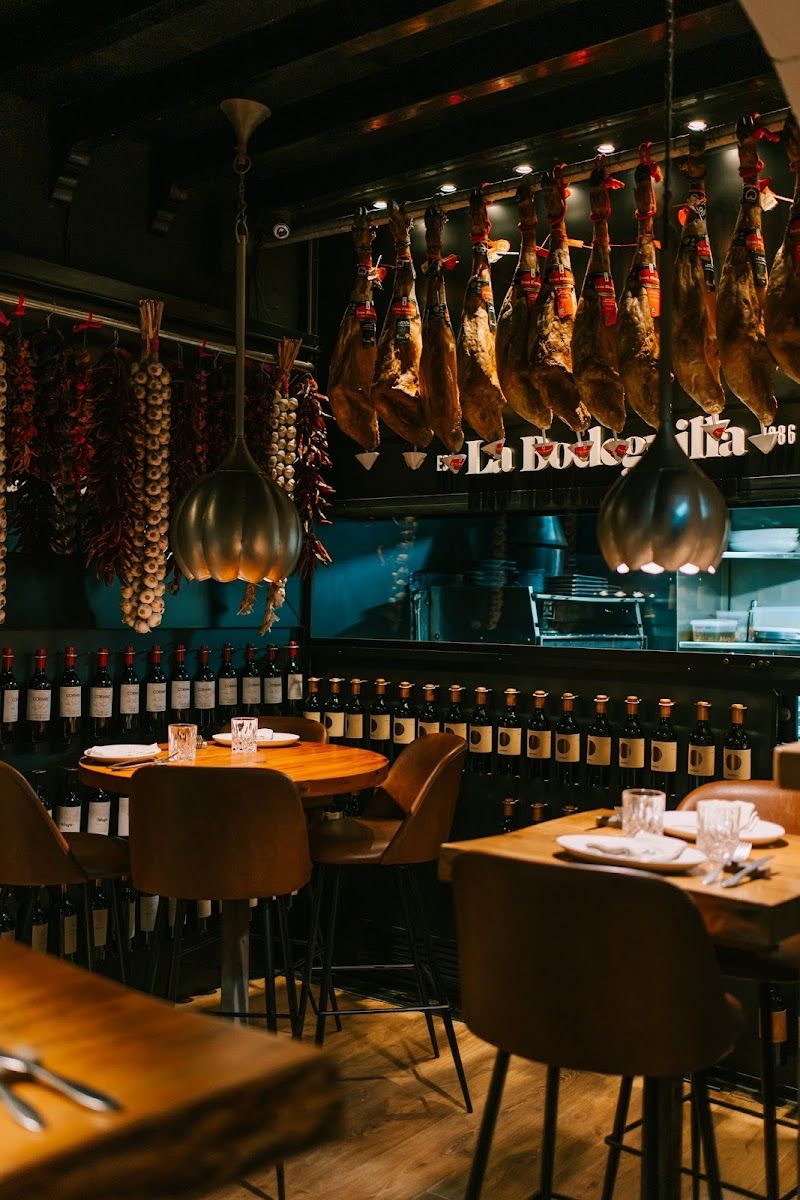
La Bodeguilla
Tiny, standing-room-only wine bar in Santa Catalina neighborhood pouring natural and organic wines from small Spanish producers. The owner personally selects every bottle and offers expert pairings with local cheeses and charcuterie. The unpretentious atmosphere attracts wine enthusiasts and neighborhood regulars.
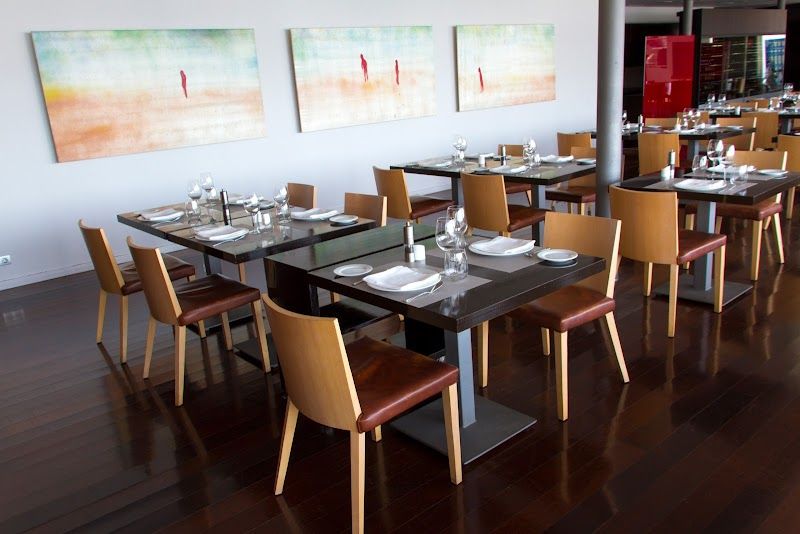
Stay Restaurant
Contemporary fine dining in a restored manor house in Llucmajor, with a tasting menu that costs EUR 85 and showcases Mallorcan ingredients through refined technique. The wine cellar houses 600+ references, heavy on Spanish natural wines. White tablecloths and serious service.
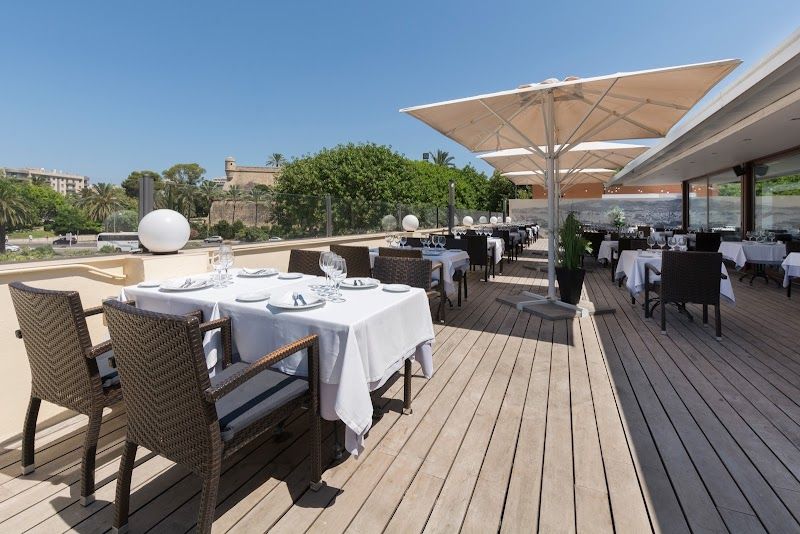
Ca'n Eduardo
Family-run seafood restaurant on Palma's city beach since 1943, with tables literally on the sand. Specializes in caldereta de llagosta and grilled fish sold by weight. The paella needs to be ordered for a minimum of two people and takes 30 minutes.
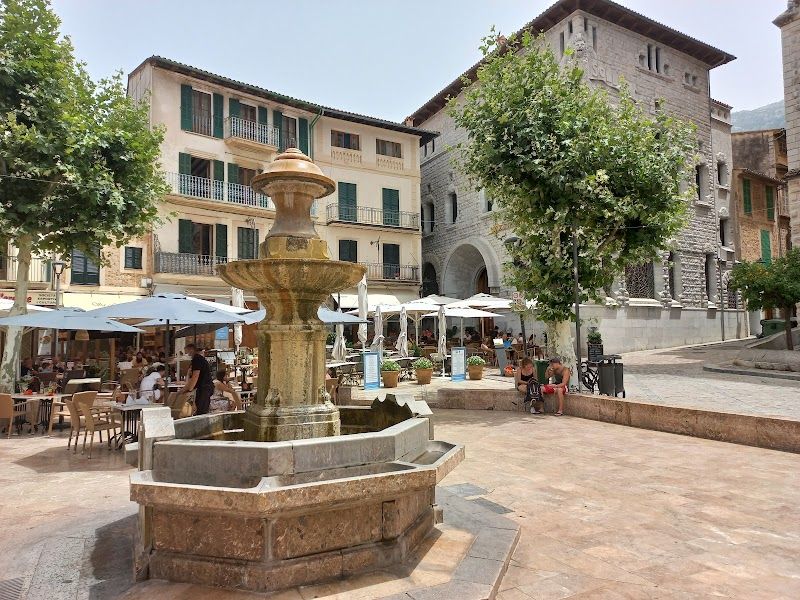
Plaça Constitució Sóller
The main square of Soller is surrounded by traditional cafes with terrace seating under plane trees, serving cortados for EUR 1.80 and fresh orange juice from the surrounding valley. The historic wooden tram rattles through the square every 30 minutes heading to Port de Soller. Cafes like Cafe Scholl and Es Punt have been local gathering spots for generations.
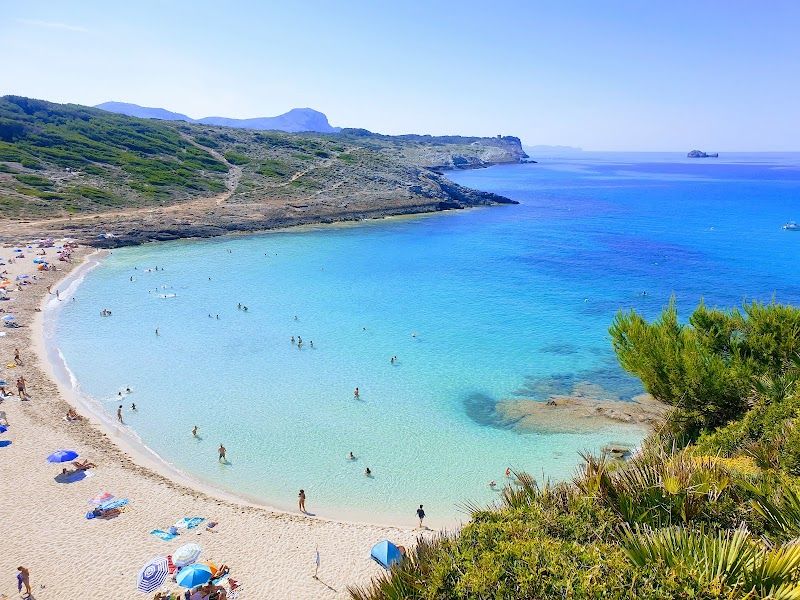
Cala Torta
Cala Torta delivers proper wilderness vibes just 90 minutes from Palma, where a 130-meter stretch of coarse sand meets rolling dunes and scrubby tamarisk trees. You'll find moderate surf that creates a constant soundtrack of crashing waves, plus genuine solitude even in August. The beach faces northeast, catching morning light beautifully and staying cooler than south-facing alternatives. The experience starts with a bumpy 2km dirt road that immediately signals you're leaving tourist Mallorca behind. Once you arrive, the beach opens up dramatically with golden sand giving way to smooth pebbles at the water's edge. Waves here are consistent but manageable for confident swimmers, while the backdrop of wild vegetation and distant hills feels refreshingly undeveloped. A single chiringuito serves basic drinks and bocadillos in summer, operating from a simple wooden shack. Most guides don't mention that this isn't a lounging beach, it's an escape beach. The coarse sand isn't comfortable for long sunbathing sessions, and the moderate surf makes it genuinely unsuitable for small kids or weak swimmers. Come for dramatic scenery and fewer crowds, not luxury. The chiringuito charges typical beach prices (beer around 4 EUR, simple sandwiches 8-10 EUR) but closes unpredictably in shoulder seasons.
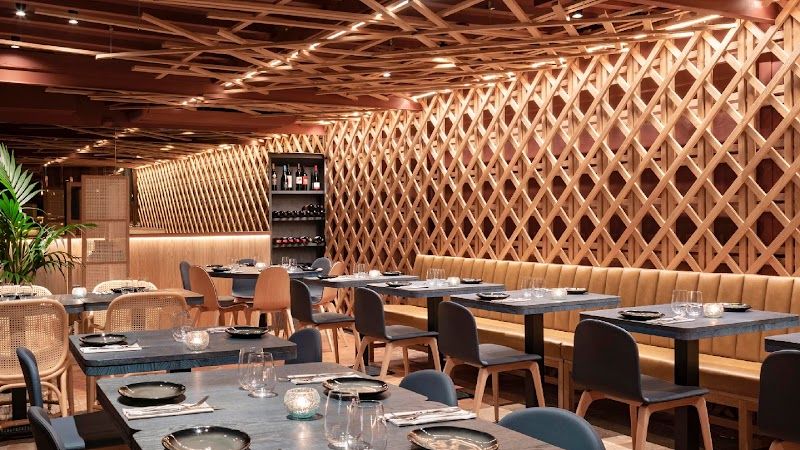
Forn de Sant Joan
Inventive Mediterranean restaurant in a restored townhouse with a spectacular interior courtyard. The tasting menu changes seasonally but always incorporates Mallorcan ingredients like Sóller prawns and Tramuntana lamb with modern techniques. Wine list focuses on Balearic and mainland Spanish producers.
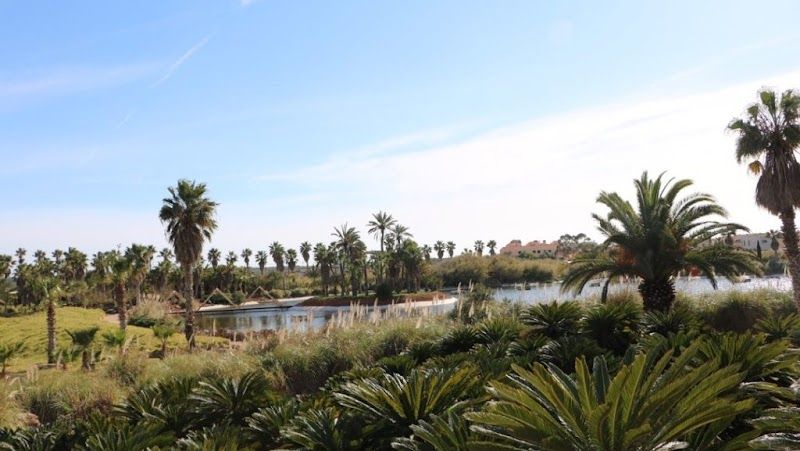
Botanicactus
Botanicactus sprawls across 50,000 square meters of southeastern Mallorca, housing Europe's most extensive cactus collection with over 12,000 species from five continents. You'll walk through distinct climate zones, from towering Mexican barrel cacti that dwarf visitors to delicate South African succulents arranged in themed gardens. The park includes a reconstructed traditional Mallorcan farmhouse and an artificial lake that feels oddly tropical against the spiky landscape. The experience flows along well-marked gravel paths that weave between massive agave plants and forests of columnar cacti reaching 15 feet high. Shade structures provide relief every few hundred meters, essential since most of the park bakes under full Mediterranean sun. The scale surprises first-time visitors: individual specimens can be decades old and utterly massive, while smaller gardens showcase intricate patterns of colorful succulents that look almost alien. At 12 EUR entry, it's pricey for what amounts to a very specialized garden that you'll either love or find boring after 45 minutes. Skip the overpriced cafe near the entrance and bring water instead. The farmhouse reconstruction feels like tourist padding, but the cactus collections genuinely impress, especially the barrel cactus section that most visitors rush past on their way to the lake.
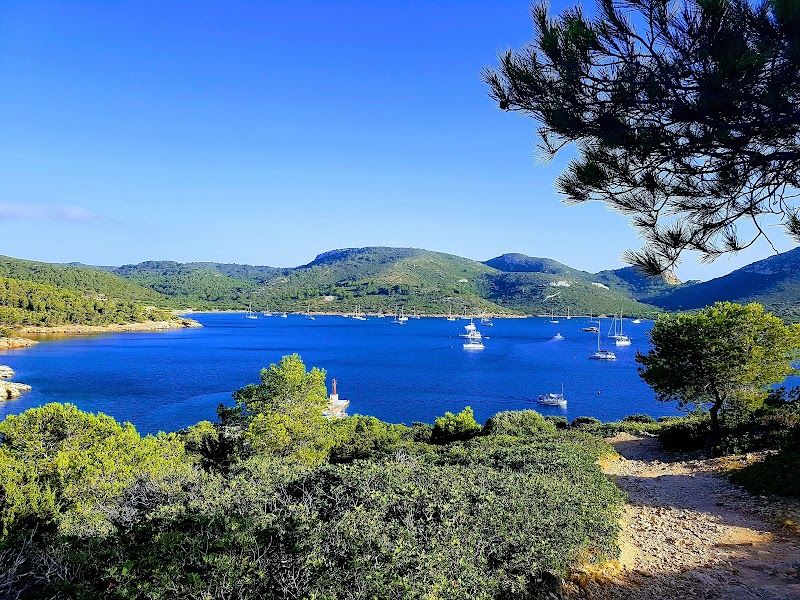
Cabrera Island Day Trip
Cabrera is a national park archipelago 14 km off the south coast of Mallorca: uninhabited islands with hiking trails, a 14th-century castle, and some of the clearest water in the Mediterranean. The boat from Colonia de Sant Jordi takes 45 minutes (EUR 40-50 return, April to October). On the island: hike to the castle (30 minutes each way, panoramic views), snorkel in the Blue Grotto (Sa Cova Blava, where the water glows neon blue), and eat your packed lunch at the small harbour. Daily visitor numbers are limited to protect the ecosystem. Book 2-3 weeks ahead in summer.
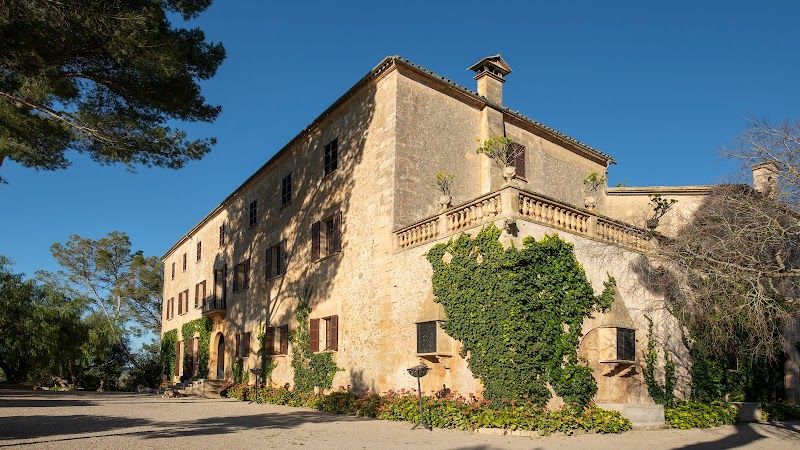
Els Calderers
Els Calderers is an 18th-century manor house that functions as a living museum of Mallorcan rural aristocracy. You'll walk through completely furnished rooms where the family actually lived, from the master's study lined with leather-bound books to the kitchen with its massive stone fireplace still blackened from centuries of cooking. The estate includes working grain mills, wine cellars carved into rock, and a collection of traditional Mallorcan animals including the famous black pigs and sturdy local donkeys. The visit flows naturally from the main house through courtyards to the working areas, and it genuinely feels like the family just stepped out for lunch. The chapel retains its original wooden pews and painted ceiling, while the servants' quarters show how the other half lived with simple beds and basic furniture. Craftspeople demonstrate traditional skills like basket weaving and blacksmithing in the original workshops, using tools and techniques unchanged for generations. Most guides oversell this as a major attraction, but it's actually perfect for families with kids who love animals and anyone genuinely interested in rural life rather than grand palaces. The folk dancing demonstration at noon gets crowded, so arrive by 11:30 or skip it entirely for a quieter experience. Entry costs around 15 EUR for adults, and you can easily see everything worthwhile in 90 minutes despite the suggested two hours.
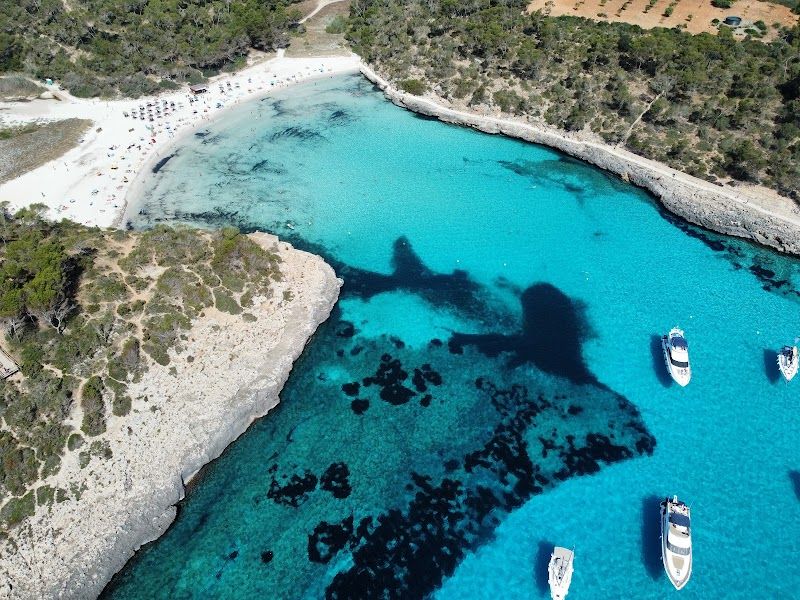
S'Amarador
S'Amarador delivers that postcard-perfect Caribbean beach look without leaving the Mediterranean. You'll find 145 meters of powdery white sand meeting shallow turquoise water so clear you can see your feet at waist depth. The beach sits within Mondragó Natural Park, which means the surrounding pine forests and rocky headlands stay completely undeveloped. The experience feels refreshingly uncommercialized compared to Mallorca's resort beaches. You'll wade into bathwater-warm shallows that stretch out for dozens of meters, perfect for families with kids or anyone who wants to float without worrying about depth. A single beach bar operates from a simple wooden structure, serving cold beers for 3 EUR and basic bocadillos for 6-8 EUR. The crowd stays mellow: mostly European families and couples who've made the 20-minute walk from the parking area. Most guides oversell this as a secret paradise, but it gets properly busy from 11am to 4pm in summer. The truth is, you're better off arriving early morning or late afternoon when the light turns that turquoise water absolutely electric. Skip the overpriced sunbed rentals at 15 EUR per day and bring your own towel. The small beach bar runs out of food by 3pm, so eat beforehand if you're staying all day.
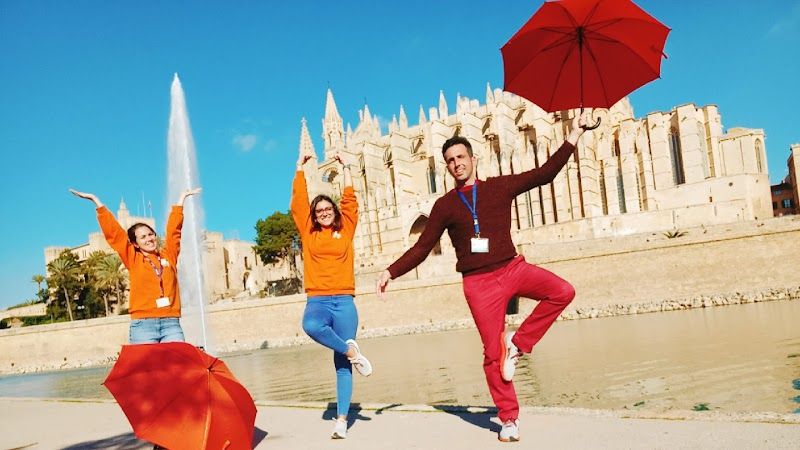
Palma Free Walking Tour
This free walking tour delivers exactly what Palma's old town does best: layers of history you can actually see and touch. You'll explore genuine Roman foundations, wander through medieval courtyards that most tourists walk right past, and learn how the Jewish Quarter's narrow streets tell stories about religious persecution. The Arab Baths are the real highlight, a 10th-century hammam that's remarkably intact, not some reconstructed tourist attraction. Your guide keeps groups to around 15 people, so you can actually hear everything and ask questions without shouting over crowds. The route winds through La Seu's shadow, into residential streets where locals hang laundry from Gothic balconies, then through stone passages that feel genuinely ancient. The atmosphere shifts completely as you move between neighborhoods: from tourist-heavy cathedral squares to quiet residential corners where you'll hear Spanish conversations echoing off medieval walls. Most free tours in Europe are mediocre, but this one's genuinely informative without being overwhelming. The guides know their stuff and don't just recite Wikipedia facts. Since it's tip-based, budget around 10-15 EUR per person if you're satisfied. Skip the afternoon tours in summer, they're brutal in the heat, and avoid Friday afternoons when local school groups sometimes join.
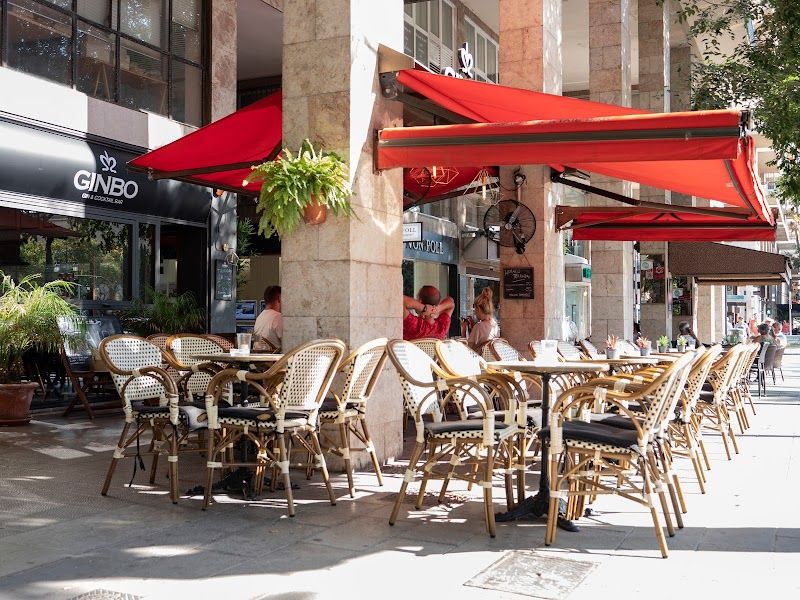
Ginbo Cocktail Bar
Award-winning cocktail bar in Palma's old town specializing in gin-based drinks with over 150 varieties from around the world. The bartenders craft creative cocktails using local botanicals and house-made syrups in an elegant, minimalist setting. Known for their signature Mallorcan-inspired serves using local herbs.
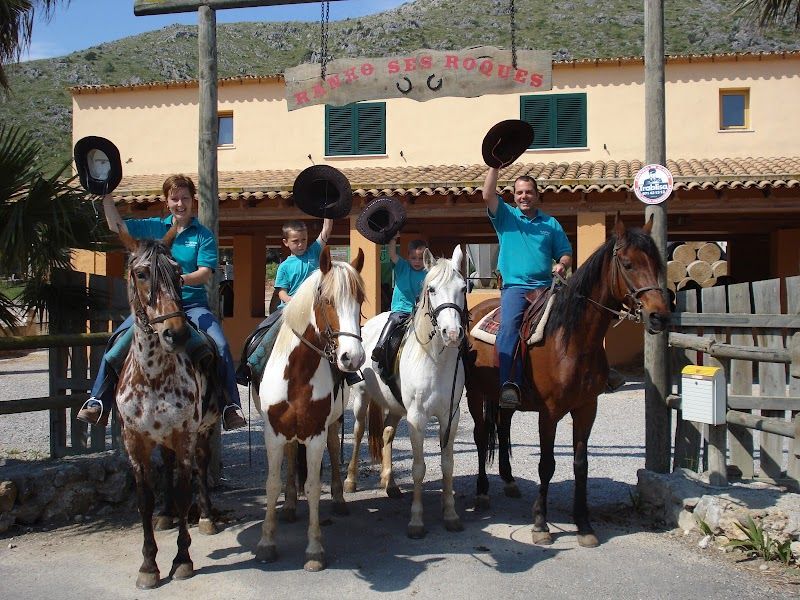
Rancho Ses Roques
Rancho Ses Roques takes you through Mallorca's Tramuntana foothills on horseback, following ancient stone paths that locals have used for centuries. You'll ride well-trained horses through traditional fincas and up mountain trails near Valldemossa, with routes designed for every skill level from complete beginners to experienced riders. The two-hour rides include panoramic viewpoints where you can see across the island's northern coastline. The experience feels authentically Mallorcan rather than touristy. Your guide leads small groups along narrow trails bordered by centuries-old stone walls, through olive groves and past working farms where you might spot local farmers tending their land. The horses are calm and responsive, making even nervous beginners feel secure as you climb gentle slopes toward mountain vistas. The pace stays relaxed, with plenty of stops for photos and to soak in the scenery. Most riding centers on the island feel commercial, but this one maintains a genuine finca atmosphere. Sunset rides cost around 65 EUR per person, offering the best value, cooler temperatures and pleasing light, though morning rides at 45 EUR work well too if you want fewer crowds. We recommend skipping the one-hour option, as it barely gets you into the mountains where the main attractions lie. Morning rides start at 45 EUR and sunset rides at 65 EUR per person.
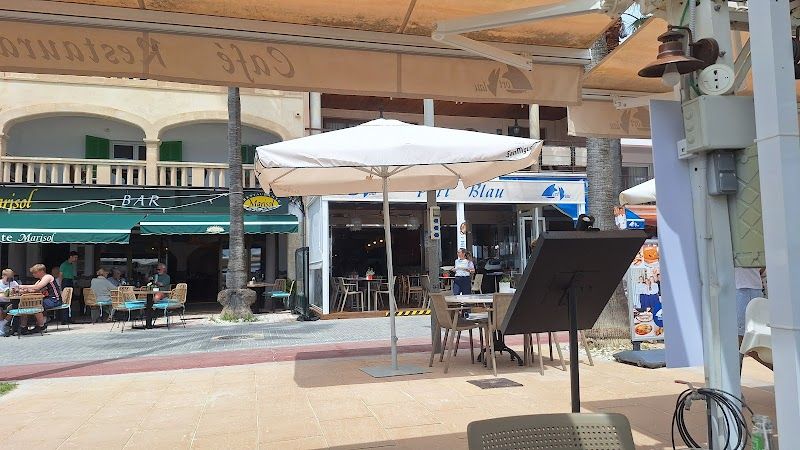
Port Blau
Harbor-side seafood restaurant in tiny Cala Figuera, where fishing boats still tie up at the stone docks. The catch displayed on ice comes from the boats you see outside the window. Grilled fish sold by weight, exceptional grilled calamari, and rice dishes for two.
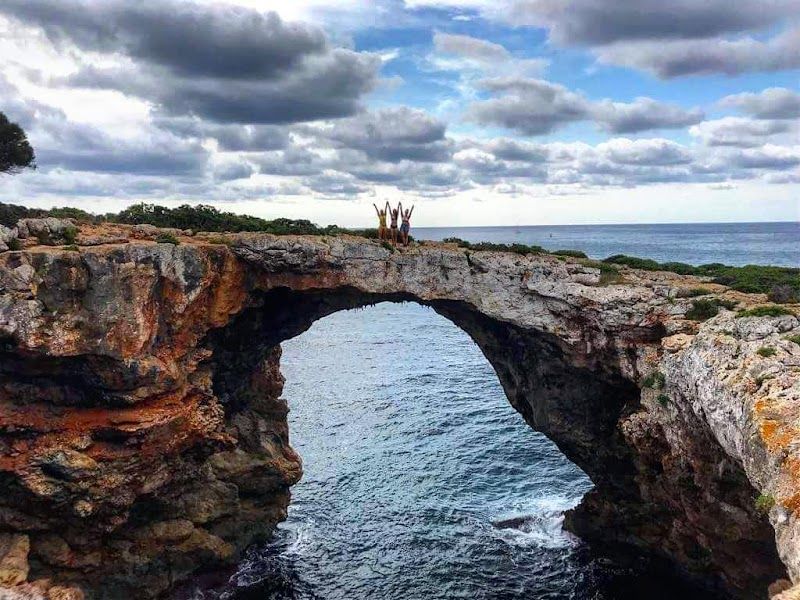
Cala Varques
Cala Varques is the cove that Mallorcans send you to when they trust you. There is no road access, the 20-minute walk through scrubland keeps the crowds manageable, there are no facilities at all, and the water is turquoise in a way that makes you check if someone has added dye. The cove is enclosed by low cliffs with some shade under the trees. Snorkelling is excellent on the rocky sides. Bring everything you need (water, food, shade, towel). Park on the road between Porto Cristo and Cales de Mallorca (informal roadside parking, follow the footpath). This is as close to a private cove as you will get without a boat.
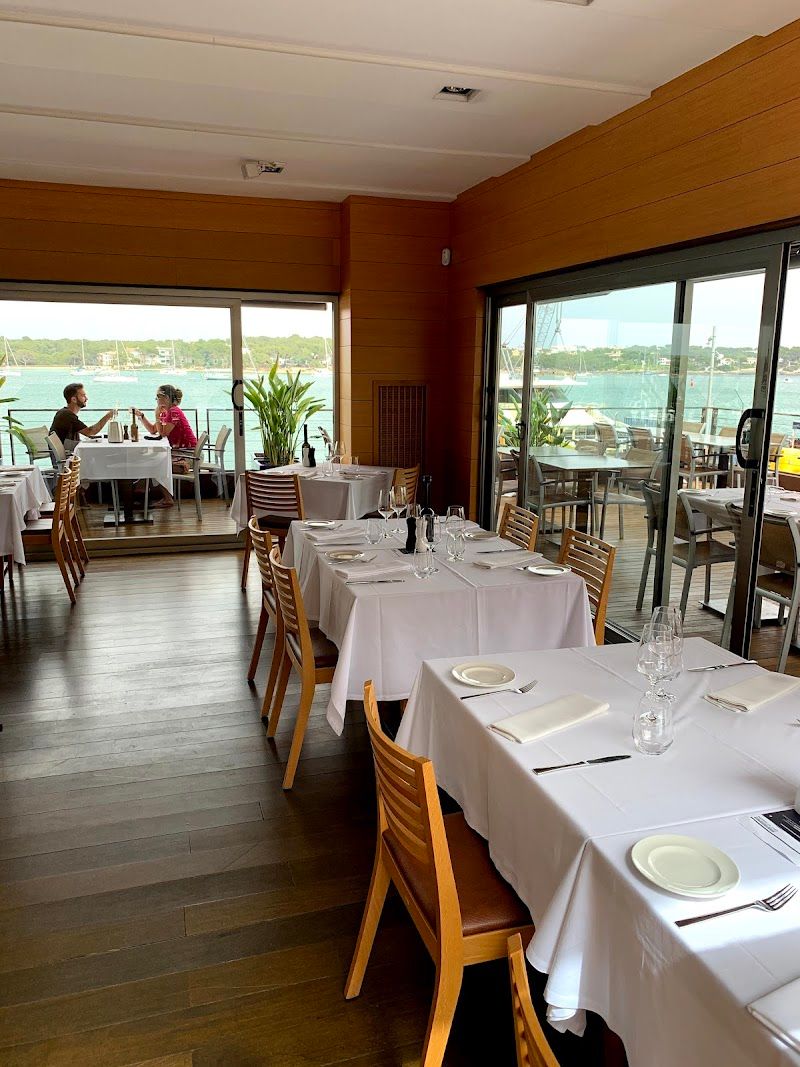
Sa Llotja
Harbourfront restaurant in Porto Cristo specializing in caldereta de llagosta and whole roasted fish. The lobster stew costs EUR 75 per person and requires 24 hours notice, but the simpler grilled fish is excellent and half the price. Solid wine list featuring Mallorcan whites.
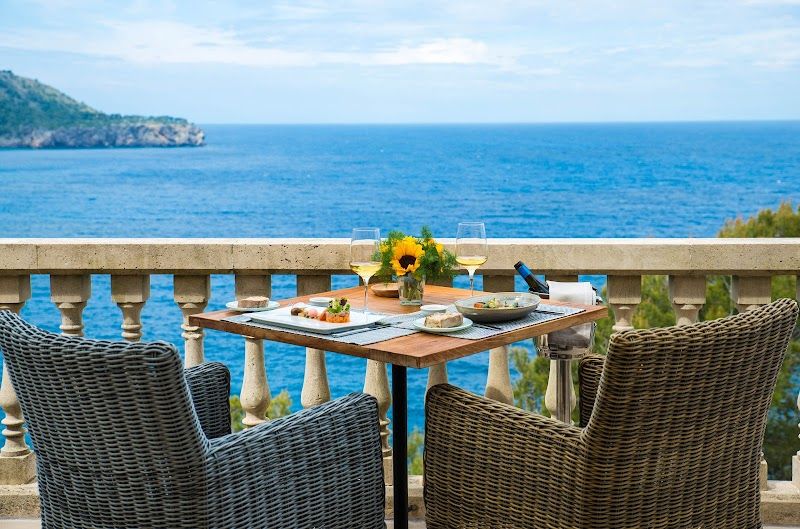
Béns d'Avall
Michelin-starred restaurant perched on terraces descending toward the sea between Deià and Sóller. The tasting menu costs EUR 110 and features hyper-local ingredients, fish from Sóller port, lamb from Tramuntana pastures, vegetables from the restaurant's own gardens. The views across the coast are exceptional.
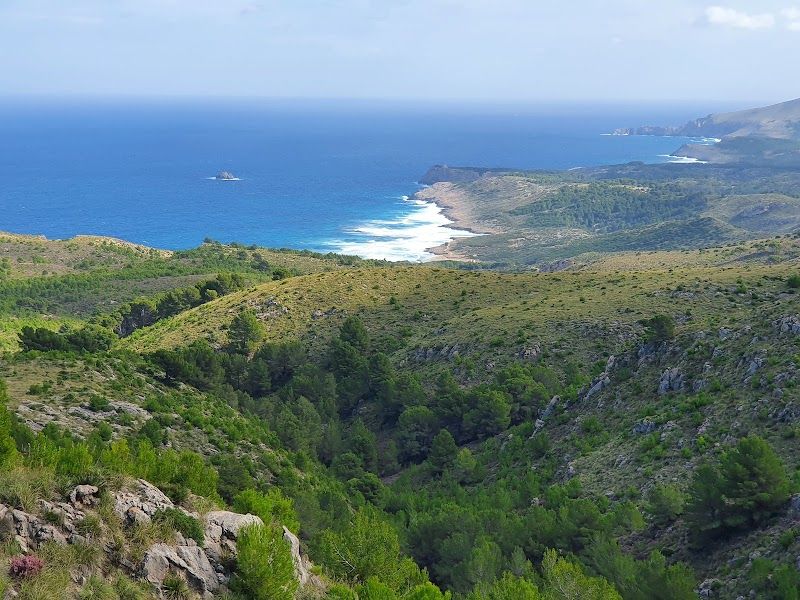
Parc Natural de Llevant
Parc Natural de Llevant sprawls across Mallorca's wild northeastern corner, protecting 1,671 hectares of coastal cliffs, scrubland, and the island's largest population of endemic dwarf fan palms. Nine well-marked trails wind through landscapes that feel more like North Africa than typical Mediterranean coastline, with the highlight being the 90-minute coastal route to Cala Torta, one of Mallorca's most pristine beaches. You'll spot wild tortoises, rare birds, and if you're lucky, the park's small herd of feral goats navigating impossible cliff faces. The walking here feels genuinely wild compared to most Mallorcan nature spots. Pine forests give way to rocky headlands where waves crash 100 meters below, and the silence is broken only by wind and birdsong. The coastal trail undulates constantly, requiring proper hiking shoes, but rewards you with views across to Menorca on clear days. Two information centers provide detailed maps, though trail markings are excellent throughout. Most visitors underestimate the difficulty and arrive in flip-flops, which is a mistake on these rocky paths. The park is completely free, parking included, making it exceptional value compared to Mallorca's commercialized attractions. Skip the inland forest trails unless you're obsessed with botany. Focus on the coastal routes for the real payoff, and bring more water than you think you need.
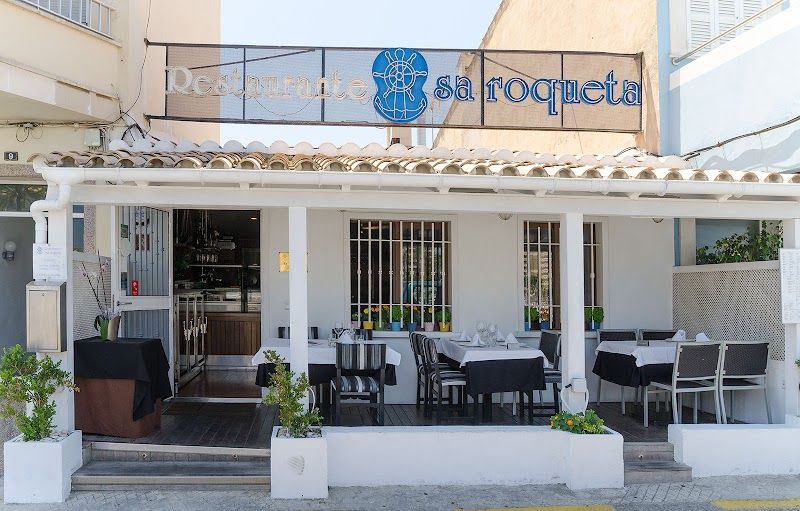
Sa Roqueta
Neighborhood restaurant in Palma's Santa Catalina district serving creative tapas and small plates. The kitchen riffs on Mallorcan classics, deconstructed pa amb oli, squid ink croquettes with alioli, grilled octopus with sobrassada. Young crowd, natural wines, reasonable prices.
Restaurante Jardín
Beachfront restaurant in Puerto Pollença with tables literally on the sand and views across the bay to the Formentor peninsula. Specializes in paella and fideuà, both requiring 30 minutes and a two-person minimum. The seafood is exceptionally fresh from local boats.
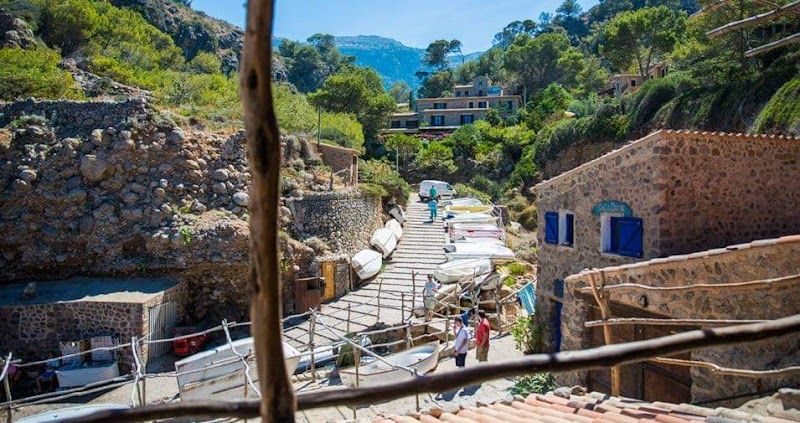
Cala Deià
Cala Deià sits at the bottom of a dramatic cliff face where traditional Mallorcan fishermen's huts, carved directly into the limestone rock, create one of the island's most atmospheric lunch spots. You'll descend steep stone steps for about 10 minutes through pine trees and wild rosemary to reach a small pebble beach dominated by these wooden boathouses. The crystal clear water here is deep emerald green, perfect for swimming once you navigate the rocky entry. The scene feels authentically Mediterranean: local fishermen mending nets beside turquoise water while Ca's Patro March restaurant serves grilled fish literally on the rocks. Waves crash against the boulders just meters from your table, and the whole cove echoes with the sound of water moving stones. You'll share this space with day-trippers from Deià village above, but it never feels crowded because of the challenging access. The contrast between the rugged cliffs and the impossibly blue water makes every photo look like a postcard. Most people underestimate how tricky the walk down becomes, especially in summer heat or after a few drinks at lunch. The stone steps are uneven and can be slippery, so decent shoes are essential. Ca's Patro March charges around 25-30 EUR per person for fresh fish dishes, and yes, you absolutely need reservations in summer. Skip the overpriced drinks and bring water for the hike back up, which takes 15 minutes and will leave you breathless.
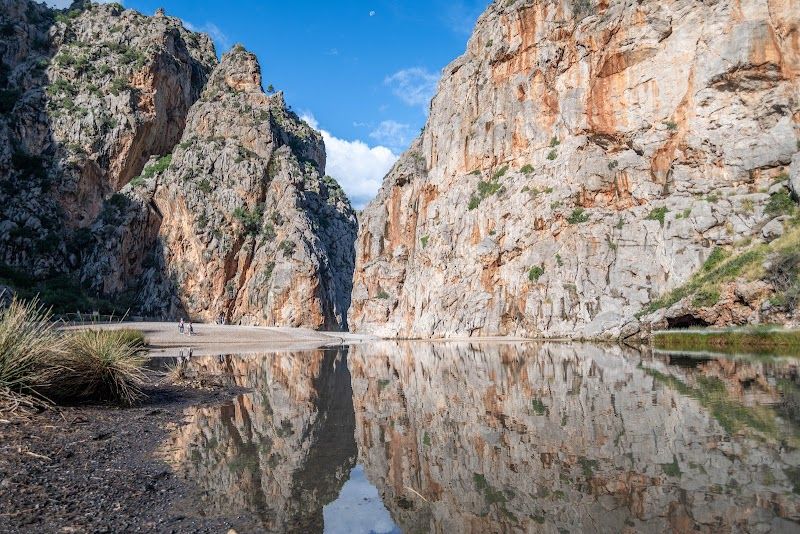
Torrent de Pareis Gorge Hike
The Torrent de Pareis is the most dramatic hike on Mallorca: a gorge walk from the village of Escorca down to Sa Calobra beach, where the gorge meets the sea between 200-metre limestone walls. The route is 3 km but takes 3-4 hours because you are scrambling over boulders, wading through pools (after rain), and navigating narrow passages. Moderate to challenging difficulty. Wear proper hiking shoes (the rocks are slippery). The gorge mouth at Sa Calobra is accessible by road (the 12 km descent is 14 hairpin bends) or by boat from Port de Soller. In July, a classical concert is held inside the gorge mouth.
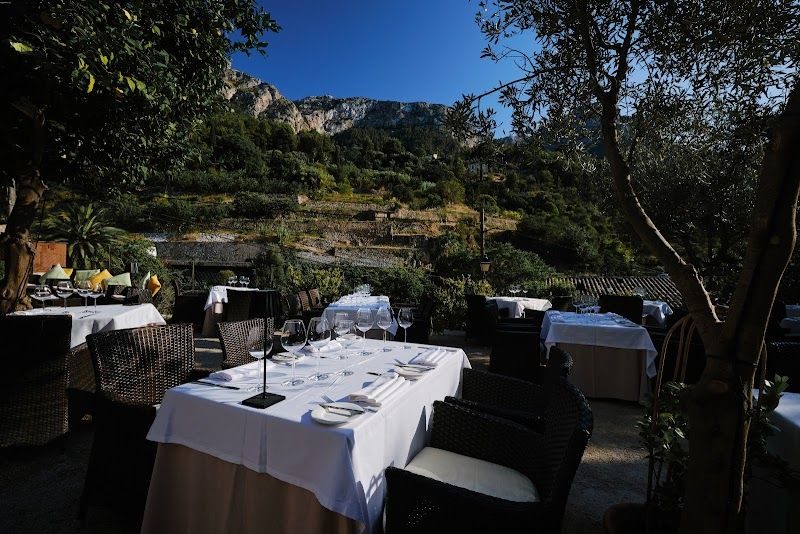
Restaurant Sebastian
Contemporary Mallorcan cuisine in Deià village with a Michelin Bib Gourmand. Chef uses vegetables from the restaurant's own terraced gardens and sources fish from Sóller port. The EUR 45 menu degustación is exceptional value, featuring innovative takes on island classics.
Tramuntana Tours
Tramuntana Tours takes you through the Serra de Tramuntana mountains in Mercedes minivans with local guides who've lived here for decades. You'll wind through ancient stone villages like Valldemossa (where Chopin wintered), artist haven Deià with its clifftop cemetery, and valley town Sóller surrounded by orange groves. The route includes stops at olive oil mills, viewpoints over the Mediterranean, and a proper lunch at a family restaurant in one of the mountain villages. The experience feels like exploring with a knowledgeable local friend rather than following a script. Your guide adapts the route based on weather and group interests, spending extra time at photography spots if you're into that or lingering at cultural sites for history buffs. The small group size (maximum 7) means you can ask questions freely and make spontaneous stops. You'll drive narrow mountain roads that most rental car tourists avoid, accessing viewpoints that feel completely isolated. Most tour companies rush through three villages in a checklist approach, but Tramuntana Tours gets the pacing right. At €85 per person, it's pricier than bus tours but worth it for the personalized experience. Skip the summer months when roads get clogged with rental cars. Book the morning departure to avoid afternoon heat and get better light for photos at the coastal viewpoints.
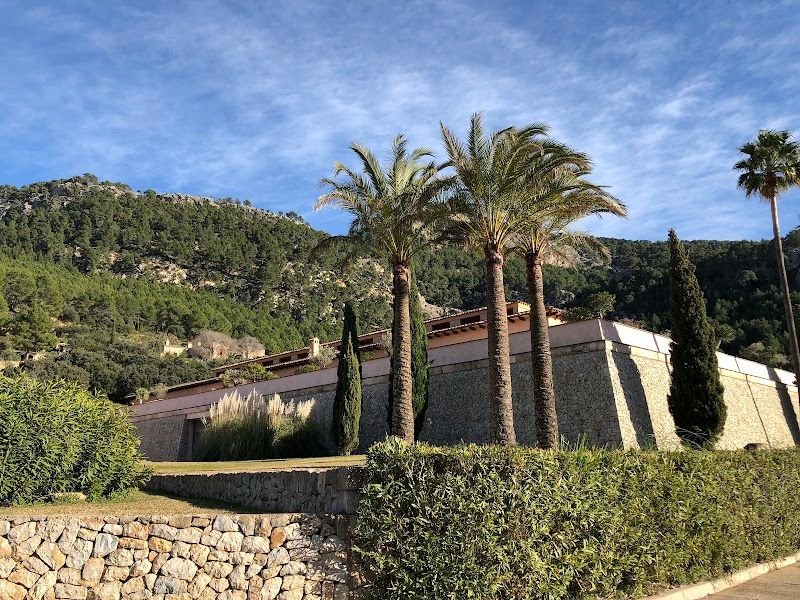
CCA Andratx
CCA Andratx houses one of Spain's most ambitious contemporary art spaces, sprawling across 56,000 square meters of galleries, sculpture gardens, and artist studios. You'll encounter rotating exhibitions that focus heavily on emerging international artists, often featuring large-scale installations and experimental media that bigger museums won't touch. The building itself, designed by Valencia's GRAS architects, feels like a piece of contemporary sculpture with its clean lines and floor-to-ceiling windows framing the Tramuntana mountains. Walking through feels like exploring a high-end private collection rather than a traditional museum. The galleries flow seamlessly into outdoor sculpture areas where contemporary works sit against Mediterranean landscaping. You'll often spot artists in residence working in their studios, and the scale means you can easily spend two hours without seeing everything. The mountain backdrop through those massive windows competes with the art for your attention, especially during golden hour. Most travel guides oversell this as essential viewing, but it's really for serious contemporary art fans. Skip it entirely if you prefer classical or historical pieces. The €12 admission feels steep given the hit-or-miss nature of rotating exhibitions, though the architecture alone justifies a visit for design enthusiasts. Check their website before visiting since some galleries close between exhibition changes, leaving you with less to see than expected.
Café Sa Plaça
Family-run café in the heart of Artà's main square serves excellent coffee and homemade pastries that have been crafted there since 1920. It's a genuine local spot where residents often gather for breakfast and sample traditional Mallorcan ensaimadas. The café's outdoor space offers views of the Sant Salvador sanctuary on the hill and is a popular spot to observe the local culture.
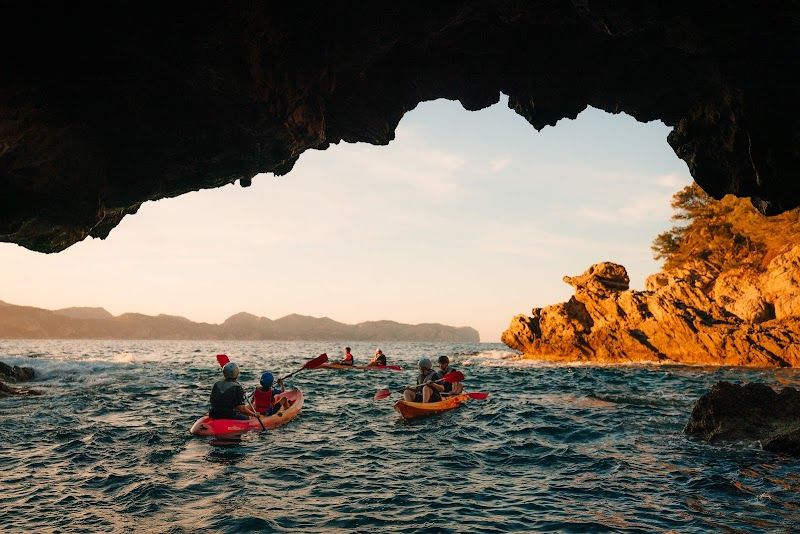
Sea Kayak Mallorca
Sea Kayak Mallorca runs half-day tours along the eastern coast where you'll paddle into genuine sea caves, snorkel in crystal-clear coves, and explore sections of coastline you can't reach by foot. The four-hour trips start from Sa Ferradura near Alcúdia and head toward Cala Romántica, with proper wetsuits, waterproof gear, and decent kayaks included. You'll get commentary on the limestone geology and spot grouper, octopus, and the occasional turtle. The paddle feels surprisingly adventurous for a tourist activity. You'll glide through narrow cave entrances where the water glows electric blue from reflected sunlight, then emerge into secluded coves surrounded by pine-covered cliffs. Swimming breaks happen at spots where the water drops to 15 meters deep and stays perfectly clear. The guides know exactly which caves are safe to enter and which snorkeling spots have the best marine life. Most sea kayaking tours in Mallorca stick to boring coastal paddling, but these guys actually take you inside proper caves and to genuinely isolated spots. Skip the afternoon tours when winds pick up and waves make cave entries sketchy. The tours cost around 65 EUR per person and book up fast in summer, so reserve ahead despite what their website claims about walk-ins.
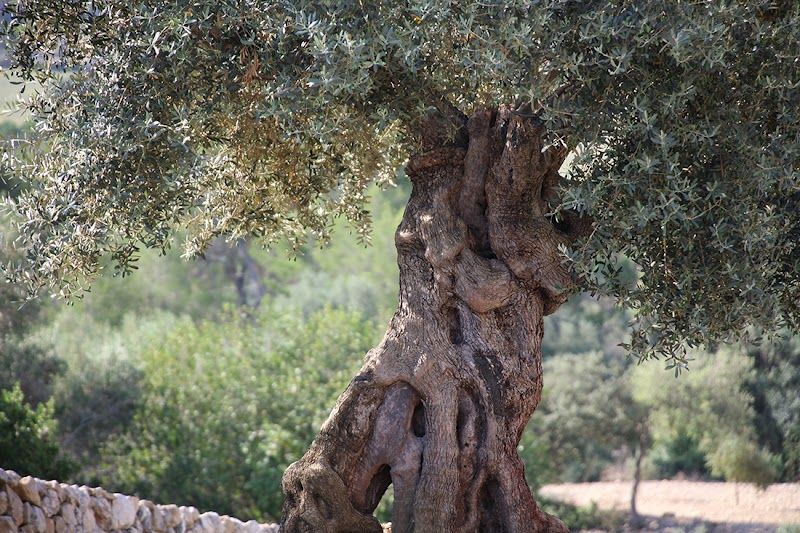
Vino y Olivas Tours
Vino y Olivas runs intimate wine tours through Mallorca's Binissalem region, visiting two family-owned wineries where you'll taste indigenous grapes like the peppery Manto Negro and crisp Prensal Blanc. You'll get proper cellar tours with the winemakers themselves, not just a tasting room experience, and learn why these local varieties thrive in Mallorca's limestone soils. The tour caps at eight people, so you actually get to ask questions and try wines that never leave the island. The day starts with pickup from Palma in a comfortable minivan, then winds through terraced vineyards backed by the Tramuntana mountains. At each winery, you'll walk through working cellars where oak barrels line stone walls, then sit for proper tastings paired with local cheese and charcuterie. The guides know their stuff about Mallorcan wine history and aren't pushing sales, just genuine enthusiasm for these small producers. Most wine tours here are tourist traps serving mediocre Tempranillo, but this one focuses on authentic Mallorcan varietals you can't find elsewhere. The 85 EUR price includes transport, all tastings, and food pairings, which is fair for the quality. Book the Thursday tour if possible since you'll hit Binissalem's market and can buy bottles directly from producers at better prices than in Palma shops.
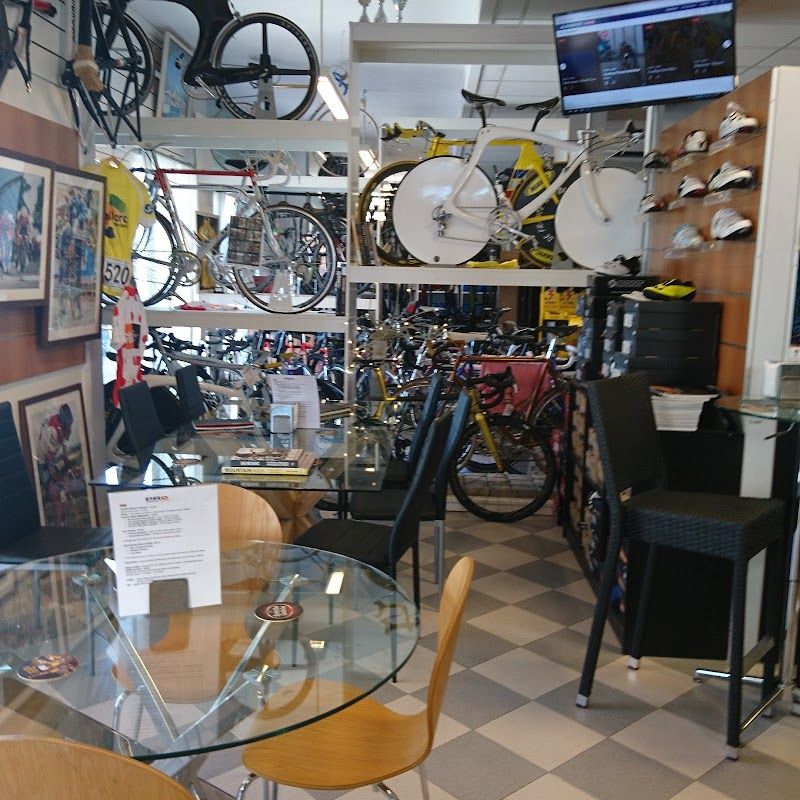
Pro Cycle Mallorca
Pro Cycle Mallorca runs the island's most professional guided road cycling tours, specializing in the legendary Serra de Tramuntana mountains. You'll tackle routes from gentle 60km coastal rides to brutal 120km climbs including the famous Sa Calobra descent, all with support vehicles carrying spare wheels, tools, and energy bars. Their guides know every switchback and can point out the exact spots where pros train during winter camps. The company provides high quality Trek bikes, but serious cyclists bring their own. The experience feels like joining a semi professional training camp rather than a tourist ride. Groups max out at 12 riders, and guides adjust pace constantly to keep everyone together on climbs. Support vans leapfrog the group, appearing at strategic points with cold drinks and mechanical help. The Sa Calobra route is genuinely challenging: 9km of hairpin turns dropping 700 meters, followed by the grinding climb back up. Views across the Mediterranean make the suffering worthwhile, and photo stops are frequent. Most cycling tour companies in Mallorca are overpriced tourist traps, but Pro Cycle justifies its 85 EUR daily rate with genuinely expert guiding and premium equipment. Skip their beginner rides if you're already comfortable on road bikes. The real value is in their advanced mountain routes where local knowledge matters most. Book directly through their website to avoid third party markup, and confirm your fitness level honestly during booking.
Oceanics Mallorca
Oceanics Mallorca runs coasteering adventures along the wild southwestern cliffs near Palma, where you'll jump from rocky ledges 3 to 12 meters into crystal-clear Mediterranean water. The routes weave through sea caves, natural swimming pools, and rocky scrambles that most tourists never see. Your qualified guide adjusts the difficulty based on your group's comfort level and daily sea conditions, so beginners get gentler 3-meter jumps while experienced thrill-seekers can tackle the full 12-meter drops. The experience starts with wetsuit fitting at their base, then a short drive to whichever cliff section has the best conditions that day. You'll spend three hours moving along the coastline, alternating between careful rock scrambling, swimming through turquoise pools, and the adrenaline rush of cliff jumping. The water is surprisingly warm from May through October, and the limestone caves create natural shelters when you need a breather. Your guide knows exactly which ledges are safe and which caves have the most dramatic acoustics. Most adventure companies in Mallorca stick to the same overcrowded spots, but Oceanics uses local knowledge to find quieter sections of coast. The €65 per person price includes all gear and is fair value for three hours with small groups, usually 6-8 people maximum. Book directly through their website to avoid tour operator markups, and don't worry if you're not a strong swimmer since the wetsuits provide plenty of buoyancy.
Exploramallorca Caving
Exploramallorca Caving takes you into genuine wild caves in Mallorca's southeast, not the touristy show caves everyone visits. You'll crawl through narrow passages, wade through underground rivers, and squeeze into chambers that have never been developed for mass tourism. The limestone formations here are spectacular: flowstone cascades, delicate soda straws, and cathedral-sized chambers lit only by your headlamp. The three-hour expedition starts with basic caving instruction before you descend into complete darkness. You'll spend most of your time crawling, climbing, and wading through knee-deep water. The highlight is reaching a massive underground chamber where you can actually stand upright and appreciate the scale. Your guide knows every handhold and will push you just enough to feel accomplished without being genuinely dangerous. This isn't for claustrophobic types or anyone expecting Instagram-friendly cave tours. You'll get properly muddy and cold, the wetsuits smell, and some passages require genuine squeezing. But that's exactly why it's brilliant compared to the sanitized Caves of Drach experience. Book directly through their website to avoid tour operator markups. The 65 EUR price point makes this excellent value for a genuine adventure activity.
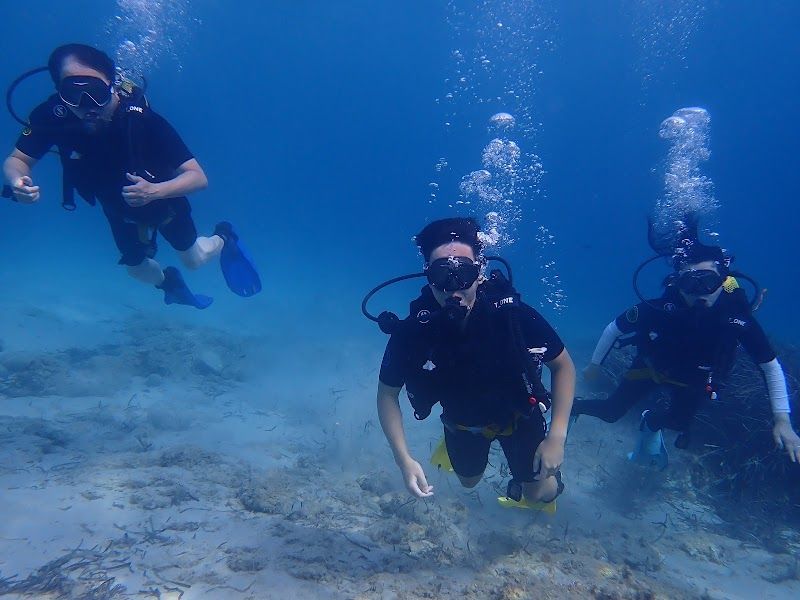
Zoea Mallorca Dive Center
Zoea Mallorca operates from Porto Colom on the east coast, not southwest as often listed, specializing in Cathedral Cave and the Dragonera wreck. These aren't beginner sites: Cathedral Cave requires confident buoyancy control in overhead environments, while the Dragonera sits at 30 meters with moderate currents. You'll see groupers, octopus, and schools of barracuda, plus the cave's famous light columns when conditions align perfectly. The experience starts with detailed briefings about each dive site, which many operators skip. Groups max out at six divers per instructor, so you're not fighting crowds underwater or waiting around on the boat. The two tank format gives you Cathedral Cave first, followed by either the wreck or nearby wall dives depending on conditions. Gear is newer Scubapro equipment, properly maintained and sized correctly. Most dive guides won't tell you this: Cathedral Cave gets cancelled frequently due to swell, especially October through March. The afternoon timing for light beams only works on calm, sunny days, maybe 40% of the time. Two tank dives run around 75 EUR, which includes everything but underwater photos. Skip their beginner courses and go elsewhere for training, this outfit shines with experienced divers on challenging sites.
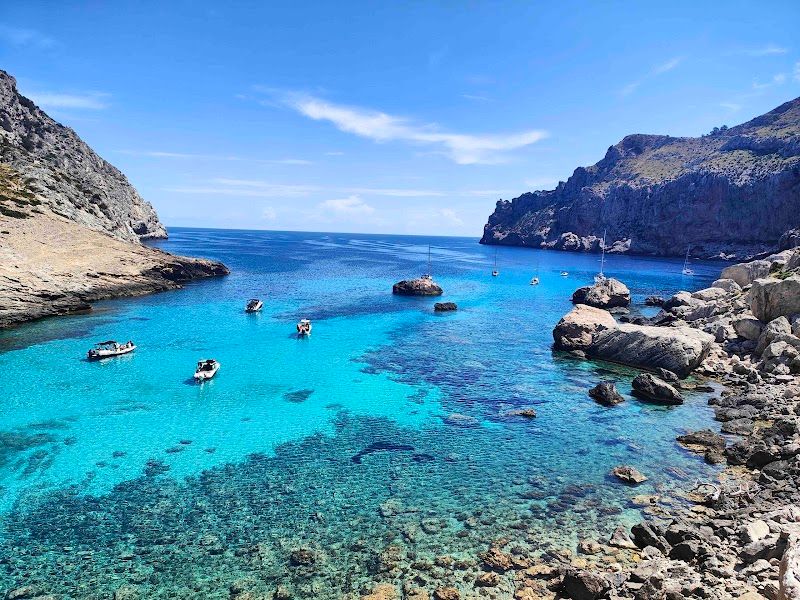
Cala Figuera - Formentor
Cala Figuera sits at the end of a rocky scramble down from the famous Mirador Es Colomer, offering some of the clearest water you'll find on Mallorca's north coast. This isn't your typical beach: it's a narrow rocky inlet where smooth limestone platforms create natural diving boards 3 to 5 meters above impossibly blue water. The depth drops off quickly, making it perfect for snorkeling around the underwater rock formations, and you'll often have it to yourself if you time it right. The experience feels like discovering your own private swimming hole, even though you're just minutes from one of the island's most photographed viewpoints. You'll climb down a well-marked but steep trail for about 10 minutes, then navigate across smooth rocks to find your spot. The water stays refreshingly cool even in summer, and the clarity lets you see straight to the bottom at 4 to 5 meters deep. Most people spend 2 to 3 hours here, alternating between cliff jumping, snorkeling, and lounging on the sun-warmed rocks. Here's what most guides don't mention: the space is genuinely tiny, fitting maybe 20 people maximum before it feels overcrowded. Come before 10am or after 4pm to avoid the worst crowds from the tour buses at Es Colomer above. Bring everything you need because there's absolutely nothing here, not even shade. The rocks can be slippery when wet, so proper water shoes are worth it. Skip this if you need facilities or easy beach access.
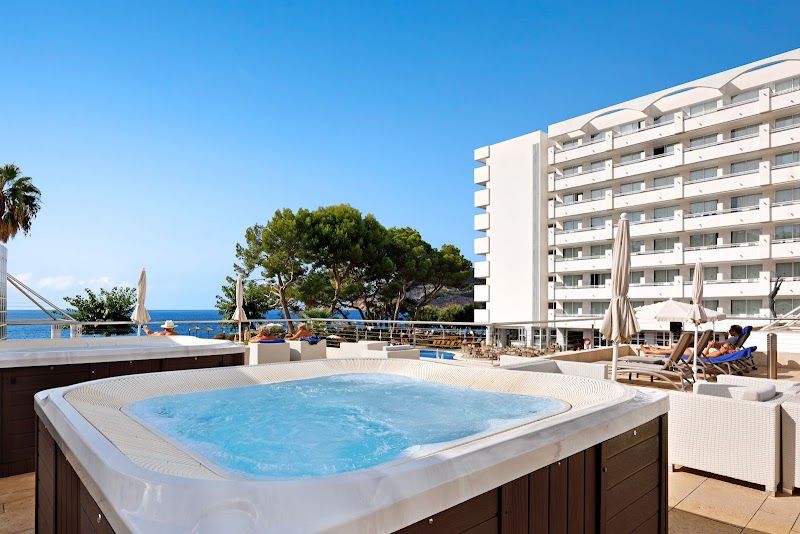
Platja de Camp de Mar
Camp de Mar wraps around a perfectly protected horseshoe bay where 200 meters of golden sand meets water so shallow and calm that toddlers can splash safely while their parents actually relax. The real draw here isn't just the beach: a wooden walkway stretches 80 meters over the turquoise water to Es Moli de'n Boi, a restaurant perched on its own tiny island. Pine-covered hills dotted with luxury villas create a backdrop that feels more exclusive than most of Mallorca's busier beach scenes. You'll find the vibe here distinctly more refined than the party beaches further east. Families claim spots early under the limited natural shade, while the wooden boardwalk becomes a slow parade of visitors heading to lunch or simply taking photos. The water stays shallow for about 30 meters out, making it ideal for kids, though serious swimmers might find it limiting. The restaurant's terrace offers the best views back toward the beach and surrounding cliffs. Most guides don't mention that parking costs 8 EUR for the day and fills up by 11am in summer. The beach itself has no facilities, so bring everything you need or plan to eat at the island restaurant where mains run 18 to 28 EUR. Skip the overcrowded lunch rush between 1pm and 3pm when the walkway becomes a bottleneck. Early morning or late afternoon gives you the most space and the best light for photos.
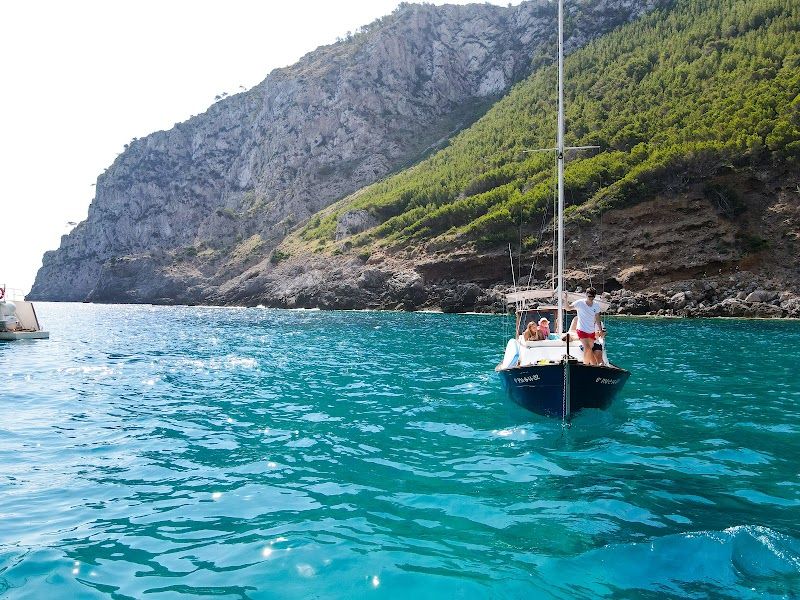
Mallorca Boat Trip & Snorkelling
A boat trip along the coast is the best way to see Mallorca's coves from the water side, and many are only accessible by boat. Half-day trips (4-5 hours, EUR 50-80 per person) run from multiple ports: Port de Soller along the Tramuntana coast, Port de Pollenca toward Cap de Formentor, Cala Ratjada along the east coast caves. Full-day trips (EUR 80-120) include lunch and multiple swimming stops. Catamaran trips from Palma run to the southern coves. Snorkelling gear is usually included. The water visibility in the coves is typically 10-20 metres.
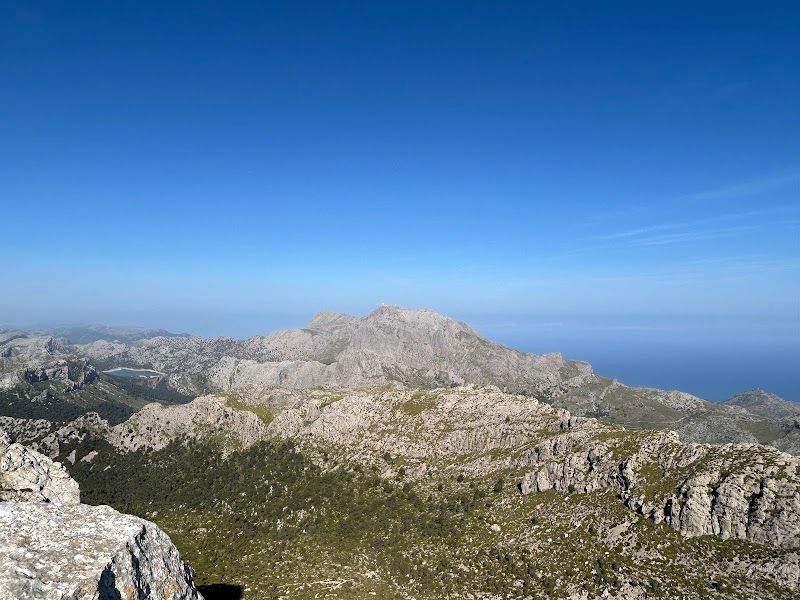
Puig de Massanella
Puig de Massanella stands at 1,365 meters as Mallorca's highest accessible peak, offering the island's most rewarding mountain hike without requiring special permits. The trail climbs through dense holm oak forests before emerging onto barren limestone terrain where you'll get sweeping 360-degree views across the entire island. On clear days you can see the coast in every direction, plus Menorca floating on the horizon. The 5-6 hour return hike starts steep and stays that way, with the forest section providing welcome shade before you hit the exposed upper slopes. The atmosphere shifts dramatically as you climb: bird calls and rustling leaves give way to wind and your own breathing echoing off rock faces. The final approach involves some easy scrambling over limestone slabs, but nothing technical. Winter brings snow to the upper sections, creating a surprisingly alpine feel that most visitors don't expect from Mallorca. Most hiking guides make this sound harder than it actually is. You need decent fitness but not mountaineering skills. The biggest mistake people make is starting too late: begin before 8am or you'll be climbing the exposed sections in brutal midday heat. Skip this entirely from July through August unless you're genuinely experienced in mountain hiking. The trail is well-marked but bring plenty of water since there are no facilities beyond the starting point.
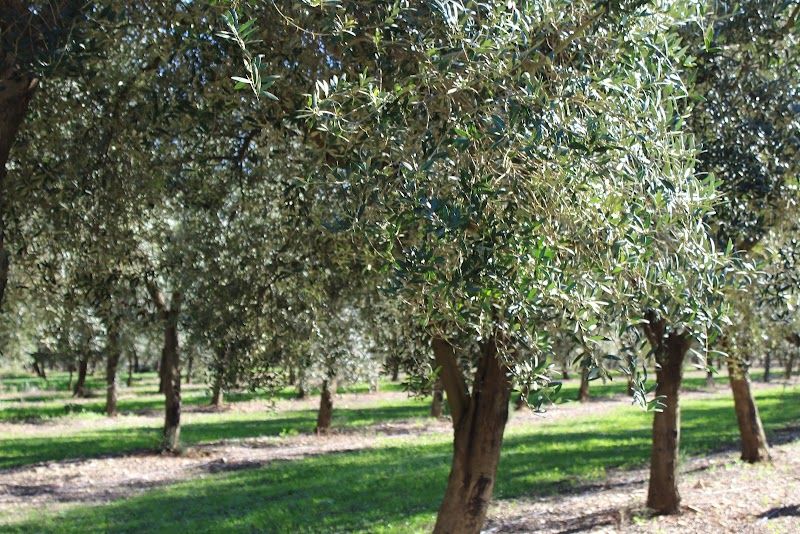
Aubocassa Olive Oil Mill
This third-generation family olive farm produces some of Mallorca's finest organic oil using traditional stone mills that date back centuries. You'll get a proper education on olive cultivation as you walk through groves planted in the 1800s, then watch the cold-pressing process in their working mill. The tasting includes four distinct estate oils (from mild to peppery) served with crusty bread, local tomatoes, and sea salt while you overlook terraced groves that stretch toward the Tramuntana mountains. The experience starts in the groves where Maria or her son Miguel explain pruning techniques and point out different olive varieties before moving to the mill building. The stone pressing wheels are massive, and you can smell the fresh oil in the air during harvest season. The tasting room has floor-to-ceiling windows facing the oldest part of the property, and they're generous with portions. You'll learn to identify flavor notes like grass, artichoke, and pepper while sampling oils made from Arbequina, Picual, and local Mallorcan varieties. Most visitors rush through the grove walk, but that's where you learn the most about why their oil tastes different. The tasting costs €15 per person and includes generous bread portions plus a small bottle to take home. Skip the expensive gift sets in their shop, the single-variety bottles at €12 each are better value. Book ahead in October and November when they're actually pressing, otherwise you'll just see empty equipment.
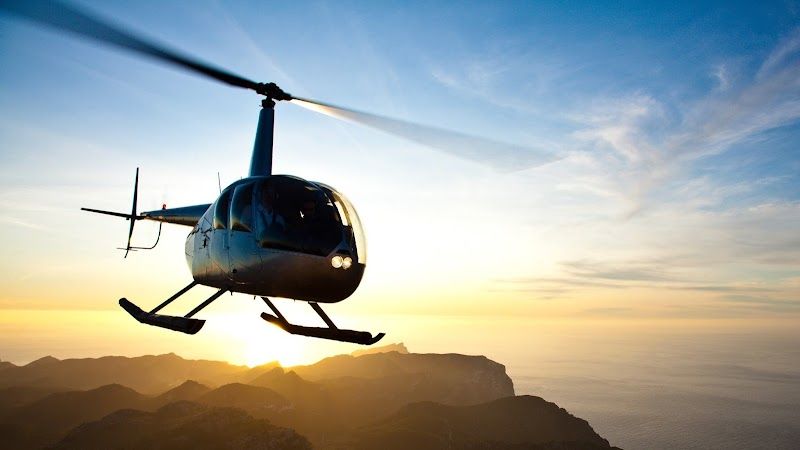
Helidream
Helidream operates from Son Bonet, a working airfield 15 minutes from central Palma, offering the only helicopter tours that actually show you Mallorca's dramatic coastline from the right angle. Their 20 to 30 minute flights take you over Palma Cathedral's Gothic spires, then north along the Tramuntana coast where you'll see Sa Calobra's famous serpentine road snaking down cliff faces that look impossible from above. The western route covers the most spectacular section of coastline between Sóller and Sa Calobra, while the eastern route focuses on Palma Bay and the city's layout. You'll lift off from a small concrete pad with minimal ceremony, which feels refreshingly unpretentious compared to touristy helicopter operations elsewhere. The Robinson R44 helicopters seat four passengers maximum, and every seat genuinely is a window seat. Your pilot doubles as guide, pointing out landmarks through headset commentary, though the noise makes conversation limited. The sensation of hovering over Sa Calobra's switchbacks is genuinely thrilling, especially when you realize how tiny the tour buses look 400 meters below. Most helicopter tours in Spain are overpriced tourist traps, but Helidream delivers actual value if you book the 30 minute western route. Skip the shorter 20 minute option, it barely gets you past Palma Bay before turning back. The afternoon flights from 3pm onwards offer the best light and clearest air, avoiding the morning haze that often obscures the Tramuntana peaks. Expect to pay around 200 EUR per person for the full 30 minute experience.
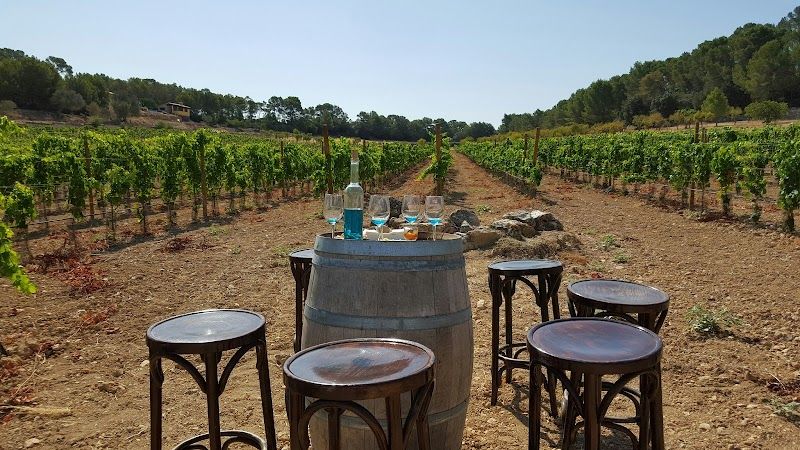
Mallorca Wine Tasting Tour
The Binissalem wine region in central Mallorca produces wines from local grapes (Manto Negro red, Prensal Blanc white) that are genuinely good and almost unknown outside the island. A wine tour visits 2-3 bodegas with tastings, food pairings (local cheese, sobrassada, olives), and vineyard walks. Jose L. Ferrer is the largest and most accessible (EUR 10-15 for a tasting). Smaller producers like Biniagual, Macia Batle, and Vins Nadal offer more personal experiences (EUR 15-20, often by appointment). Self-drive is possible (Binissalem is 25 minutes from Palma) or take a guided tour (EUR 60-90 per person including transport).
Wine House
Modern wine bar and shop in Palma's old town specializing in Balearic and Spanish wines by the glass or bottle. The knowledgeable staff guide tastings through Mallorca's small wine regions including Binissalem and Pla i Llevant denominations. The minimalist interior contrasts with the neighboring historic buildings.
Blue Jazz Club
Intimate jazz club in the heart of Palma's old town hosting live performances Thursday through Saturday. The small, candlelit space features local and international musicians playing everything from bebop to Latin jazz. Shows typically start at 10 PM with a relaxed, authentic atmosphere.
North Sailing Mallorca
North Sailing Mallorca runs traditional sailing excursions along the dramatic northern coast, departing from Port de Pollença on an authentic wooden yacht that fits just 8 passengers. You'll sail past the towering limestone cliffs of Cap de Formentor, drop anchor at pristine coves like Cala Murta and Cala Figuera for swimming and snorkeling, and enjoy a proper lunch onboard while dolphins occasionally join your wake. The boat itself is gorgeous: polished wood, canvas sails, and none of the overcrowded catamaran nonsense you'll find elsewhere. The day unfolds at a genuinely relaxing pace, with the captain adjusting the route based on wind conditions and sea state. You'll spend roughly equal time sailing and swimming, with the crew preparing fresh paella or grilled fish while you're anchored in crystalline water. The Formentor cliffs look completely different from sea level, rising nearly 400 meters straight up, and the swimming stops feel genuinely secluded. Wind fills the sails most mornings, but expect some motor assistance on calmer days. At around 180 EUR per person, it's expensive but fair for what you get: small group size, quality boat, decent food, and access to swimming spots you can't reach by land. Book directly through their website to avoid commission markups from hotels. Most operators cancel in choppy conditions, but these guys sail unless it's genuinely rough, which I respect. Skip this if you're prone to seasickness or expecting a party boat atmosphere.
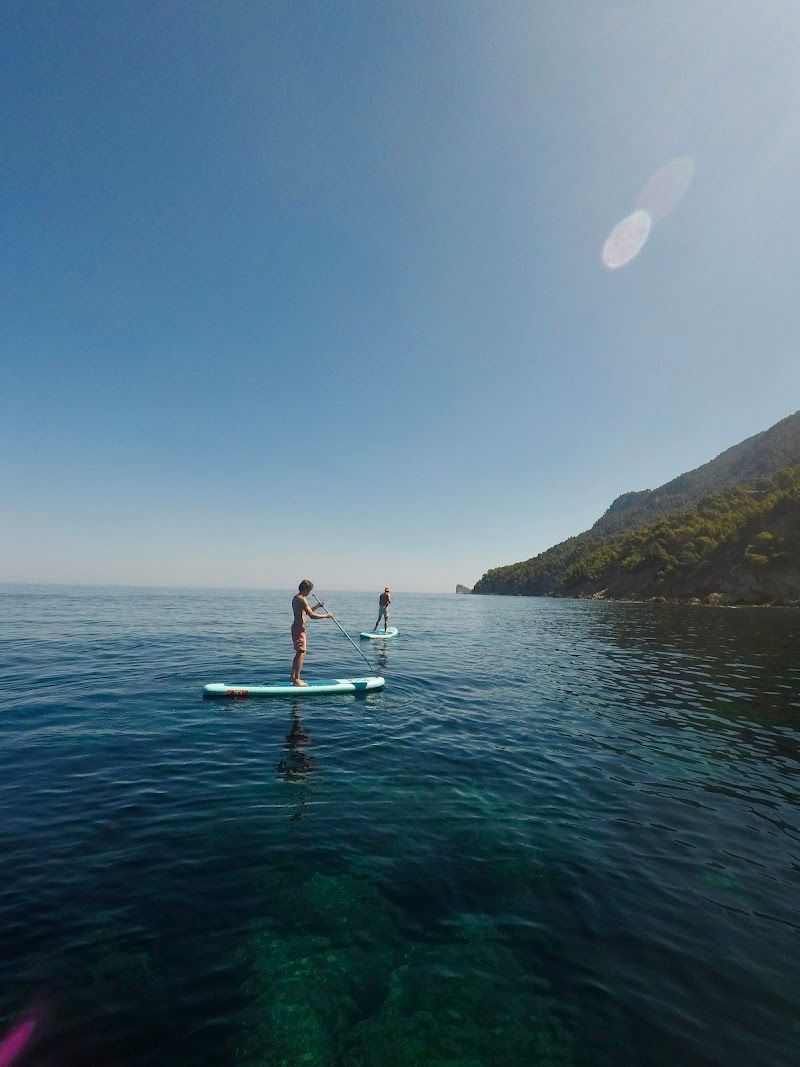
Stand Up Paddle Mallorca
Stand Up Paddle Mallorca runs SUP tours from Cala d'Or's protected southeastern bays, where flat water and limestone cliffs create perfect paddling conditions. You'll explore sea caves accessible only by water, paddle over seagrass beds where fish dart beneath your board, and learn proper SUP technique from instructors who actually know these waters. The sunset tours include local cheese and wine on a secluded beach that most tourists never find. Your session starts with 15 minutes of beach instruction before launching into turquoise water so clear you can see the sandy bottom at 4 meters deep. The pace stays relaxed as you paddle along dramatic coastline, ducking into caves where the water glows electric blue. Most groups spot octopus, sea bream, and occasionally dolphins. The guides share stories about Mallorca's fishing history while you float in hidden coves that feel completely untouched. Forget the crowded northern beaches, this southeastern coast delivers the real Mallorca experience. Tours cost around 45 EUR for the standard session, 65 EUR for sunset with refreshments. Skip the busy afternoon slots when wind picks up, morning departures offer mirror-like conditions. The operators here know every cave and current, unlike the generic SUP rentals in Palma that just point you toward open water.