Spain
Valencia
The city that invented paella, a futuristic Calatrava complex in a riverbed park, and a Gothic market with 1,000 stalls
Best Time
April-June and September-October
Ideal Trip
2-3 days
Language
Spanish and Valencian, English in tourist areas
Currency
EUR
Budget
EUR 28-63/day (excl. hotel)
About Valencia
Valencia is the city that invented paella and will never let you forget it. The dish is cooked over wood fire in a wide shallow pan, the rice is short-grain and absorbs the saffron broth, the socarrat (the crispy rice at the bottom) is the part locals fight over, and if you order it with chorizo a Valenciano will look at you like you insulted their mother. A proper paella valenciana has rabbit, chicken, green beans, and garrafon beans. It costs EUR 12-18 per person, is always ordered for a minimum of two, and is always eaten at lunch, never dinner. The beach restaurants at La Malvarrosa and El Cabanyal serve it best.
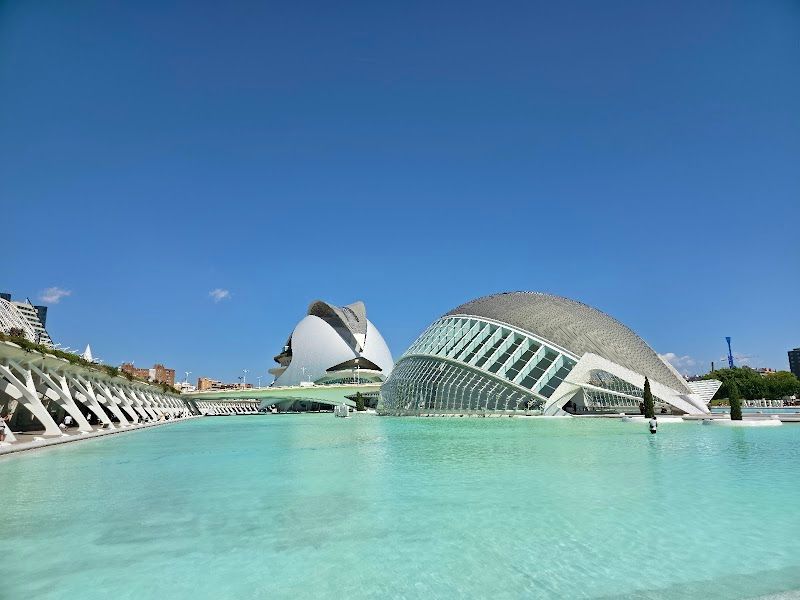
The City of Arts and Sciences is the other reason people come, and it is genuinely worth the trip. Santiago Calatrava designed a complex of futuristic white buildings in a drained riverbed that looks like a science fiction film set. The Oceanografic (EUR 33, the largest aquarium in Europe) and the Hemisferic (IMAX cinema inside what looks like a giant eye) are the highlights. The whole complex is walkable and the Turia Gardens, the 9 km park that runs through the old riverbed from the city centre to the complex, is one of the best urban parks in Europe.
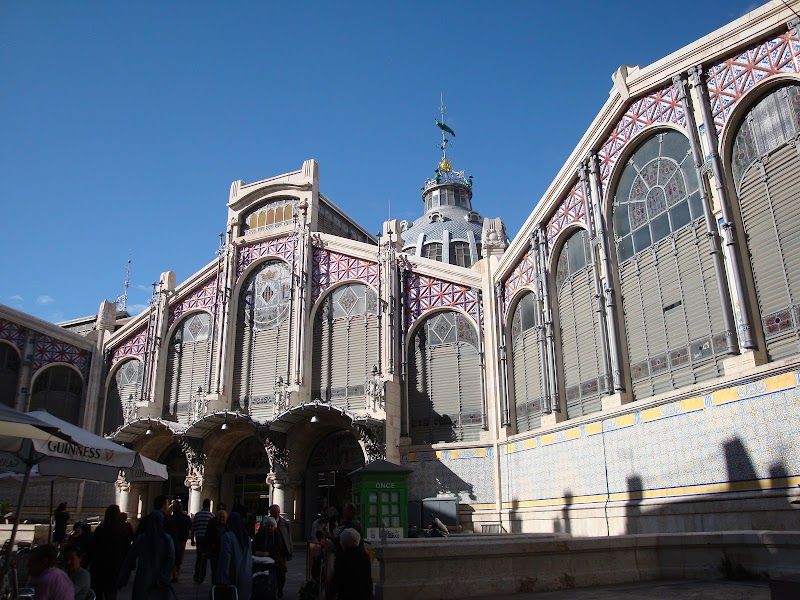
The old town is underrated. The Cathedral claims to have the actual Holy Grail. The Llotja de la Seda (EUR 2) is the Gothic silk exchange with twisted spiral columns and is the most beautiful secular Gothic building in Spain. The Mercado Central has over 1,000 stalls in a 1928 Modernisme building: go hungry, drink fresh horchata at the counter, eat at the stalls, and understand why Valencia's food scene is better than its reputation suggests.
Neighborhoods
Each district has its own personality
Ciutat Vella
The medieval core: the cathedral with its Holy Grail claim, the Gothic silk exchange, the 1,000-stall Modernisme market, and the medieval towers that still mark the old city gates
Ruzafa
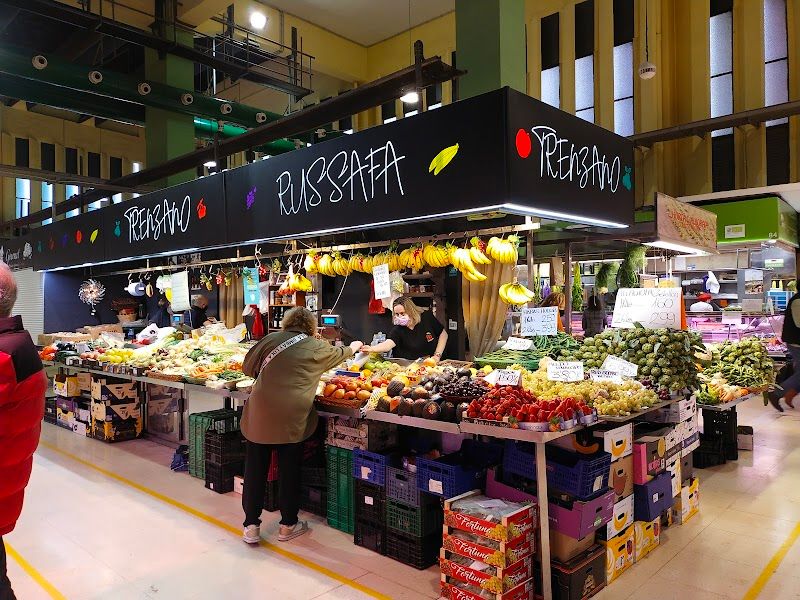
The creative and restaurant district south of the old town: the highest restaurant density in Valencia, brunch culture, vintage shops, street art, and where Valencia under 40 goes on weekend evenings
City of Arts & Sciences
Calatrava's futuristic complex in the drained Turia riverbed: white biomorphic structures reflected in shallow pools, the largest aquarium in Europe, and the 9 km linear park that connects it all to the old town
Things to Do
Top experiences in Valencia
City of Arts and Sciences
Valencia's City of Arts and Sciences sprawls across 350,000 square meters of what used to be the Turia riverbed, featuring six futuristic white structures designed by Santiago Calatrava. You're looking at Europe's largest aquarium (the Oceanogràfic), an IMAX cinema shaped like a giant eye (the Hemisfèric), an interactive science museum that resembles a whale skeleton, and an opera house that pushes architectural boundaries. The buildings reflect dramatically in shallow surrounding pools, creating some of Spain's most photographed modern architecture. Walking through feels like exploring a sci-fi movie set where every angle reveals new curves and impossible-looking supports. The structures change completely as you move around them: what looks like a spine from one side becomes flowing wings from another. Early morning and late afternoon light transforms the white surfaces and creates mirror-perfect reflections in the water. The scale hits you gradually as you realize each building is massive, yet they feel weightless thanks to Calatrava's engineering. Most guides push you to buy tickets for everything, but honestly, walking the exterior for free gives you 70% of the experience. The Oceanogràfic justifies its EUR 33 price if you've got 3 hours and love aquariums, but the science museum at EUR 9 feels dated. Skip the IMAX unless you're desperate for air conditioning. The real magic happens outside with your camera during golden hour.
Oceanogràfic València
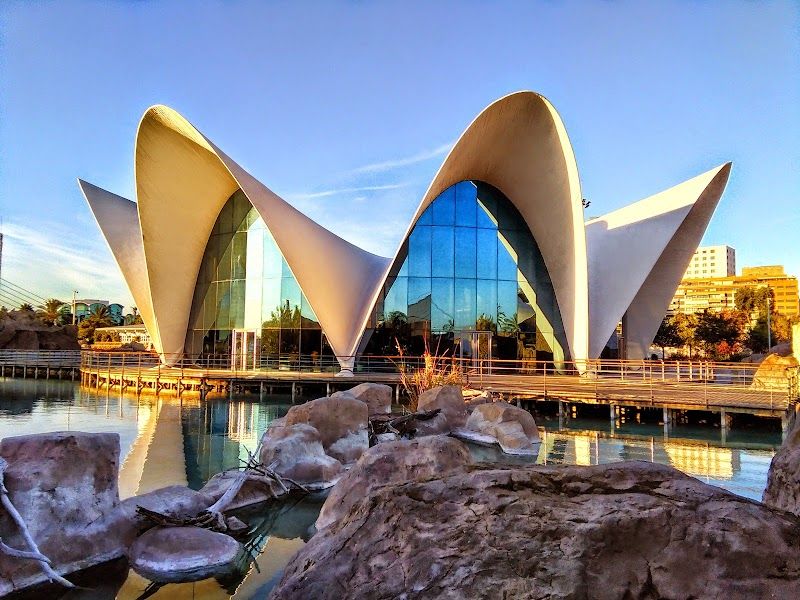
Oceanogràfic València houses 45,000 marine animals across nine underwater towers, each replicating different ocean ecosystems from Arctic waters to tropical coral reefs. You'll walk through Europe's longest underwater tunnel (35 meters) surrounded by sharks, rays, and massive groupers, then explore separate pavilions for dolphins, beluga whales, walruses, and penguins. The architecture alone is spectacular: Félix Candela's futuristic white structures look like giant water lilies floating on artificial lagoons. Your visit flows naturally from ecosystem to ecosystem, starting with Mediterranean waters and progressing to tropical seas, Arctic zones, and finally the impressive dolphinarium. The underwater tunnels create genuine wow moments as hammerhead sharks glide overhead, while the beluga whale habitat lets you watch these Arctic giants both above and below water. The dolphin shows happen four times daily, but honestly, the spontaneous interactions you'll see just walking around the dolphin lagoons are more engaging. Tickets cost 32.70 EUR for adults (book online for small discounts), and you'll need a full morning or afternoon to see everything properly. Skip the overpriced restaurant inside and eat beforehand. Most visitors rush through the smaller exhibits to reach the big attractions, but the jellyfish gallery and sea turtle recovery center are actually more memorable than the crowded dolphin shows. Start with the Red Sea tower if you arrive after 11am, as tour groups hit the main tunnel first.
Mercado Central Valencia
Mercado Central is Europe's largest fresh food market, housed in a stunning 1928 Modernist building with iron columns, ceramic tiles, and stained glass that casts colored light across 1,000+ stalls. You'll find everything Valencia's top chefs buy: glistening fish, jamón ibérico, citrus varieties that don't exist outside Spain, and the city's best fresh horchata. This isn't a tourist market, it's where locals actually shop, which means genuine quality and real prices. The moment you step inside, the scale hits you: soaring ceilings, endless aisles of produce, and vendors calling out prices in rapid Valencian. The central dome area feels almost cathedral-like, while the fish section near the back buzzes with serious buyers examining the daily catch. The horchata stall by the main entrance draws constant queues of locals getting their thick, fresh tiger nut drink with fartons for dipping. You'll hear more Spanish than English, which is exactly what you want. Most food tours bring groups here around 11am, making it crowded and less authentic. The real magic happens before 10am when chefs are selecting ingredients and vendors are at their chattiest. Skip the overpriced jamón near the entrances and head to the back corners where locals shop. The horchata costs EUR 2.50 to 3 and beats every restaurant version in the city. Don't bother after 2pm when half the stalls start closing early.
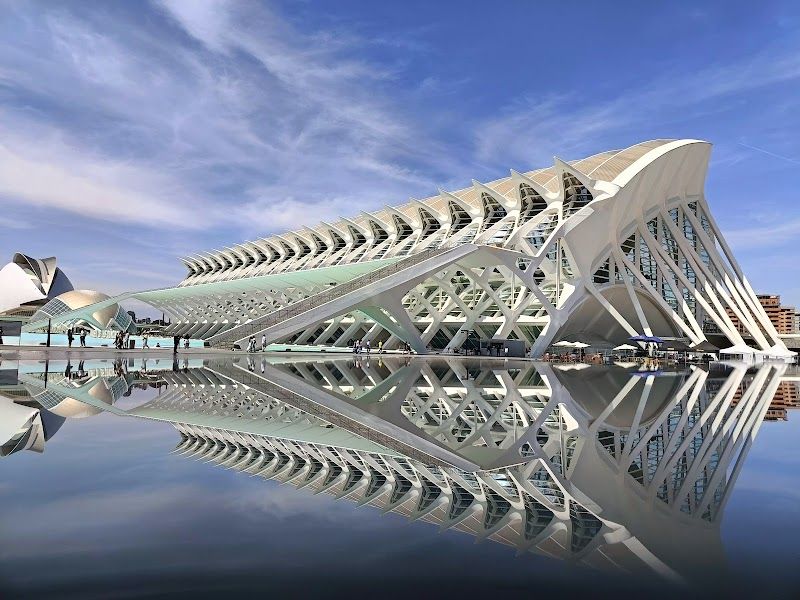
Museu de les Ciències Príncipe Felipe
Santiago Calatrava's skeletal white architecture houses one of Spain's most engaging science museums, where you'll spend hours with hands-on exhibits that actually work. The Zero Gravity simulator lets you experience weightlessness, while the giant Foucault pendulum demonstrates Earth's rotation in real time. Interactive displays cover everything from DNA sequencing to Mars exploration, with most explanations in Spanish, Valencian, and English. You can manipulate real lab equipment, walk through a reproduction of the International Space Station, and test physics principles that would make your school teacher jealous. The building itself steals the show with its ribbed white exterior and cathedral-like interior spaces flooded with natural light. You'll start on the ground floor with basic physics exhibits, then climb through increasingly complex displays about biology, technology, and space. The atmosphere feels more like a playground for curious adults than a stuffy museum. Kids run between exhibits while parents get equally absorbed in the demonstrations. The upper levels offer the best exhibits and fewer crowds, especially the astronomy section with its planetarium-style projections. Most guides don't mention that entry costs €8 for adults, but the combined ticket with other City of Arts and Sciences attractions gets expensive fast at €37.20. Skip the ground floor's basic exhibits about simple machines and head straight upstairs where the real innovations live. The museum works best for 2-3 hours maximum, after that the interactive novelty wears thin and you'll want to explore the stunning exterior architecture and reflecting pools outside.
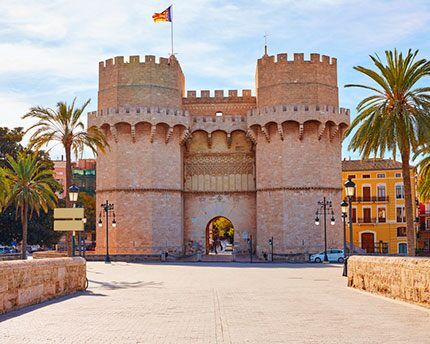
Torres de Serranos
Torres de Serranos stands as Valencia's most impressive medieval gateway, a pair of 33-meter Gothic towers that once protected the northern entrance to the walled city. You'll climb narrow stone staircases inside the towers to reach the rooftop terrace, where you get the best panoramic view in all of Ciutat Vella. The vista stretches across red-tiled rooftops, church spires, and the green ribbon of the former Turia riverbed turned park. The climb takes you through small chambers that once housed guards and prisoners, with thick stone walls and narrow arrow slits that show how seriously Valencia took its defenses. The staircases are genuinely medieval: uneven, narrow, and steep enough to make you appreciate why attacking armies struggled. Once you reach the top, the cityscape opens up dramatically, and you can see clear across to the City of Arts and Sciences in the distance. Entry costs 2 EUR, but it's free on Sundays and holidays when locals pack the place. Most visitors rush straight up and miss the carved heraldic shields and Gothic details on the facade. The towers close at sunset, so don't arrive expecting a night view. Skip this if you're claustrophobic, the staircases are genuinely tight, and there's no elevator.
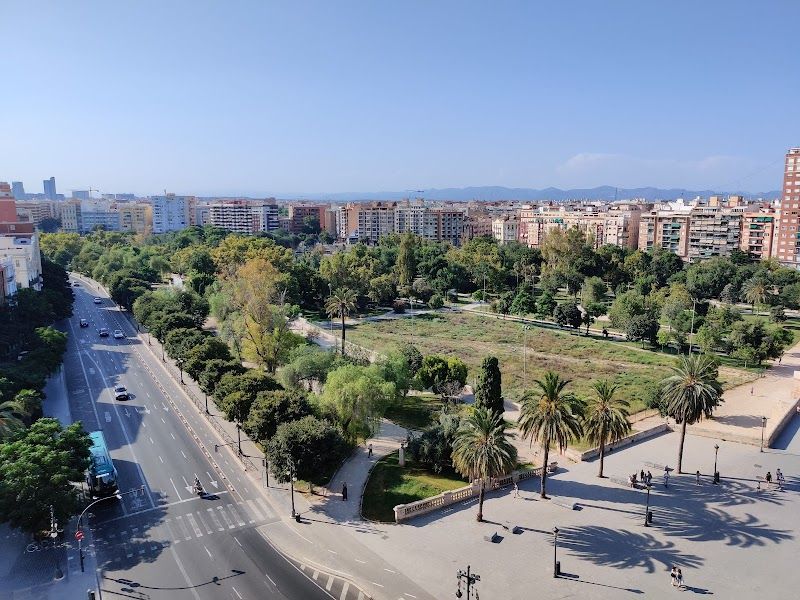
Turia Gardens Bike Ride
The Jardines del Turia is a 9 km linear park that runs through the centre of Valencia in the bed of the Turia river. After the 1957 flood (the worst in Valencia's history, 81 people killed, 200,000 displaced), the city diverted the river around the urban perimeter. The dried riverbed was converted into a park in the 1980s after citizens successfully defeated a plan to turn it into a motorway. Today it connects the old town to the City of Arts and Sciences in a continuous green corridor with gardens, sports courts, playgrounds, fountains, and the Parque de Gulliver (a giant Gulliver figure on the grass with climbing structures inside). Bikes can be rented at any ValenBisi city bike station (EUR 0.50 for 30 minutes, registration requires a credit card or the app) or from private rental shops near the old town. The full 9 km ride from the Torres de Serranos to the City of Arts and Sciences takes 30-40 minutes at a relaxed pace. The gardens are flat, car-free, and connect the main sights.
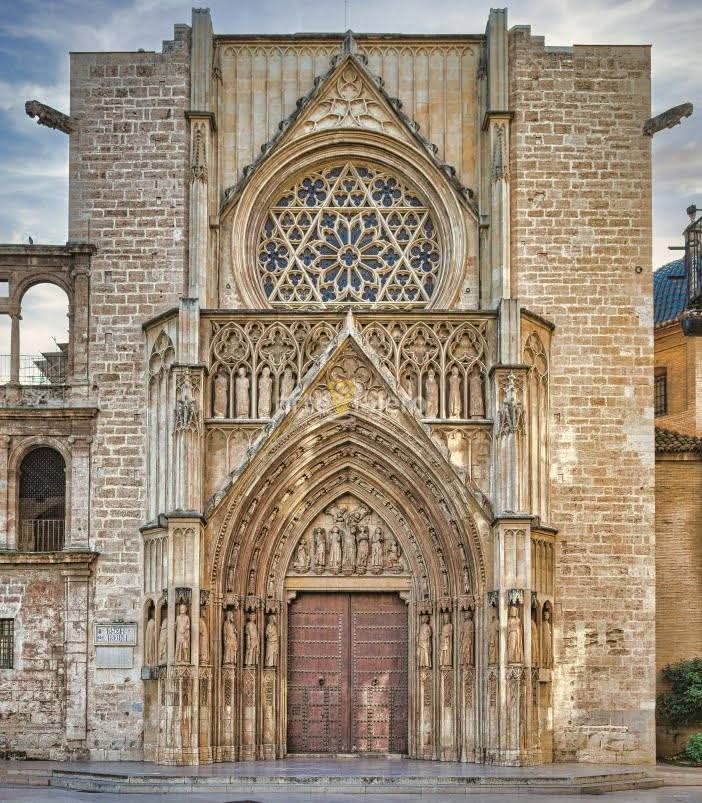
Valencia Cathedral and Micalet Tower
The Valencia Cathedral was built on the site of a former mosque between the 13th and 15th centuries and is a layered Gothic structure with Baroque, Romanesque, and Renaissance elements added over the centuries. The main entry is through the Puerta de los Apostoles (the Gothic doorway facing the Tribunal de las Aguas, which still meets here every Thursday at noon). Inside, the Chapel of the Holy Chalice contains what Valencia claims is the actual Holy Grail: a 1st-century agate cup that was in Valencia from the 11th century. The Micalet Tower (the bell tower, EUR 2) is 51 metres high with a staircase of 207 steps and a platform with 360-degree views over the tiled rooftops and the old city. The tower is octagonal (unlike the square minaret it replaced) and its bells are still rung by hand for major events. Entry to the cathedral is EUR 9.
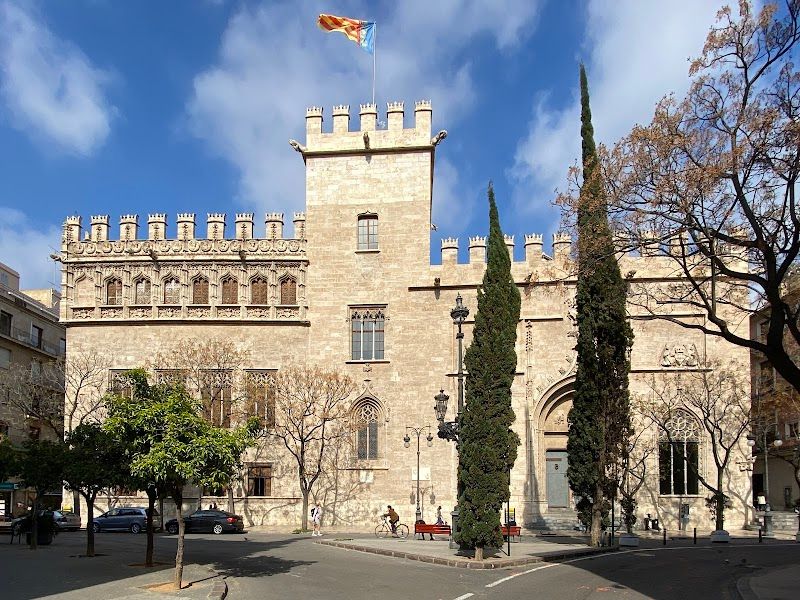
La Llotja de la Seda (Silk Exchange)
This 15th century silk trading hall showcases the most spectacular Gothic columns you'll see in Spain: nine twisted stone pillars that spiral 17 meters up to intricate fan vaulting. You're walking through Europe's best preserved medieval commercial exchange, where Valencia's silk merchants once conducted business that made this one of the continent's wealthiest cities. The main trading hall (Sala de Contratación) contains those famous twisted columns, while the Torre del Consulado houses the old merchant tribunal, and a peaceful Gothic courtyard with orange trees completes the complex. The moment you enter the main hall, those columns dominate everything. They look like massive stone ropes frozen mid-twist, and the narrow Gothic windows cast shifting shadows that make them appear to move as you walk around. The acoustics are remarkable: whisper at one column and someone across the hall can hear you clearly. The courtyard provides a quiet contrast with its geometric garden layout and the sound of water from the central well. Most visitors spend their time photographing the columns from every angle, and you should too. At €2, this is ridiculously good value for a UNESCO World Heritage site. Most people rush through in 20 minutes, but give yourself the full hour to appreciate how the light changes on those columns. The audio guide costs extra and isn't worth it: the visual impact speaks for itself. Skip the tower climb unless you're obsessed with medieval tribunals. Come right after visiting Mercado Central across the plaza, both represent Valencia's commercial heart perfectly.
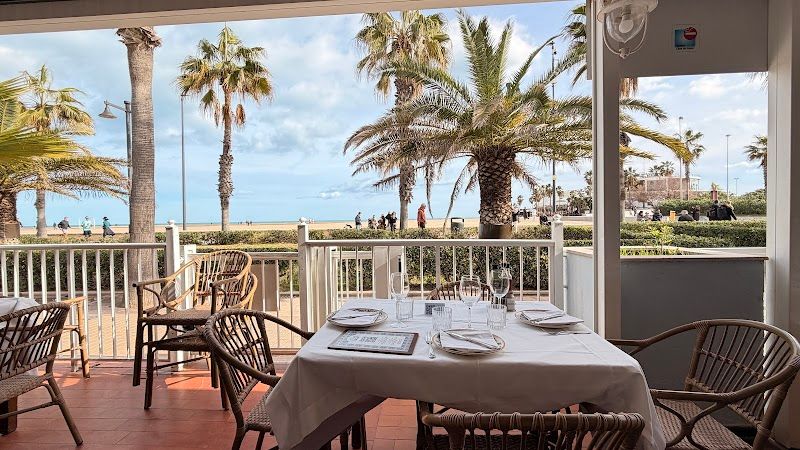
La Pepica
Family-run paella restaurant since 1898, serving traditional Valencian paella and seafood rice dishes in a dining room decorated with photos of celebrity visitors including Hemingway. The beachfront terrace offers views of the Mediterranean while you wait for your paella to cook.
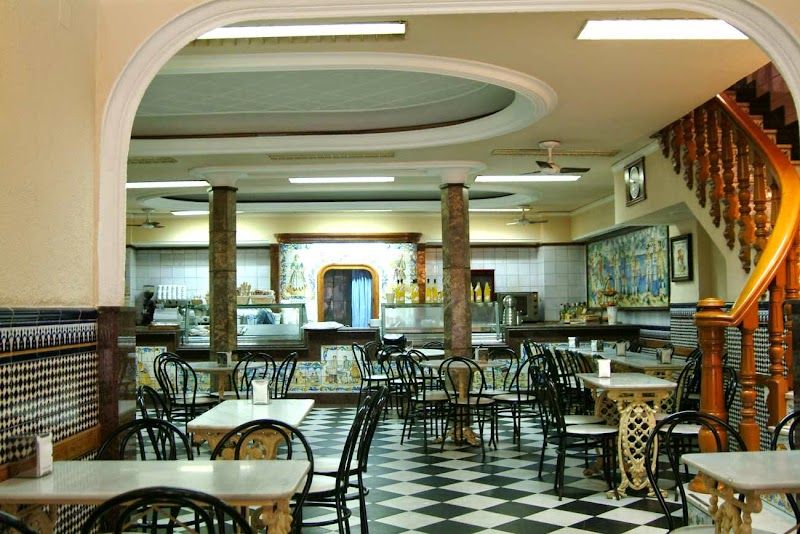
Horchatería Santa Catalina
Traditional horchatería serving fresh horchata made daily from local tiger nuts, accompanied by fartons for dipping. The tiled interior dates to the early 20th century and the recipe has remained unchanged for four generations.
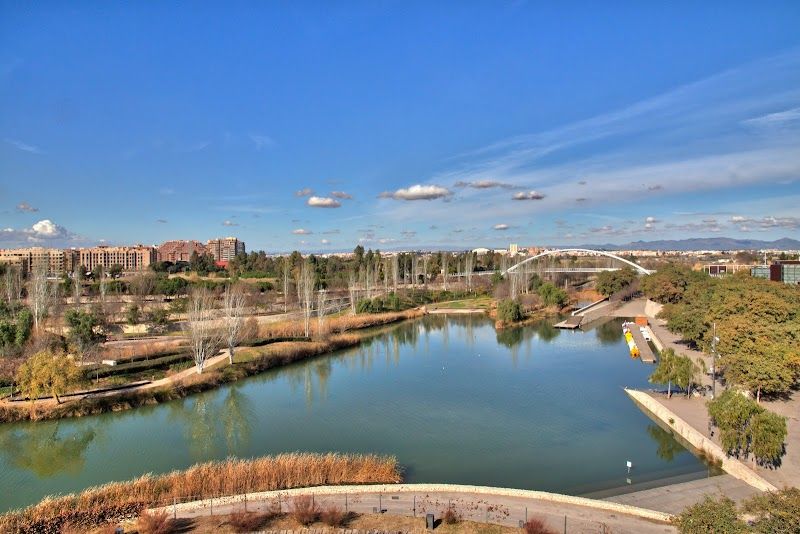
Parc de Capçalera
Parc de Capçalera spreads across 13 hectares at the western tip of Valencia's old Turia riverbed, anchoring one end of Europe's longest urban park system. You'll find an artificial lake surrounded by Mediterranean pines, eucalyptus groves, and rolling lawns where locals spread picnic blankets on weekends. The park connects seamlessly to the 9km Turia Gardens greenway that cuts straight through Valencia's heart, making it your launching point for the city's best cycling route. The atmosphere here feels distinctly local compared to touristy spots downtown. Families cycle the wide paths while kids feed ducks at the lake's edge, and you'll hear more Valencian than English. The southern section stays quieter since most visitors gravitate toward Bioparc zoo in the north. Tall palms and citrus trees provide genuine shade during Valencia's scorching summers, and the lake's fountains create a cooling microclimate that drops temperatures noticeably. Most guides mention this park as an afterthought, but it's actually Valencia's best escape from urban heat without leaving the city. Skip the overpriced Bioparc (€23.80 for adults) unless you're traveling with young kids. The free southern parkland delivers the same peaceful atmosphere. Come early morning or late afternoon when locals exercise, the light hits the lake perfectly, and you'll avoid the midday sun that makes the open areas uncomfortable.
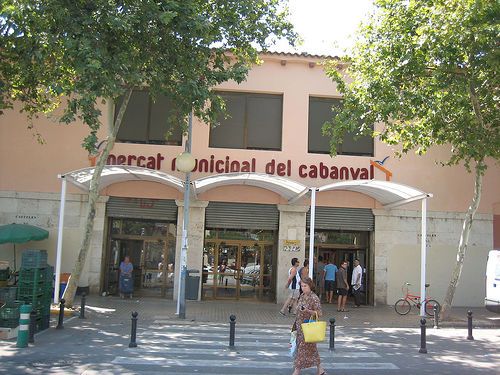
Mercat del Cabanyal
Mercat del Cabanyal sits in a beautiful 1920s modernist building where fishermen's families have sold their catch for generations. You'll find the best seafood in Valencia here: langostinos for €12-15/kg, local dorada at €8-10/kg, and whatever the boats brought in that morning. The stalls reflect El Cabanyal's fishing heritage, with vendors who've worked here for decades and know exactly which fish was caught where. The market feels authentically local, not prettied up for visitors. Fishmongers call out prices in rapid Valencian, elderly neighbors debate the merits of different catches, and the smell of sea salt mingles with fresh bread from the bakery stalls. Bar Mercat inside serves proper working-class almuerzo: grilled sardines, tortilla española, and cold beer for under €8. The modernist iron and glass architecture creates beautiful light patterns across the stalls. Most travel guides oversell Valencia's Mercado Central and completely ignore this place, which works in your favor. The seafood quality here often surpasses the central market because turnover is faster and fishermen sell directly. Skip the few tourist-oriented stalls near the entrance; the real action happens in the back sections where locals shop. Prices drop significantly after 1pm when vendors want to clear stock.
Travel Guides
Expert guides for every travel style
Where to Eat in Valencia: Paella, Horchata & Ruzafa
Valencia food guide: the correct way to order paella, where to eat it (beach restaurants, El Palmar), the Ruzafa restaurant district, horchata with fartons, the Mercado Central, and the Agua de Valencia cocktail.
8 min
First Time in Valencia: What You Need to Know
The practical guide to Valencia: the non-negotiable paella rules, the Turia Gardens and how to bike them, what Las Fallas actually is, horchata with fartons, and how to get to the Calatrava complex.
6 min
Frequently Asked Questions
Paella is a lunch dish, never dinner. Order a minimum of two portions (the pan size makes single servings impractical). Allow 30-45 minutes for it to cook after ordering: a good paella cannot be rushed. Paella valenciana uses rabbit, chicken, green beans, and garrafon beans. Seafood paella (arroz a banda, arroz negro) is a different dish and also legitimate. Ordering paella with chorizo is the one thing that will genuinely offend the person cooking it.
The Oceanografic (EUR 33) is worth it if you want to spend 2-3 hours in the largest aquarium in Europe: 500 species, the shark tank, and the jellyfish tunnel are the highlights. The Museu de les Ciencies (EUR 9) and the Hemisferic IMAX (EUR 9) are optional add-ons. The exterior of the complex is free to walk around and already justifies the trip. Morning light (before 11 AM) is best for the reflections in the pools.
Las Fallas is Valencia's fire festival, held annually in the third week of March. The city constructs hundreds of large satirical sculptures (fallas) throughout the streets, runs 18 days of fireworks at 2 PM daily (the mascletà), and burns everything on the night of March 19th. It is one of the most extraordinary festivals in Europe. Book accommodation 6-12 months ahead: the city fills completely and prices triple. The UNESCO-listed festival is loud, smoky, and astonishing.
Metro Line 4 or 6 from Xativa station to Neptuno stop (25 min, EUR 1.50). Alternatively, bike the Turia Gardens (30-40 min from the old town, flat and car-free). The beach at La Malvarrosa is 6 km from the old town. El Saler beach (15 km south, backed by Albufera pine forest) requires a bus (route 25) or car and is less crowded.
Horchata (orxata in Valencian) is a cold drink made from tiger nuts (chufa), water, and sugar. The fresh version is thick, slightly earthy, and completely unlike the packaged version sold elsewhere in Spain. It is drunk as a mid-morning or mid-afternoon refreshment, always cold, usually with fartons (elongated glazed pastries for dipping). The Mercado Central horchata stall serves the genuine article. Horchateria Santa Catalina near the Cathedral is the most historic vendor.