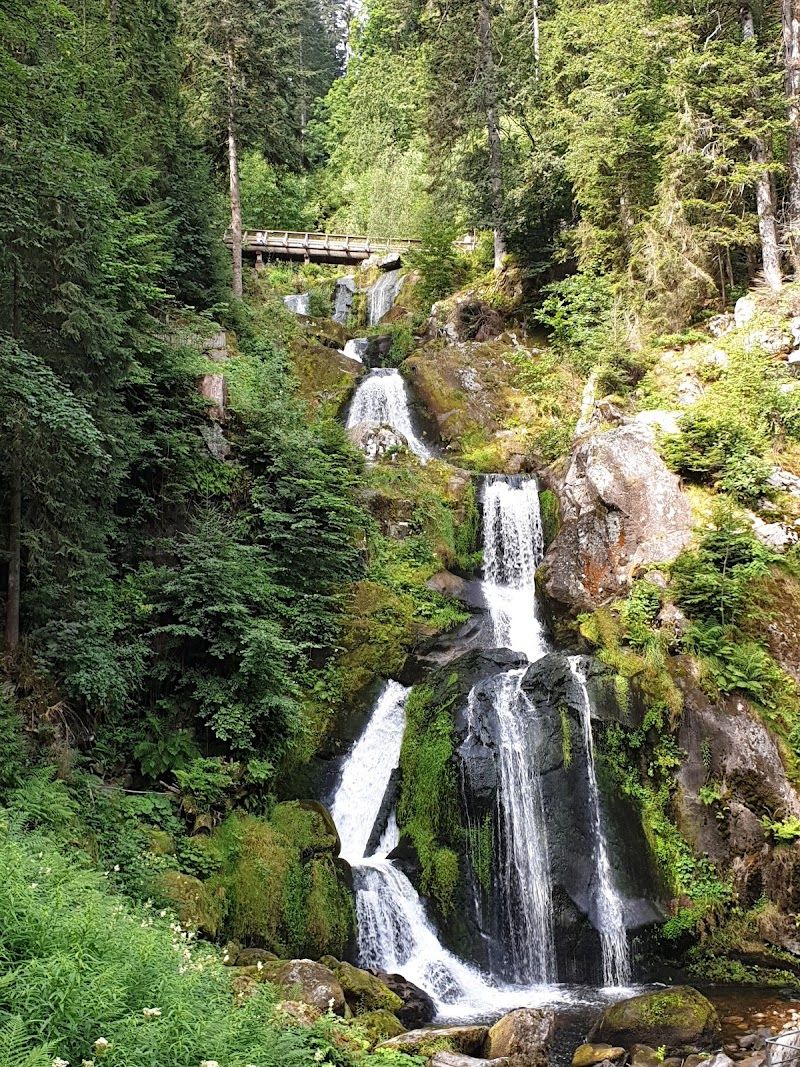
Triberg in winter transforms this Black Forest town into something genuinely special. The 163-metre Triberg Waterfalls freeze into crystalline sculptures, Christmas markets fill the Hauptstrasse with mulled wine and handmade ornaments, and every Gasthaus glows with warm light against the snow-covered forest. Unlike summer when tour buses clog the narrow streets, winter Triberg belongs to locals and smart travelers who understand that cold weather makes everything better here.
The town sits at 700 metres elevation in a narrow valley, which means reliable snow from December through March. This isn't just a dusting that melts by noon - Triberg gets proper winter weather that sticks around. The forest trails become cross-country ski routes, the waterfalls turn into ice sculptures, and the cuckoo clock shops take on a fairy-tale quality when framed by icicles hanging from traditional Black Forest rooflines.
Why Triberg Winter Wonderland Beats Summer Tourism
Summer brings chaos to Triberg. Tour buses line up three deep on Hauptstrasse, the waterfall trails become congested hiking highways, and every cafe table is occupied by day-trippers wolfing down Black Forest cake before rushing to the next attraction. Winter flips this dynamic completely.
The numbers tell the story clearly: summer sees 8,000-10,000 visitors per day during peak season. Winter drops to 800-1,200 daily visitors, mostly German families on Christmas market trips and serious hikers who know the forest looks better under snow. This means you actually get to experience Triberg rather than just photograph it through crowds.
Restaurant service improves dramatically when servers aren't overwhelmed. The Triberg Waterfalls become a contemplative experience rather than a photo queue. Even the cuckoo clock demonstrations at the House of 1000 Clocks feel more personal when you're not competing with fifty other tourists for the guide's attention.
The trade-off is weather. Temperatures hover around -2°C to 3°C from December through February, with frequent snow and ice on the trails. But this is exactly what makes Triberg in winter so compelling - the cold creates the spectacle.
Triberg Waterfalls in Winter: Ice Sculptures Worth the Hike
The Triberg Waterfalls in winter become Germany's most accessible frozen waterfall experience. The seven-stage cascade transforms into a series of ice formations ranging from delicate icicle curtains on the upper stages to massive frozen pools at the base. Entry costs EUR 8 for adults, EUR 5 for kids 6-17 (free with KONUS guest cards from participating hotels).
The Kulturweg (cultural path) remains open all winter with regular maintenance, though the upper sections require proper winter boots. The paved lower section takes you to the three main viewing platforms where the waterfalls create their most dramatic ice formations. Morning visits between 9-11 AM offer the best light for photography, as winter sun angles through the forest canopy and illuminates the ice.
What actually freezes varies by temperature. During mild winters (0°C to -5°C), you get partial freezing with water flowing behind ice curtains. Cold snaps below -10°C freeze the entire cascade solid, creating sculptural formations that change daily as new ice layers build up. The locals track freeze patterns - ask at any Gasthaus for current conditions before hiking up.
The Naturweg and Kaskadenweg trails close during heavy snow, but the forest service maintains the Kulturweg year-round with gravel and occasional salt treatments. Expect 30-45 minutes round-trip to the main viewpoints. The waterfalls neighborhood includes several cafes where you can warm up afterwards, though only Bergsee-Cafe and Restaurant Pfaff stay open through winter months.
Winter Trail Conditions and Safety
The waterfall trails in winter require different preparation than summer hiking. Ice forms on wooden boardwalks and stone steps, making them treacherous without proper footwear. Yaktrax or similar ice cleats are essential - you can buy them at Sport Bauer on Hauptstrasse 42 for around EUR 25-35.
Trail markers become harder to follow under snow, but the main Kulturweg is well-maintained with red and white blazes on trees every 50 metres. The forest service posts current trail conditions at the entrance kiosk, updated every morning by 8 AM. When ice storms hit (typically 2-3 times per winter), all trails close until conditions improve.
Bring extra batteries for cameras - cold weather drains them quickly. The best photo opportunities occur during temperature swings when partial melting creates mixed ice and water formations. Local photography groups recommend visiting during the "goldene Stunde" (golden hour) between 3-4 PM in winter when low-angle sunlight creates dramatic backlighting through the ice.
Triberg Christmas Markets: Small But Authentic
Triberg's Christmas markets run from the first weekend in December through December 23rd, concentrated around Marktplatz Triberg and along Hauptstrasse. This isn't Cologne or Dresden - expect 15-20 wooden stalls rather than sprawling market districts. But that's exactly why it works.
The scale means vendors actually interact with customers instead of processing crowds. Hans Weber at the cuckoo clock stall (third stall from the fountain) has been carving ornaments for 30 years and will explain the difference between Schwarzwald and Bavarian clock-making traditions while you browse. Maria Zimmermann's Lebkuchen stall (opposite the church) offers samples of her grandmother's recipe before you buy - something impossible in larger markets.
Market hours run 11 AM-8 PM weekdays, 10 AM-9 PM weekends. Friday and Saturday evenings bring the most atmosphere, when local brass bands play from the fountain area and mulled wine consumption reaches its peak. The Glühwein (around EUR 4-5) comes in collectible ceramic mugs that make better souvenirs than most tourist shop offerings.
Food stalls focus on regional specialties rather than generic German Christmas market fare. Look for Reibekuchen (potato pancakes) from the Gasthof Adler booth, Flammkuchen topped with Black Forest ham, and proper Schwarzwälder Kirschtorte served warm with a shot of kirsch on the side. The town center restaurants extend their hours during market season, with most offering special Christmas menus through December.
Christmas Market Food and Drink Guide
The Triberg Christmas markets offer regional specialties you won't find at larger German Christmas markets. Schwarzwälder Schinken (Black Forest ham) appears on everything from Flammkuchen to Maultaschen, sourced from local smokehouses in the surrounding valleys.
Try the Feuerzangenbowle - mulled wine with a sugar loaf suspended above the cup, doused in rum and set on fire. It's theatrical and warming, cold December evenings. The process takes 5-10 minutes as the burning rum slowly caramelizes the sugar into the wine below. Most stalls charge around EUR 7-8 for the full presentation.
For food, skip the generic bratwurst and focus on Black Forest specialties. Saure Rädele (pickled turnip slices) pair excellently with local sausages. Hefezopf (sweet bread braids) come fresh from ovens set up behind the stalls. The best Lebkuchen uses local honey and incorporates kirsch for authentic Black Forest flavor.
Hot chestnuts (geröstete Kastanien) come from vendors using traditional roasting drums over open fires. At around EUR 3 per bag, they're warming cold hands while browsing. Local apple cider (Apfelwein) offers a non-alcoholic warming option, often spiced with cinnamon and cloves.
Best Time to Visit Triberg in Winter
December offers the complete winter experience - Christmas markets, reliable snow, and frozen waterfalls, but also the highest prices and most visitors. Hotel rates peak during Christmas market season (December 1-23), often 40-60% above January rates.
January through mid-February delivers the best value. Snow conditions remain excellent, the waterfalls stay frozen, and accommodation costs drop significantly. Most restaurants maintain winter menus, and the Schwarzwaldmuseum Triberg (EUR 6 adults, EUR 3 kids) offers a warm indoor option when weather turns harsh.
March brings unpredictable conditions - warm days can create muddy trails and partially melted ice formations, while cold snaps restore winter wonderland conditions overnight. If you're flexible with dates, March can offer spectacular photography opportunities as winter transitions to spring, but plan backup indoor activities.
Weekdays beat weekends throughout winter for accommodation availability and restaurant service. Tuesday through Thursday visits often include complimentary KONUS guest cards from participating hotels, providing free waterfall entry and local bus transportation.
Weather Patterns and What to Expect
Triberg's winter weather follows predictable patterns that smart travelers can use for planning. December typically brings the first sustained snow, with temperatures dropping to -5°C to 0°C. January and February see the coldest weather (-10°C to -2°C), ensuring frozen waterfalls and excellent cross-country skiing conditions.
Snowfall averages 40-60cm accumulation from December through February, with occasional heavy dumps bringing 20-30cm overnight. These major snow events typically occur 3-4 times per winter and create the most dramatic forest scenery. Local weather services provide accurate 5-day forecasts - check before booking to align your visit with optimal conditions.
Wind patterns matter for waterfall photography. Southwest winds bring warmer air that can create partial melting and dramatic mixed ice-water formations. Northeast winds maintain cold temperatures that preserve solid ice formations but create challenging photography conditions with blowing snow.
Sunrise occurs around 8:15 AM in December, 7:45 AM in February. Sunset drops to 4:30 PM in December, extending to 6:00 PM by late February. Plan outdoor activities for the limited daylight hours, saving indoor attractions like museums and cuckoo clock shopping for early morning or evening.
Where to Stay: Winter-Ready Accommodations
Winter accommodation in Triberg requires different considerations than summer visits. Heating systems, proximity to plowed roads, and restaurant access become priorities when temperatures drop and snow accumulates.
Gasthaus Adler (Hauptstrasse 15) offers the best combination of location and winter amenities. Rooms include individual heating controls, the restaurant stays open through winter with extended hours during Christmas market season, and the building connects directly to the main shopping district without outdoor walking. Rooms run around EUR 80-120 in winter, including KONUS guest cards for waterfall entry.
Hotel Pfaff sits closest to the waterfall entrance but requires a 400-metre walk along potentially icy sidewalks to reach restaurants and shops. The trade-off is waking up to forest views and immediate trail access. Winter rates drop to around EUR 70-100 per night, and the attached restaurant serves proper Black Forest specialties.
Avoid accommodations in Schonach during winter unless you have a rental car. The 5km distance becomes problematic when local buses reduce winter schedules, and walking isn't practical in snow and ice conditions.
Heating and Comfort Considerations
Traditional Black Forest Gasthof buildings often have inconsistent heating systems. Rooms directly above restaurant kitchens stay warmest, while corner rooms and upper floors can feel drafty during cold snaps. When booking, specifically request rooms away from north-facing walls and near heat sources.
Most accommodations provide extra blankets, but bring warm sleepwear for older buildings where heating shuts off overnight. Modern hotels like Parkhotel Wehrle maintain consistent temperatures, while traditional Gasthauser rely on individual room heating that can be unreliable.
Hot water availability varies significantly between properties. Larger hotels typically provide unlimited hot water, while smaller Gasthof properties may have limited capacity during peak usage periods (7-9 AM, 6-8 PM). Plan showers accordingly, especially after cold day spent hiking to frozen waterfalls.
WiFi performance degrades during winter storms when heavy snow affects signal transmission. Business travelers should confirm internet reliability when booking, as some older properties struggle with connectivity during weather events.
Winter Dining: Cozy Gasthauser and Seasonal Menus
Winter dining in Triberg focuses on hearty regional specialties cold weather. Traditional Black Forest Gasthauser transform into cozy refuges with crackling fireplaces, steamed windows, and menus built around warming soups, roasted meats, and comfort desserts.
Gasthaus Adler Schonach serves the region's best Sauerbraten (marinated roast beef) through winter months, slow-cooked in local red wine with traditional spice blends. The EUR 16 portion comes with Spätzle and red cabbage, perfect after a cold morning at the waterfalls. Their dining room maintains a central fireplace that creates genuine gemütlichkeit atmosphere missing from tourist-focused restaurants.
Restaurant Pfaff specializes in game dishes during winter season - wild boar, venison, and duck sourced from local hunters. The Hirschbraten (roast venison, EUR 22) includes traditional accompaniments like Preiselbeeren (lingonberries) and Rotkohl (red cabbage). Request tables near the tile heating stove for the warmest seating.
For authentic Black Forest cake in winter, skip the tourist cafes and head to local Konditorei shops. The Black Forest Cake Trail guide covers year-round options, but winter service focuses on take-away rather than outdoor seating. Cafe Schaefer (Hauptstrasse 33) serves Black Forest cake slices for EUR 5-6 with proper kirsch accompaniment, plus excellent filter coffee for EUR 3-4 to ward off the cold.
Seasonal Specialties and Winter Menus
Winter menus in Triberg emphasize regional game, preserved foods, and warming preparations that reflect traditional Black Forest survival cooking. Wild mushroom soups feature preserved Steinpilze (porcini) and Pfifferlinge (chanterelles) foraged during autumn and dried for winter use.
Sauerkraut preparations become more prominent during cold months, served alongside Kassler (smoked pork chops) and homemade Spätzle. The fermentation process originally preserved cabbage through winter, and the tangy flavor pairs perfectly with rich meat dishes. Expect EUR 12-18 for traditional lunch plates combining these elements.
Glühwein and Feuerzangenbowle appear on every menu from December through February. Quality varies dramatically - local Gasthauser use regional wines and fresh spices, while tourist restaurants often serve pre-mixed versions from industrial suppliers. Ask if the Glühwein is "hausgemacht" (house-made) to ensure authentic preparation.
Winter desserts expand beyond Black Forest cake to include seasonal specialties like Lebkuchen variations, Stollen (fruit bread with marzipan), and warm Apfelstrudel served with vanilla sauce. These pair excellently with schnaps digestifs - try Mirabellenbrand (yellow plum brandy) or Himbeerbrand (raspberry brandy) distilled from local fruit.
Cross-Country Skiing and Winter Activities
Triberg's winter activities extend far beyond sightseeing. The surrounding Black Forest offers excellent cross-country skiing on maintained trails, winter hiking routes, and seasonal attractions that justify multi-day visits during winter months.
The Triberg-Schonach cross-country ski network includes 15km of groomed trails ranging from beginner loops around the town center to challenging routes climbing toward the Rohrhardsberg summit. Trail maps are available at the tourist information office (Wallfahrtstrasse 4) and most hotels provide them to guests. Daily trail passes cost around EUR 5 for adults, though many accommodations include ski pass discounts in winter packages.
Equipment rental is available at Sport Bauer (Hauptstrasse 42) - cross-country ski sets run around EUR 20-25 per day, including boots, skis, and poles. They also rent snowshoes (around EUR 15 per day) for forest exploration when snow depths exceed comfortable hiking conditions.
The Sommerrodelbahn Gutach closes during winter, but the surrounding area becomes excellent for winter hiking. The Vogtsbauernhof museum closes November through March, but the grounds remain accessible for snowshoeing when conditions permit.
Trail Conditions and Equipment Needs
Cross-country skiing conditions in Triberg depend heavily on snow base depth and recent weather. Minimum 20cm base is required for trail grooming, typically achieved by mid-December and maintained through February. The trail network includes three difficulty levels clearly marked with international symbols.
Blue (easy) trails follow valley floors with minimal elevation change, beginners or families with children. These 2-4km loops stay open longest during marginal snow conditions. Red (intermediate) trails climb gradually toward ridge lines, offering forest views and 6-8km distances. Black (difficult) trails tackle serious elevation gain toward viewpoints like Schonacher Rohrhardsberg, requiring strong skiing technique and winter navigation skills.
Trail grooming occurs 2-3 times per week depending on usage and weather. Fresh grooming typically happens Tuesday, Thursday, and Saturday mornings, with tracks in best condition Wednesday through Sunday. Monday trails often show wear from weekend skiers but remain perfectly usable.
Emergency shelter huts are positioned every 2-3km along main routes, stocked with basic first aid supplies and emergency communications. Cell phone coverage varies throughout the forest, with reliable signal only in valley areas near town.
Getting There and Winter Transportation
Winter transportation to Triberg requires different planning than summer visits. Train schedules remain consistent year-round, but local bus connections reduce frequency, and driving conditions can become challenging during snow events.
Deutsche Bahn trains run hourly from Stuttgart (2.5 hours, around EUR 35-45) and Freiburg (1.5 hours, around EUR 25-35) to Triberg station. The station sits 800 metres from the town center via Bahnhofstrasse, a gradual uphill walk that becomes slippery during ice conditions. Taxis meet most trains during winter months - expect around EUR 8-10 to hotels in the town center.
Driving to Triberg in winter means navigating B33 and B500 mountain roads that receive regular snow and ice. German law requires winter tires (marked M+S or Alpine symbol) from October through Easter on vehicles driving these routes. Rental cars automatically include winter tires during this period, but verify when booking. Tire chains are rarely necessary for Triberg access but recommended for exploring remote valleys.
Parking availability improves significantly in winter as day-trip tourist traffic drops. The main parking area near the waterfall entrance (Hauptstrasse/Wallfahrtstrasse) costs around EUR 4 per day and includes snow clearing services. Street parking throughout the town center remains free but requires attention to snow removal schedules posted on local signs.
Local Transportation in Winter Conditions
The KONUS guest card system continues through winter, providing free local bus transportation for hotel guests staying in participating accommodations. However, bus schedules reduce during winter months, with some routes operating only 2-3 times daily instead of hourly summer service.
Bus route 7265 connects Triberg to Schonach every 2 hours during winter, compared to hourly summer service. The 15-minute journey costs around EUR 3 without KONUS cards. Route timing becomes critical for visiting attractions like the walk-in cuckoo clock, as missing the return bus means waiting 2 hours in cold weather.
Taxi service operates year-round but with limited vehicle availability. Pre-booking is essential for evening restaurant returns or early morning train connections. Taxi Schwarz (phone: 07722-4433) provides reliable service but requires 30-60 minute advance notice during busy periods like Christmas market weekends.
Walking distances that seem manageable in summer become challenging in winter conditions. The 600-metre distance from hotels to waterfall entrance takes 15-20 minutes in snow and ice, compared to 8-10 minutes on dry pavement. Plan extra time for all walking routes and carry flashlights for early evening navigation when daylight ends by 4:30 PM.
Triberg in winter rewards travelers who embrace cold weather in exchange for authentic Black Forest experiences. The frozen waterfalls alone justify the trip, but the combination of Christmas markets, cozy restaurants, and snow-covered forest trails creates a winter destination that feels genuinely special rather than artificially marketed. Pack warm clothes, waterproof boots, and realistic expectations about weather - then prepare to discover why locals consider winter the best season for experiencing the Black Forest.