Marseille
Le Panier
The oldest inhabited part of Marseille on the hill above the port: steep streets, painted staircases, street art galleries, artisan shops, and La Vieille Charite at the centre.
About Le Panier
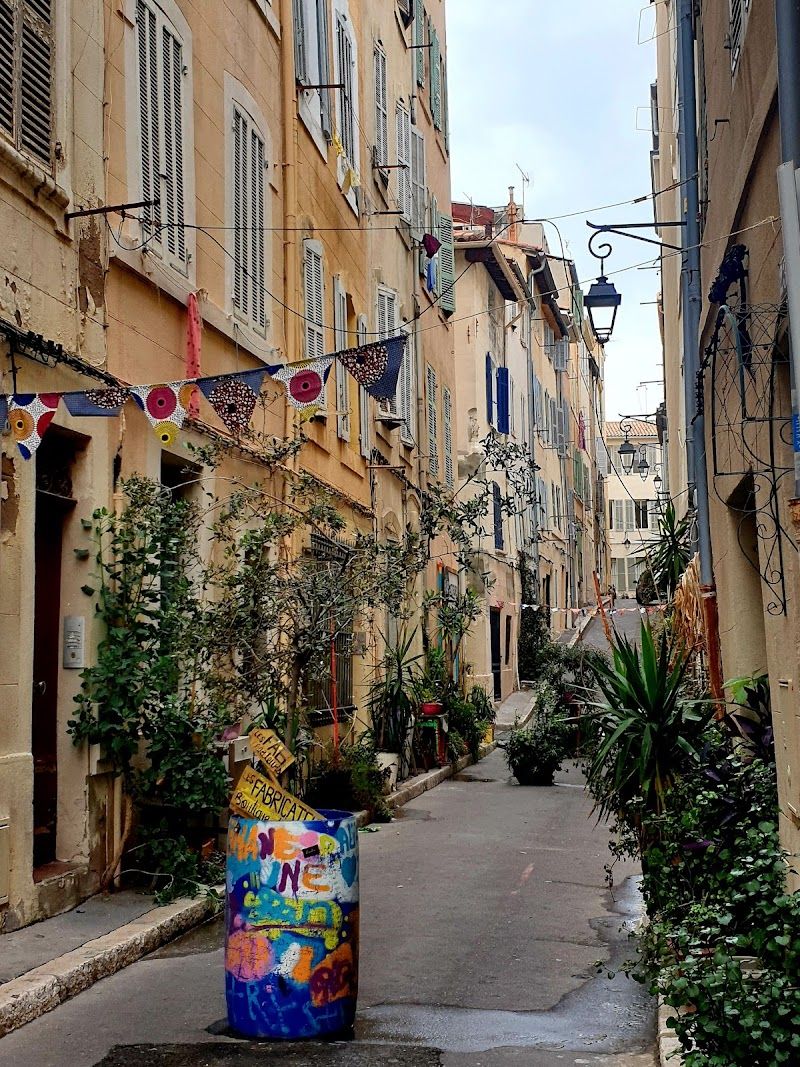
Le Panier is where Marseille began. The Greek colonists who founded Massalia in 600 BC settled on this hill above the natural harbour, and the neighbourhood has been continuously inhabited since then. The modern version is a tangle of steep, narrow streets running from the Rue de la Republique at the harbour level up to Place des Moulins at the summit. The streets are mostly too narrow for cars and the entire quarter is navigated on foot, uphill.
La Vieille Charite is the architectural centrepiece: a 17th-century baroque poorhouse built around a domed oval chapel in the centre. The complex now houses three museums (Egyptian antiquities, African arts, and Oceanic arts; a fourth space for temporary exhibitions) and the ticket is EUR 6-12 depending on which collection is on. Even without entering the museums, the courtyard is worth walking through. The chapel dome is one of the best pieces of baroque architecture in Provence.
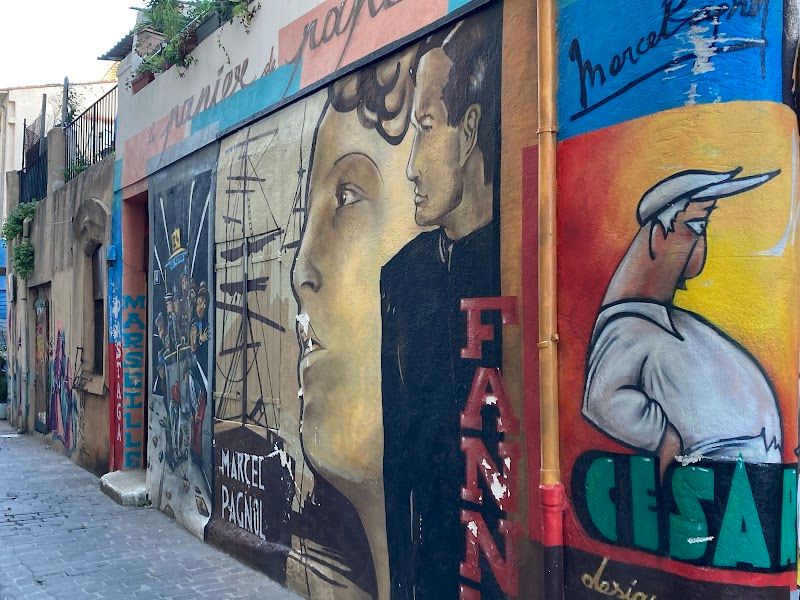
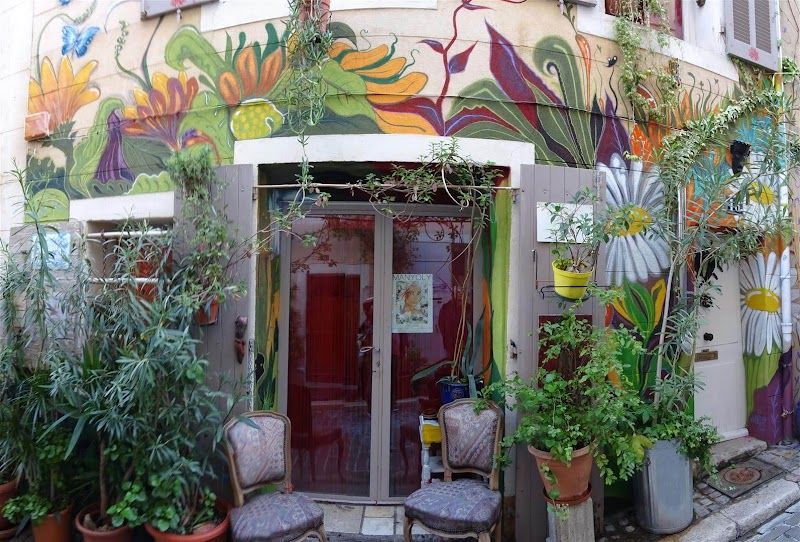
The street art in Le Panier is ongoing and changes regularly. The whole neighbourhood functions as an outdoor gallery, with murals commissioned by the city and added by independent artists on the painted stair risers, on walls, and on the sides of buildings. Rue du Panier and the stairways connecting it to the lower streets have the highest concentration. The gentrification is recent and the neighbourhood still has an authentic quality that the area around the Vieux-Port proper lacks. The artisan shops sell ceramics, soap (the savon de Marseille tradition is strong here), and local food products.
Things to Do
Top experiences in Le Panier
Le Panier Quarter Walk
Le Panier is Marseille's oldest neighborhood, where Greek sailors first settled in 600 BC on the hill overlooking what's now the Vieux-Port. Today it's a maze of narrow cobblestone streets covered in constantly changing street art, with artisan workshops, small galleries, and the occasional locals-only café. The centerpiece is La Vieille Charité, a 17th-century baroque complex built around a domed chapel that now houses three museums (Egyptian, African, and Mediterranean collections) for EUR 6-12. You'll start at the bottom near the port and climb steep streets that feel more like outdoor art galleries than actual roads. Every wall, stairway, and doorway seems to have a mural, and the art changes regularly as new artists add their work. The atmosphere shifts as you climb: touristy at the bottom near Rue de la République, increasingly authentic as you reach the upper streets around Place des Moulins. From the top, you get views back down to the old port and across the city. This isn't some sanitized historic district, it's a real neighborhood where people actually live, though gentrification is creeping in. Skip the museums at La Vieille Charité unless you're genuinely interested in the collections; the building's architecture is impressive enough from the courtyard (free to enter). The walk takes about 90 minutes if you're stopping for photos, but avoid midday in summer when the stone streets become hot with zero shade.
Cathédrale La Major
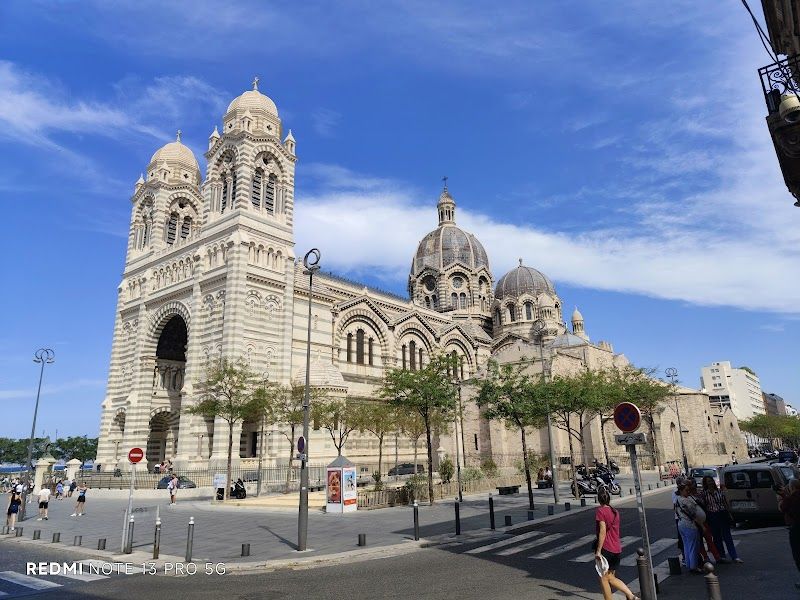
Cathédrale La Major rises like a Byzantine palace transplanted to the Mediterranean, with green and white striped stonework that looks nothing like traditional French churches. Built between 1852 and 1893, this massive cathedral holds 444 marble columns, golden mosaics covering 2,870 square meters, and a blend of Eastern and Western Christian art that reflects Marseille's position as a gateway between Europe and the Orient. The sheer scale impresses: it's 142 meters long and can hold 3,000 people. Walking inside feels like entering a completely different world from the narrow streets of Le Panier outside. The striped exterior continues inside with alternating bands of white Carrara marble and green stone from Florence, while Byzantine-style mosaics cover the domes and walls in gold, blue, and crimson. Your footsteps echo in the vast space, and afternoon light filters through stained glass windows onto the marble floors. The atmosphere stays surprisingly peaceful despite being free to enter. Most visitors spend too much time photographing the exterior and rush through the interior, but the real treasures are inside. The crypt (free entry) contains beautiful marble work that most people skip entirely. Skip the crowded midday hours when cruise ship groups arrive, and don't bother with the souvenir shop near the entrance. The contrast with the tiny Romanesque Vieille Major next door makes both churches more interesting.
Regards de Provence
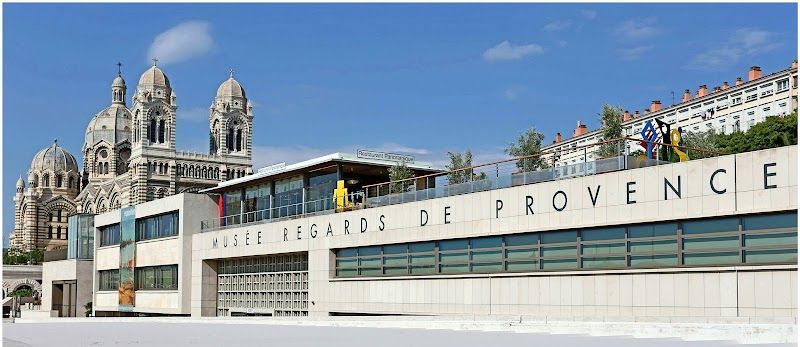
Regards de Provence occupies a striking 1948 sanitary station building that looks like a modernist castle, complete with a cylindrical tower that dominates the skyline. Inside, you'll find rotating exhibitions of how artists from Cézanne to contemporary painters have captured Provence's landscapes, light, and culture. The permanent collection spans 150 years of Provençal art, with some genuinely surprising pieces that go beyond the typical lavender field clichés. The museum flows logically through chronological periods, starting with 19th century romanticized visions and moving toward grittier modern interpretations. What strikes you immediately is how the building's original medical function creates an unexpectedly intimate viewing experience: small rooms force you to engage closely with each piece. The tower climb involves several flights of narrow stairs, but the 360-degree panorama at the top genuinely delivers, especially the view toward MuCEM and the old port. Most travel guides oversell this as essential Marseille culture, but honestly, it's worth visiting primarily for the building and tower view rather than the art collection itself. The permanent collection feels somewhat limited, and temporary exhibitions can be hit or miss. Entry costs around 6 EUR, which feels fair given the unique architecture and vista. Skip this if you're short on time and prioritize MuCEM instead, unless you're specifically interested in regional art history.
Place de Lenche
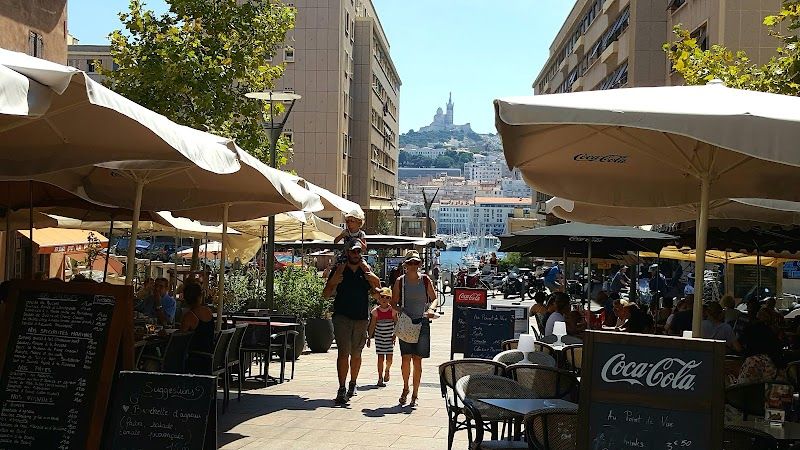
Place de Lenche sits directly above the original Greek agora where Marseille began 2,600 years ago, making it arguably the oldest continuously inhabited spot in France. You'll find a small, unremarkable square surrounded by faded pastel buildings, but beneath your feet lie the stone foundations of the ancient Greek port discovered during 1960s excavations. The real draw here is the panoramic view over Vieux-Port and the chance to stand exactly where Phocaean Greeks first established their trading post. The square feels more like a wide spot in the narrow streets than a formal plaza, with locals hanging laundry from wrought-iron balconies and cats sunning themselves on warm stones. Archaeological information panels dot the perimeter, showing diagrams of the Greek port layout discovered below. The afternoon light hits the square perfectly, illuminating the view down to the harbor while casting the surrounding medieval streets in golden shadows. You can easily imagine ancient merchants negotiating deals in this same spot. Most guidebooks oversell this as a major attraction when it's really a brief but meaningful stop during a Le Panier walk. The archaeological panels are only in French, so you'll miss the technical details unless you translate them. The view is lovely but not dramatically different from other Le Panier viewpoints. Spend 10 minutes reading the panels and taking in the harbor vista, then continue exploring the surrounding streets where you'll find better photo opportunities.
Street Art Marseille Tour
Two-hour guided exploration of Cours Julien's street art scene, featuring massive murals by international artists like Inti, Jef Aérosol, and local collective Le M.U.R. Learn how this former working-class neighborhood transformed into Southern France's street art capital starting in the 1990s.
Nightlife
Bars and nightlife in Le Panier
Getting Here
Getting There
Metro Line 1: Vieux-Port station, then walk north and uphill (10-15 minutes)
On Foot
Very hilly. The neighbourhood is entirely on foot. The streets between the harbour and the summit involve significant climbing. Sensible shoes are essential.
Insider Tips
Direction of the walk
Start at the bottom of Le Panier near the Rue de la Republique and walk up. The steepest streets have the most interesting street art and the ascent is easier to manage than descending steep painted stairs. Place des Moulins at the summit has a quiet square with views over the rooftops. Avoid midday in July and August: the stone streets radiate heat and there is no shade.
La Vieille Charite
The baroque poorhouse at the centre of Le Panier is worth 45 minutes regardless of which museum is showing. The courtyard and the oval chapel dome are free to walk through. The Egyptian antiquities and African arts collections (EUR 6-12) are small but well-curated. Check which temporary exhibition is on before buying a combined ticket.
Best views down to the port
Rue du Refuge and Place des Moulins at the top of Le Panier have the best views down to the Vieux-Port and across to the MuCEM. The light is best in the morning when the sun is behind you and falls on the port below. The terrace cafes near Place des Moulins are the right place for a coffee after the climb.
Nearby Neighborhoods
Continue exploring
Vieux-Port & La Canebière
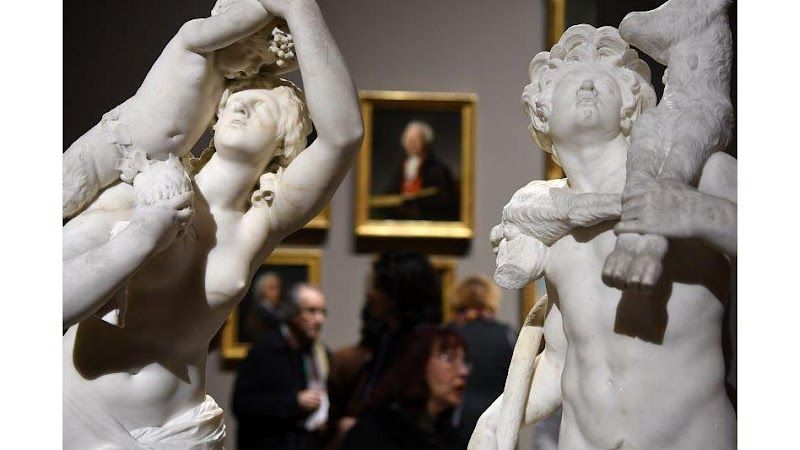
The working harbour at the centre of everything: the fish market at 7 AM, ferries to the islands, restaurant terraces facing the water, and the MuCEM walkway at the western entrance to the port.
Notre-Dame de la Garde & South
The high point of the city and the coastal south: the basilica at the summit, the Corniche Kennedy running along the sea cliffs, the tiny Vallon des Auffes fishing port below, and the Calanques beginning further south.
Cours Julien & La Plaine
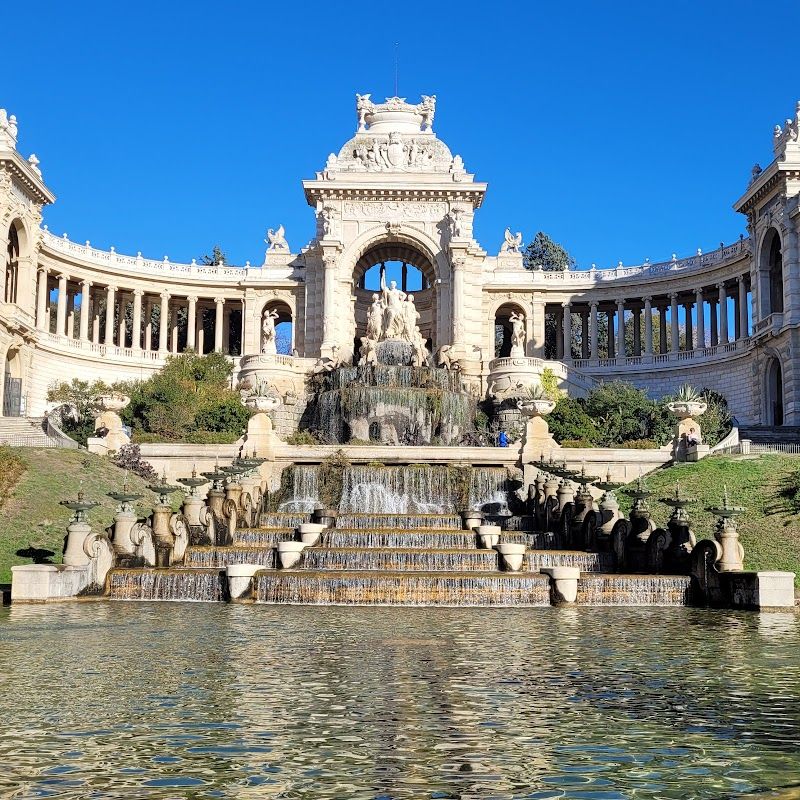
Marseille's bohemian quarter east of the Vieux-Port: street art on every wall, record shops, cheap diverse food from every corner of the Mediterranean and beyond, and bars that stay open late.
Related Articles
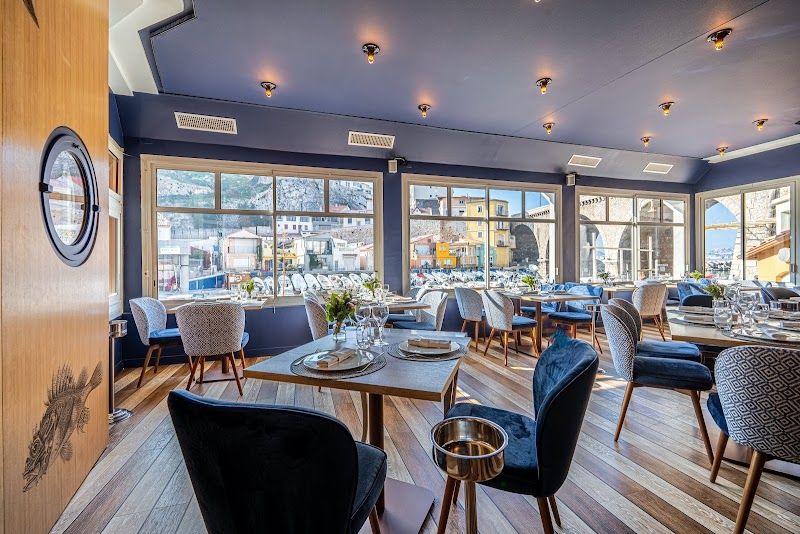
What to Eat in Marseille: 12 Local Specialties Beyond Bouillabaisse
Marseille's food scene goes far beyond bouillabaisse. Discover panisse, navette cookies, and 10 other local specialties that locals actually eat in France's most diverse city.
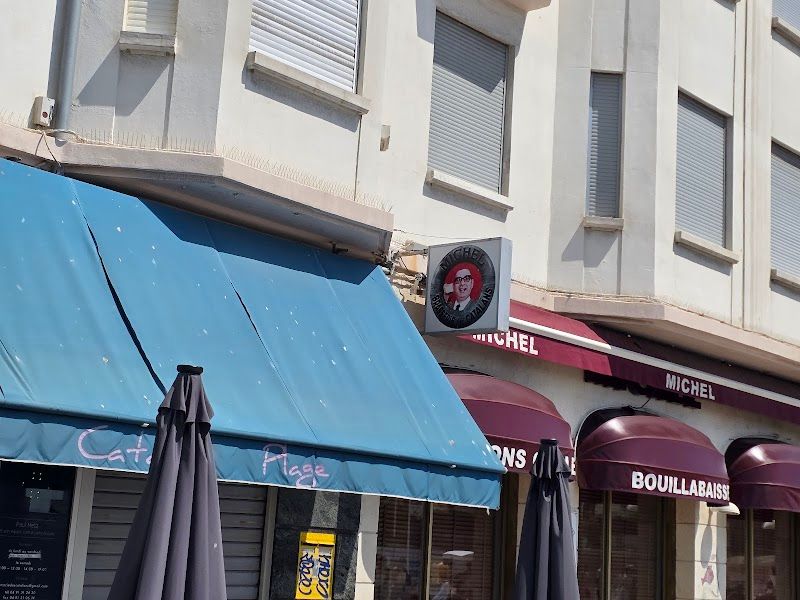
Marseille's Best Food Markets: Where Locals Shop and What to Buy
Marseille's food markets are where the city's soul lives. The Vieux-Port fish market has operated since 600 BC, while Marché des Capucins is where locals buy everything from Moroccan spices to perfect tomatoes.
Plan a trip featuring Le Panier
Get a personalized Marseille itinerary with Le Panier built in.
Start Planning