Italy
Turin
Egypt's second-best museum, the city that invented Nutella, Baroque arcades, and Barolo by the glass for EUR 6
Best Time
April-June and September-October
Ideal Trip
2-3 days
Language
Italian, limited English outside hotels and tourist areas
Currency
EUR
Budget
EUR 44-98/day (excl. hotel)
About Turin
Turin is the Italian city that nobody visits and everyone should. It was the first capital of unified Italy, the home of Fiat and Lavazza, the city that invented the modern chocolate industry (gianduja, the hazelnut chocolate that became Nutella, was born here), and it has the most elegant grid of Baroque boulevards and arcaded squares in Italy. The problem is that it sits in Piedmont, in the shadow of Milan to the east and the Alps to the west, and most tourists drive past it on the way to somewhere else.
The Egyptian Museum (EUR 18) is the second most important collection of Egyptian antiquities in the world after Cairo, and it is spectacularly presented in a renovated palazzo. The Mole Antonelliana is the city's defining building, a 167-metre spire originally designed as a synagogue, now housing the National Cinema Museum (EUR 15, the panoramic lift to the top is the best city view in northern Italy). The Royal Palace (EUR 15) and Piazza Castello form the monumental centre.
The food is Piedmontese: rich, seasonal, and truffle-adjacent. Bagna càuda (hot garlic and anchovy dip for raw vegetables, EUR 10-14, a winter dish your breath will remember for days), vitello tonnato (cold veal with tuna sauce, EUR 12-15, sounds wrong, tastes perfect), and bicerin (the Turinese layered espresso-chocolate-cream drink, EUR 5-7, from Caffè Al Bicerin, the café that has been serving it since 1763). A glass of Barolo at a neighbourhood enoteca costs EUR 8-15.
Neighborhoods
Each district has its own personality
Centro & Piazza Castello
The Savoy royal centre: Piazza Castello with the Royal Palace and Palazzo Madama, Caffè Al Bicerin (since 1763), Piazza San Carlo with twin churches and historic cafes, and the Baroque arcades of Via Roma
Quadrilatero Romano & Porta Palazzo
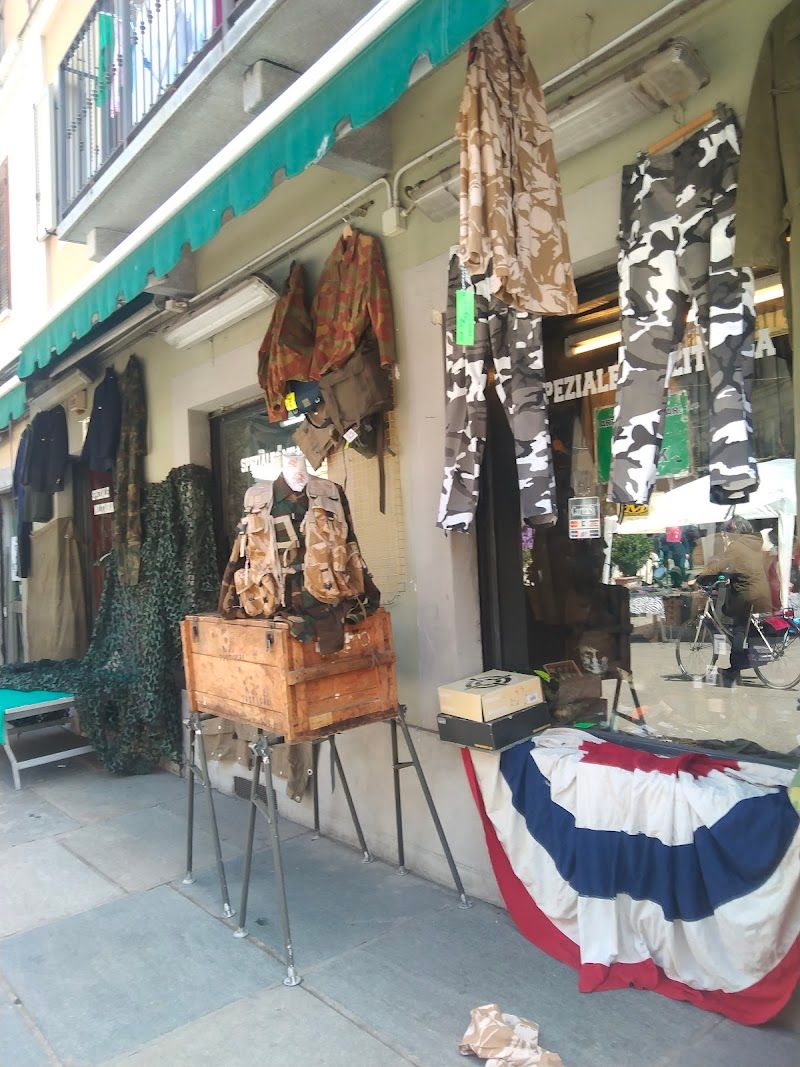
The Roman grid neighbourhood: Porta Palazzo (the largest open-air market in Europe, every morning), the best aperitivo density in Turin, trattorias, and the multicultural character from the North African and Eastern European communities
San Salvario & Valentino
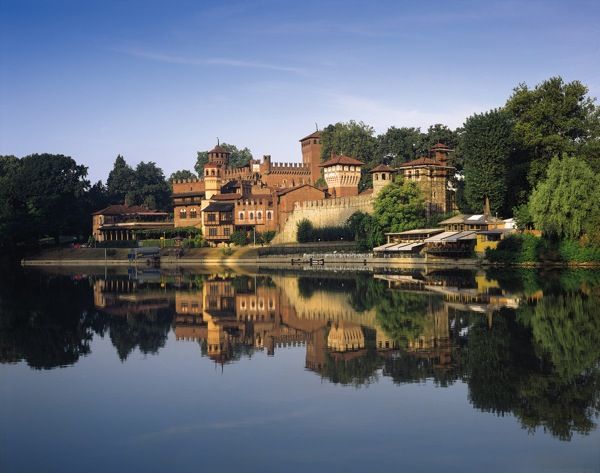
The student and multicultural neighbourhood south of the station: cheap eats, craft beer bars, weekend nightlife, and Parco del Valentino along the Po river with the reconstructed medieval village
Things to Do
Top experiences in Turin
Piazza Vittorio Veneto
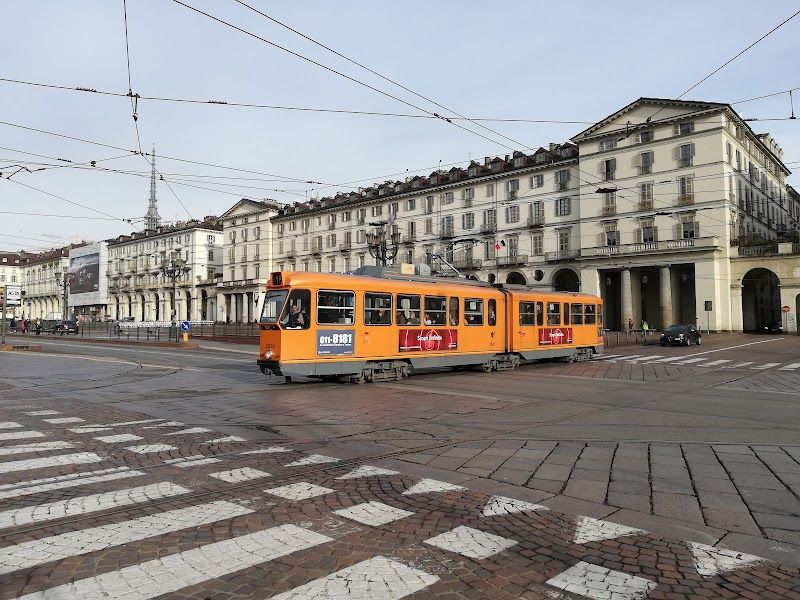
This massive Baroque square stretches out like an amphitheater, with its sweeping arcades descending toward the Po River and framing a perfect view of the Gran Madre di Dio church across the water. It's Europe's largest square of its kind, built in the 1800s as Turin's grand entrance from the river. You'll get one of the city's best panoramic shots here, with the Alps rising behind the neoclassical church and the green Collina Torinese hills rolling away to the east. The square feels theatrical, almost like a movie set with its uniform cream colored porticoes curving down toward the river. Late afternoon light hits the arcades beautifully, and you'll see locals settling into the cafe tables under the colonnades as the sun starts to sink. The space opens up dramatically as you walk down from Via Po, and the view across to Gran Madre gets better with each step toward the river side. Most guidebooks make this sound more exciting than it actually is. It's gorgeous for photos and aperitivo, but you don't need more than 20 minutes here unless you're settling in for drinks. The cafes under the arcades charge tourist prices (expect 8-12 EUR for cocktails), but the terrace tables with river views justify the markup. Skip the upper section near Via Po and head straight to the bottom for the best perspective.
Piazza San Carlo
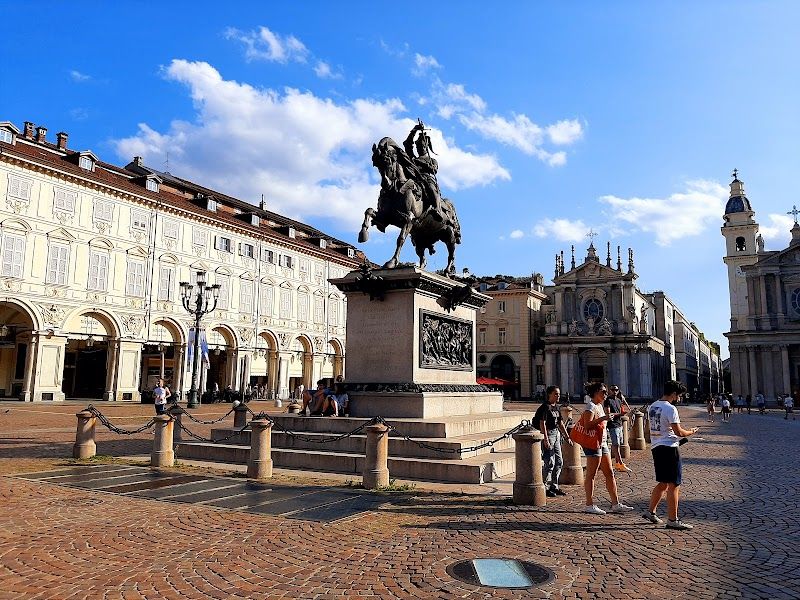
Piazza San Carlo serves as Turin's outdoor living room, where twin Baroque churches frame the southern end and cafes line elegant arcades that have hosted the city's social elite since the 1700s. You'll find yourself in a perfectly proportioned space where the bronze statue of Emanuele Filiberto commands the center, sword raised toward France after his military victories. The real draw is the cafe culture: historic spots like Caffè San Carlo and Caffè Torino still serve espresso at marble tables where writers, politicians, and locals conduct business. Walking into the piazza feels like entering a stage set where every element was designed for maximum elegance. The morning light hits the yellow ochre facades beautifully, casting long shadows across the geometric stone patterns underfoot. You'll notice how the arcades create natural gathering spots, with small clusters of people reading newspapers over cappuccinos or tourists studying maps. The twin churches of San Carlo and Santa Cristina create a sense of symmetry that makes photographers stop mid stride. Most guides oversell this as a major attraction when it's really best experienced as a coffee stop during a walking tour of central Turin. Skip the overpriced tourist cafes near the statue and head to the smaller spots under the western arcade where locals actually drink. The square gets packed during aperitivo hour (6pm to 8pm), so visit mid morning for the best atmosphere and photos. Expect to pay 1.50 EUR for espresso at the bar, 4 EUR if you sit at a table.
Museo Egizio (Egyptian Museum)
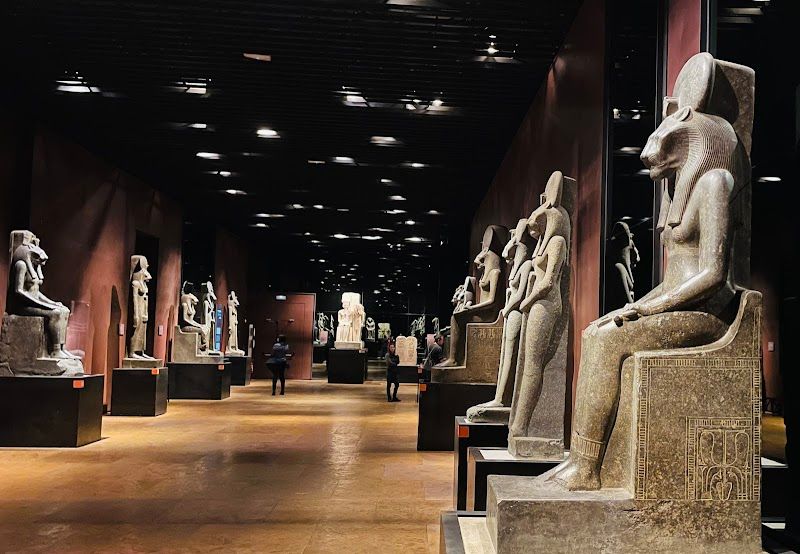
The Museo Egizio holds the world's second largest collection of Egyptian antiquities, with 40,000 objects spanning 4,000 years. You'll see eight royal mummies, the complete intact tomb of architect Kha and Merit from 1400 BC, a 15-meter Book of the Dead papyrus, and the towering 3.17-meter black granite Ramesses II statue. This isn't just another dusty museum: the 2015 renovation created immersive chambers that replicate original tomb environments. You start in the ground floor's soaring gallery surrounded by colossal statues and sarcophagi, then work upward through chronologically arranged rooms. The Tomb of Kha recreation is extraordinary, every cup, chair, and jewelry piece positioned exactly where archaeologists found them in 1906. The lighting is theatrical but respectful, and interactive displays explain hieroglyphics and mummification without dumbing things down. Most guides push you through too quickly, but this collection deserves three hours minimum. Skip the basement storage displays and focus on floors one through three. The EUR 18 entry fee stings, but consider this rivals the Cairo Museum for quality. Book online to avoid weekend queues, and ignore the audio guide: the new wall texts are excellent and faster to navigate.
Parco del Valentino
Parco del Valentino stretches for 2.5km along the Po River, combining Turin's largest green space with an authentic recreation of a 15th-century medieval village. You'll find centuries-old plane trees shading wide lawns where locals picnic, plus the University's Botanical Garden with over 2,000 plant species. The highlight is Borgo Medievale, a meticulously crafted 1884 reconstruction complete with working artisan shops, a drawbridge, and castle tower. The park flows naturally from manicured gardens near Corso Vittorio Emanuele II down to wilder riverside paths where joggers and cyclists stream past. Walking through Borgo Medievale feels like stepping onto a film set: costumed blacksmiths hammer away, medieval music drifts from courtyards, and the castle's stone walls smell authentically ancient. The contrast between this theatrical village and families playing football on nearby lawns creates Turin's most surreal juxtaposition. Most guides oversell the Botanical Garden, it's genuinely interesting only if you're into plants. The castle tower costs 5 EUR but delivers panoramic views over the Po and Alps on clear days. Skip the overpriced village cafe and bring a picnic instead. Early morning visits avoid the crowds and catch golden light on the medieval stonework.
Porta Palazzo Market
Europe's largest open-air market sprawls across Piazza della Repubblica every morning except Sunday, with 800 stalls covering an entire city block. You'll find extraordinary Piedmontese produce, alpine river fish, artisanal cheeses, and an entire international food section serving Turin's North African and Eastern European communities. The covered market building from 1916 houses the premium delicatessen stalls, while October and November bring Italy's best public truffle display outside Alba. The energy peaks before 9 AM when vendors call out prices and shoppers jostle through narrow aisles between wooden stalls. You can smell roasting coffee, fresh bread, and pungent cheeses from blocks away. The truffle vendors let you handle their precious white specimens, weighing them on antique scales while explaining the differences between Langhe and Monferrato varieties. Street food vendors dish out North African specialties alongside traditional Piemontese fare. Most tourists stick to the obvious produce stalls and miss the real treasures. The covered market's cheese selection rivals anything in France, but costs 30% less than downtown shops. White truffles run EUR 200 to 400 per 100 grams, but you're not obligated to buy after examining them. Skip the touristy perimeter stalls and head straight for the international food section for the city's best couscous and authentic Eastern European specialties.
La Reggia di Venaria Reale
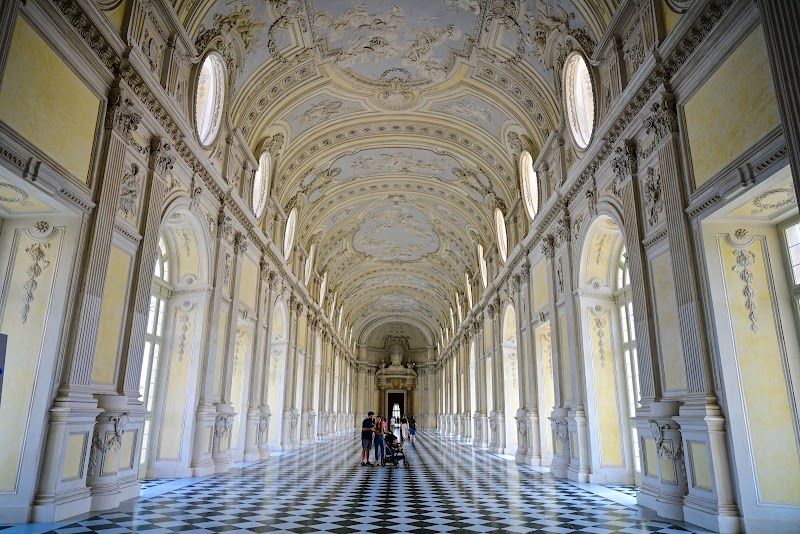
La Reggia di Venaria Reale showcases the absolute peak of Savoy royal excess, with the spectacular Hall of Diana stretching 140 meters of pure baroque theater. You'll walk through gilded galleries where frescoed ceilings soar overhead, and the Bucintoro room displays actual royal carriages that transported kings across Europe. The formal gardens cover 80 hectares with geometric patterns, fountains, and a perfectly restored orangery that rivals anything at Versailles. The palace flows chronologically through centuries of royal life, starting with hunting lodges and escalating to pure architectural megalomania. Each room outdoes the last: marble floors inlaid with precious stones, walls covered in silk tapestries, and mirrors that multiply the grandeur infinitely. The Hall of Diana stops conversations mid-sentence when you enter, its barrel-vaulted ceiling painted with hunting scenes that seem to move in the shifting light. Outside, the gardens unfold in perfect symmetry, with gravel paths leading to hidden grottos and water features. Most guides don't mention that you can easily spend 4 hours here if you're actually interested in royal history. Skip the basement exhibition rooms which feel like filler, and don't bother with the audio guide at €5 since the English descriptions are decent. Entry costs €25, but combined tickets with the gardens run €30. The palace gets surprisingly quiet after 3 PM when tour groups leave.
Basilica di Superga
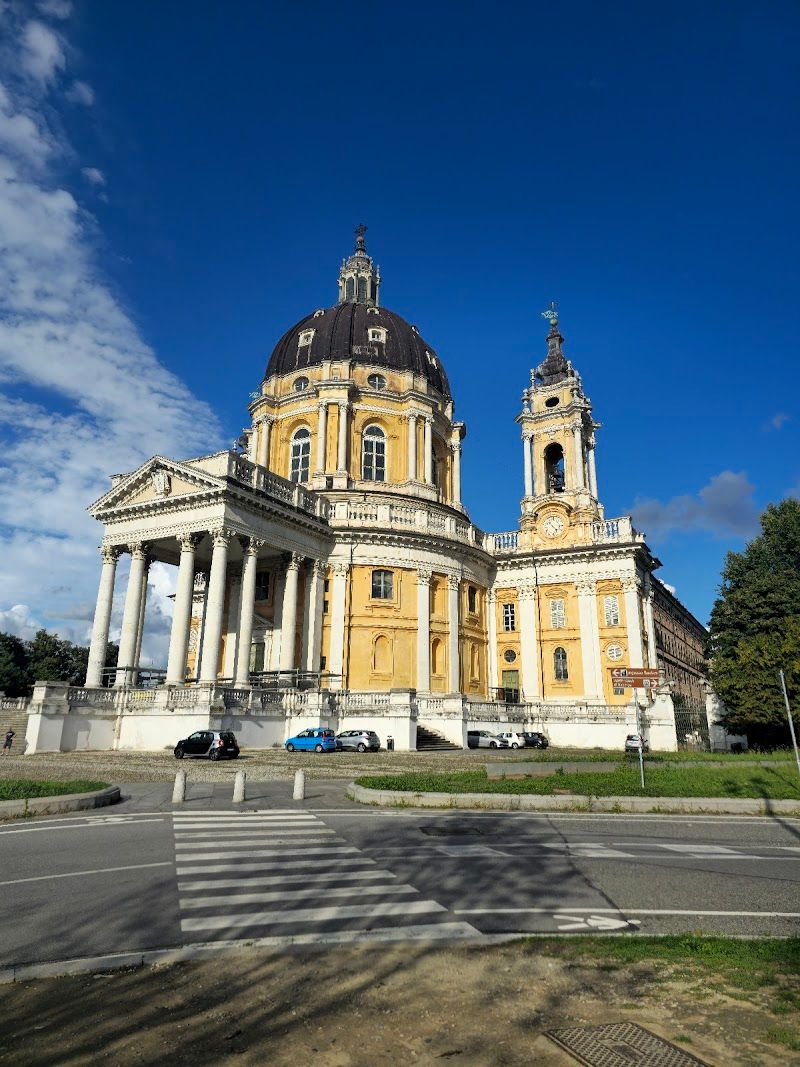
This hilltop Baroque basilica sits 672 meters above Turin, designed by master architect Filippo Juvarra in the 1710s as the Savoy royal family's mausoleum. You'll explore the ornate church interior with its soaring dome, then descend to the crypts where Italian royalty lies buried in marble sarcophagi. The real draw is the panoramic terrace: on clear days you can see the entire Alps arc from Monte Rosa to the Maritime Alps, with Turin's grid spread out below like a map. The historic rack tramway from Sassi takes 20 minutes, climbing through vineyards and forests while the city shrinks behind you. Inside the basilica, the atmosphere shifts from tourist chatter to reverent quiet as you enter the royal tombs. Behind the building, a simple memorial plaque marks where the Grande Torino football team died in 1949 when their plane crashed into the hillside. The contrast between the opulent royal burial chambers and this modest sports memorial feels uniquely Italian. Most visitors rush through the basilica in 30 minutes, but you need at least two hours to appreciate both the architecture and views properly. The tram costs €4 each way, though driving up saves money if you're in a group. Skip the overpriced cafe on site and bring snacks. The basilica interior closes for Mass on Sunday mornings, but the views remain accessible. Weather makes or breaks this trip: on hazy days you'll see nothing but gray soup where the Alps should be.
Palazzo Madama
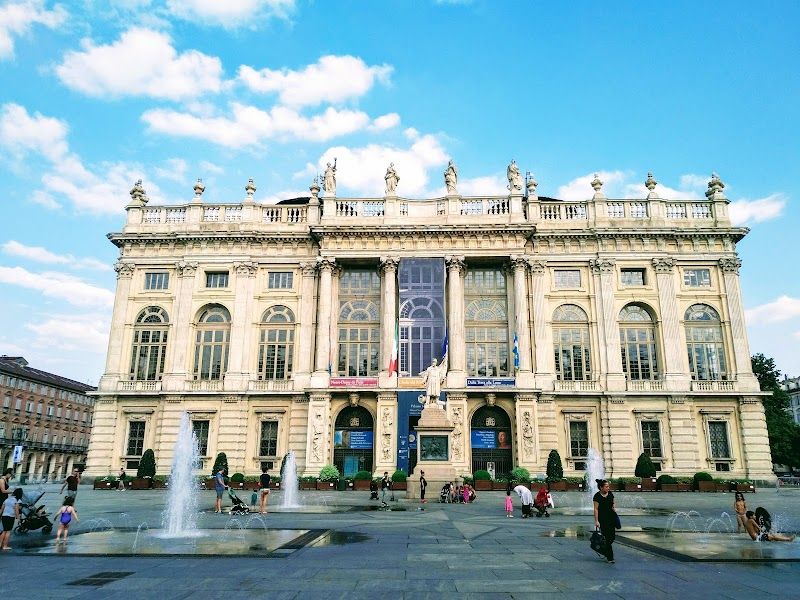
Palazzo Madama stands as Turin's most architecturally schizophrenic building, with a soaring Baroque facade by Juvarra grafted onto a medieval castle that itself was built over Roman gates. Inside, the Museo Civico d'Arte Antica houses Italy's finest collection of decorative arts: think intricate ivory carvings, medieval manuscripts, and enough ornate furniture to fill a dozen palaces. The real prize is the rooftop terrace, which delivers knockout views across Piazza Castello to the Alps when the weather cooperates. You'll start in Juvarra's magnificent marble staircase, easily the most photographed spot here, before wandering through rooms that feel more like a collector's private home than a sterile museum. The medieval sections retain their fortress atmosphere with thick stone walls and narrow windows, while the Baroque rooms practically drip with gilt and crystal. The contrast is jarring and fascinating, like touring two completely different buildings that happen to share the same address. Most guides oversell the art collection, honestly it's good but not spectacular unless you're particularly into decorative arts. The combined ticket with Palazzo Reale costs €15 versus €10 for Madama alone, worth it if you're doing both. Skip the audio guide and head straight to the terrace first, then work your way down. Many visitors miss the medieval foundations in the basement, which are actually more atmospheric than half the fancy rooms upstairs.
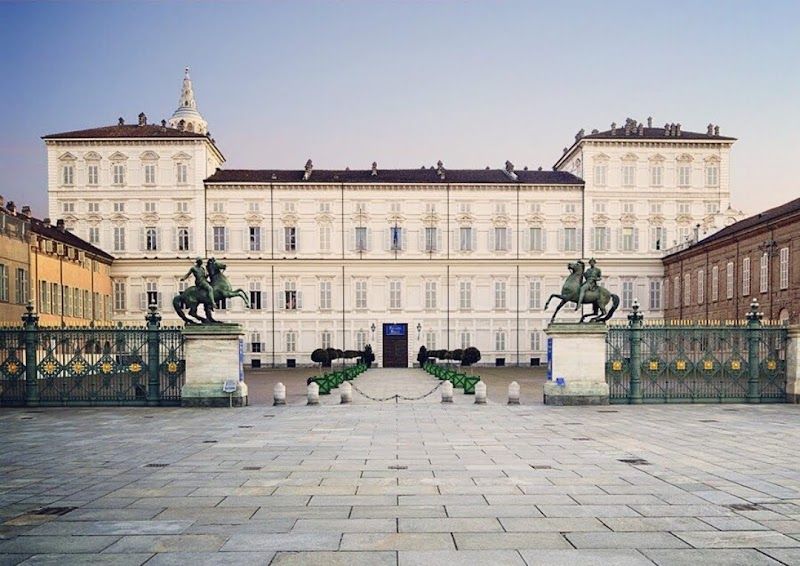
Palazzo Reale di Torino (Royal Palace) and Piazza Castello
The Royal Palace (Palazzo Reale) is the principal residence of the House of Savoy, the dynasty that ruled Piedmont for seven centuries and became the royal family of unified Italy in 1861. The building faces Piazza Castello from the north, with the main facade on the piazza side. The state apartments (EUR 15) are a procession of over-furnished rooms with Gobelin tapestries, Meissen porcelain, and gilded everything: the standard Baroque royal interior amplified by Savoy wealth and the need to impress visiting monarchs. The Armory (included) has one of the most complete collections of ceremonial arms and armour in Europe. The Chapel of the Holy Shroud (the Cappella della Sindone) is accessed from the palace: the Shroud of Turin is kept here, in a silver casket inside the chapel designed by Guarino Guarini (1668-1694), one of the most spatially complex Baroque interiors in Italy. The Shroud is almost never on public display. The chapel can be visited regardless. Piazza Castello itself is the ceremonial heart of Turin: the Palazzo Madama (medieval castle with Baroque facade, EUR 10, the rooftop terrace view), Palazzo Chiablese, and the Teatro Regio (Turin's opera house) all face the square.
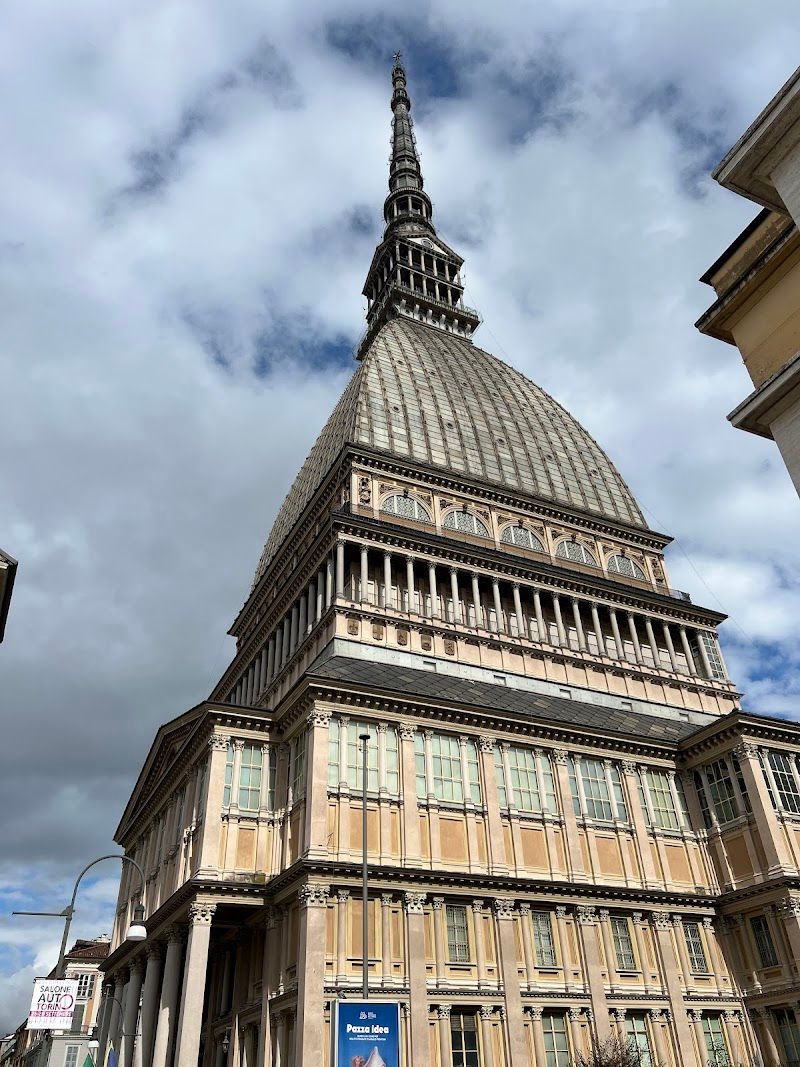
Mole Antonelliana and National Cinema Museum
Turin's strangest architectural story stands 167 meters tall in the city center: the Mole Antonelliana started as a synagogue in 1863, bankrupted the Jewish community who commissioned it, got abandoned mid-construction, then became the city's accidental monument. Today it houses Europe's most creative cinema museum, where you'll explore film history through immersive installations rather than boring chronological displays. The horror cave genuinely startles, the 1930s monster movie room captures Hollywood's golden age perfectly, and the melodrama chapel feels like stepping into a soap opera set. You enter through the base and spiral upward through themed rooms that feel more like theater sets than traditional museum spaces. The installations use original equipment: zoetropes from the 1830s, Lumière brothers' projectors, and contemporary digital displays that respond to your movement. The building's soaring interior amplifies every sound, creating an almost cathedral-like atmosphere that makes the film artifacts feel sacred. The glass panoramic lift shoots through the tower's center to the 85-meter viewing platform, offering Alpine views that extend to Mont Blanc on clear days. Most visitors rush through to reach the lift, but the museum deserves the full two hours even if you're not a film buff. Skip the gift shop (overpriced movie posters) and invest the EUR 8 extra for the lift: the view justifies the cost and the ride itself is thrilling. The EUR 15 museum entry feels steep until you experience how thoughtfully everything's designed. Closed Mondays, and weekend mornings are surprisingly quiet compared to afternoons.
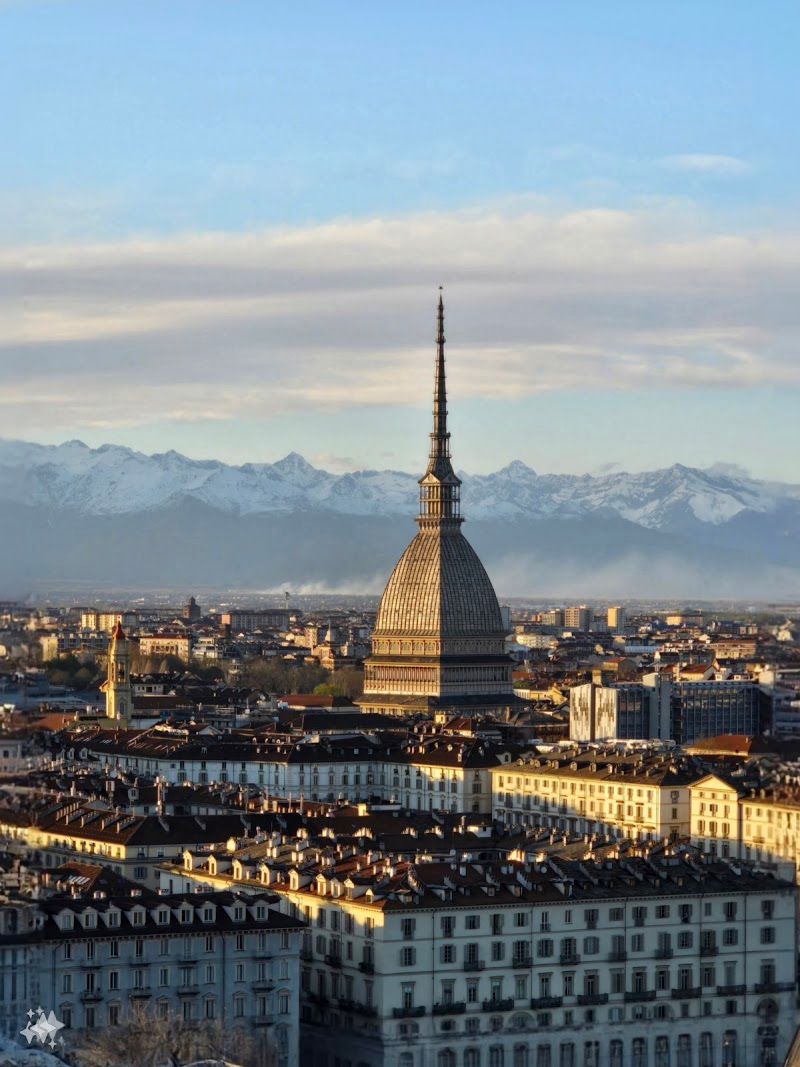
Chiesa di Santa Maria del Monte dei Cappuccini
Take the stone stairway from Via Giovanni Giolitti instead of the main road approach; it's more atmospheric and gives you better glimpses of the view as you climb. Most people crowd the main terrace, but walk around to the left side of the church building for views with fewer people blocking your shots. The small parking area fills up completely by 4 pm on clear days, so either come early morning or use the riverside parking along Lungo Po and walk up.
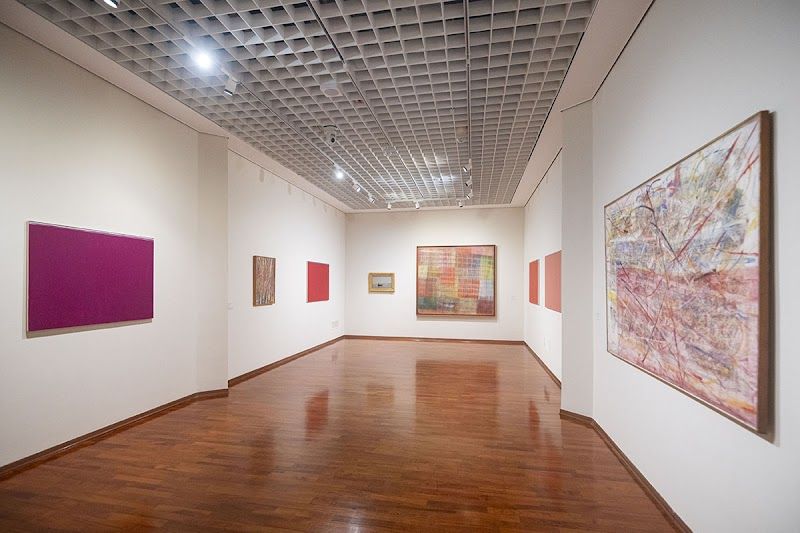
GAM - Galleria Civica d'Arte Moderna e Contemporanea
GAM houses Italy's finest collection of modern and contemporary art in a 1895 neoclassical palace that resembles a Parisian mansion more than a typical museum. You'll find Europe's best Futurist collection here, with explosive works by Balla and Boccioni that practically vibrate off the walls, plus exceptional pieces by Modigliani, de Chirico, and Fontana. The 45,000 works span from 19th-century Romanticism through cutting-edge Arte Povera installations, making this the definitive journey through Italian modernism. The experience flows well across three floors, starting with 19th-century salons on the ground level before ascending to modernist galleries. The second floor Futurist rooms feel electric, while the contemporary installations on the third floor provide breathing space and conceptual depth. The top-floor video art room creates an almost meditative atmosphere, and the sculpture garden out back offers a peaceful contrast to the intensity inside. Most visitors rush through the contemporary floors to reach the famous names, but you're missing the point. The lesser-known Arte Povera works upstairs are often more rewarding than the predictable Modigliani pieces. Entry costs €10 (€8 reduced), and Tuesday evenings until 22:00 offer the best experience with fewer tour groups and dramatic evening lighting. It is suggested to skip the audio guide at €5, the wall texts in English are excellent.
Travel Guides
Expert guides for every travel style
Turin Food & Chocolate Guide: Bicerin, Gianduja, Barolo & Piedmontese Cuisine
Turin invented gianduja (which became Nutella), the bicerin, and arguably the aperitivo. The Piedmontese food is rich, butter-heavy, and truffle-adjacent. Here is how to eat it correctly.
8 min
2-3 Days in Turin: First-Timer's Itinerary
How to spend 2-3 days in Turin: the Egyptian Museum, Mole Antonelliana, bicerin at Al Bicerin, the Porta Palazzo market, Piazza Castello, and an optional Langhe wine day.
7 min
Frequently Asked Questions
It is the world's second most important Egyptian collection after Cairo, and significantly better than what Rome has. It holds 40,000 objects including the complete, intact Tomb of Kha and Merit (untouched since 1400 BC), 8 royal mummies, one of the longest surviving Books of the Dead, and a large-scale Ramesses II statue. The presentation (renovated in 2015) is exceptional. Allow 2-3 hours minimum. EUR 18. Closed Monday.
A bicerin is a layered drink specific to Turin: espresso at the base, thick dark drinking chocolate poured over it, whipped cream on top, served in a small glass. You do not stir it: you drink it in layers, espresso first through the cream and chocolate. It was invented at Caffè Al Bicerin on Piazza della Consolata, where they have been serving the same recipe since 1763. EUR 5-7. Dumas, Cavour, Nietzsche, and Puccini are all documented as customers. The café has 10 tables and is unchanged.
By car: A6 south to Asti (1 hour), then the SP road network into the hills. By train: to Alba (1.5 hours, change at Bra or Asti). Organised day tours from Turin run EUR 80-120 and include winery visits. October is the best time: white truffle season, harvest, the Nebbiolo grapes being picked. The Enoteca del Barolo in Barolo village lets you taste 15-20 producers by the glass (EUR 5-15 per glass depending on producer). Self-driving means a designated driver.
Turin claims to have invented the aperitivo: the tradition of serving food with a pre-dinner drink, which spread through Italy and became the spritz and the Negroni. Vermouth was invented here (Carpano Classico in 1786, Punt e Mes in 1870). Turin's aperitivo today: between 6 and 9 PM, go to a decent bar in the Quadrilatero Romano or Piazza San Carlo area, order a drink (EUR 8-12), and a table of food appears automatically. The better bars serve actual cured meats, cheeses, and hot bites. It is both a drink and dinner.