Every tourist in Paris knows about the Champs-Élysées, but if you want to understand how Parisians actually live, you need to follow them to their local paris food market. These aren't photo opportunities - they're working markets where neighbors argue about tomato prices in rapid French and vendors know your name after three visits.
The best markets in Paris are split between covered halls that have operated for centuries and open-air markets that pop up twice a week in neighborhood squares. The covered markets stay consistent year-round, while the seasonal markets shift with whatever's growing in the Île-de-France region. Both types offer something supermarkets cannot: vendors who grew or made everything they're selling, prices that reflect actual value rather than marketing budgets, and the social fabric that holds Parisian neighborhoods together.
Marché des Enfants Rouges: Paris's Oldest Covered Market
The Marché des Enfants Rouges in Le Marais opened in 1628, making it the oldest covered market in Paris. The name translates to "Market of the Red Children," referencing an orphanage whose residents wore red uniforms. Today, it operates Tuesday through Sunday from 8:30am to 7:30pm (Sunday until 2pm).
What makes this market different from tourist-focused spots is the mix of traditional French vendors and immigrant food stalls that reflect the Marais's diversity. The produce vendors here charge 20-30% less than equivalent organic shops in the neighborhood. You'll find seasonal French vegetables alongside North African spices and Japanese bento boxes.
The standout vendors include Alain Dubois for seasonal vegetables (he grows everything within 100km of Paris), Chez Alain for rotisserie chicken that locals line up for on Sunday mornings, and the Moroccan stall run by Fatima, where the tagines cost EUR 8-12 and serve two people easily.
Location: 39 Rue de Bretagne, 75003 Paris
Metro: Temple (Line 3) or Filles du Calvaire (Line 8)
Best time to visit: Saturday morning before 11am for the full selection
Rue Montorgueil: The Market Street That Never Sleeps
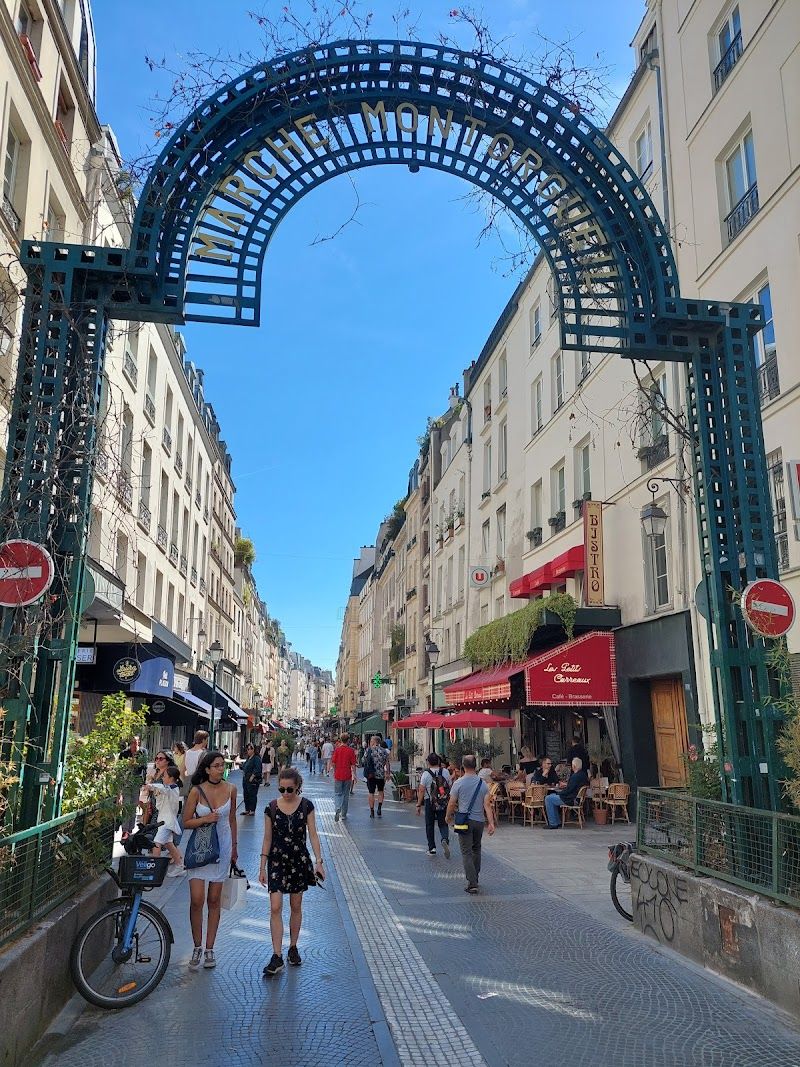
Rue Montorgueil technically isn't a market - it's a pedestrian street lined with food shops that function as one continuous market. Located between Les Halles and the Grands Boulevards, this cobblestone street has been feeding Parisians since the 13th century.
The street operates on Parisian rhythm: bakeries open at 6am, produce shops by 8am, cheese vendors by 9am, and restaurants serve until midnight. This is where you learn the difference between a boulangerie (bread only) and a boulangerie-pâtisserie (bread plus pastries). Stohrer, at number 51, opened in 1730 and still makes rum babas using the original recipe.
For practical shopping, hit Maître Fromager Laurent Dubois for cheese (his Comté aged 24 months costs EUR 45/kg but transforms every meal), L'Escargot Montorgueil for prepared foods that travel well, and the organic produce stand near Rue Étienne Marcel that prices everything by the piece rather than weight.
Location: Rue Montorgueil, 75001 and 75002 Paris
Metro: Sentier (Line 3), Étienne Marcel (Line 4), or Les Halles (Lines 1, 4, 7, 11, 14)
Best time to visit: Weekday mornings from 9-11am when locals do their shopping
Marché Saint-Germain: The Covered Market That Modernized Right
The Marché Saint-Germain proves that old markets can adapt without losing their soul. This covered market in Saint-Germain-des-Prés underwent renovation in 2019 but kept its original 1818 iron framework and most importantly, its local vendors.
Open Tuesday through Saturday from 8am to 8pm, Sunday until 1:30pm, the market balances traditional French products with international specialties. The butcher shop here sells dry-aged beef that costs 30% less than equivalent cuts at Boucherie Saint-Germain around the corner. The fishmonger receives daily deliveries from Normandy and Brittany, with prices clearly marked per 100g.
The market's secret weapon is the prepared food section upstairs, where local chefs run small stalls serving everything from Vietnamese pho (EUR 12) to traditional French pot-au-feu (EUR 14). These aren't tourist meals - they're what neighborhood workers eat for lunch.
Location: 4-8 Rue Lobineau, 75006 Paris
Metro: Mabillon (Line 10) or Saint-Germain-des-Prés (Line 4)
Best time to visit: Thursday and Friday afternoons when the wine vendor offers tastings
Best Neighborhood Farmers Markets Across Paris
Parisian farmers markets operate on a strict twice-weekly schedule, with each neighborhood hosting markets on specific days. These markets focus heavily on seasonal French produce, with vendors traveling from farms within 200km of the city.
Marché des Batignolles (Saturday Morning)
Saturday mornings from 9am to 3pm, Boulevard des Batignolles transforms into northwest Paris's primary farmers market. This market serves the 17th arrondissement's mix of young families and longtime residents, creating competitive pricing and high turnover.
The organic produce here costs 15-20% less than Monoprix organic sections because you're buying directly from farmers. Look for seasonal specialties: asparagus in April (EUR 8/kg), tomatoes in August (EUR 4/kg for heirloom varieties), and winter squash from October through March.
The cheese vendor, Patricia, sources from small producers in Normandy and offers tastings on Saturday mornings. Her raw milk Camembert costs EUR 12/wheel and peaks exactly 10 days after purchase.
Location: Boulevard des Batignolles, 75017 Paris
Metro: Rome (Line 2) or Place de Clichy (Lines 2, 13)
Specialty: Organic vegetables and Norman cheeses
Marché Bastille (Thursday and Sunday)
The Bastille market runs along Boulevard Richard-Lenoir twice weekly - Thursday 7am to 2:30pm and Sunday 7am to 3pm. Sunday draws larger crowds but Thursday offers better selection from vendors who save their premium products for the weekend shoppers in Bastille/Oberkampf.
This market excels at North African and Middle Eastern ingredients alongside traditional French products. The spice vendor sells ras el hanout blends (EUR 15/100g) that taste nothing like supermarket versions. The olive bar offers 20+ varieties with prices ranging from EUR 12/kg for basic Kalamata to EUR 35/kg for estate-bottled French olives.
Location: Boulevard Richard-Lenoir, 75011 Paris
Metro: Bastille (Lines 1, 5, 8) or Bréguet-Sabin (Line 5)
Specialty: North African ingredients and rotisserie chicken
Marché Saint-Germain Open-Air (Tuesday, Friday, Sunday)
Not to be confused with the covered market, the open-air Saint-Germain market sets up in Place Saint-Germain-des-Prés on Tuesday, Friday, and Sunday mornings from 7am to 1:30pm. This small market serves the neighborhood's demanding clientele with premium products and premium prices.
Everything here costs 20-40% more than equivalent markets in outer arrondissements, but the quality justifies the expense if you're shopping for special meals. The fish vendor sells day-boat catches from Brittany, the produce vendor specializes in heirloom varieties, and the flower stall creates arrangements that last two weeks.
Location: Place Saint-Germain-des-Prés, 75006 Paris
Metro: Saint-Germain-des-Prés (Line 4)
Specialty: Premium ingredients and prepared foods
Specialized Food Markets Worth the Journey
Some of Paris's best food markets focus on specific products or serve particular communities. These markets require more planning but offer products you won't find elsewhere in the city.
Marché aux Puces Food Section (Saturday, Sunday, Monday)
Most people visit the Marché aux Puces in Saint-Ouen for antiques, but the food section operates independently on the market's periphery. Saturday through Monday from 9am to 6pm, this area serves the large West African and Maghrebi communities in northern Paris.
The spice vendors here import directly from Morocco, Tunisia, and Senegal. Prices run 50-70% below specialty shops in central Paris because these vendors serve local families rather than curious tourists. The butcher shops sell cuts rarely available elsewhere in Paris, including goat meat and specific preparations for various cultural celebrations.
Location: Avenue Michelet, 93400 Saint-Ouen
Metro: Porte de Clignancourt (Line 4)
Specialty: West African and North African ingredients
Marché President Wilson (Wednesday and Saturday)
Wednesday and Saturday mornings from 7am to 2:30pm, Avenue du Président Wilson in the 16th arrondissement hosts what locals call "the rich people's market." The prices reflect the neighborhood - expect to pay 30-50% more than equivalent products elsewhere - but the quality consistently exceeds other markets.
The produce vendors here supply several Michelin-starred restaurants in the area. The tomato selection in summer includes 15+ heirloom varieties, many grown in greenhouses specifically for this market. The truffle vendor operates October through March, selling fresh Périgord truffles by the gram (approximately EUR 800-1200/kg depending on season and quality).
Location: Avenue du Président Wilson, 75016 Paris
Metro: Iéna (Line 9) or Alma-Marceau (Line 9)
Specialty: Ultra-premium ingredients and restaurant-quality products
Shopping Strategy: How to Navigate Paris Food Markets Like a Local
Successful market shopping in Paris follows unwritten rules that tourists rarely understand. Vendors expect you to greet them ("Bonjour") before stating what you want, and they'll often select produce for you rather than letting you handle it. This isn't rudeness - it's quality control.
Arrive early for the best selection but late for the best prices. Many vendors reduce prices by 20-30% in the final hour before closing rather than transport unsold goods back to storage. Saturday markets operate on different timing than weekday markets, with peak crowds between 10am-noon.
Bring exact change when possible. While most vendors accept cards for purchases over EUR 10, cash transactions move faster and some vendors offer small discounts for cash payments. The organic certification system works differently here - look for "AB" (Agriculture Biologique) labels rather than USDA Organic equivalents.
What to Buy at Each Type of Market
Covered markets excel at: Weather-independent shopping, prepared foods, specialty items, and products requiring refrigeration. These markets maintain consistent quality year-round and often house vendors who've operated from the same stall for decades.
Open-air farmers markets excel at: Seasonal produce, flowers, regional specialties, and bulk purchasing. The selection varies dramatically by season, but prices typically run 20-40% below covered markets for equivalent products.
Specialty markets excel at: Ingredients unavailable elsewhere, restaurant-quality products, and cultural specialties. These markets require the most planning but offer products that transform home cooking.
Timing Your Market Visits Around Paris Seasons
Parisian markets shift dramatically with seasons, and understanding these changes helps you shop more effectively and economically. Spring markets (March-May) focus on tender vegetables and herbs, with prices dropping 30-40% as local production increases.
Summer markets (June-August) offer the year's best tomatoes, stone fruits, and berries. This is when French produce peaks, and many vendors reduce prices on abundance items. The key summer shopping window runs 8-10am before heat affects delicate items.
Fall markets (September-November) transition to root vegetables, late-season fruits, and preserved goods. Prices for summer items drop dramatically in early September as vendors clear inventory. Winter markets (December-February) rely heavily on stored crops, imported items, and preserved foods, with prices typically 20-30% higher than summer equivalents.
Beyond the Tourist Trail: Markets in Outer Arrondissements
The best value markets often operate in Paris's outer arrondissements, serving local communities rather than tourists. These markets offer authentic experiences and practical prices.
The Belleville market (Tuesday and Friday, Boulevard de Belleville) serves the neighborhood's diverse population with Vietnamese, Chinese, North African, and traditional French vendors. Prices here run 25-35% below equivalent markets in central Paris, and the selection reflects genuine multiculturalism rather than tourist expectations.
Marché de la Place des Fêtes (Tuesday, Friday, Sunday mornings) in the 19th arrondissement operates as a working-class market with practical pricing and no pretense. The produce quality matches more expensive markets, but vendors focus on volume sales rather than premium positioning.
Getting There: Market Access and Transportation
Most covered markets sit near metro stations, but open-air markets often require 5-10 minute walks from the nearest stop. The Paris metro system operates efficiently for market shopping, with early morning service starting at 5:30am on weekdays.
For serious market shopping, consider the Navigo weekly pass (EUR 32.40) if you're visiting multiple markets across different zones. Individual metro tickets cost EUR 2.55, making the weekly pass economical if you're taking 13+ trips.
Many markets operate during morning hours only, creating natural timing conflicts with major tourist attractions. Plan market visits for your first or second day when jet lag has you awake early anyway. The complete Paris experience benefits from incorporating market visits into neighborhood exploration rather than treating them as separate activities.
Making the Most of Your Paris Market Experience
Parisian food markets offer more than shopping - they provide insight into how the city actually functions beyond its tourist facade. These markets connect you to the seasonal rhythms, neighborhood dynamics, and cultural diversity that define modern Paris.
Start with one covered market and one farmers market to understand the differences, then branch out based on your interests and location. The vendors remember regular customers and offer better products to people who demonstrate appreciation for quality and seasonal availability.
Bring a sturdy shopping bag, comfortable shoes, and patience for the social interactions that make these markets function. The best purchases often come from conversations with vendors who'll guide you toward items at their peak rather than what looks best from a distance.
For travelers interested in authentic Parisian cafe culture or planning a comprehensive food-focused visit, these markets provide ingredients and insights that enhance every meal. The difference between tourist restaurants and neighborhood favorites often starts with where the ingredients come from - and these markets are where the best chefs and home cooks in Paris do their shopping.