
Spain
Barcelona
Gaudi, tapas at midnight, and a beach you'll actually want to swim at
Best Time
April-June, September-October
Ideal Trip
4-5 days
Language
Catalan / Spanish
Currency
EUR (€)
Budget
EUR 45-102/day (excl. hotel)
About Barcelona
Barcelona is the city that proves you can have world-class architecture, a genuine beach, and a €1 espresso all in the same afternoon. Gaudi gets the credit for making the city look like a fever dream - and the Sagrada Familia really is that impressive - but it's the neighborhoods away from the tour buses that make you want to extend your trip.
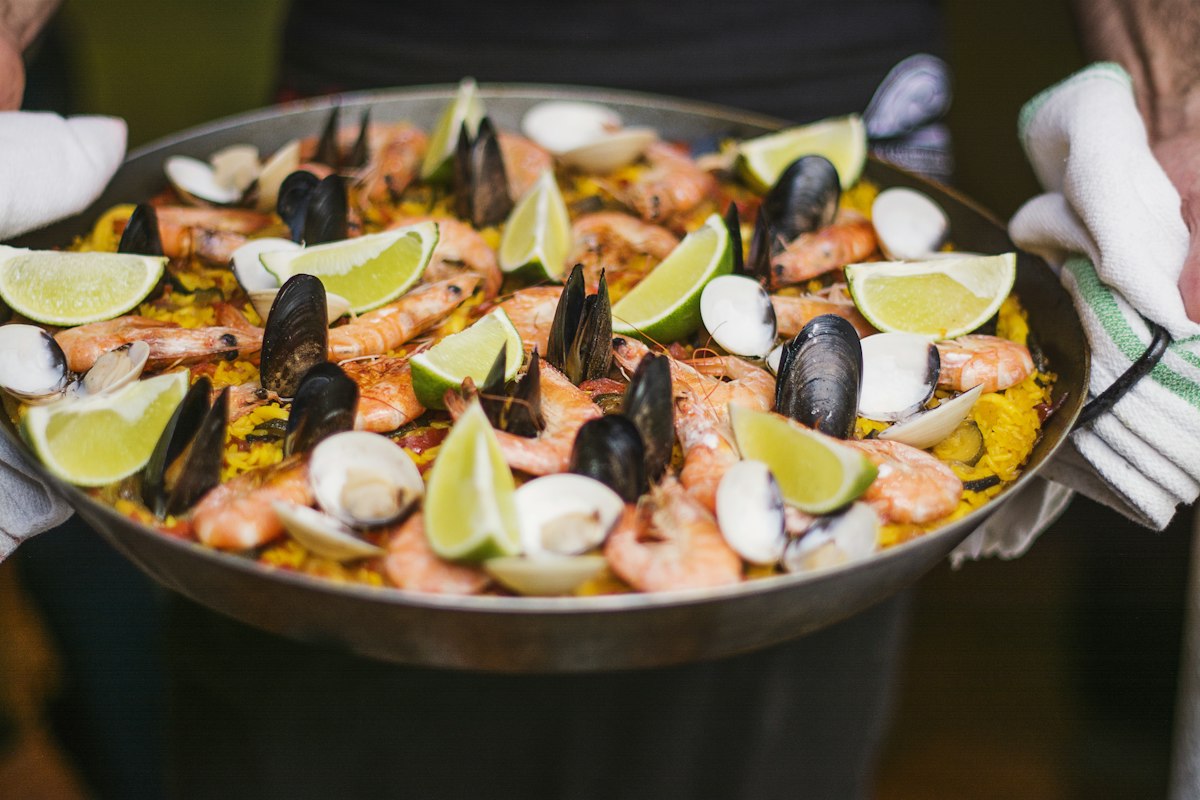
The Gothic Quarter has medieval streets narrow enough to touch both walls, and tapas bars where €3 gets you a glass of vermouth and a plate of patatas bravas at 7 PM while the rest of Europe is already eating dinner. Barcelona doesn't do dinner before 9. Lunch is at 2. This takes exactly one day to get used to and then you'll wonder why anyone eats any other way.
El Born is where the locals actually go out. Barceloneta has a beach that's genuinely good, not just good-for-a-city. Gracia feels like a small town that got absorbed by a metropolis and refused to change. And the Eixample - that grid of wide boulevards with the clipped corners - has more Modernista buildings than any architecture student could catalog in a month.
Here's the thing about Barcelona: the tapas are cheap, the wine is cheaper, and the city doesn't really wake up until you've already had three courses. It runs on its own clock and after 48 hours, so will you.
Neighborhoods
Each district has its own personality
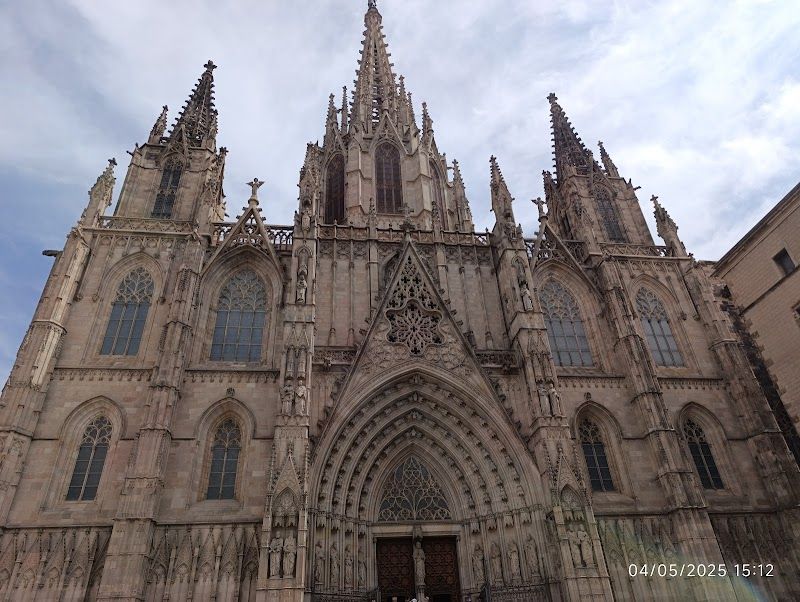
Gothic Quarter
Medieval, atmospheric, layered history at every turn
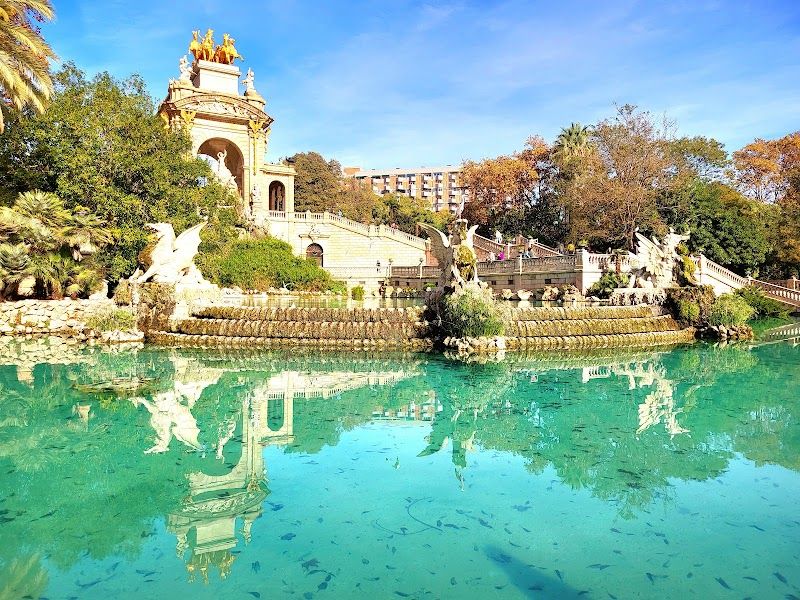
El Born & La Ribera
Stylish, local, lively after dark
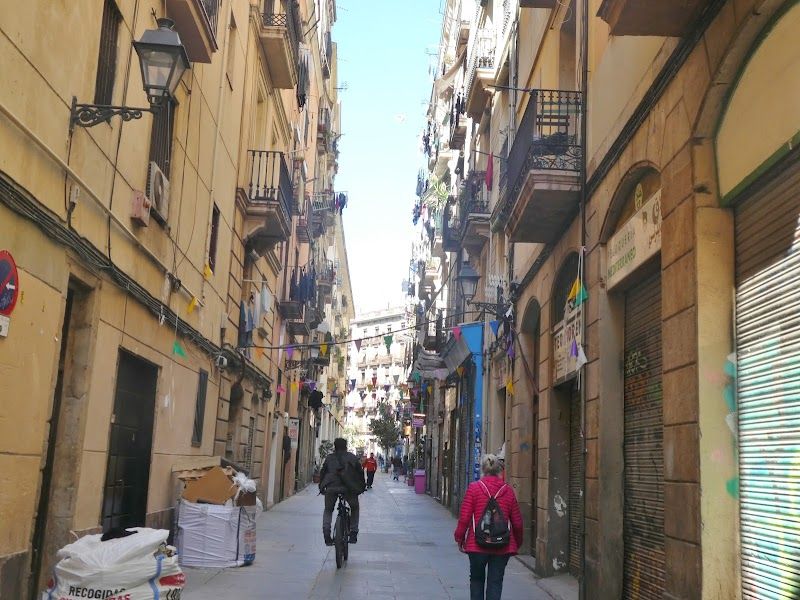
El Raval
Gritty, creative, multicultural, honest
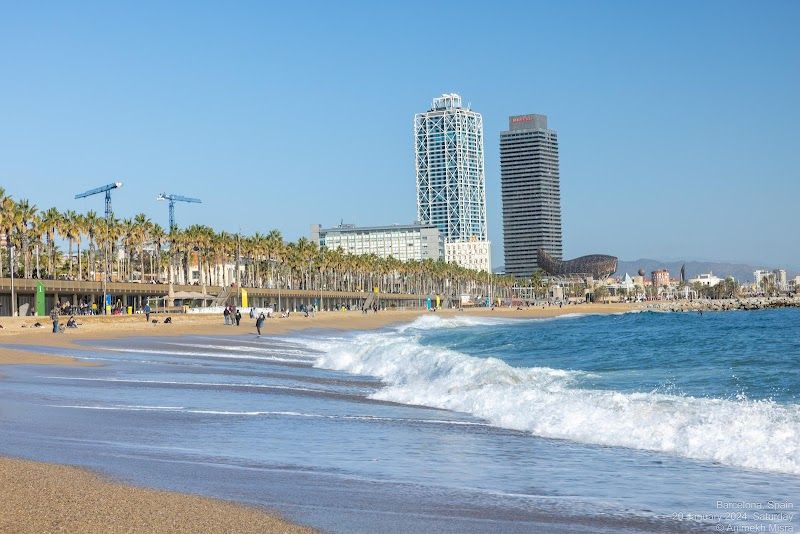
Barceloneta
Beach town in a big city, seafood, loud and social
Eixample
Elegant, architectural, wide boulevards, upscale dining
Gracia
Village atmosphere, independent, creative, unpretentious
Things to Do
Top experiences in Barcelona
Sagrada Familia
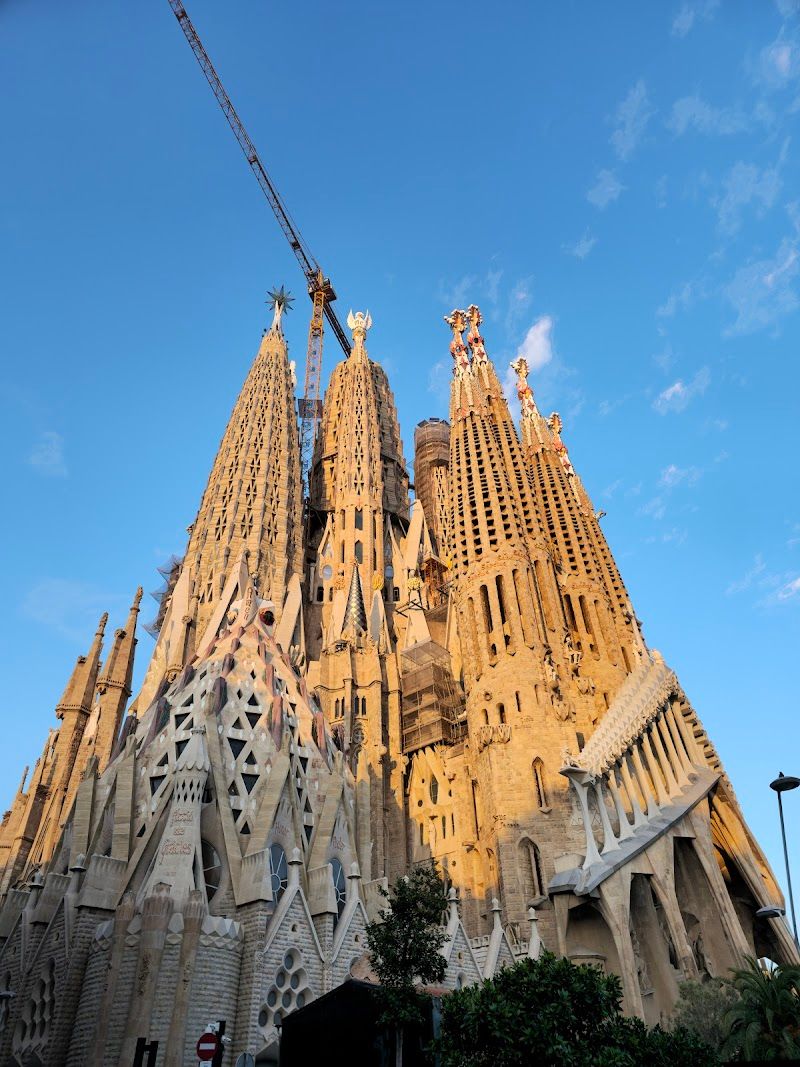
Every photo you've seen of the Sagrada Familia is wrong. Not inaccurate - just incapable of capturing what happens when you walk inside and the morning light hits those columns. Gaudi designed the interior as a forest, and that's not a metaphor: the columns branch like trees, the light filters through stained glass like a canopy, and your neck hurts from looking up within thirty seconds. The exterior gets all the photos but the inside is the actual masterpiece. Book tickets online at least two weeks ahead - they sell out, and the guys outside offering "skip the line" are either scalpers charging triple or scammers selling nothing. The €26 basic entry is worth every cent. The €36 tower ticket adds a lift to either the Nativity or Passion tower - the Nativity tower has better views and more Gaudi detail, but both involve narrow spiral staircases on the way down that aren't great if you're claustrophobic or have bad knees. Timing matters more here than almost anywhere else in Barcelona. The eastern stained glass windows light up between 9-10 AM, turning the entire nave blue and green - it's the single most beautiful moment in the building. By 11 AM the light shifts and the crowds arrive. Late afternoon between 5-6 PM, the western windows go orange and red, which is equally stunning but harder to get tickets for. Midday is the worst time: flat light, maximum crowds, and you'll spend more time dodging selfie sticks than looking up. The construction has been going since 1882 and the completion date keeps slipping - 2026 was the target but don't count on it. The cranes and scaffolding are part of the experience at this point. The Nativity facade facing the park is Gaudi's original work - intricate, organic, covered in stone animals and figures. The Passion facade on the opposite side was finished by sculptor Josep Subirachs in a completely different angular style, and locals have been arguing about it since the 1980s. Walk around the full exterior before going in - it's free and takes 15 minutes, and you'll appreciate the inside more knowing what holds it all together.
Park Guell
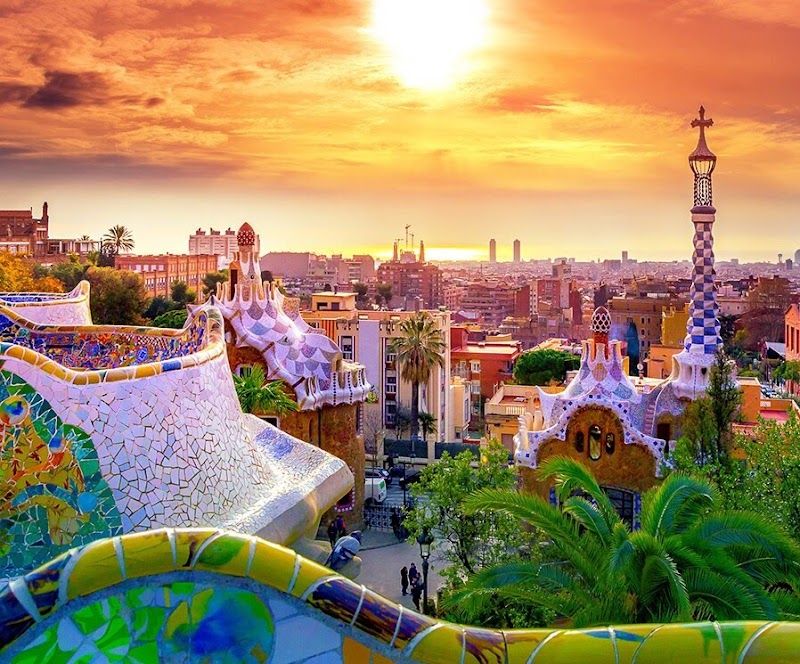
Park Güell is Gaudí's wonderland perched on a hill above Barcelona, where organic architecture meets playground fantasy. The paid Monumental Zone (€10, free under 6) contains the famous dragon salamander, the serpentine mosaic bench overlooking the entire city, and the forest of tilted columns in the Hypostyle Hall. You'll get sweeping views from the Mediterranean to Tibidabo, plus those Instagram shots everyone takes of the colorful trencadís mosaics. The experience flows from whimsical to surreal as you navigate Gaudí's curved pathways and gingerbread-house structures. Kids run wild on the undulating surfaces while adults marvel at how every surface seems to ripple and breathe. The crowds can be intense around the dragon, but once you reach the upper terrace with its famous wavy bench, Barcelona spreads out below you in a perfect panorama that makes the chaos worth it. Here's what most guides won't tell you: the free areas surrounding the Monumental Zone are genuinely beautiful and less crowded. The viaducts and walking paths cost nothing and still showcase Gaudí's organic style. Skip the overpriced Gaudí House Museum (€5.50) unless you're obsessed - it's his former residence but frankly unremarkable. Book timed entry online since they cap visitors at 400 per half hour, and don't bother with the audio guide - the park speaks for itself.
Boqueria Market & Tapas Tour
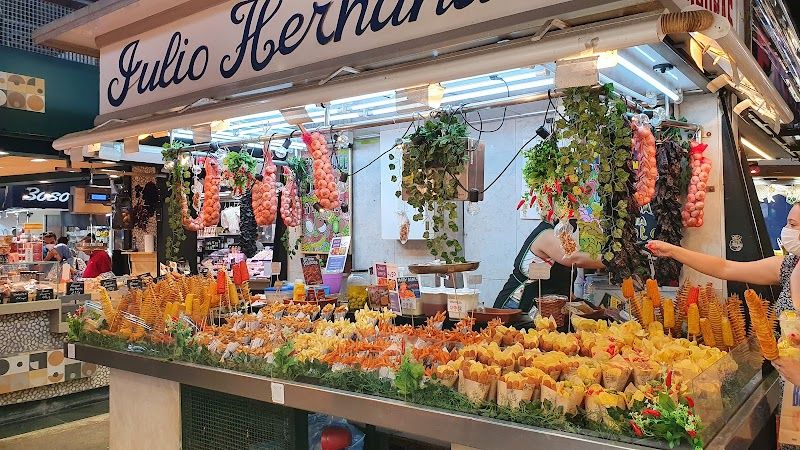
This isn't your typical tourist market walk-through. You'll spend two hours with a guide who actually knows the vendors at La Boqueria, tasting jamón ibérico that costs €45/kg retail, aged Manchego, and surprisingly good oysters from the fish section. The second half takes you to three nearby tapas bars where your guide orders dishes that aren't on any English menu - think grilled razor clams, house-made morcilla, and whatever the kitchen recommends that day. The market portion moves fast since you're tasting, not shopping. Your guide stops at maybe six stalls, explaining why this jamón costs triple what the tourist stalls charge and letting you try three different Manchego ages. The atmosphere shifts completely once you hit the tapas bars - suddenly you're standing shoulder-to-shoulder with locals who've been coming here for decades, drinking vermouth and eating things you can't pronounce. Most food tours in Barcelona are overpriced tourist traps, but this one actually delivers. Expect to spend around €65-75 per person depending on the company, and you'll genuinely eat well. Skip the afternoon tours entirely - by 2pm La Boqueria turns into a photo-op circus and the good tapas bars are slammed. The guide makes all the difference here, so book with smaller companies that cap groups at 8-10 people maximum.
Casa Batllo
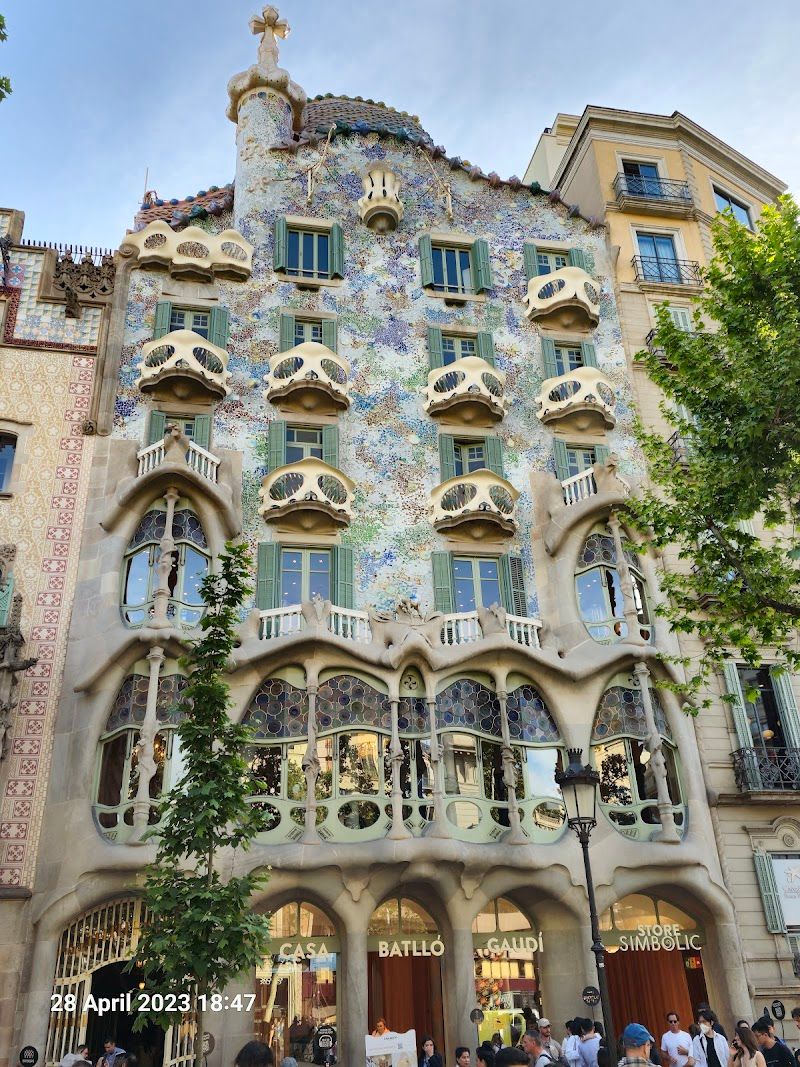
Casa Batlló is Gaudí's most fantastical residential redesign, where he transformed a conventional 1877 townhouse into something that looks alive. The facade ripples with bone-like balconies and scales that shift color in the light, while inside, every surface flows like water - doorways melt into walls, and staircases curve without a single straight edge. The blue-tiled light well creates an underwater atmosphere that changes as you climb from dark ocean depths to bright surface levels. Your visit flows upward through increasingly dramatic spaces. The main floor's undulating salon feels like being inside a sea cave, with skylights that cast dancing reflections. The attic's catenary arches create a ribcage effect that's genuinely striking, while the rooftop delivers Barcelona's most theatrical chimney pots - twisted, colorful sculptures that look like a dragon's spine. The audio guide's augmented reality features actually enhance rather than distract from the architecture. At €35 for adults, it's expensive but justified once you experience how completely Gaudí reimagined domestic space. Most visitors rush through to reach the famous rooftop, but the light well's color gradation is equally impressive and often overlooked. Book online to avoid queues - walk-up tickets cost the same but you'll waste time waiting. The gift shop is overpriced even by Barcelona standards.
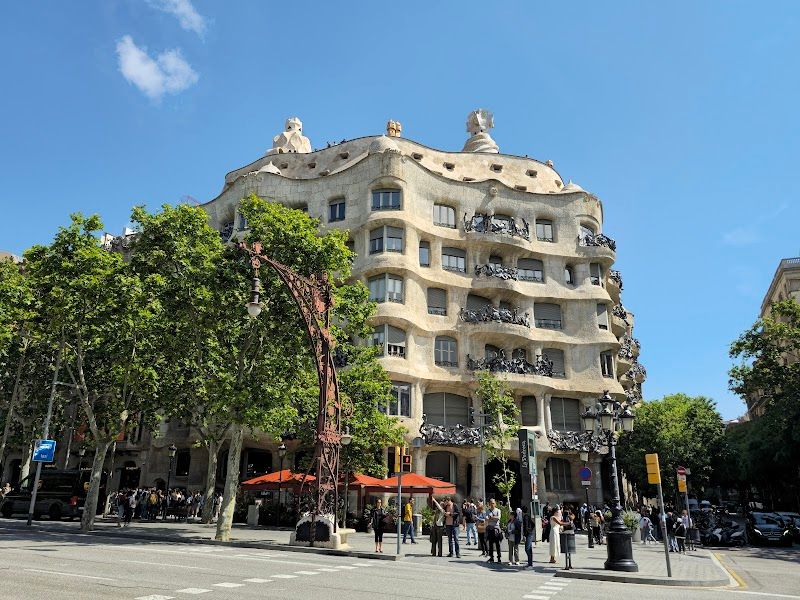
La Pedrera (Casa Mila)
Casa Milà is Gaudí's final apartment building and his most radical departure from straight lines - the entire facade ripples like water, with wrought-iron balconies that look like tangled seaweed. You'll explore a recreated 1910 bourgeois apartment (complete with period furniture and servant quarters), the undulating attic with its cathedral-like arches, and the rooftop where 30 sculptural chimneys rise like armored sentinels. The audio guide explains Gaudí's engineering genius, from the innovative ventilation system to the load-bearing walls that eliminated the need for interior supports. The visit flows upward through increasingly surreal spaces. The apartment feels lived-in rather than museum-sterile, with Art Nouveau details in every door handle and light fixture. The attic's white parabolic arches create an almost spiritual atmosphere - this is where Gaudí's structural innovations become pure art. The rooftop finale delivers Barcelona's best 360-degree views, framed by those otherworldly chimneys that change personality depending on the light. At €25 for adults, it's expensive but less crowded than Casa Batlló and more architecturally significant. Skip the €7 audio guide upgrade - the free version covers everything important. The gift shop is overpriced tourist trap, but the rooftop cafe serves decent coffee with unbeatable views. Summer evening visits (€34) include cava and projection mapping on the chimneys - genuinely magical if you don't mind the premium.
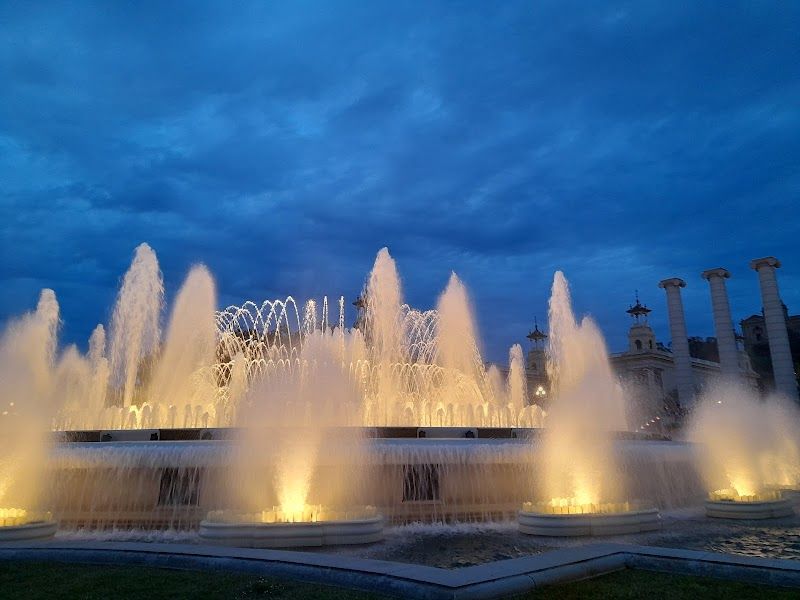
Montjuïc Sunset & Magic Fountain Night Tour
This three-hour evening tour combines Barcelona's best sunset spot with its most spectacular free show. You'll take the cable car up Montjuïc hill to catch golden hour views from the 17th-century castle, then walk through the Olympic Ring where the 1992 Games transformed the city. The finale is the Magic Fountain's 15-minute choreographed display - jets of water dancing to music while colored lights create a proper spectacle that draws crowds every weekend. The cable car ride gives you sweeping views across the port and city as you ascend, and the castle offers genuinely stunning panoramas over Barcelona's grid system and coastline. Walking through the Olympic sites feels like a history lesson - you'll see Palau de la Música Catalana and the athletics stadium while your guide explains how '92 changed everything. The fountain show itself is surprisingly moving, with classical music synchronized to water choreography that reaches 50 meters high. Most tours rush the castle portion, but that's actually the highlight - the fountain show, while impressive, lasts just 15 minutes and you can easily see it on your own for free. The cable car costs €13.20 each way if you go solo, so tours around €45-55 offer decent value if you want the commentary. Skip this entirely from November to February when the fountain's closed - the sunset views are still there, but half the experience disappears.
Barcelona Cathedral
Most visitors to Barcelona's Gothic Quarter pass by the Cathedral of the Holy Cross and Saint Eulalia on their way to the Sagrada Familia. That's their loss. This is the medieval original: a more peaceful destination, where you can actually hear yourself think inside. The Gothic nave with its soaring ribbed vaults dates to the 13th century. Unlike the Sagrada Familia, there's no Gaudi razzle-dazzle here. Instead, you'll find 700 years of stone, shadow, and the particular silence that old churches create. Free entry is available before 12:30 PM and after 5:15 PM. The €9 tourist ticket, which includes access from 12:30 PM to 5:15 PM, also grants entry to the choir stalls, the rooftop terrace, and the small museum. The rooftop alone is worth visiting: you can take a lift up for €3.50 and enjoy a view across Gothic Quarter rooftops, the spires of the cathedral, and on clear days, out to the sea. This popular spot is often empty, making it an even more appealing experience for those looking for quiet time. The cloister is the best part of the building and many people never find it. A doorway on the right side leads to a courtyard with palm trees, a mossy fountain, and 13 live white geese - a unique tribute to Saint Eulalia's martyrdom at age 13. The geese have been present since medieval times and honk indignantly at those walking past. A peaceful moment awaits you in the cloister, especially during morning light between 9-10 AM, when you're unlikely to find anyone else around. Don't confuse this with Santa Maria del Mar in El Born (also worth visiting) or Santa Maria del Pi nearby. There are several Gothic churches in Barcelona. This is the main one - the seat of the Archbishop, home to the geese, and the one you should visit first.
Parc de la Ciutadella
Parc de la Ciutadella is Barcelona's most beloved green space, built on the ruins of an 18th-century military fortress that locals despised. The star attraction is the monumental Cascada fountain, where a young Gaudí helped design the waterworks before he became famous. You'll find rowboats circling a peaceful lake, the impressive Arc de Triomf entrance, and the city zoo sprawling across one section. The Catalan Parliament occupies a grand building here, and several excellent museums border the grounds. Weekends transform this place into Barcelona's unofficial town square. Drummers gather near the fountain creating impromptu concerts, families spread blankets everywhere for epic picnics, and street performers work the crowds. The atmosphere feels authentically local rather than touristy. You'll hear more Catalan than English, watch kids feed ducks while parents chat on benches, and see teenagers practicing guitar under palm trees. The paths wind past tropical plants and sculptures, with plenty of shade when the Mediterranean sun gets intense. Most guides oversell the zoo (€21.40, skip unless you're with kids) and undersell the simple pleasure of people-watching. The fountain area gets packed on sunny weekends, so head to the quieter northern section near the geology museum if you want space. Rowboat rental costs €6 for 30 minutes and books up fast on Sundays. The park works brilliantly as a picnic spot after hitting nearby Boqueria market.
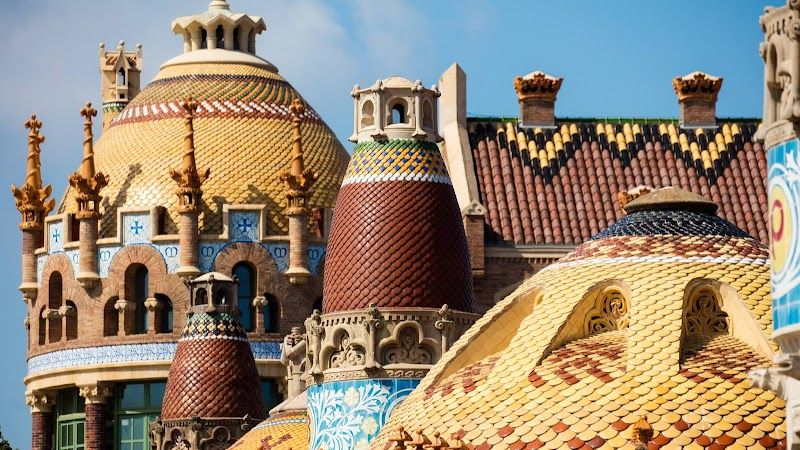
Recinte Modernista de Sant Pau
This sprawling hospital complex showcases Lluís Domènech i Montaner's vision of healing through beauty - 12 ornate pavilions connected by underground tunnels, each dedicated to different medical specialties. You'll wander through rooms lined with ceramic mosaics, stained glass windows, and sculptural details that make Casa Batlló look restrained. The operating theater in the Sant Rafael pavilion still has original surgical equipment, while the administration building houses temporary exhibitions about modernist architecture. It's essentially a small modernist city that actually functioned as Barcelona's main hospital until 2009. The self-guided route takes you through restored pavilions where patients once recovered surrounded by art nouveau masterpieces. Underground passages connect the buildings - originally designed so patients wouldn't see other medical cases, now they provide dramatic architectural reveals. The gardens between pavilions offer breathing space, and you'll often have entire rooms to yourself, unlike the shoulder-to-shoulder experience at Park Güell. The audio guide (included) explains the therapeutic philosophy behind decorating a hospital like a palace. Most visitors rush through in 45 minutes, but you need at least 90 minutes to appreciate the details. Entry costs €15 (€11 for students), and morning visits mean better light for photos through those stained glass windows. Skip the gift shop - it's overpriced postcards. The real value here is experiencing world-class modernist architecture without fighting crowds, something increasingly rare in Barcelona.
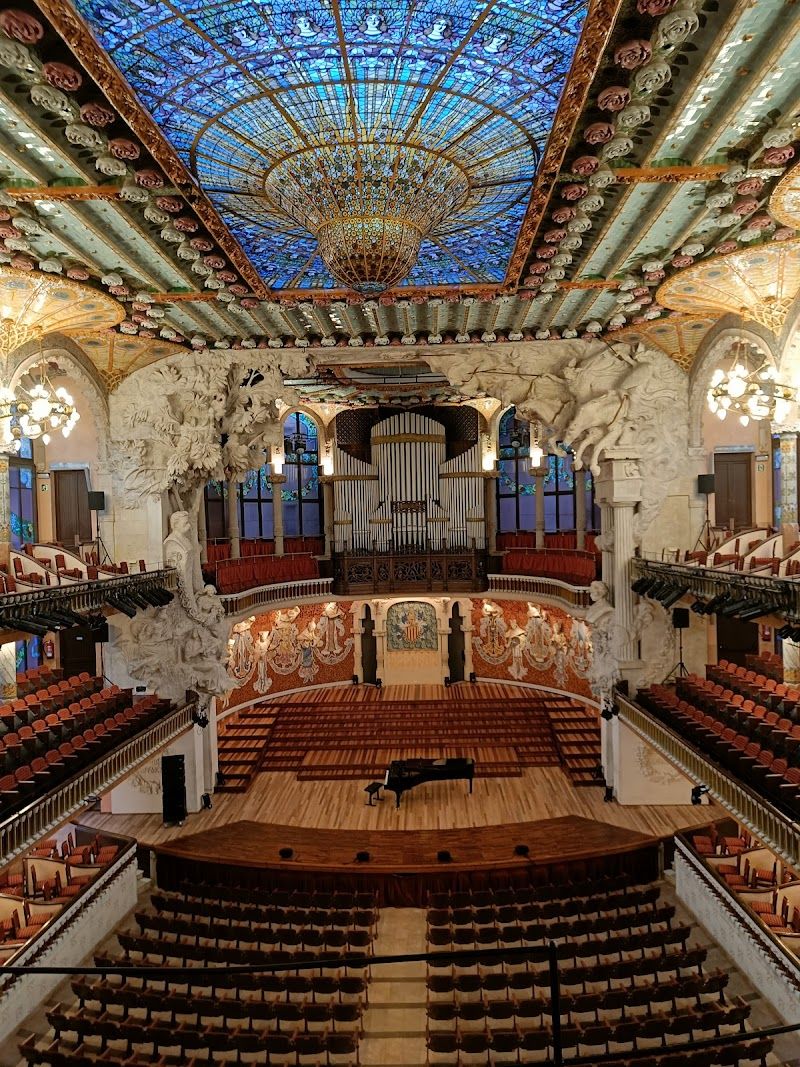
Palau de la Música Catalana
This 1908 modernista masterpiece by Lluís Domènech i Montaner remains the world's only concert hall lit entirely by natural light. The main auditorium explodes with color - an inverted stained glass dome crowns the space while mosaic columns spiral up like palm trees. Sculptural muses seem to burst from the stage backdrop, and every surface displays intricate tilework and carved stone. You'll tour backstage areas, the stunning rehearsal hall, and learn why UNESCO calls this architectural jewelry box irreplaceable. The 50-minute guided tours move through intimate spaces where you can actually touch the tilework and examine the craftsmanship up close. The revelation comes when you enter the main hall - most visitors gasp audibly as that incredible skylight comes into view. The acoustics are perfect even when empty, and guides often demonstrate by singing a few notes. Natural light filters through stained glass creating an almost ethereal atmosphere that changes throughout the day. Guided tours cost €20 and run every 30 minutes, but they're often rushed and crowded. The self-guided audio option (€15) lets you linger in the main hall as long as you want, which is crucial for photography. Skip the expensive concert tickets unless you're genuinely interested in the music - you'll see everything spectacular on the tour. Book morning slots when the light is best and crowds are thinner.
Mirador de Colom
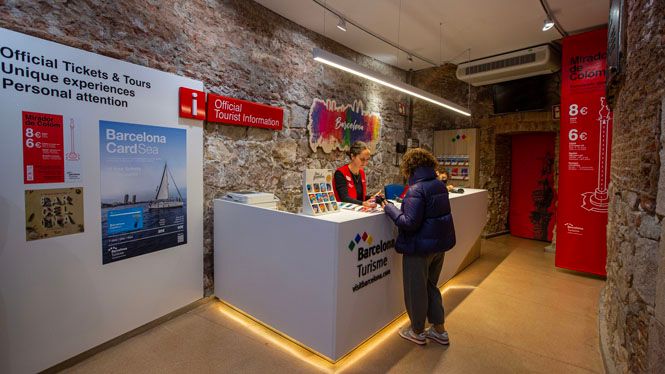
This 60-meter iron column topped with Columbus pointing seaward gives you Barcelona's most central aerial view. The tiny elevator carries just six people up to a circular viewing platform that looks directly over Port Vell's marina, across to Barceloneta beach, and down into the medieval streets of the Gothic Quarter. It's the only viewpoint where you can see how the old city connects to the harbor - something that's impossible to grasp from street level. The experience is quick but satisfying. You'll queue briefly at the base (unless it's peak summer), then squeeze into what feels like the world's smallest elevator for a 30-second ride up. The viewing platform is compact with thick glass panels, so expect to shuffle around other visitors to get clear shots. The perspective is genuinely helpful - you can trace Las Ramblas stretching inland, spot the cathedral's spires, and understand how Barcelona's grid system works beyond the old town. At €6, it's reasonable compared to Barcelona's other paid viewpoints, though the experience lasts maybe 15 minutes total. Most travel guides oversell this as essential, but honestly, if you're doing Park Güell or Sagrada Familia, skip it. However, if you're spending your time in the old city and want a quick orientation tool, it delivers exactly what it promises without pretense.
Tibidabo Amusement Park
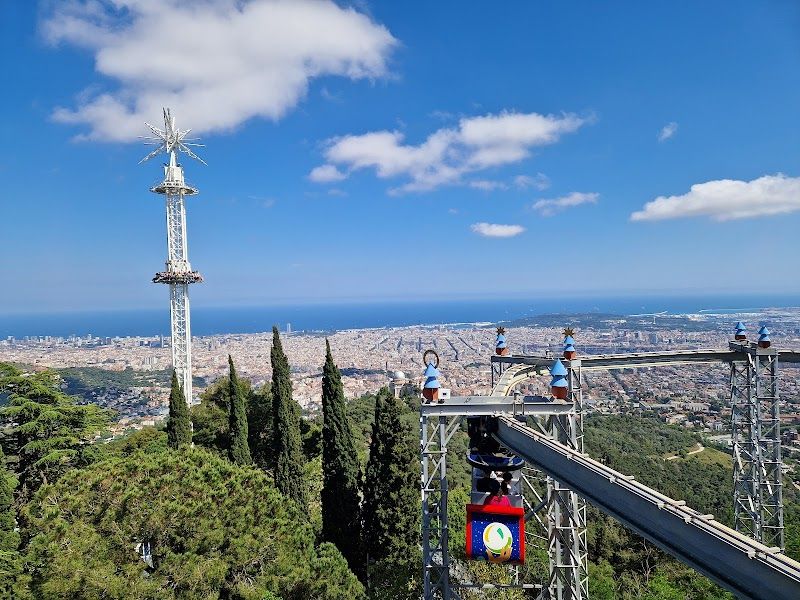
Tibidabo sits 512 meters above Barcelona, making it Europe's most dramatically positioned amusement park. You'll find a fascinating mix of century-old mechanical rides alongside modern roller coasters, plus the towering Sagrat Cor basilica that dominates Barcelona's skyline. The real draw isn't just the rides - it's the sweeping views across the entire city, Mediterranean coastline, and Pyrenees mountains on clear days. The park feels like stepping back in time, especially on the vintage wooden Airplane ride from 1928 that still creaks and sways as it spins. The historic Ferris wheel and carousel maintain their original charm, while newer attractions like the Pendulum provide modern thrills. The atmosphere is distinctly nostalgic rather than flashy - families picnic between rides, and the pace feels relaxed compared to typical theme parks. The basilica looms overhead, and you can climb its tower for even more spectacular panoramas. Most guides don't mention that ride prices vary wildly - individual tickets cost €2-8 each, making the Sky Walk pass (€28.50) worthwhile if you plan to do more than four attractions. Skip the overpriced restaurant and bring snacks instead. The park often closes sections during weekdays in low season, so check the website before traveling up the mountain. Sunset visits are magical but remember the last funicular down leaves at 9:30pm.
Travel Guides
Expert guides for every travel style
Where to Eat in Barcelona: A Neighborhood Food Guide
6 min read
Best of the Gothic Quarter: A Walking Guide
5 min read
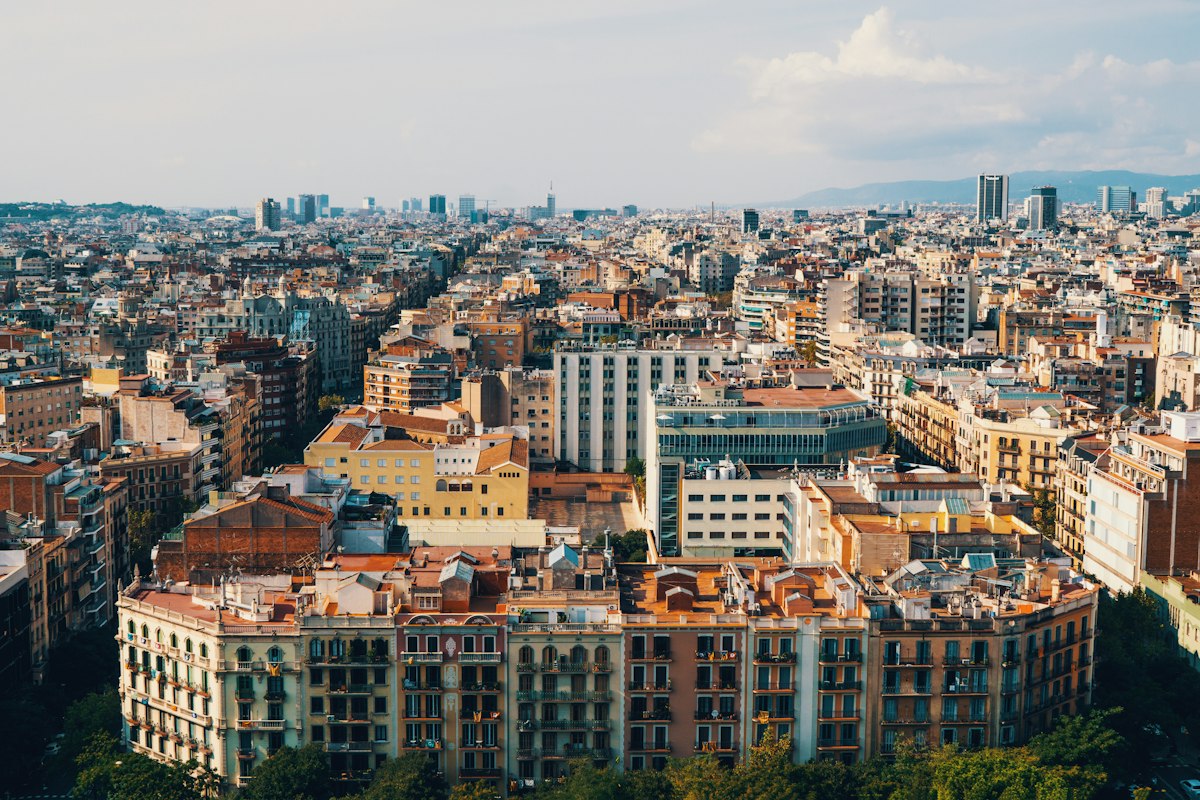
Barcelona with Kids: Family-Friendly Guide
5 min read
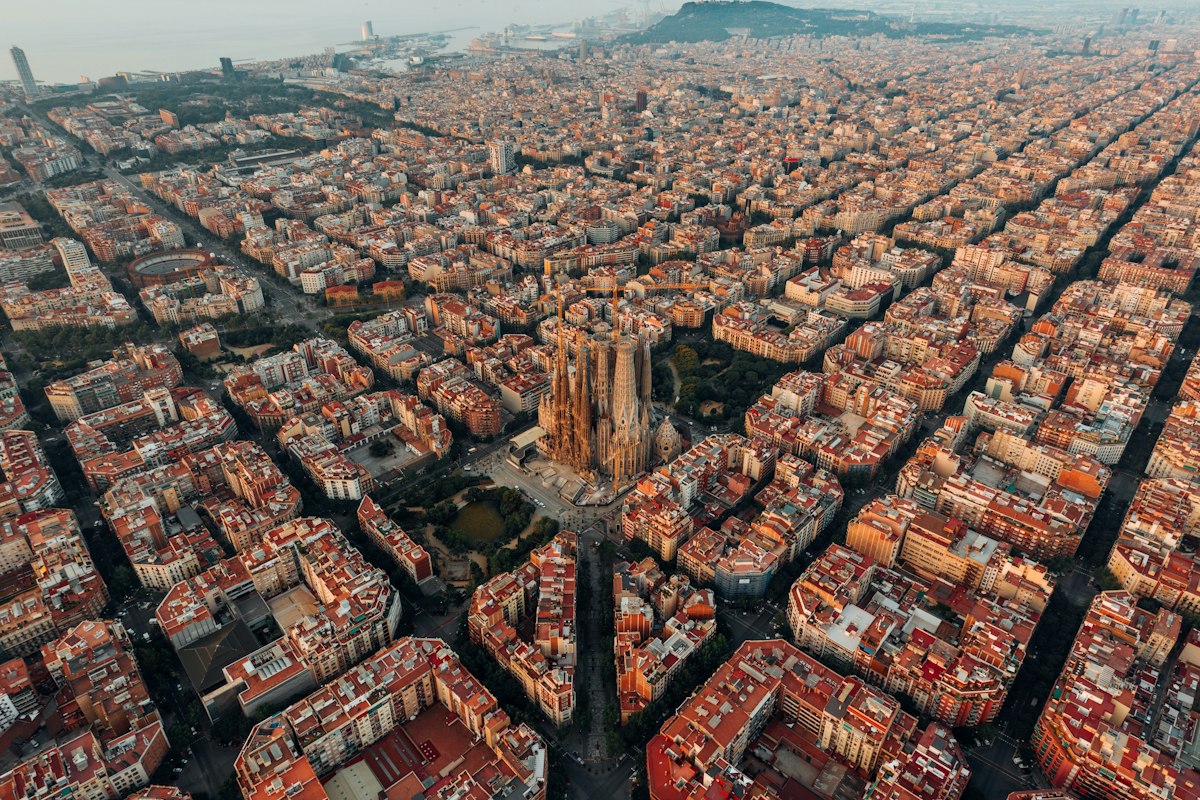
3 Days in Barcelona: First-Timer's Itinerary
5 min read
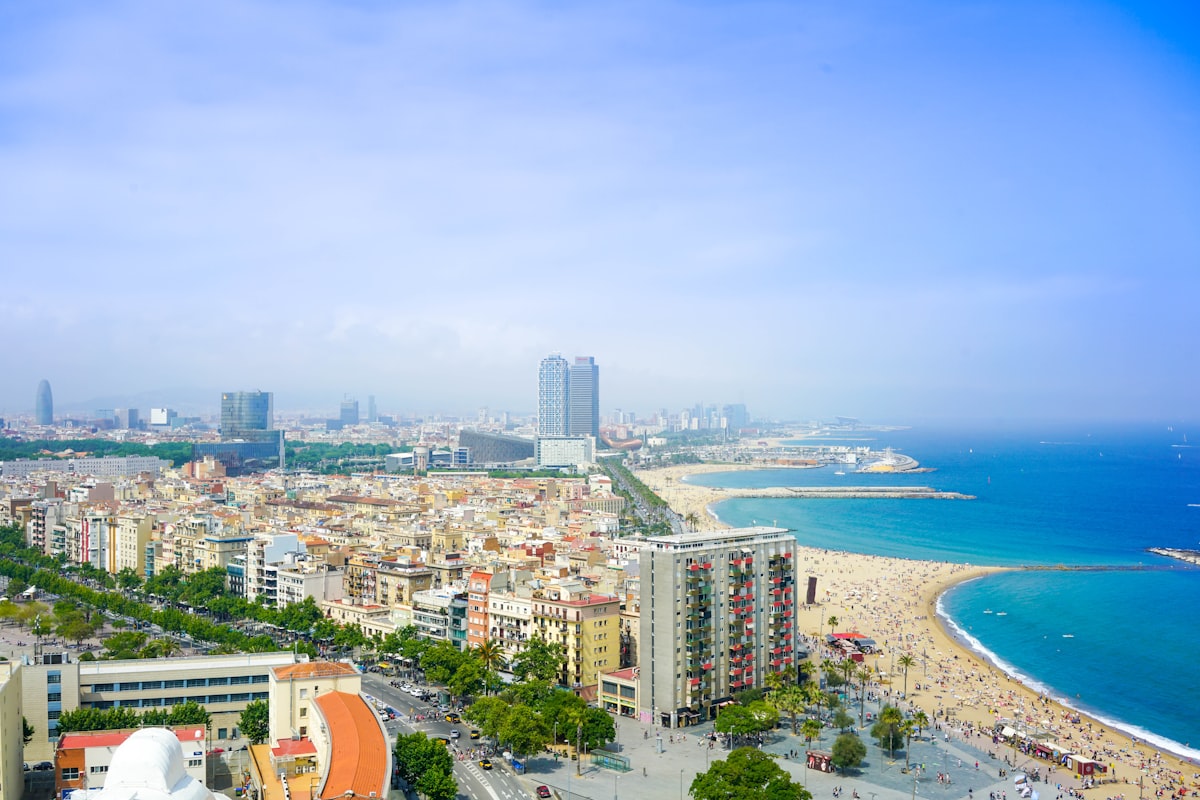
5 Days: The Complete Barcelona Experience
6 min read
First Time in Barcelona: Everything You Need to Know
5 min read
From the Journal
Barcelona vs Madrid: Which City Should First-Time Visitors Choose?
Should you visit Barcelona or Madrid first? We break down the food, culture, costs, and vibe to help you decide which Spanish city matches your travel style.
How Much Food Actually Costs in Barcelona: Real Prices for Every Budget
Barcelona food prices range from €1.50 coffee to €100 upscale dinners. Menu del dia lunches at €12-18 offer the best value, while neighborhood tapas bars keep costs low.
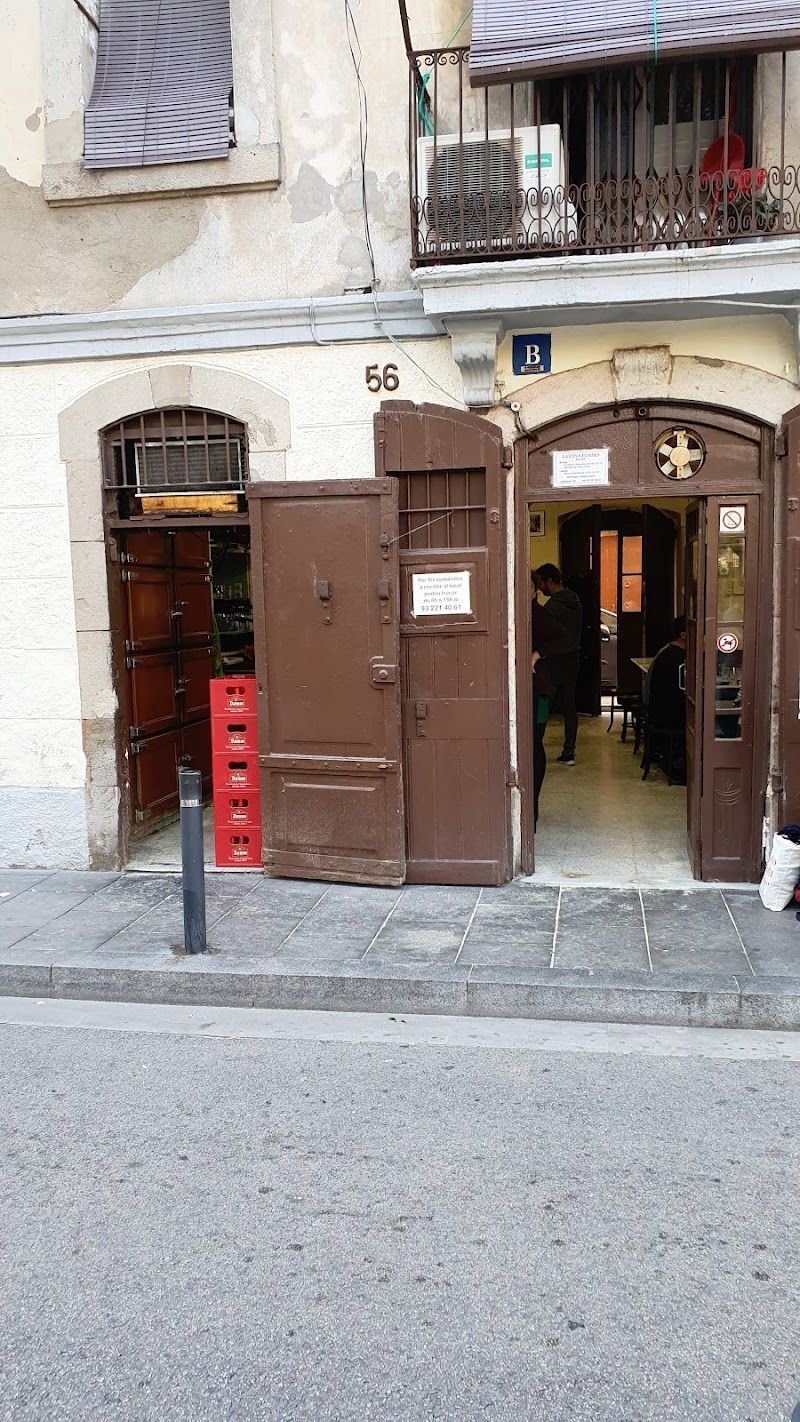
Local Food Recommendations: Where Barcelona Residents Actually Eat
Forget La Rambla restaurants. Here's where locals in Barcelona actually eat, from €12 menu del dia spots to neighborhood bars serving proper tapas.
Practical Tips
Lunch is 1:30-3:30 PM, dinner is 9-11 PM. Restaurants that serve dinner at 7 PM are tourist traps. The menu del dia at lunch (3 courses with drink for €12-18) is still the best deal in the city - available 1-4 PM at most restaurants.
Buy a T-Casual card (EUR 13 for 10 trips) at any metro station. It works on metro, bus, tram, and local trains within zone 1. Get the 2-zone version (EUR 25.5) if you're taking the airport metro. For stays over 2 days, the Hola Barcelona 48h card (EUR 17.5) or 72h card (EUR 25.5) offer unlimited rides and include airport access. Most of central Barcelona is walkable in 20-30 minutes. Don't bother with taxis unless it's late at night.
Las Ramblas and the metro are the hot spots. Front pockets, zipped bags, phone in your hand not your back pocket. It's not dangerous, just annoying if you're careless. El Born and Gracia are totally fine.
Sagrada Familia, Park Guell (monumental zone), Casa Batllo, and La Pedrera all sell out weeks ahead, especially during peak season. Book online 3-4 weeks before your trip - Sagrada Familia (EUR 26) and Casa Batllo (EUR 35) often require the longest lead times. Park Guell's timed entry system (EUR 18) releases tickets in batches, so check multiple times if your preferred slot is full. Morning slots at Sagrada Familia get the best natural light for photos, while La Pedrera (EUR 28) is less crowded for early afternoon visits.
Barcelona is bilingual - street signs are in Catalan, most people speak both. "Gracia" not "gracias" is the local thank-you. Starting with "Bon dia" instead of "Buenos dias" gets you a warmer reception.
Not expected like in the US. Round up the bill or leave €1-2 for good service at restaurants. Nobody tips at bars or cafes. Don't overthink it.
Frequently Asked Questions
Three days covers the highlights if you're efficient: Gothic Quarter, Gaudi's greatest hits, and the beach. Five days lets you explore Gracia, Montjuic, a day trip to Montserrat, and actually eat at a pace Barcelona approves of. Most people wish they'd booked one more day.
El Born is the sweet spot - walkable to the Gothic Quarter and beach, great restaurants and bars, and it feels like a neighborhood rather than a hotel district. The Eixample is good for Gaudi proximity and wider streets. The Gothic Quarter is atmospheric but noisy at night. Avoid staying on or near Las Ramblas.
Very safe for a major European city. Pickpocketing is the main concern, concentrated on Las Ramblas, in the metro, and around major attractions. Violent crime targeting tourists is extremely rare. Standard city precautions: don't leave your phone on the table at sidewalk cafes, keep bags zipped in crowds.
April through June is ideal: warm enough for the beach (usually from May), fewer crowds than summer, and everything is open. September and October are equally good. July and August are hot (30°C+), packed, and more expensive. Winter is mild (10-15°C) with great hotel deals but some beach bars close.
English is widely spoken in restaurants, hotels, and tourist areas. You'll manage fine. But learning a few words of Catalan or Spanish makes a real difference - "Bon dia" (good morning in Catalan), "la cuenta" (the bill), "una canya" (a small draft beer). Menu del dia menus are sometimes Spanish-only, but Google Translate handles that.
The Aerobus from Terminal 1 or 2 to Placa Catalunya takes 35 minutes and costs €7.75 one way. Runs every 5-10 minutes. The metro L9 Sud costs €5.50 and takes 35-45 minutes with transfers to reach the city center - you need the special airport supplement ticket since regular metro tickets don't work. A taxi costs €39 from Terminal 1 or €47 from Terminal 2 to anywhere in the city center. Skip the train - it only goes to Passeig de Gracia and the schedule is unreliable.